
Management By STEPHEN P ROBBINS MARY COULTER PART
Management By STEPHEN P. ROBBINS MARY COULTER
PART 1 p p Chapter 1 Introduction to Management and Organization Chapter 2 Management yesterday and Today
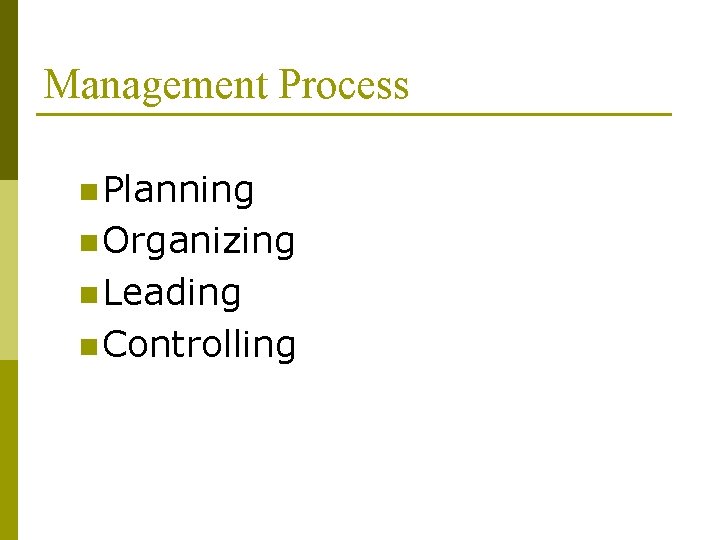
Management Process n Planning n Organizing n Leading n Controlling

Management Roles : Henry Mintzberg 1. Interpersonal • • • Figurehead Leader Liaison 3. Decisional • • 2. Informational • • • Monitor Disseminator Spokeperson Entrepreneur Disturbance Handler Resource Allocator Negotiator
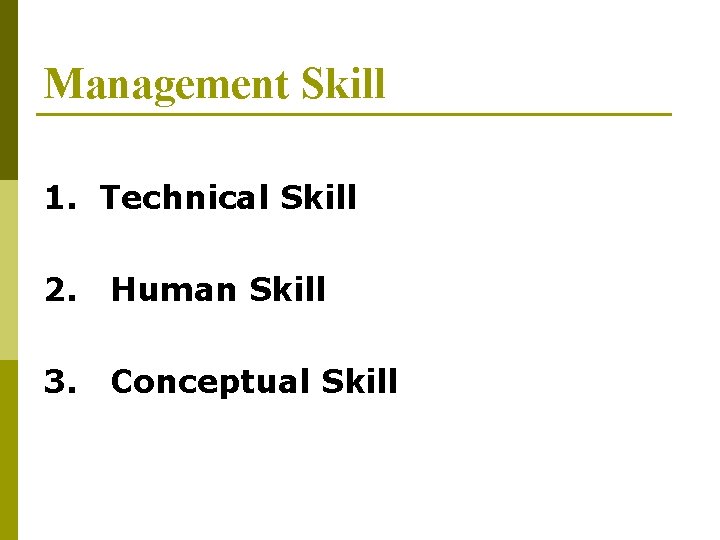
Management Skill 1. Technical Skill 2. Human Skill 3. Conceptual Skill
Management Theories 1. Scientific 2. Administrative Theorists 3. Quantitative Approach 4. Organizational Behavior
Current Trends and Issues 1. 2. 3. 4. 5. 6. 7. 8. Globalization Workforce Diversity Entrepreneurship E – Business Need for Innovation and Flexibility Quality Management Learning Organization Workplace Spirituality
PART 2 p p p Chapter 3 Organization Culture and the Environment : The Constraints Chapter 4 Managing in a Global Environment Chapter 5 Social Responsibility and Managerial Ethics
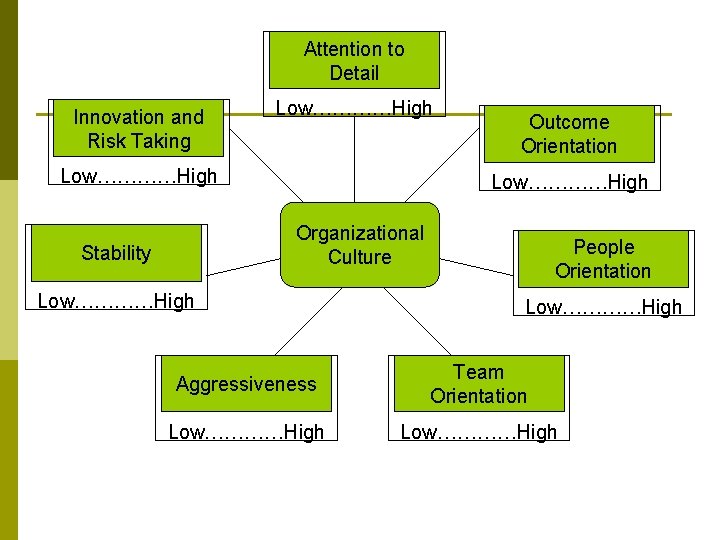
Attention to Detail Innovation and Risk Taking Low…………High Outcome Orientation Low…………High Organizational Culture Stability Low…………High People Orientation Low…………High Aggressiveness Team Orientation Low…………High
Managing in a Global Environment The Global Environment p Regional Trading Alliance p Different Type of Global Organizations
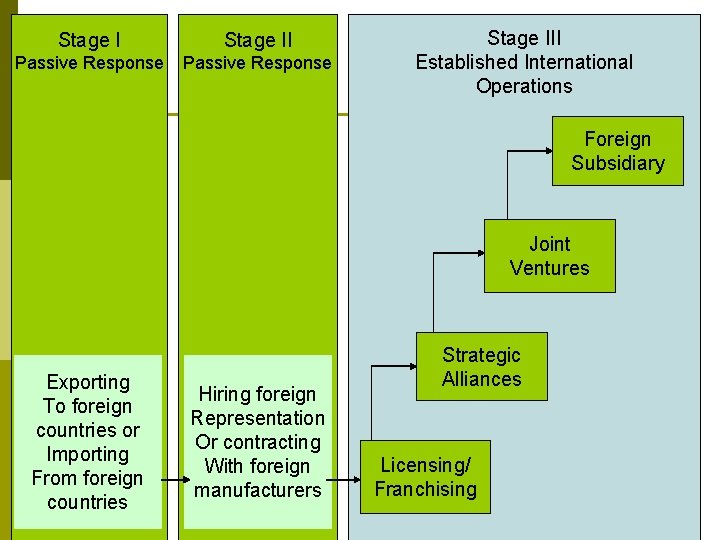
Stage II Passive Response Stage III Established International Operations Foreign Subsidiary Joint Ventures Exporting To foreign countries or Importing From foreign countries Hiring foreign Representation Or contracting With foreign manufacturers Strategic Alliances Licensing/ Franchising
and Managerial Ethics The “Greening “ of Management p How Organizations Go Green 1. Legal Approach 2. Market Approach 3. Stakeholders Approach 4. Activist Approach p
PART 3 p p Chapter 6 Decision Making: the Essence of the Manager’s Job Chapter 7 Foundations of Planning Chapter 8 Strategic Management Chapter 9 Planning Tools and Techniques
Purposes of Planning 1. 2. 3. 4. Planning Gives Direction Planning Reduces Uncertainty Planning Reduces Overlapping and Wasteful Activities Planning Sets the Standard Used in Controlling
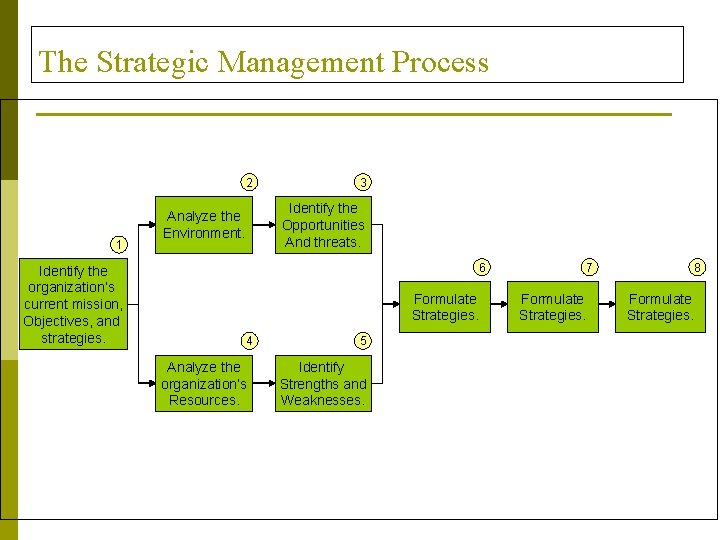
The Strategic Management Process 2 1 Identify the organization’s current mission, Objectives, and strategies. 3 Identify the Opportunities And threats. Analyze the Environment. 6 Formulate Strategies. 4 Analyze the organization’s Resources. 5 Identify Strengths and Weaknesses. 7 Formulate Strategies. 8 Formulate Strategies.
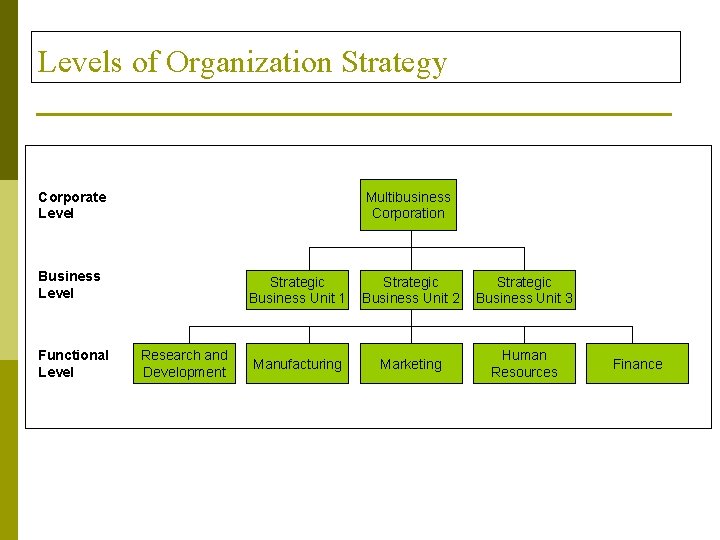
Levels of Organization Strategy Corporate Level Multibusiness Corporation Business Level Functional Level Research and Development Strategic Business Unit 1 Strategic Business Unit 2 Strategic Business Unit 3 Manufacturing Marketing Human Resources Finance
PART 4 p Chapter 10 Organizational Structure and Design p Chapter 11 Communication and Information Technology p Chapter 12 Human Resource Management p Chapter 13 Managing Change and Innovation
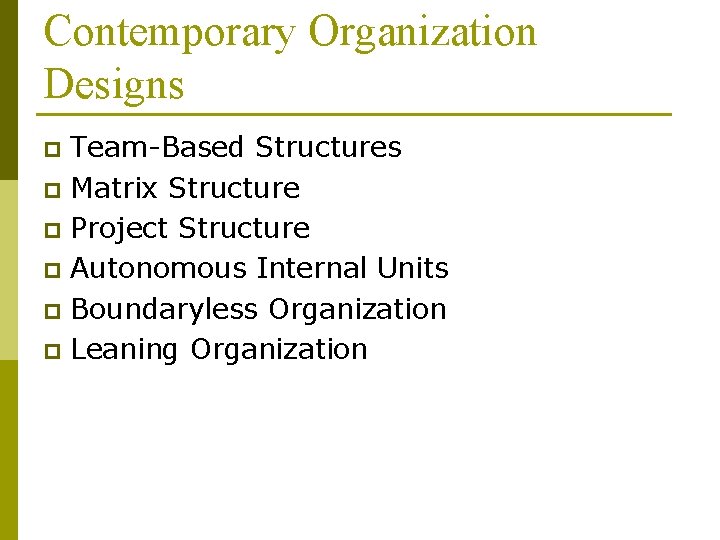
Contemporary Organization Designs Team-Based Structures p Matrix Structure p Project Structure p Autonomous Internal Units p Boundaryless Organization p Leaning Organization p
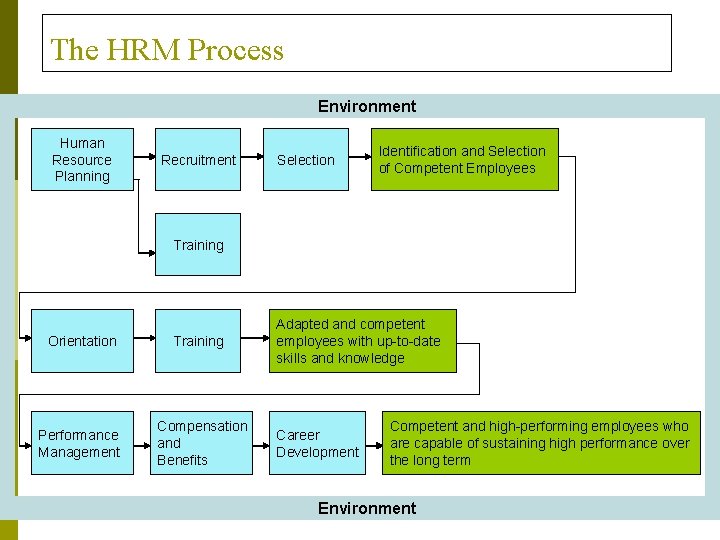
The HRM Process Environment Human Resource Planning Recruitment Selection Identification and Selection of Competent Employees Training Orientation Performance Management Training Compensation and Benefits Adapted and competent employees with up-to-date skills and knowledge Career Development Competent and high-performing employees who are capable of sustaining high performance over the long term Environment
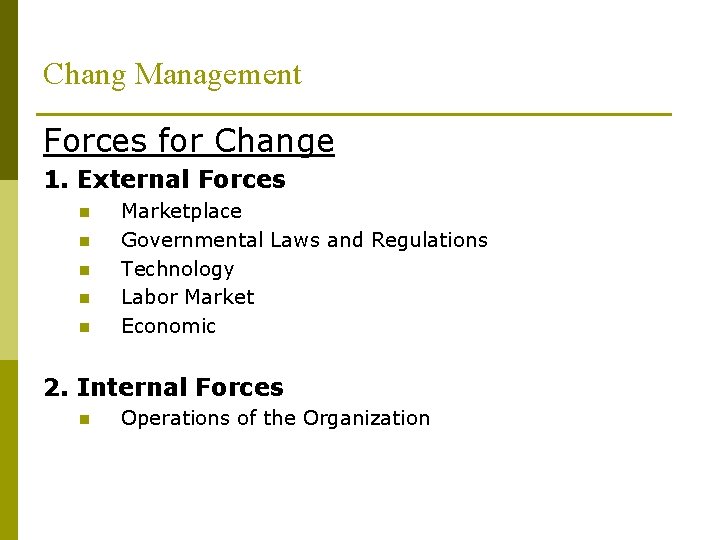
Chang Management Forces for Change 1. External Forces n n n Marketplace Governmental Laws and Regulations Technology Labor Market Economic 2. Internal Forces n Operations of the Organization
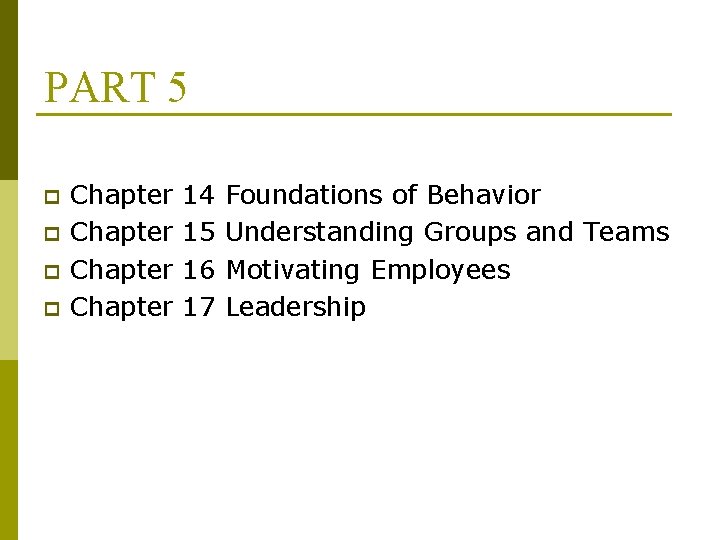
PART 5 p p Chapter 14 15 16 17 Foundations of Behavior Understanding Groups and Teams Motivating Employees Leadership
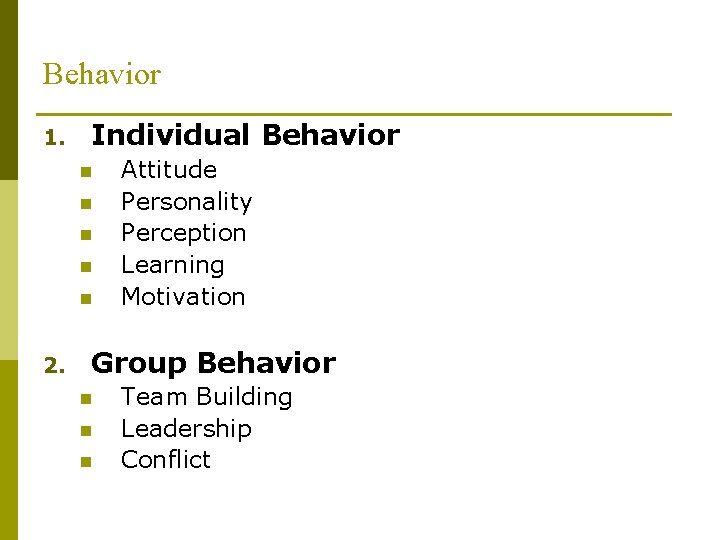
Behavior 1. Individual Behavior n n n 2. Attitude Personality Perception Learning Motivation Group Behavior n n n Team Building Leadership Conflict
Attitude Job Satisfaction p Job Involvement p Organizational Commitment p Organizational Citizenship Behavior p
Big-Five Model of Personality 1. 2. 3. 4. 5. Extraversion Agreeableness Conscientiousness Emotional Stability Openness to Experience
Shaping : A Managerial Tool 1. 2. 3. 4. Positive Reinforcement Negative Reinforcement Punishment Extinction
PART 6 p p Chapter 18 Foundations of Control Chapter 19 Operations and Value Chain Management
Types of Control Feedforward Control p Concurrent Control p Feedback Control p
- Slides: 27