
Management by competencies Theory of vitality Pyramid of
Management by competencies Theory of vitality
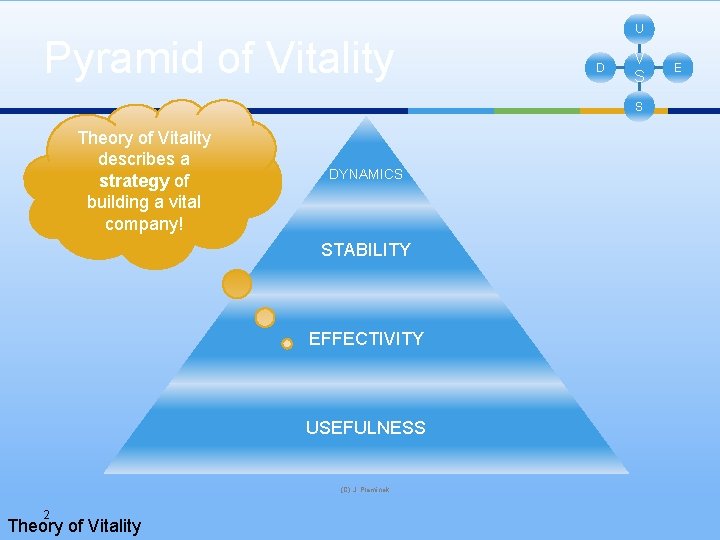
Pyramid of Vitality U D V S S Theory of Vitality describes a strategy of building a vital company! DYNAMICS STABILITY EFFECTIVITY USEFULNESS (C) J. Plamínek 2 Theory of Vitality E
Theory of limitations ¥ The order of the pyramid is Logical ¥ Not possible to accomplish to 100% ¥ ¥ None of the vital signs can be developed to 100% ¥ We improve it until it has any limitations ¥ That leads to sequence of “currative” interventions
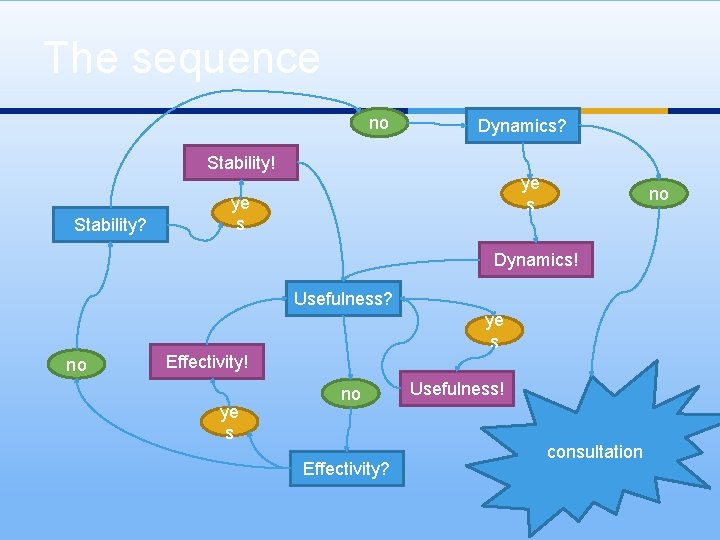
The sequence no Dynamics? Stability! Stability? ye s no Dynamics! Usefulness? ye s no Effectivity! ye s no Effectivity? Usefulness! consultation
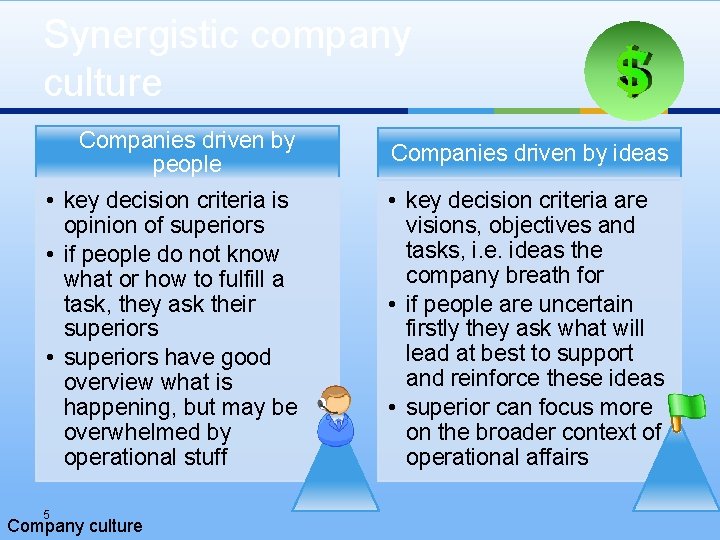
Synergistic company culture Companies driven by people Companies driven by ideas • key decision criteria is opinion of superiors • if people do not know what or how to fulfill a task, they ask their superiors • superiors have good overview what is happening, but may be overwhelmed by operational stuff • key decision criteria are visions, objectives and tasks, i. e. ideas the company breath for • if people are uncertain firstly they ask what will lead at best to support and reinforce these ideas • superior can focus more on the broader context of operational affairs 5 Company culture
The company driven by ideas ¥ It is necessary to “decompose” the ideas ¥ Motivation is the basement for listening ideas ¥ Different people are willing to wait different time ¥ Motivation must be designed for concrete position
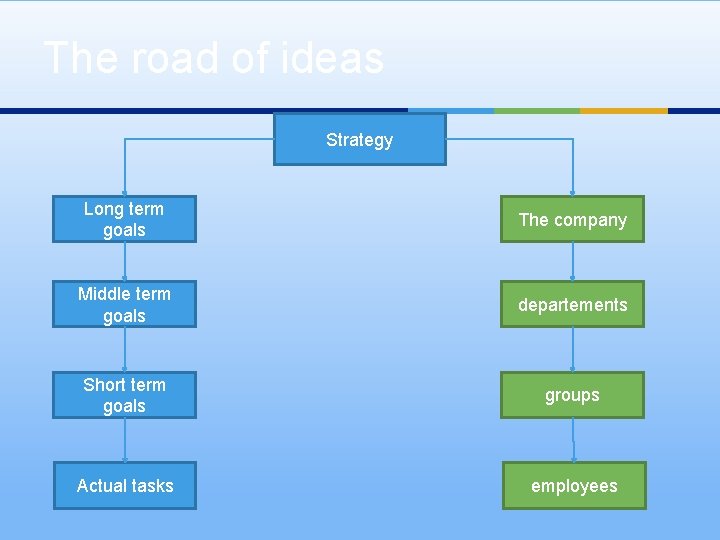
The road of ideas Strategy Long term goals The company Middle term goals departements Short term goals groups Actual tasks employees
Political barriers ¥ Fight for the Power ¥ Influence ¥ Money ¥ ¥ Support of the high management is the key to vitality
Proceses ¥ All processes must be done for OUTPUT ¥ Output is giving the money and profit ¥ Limit the power of OPE and Controlling Administration ¥ Forms filling ¥ Other non productive tasks ¥ ¥ But it is need to have feed back!!!

Management of the processes ¥ Needs to be separated from the sources ¥ Only one owner of the problem (project manager) ¥ At last one more level of the sub-process More levels adds more problems ¥ More levels needs more owners ¥ The space for non-profit tasks ¥
Management of the sources ¥ As many levels as necessary ¥ Each manager should have at last 5 subordinates ¥ Manager is the keeper of the human resources Coach ¥ Trainer ¥ Consultant ¥

Human sources in Mb. C ¥ Three ¥ types of HR Quality What we are ¥ Can not be changed, only accepted ¥ ¥ Attitude ¥ ¥ What we believe in and what we want Abilities ¥ What we know and what we have learned
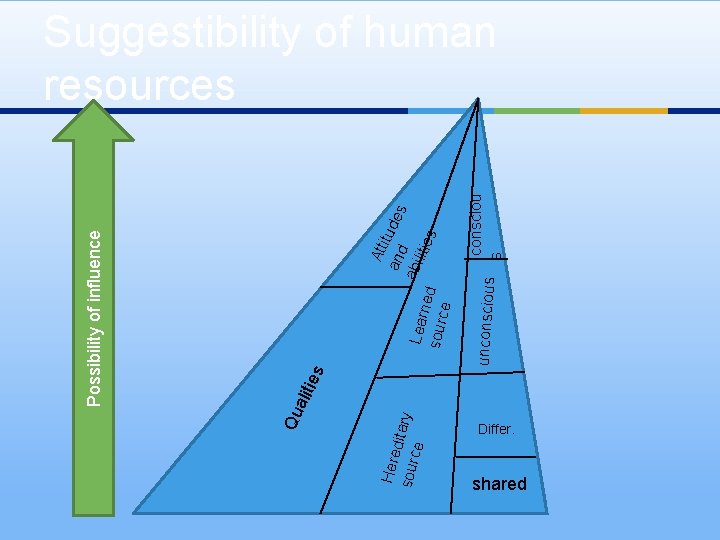
Here d sour itary ce ies alit Qu unconscious consciou s Att i and tudes abi Lear litie ned s sour ce Possibility of influence Suggestibility of human resources Differ. shared
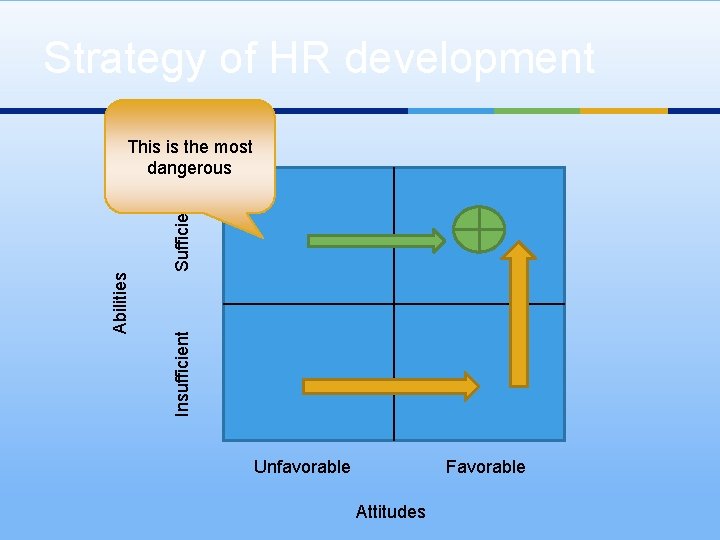
Strategy of HR development Insufficient Abilities Sufficient This is the most dangerous Unfavorable Favorable Attitudes
Management of HR in Mb. C ¥ The target is not to exhaust the sources ¥ The management of HR must be Efficient ¥ Effective ¥ ¥ The potential and the performance need to be in a harmony ¥ The goose can produce the golden eggs till it lives
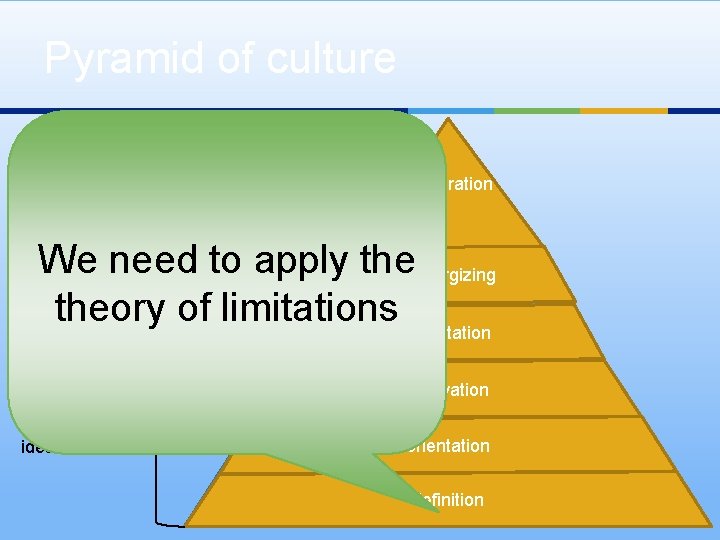
Pyramid of culture Integration under company’s ideas integration We need to apply thesynergizing theory of limitations habilitation Harmony between requested and real abilities of the people Loyalty to company’s ideas motivation orientation definition
- Slides: 16