
MANAGEMENT ACCOUNTING Unit I Management Accounting Scope and
- Slides: 11
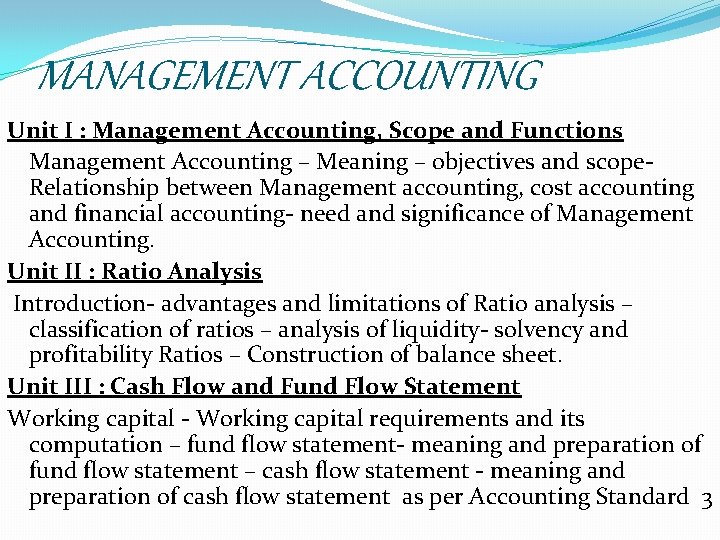
MANAGEMENT ACCOUNTING Unit I : Management Accounting, Scope and Functions Management Accounting – Meaning – objectives and scope. Relationship between Management accounting, cost accounting and financial accounting- need and significance of Management Accounting. Unit II : Ratio Analysis Introduction- advantages and limitations of Ratio analysis – classification of ratios – analysis of liquidity- solvency and profitability Ratios – Construction of balance sheet. Unit III : Cash Flow and Fund Flow Statement Working capital - Working capital requirements and its computation – fund flow statement- meaning and preparation of fund flow statement – cash flow statement - meaning and preparation of cash flow statement as per Accounting Standard 3
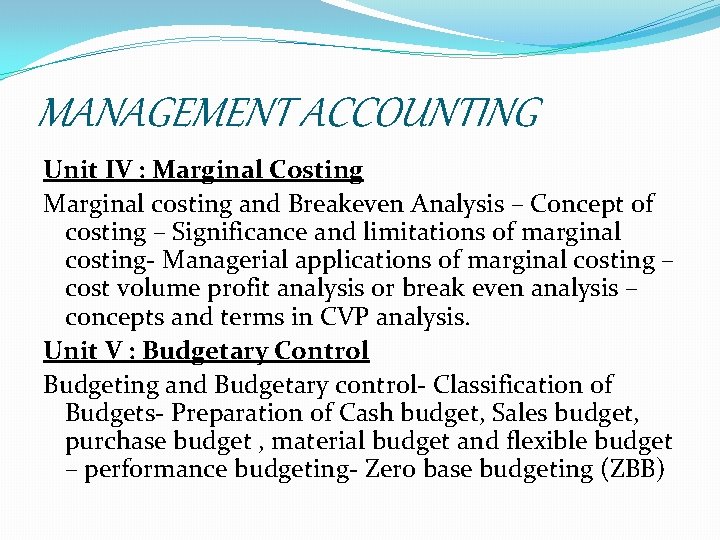
MANAGEMENT ACCOUNTING Unit IV : Marginal Costing Marginal costing and Breakeven Analysis – Concept of costing – Significance and limitations of marginal costing- Managerial applications of marginal costing – cost volume profit analysis or break even analysis – concepts and terms in CVP analysis. Unit V : Budgetary Control Budgeting and Budgetary control- Classification of Budgets- Preparation of Cash budget, Sales budget, purchase budget , material budget and flexible budget – performance budgeting- Zero base budgeting (ZBB)
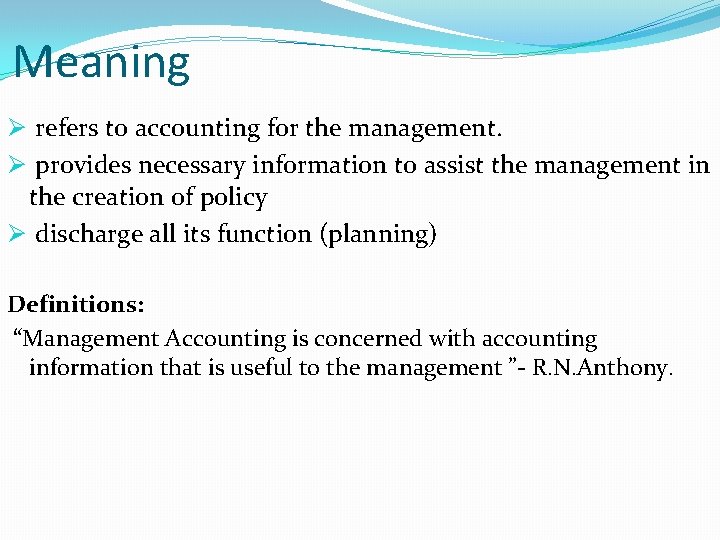
Meaning Ø refers to accounting for the management. Ø provides necessary information to assist the management in the creation of policy Ø discharge all its function (planning) Definitions: “Management Accounting is concerned with accounting information that is useful to the management ”- R. N. Anthony.
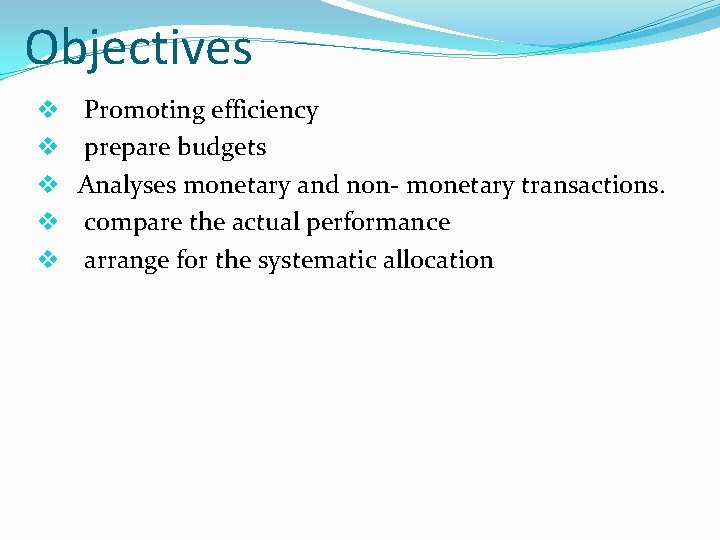
Objectives v v v Promoting efficiency prepare budgets Analyses monetary and non- monetary transactions. compare the actual performance arrange for the systematic allocation
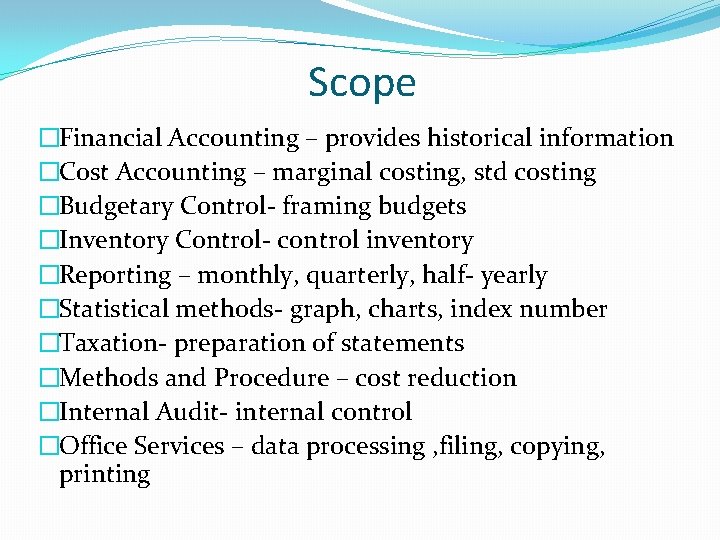
Scope �Financial Accounting – provides historical information �Cost Accounting – marginal costing, std costing �Budgetary Control- framing budgets �Inventory Control- control inventory �Reporting – monthly, quarterly, half- yearly �Statistical methods- graph, charts, index number �Taxation- preparation of statements �Methods and Procedure – cost reduction �Internal Audit- internal control �Office Services – data processing , filing, copying, printing
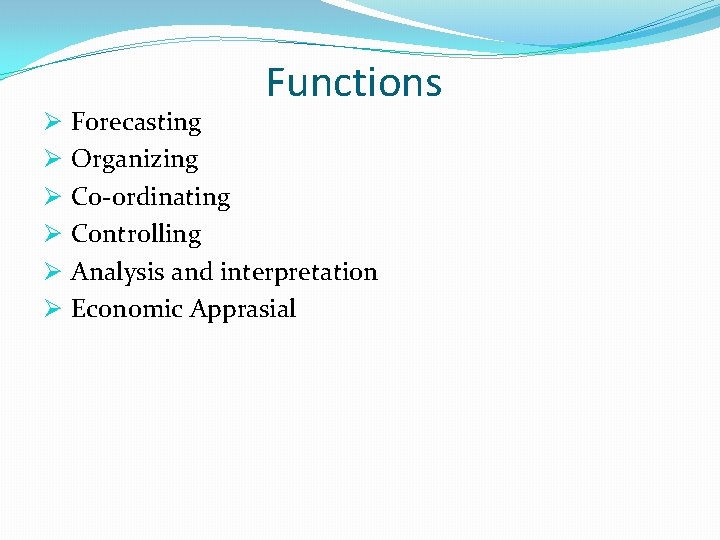
Ø Ø Ø Functions Forecasting Organizing Co-ordinating Controlling Analysis and interpretation Economic Apprasial
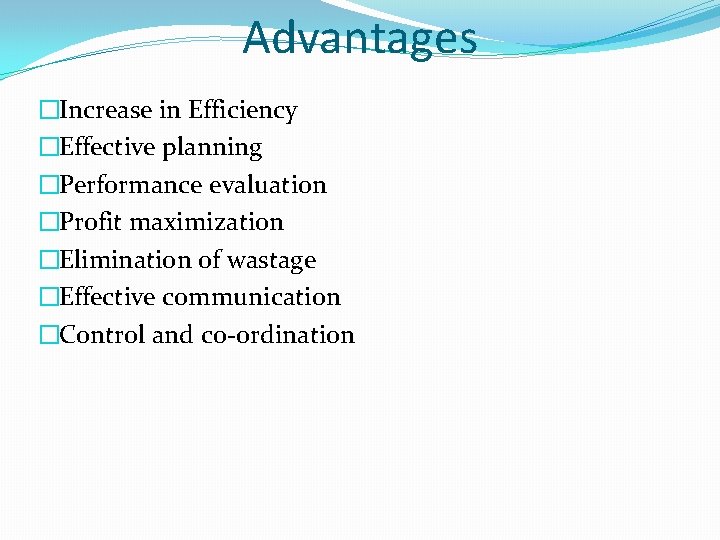
Advantages �Increase in Efficiency �Effective planning �Performance evaluation �Profit maximization �Elimination of wastage �Effective communication �Control and co-ordination
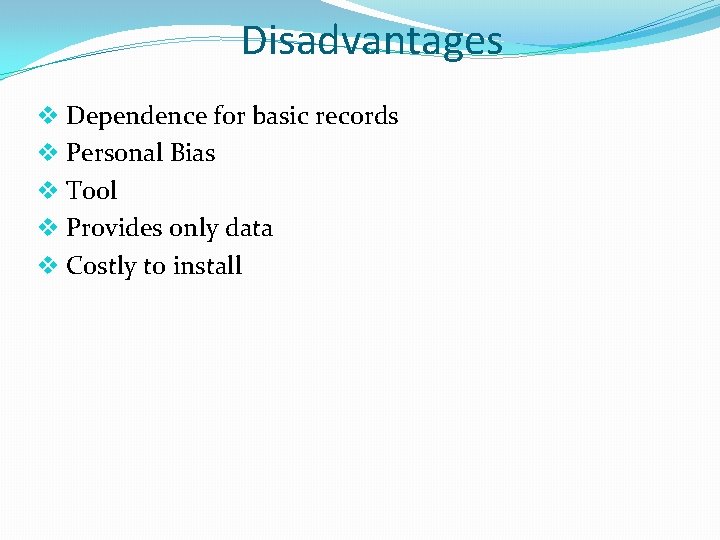
Disadvantages v Dependence for basic records v Personal Bias v Tool v Provides only data v Costly to install
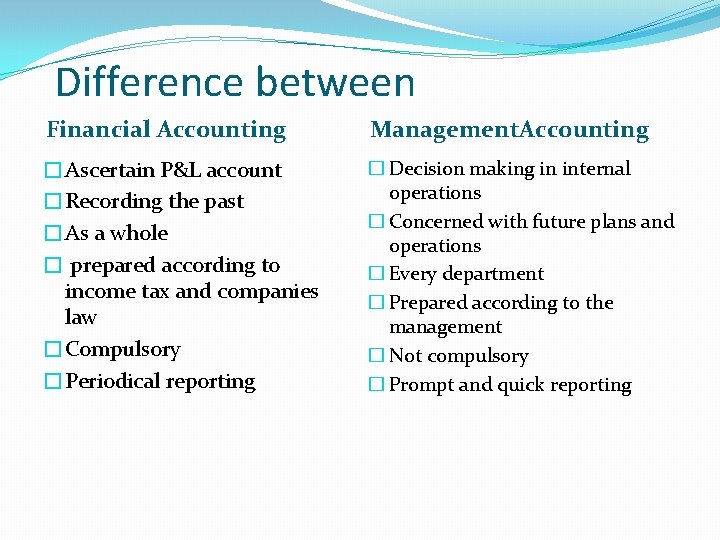
Difference between Financial Accounting Management. Accounting �Ascertain P&L account �Recording the past �As a whole � prepared according to income tax and companies law �Compulsory �Periodical reporting � Decision making in internal operations � Concerned with future plans and operations � Every department � Prepared according to the management � Not compulsory � Prompt and quick reporting
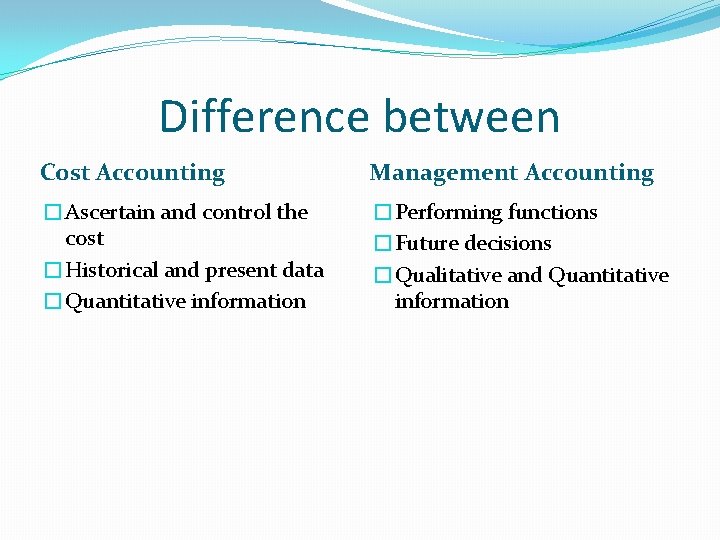
Difference between Cost Accounting Management Accounting �Ascertain and control the cost �Historical and present data �Quantitative information �Performing functions �Future decisions �Qualitative and Quantitative information
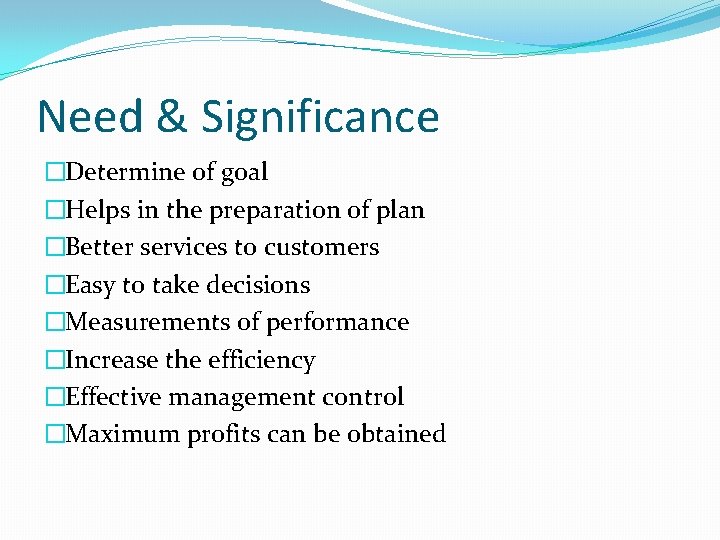
Need & Significance �Determine of goal �Helps in the preparation of plan �Better services to customers �Easy to take decisions �Measurements of performance �Increase the efficiency �Effective management control �Maximum profits can be obtained