
MANAGEMENT 101 Insight Enterprise Debrief 10 17 16
MANAGEMENT 101 Insight Enterprise – Debrief 10. 17. 16 Danielle Tussing Ph. D. Student Management Department dvtuss@wharton. upenn. edu
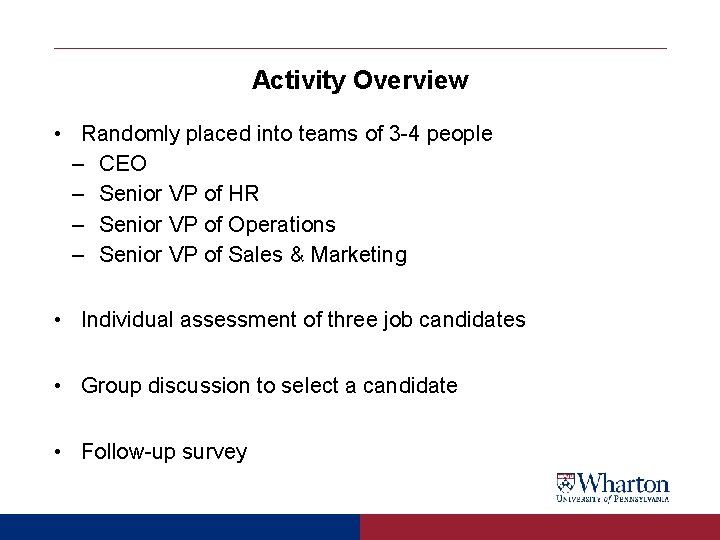
Activity Overview • Randomly placed into teams of 3 -4 people – CEO – Senior VP of HR – Senior VP of Operations – Senior VP of Sales & Marketing • Individual assessment of three job candidates • Group discussion to select a candidate • Follow-up survey
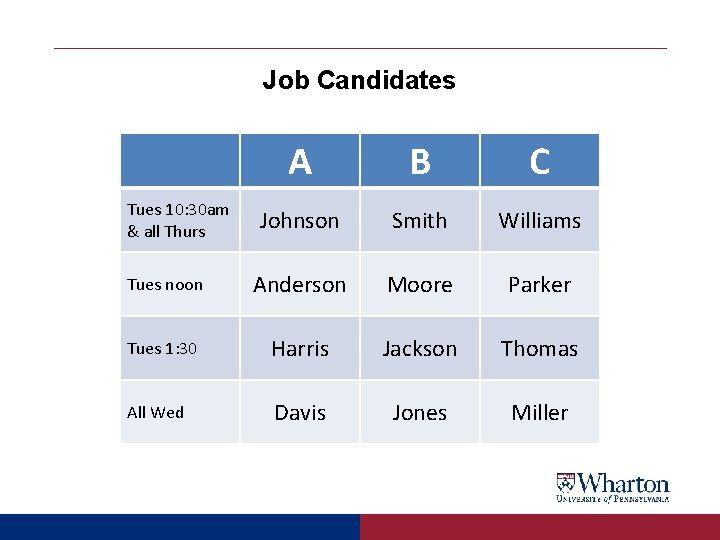
Job Candidates A B C Johnson Smith Williams Tues noon Anderson Moore Parker Tues 1: 30 Harris Jackson Thomas All Wed Davis Jones Miller Tues 10: 30 am & all Thurs
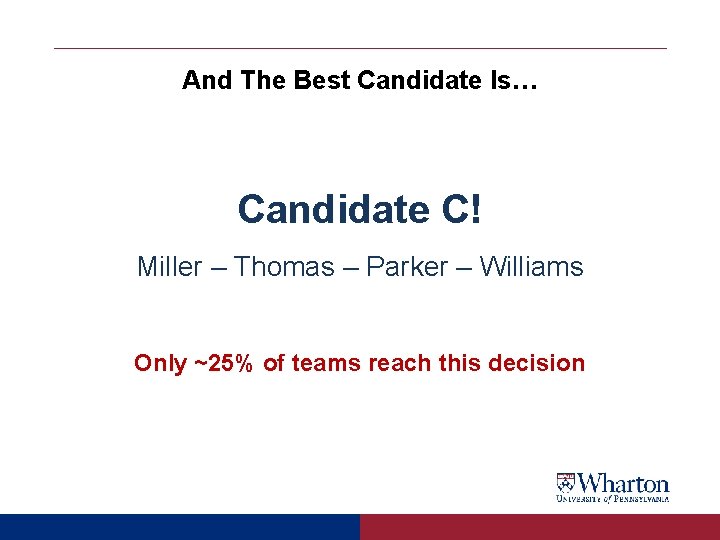
And The Best Candidate Is… Candidate C! Miller – Thomas – Parker – Williams Only ~25% of teams reach this decision
Making the Right Decision • Realizing that everyone on the team has different information • Sharing unique information • Evaluating pros and cons of each candidate before making a decision • Refraining from making personal attributions from neutral facts – Serving as a volunteer CFO at a non-profit can imply… § Clearly can do the job (not realizing that the case says nothing about the size of the non-profit!) § Too involved in the community and won’t devote enough time to work
Challenges to Information Sharing • Common knowledge effect – Key benefit of groups is bringing together individuals’ unique information – HOWEVER, members of a group tend to discuss information that is shared by everyone (info everyone knows) • Redundant information guides decisions – Tend to place more weight on common knowledge
Decision-Making Heuristics • Anchoring – Our initial judgement becomes the basis for subsequent judgements – In this activity, people tend to become anchored by their initial opinion about which candidate is best/worst • Confirmation bias – Tendency to seek information that confirms our hypothesis – If you formed the opinion that Candidate A is the right decision, tend to discredit information that disconfirms this
Advocacy versus Inquiry • Advocacy approach: Once personal preferences formed, we tend to advocate for our own opinion – Persuade others to adopt our point of view – Defend our opinions • Instead, consider an inquiry approach – Think of the task as a collective task – Test out ideas and then evaluate them afterwards – Accept and process contradictory information In inquiry version of case (participants DO NOT rank order candidates before meeting), ~75% of teams select Candidate C
Results
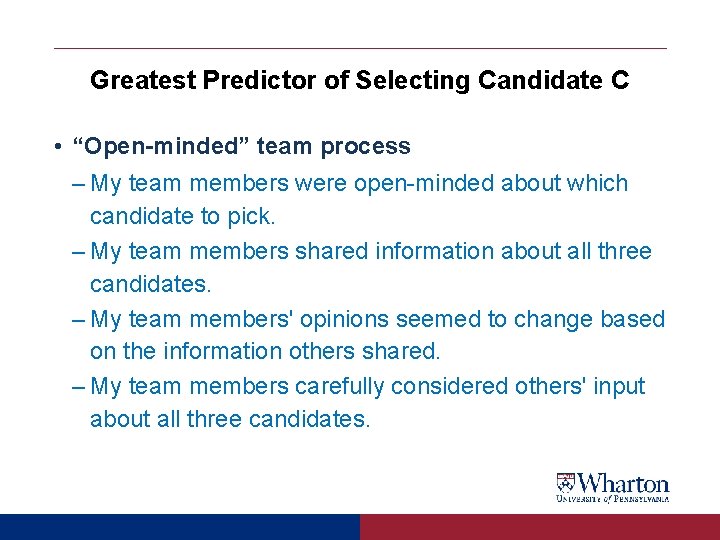
Greatest Predictor of Selecting Candidate C • “Open-minded” team process – My team members were open-minded about which candidate to pick. – My team members shared information about all three candidates. – My team members' opinions seemed to change based on the information others shared. – My team members carefully considered others' input about all three candidates.
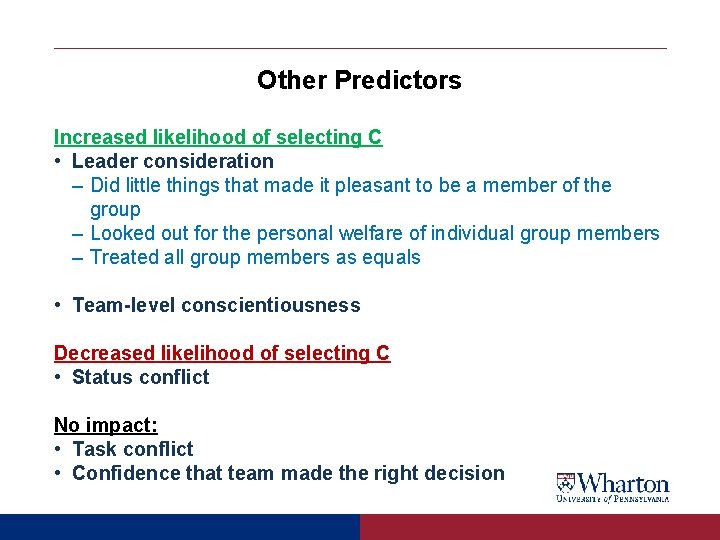
Other Predictors Increased likelihood of selecting C • Leader consideration – Did little things that made it pleasant to be a member of the group – Looked out for the personal welfare of individual group members – Treated all group members as equals • Team-level conscientiousness Decreased likelihood of selecting C • Status conflict No impact: • Task conflict • Confidence that team made the right decision
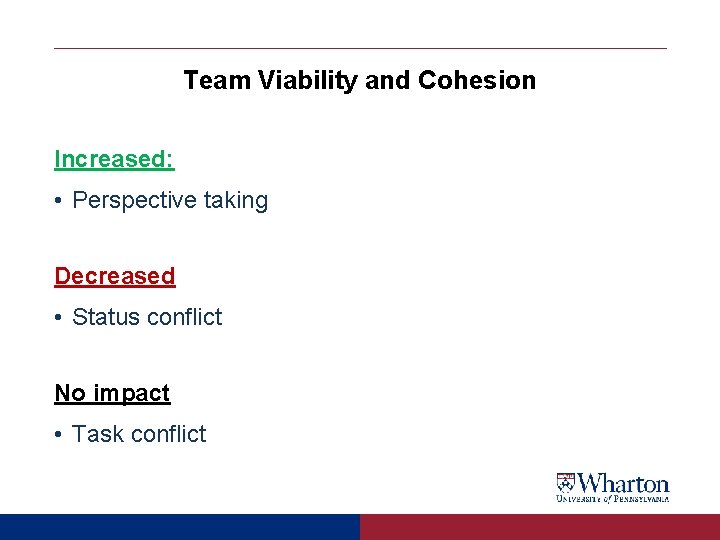
Team Viability and Cohesion Increased: • Perspective taking Decreased • Status conflict No impact • Task conflict
Thank You! Q&A
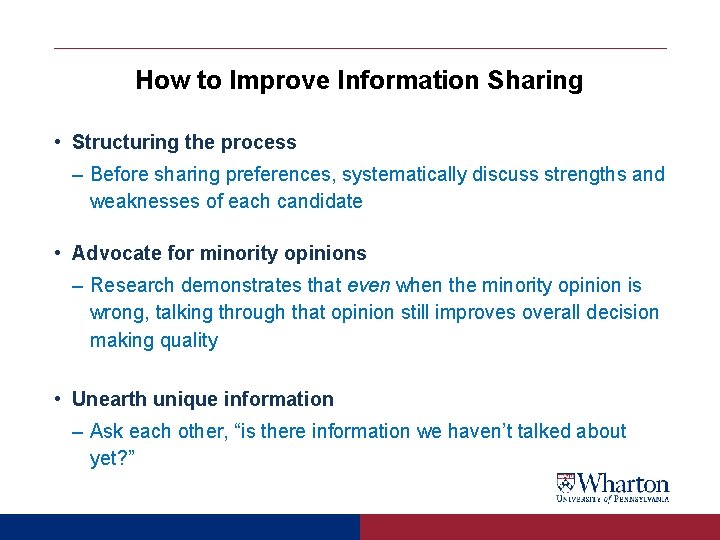
How to Improve Information Sharing • Structuring the process – Before sharing preferences, systematically discuss strengths and weaknesses of each candidate • Advocate for minority opinions – Research demonstrates that even when the minority opinion is wrong, talking through that opinion still improves overall decision making quality • Unearth unique information – Ask each other, “is there information we haven’t talked about yet? ”
- Slides: 14