
MAMMOGRAPHY LECTURE 1 rev 2010 Positioning Anatomy RADIOGRAPHIC














- Slides: 75
MAMMOGRAPHY LECTURE #1 rev 2010 Positioning & Anatomy RADIOGRAPHIC IMAGING OF THE BREAST RTEC 255 -Week # 3 D. Charman, M. Ed. , R. T. (R, M) 1
2 Mammograms don’t look fun but they can save a life!
Man – o - gram 3
A mammogram can find breast cancer when it is very small -- 2 to 3 years before you can feel it. n No screening tool is 100% effective. Good quality mammograms can find 85 -90% of cancers n Some cancers are not found until they reach this size A mammogram can find cancer when it is only this size 4
Do it for those you love…. And who love you 5
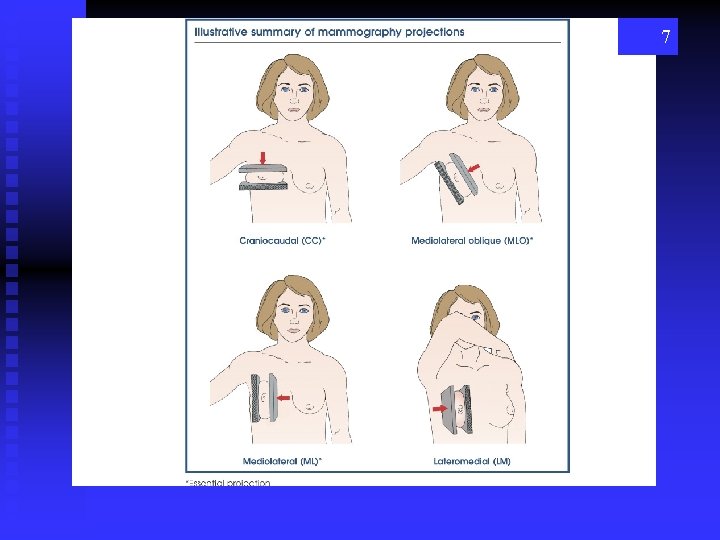
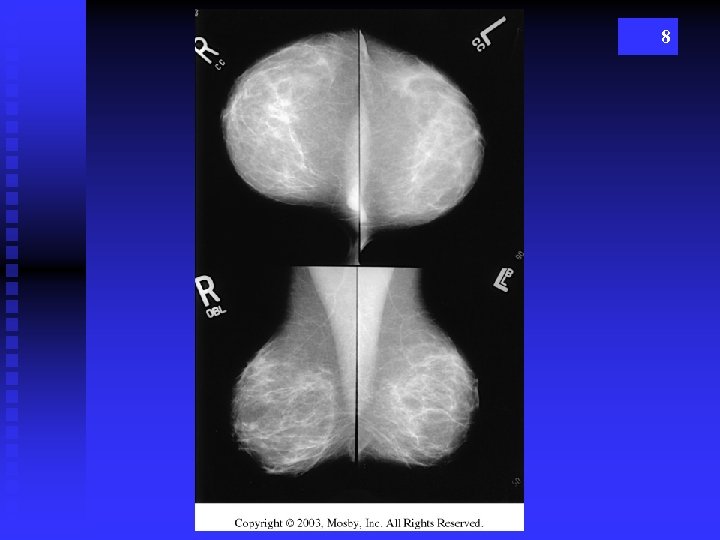
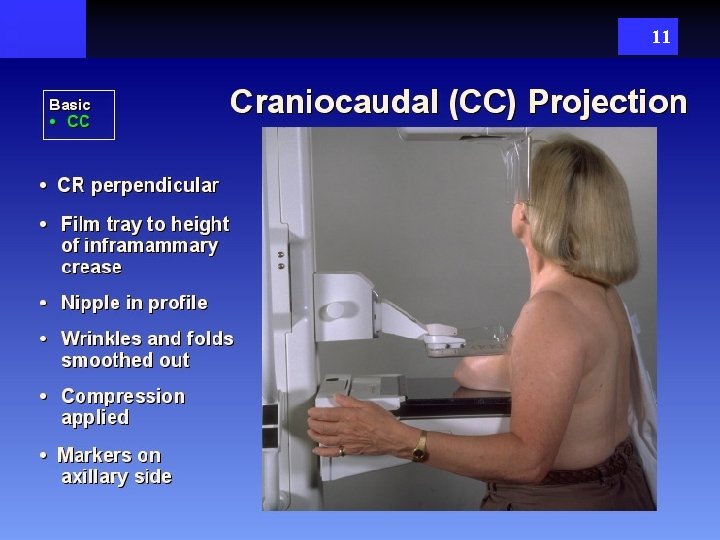
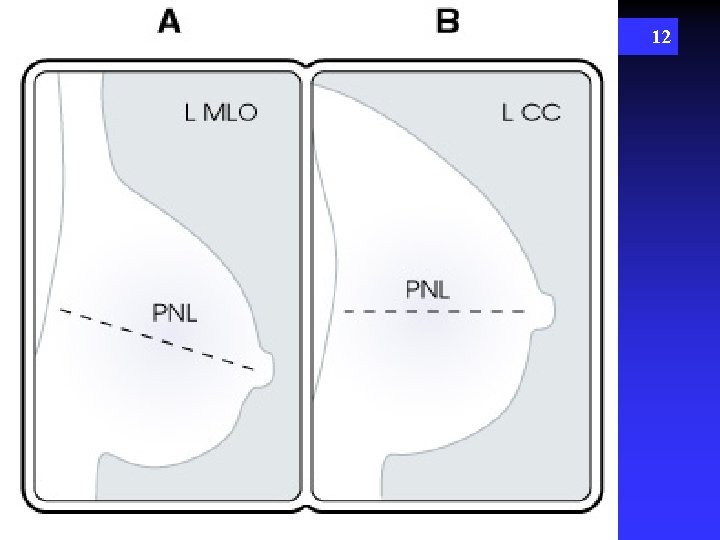
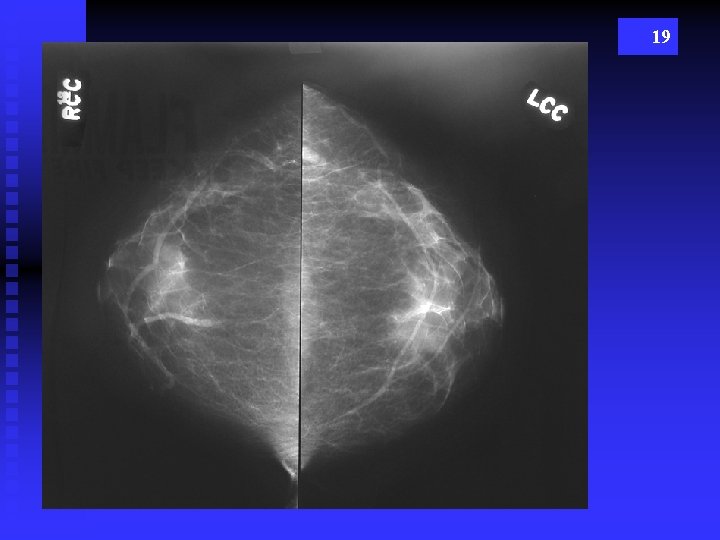
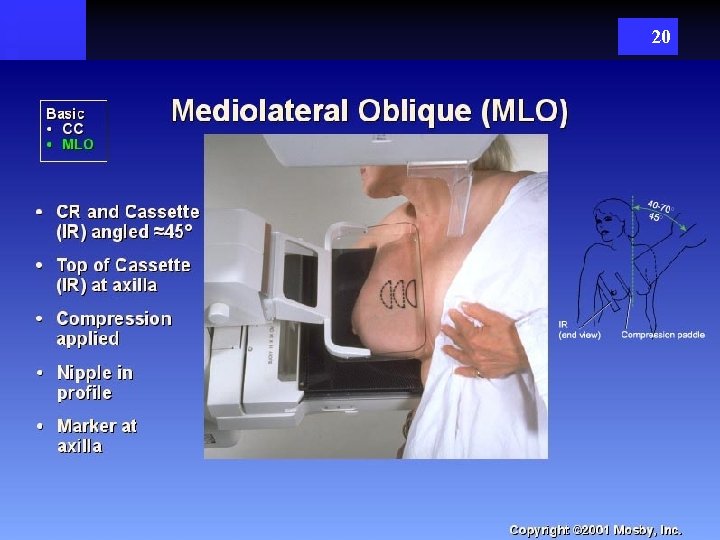
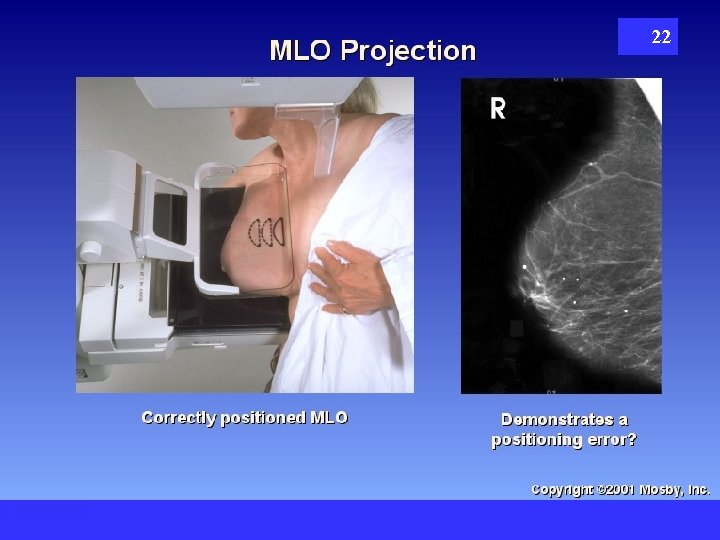
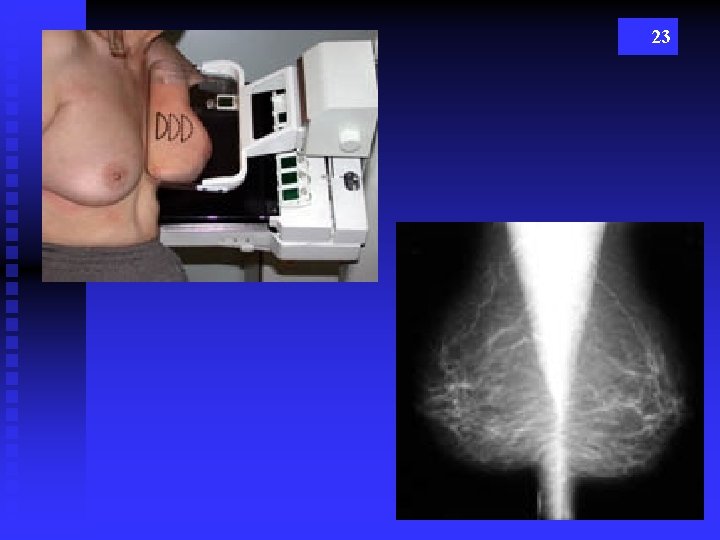
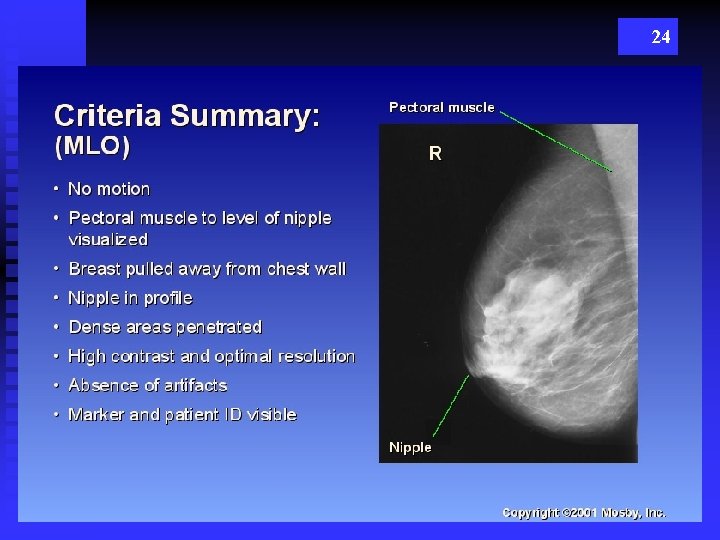
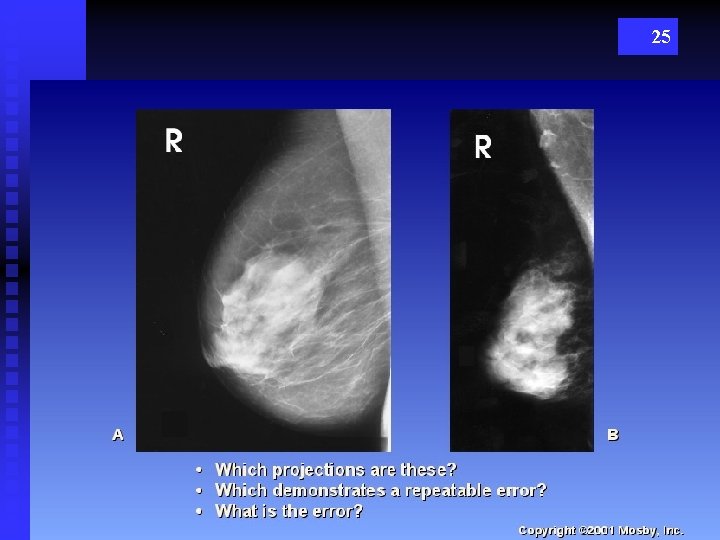
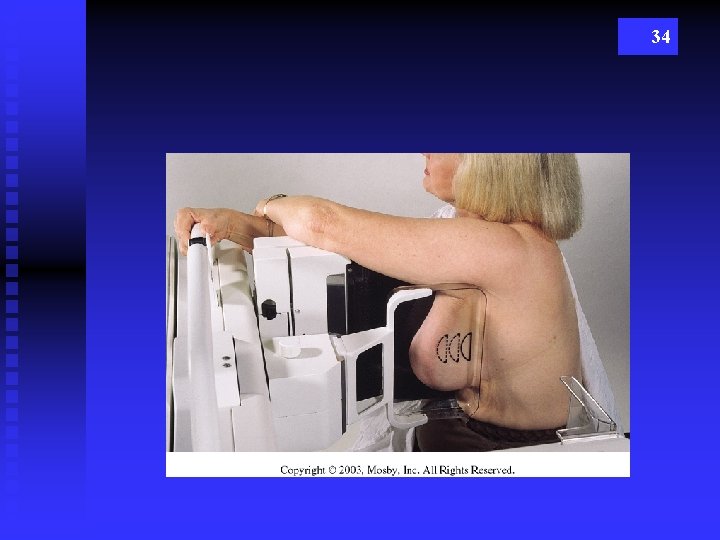
POSITIONING Routine Images aka “screening mammo” (not screaming) n. CC - cranio caudad n. MLO – mediolateral oblique 6
7
8
9 More on MAMMO Equipment – week 8 With Xray & Mammo QC
10
11
12
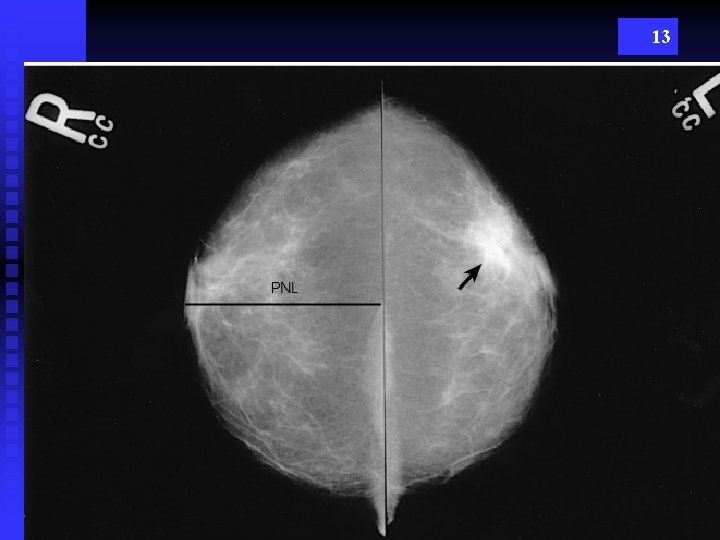
13
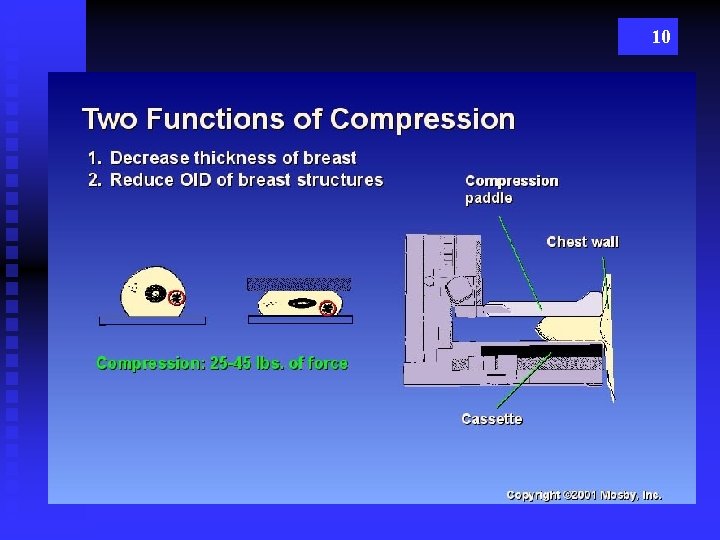
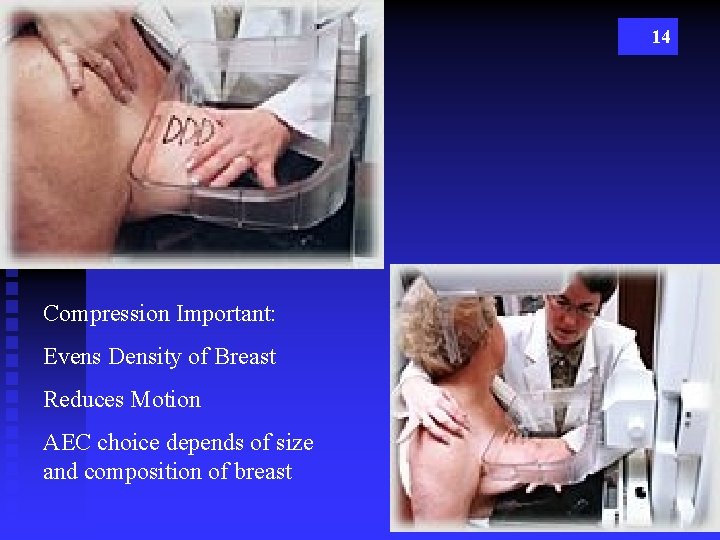
14 Compression Important: Evens Density of Breast Reduces Motion AEC choice depends of size and composition of breast
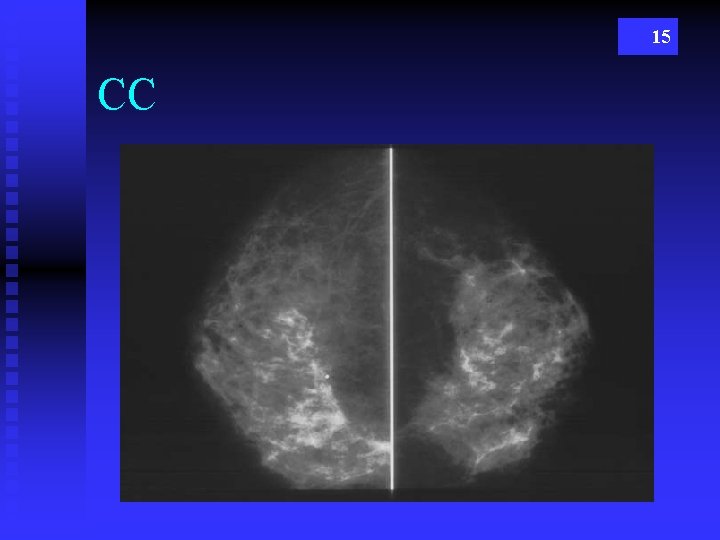
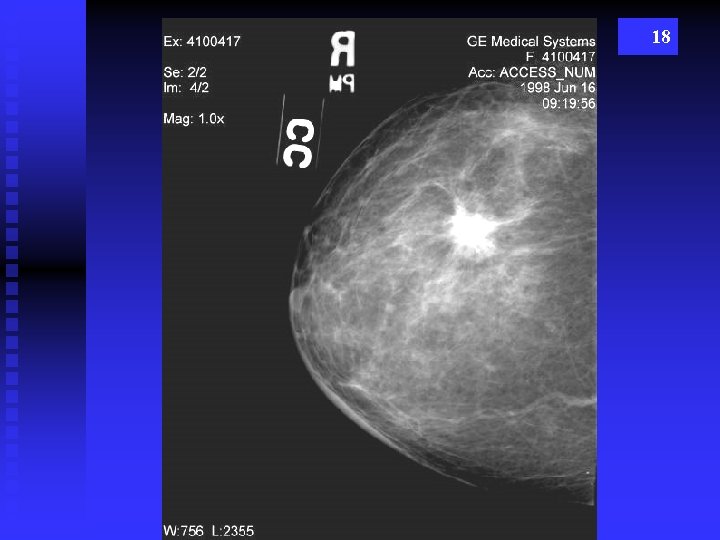
15 CC
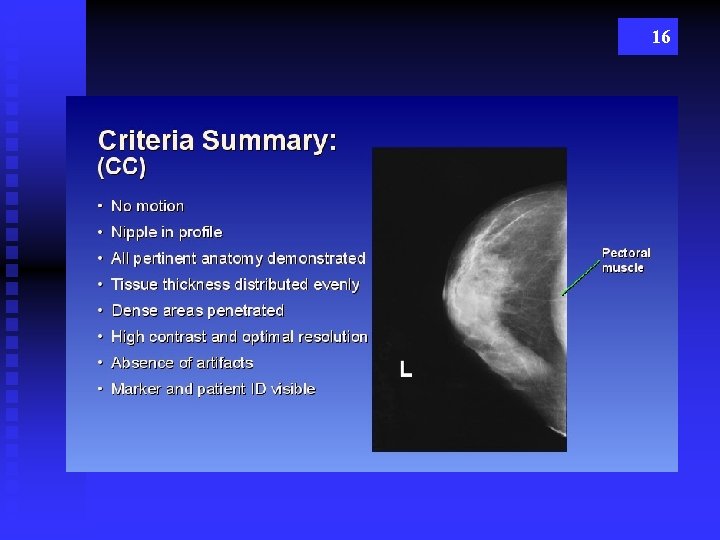
16
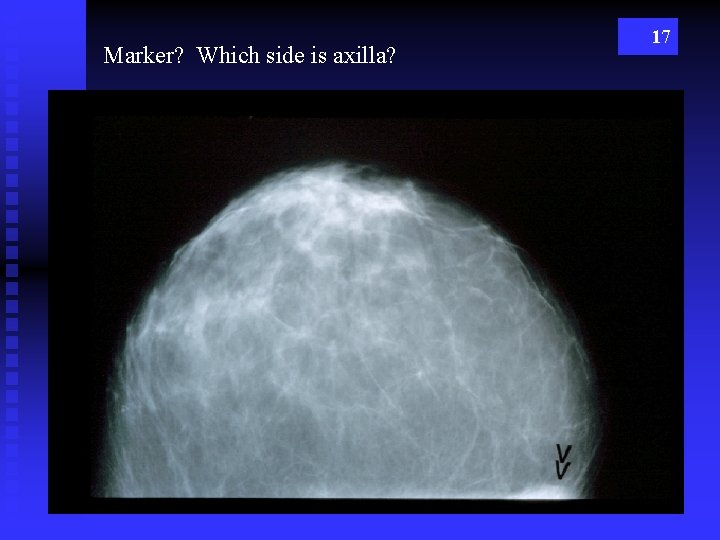
Marker? Which side is axilla? 17
18
19
20
MLO – RT BREAST 21
22
23
24
25
26
27
28
29
30 POSITIONING CC – CRANIOCAUDAD n MLO – MEDIAL LATERAL OBLIQUE n “TRUE” LATERAL n ETC n
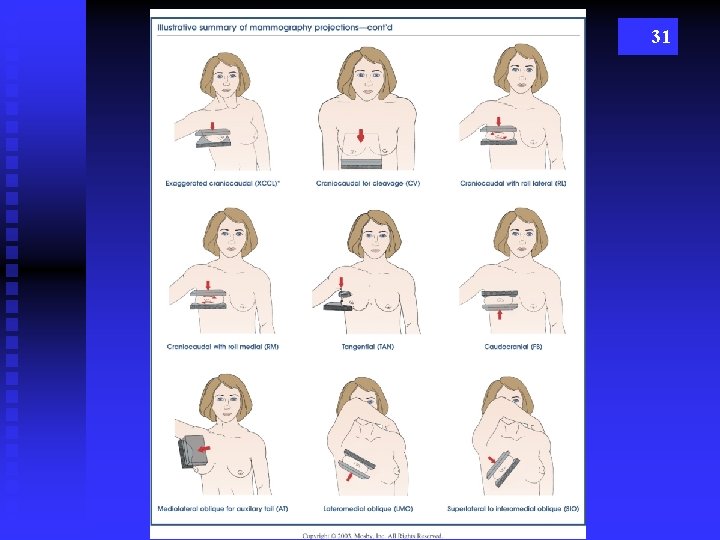
31
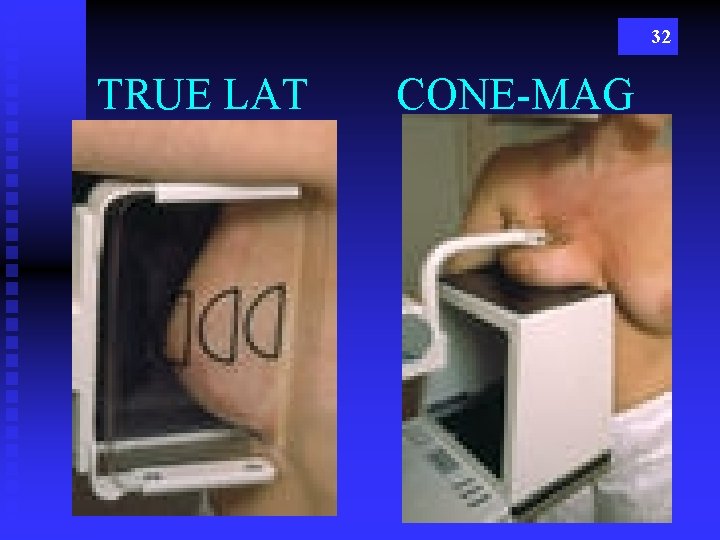
32 TRUE LAT CONE-MAG
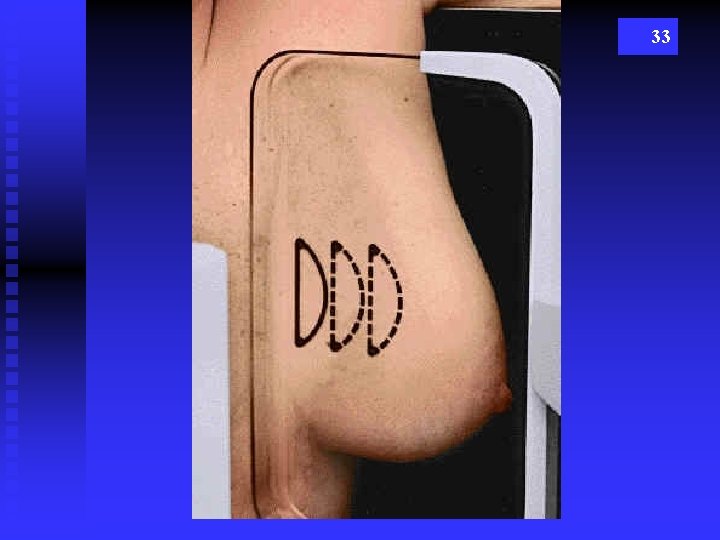
33
34
35
36 Magnification = increase OID
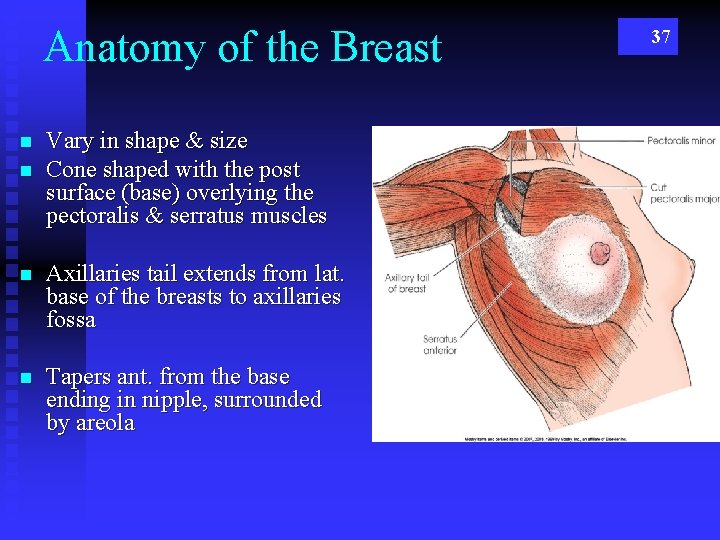
Anatomy of the Breast n n Vary in shape & size Cone shaped with the post surface (base) overlying the pectoralis & serratus muscles n Axillaries tail extends from lat. base of the breasts to axillaries fossa n Tapers ant. from the base ending in nipple, surrounded by areola 37
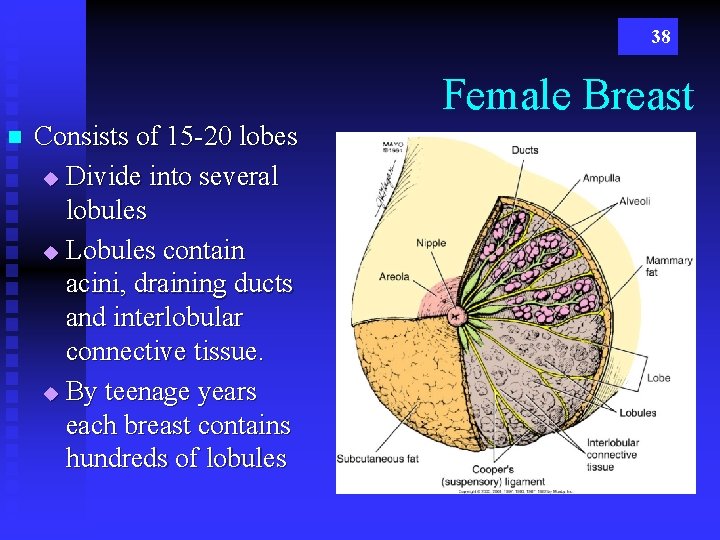
38 Female Breast n Consists of 15 -20 lobes u Divide into several lobules u Lobules contain acini, draining ducts and interlobular connective tissue. u By teenage years each breast contains hundreds of lobules
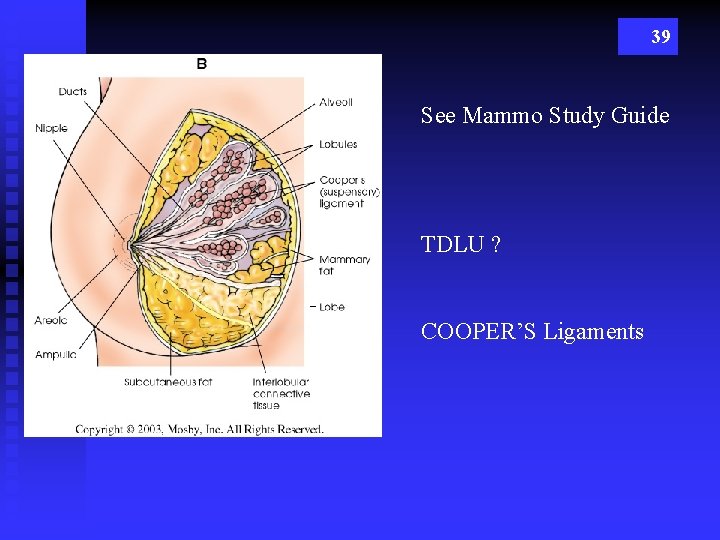
39 See Mammo Study Guide TDLU ? COOPER’S Ligaments
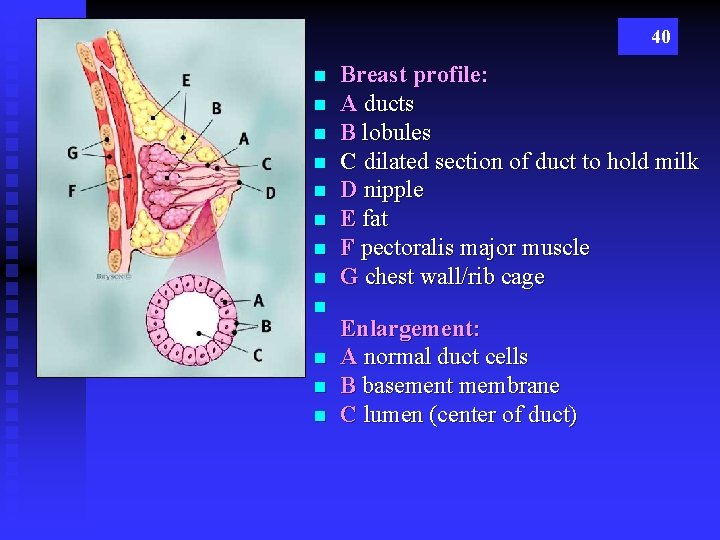
40 n n n Breast profile: A ducts B lobules C dilated section of duct to hold milk D nipple E fat F pectoralis major muscle G chest wall/rib cage Enlargement: A normal duct cells B basement membrane C lumen (center of duct)
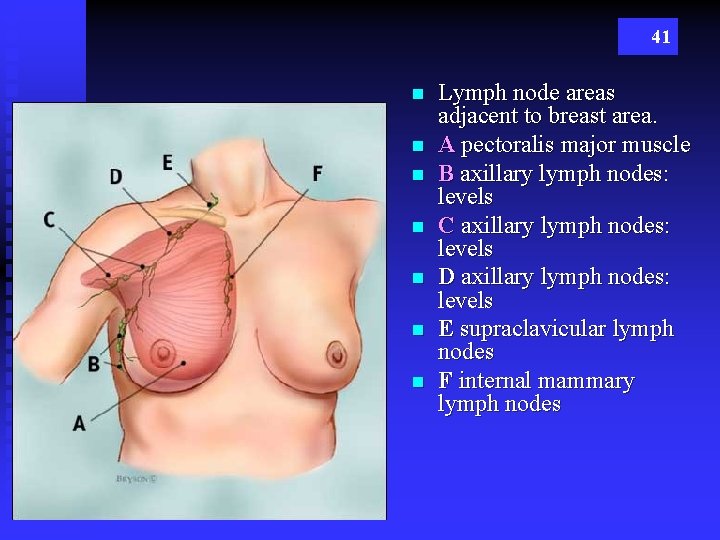
41 n n n n Lymph node areas adjacent to breast area. A pectoralis major muscle B axillary lymph nodes: levels C axillary lymph nodes: levels D axillary lymph nodes: levels E supraclavicular lymph nodes F internal mammary lymph nodes
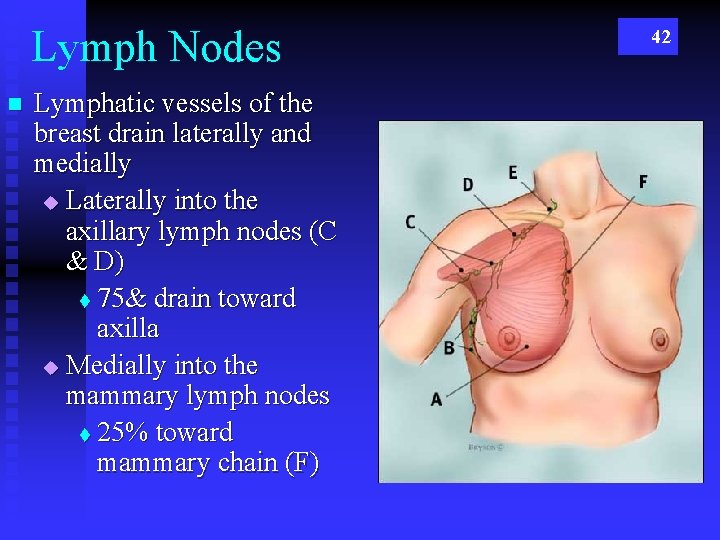
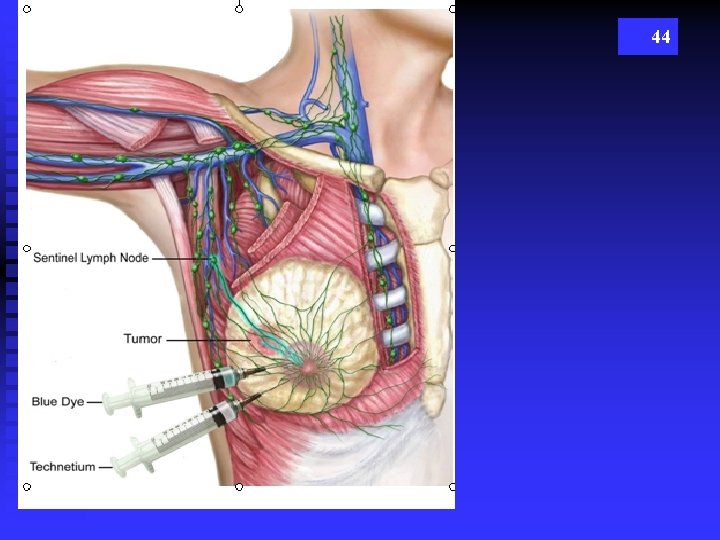
Lymph Nodes n Lymphatic vessels of the breast drain laterally and medially u Laterally into the axillary lymph nodes (C & D) t 75& drain toward axilla u Medially into the mammary lymph nodes t 25% toward mammary chain (F) 42
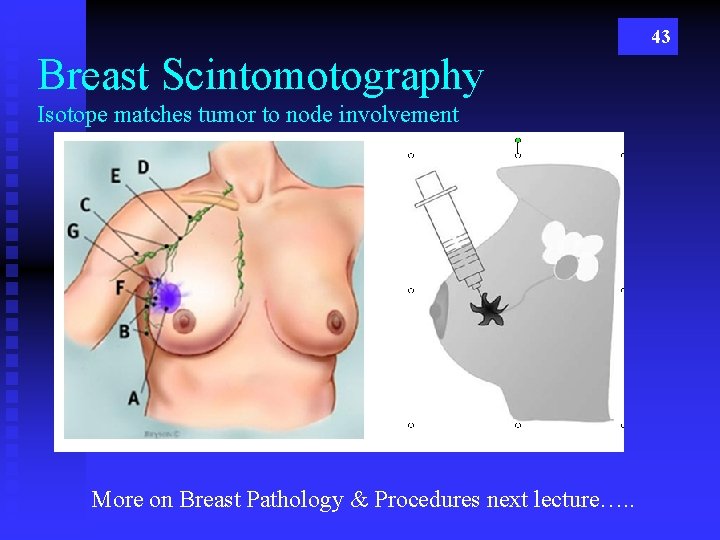
43 Breast Scintomotography Isotope matches tumor to node involvement More on Breast Pathology & Procedures next lecture…. .
44
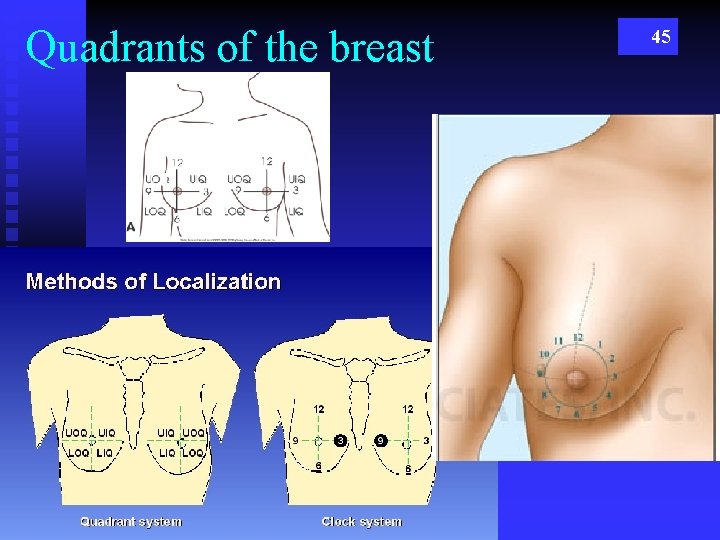
Quadrants of the breast 45
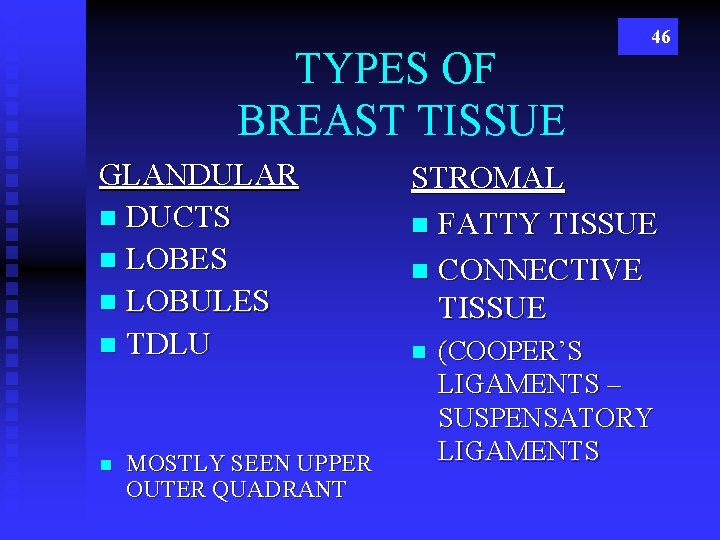
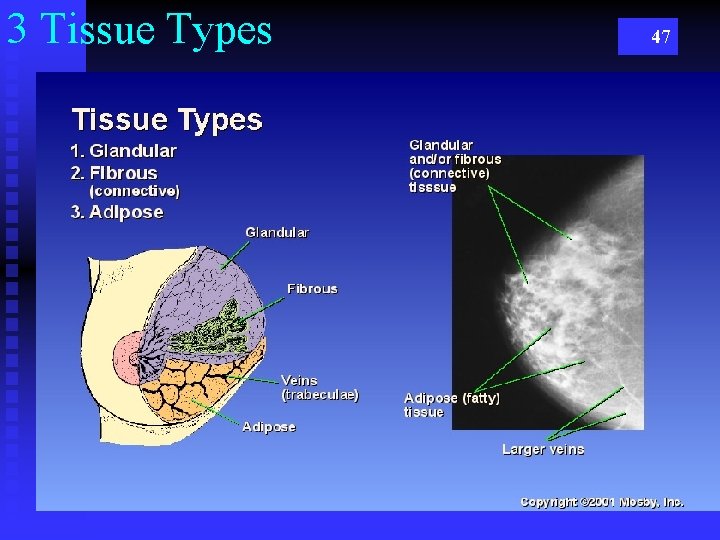
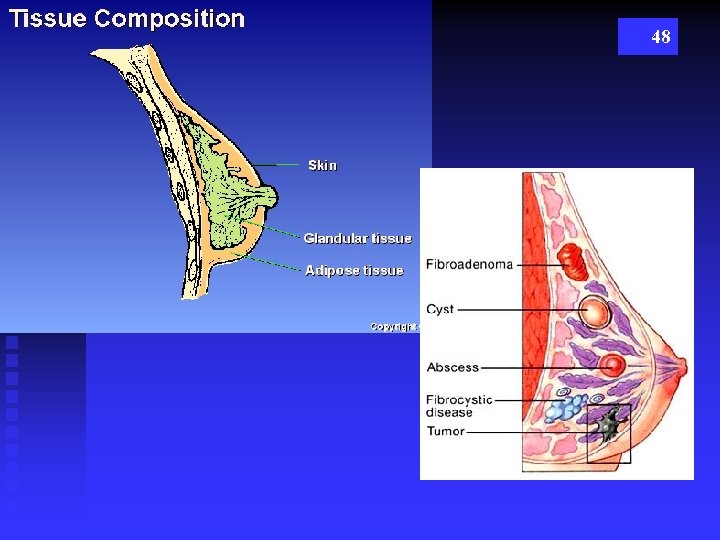
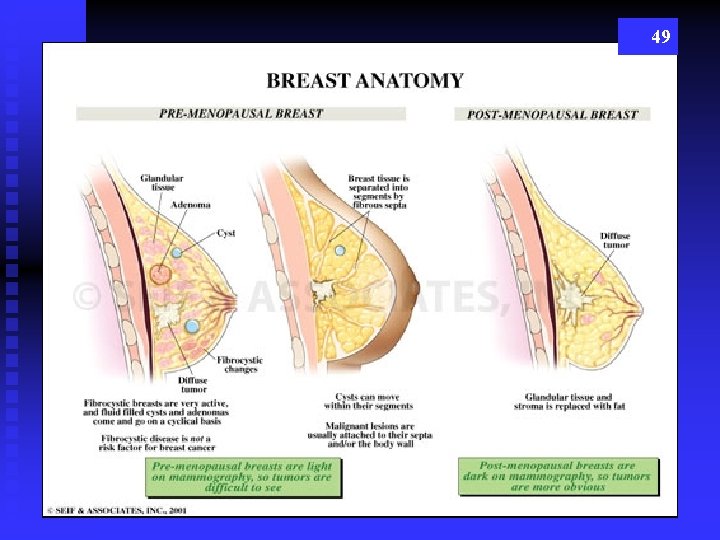
TYPES OF BREAST TISSUE GLANDULAR n DUCTS n LOBES n LOBULES n TDLU n MOSTLY SEEN UPPER OUTER QUADRANT 46 STROMAL n FATTY TISSUE n CONNECTIVE TISSUE n (COOPER’S LIGAMENTS – SUSPENSATORY LIGAMENTS
3 Tissue Types 47
48
49
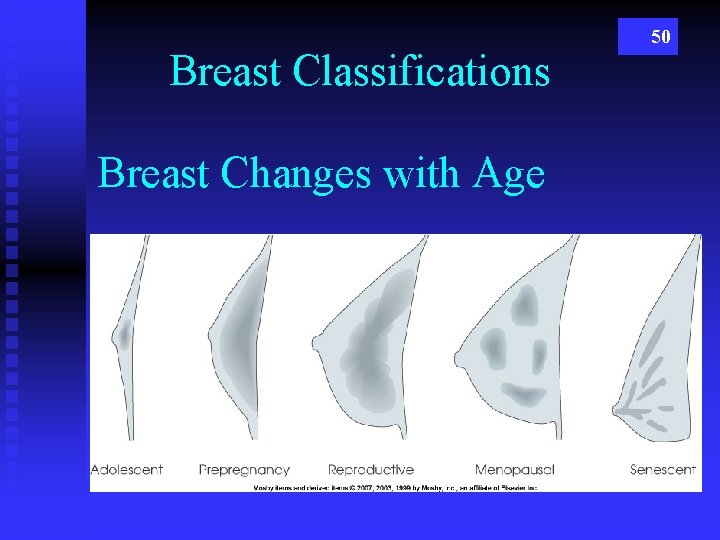
Breast Classifications Breast Changes with Age 50
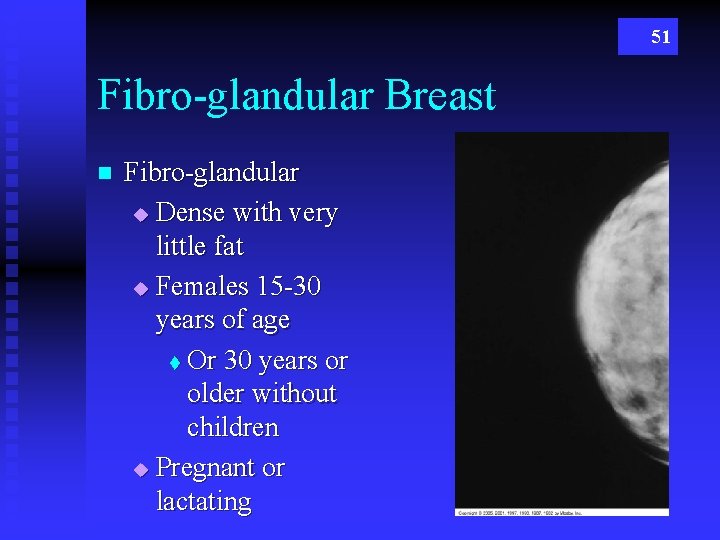
51 Fibro-glandular Breast n Fibro-glandular u Dense with very little fat u Females 15 -30 years of age t Or 30 years or older without children u Pregnant or lactating
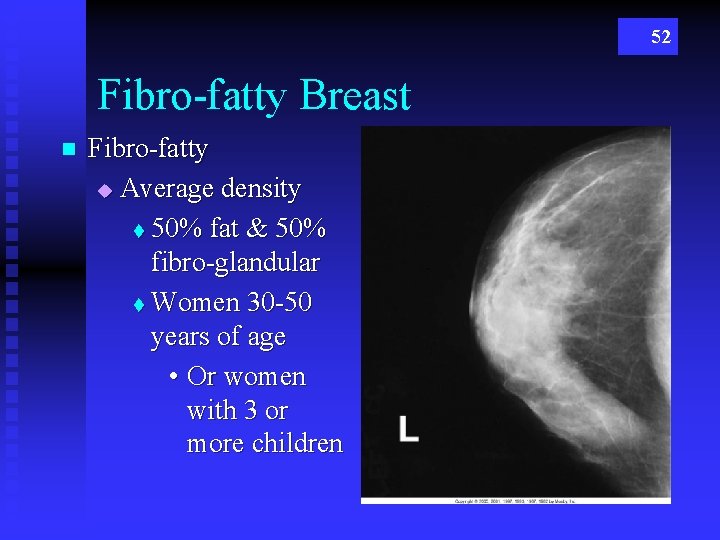
52 Fibro-fatty Breast n Fibro-fatty u Average density t 50% fat & 50% fibro-glandular t Women 30 -50 years of age • Or women with 3 or more children
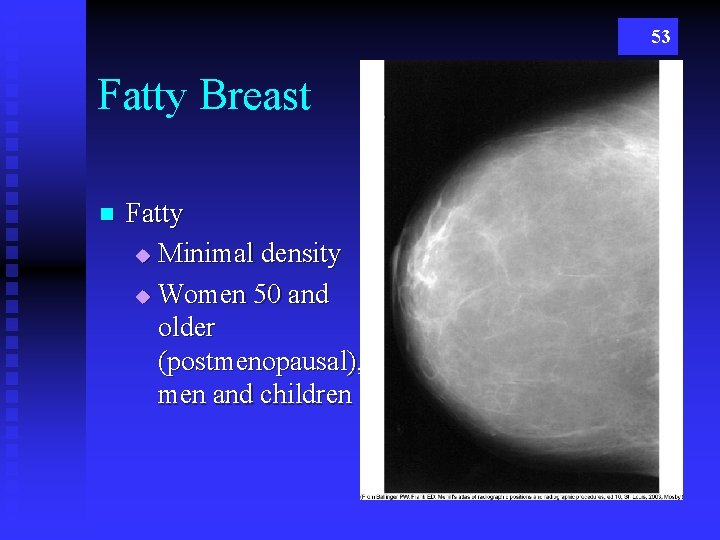
53 Fatty Breast n Fatty u Minimal density u Women 50 and older (postmenopausal), men and children
THE MALE BREAST Male Mammography and Cancer 54
55 Male Breast Cancer Statistics: According to the American Cancer Society, about 0. 22 percent of men’s cancer deaths are from breast cancer. n This disease is 100 times more common in women than it is in men. n Thanks to greater awareness and better treatments, the survival rates for both men and women are on the rise. n
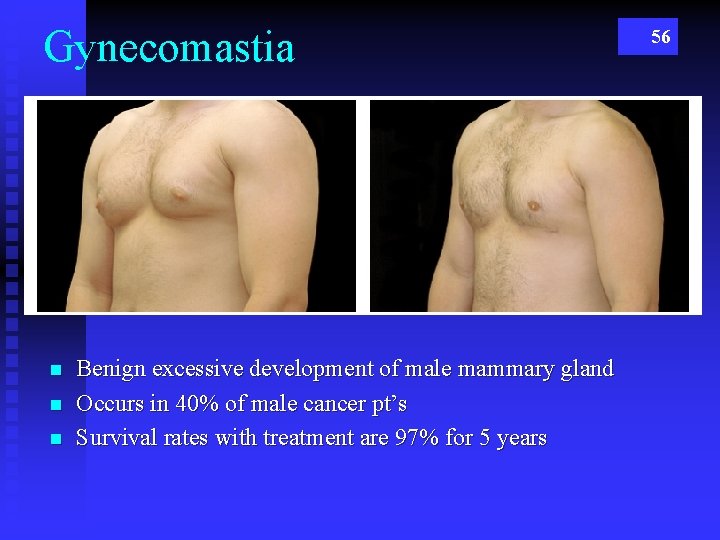
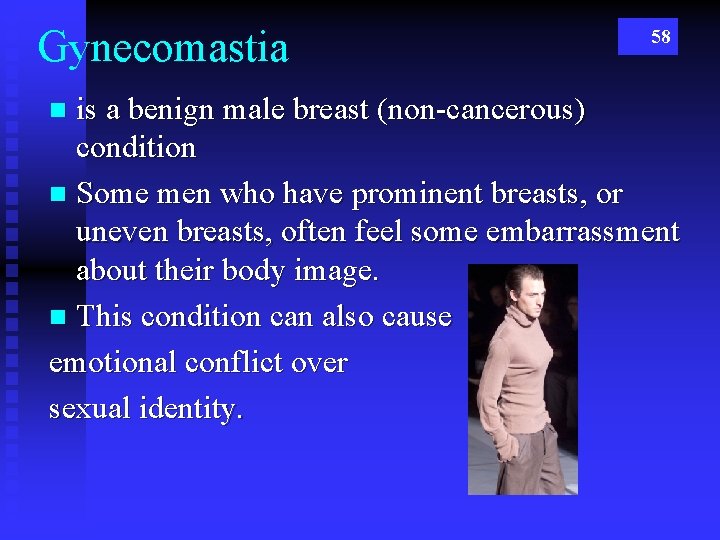
Gynecomastia n n n Benign excessive development of male mammary gland Occurs in 40% of male cancer pt’s Survival rates with treatment are 97% for 5 years 56
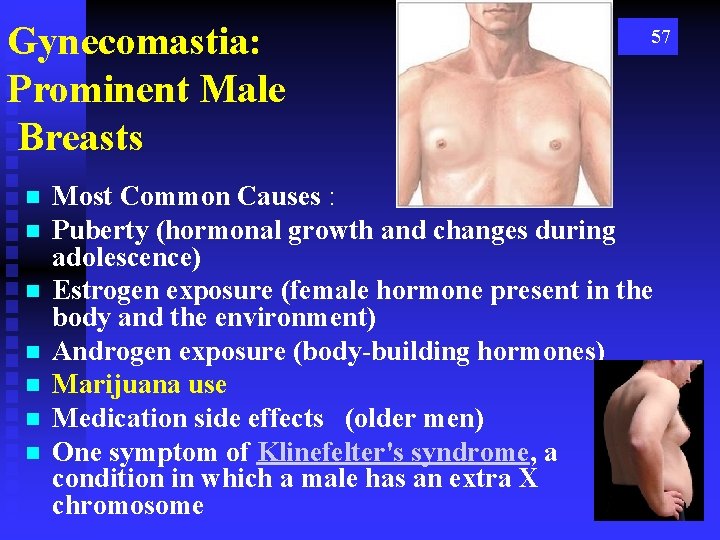
Gynecomastia: Prominent Male Breasts n n n n 57 Most Common Causes : Puberty (hormonal growth and changes during adolescence) Estrogen exposure (female hormone present in the body and the environment) Androgen exposure (body-building hormones) Marijuana use Medication side effects (older men) One symptom of Klinefelter's syndrome, a condition in which a male has an extra X chromosome
Gynecomastia 58 is a benign male breast (non-cancerous) condition n Some men who have prominent breasts, or uneven breasts, often feel some embarrassment about their body image. n This condition can also cause emotional conflict over sexual identity. n
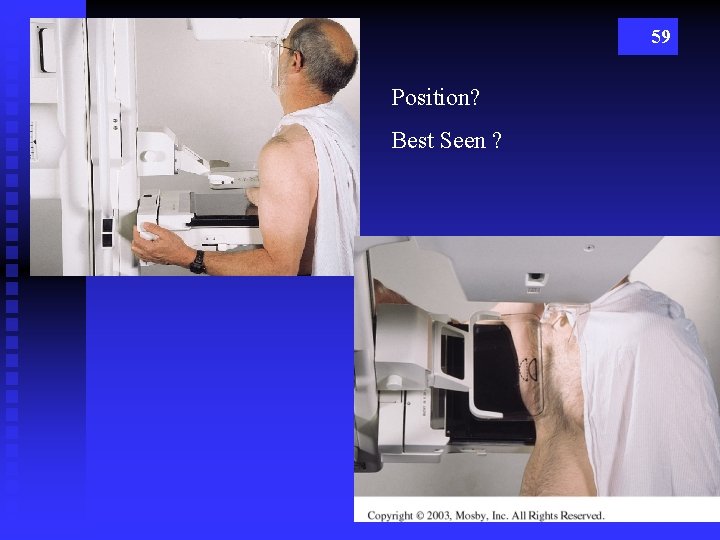
59 Position? Best Seen ?
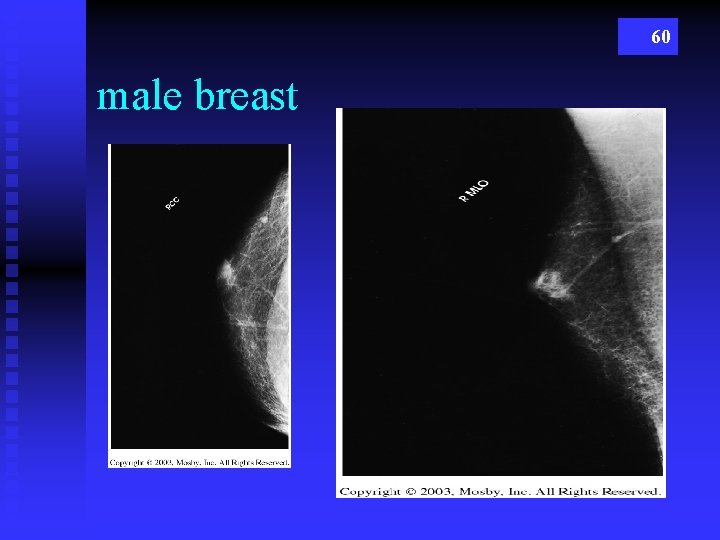
60 male breast
61 Male Mammography 1300 men get breast cancer per year u 1/3 die n Most are 60 years or older n Nearly all are primary tumors n Symptoms include: u Nipple retraction u Crusting u Discharge u Ulceration n
62 male mastectomy
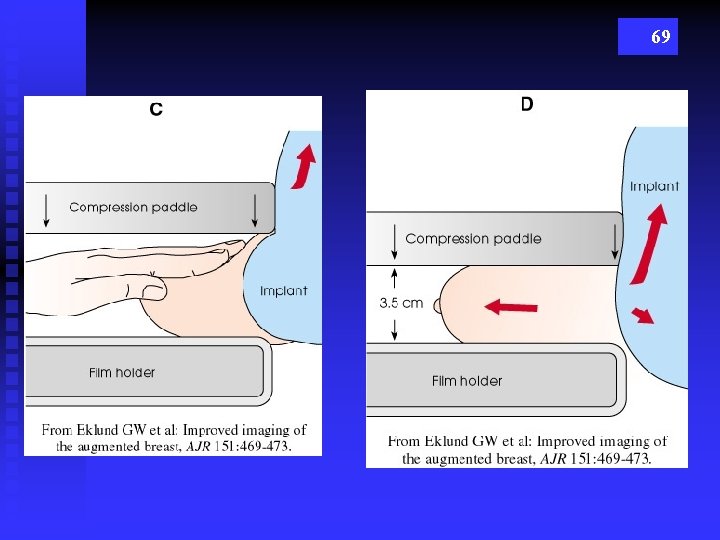
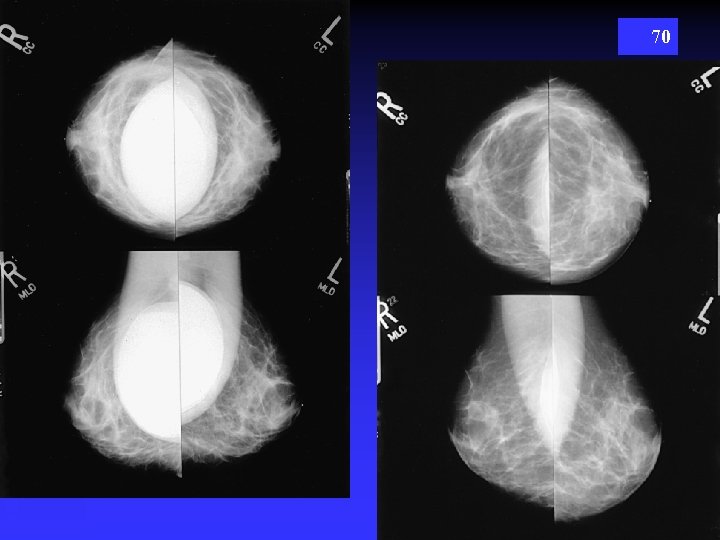
63 THE AUGMENTED BREAST Difficulty with IMPLANTS
Breast Implants Is it worth the risk? 64
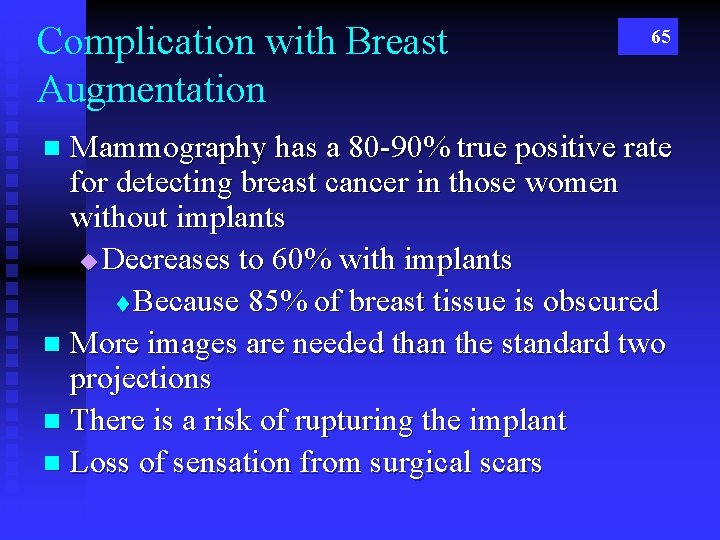
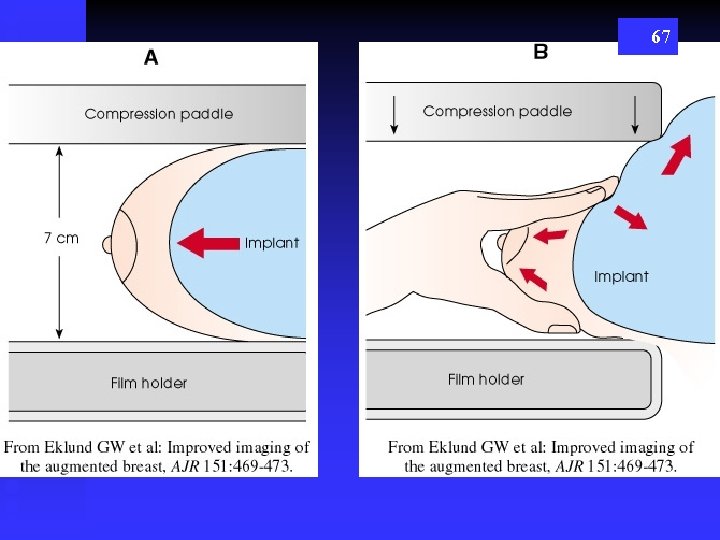
Complication with Breast Augmentation 65 Mammography has a 80 -90% true positive rate for detecting breast cancer in those women without implants u Decreases to 60% with implants t Because 85% of breast tissue is obscured n More images are needed than the standard two projections n There is a risk of rupturing the implant n Loss of sensation from surgical scars n
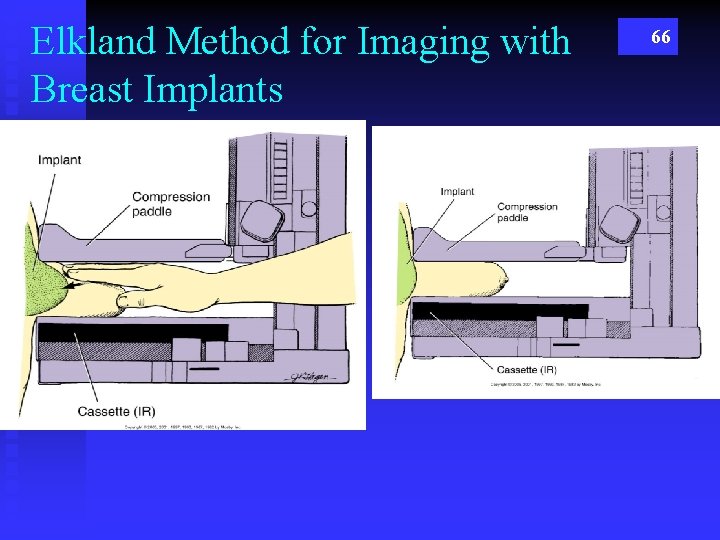
Elkland Method for Imaging with Breast Implants 66
67
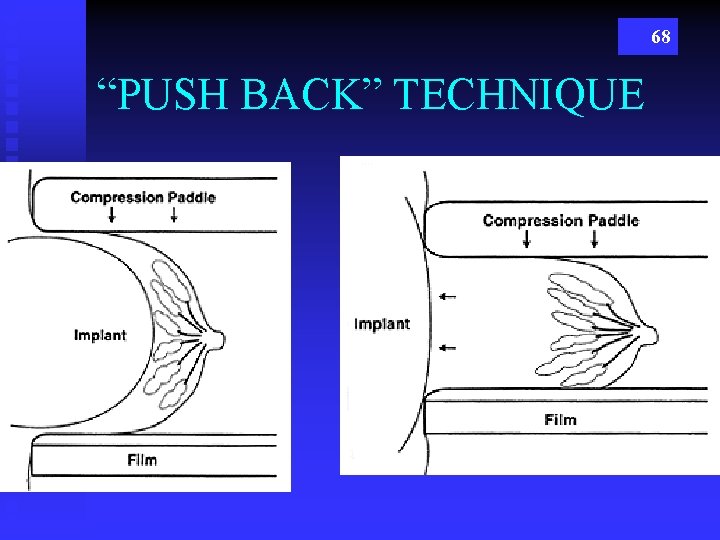
68 “PUSH BACK” TECHNIQUE
69
70
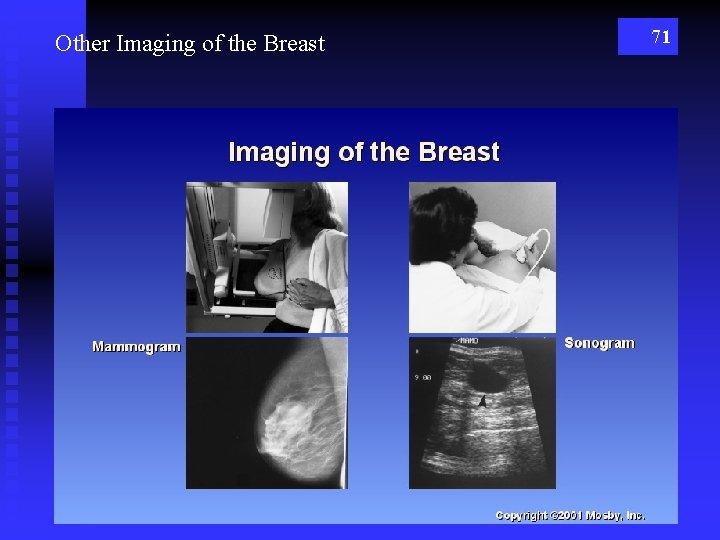
Other Imaging of the Breast 71
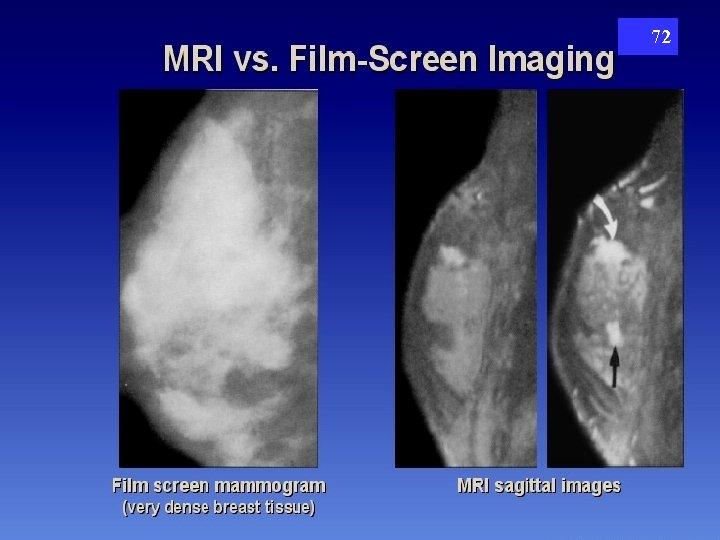
72
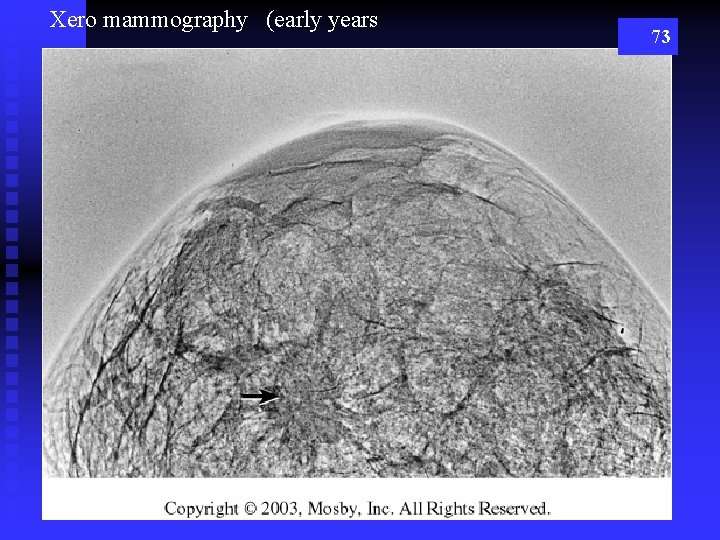
Xero mammography (early years 73
OTHER CHALLENGES TO MAMMOGRAPHY 74
75