
Mammals What is a Mammal a Mammals are
- Slides: 13
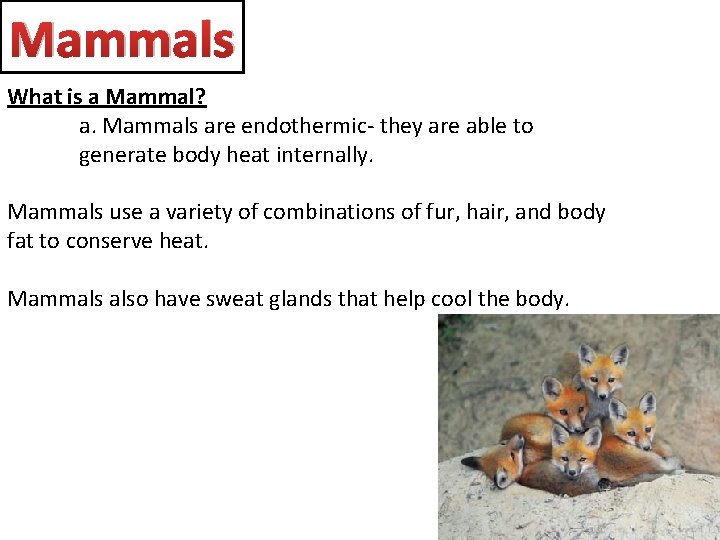
Mammals What is a Mammal? a. Mammals are endothermic- they are able to generate body heat internally. Mammals use a variety of combinations of fur, hair, and body fat to conserve heat. Mammals also have sweat glands that help cool the body.
Mammals are: a. Viviparous- young mammals develop within the mother b. Female mammals develop mammary glands- produce milk mammals are given this name because of theses glands. c. Have different types of teeth- for food sources d. Have well- developed breathing muscles e. Have a four chambered heart https: //www. youtube. com/watch? v=9 Tx. Vfoyk. W 9 U VIDEO
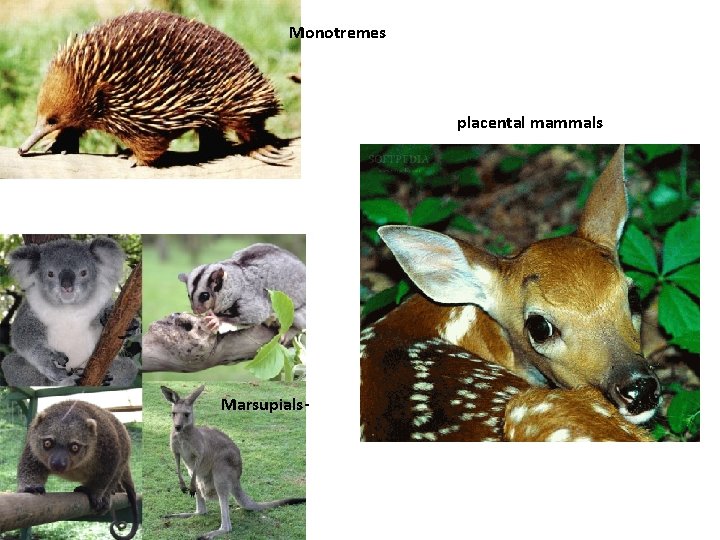
Evolution of Mammals The first mammals were small Some of the oldest include: a. Monotremes- most primitive b. Marsupials- all have a pouch The third group are placental mammals – most common
Monotremes placental mammals Marsupials-
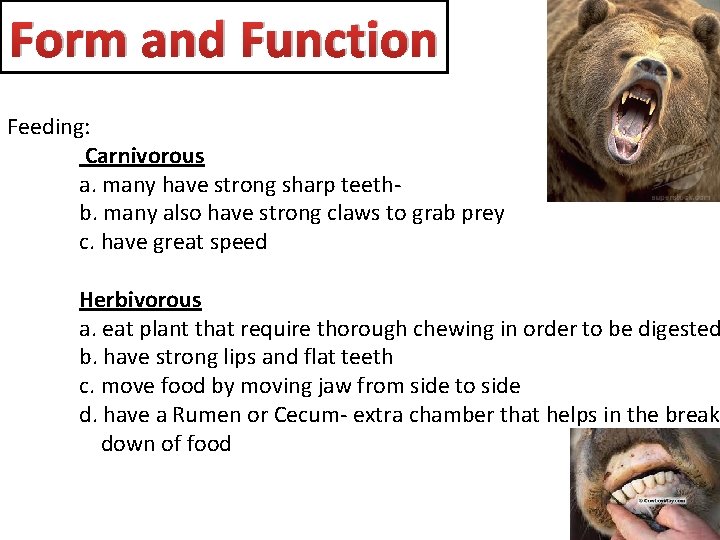
Form and Function Feeding: Carnivorous a. many have strong sharp teethb. many also have strong claws to grab prey c. have great speed Herbivorous a. eat plant that require thorough chewing in order to be digested b. have strong lips and flat teeth c. move food by moving jaw from side to side d. have a Rumen or Cecum- extra chamber that helps in the break down of food
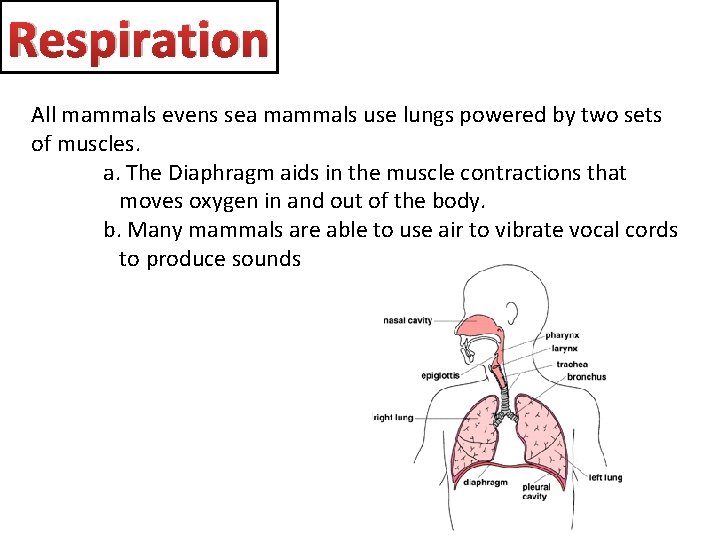
Respiration All mammals evens sea mammals use lungs powered by two sets of muscles. a. The Diaphragm aids in the muscle contractions that moves oxygen in and out of the body. b. Many mammals are able to use air to vibrate vocal cords to produce sounds
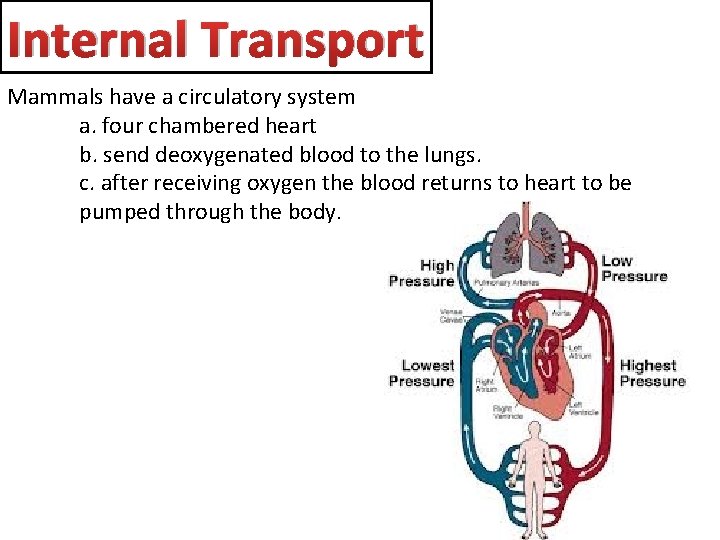
Internal Transport Mammals have a circulatory system a. four chambered heart b. send deoxygenated blood to the lungs. c. after receiving oxygen the blood returns to heart to be pumped through the body.
Excretion Mammals have well kidneys a. kidneys help control body fluids and hydration. b. kidneys help control hormones c. kidneys help retain salts, sugars and compound the body needs. Video https: //www. youtube. com/watch? v=v. B 7 t. SHq. R 1 e. Y
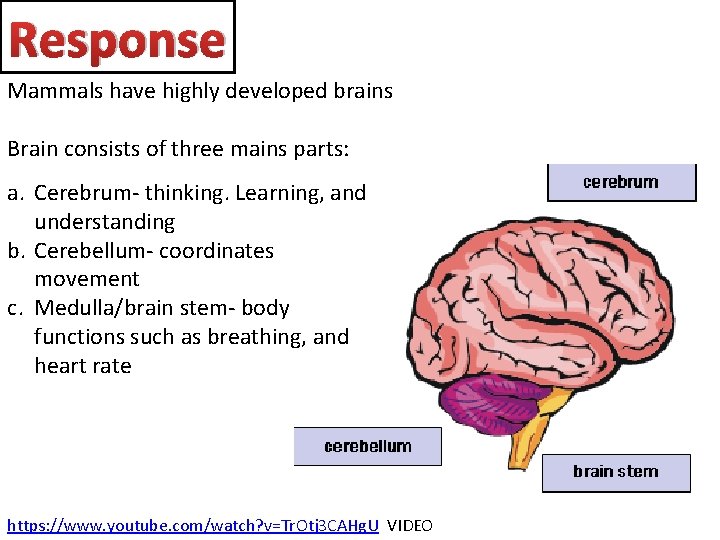
Response Mammals have highly developed brains Brain consists of three mains parts: a. Cerebrum- thinking. Learning, and understanding b. Cerebellum- coordinates movement c. Medulla/brain stem- body functions such as breathing, and heart rate https: //www. youtube. com/watch? v=Tr. Otj 3 CAHg. U VIDEO
Mammals depend on senses to provide them with information Eyes, Smell, Touch, Taste, Hearing
Movement Mammals have evolved different structures for movement. Many have four legs for speed Climbing Mammals have flexible feet and digits Flying Mammals have modified flaps Aquatic mammals have arms modified into flippers
There are many orders of Mammals read page 746 -749 as homework.
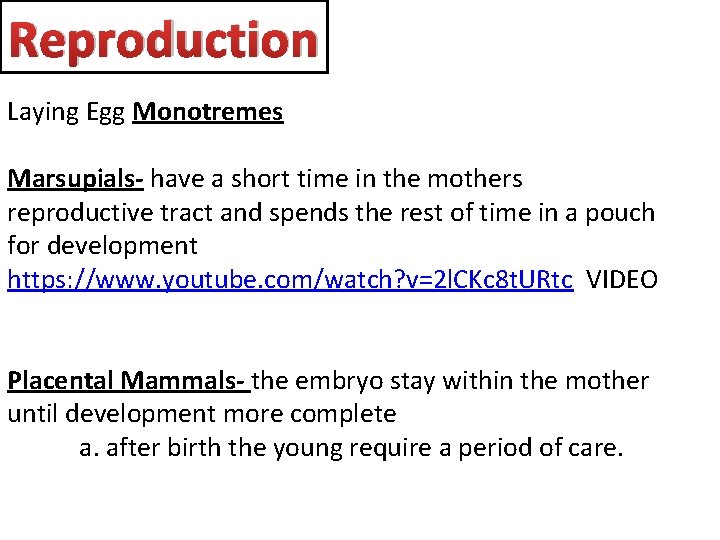
Reproduction Laying Egg Monotremes Marsupials- have a short time in the mothers reproductive tract and spends the rest of time in a pouch for development https: //www. youtube. com/watch? v=2 l. CKc 8 t. URtc VIDEO Placental Mammals- the embryo stay within the mother until development more complete a. after birth the young require a period of care.