
Mammals Synapsida Includes extinct predecessors of mammals nonmammalian
- Slides: 33
Mammals
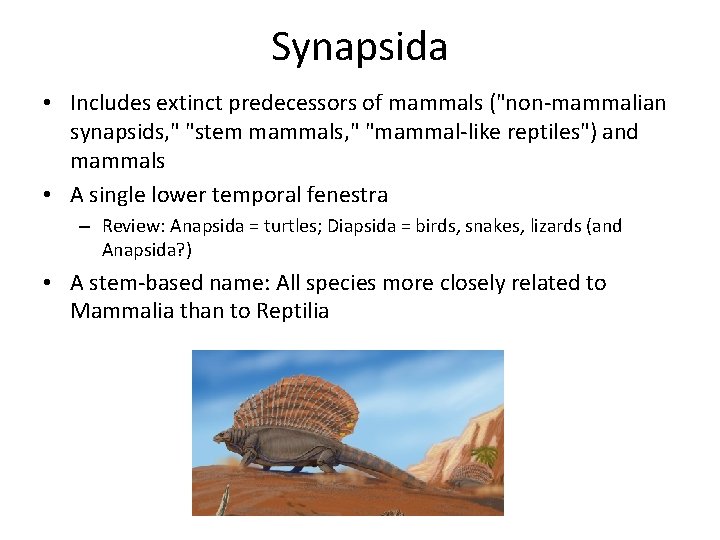
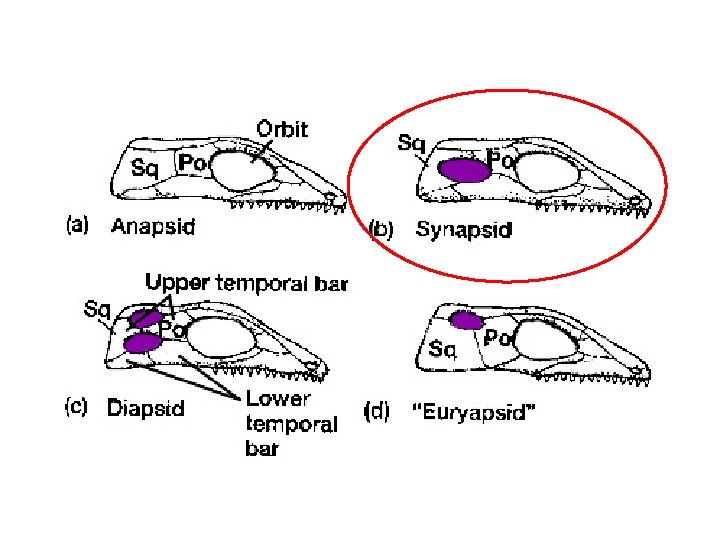
Synapsida • Includes extinct predecessors of mammals ("non-mammalian synapsids, " "stem mammals, " "mammal-like reptiles") and mammals • A single lower temporal fenestra – Review: Anapsida = turtles; Diapsida = birds, snakes, lizards (and Anapsida? ) • A stem-based name: All species more closely related to Mammalia than to Reptilia
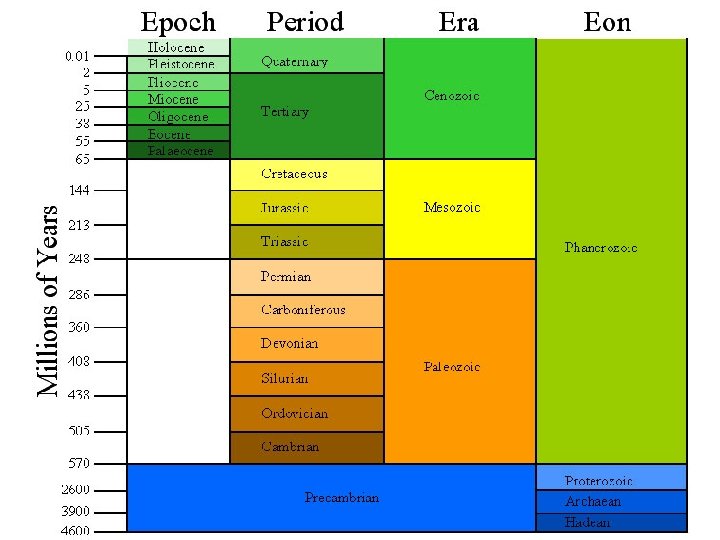
Synapsida • First group of amniotes to radiate in a terrestrial environment • Most abundant terrestrial vertebrates in Late Carboniferous and Permian (300 -250 mya) • Top carnivores from Early Permian to Triassic (300 -250 mya) • Medium to large size (10 -200 kg) until the Late Triassic • 2 mass extinctions – Permian-Triassic: 250 mya (archosaurs become dominant) – Cretaceous-Tertiary 65 mya (mammals radiated extensively post-extinction)
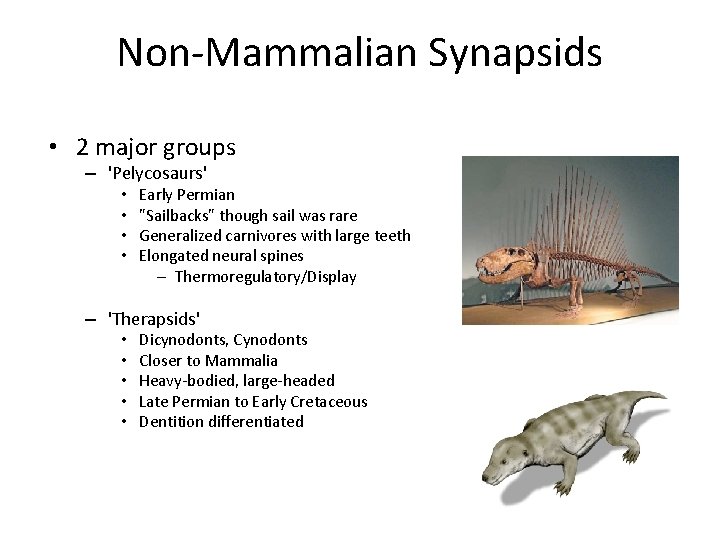
Non-Mammalian Synapsids • 2 major groups – 'Pelycosaurs' • • Early Permian "Sailbacks" though sail was rare Generalized carnivores with large teeth Elongated neural spines – Thermoregulatory/Display – 'Therapsids' • • • Dicynodonts, Cynodonts Closer to Mammalia Heavy-bodied, large-headed Late Permian to Early Cretaceous Dentition differentiated
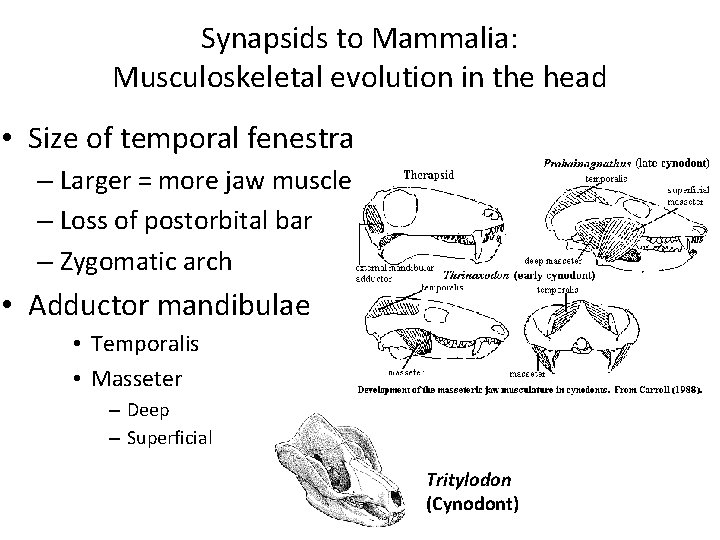
Synapsids to Mammalia: Musculoskeletal evolution in the head • Size of temporal fenestra – Larger = more jaw muscle – Loss of postorbital bar – Zygomatic arch • Adductor mandibulae • Temporalis • Masseter – Deep – Superficial Tritylodon (Cynodont)
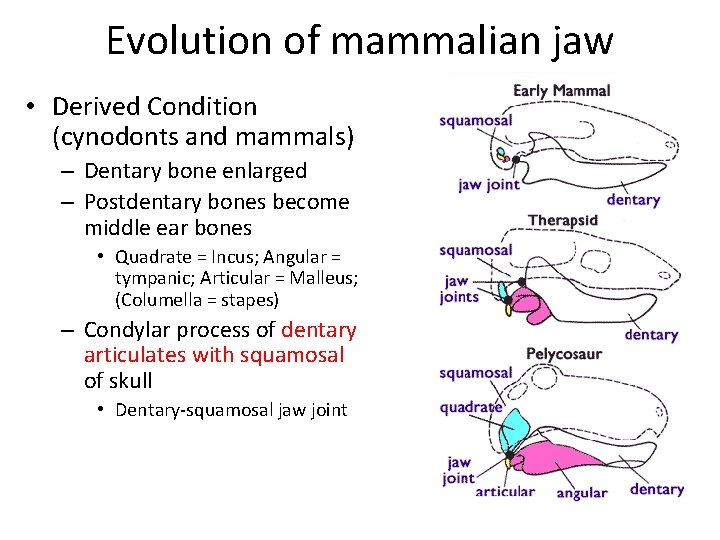
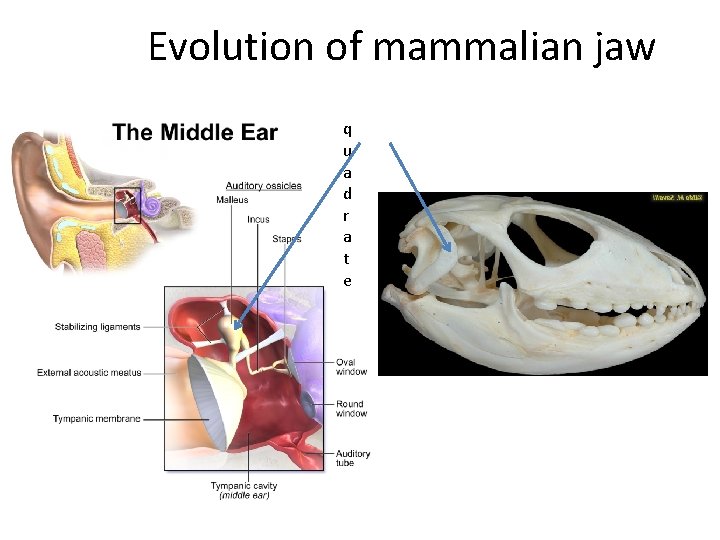
Evolution of mammalian jaw • Derived Condition (cynodonts and mammals) – Dentary bone enlarged – Postdentary bones become middle ear bones • Quadrate = Incus; Angular = tympanic; Articular = Malleus; (Columella = stapes) – Condylar process of dentary articulates with squamosal of skull • Dentary-squamosal jaw joint
Evolution of mammalian jaw q u a d r a t e
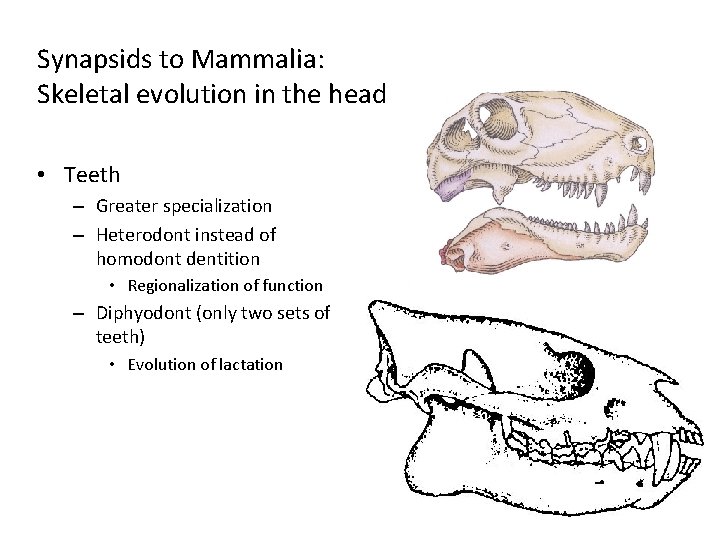
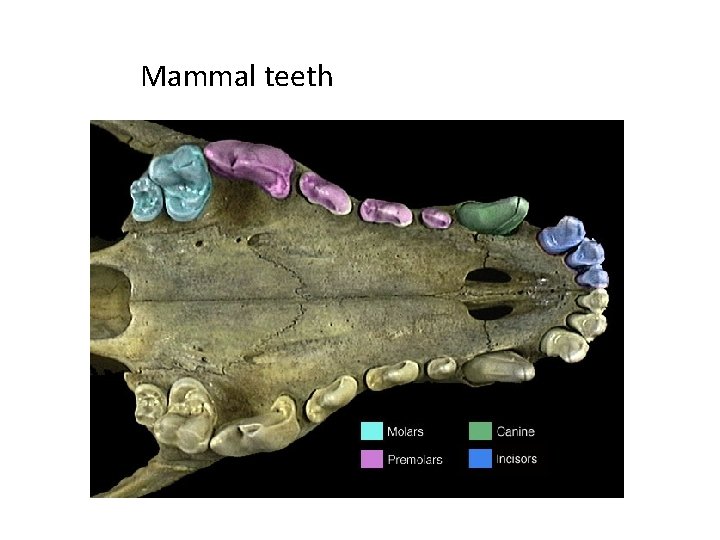
Synapsids to Mammalia: Skeletal evolution in the head • Teeth – Greater specialization – Heterodont instead of homodont dentition • Regionalization of function – Diphyodont (only two sets of teeth) • Evolution of lactation
Mammal teeth
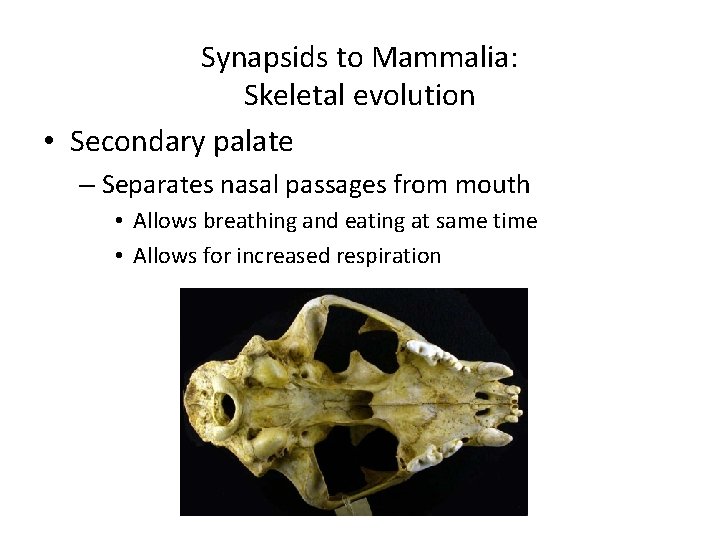
Synapsids to Mammalia: Skeletal evolution • Secondary palate – Separates nasal passages from mouth • Allows breathing and eating at same time • Allows for increased respiration
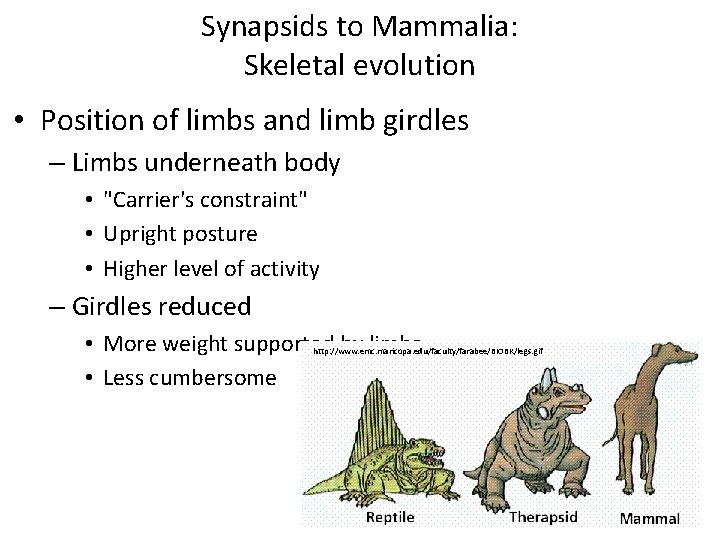
Synapsids to Mammalia: Skeletal evolution • Position of limbs and limb girdles – Limbs underneath body • "Carrier's constraint" • Upright posture • Higher level of activity – Girdles reduced • More weight supported by limbs • Less cumbersome http: //www. emc. maricopa. edu/faculty/farabee/BIOBK/legs. gif http: //microlnx. com/dinosaurs/images/Synaps 5. gif
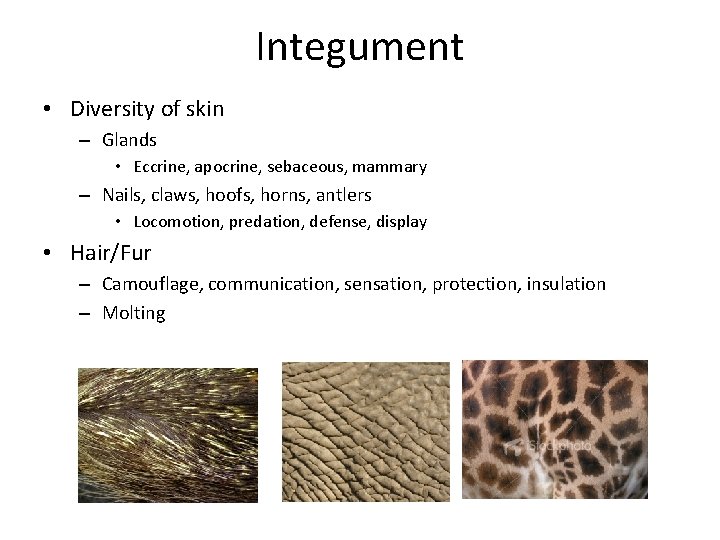
Integument • Diversity of skin – Glands • Eccrine, apocrine, sebaceous, mammary – Nails, claws, hoofs, horns, antlers • Locomotion, predation, defense, display • Hair/Fur – Camouflage, communication, sensation, protection, insulation – Molting
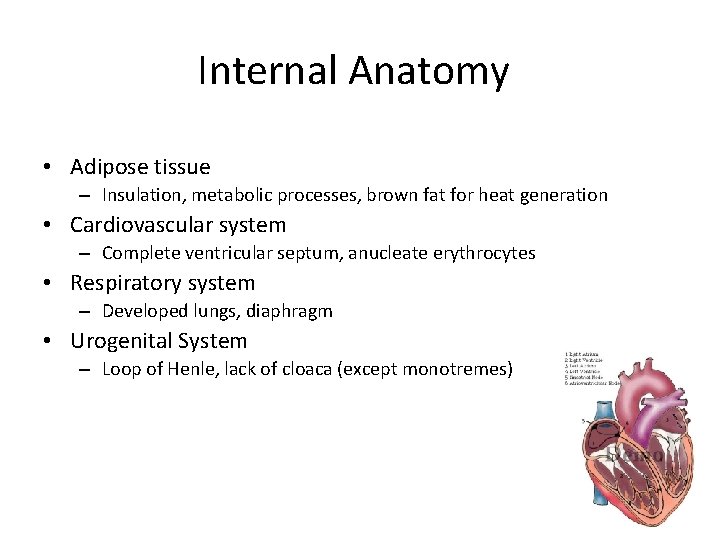
Internal Anatomy • Adipose tissue – Insulation, metabolic processes, brown fat for heat generation • Cardiovascular system – Complete ventricular septum, anucleate erythrocytes • Respiratory system – Developed lungs, diaphragm • Urogenital System – Loop of Henle, lack of cloaca (except monotremes)
Mammal reproduction • Genetic sex determination (XY) • Internal fertilization • Oviparity (Monotremata) or viviparity (other lineages) • Variation in structure of reproductive tract and penis, gestation time, cloaca, parental care • lactation
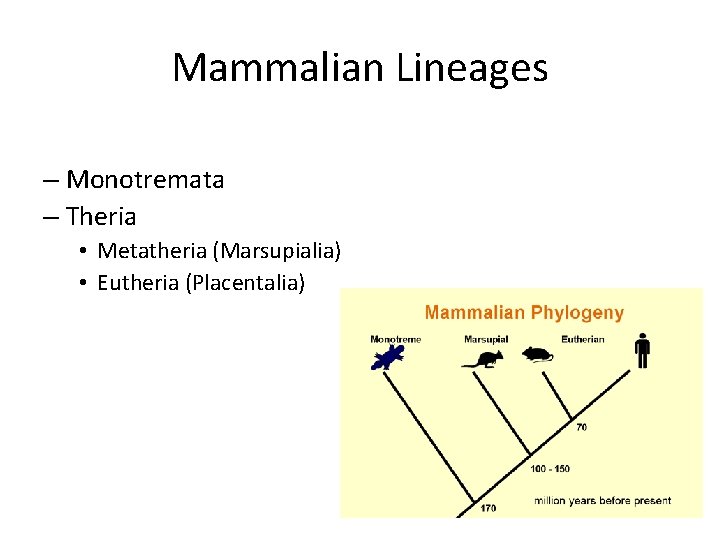
Mammalian Lineages – Monotremata – Theria • Metatheria (Marsupialia) • Eutheria (Placentalia)
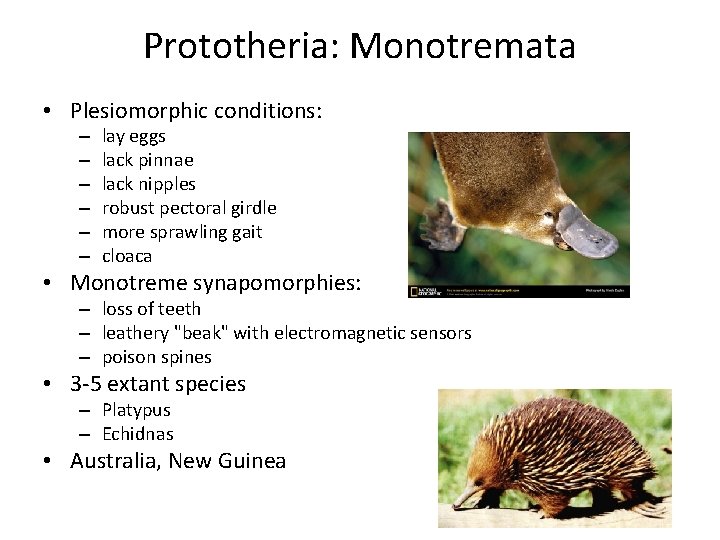
Prototheria: Monotremata • Plesiomorphic conditions: – – – lay eggs lack pinnae lack nipples robust pectoral girdle more sprawling gait cloaca • Monotreme synapomorphies: – loss of teeth – leathery "beak" with electromagnetic sensors – poison spines • 3 -5 extant species – Platypus – Echidnas • Australia, New Guinea
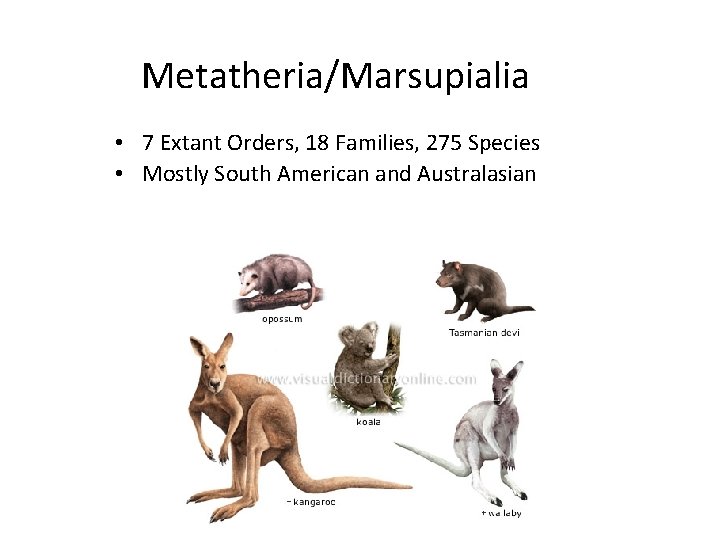
Metatheria/Marsupialia • 7 Extant Orders, 18 Families, 275 Species • Mostly South American and Australasian
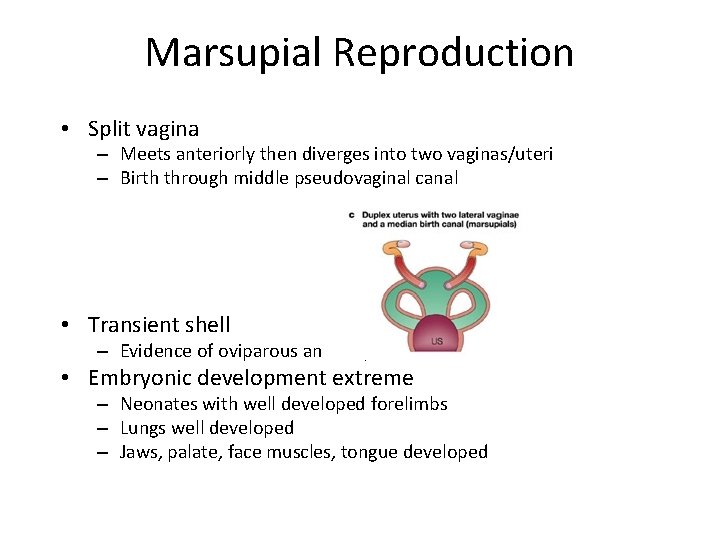
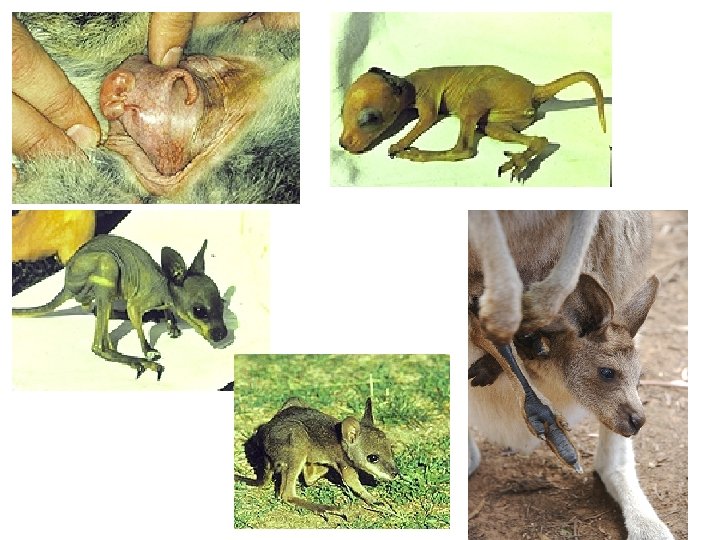
Marsupial Reproduction • Split vagina – Meets anteriorly then diverges into two vaginas/uteri – Birth through middle pseudovaginal canal • Transient shell – Evidence of oviparous ancestry • Embryonic development extreme – Neonates with well developed forelimbs – Lungs well developed – Jaws, palate, face muscles, tongue developed
Marsupial Reproduction • Nipples in pouch – Pouch – Neonates climb into pouch to nipples • Milk composition variable – Watery and protein rich – Thicker and fat rich – Nipples independent of each other • Up to three young developing at one time
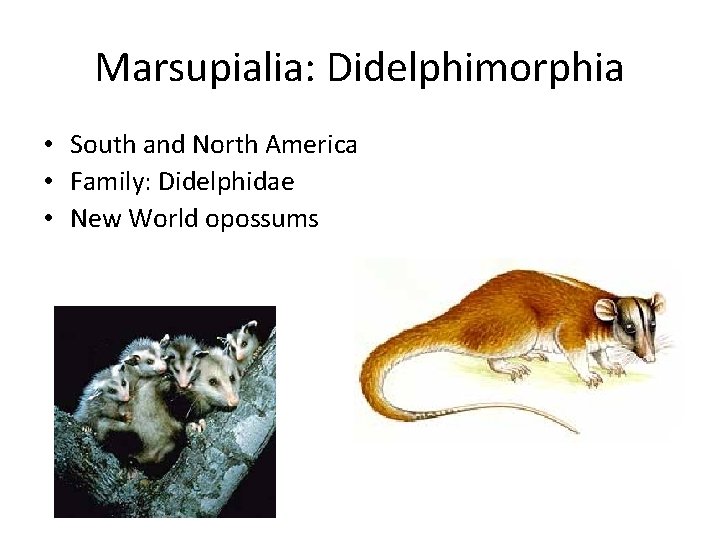
Marsupialia: Didelphimorphia • South and North America • Family: Didelphidae • New World opossums
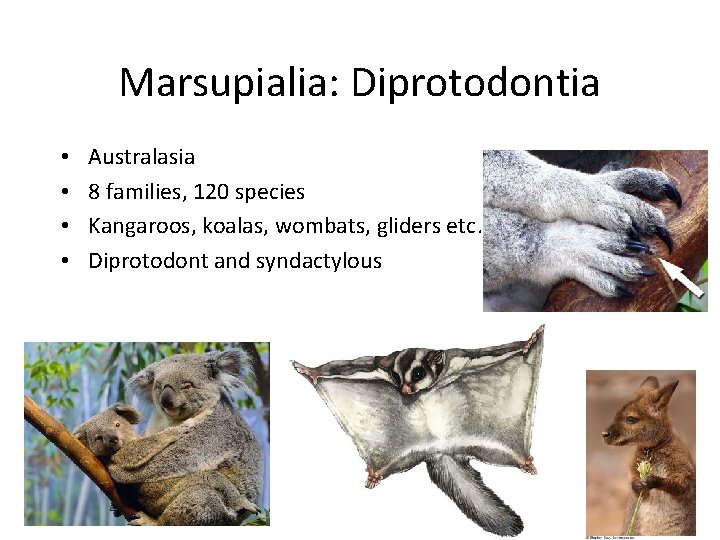
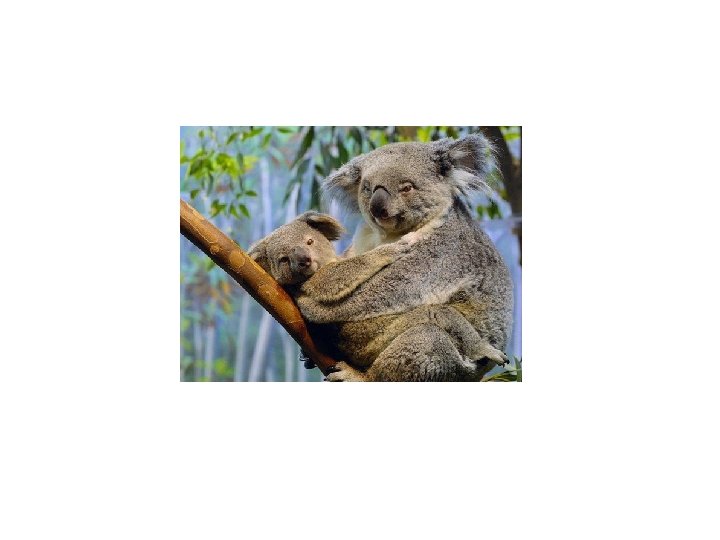
Marsupialia: Diprotodontia • • Australasia 8 families, 120 species Kangaroos, koalas, wombats, gliders etc. Diprotodont and syndactylous
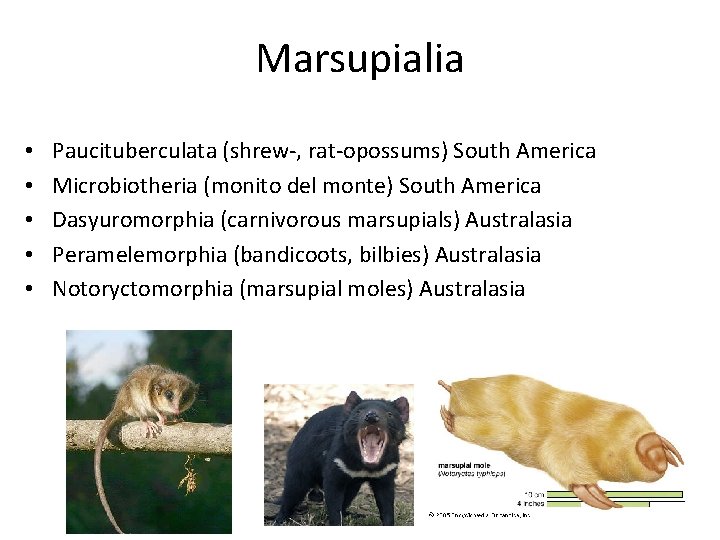
Marsupialia • • • Paucituberculata (shrew-, rat-opossums) South America Microbiotheria (monito del monte) South America Dasyuromorphia (carnivorous marsupials) Australasia Peramelemorphia (bandicoots, bilbies) Australasia Notoryctomorphia (marsupial moles) Australasia
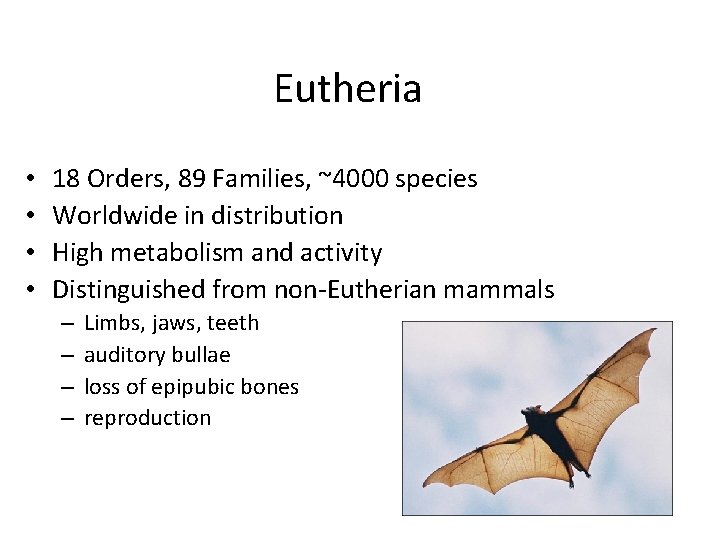
Eutheria • • 18 Orders, 89 Families, ~4000 species Worldwide in distribution High metabolism and activity Distinguished from non-Eutherian mammals – – Limbs, jaws, teeth auditory bullae loss of epipubic bones reproduction
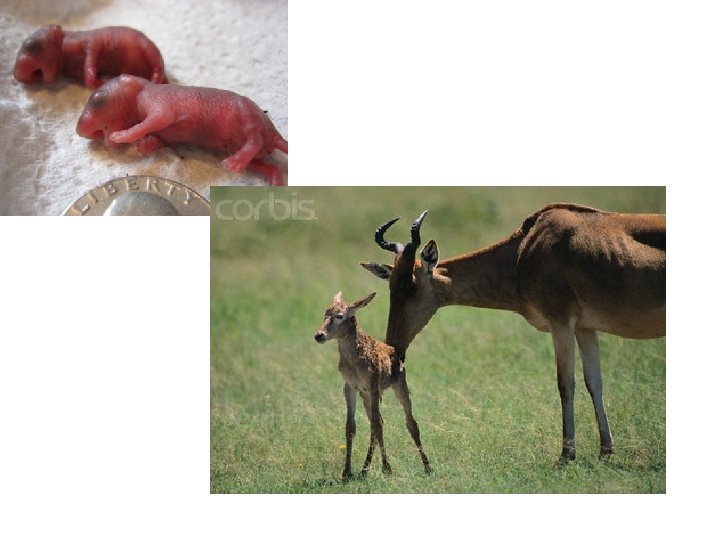
Eutherian Reproduction • Single vagina but bipartite uterus (in most) • Prolonged gestation • Complex well developed placenta – Choriovitelline and Chorioallantoic placentas • Neonates either altricial or precocial – Lactation necessary but duration shorter than gestation
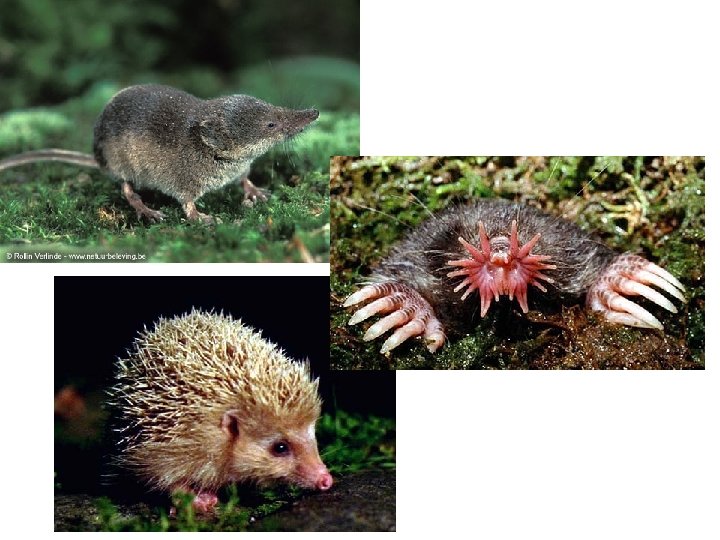
Eutheria: Soricomorpha • All continents except Australia, SA and Antarctica • 2 g to 1 kg • Diverse – 6 families, 350 spp, including shrews, moles, hedgehogs • Fossorial, semi-fossorial, terrestrial • Pinnae and eyes absent or reduced
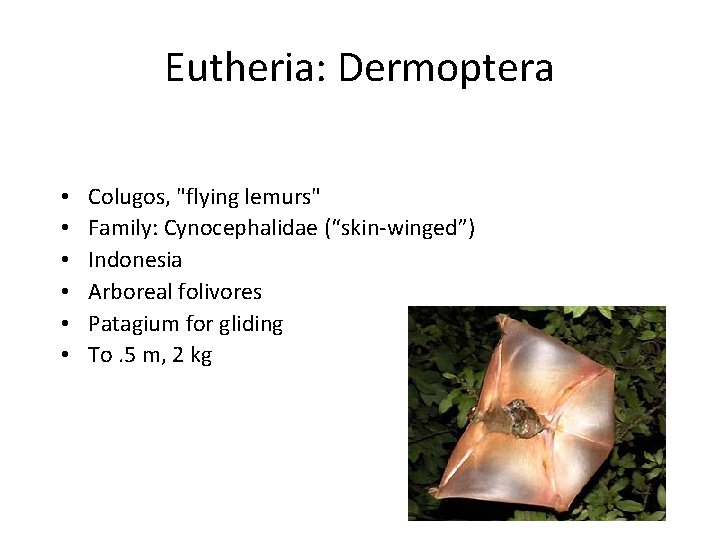
Eutheria: Dermoptera • • • Colugos, "flying lemurs" Family: Cynocephalidae (“skin-winged”) Indonesia Arboreal folivores Patagium for gliding To. 5 m, 2 kg