
Mammals of the Badlands By Christina Hurley Badlands
Mammals of the Badlands By Christina Hurley
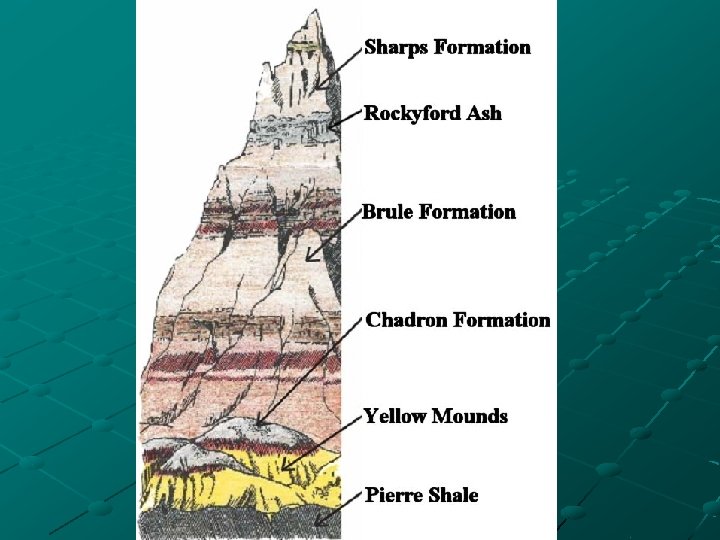
Badlands: Geologic History Started forming about 75 million years ago Are composed of 6 different formations n n n Pierre Shale Yellow Mounds Chadron Formation Brule Formation Rockyford Ash Sharps Formation

Pierre Shale Deposited 69 -75 mya by shallow inland sea Black mud hardened to shale Fossil clams, ammonites, and sea reptiles have been found
Yellow Mounds Weathered black ocean mud n Had been exposed from formation of the Black Hills Example of fossil soil (paleosol)
Chadron Formation Deposited 34 -37 mya River flood plain n New floods would make each deposit Known for titanotheres fossils (large, rhinoceros-like mammals)

Brule Formation Deposited 30 -34 mya Open savannah Bands of sandstone show rivers Red bands paleosol Oreodonts (sheep-like animals) dominated
Rockyford Ash Volcanic Ash Bottom layer of Sharps Formation Serves as a boundary between Sharps and Brule Formations
Sharps Formation 28 -30 million years old Deposited by wind and water Volcanic eruptions from the west provided ash
Paleontology Hyracodon Subhyracodon Metamynodon Tapiroids Colodon Protapirus Mesohippus Miohippus Archaeotherium Protoceras Hyaenodon Poebrotherium Oreodont Nimravid Hesperocyon
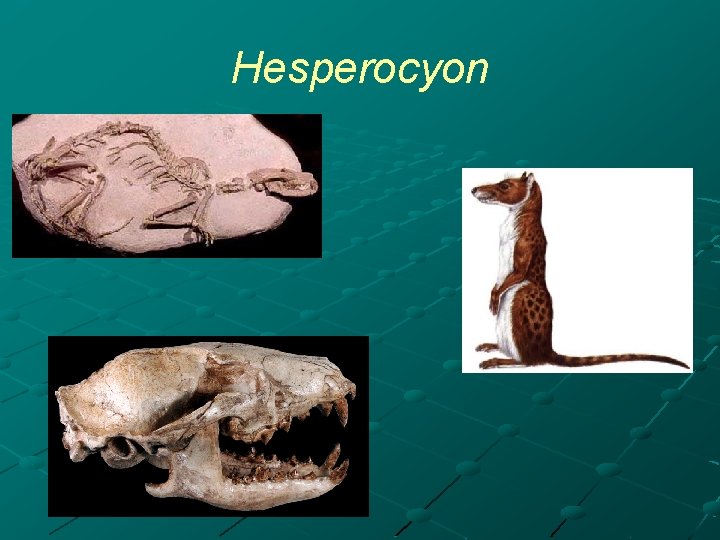
Hesperocyon
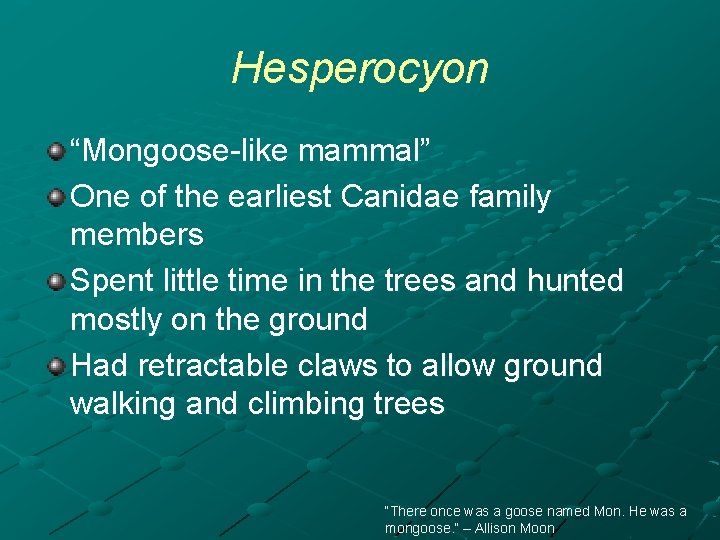
Hesperocyon “Mongoose-like mammal” One of the earliest Canidae family members Spent little time in the trees and hunted mostly on the ground Had retractable claws to allow ground walking and climbing trees “There once was a goose named Mon. He was a mongoose. ” – Allison Moon
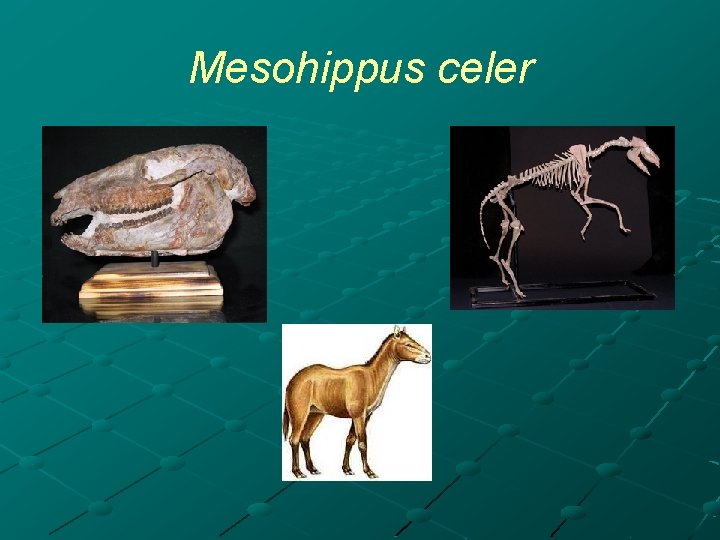
Mesohippus celer
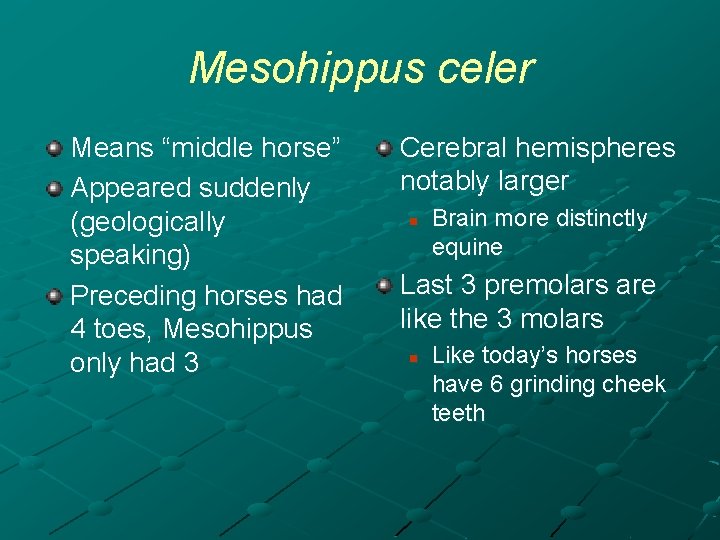
Mesohippus celer Means “middle horse” Appeared suddenly (geologically speaking) Preceding horses had 4 toes, Mesohippus only had 3 Cerebral hemispheres notably larger n Brain more distinctly equine Last 3 premolars are like the 3 molars n Like today’s horses have 6 grinding cheek teeth
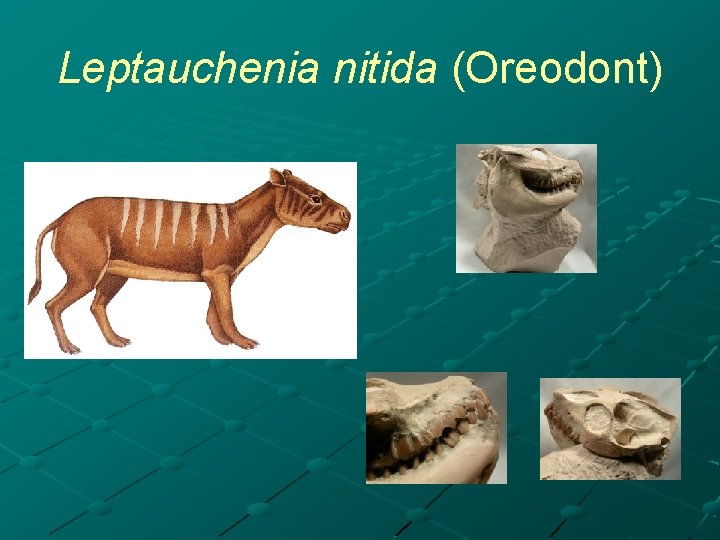
Leptauchenia nitida (Oreodont)
Leptauchenia nitida (Oreodont) Called “ruminants hogs” Have distinctive canine teeth High set eyes and nostrils suggest aquatic life-style Clawed toes indicate terrestrial habitat Debated whether it is related to pigs or sheep n It’s a SHIG!

Nimravids
Nimravids Are not saber-toothed cats, not even true cats Illustrates parallel evolution Differences are: n n n Paths of various nerve and blood vessels in skull are more primitive Lack a two-chambered auditory bulla Teeth are more coned shaped No modern relatives – truly extinct
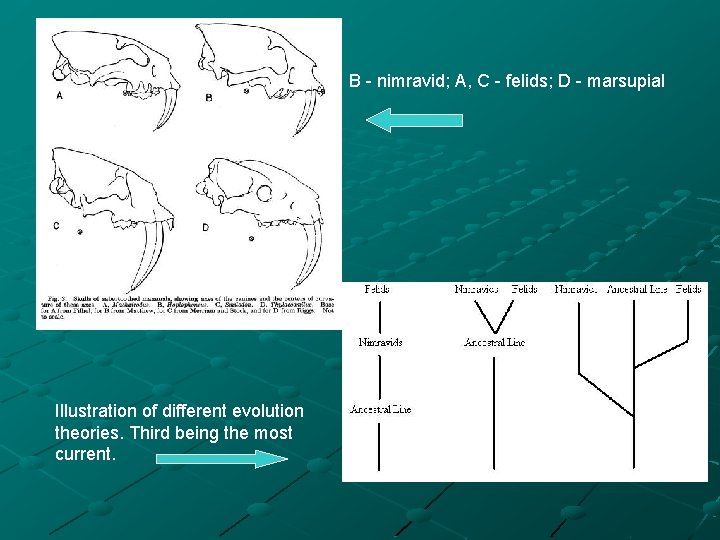
B - nimravid; A, C - felids; D - marsupial Illustration of different evolution theories. Third being the most current.
Conclusion Hesperocyon – brought dogs down from the trees Mesohippus celer – 4 toes down to 3, more equine like brain Oreodont – importance still unknown Nimravids – shows parallel evolution
References http: //fossilmuseum. net/Fossil_Sites/badlands. html http: //fossilmuseum. net/Fossil_Galleries/Mammalia/Oreo dont/Oreodont. htm http: //talkorigins. org/faqs/horse_evol. html http: //laelaps. wordpress. com/2007/06/28/just-what-is-animravid-anyway/ http: //www. nps. gov/badl/upload/07 Newspaper. pdf Warren, Dean M. . Small Animal Care and Management. 2. Thomson Delmar Learning, 2002.
- Slides: 21