
Mammals of the Animal Kingdom Living on Planet
- Slides: 38
Mammals of the Animal Kingdom Living on Planet Earth Move through the program using the arrow keys below this message. Keyboard and mouse options will also work.
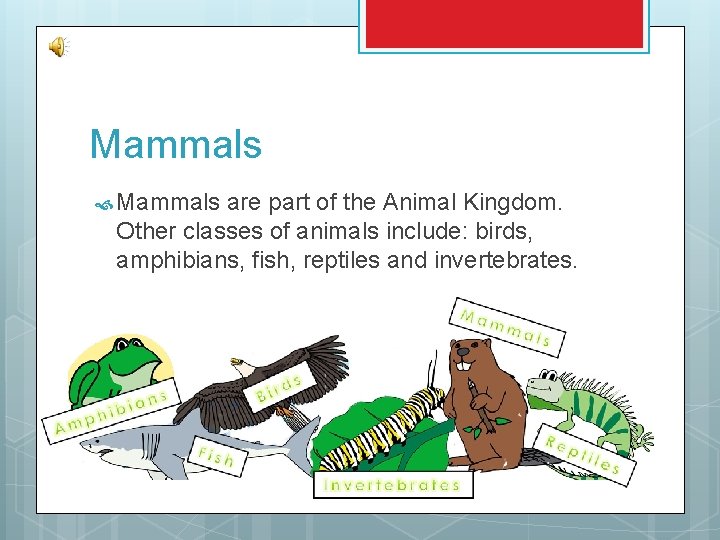
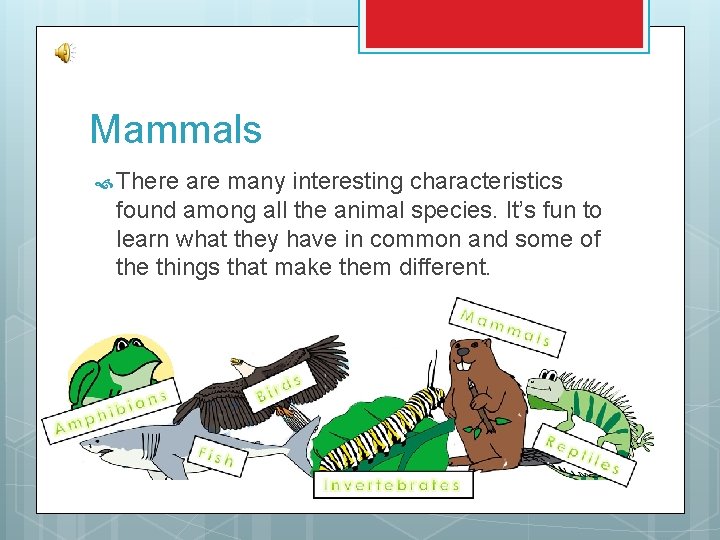
Mammals are part of the Animal Kingdom. Other classes of animals include: birds, amphibians, fish, reptiles and invertebrates.
Mammals All members of the kingdom of animals have one thing in common—they have a mouth or similar method of ingesting food. If they absorb food they belong to another kingdom of life.
Mammals Have mouths to ingest food Have vertebrae to support their bodies Are warm-blooded Breathe with lungs Nourish their young with milk Have skin with hair or hair follicles
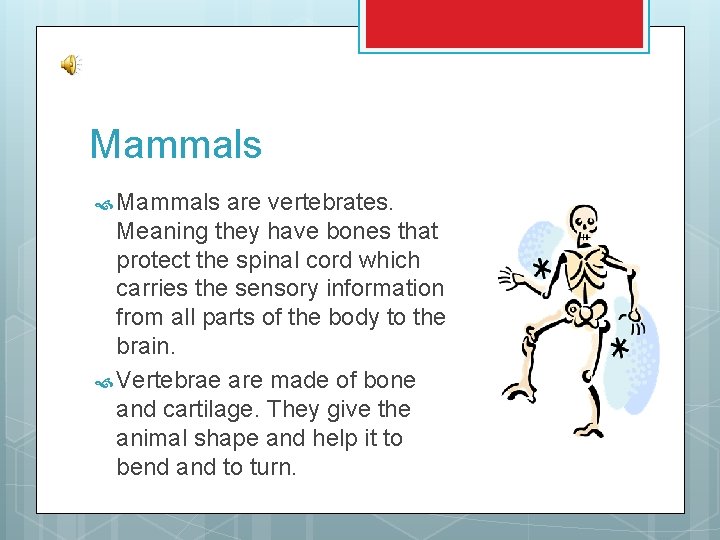
Mammals are vertebrates. Meaning they have bones that protect the spinal cord which carries the sensory information from all parts of the body to the brain. Vertebrae are made of bone and cartilage. They give the animal shape and help it to bend and to turn.
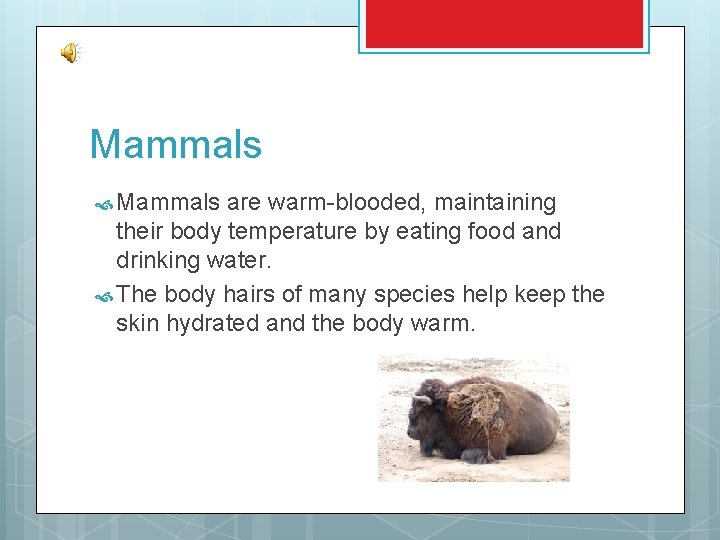
Mammals are warm-blooded, maintaining their body temperature by eating food and drinking water. The body hairs of many species help keep the skin hydrated and the body warm.
Mammals breathe air into lungs. The heart moves oxygen from the lungs into the blood. Each heart beat pushes blood throughout the body. The body’s skeleton, organs and muscles depend upon good oxygen circulation from the heart and the lungs.
Mammals Many mammals have keen senses and highly developed brains. Because they are warmblooded they can remain active when it’s cold. Most mammals give birth to live young but a few species lay eggs.
Mammals are often able to make vocal sounds, give off scents, and use their strong senses of sight, hearing and smell to communicate.
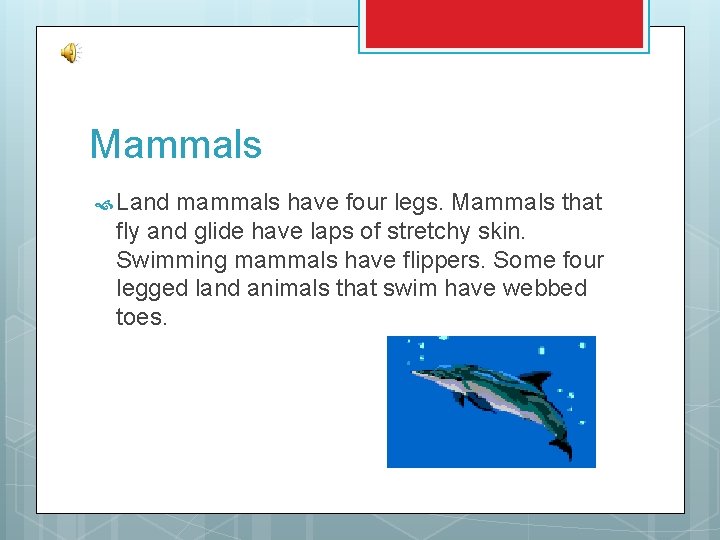
Mammals Land mammals have four legs. Mammals that fly and glide have laps of stretchy skin. Swimming mammals have flippers. Some four legged land animals that swim have webbed toes.
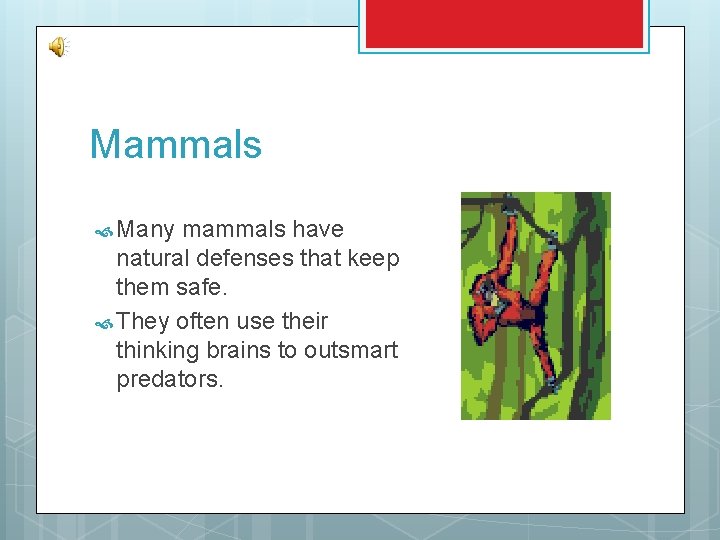
Mammals Many mammals have natural defenses that keep them safe. They often use their thinking brains to outsmart predators.
Mammals There at least 4, 000 mammals found on land in the water. We’ll look at some characteristics that make mammals different from other animals. We’ll also learn some of the special features animals possess to adapt and survive in the wild.
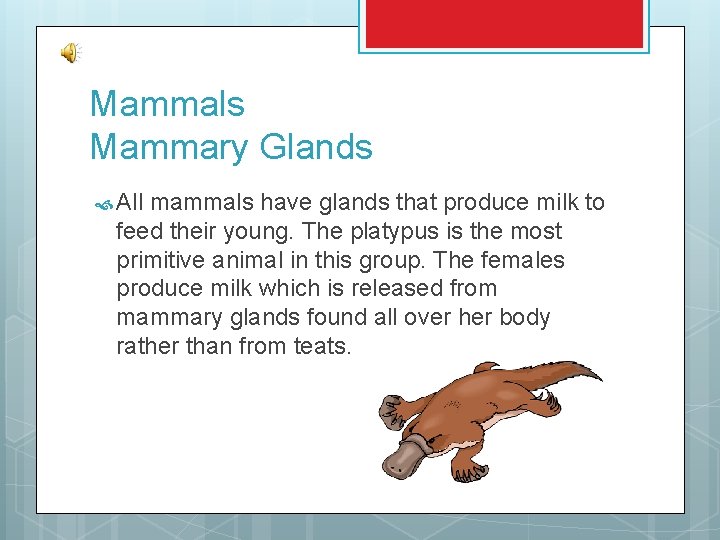
Mammals Mammary Glands All mammals have glands that produce milk to feed their young. The platypus is the most primitive animal in this group. The females produce milk which is released from mammary glands found all over her body rather than from teats.
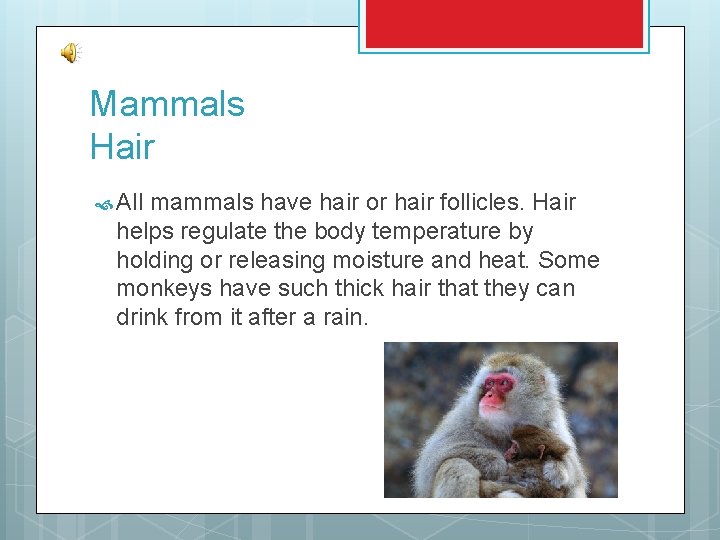
Mammals Hair All mammals have hair or hair follicles. Hair helps regulate the body temperature by holding or releasing moisture and heat. Some monkeys have such thick hair that they can drink from it after a rain.
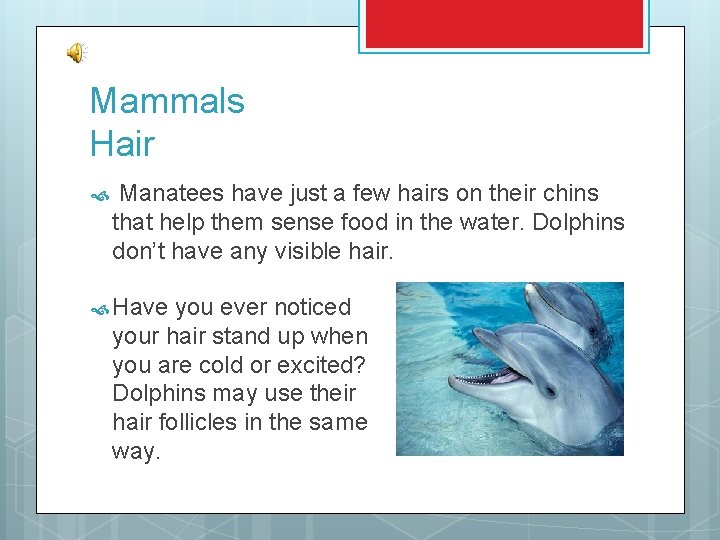
Mammals Hair Manatees have just a few hairs on their chins that help them sense food in the water. Dolphins don’t have any visible hair. Have you ever noticed your hair stand up when you are cold or excited? Dolphins may use their hair follicles in the same way.
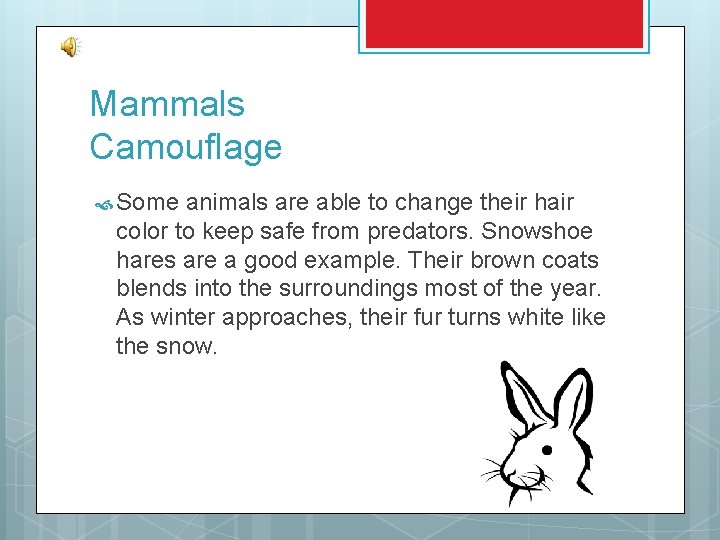
Mammals Camouflage Some animals are able to change their hair color to keep safe from predators. Snowshoe hares are a good example. Their brown coats blends into the surroundings most of the year. As winter approaches, their fur turns white like the snow.
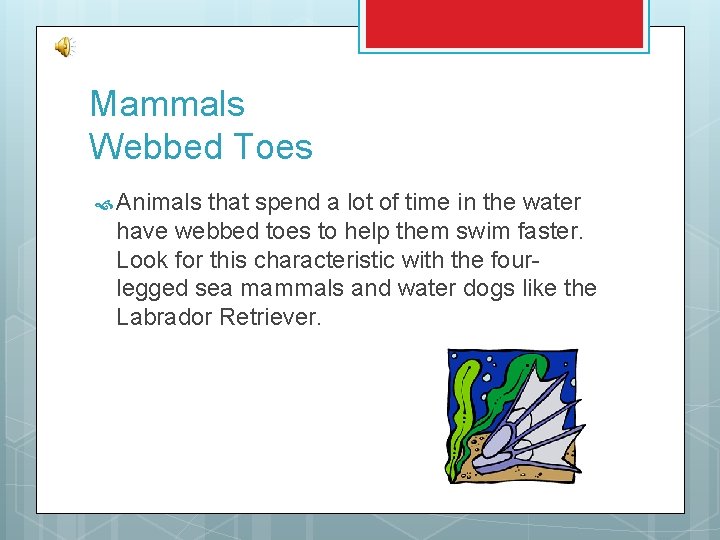
Mammals Webbed Toes Animals that spend a lot of time in the water have webbed toes to help them swim faster. Look for this characteristic with the fourlegged sea mammals and water dogs like the Labrador Retriever.
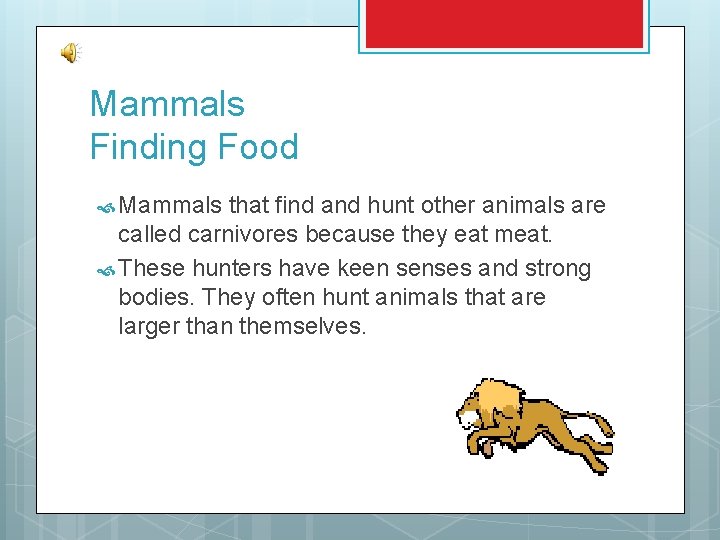
Mammals Finding Food Mammals that find and hunt other animals are called carnivores because they eat meat. These hunters have keen senses and strong bodies. They often hunt animals that are larger than themselves.
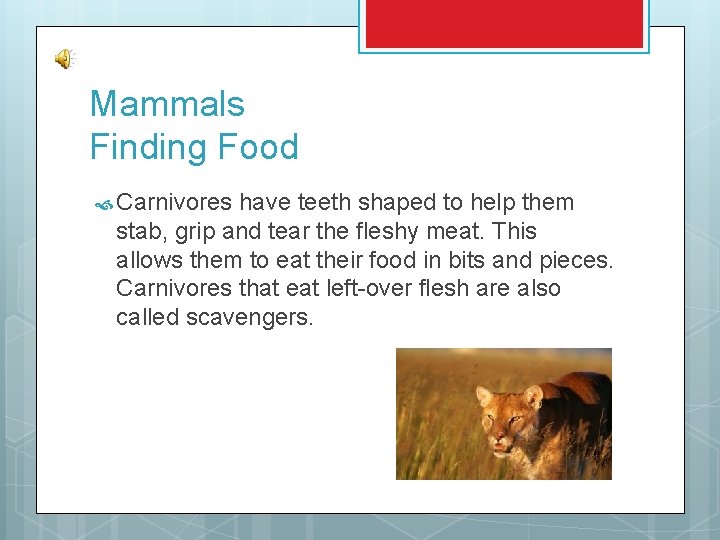
Mammals Finding Food Carnivores have teeth shaped to help them stab, grip and tear the fleshy meat. This allows them to eat their food in bits and pieces. Carnivores that eat left-over flesh are also called scavengers.
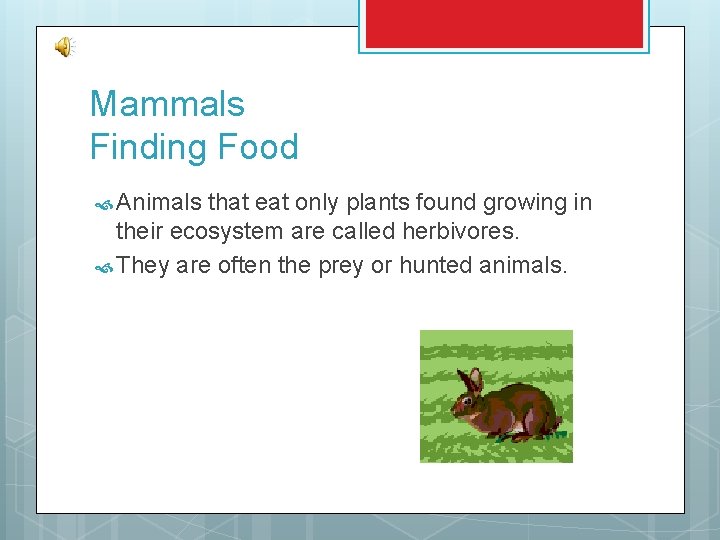
Mammals Finding Food Animals that eat only plants found growing in their ecosystem are called herbivores. They are often the prey or hunted animals.
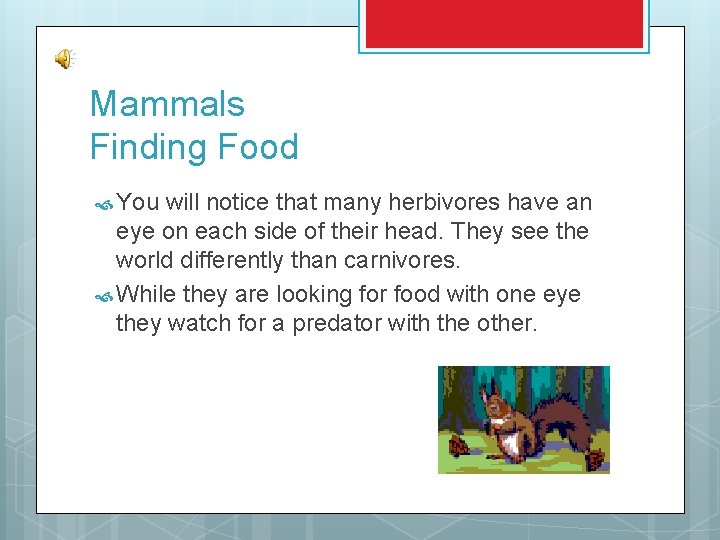
Mammals Finding Food You will notice that many herbivores have an eye on each side of their head. They see the world differently than carnivores. While they are looking for food with one eye they watch for a predator with the other.
Mammals Hibernation Mammals depend upon rich, high calorie foods to live. In harsh winter climates some food plants stop growing and are covered by snow. It is also more difficult for animals to control their body heat so they go into hibernation.
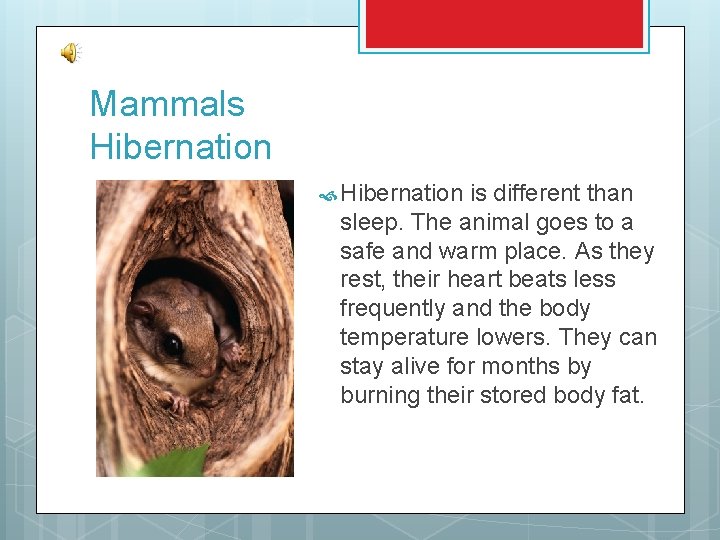
Mammals Hibernation is different than sleep. The animal goes to a safe and warm place. As they rest, their heart beats less frequently and the body temperature lowers. They can stay alive for months by burning their stored body fat.
Mammals Hibernation Spring arrives with warmer temperatures and the animals become more active. Animals living in climates closer to the equator don’t usually hibernate because the climate is much warmer and the food grows all year round.
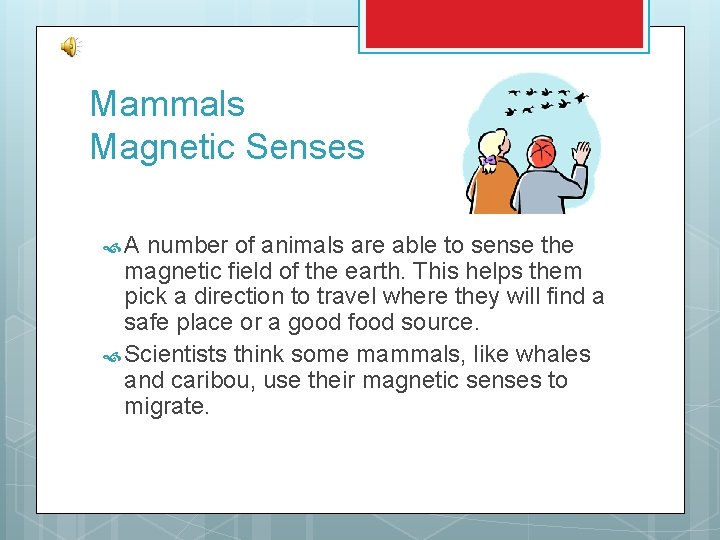
Mammals Magnetic Senses A number of animals are able to sense the magnetic field of the earth. This helps them pick a direction to travel where they will find a safe place or a good food source. Scientists think some mammals, like whales and caribou, use their magnetic senses to migrate.
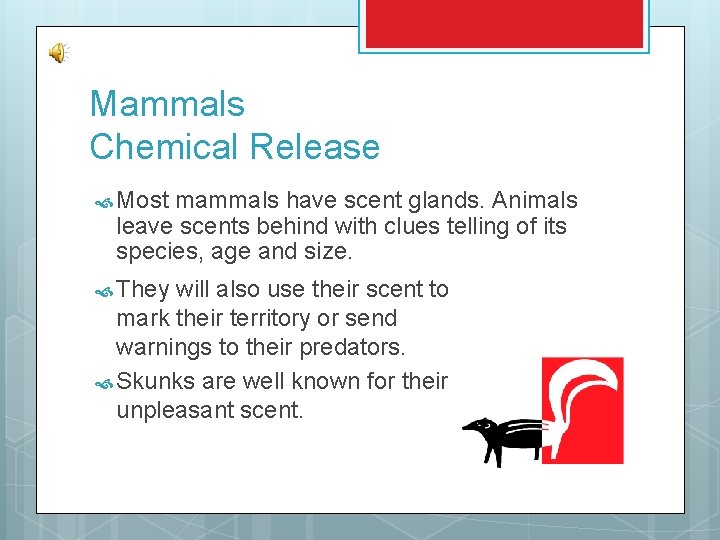
Mammals Chemical Release Most mammals have scent glands. Animals leave scents behind with clues telling of its species, age and size. They will also use their scent to mark their territory or send warnings to their predators. Skunks are well known for their unpleasant scent.
Mammals Poison Defenses Very few mammals use a snake-like venom poison. A shrew, similar to a mouse, and the male platypus may be the only mammals with this ability.
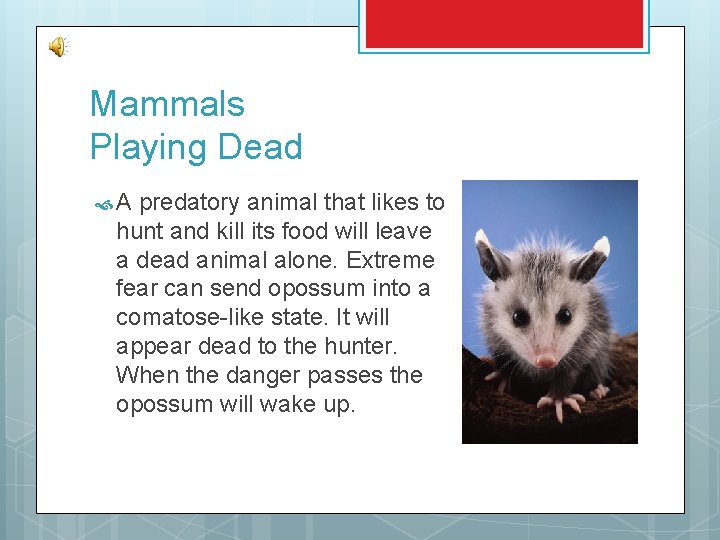
Mammals Playing Dead A predatory animal that likes to hunt and kill its food will leave a dead animal alone. Extreme fear can send opossum into a comatose-like state. It will appear dead to the hunter. When the danger passes the opossum will wake up.
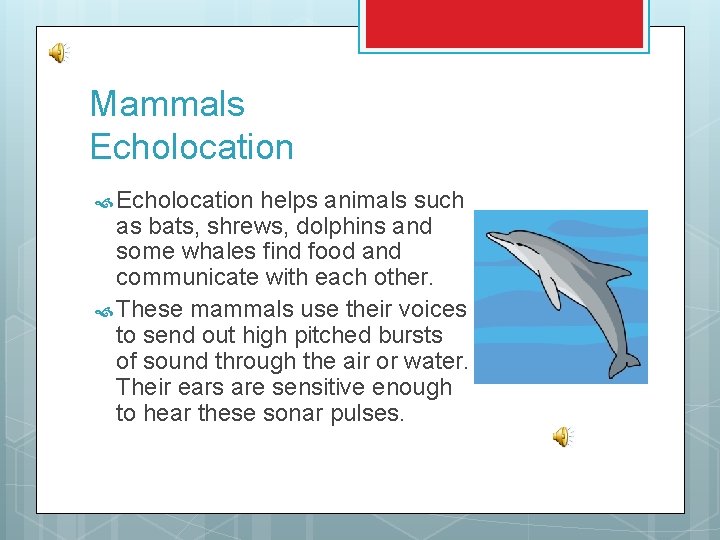
Mammals Echolocation helps animals such as bats, shrews, dolphins and some whales find food and communicate with each other. These mammals use their voices to send out high pitched bursts of sound through the air or water. Their ears are sensitive enough to hear these sonar pulses.
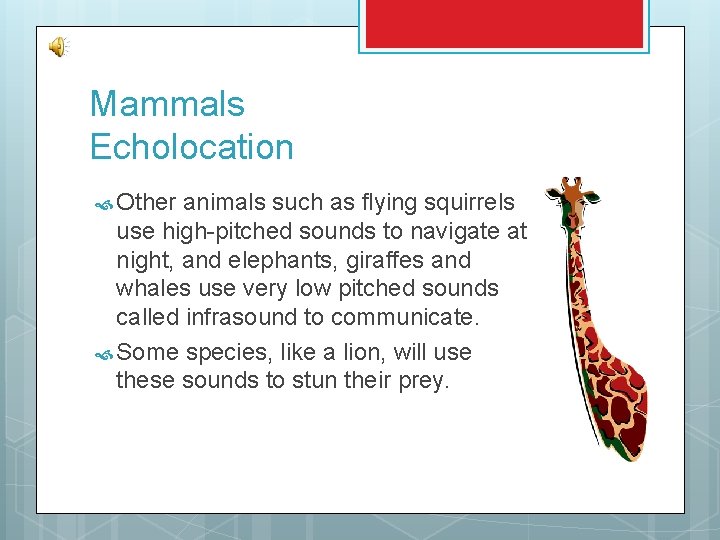
Mammals Echolocation Other animals such as flying squirrels use high-pitched sounds to navigate at night, and elephants, giraffes and whales use very low pitched sounds called infrasound to communicate. Some species, like a lion, will use these sounds to stun their prey.
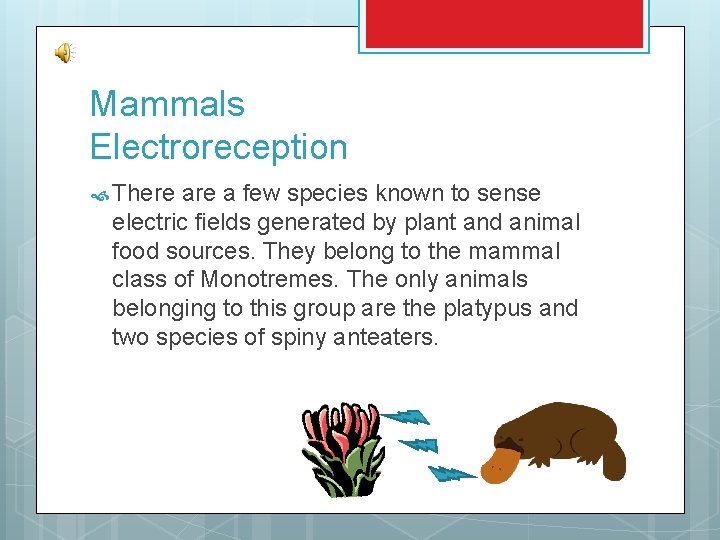
Mammals Electroreception There a few species known to sense electric fields generated by plant and animal food sources. They belong to the mammal class of Monotremes. The only animals belonging to this group are the platypus and two species of spiny anteaters.
Mammals There are many interesting characteristics found among all the animal species. It’s fun to learn what they have in common and some of the things that make them different.
Mammals We hope you enjoyed learning about the mammals of the Animal Kingdom.
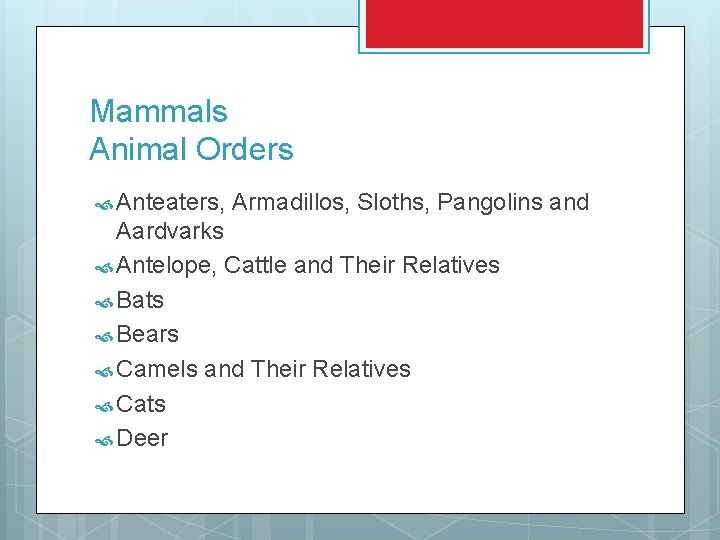
Mammals Animal Orders Anteaters, Armadillos, Sloths, Pangolins and Aardvarks Antelope, Cattle and Their Relatives Bats Bears Camels and Their Relatives Cats Deer
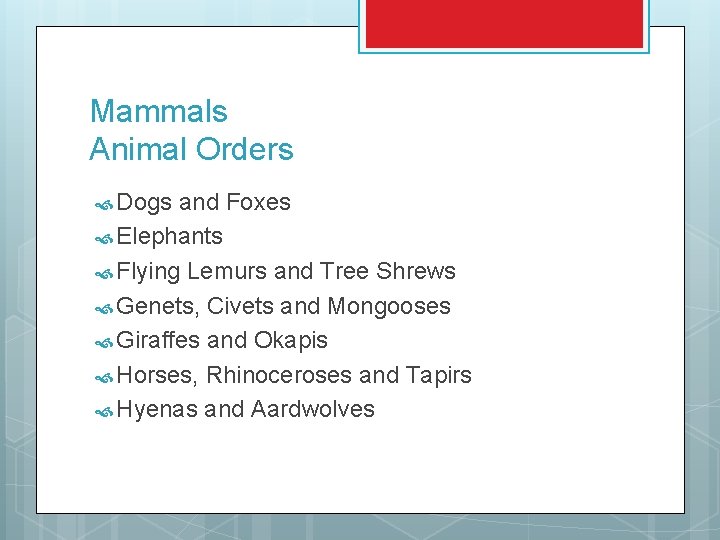
Mammals Animal Orders Dogs and Foxes Elephants Flying Lemurs and Tree Shrews Genets, Civets and Mongooses Giraffes and Okapis Horses, Rhinoceroses and Tapirs Hyenas and Aardwolves
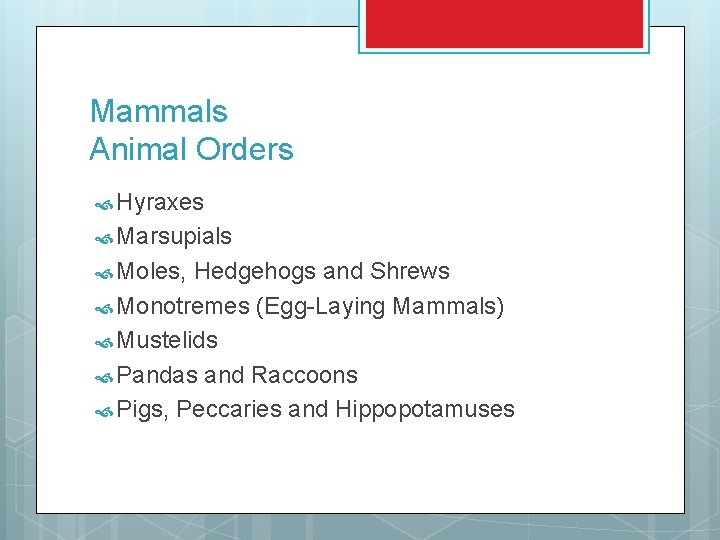
Mammals Animal Orders Hyraxes Marsupials Moles, Hedgehogs and Shrews Monotremes (Egg-Laying Mammals) Mustelids Pandas and Raccoons Pigs, Peccaries and Hippopotamuses
Mammals of the Animal Kingdom Images Courtesy of: Microsoft Clipart www. office. com Contributions from abcteach. com staff members, and others as identified. Copyright 2010 abcteach. com
Click on the image above to find complimentary paragraph and essay writing assignments. Have your students work as a class, in groups or individually to develop their thinking and writing skills. Mammals of the Animal Kingdom Living on Planet Earth