
Malnutrition the older patient James T Birch Jr
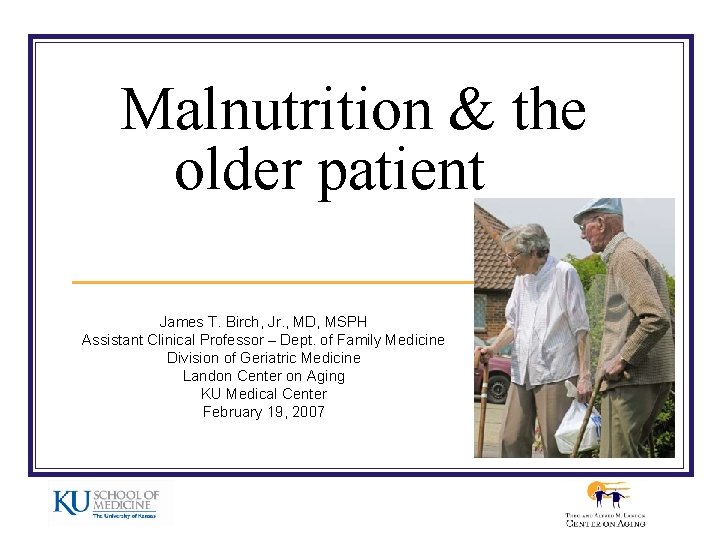
Malnutrition & the older patient James T. Birch, Jr. , MD, MSPH Assistant Clinical Professor – Dept. of Family Medicine Division of Geriatric Medicine Landon Center on Aging KU Medical Center February 19, 2007
Objectives Outline the ACOVE indicators for malnutrition for community-dwelling and hospitalized older persons n Understand the physiologic changes that contribute to the problem n Identify the risks of malnutrition in the elderly patient n Discuss nutritional screening and assessment tools n
Objectives Review basic nutritional requirements for the older patient n Discuss options for nutritional intervention n Review the ethical considerations for replacement of nutrition and hydration of the older patient n Identify nutritional syndromes n
Definition n Malnutrition is the condition that develops when the body does not get the right amount of vitamins, minerals, and other nutrients it needs to maintain healthy tissues and organ function. The condition may result from an inadequate or unbalanced diet, digestive difficulties, absorption problems, or other medical conditions. However, there is no universally accepted clinical definition.
“Malnutrition is not something observed only in third-world countries. ” 1 “Older persons suffer a burden of malnutrition that spans the spectrum from under- to overnutrition. ” 2 “Malnutrition in the elderly is one of the greatest threats to health, well-being, and autonomy…. ” 1. Kiseljak-Vassiliades, K. , et al. Basic Nutrition for Successful Aging: Part 1. Clinical Geriatrics, Vol. 14(4); April 2006 2. Geriatrics Review Syllabus: A Core Curriculum in Geriatric Medicine, Sixth Edition (GRS 6); American Geriatrics Society 2006 3. Francesco, VD, et al. The Anorexia of Aging. Digestive Diseases 25(2); 2007
ACOVE - 3 Quality indicators for Malnutrition n n ACOVE-3 indicators are comprised of IF-THENBECAUSE statements Apply to community-dwelling AND hospitalized older persons 8 quality indicators covering 4 domains Indicators are not supported by RCTs (except one) because most all studies have been small and involved persons who met “narrow” entry criteria or which lacked the highest quality of methodological rigor. Indicators are a product of literature review and expert panel consideration.
ACOVE-3 quality indicators n Indicator #1: ALL community-dwelling pts. Should be weighed at each physician office visit and these weights should be documented in the medical record BECAUSE this is an inexpensive method to screen for energy undernutrition and obesity that has prognostic importance.
ACOVE-3 quality indicators n Indicator #2: IF a vulnerable elder has involuntary wt. loss of > 10% of body wt. over one year or less, THEN wt. loss (or a related disorder) should be documented in the medical record as an indication that the physician recognized malnutrition as a potential problem BECAUSE some patients with wt. loss have potentially reversible disorders.
ACOVE-3 quality indicators n Indicator #3: IF a community-dwelling vulnerable elder has documented involuntary wt. loss or hypoalbuminemia (< 3. 5 g/d. L), THEN she or he should receive an evaluation for potentially reversible causes of poor nutritional intake BECAUSE there are many treatable contributors to malnutrition.
ACOVE-3 quality indicators n Indicator #4: IF a community-dwelling vulnerable elder has documented involuntary wt. loss or hypoalbuminemia (< 3. 5 g/d. L), THEN he or she should receive an evaluation for potentially relevant comorbid conditions including: Medications that might be associated with decreased appetite (digoxin, fluoxetine, anticholinergics), depressive symptoms, and cognitive impairment BECAUSE each of these represents a treatable contributor to malnutrition.
ACOVE-3 quality indicators n Indicator #5: IF a vulnerable elder is hospitalized, THEN his or her nutritional status should be documented during the hospitalization by evaluation of oral intake or serum biochemical testing (e. g. , albumin, prealbumin, or cholesterol) BECAUSE each of these measures has prognostic significance and can identify older persons at risk of malnutrition or adverse outcomes (complications, prolonged length of stay, in-hospital and up to one-year mortality).
ACOVE-3 quality indicators n Indicator #6: IF a hospitalized vulnerable elder is unable to take foods orally for more than 72 hours, THEN alternative alimentation (either enteral or parenteral) should be offered BECAUSE such patients are at high risk of malnutrition that can improve with caloric supplementation
ACOVE-3 quality indicators n Indicator #7: IF a vulnerable elder who was hospitalized for a hip fracture has evidence of nutritional deficiency (thin body habitus or low serum albumin or prealbumin), THEN oral or enteral nutritional proteinenergy supplementation should be initiated post-operatively BECAUSE RCTs have indicated better outcomes in these pts.

ACOVE-3 quality indicators n Indicator #8: IF a vulnerable elder with a stroke has persistent dysphagia at 14 days, THEN a gastrostomy or jejunostomy tube should be considered for enteral feeding BECAUSE this method of feeding has improved outcomes compared to oral feeding.
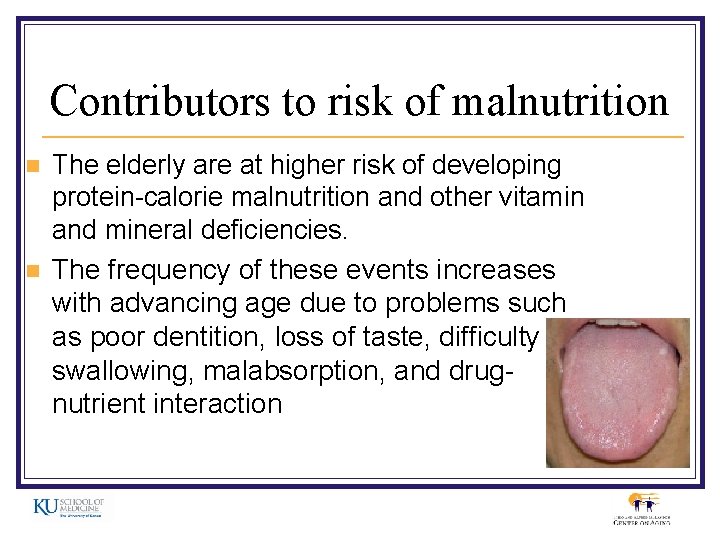
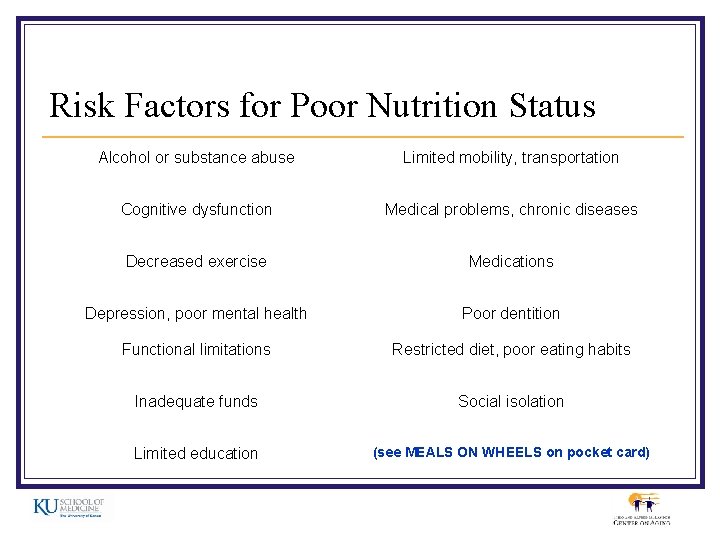
Contributors to risk of malnutrition n n The elderly are at higher risk of developing protein-calorie malnutrition and other vitamin and mineral deficiencies. The frequency of these events increases with advancing age due to problems such as poor dentition, loss of taste, difficulty swallowing, malabsorption, and drugnutrient interaction
Contributors to risk of malnutrition n Other physical limitations such as inability to obtain necessary food due to lack of transportation and dependence on others for shopping, lack of financial resources, and functional limitations can contribute to nutritional deficiencies
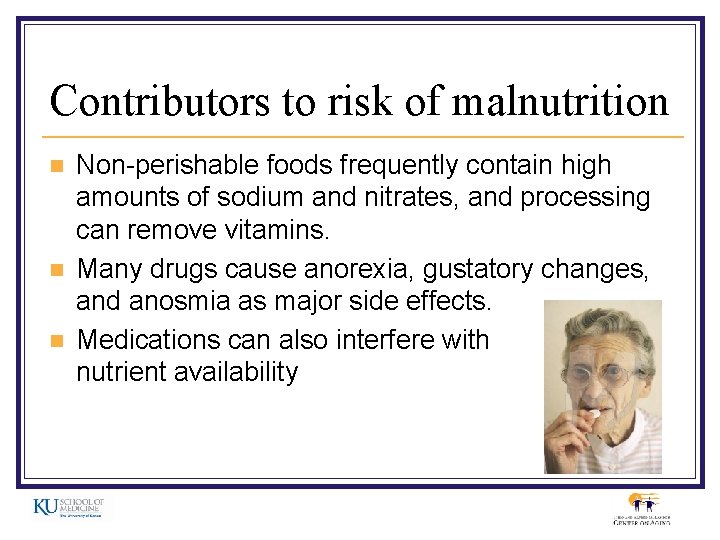
Contributors to risk of malnutrition n Non-perishable foods frequently contain high amounts of sodium and nitrates, and processing can remove vitamins. Many drugs cause anorexia, gustatory changes, and anosmia as major side effects. Medications can also interfere with nutrient availability
Risk Factors for Poor Nutrition Status Alcohol or substance abuse Limited mobility, transportation Cognitive dysfunction Medical problems, chronic diseases Decreased exercise Medications Depression, poor mental health Poor dentition Functional limitations Restricted diet, poor eating habits Inadequate funds Social isolation Limited education (see MEALS ON WHEELS on pocket card)
Physiology-the “anorexia of aging”
Physiology-the “anorexia of aging”
Physiology n Changes in physiology, metabolism, body composition, and physical function in the older patient may alter nutritional requirements, so that standards applicable to younger patient or middle-aged adults cannot be applied to the elderly
Physiology n Changes in body composition n n Decreased bone mass Decreased lean mass Decreased water content Increased total body fat (greater -abdominal fat stores) intra Decline in organ function is highly variable among individuals and may affect assessment and intervention options
Physiology n n Serum albumin is a recognized risk indicator for morbidity and mortality but is not an indicator of malnutrition because it lacks sensitivity and specificity. A modest decline does occur with aging Half-life is ~ 20 days Sensitive to hydration state and presence of inflammation, surgery, and other severe disease
Physiology n Hypoalbuminemia in the A. Community Setting Functional limitation Sarcopenia Increased health care use Mortality
Physiology n Hypoalbuminemia in the B. Hospital setting Increased length of stay Complications Readmissions Mortality
Physiology n There are some reports which express the use of caution with using albumin as a measurement of nutritional status in “hospitalized” patients. It is inversely correlated with markers of inflammatory activity (ESR, CRP) and can behave as an acute-phase reactant, with markedly reduced levels in the setting of acute illness.
Physiology n n n Prealbumin half-life ~ 48 hours Responds rather quickly to increased protein intake Controversial with regards to its use as a marker of malnutrition Best used in conjunction with other parameters (i. e. exam, BMI, CRP, hx of wt. loss, and various nutritional assessments) Also affected by changes in transcapillary escape due to infection, inflammation, etc.
Physiology n Cholesterol Serum cholesterol has been linked to nutritional status. Levels <160 mg/dl have been detected in patients with malignancy or other severe disease states. Community-dwelling elderly with both hypoalbuminemia and hypocholesterolemia exhibit higher rates of functional decline and mortality than those with either one alone.
Drugs that can cause ANOREXIA n n n n digoxin phenytoin SSRI’s / lithium Ca++ channel blockers H 2 receptor antagonists / PPIs Any chemotherapy metronidazole n n n n narcotic analgesics K+ supplements furosemide ipratropium bromide theophylline spironolactone levodopa fluoxetine
Drugs can interfere with senses of taste and smell n n n More than 250 medications reportedly disturb gustatory sensation More than 40 drugs reportedly disturb the sense of olfaction A few of these agents have been objectively determined to affect these functions via experiments, clinical trials, or intensity scaling
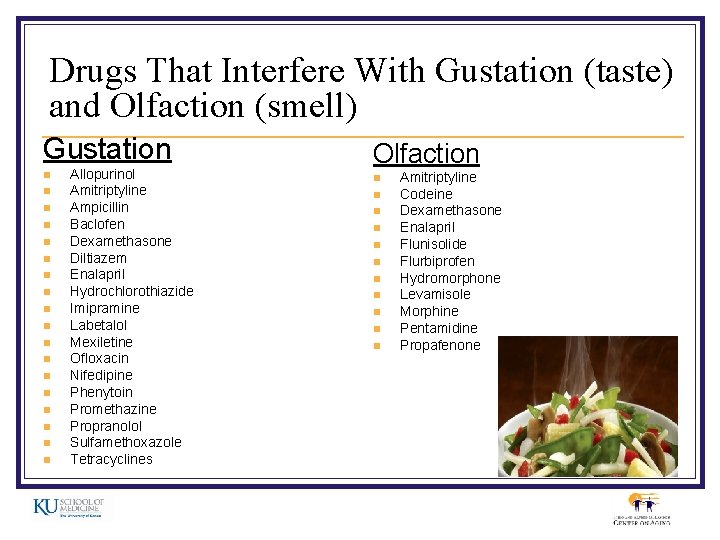
Drugs That Interfere With Gustation (taste) and Olfaction (smell) Gustation n n n n Allopurinol Amitriptyline Ampicillin Baclofen Dexamethasone Diltiazem Enalapril Hydrochlorothiazide Imipramine Labetalol Mexiletine Ofloxacin Nifedipine Phenytoin Promethazine Propranolol Sulfamethoxazole Tetracyclines Olfaction n n Amitriptyline Codeine Dexamethasone Enalapril Flunisolide Flurbiprofen Hydromorphone Levamisole Morphine Pentamidine Propafenone
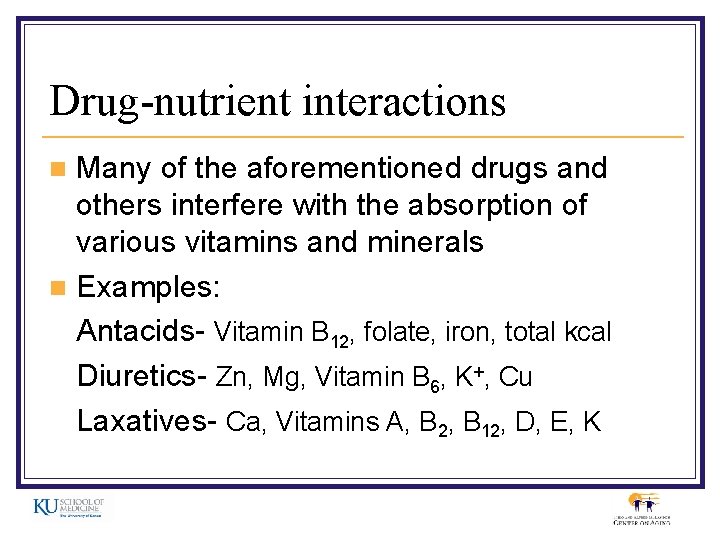
Drug-nutrient interactions Many of the aforementioned drugs and others interfere with the absorption of various vitamins and minerals n Examples: Antacids- Vitamin B 12, folate, iron, total kcal Diuretics- Zn, Mg, Vitamin B 6, K+, Cu Laxatives- Ca, Vitamins A, B 2, B 12, D, E, K n
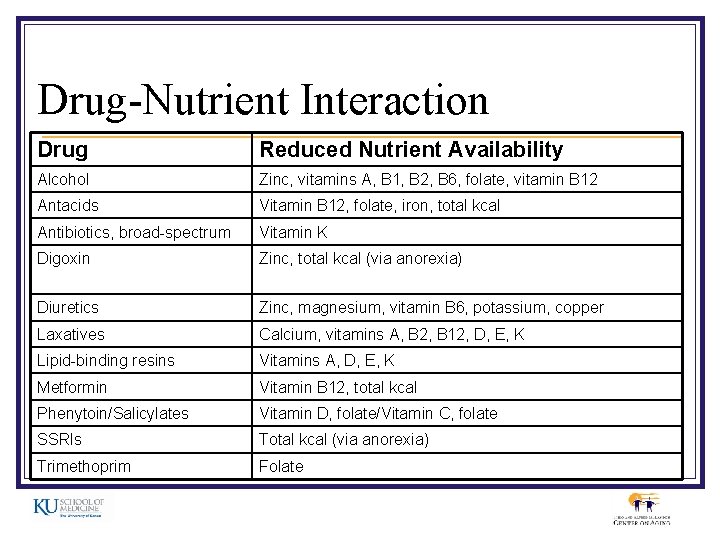
Drug-Nutrient Interaction Drug Reduced Nutrient Availability Alcohol Zinc, vitamins A, B 1, B 2, B 6, folate, vitamin B 12 Antacids Vitamin B 12, folate, iron, total kcal Antibiotics, broad-spectrum Vitamin K Digoxin Zinc, total kcal (via anorexia) Diuretics Zinc, magnesium, vitamin B 6, potassium, copper Laxatives Calcium, vitamins A, B 2, B 12, D, E, K Lipid-binding resins Vitamins A, D, E, K Metformin Vitamin B 12, total kcal Phenytoin/Salicylates Vitamin D, folate/Vitamin C, folate SSRIs Total kcal (via anorexia) Trimethoprim Folate
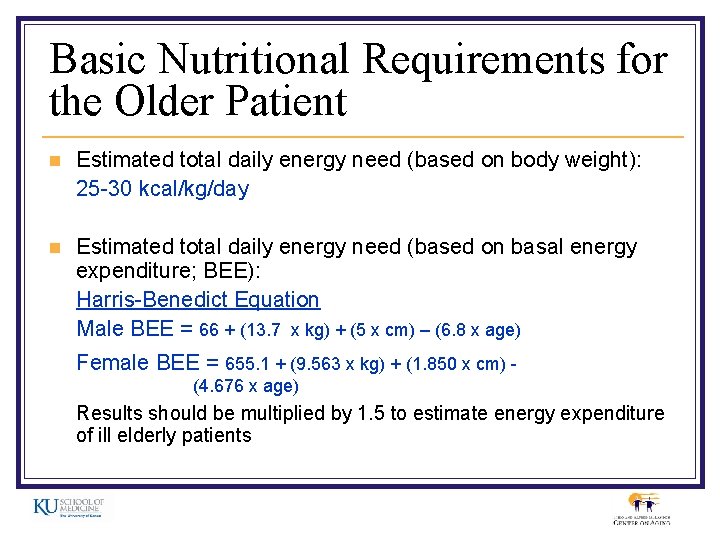
Basic Nutritional Requirements for the Older Patient n Estimated total daily energy need (based on body weight): 25 -30 kcal/kg/day n Estimated total daily energy need (based on basal energy expenditure; BEE): Harris-Benedict Equation Male BEE = 66 + (13. 7 x kg) + (5 x cm) – (6. 8 x age) Female BEE = 655. 1 + (9. 563 x kg) + (1. 850 x cm) (4. 676 x age) Results should be multiplied by 1. 5 to estimate energy expenditure of ill elderly patients
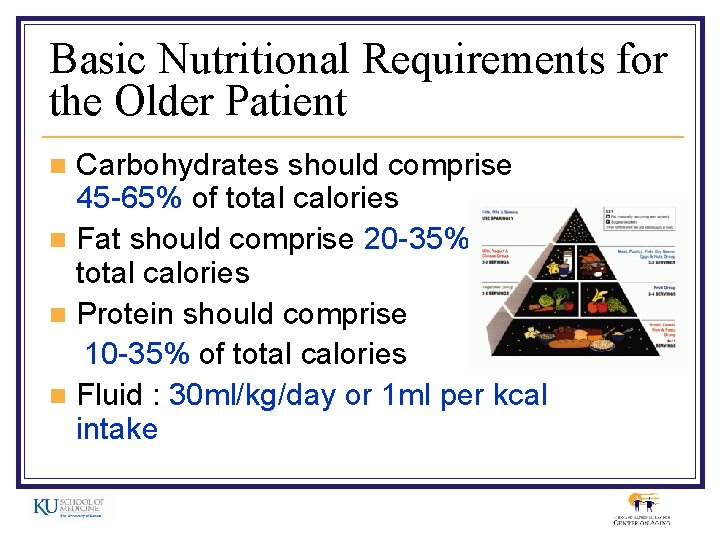
Basic Nutritional Requirements for the Older Patient Carbohydrates should comprise 45 -65% of total calories n Fat should comprise 20 -35% of total calories n Protein should comprise 10 -35% of total calories n Fluid : 30 ml/kg/day or 1 ml per kcal intake n
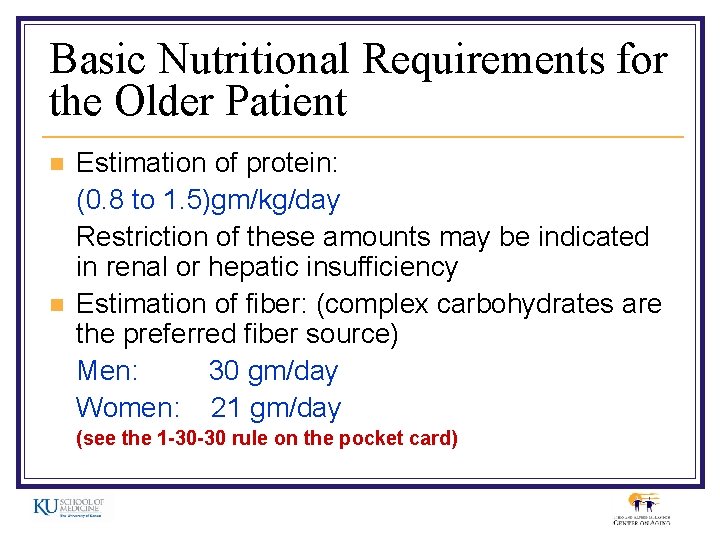
Basic Nutritional Requirements for the Older Patient n n Estimation of protein: (0. 8 to 1. 5)gm/kg/day Restriction of these amounts may be indicated in renal or hepatic insufficiency Estimation of fiber: (complex carbohydrates are the preferred fiber source) Men: 30 gm/day Women: 21 gm/day (see the 1 -30 -30 rule on the pocket card)
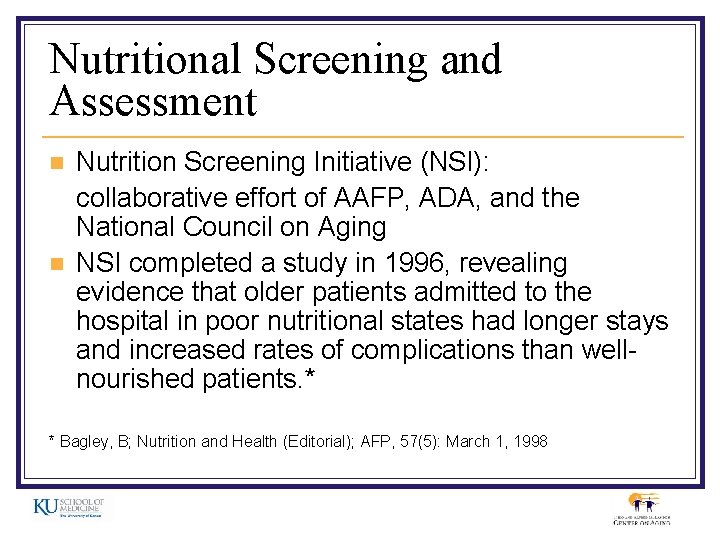
Nutritional Screening and Assessment n n Nutrition Screening Initiative (NSI): collaborative effort of AAFP, ADA, and the National Council on Aging NSI completed a study in 1996, revealing evidence that older patients admitted to the hospital in poor nutritional states had longer stays and increased rates of complications than wellnourished patients. * * Bagley, B; Nutrition and Health (Editorial); AFP, 57(5): March 1, 1998
Nutritional Screening and Assessment The NSI developed a screening tool that can be completed by patients, family members, or a health care professional n The tool consists of 10 questions which are scored and placed in 3 categories: No nutritional risk 0 -2 points Moderate nutritional risk 3 -5 points High nutritional risk >6 points n
Nutritional Screening and Assessment n NSI (points apply to “YES” answers) n I have an illness or condition that made me change the kind and/or amount of food I eat (2) n I eat fewer than two meals per day (3) n I eat few fruits or vegetables, or mild products (2) n I have 3 or more drinks of beer, liquor, or wine almost every day (2) n I have tooth or mouth problems that make it hard for me to eat-2 n I don’t always have enough money to buy the food I need (4) n I eat alone most of the time (1) n I take 3 or more different prescribed or OTC drugs per day (1) n Without wanting to, I have lost or gained 10 or more pounds in the last six months (2) n I am not always physically able to shop, cook and/or feed myself (2)
Nutritional Screening and Assessment Mini Nutritional Assessment (MNA) is a validated screening and assessment tool for identifying elderly patients with or at risk for malnutrition n Developed by the Nestlé Research Center, in collaboration with hospital clinicians n
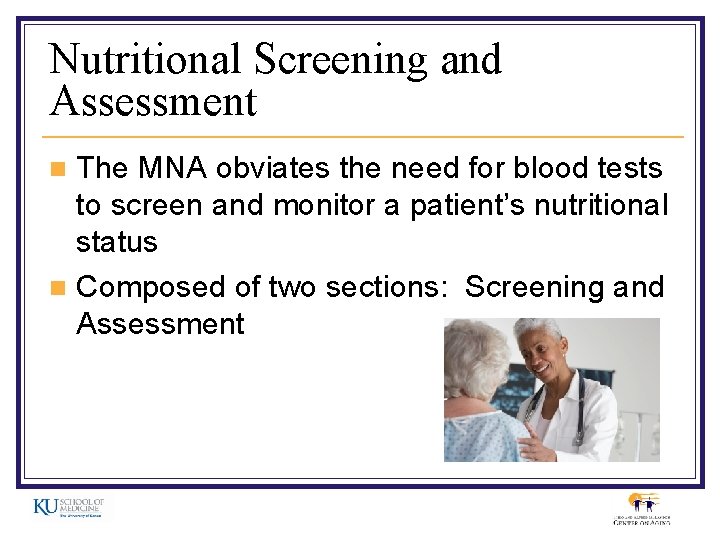
Nutritional Screening and Assessment The MNA obviates the need for blood tests to screen and monitor a patient’s nutritional status n Composed of two sections: Screening and Assessment n
Nutritional Screening and Assessment n n MNA Screening: In the screening section, five questions are asked, and the patient's BMI (Body Mass Index) is calculated, using the patient's height and weight. From these six items, a score is calculated, which will indicate whethere is possible malnutrition Screening score: (max. 14 pts) > 12 pts Normal; not at risk < 11 pts Poss. malnutrition; go to assessment
Nutritional Screening and Assessment n n MNA Assessment: Clarifies whethere is a future risk of malnutrition, or if malnourishment is currently present. The assessment section is comprised of 10 questions, and two anthropometric measures – mid-arm circumference and calf circumference. Scoring (max. 16 pts); when added to screening score, total max is 30 pts. If total is 17 -23. 5 pts, pt is at risk of malnutrition and if <17 pts, the pt is malnourished.
Nutritional Screening and Assessment n The MNA has demonstrated acceptable internal consistency, inter-observer reliability, and validity in studies of community-dwelling, hospitalized, and nursing home elderly individuals around the world and in the U. S. Beck, A. , et al. European Journal of Clinical Nutrition. Nov 2001, Vol 55(11); 1028 -33
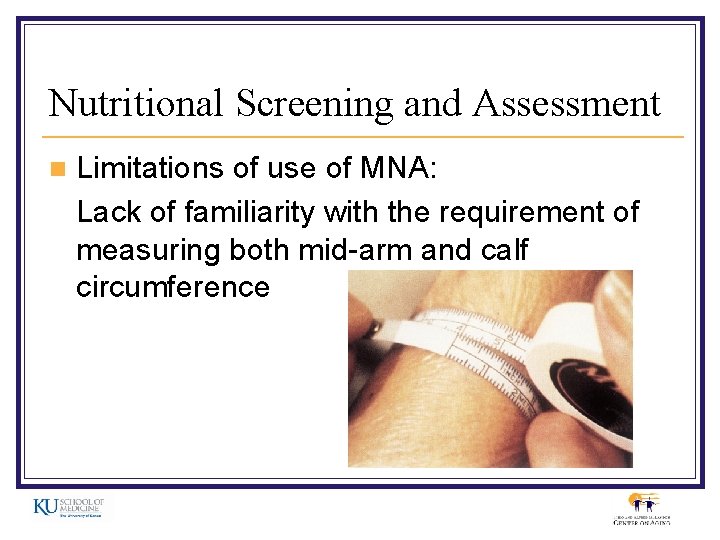
Nutritional Screening and Assessment n Limitations of use of MNA: Lack of familiarity with the requirement of measuring both mid-arm and calf circumference
Nutritional Screening and Assessment n Geriatric Nutritional Risk Index (GNRI): requires measurements of height, albumin, and weight at admission (also ideal weight as calculated from the Lorentz equation). Nutritional risk is graded based on results of calculations. It is a more reliable prognostic indicator of morbidity and mortality in hospitalized elderly. Low albumin and elevated CRP correlate statistically with increased nutritional risk (stronger than with prealbumin)
Body Size Classification Body Size Body Mass Index (kg/m²) Underweight < 18. 5 Normal weight 18. 5 -24. 9 Overweight 25 -29. 9 Obesity ≥ 30 Extreme Obesity ≥ 40
Nutritional Syndromes n Undernutrition-3 rd leading condition in hospital and home care sites and 4 th leading condition in office practice and nursing homes for which QI efforts would improve the functional health of older persons.
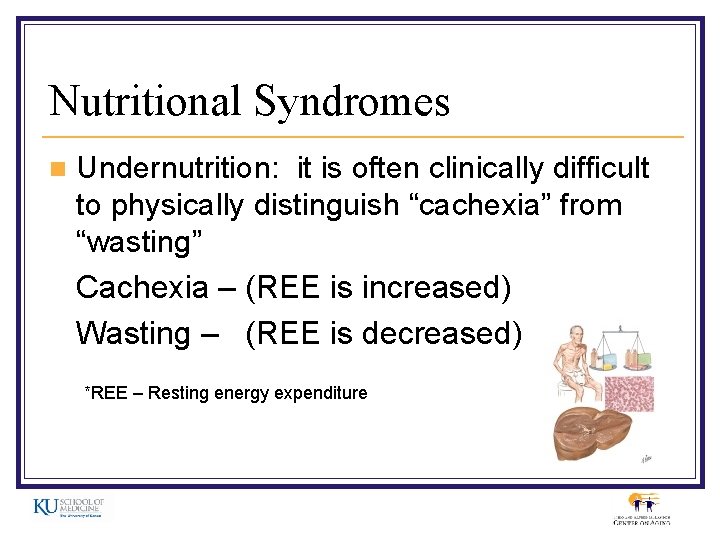
Nutritional Syndromes n Undernutrition: it is often clinically difficult to physically distinguish “cachexia” from “wasting” Cachexia – (REE is increased) Wasting – (REE is decreased) *REE – Resting energy expenditure
Nutritional Syndromes n n n Obesity – prevalence extends to the 60 -70 age group Adverse outcomes associated with obesity include impaired functional status (esp. BMI>35), increased health care resource use and increased mortality Poor diet quality and micronutrient deficiencies are common in obese elderly pts. , especially women who live alone
Nutritional Syndromes n n In the older obese patient, the focus should be on attaining a healthy weight to promote improved function, overall health, and quality of life A combination of dietary change, behavior modification and increasing activity or exercise are appropriate for most elderly obese patients.
Nutritional Syndromes However, homebound elderly are growing in number among the elderly obese. For those with frailty and obesity, the emphasis may be better placed on preservation of strength and flexibility rather than on weight reduction.
Nutritional interventions n n n PREVENTION is easier than treatment Intake improved by catering to food preferences; avoid therapeutic diets with no known clinical value Prepare patients for meals with hand/mouth care; proper positioning Assist those who need assistance Use herbs and spices to compensate for the losses of senses of taste and smell
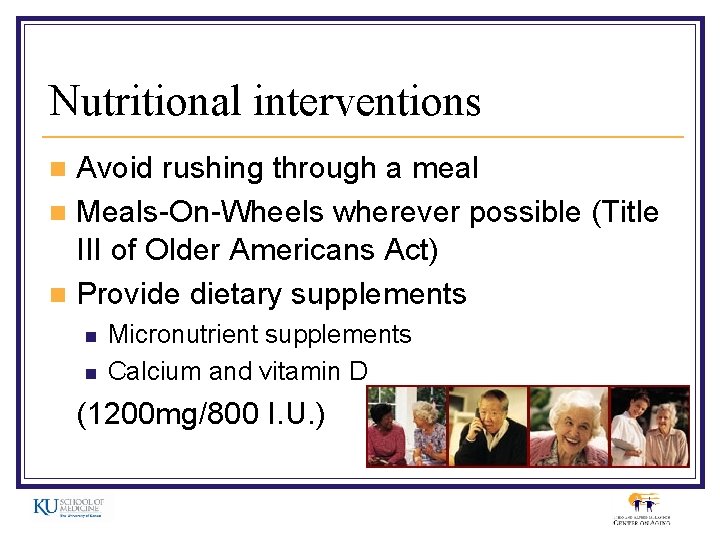
Nutritional interventions Avoid rushing through a meal n Meals-On-Wheels wherever possible (Title III of Older Americans Act) n Provide dietary supplements n n n Micronutrient supplements Calcium and vitamin D (1200 mg/800 I. U. )
Nutritional interventions n Vitamin E has not been shown to reduce the progression of Alzheimer’s disease or prevent coronary artery disease, but has been associated with a higher risk of hemorrhagic stroke; naturally occurring vitamins may do a better job of preventing cardiovascular disease and mortality.
Nutritional interventions It has been suggested that multivitamins and antioxidants may help to prevent agerelated cataracts and macular degeneration n Ask about and document all medications and supplements being taken. Review the necessity, safety, potential risks, and adverse effects with the patient. n
Nutritional interventions n DRUG TREATMENT: Appetite stimulants Cytokine-modulating agents Trophic agents

Nutritional interventions n Appetite stimulants n n mirtazapine (Remeron): 3. 75 -30 mg PO at bedtime; enhances serotonin via antagonism of the 5 -HT 3 receptor cyproheptadine (Periactin): 2 -4 mg PO orally with meals; serotonin and histamine antagonist with some anticholinergic properties and potential for confusion in the elderly
Nutritional interventions n Appetite stimulants n n Megestrol (Megace) 320 – 800 mg PO in four divided doses. Wt. gain is primarily fat; associated with increased risk of DVT in nursing home patients Dronabinol (Marinol) 5 -15 mg/M 2/day; a cannabinoid associated with somnolence and dysphoria in older persons
Ethical issues n For the nursing home patient, standards of care stipulate that a resident maintain acceptable parameters of nutritional status (weight, protein levels) unless the clinical condition is one wherein this is not possible, and a resident should receive a therapeutic diet when there is a problem.
Ethical issues n Adequate nutrition and hydration should always be provided to the elderly patient unless invasive nutritional support is refused by a fully-competent patient (document in written form that pt. has been informed of potential consequences of this choice with witnesses) or the terminally ill patient has executed a living will or advance directive that excludes artificial feeding in the event of unexpected death or terminal illness.
Ethical issues n n n Use caution with initiation of artificial nutrition and hydration in demented patients. This has not been demonstrated to improve life expectancy or quality of life. Appropriate counseling of patient, family, and/or surrogate of the consequences of withholding nutrition and feeding is obligatory! Consider palliative care in the setting of severe or end-stage dementia, and in those cases where living wills specify the withholding of artificial nutrition and hydration.
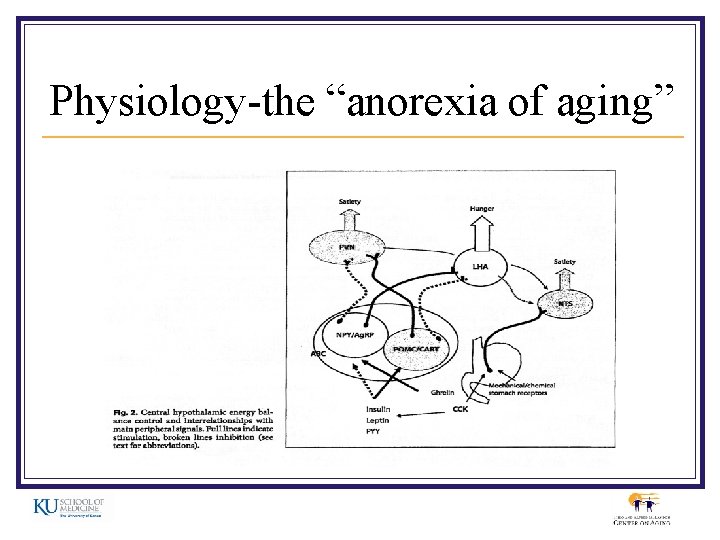
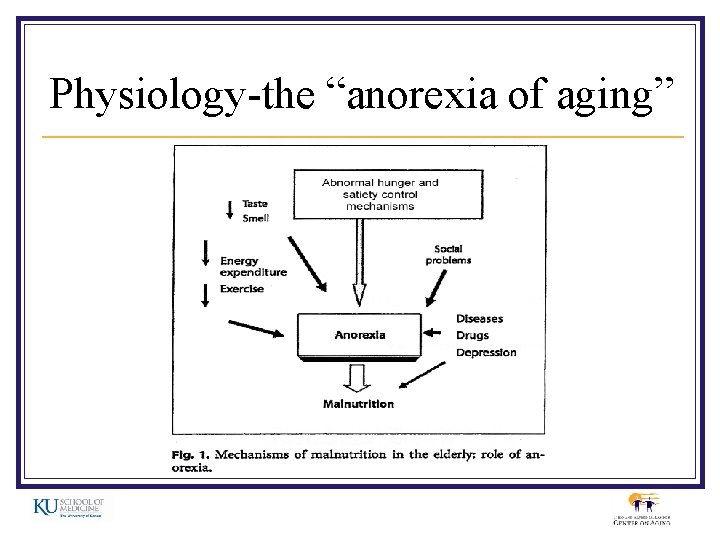
SUMMARY n n n Malnutrition is remarkably common in the older adult The risk of malnutrition in the elderly is high even in the absence of clinical or social risk factors due to the primitive so-called “anorexia of aging. ” Limitations in functional capacity, dentition, and support systems contribute to the problem Medications can and do adversely impact nutritional status Use of one of the screening tools can identify undernourished individuals whose problems are amenable to intervention
SUMMARY n n n Prevention is best, but implementation of interventions as early as possible (< 3 days since diagnosis) enhance more favorable outcomes Prealbumin alone is probably not a good parameter for identifying malnutrition but when combined with other measures such as serum albumin, cholesterol, BMI, or CRP it can be more useful. Low albumin and elevated CRP can be significant risk indicators while not being “diagnostic” of the presence of malnutrition.
SUMMARY n n Clarify patients’ advance directives whenever possible before initiating tube feedings or other artificial nutrition and hydration. Only a few of the quality indicators for malnutrition have evidence to support them, but the 8 ACOVE indicators we’ve discussed can serve as measures that may differentiate between quality and substandard care.
References n n n n n Nestle Nutrition; MNA (Mini Nutritional Assessment) http: //www. nestlenutrition. com/tools/mna. aspx Malnutrition, Chap. 24; Geriatrics Review Syllabus, Sixth Edition; American Geriatrics Society, 2006: PP 174 -80 Reuben, D. Quality Indicators for Malnutrition for Vulnerable Community-Dwelling and Hospitalized Older Persons; RAND Health; http: //www. rand. org/health/projects/acove/quality_indicators. html Bagley, B. Nutrition and Health-Editorial; American Family Physician; March 1, 1998; 57(5)+Beck, A. M. , et al. A six month’s prospective follow-up of 65+ y-old patients from general practice classified according to nutritional risk by the Mini Nutritional Assessment; Euro J of Clin Nutrition, 2001, Vol. 55: 1028 -33 Lantz, M. S. Failure to Thrive; Clinical Geriatrics, March 2005, 13(3): pp 20 -23 Kiseljak-Vassiliades, K. , et al. Basic Nutrition for Successful Aging: Part 1; Clinical Geriatrics, April 2006, 14(4): pp 16 -24 Shenkin, A. Serum Prealbumin: Is It a Marker of Nutritional Status or of Risk of Malnutrition? -Editorial; Clinical Chemistry: 52(12), 2006 Devoto, G. , et al. Prealbumin Serum Concentrations as a Useful Tool in the Assessment of malnutrition in Hospitalized Patients. Clinical Chemistry: 52(12): 2281 -85, 2006 Francesco, V. D. , et al. The Anorexia of Aging; Digestive Diseases 25(2): 129 -137; 2007
- Slides: 66