
Malnutrition in surgical patients Surgical Nutrition Training Module

- Slides: 35
Malnutrition in surgical patients Surgical Nutrition Training Module Level 1 Philippine Society of General Surgeons Committee on Surgical Training
Objectives • To define malnutrition and discuss its impact on the surgical patient • To identify malnutrition in hospitalized surgical patients
MALNUTRITION IS A SYNDROME
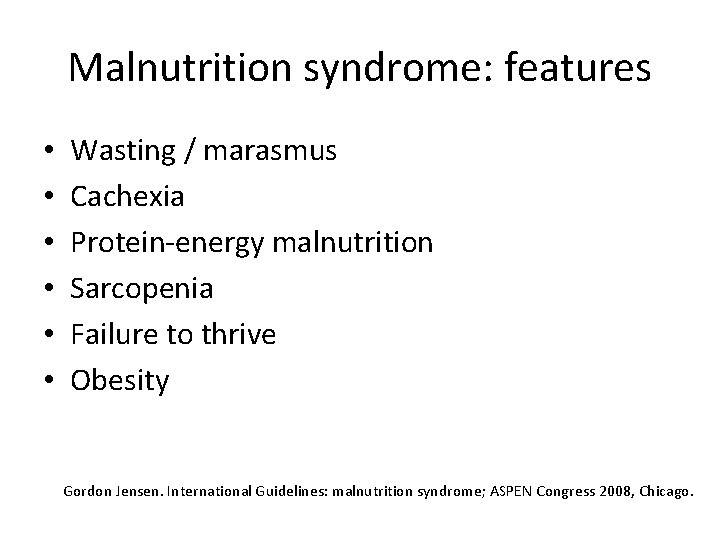
Malnutrition syndrome: features • • • Wasting / marasmus Cachexia Protein-energy malnutrition Sarcopenia Failure to thrive Obesity Gordon Jensen. International Guidelines: malnutrition syndrome; ASPEN Congress 2008, Chicago.
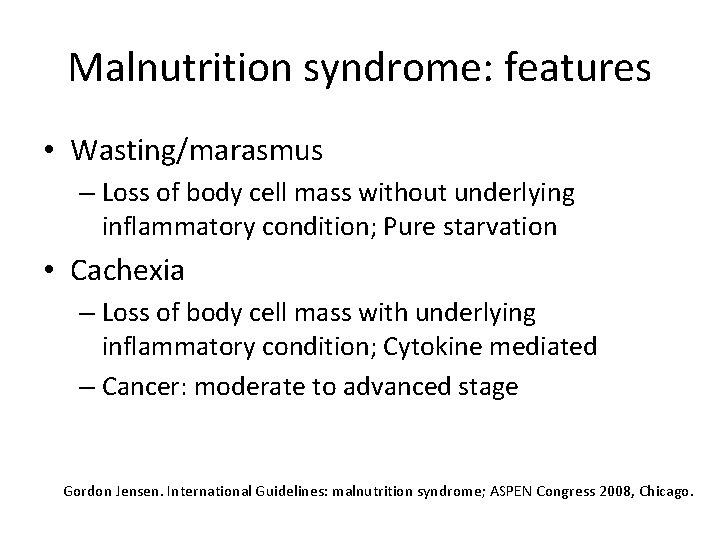
Malnutrition syndrome: features • Wasting/marasmus – Loss of body cell mass without underlying inflammatory condition; Pure starvation • Cachexia – Loss of body cell mass with underlying inflammatory condition; Cytokine mediated – Cancer: moderate to advanced stage Gordon Jensen. International Guidelines: malnutrition syndrome; ASPEN Congress 2008, Chicago.
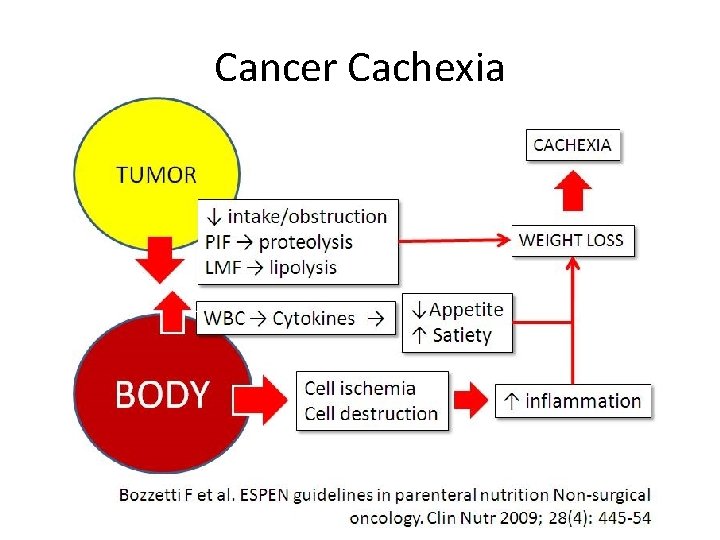
Cancer Cachexia
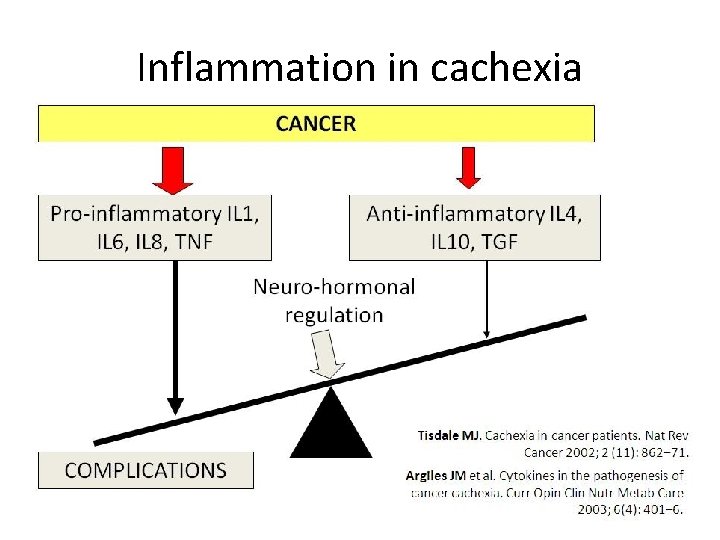
Inflammation in cachexia
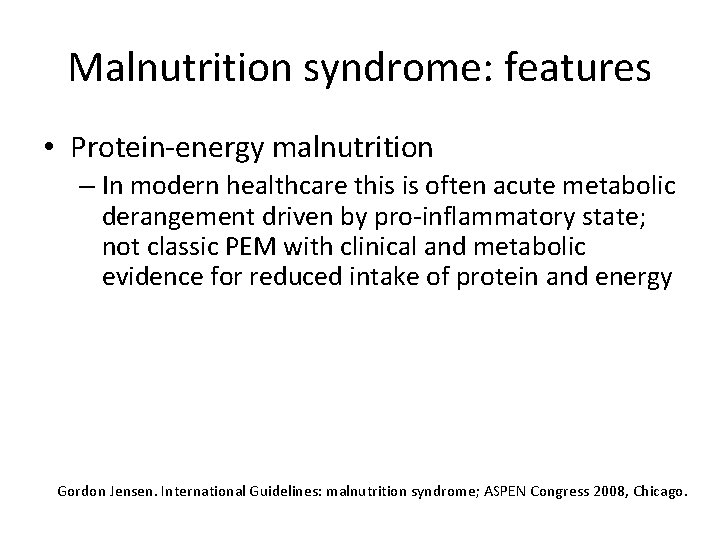
Malnutrition syndrome: features • Protein-energy malnutrition – In modern healthcare this is often acute metabolic derangement driven by pro-inflammatory state; not classic PEM with clinical and metabolic evidence for reduced intake of protein and energy Gordon Jensen. International Guidelines: malnutrition syndrome; ASPEN Congress 2008, Chicago.
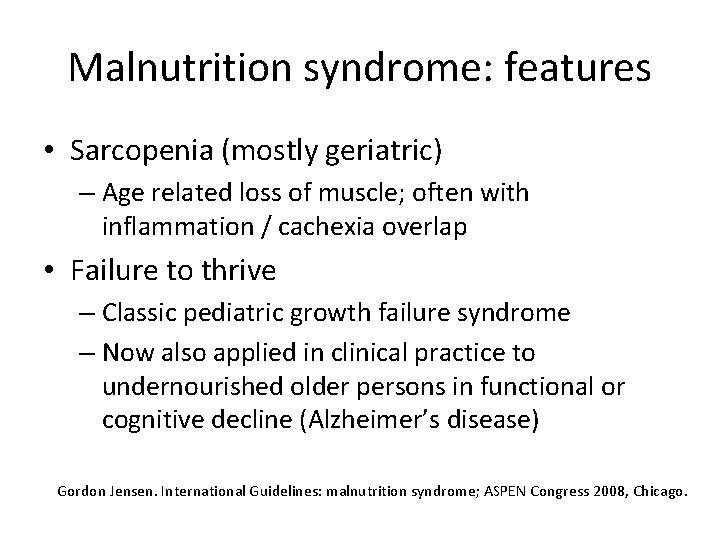
Malnutrition syndrome: features • Sarcopenia (mostly geriatric) – Age related loss of muscle; often with inflammation / cachexia overlap • Failure to thrive – Classic pediatric growth failure syndrome – Now also applied in clinical practice to undernourished older persons in functional or cognitive decline (Alzheimer’s disease) Gordon Jensen. International Guidelines: malnutrition syndrome; ASPEN Congress 2008, Chicago.
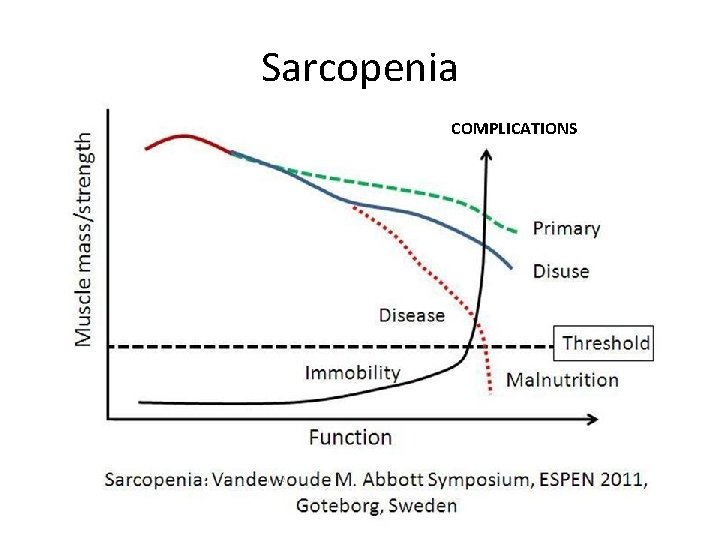
Sarcopenia COMPLICATIONS
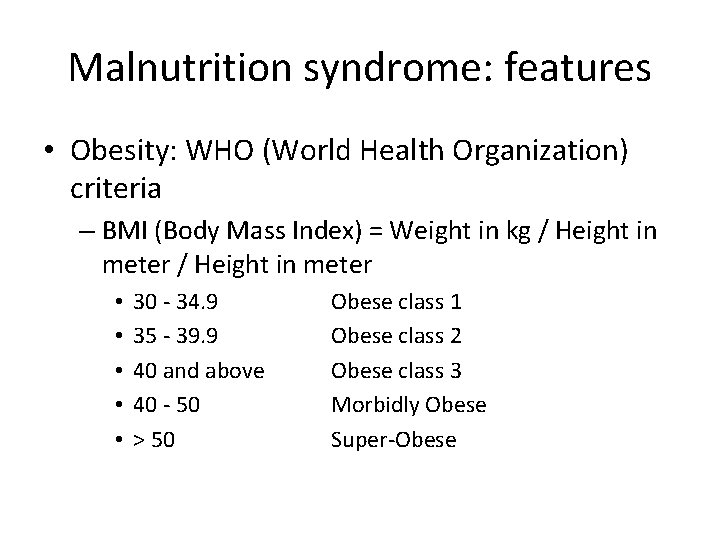
Malnutrition syndrome: features • Obesity: WHO (World Health Organization) criteria – BMI (Body Mass Index) = Weight in kg / Height in meter • • • 30 - 34. 9 35 - 39. 9 40 and above 40 - 50 > 50 Obese class 1 Obese class 2 Obese class 3 Morbidly Obese Super-Obese
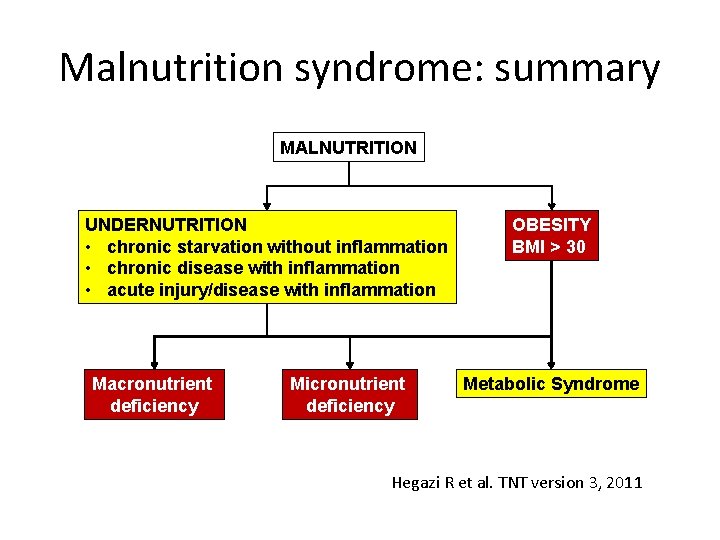
Malnutrition syndrome: summary MALNUTRITION UNDERNUTRITION • chronic starvation without inflammation • chronic disease with inflammation • acute injury/disease with inflammation Macronutrient deficiency Micronutrient deficiency OBESITY BMI > 30 Metabolic Syndrome Hegazi R et al. TNT version 3, 2011
Malnutrition process • It is a continuum – Starts with poor intake – Effect of initiation and progress of the disease process: severity of disease and adequacy of intake – Effect of efforts to correct both body composition and disease process
Malnutrition concerns • Lean body mass – Structure and function – Body composition capacity for healing and recovery – Quality of life • Energy reserves – Function – Optimal utilization of substrates and protein synthesis
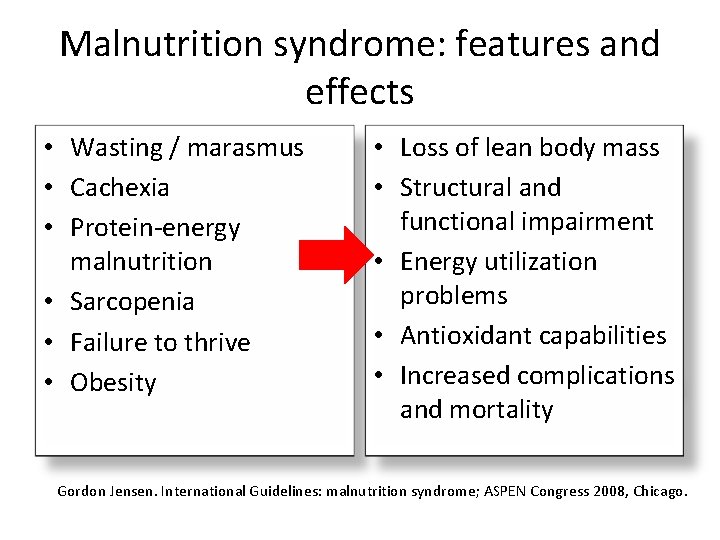
Malnutrition syndrome: features and effects • Wasting / marasmus • Cachexia • Protein-energy malnutrition • Sarcopenia • Failure to thrive • Obesity • Loss of lean body mass • Structural and functional impairment • Energy utilization problems • Antioxidant capabilities • Increased complications and mortality Gordon Jensen. International Guidelines: malnutrition syndrome; ASPEN Congress 2008, Chicago.
EFFECT OF SURGERY ON THE PATIENT
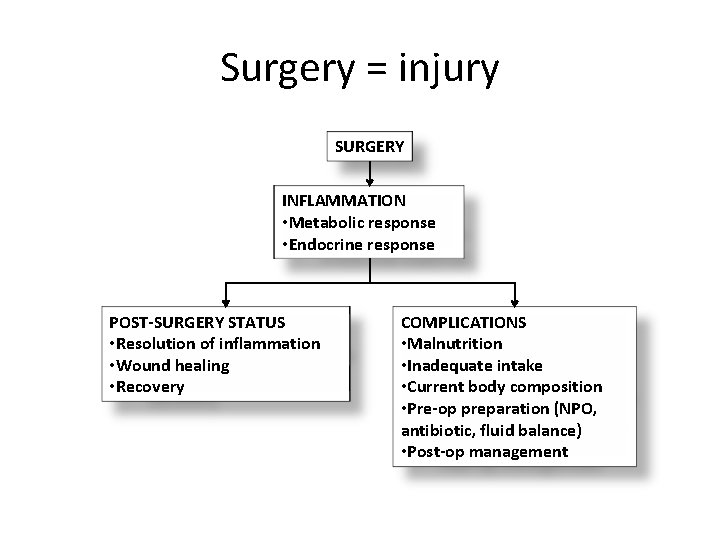
Surgery = injury SURGERY INFLAMMATION • Metabolic response • Endocrine response POST-SURGERY STATUS • Resolution of inflammation • Wound healing • Recovery COMPLICATIONS • Malnutrition • Inadequate intake • Current body composition • Pre-op preparation (NPO, antibiotic, fluid balance) • Post-op management
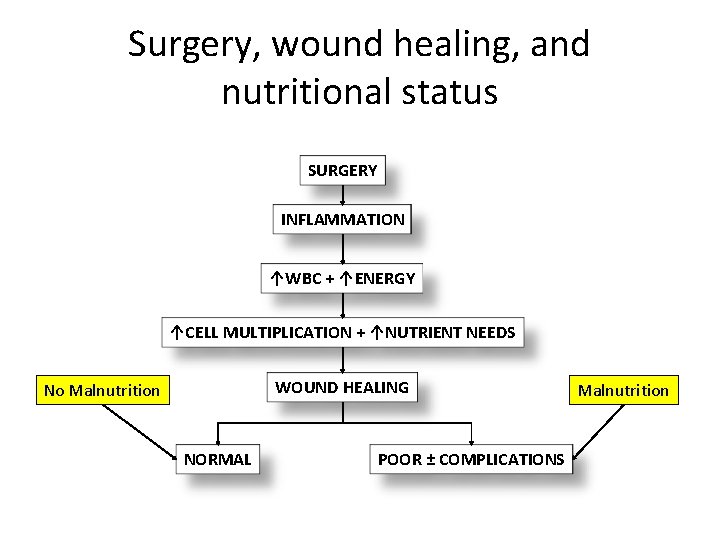
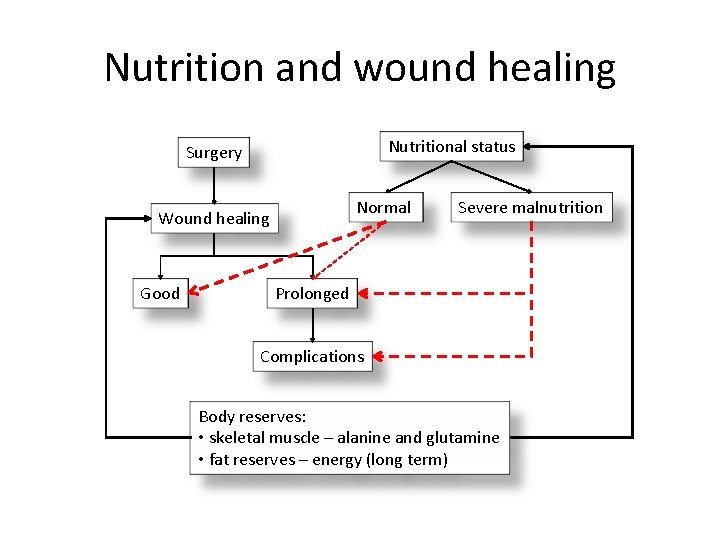
Surgery, wound healing, and nutritional status SURGERY INFLAMMATION ↑WBC + ↑ENERGY ↑CELL MULTIPLICATION + ↑NUTRIENT NEEDS WOUND HEALING No Malnutrition NORMAL POOR ± COMPLICATIONS Malnutrition
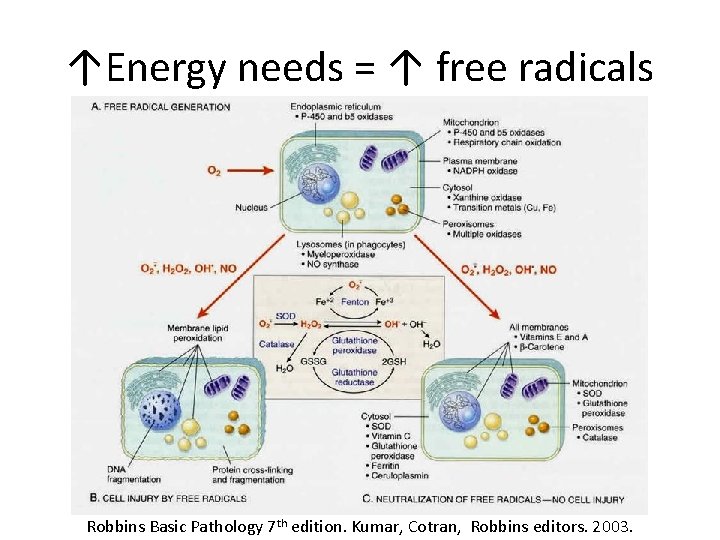
↑Energy needs = ↑ free radicals Robbins Basic Pathology 7 th edition. Kumar, Cotran, Robbins editors. 2003.
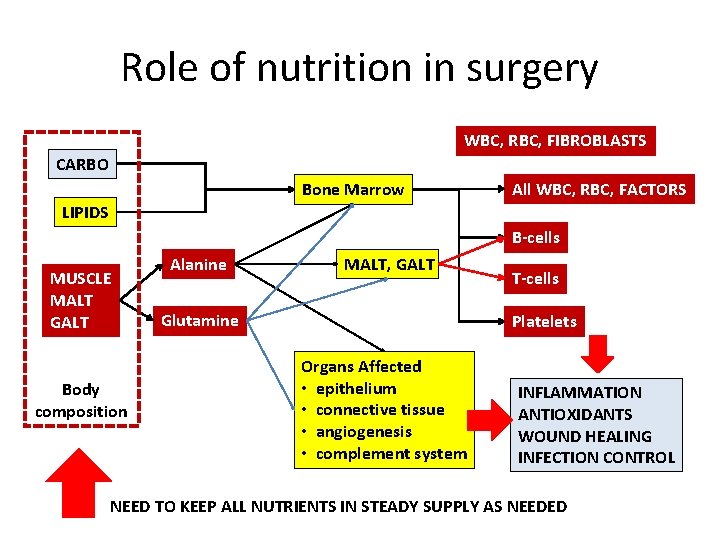
Role of nutrition in surgery WBC, RBC, FIBROBLASTS CARBO Bone Marrow All WBC, RBC, FACTORS LIPIDS B-cells MUSCLE MALT GALT Body composition Alanine MALT, GALT Glutamine T-cells Platelets Organs Affected • epithelium • connective tissue • angiogenesis • complement system INFLAMMATION ANTIOXIDANTS WOUND HEALING INFECTION CONTROL NEED TO KEEP ALL NUTRIENTS IN STEADY SUPPLY AS NEEDED
Nutrition and wound healing Nutritional status Surgery Normal Wound healing Good Severe malnutrition Prolonged Complications Body reserves: • skeletal muscle – alanine and glutamine • fat reserves – energy (long term)
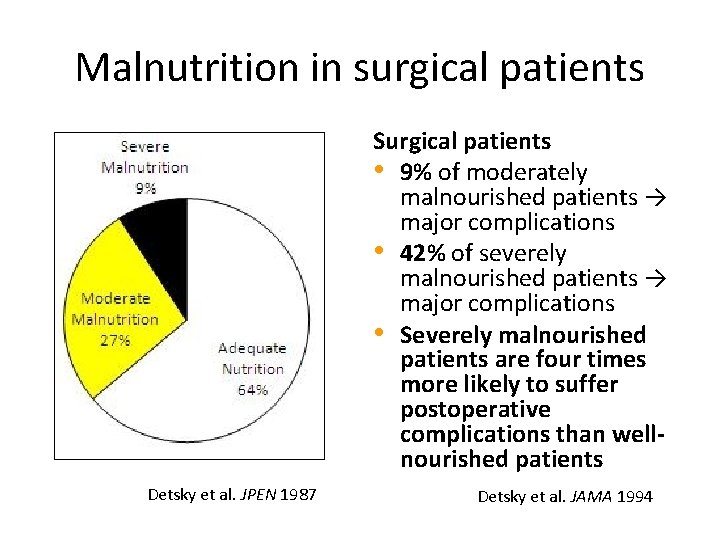
Malnutrition in surgical patients Surgical patients • 9% of moderately malnourished patients → major complications • 42% of severely malnourished patients → major complications • Severely malnourished patients are four times more likely to suffer postoperative complications than wellnourished patients Detsky et al. JPEN 1987 Detsky et al. JAMA 1994
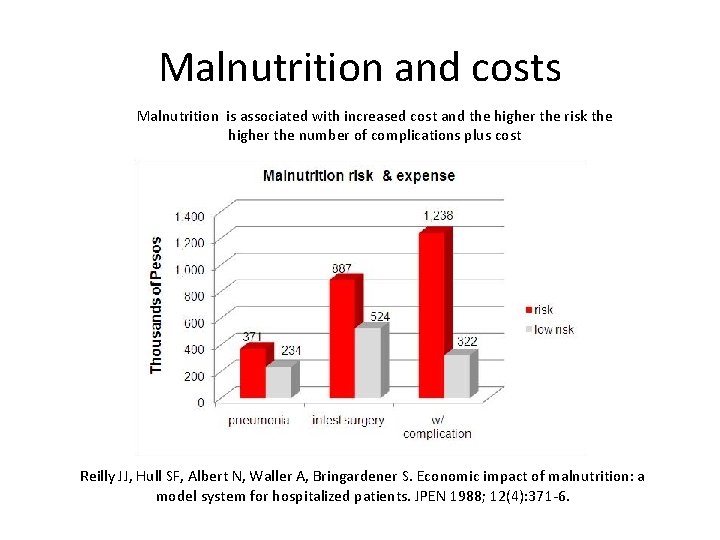
Malnutrition and costs Malnutrition is associated with increased cost and the higher the risk the higher the number of complications plus cost Reilly JJ, Hull SF, Albert N, Waller A, Bringardener S. Economic impact of malnutrition: a model system for hospitalized patients. JPEN 1988; 12(4): 371 -6.
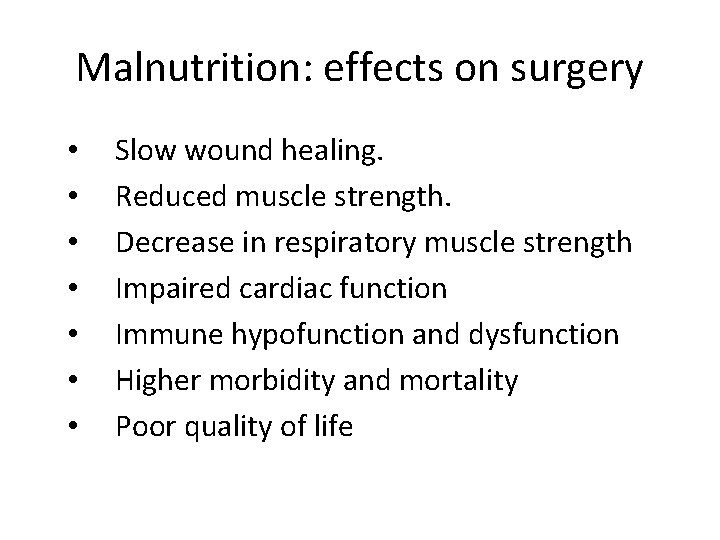
Malnutrition: effects on surgery • • Slow wound healing. Reduced muscle strength. Decrease in respiratory muscle strength Impaired cardiac function Immune hypofunction and dysfunction Higher morbidity and mortality Poor quality of life
PREVALENCE OF MALNUTRITION
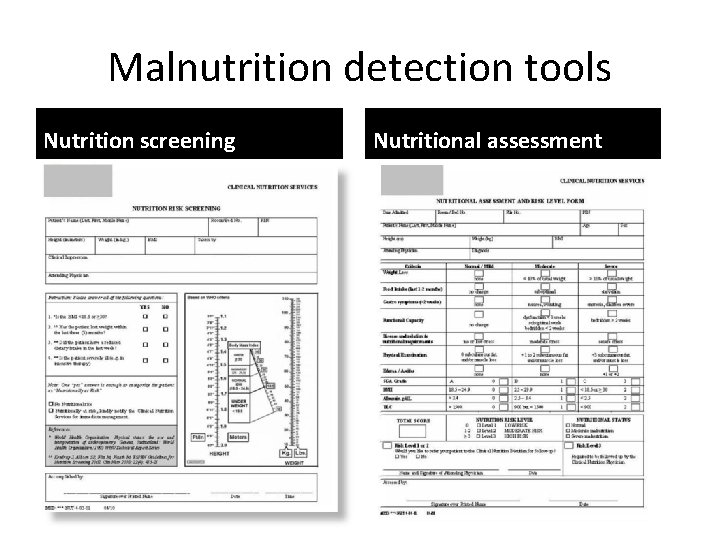
Malnutrition detection tools Nutrition screening Nutritional assessment
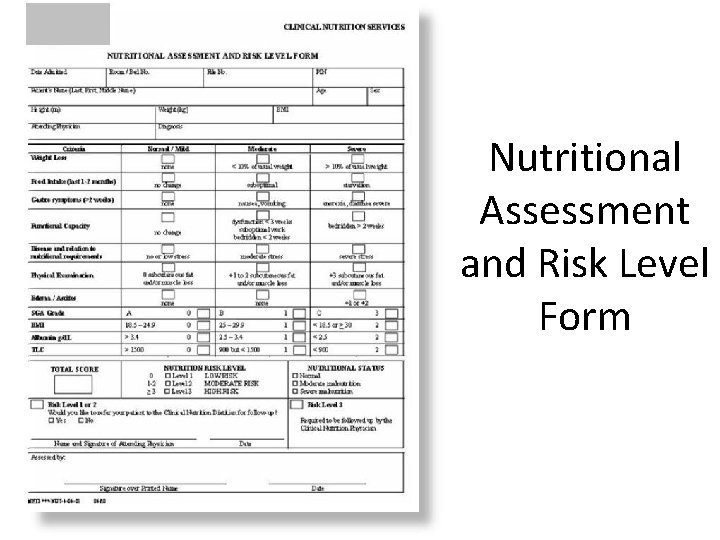
Nutritional Assessment and Risk Level Form
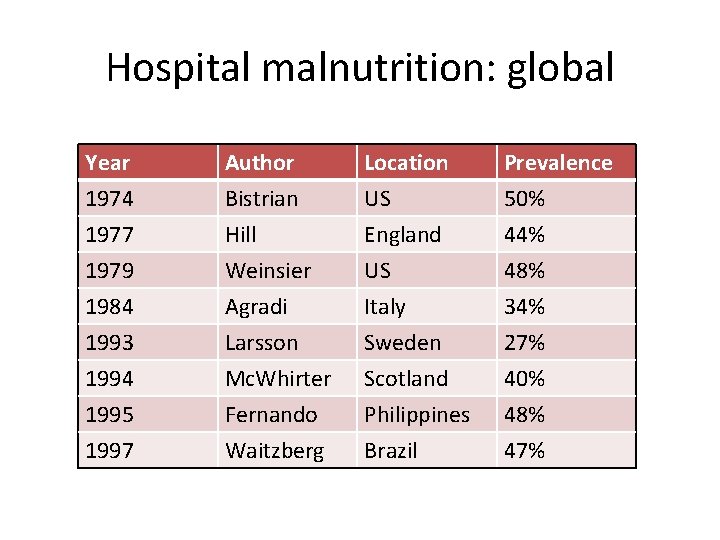
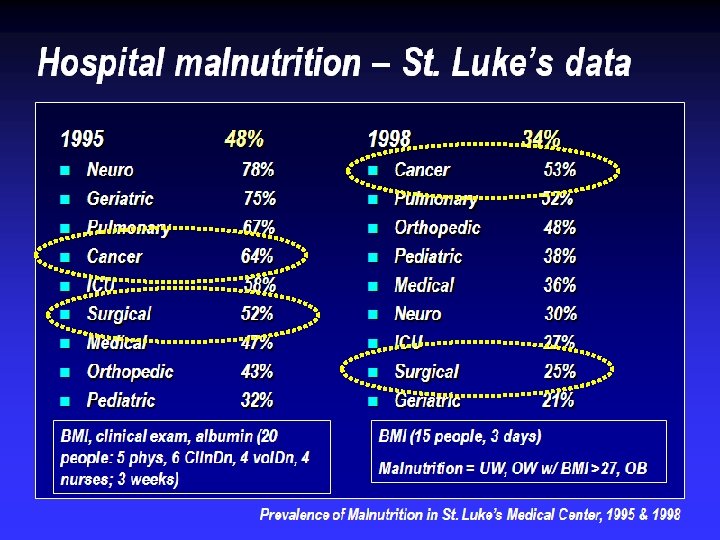
Hospital malnutrition: global Year 1974 1977 1979 Author Bistrian Hill Weinsier Location US England US Prevalence 50% 44% 48% 1984 1993 1994 1995 1997 Agradi Larsson Mc. Whirter Fernando Waitzberg Italy Sweden Scotland Philippines Brazil 34% 27% 40% 48% 47%
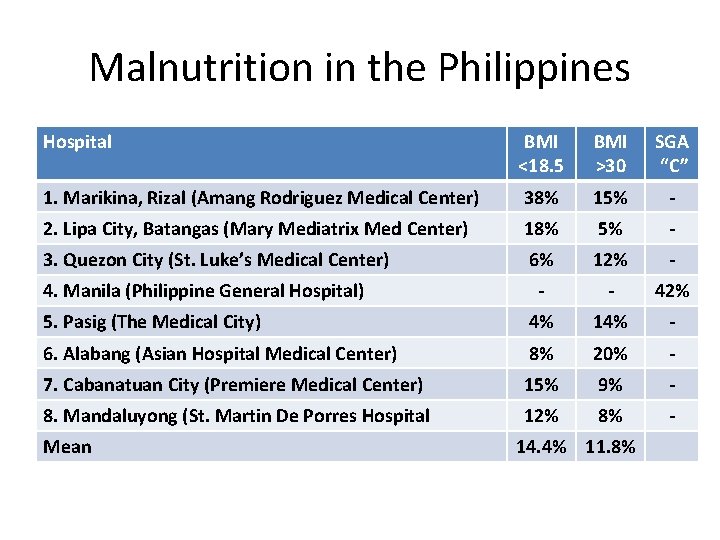
Malnutrition in the Philippines Hospital BMI <18. 5 BMI >30 SGA “C” 1. Marikina, Rizal (Amang Rodriguez Medical Center) 38% 15% - 2. Lipa City, Batangas (Mary Mediatrix Med Center) 18% 5% - 3. Quezon City (St. Luke’s Medical Center) 6% 12% - - - 42% 5. Pasig (The Medical City) 4% 14% - 6. Alabang (Asian Hospital Medical Center) 8% 20% - 7. Cabanatuan City (Premiere Medical Center) 15% 9% - 8. Mandaluyong (St. Martin De Porres Hospital 12% 8% - 4. Manila (Philippine General Hospital) Mean 14. 4% 11. 8%
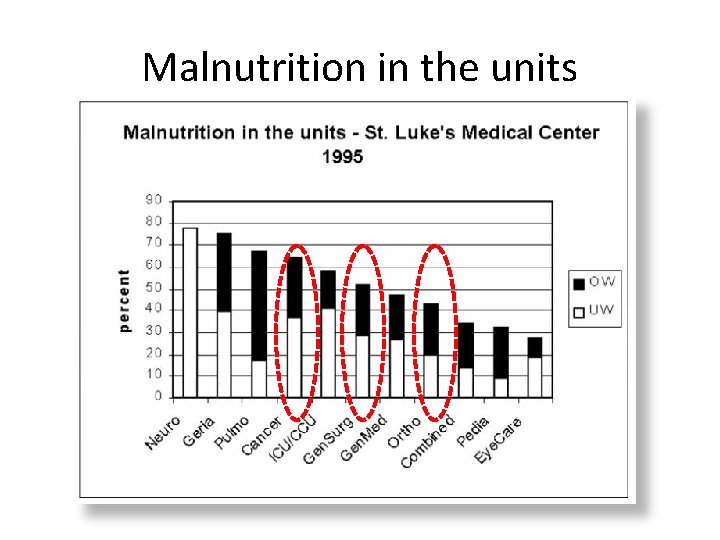
Malnutrition in the units
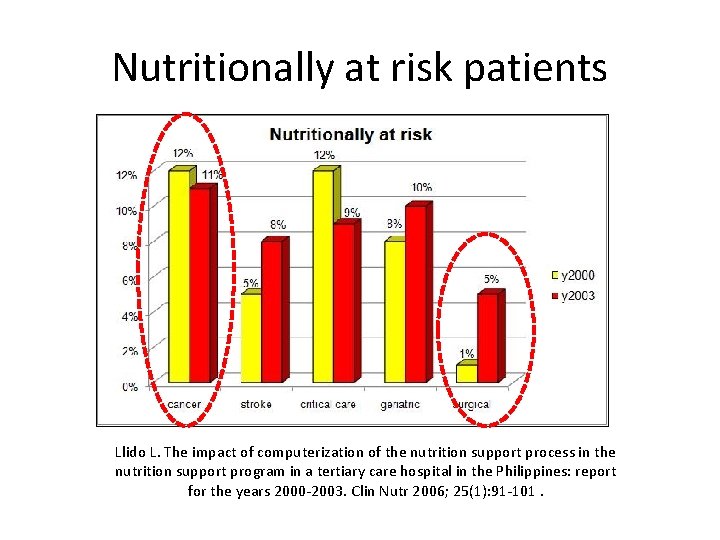
Nutritionally at risk patients Llido L. The impact of computerization of the nutrition support process in the nutrition support program in a tertiary care hospital in the Philippines: report for the years 2000 -2003. Clin Nutr 2006; 25(1): 91 -101.
WHAT IS THE PREVALENCE OF MALNUTRITION AMONG SURGICAL PATIENTS IN YOUR CENTER?
CONCLUSION
Malnutrition • Is a syndrome • Its presence in surgical patients influences outcome • Detection and management is a priority in surgical patients • Is prevalent in the surgical patient population