
MALIGNANT BONE TUMORS Pazourek L Ondrek Osteosarcoma Malignant

MALIGNANT BONE TUMORS Pazourek L. , Ondrůšek Š.

Osteosarcoma Malignant osteoid
Epidemiology 3 new cases /1 milion/ year n 2. decade n Metaphysis of long bones 1/2 in knee region n distal femur proximal tibia proximal humerus
Classification n Primary – Central n High-grade – Conventional high-grade (80 – 90%) n Osteoblastic n Chondroblastic n Fibroblastic – Telangiectatic n Low-grade

Peripheral High-grade Low-Grade Parosteal (lowgrade) Low/intermediategrade Periostal
n Secondary - in Paget´s disease of bone - post radiation
Symptoms n pain – during night, in rest swelling n pathological fracture n metastases in the time of diagnosis in 10 -25 % of patients n
Diagnostics X-ray n CT / MRI n Scintigraphy n Chest X- ray or spiral CT n Ultrasonography n Biopsy – excisional, needle n
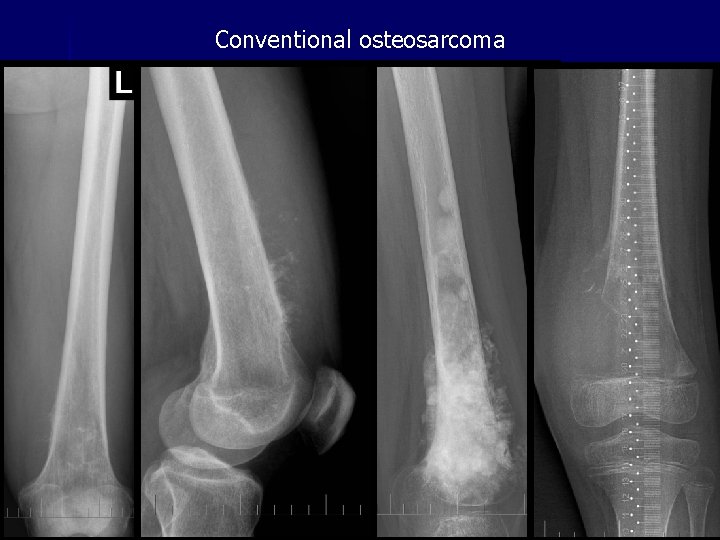
Conventional osteosarcoma
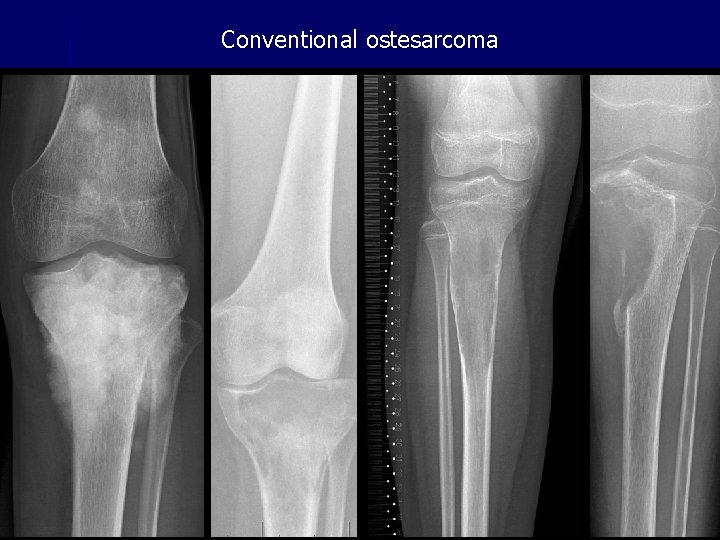
Conventional ostesarcoma
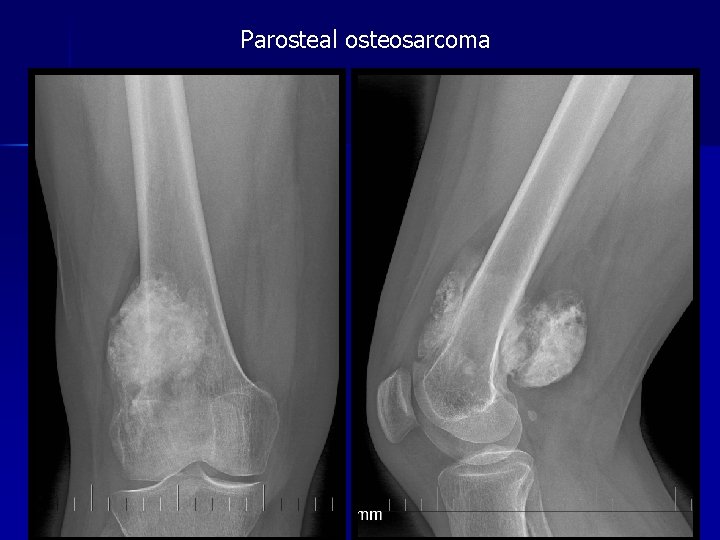
Parosteal osteosarcoma
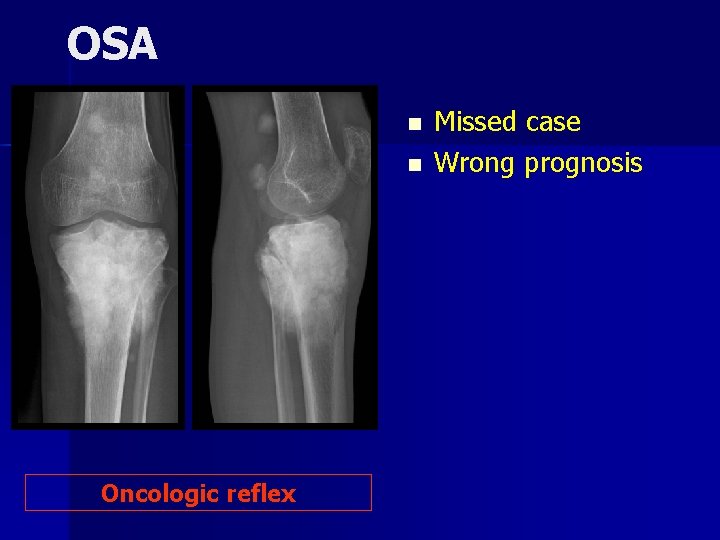
OSA n n Oncologic reflex Missed case Wrong prognosis
Therapy n neodjuvant chemotherapy surgery – radical resection / amputation adjuvant chemotherapy n Metastasectomy in lungs n Chemotherapy: (EURAMOS protocol) n n – metotrexat, doxorubicin, adriamycin, cisplatina, ifosfamid, etoposid. n In low-grade OSA – only surgical treatment n OSA is a radioresistant tumor
Prognostic factors n Metastases n Size of the tumor n Axial localisation n Radicality of surgery n Response to chemotherapy
Prognosis – 5 years survival n n 70% - conventional high-grade OSA without MTS and with good respone to chemotherapy (to 10 % of vital tumor cells) 90% - u low-grade OSA after radical surgery
Chondrosarcoma
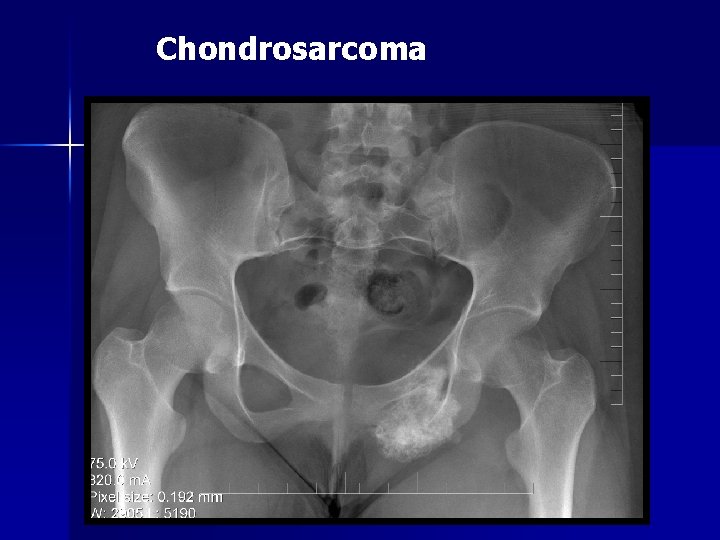
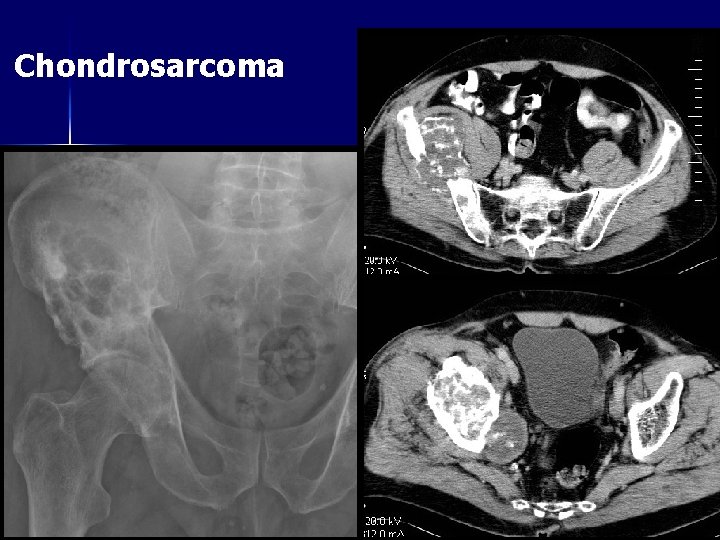
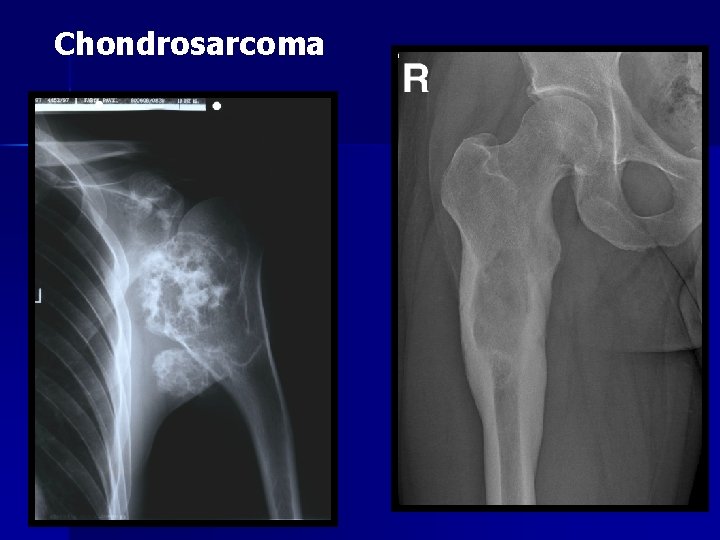
Epidemiology 10% of primary malignant bone tumors n Age: n – primary: 40 – 60 years – secondary: 25 – 45 years n Localisationpelvis, proximal femur, proximal humerus
Etiology n Secondary – Multiple enchondromas (M. Ollier, Maffucci sy – Exostosis disease cartilage over 2 cm – Chondroblastoma, chondromyxoid fibroma …
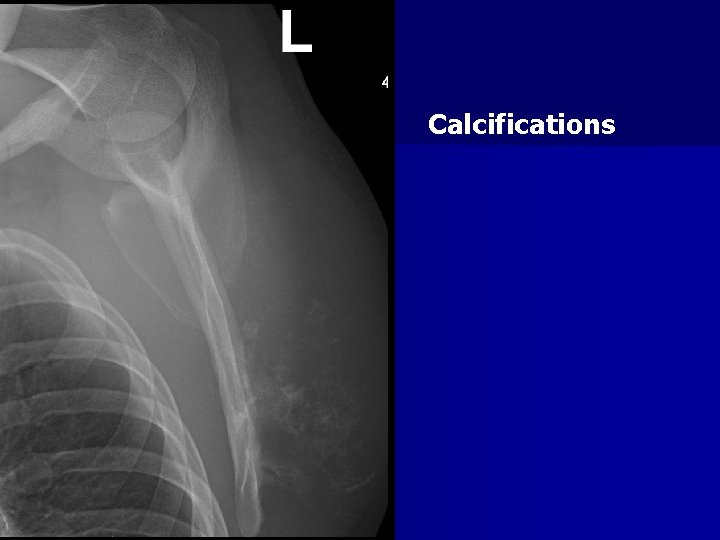
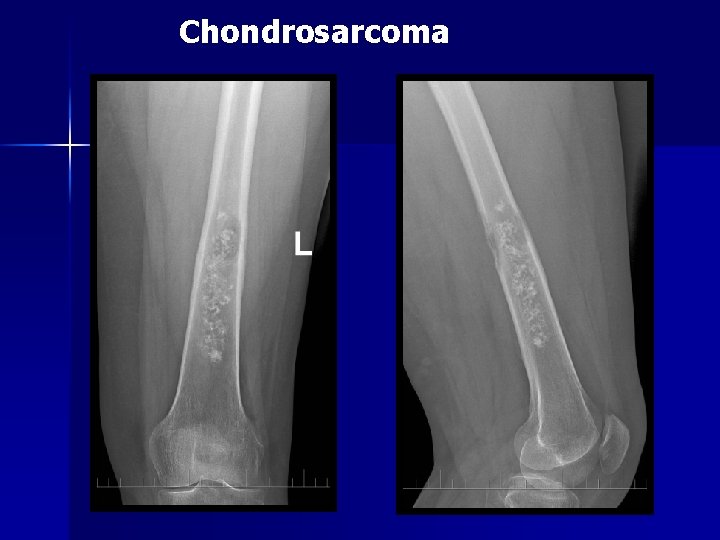
Calcifications
Chondrosarcoma
Chondrosarcoma
Chondrosarcoma
Chondrosarcoma
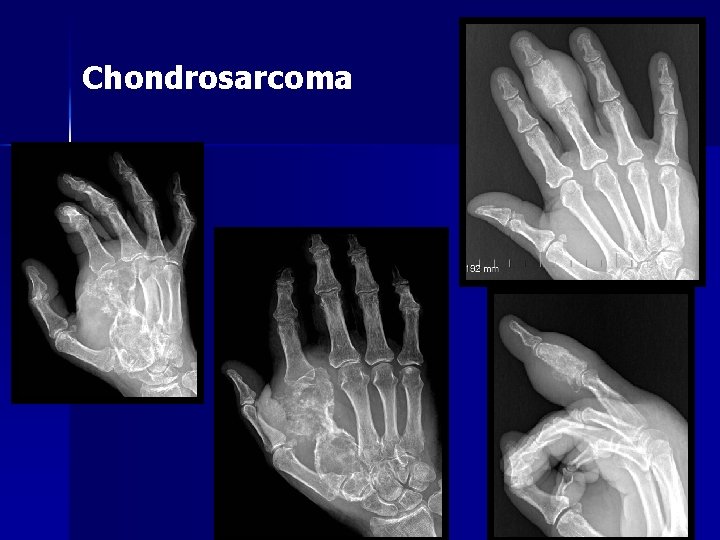
Chondrosarcoma
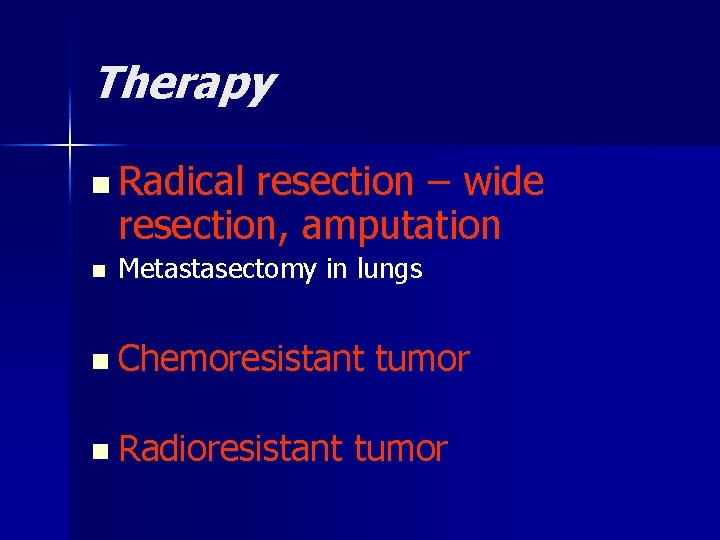
Therapy n Radical resection – wide resection, amputation n Metastasectomy in lungs n Chemoresistant n Radioresistant tumor
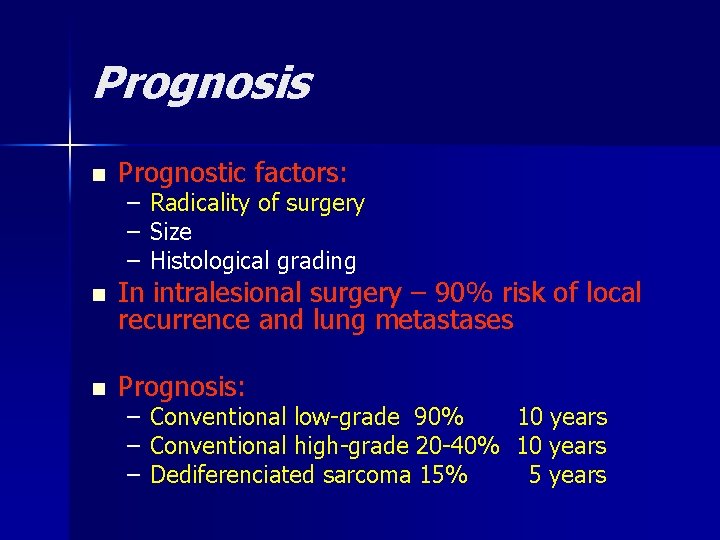
Prognosis n Prognostic factors: – – – Radicality of surgery Size Histological grading n In intralesional surgery – 90% risk of local recurrence and lung metastases n Prognosis: – – – Conventional low-grade 90% 10 years Conventional high-grade 20 -40% 10 years Dediferenciated sarcoma 15% 5 years
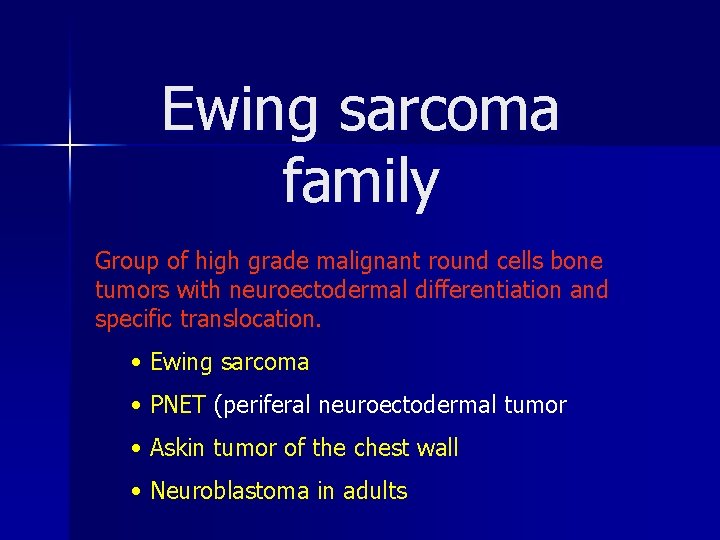
Ewing sarcoma family Group of high grade malignant round cells bone tumors with neuroectodermal differentiation and specific translocation. • Ewing sarcoma • PNET (periferal neuroectodermal tumor • Askin tumor of the chest wall • Neuroblastoma in adults
Epidemiology n One new case /1 mil. / 1 year 5 -25 years n In metaphysis of long bones with extension into diaphysis and in flat bones (pelvis, scapulla) n
Symptoms pain n swelling n Fever, redness, n Leucocytosis, ESR elev. n Biopsy- + identification of specific gene translocation t(11, 22)q(24, 12) n
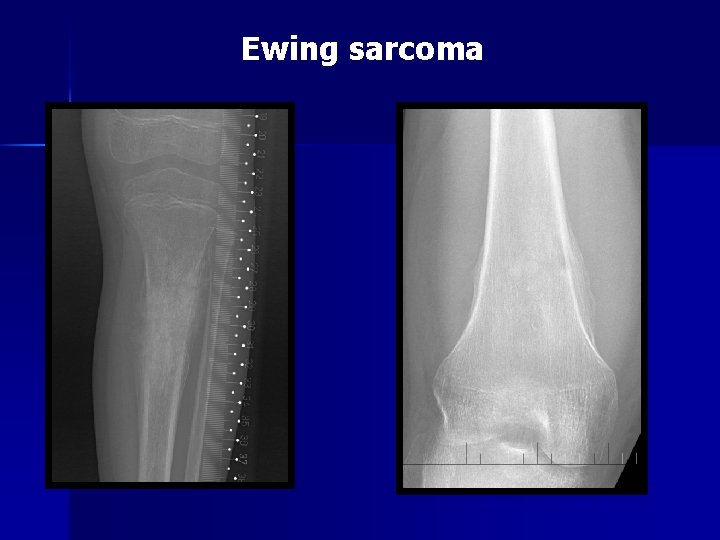
Ewing sarcoma
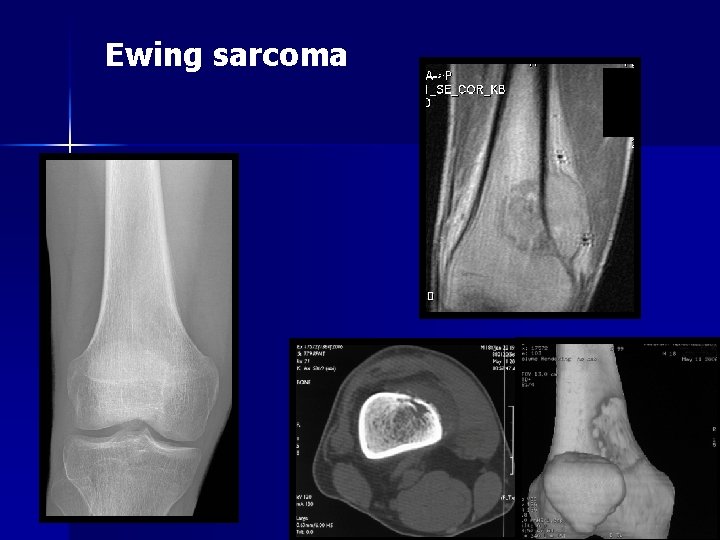
Ewing sarcoma

Ewing sarcoma
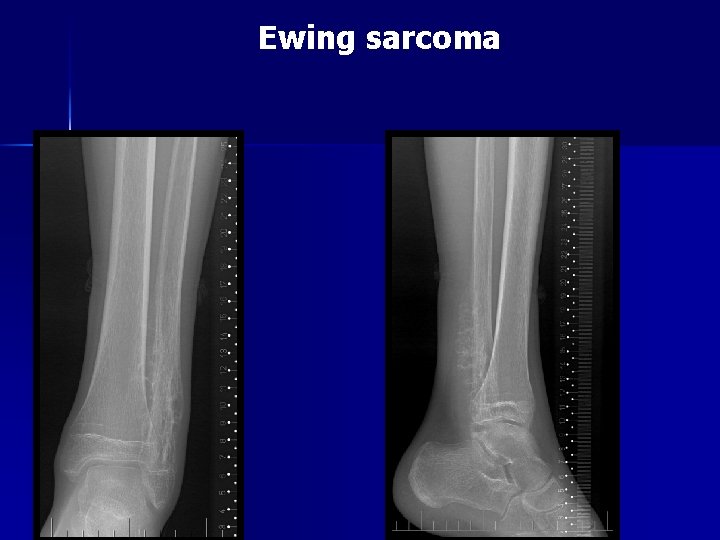
Ewing sarcoma
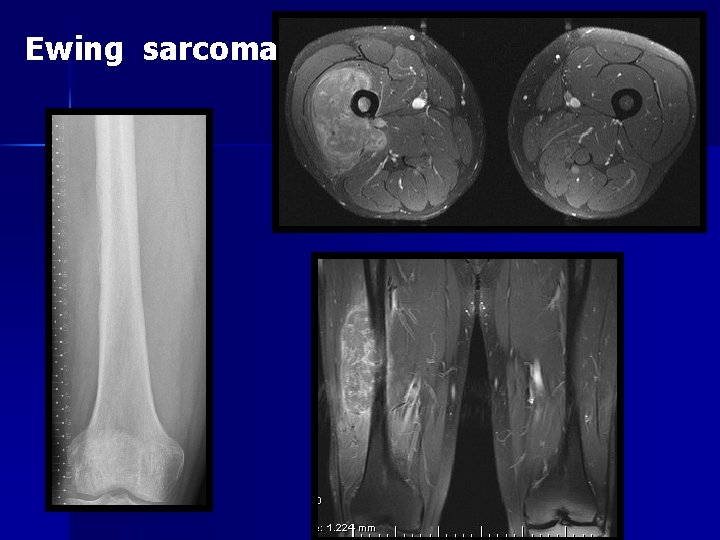
Ewing sarcoma
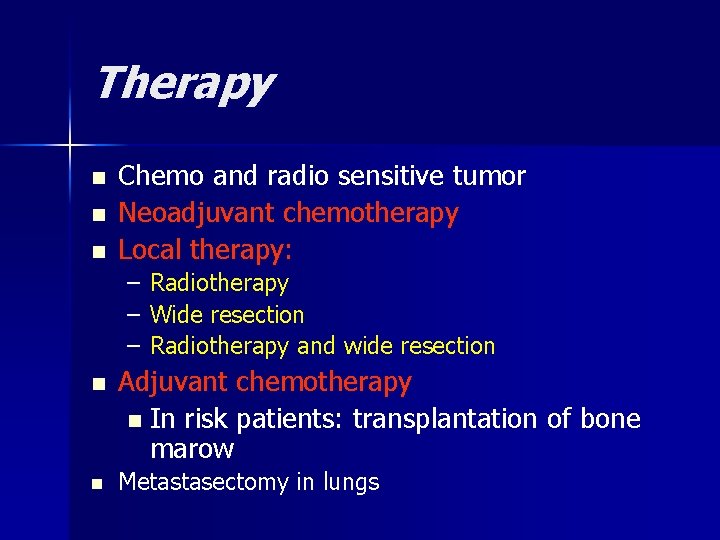
Therapy n n n Chemo and radio sensitive tumor Neoadjuvant chemotherapy Local therapy: – – – n n Radiotherapy Wide resection Radiotherapy and wide resection Adjuvant chemotherapy n In risk patients: transplantation of bone marow Metastasectomy in lungs
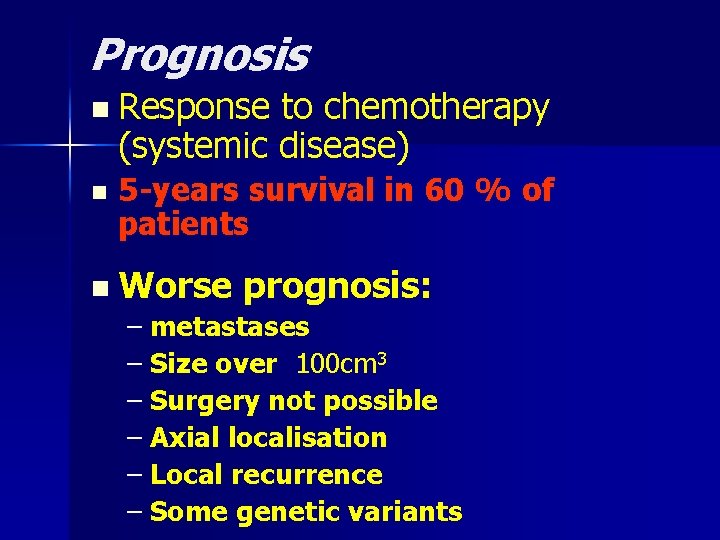
Prognosis n Response to chemotherapy (systemic disease) n 5 -years survival in 60 % of patients n Worse prognosis: – metastases – Size over 100 cm 3 – Surgery not possible – Axial localisation – Local recurrence – Some genetic variants
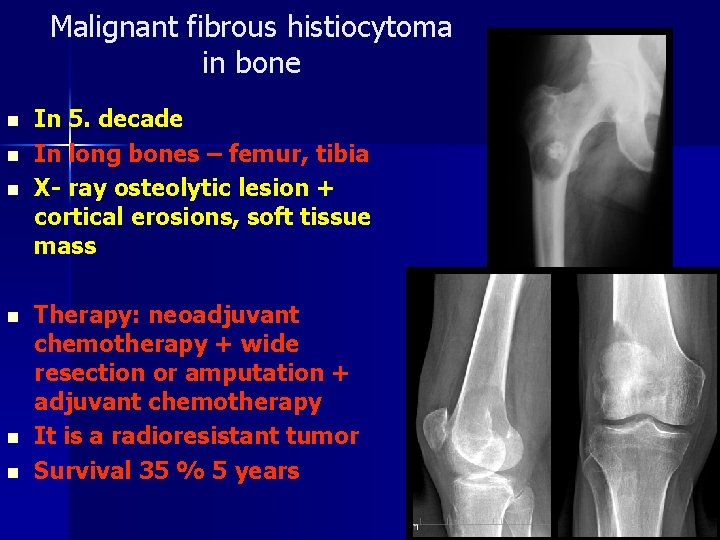
Malignant fibrous histiocytoma in bone n n n In 5. decade In long bones – femur, tibia X- ray osteolytic lesion + cortical erosions, soft tissue mass Therapy: neoadjuvant chemotherapy + wide resection or amputation + adjuvant chemotherapy It is a radioresistant tumor Survival 35 % 5 years
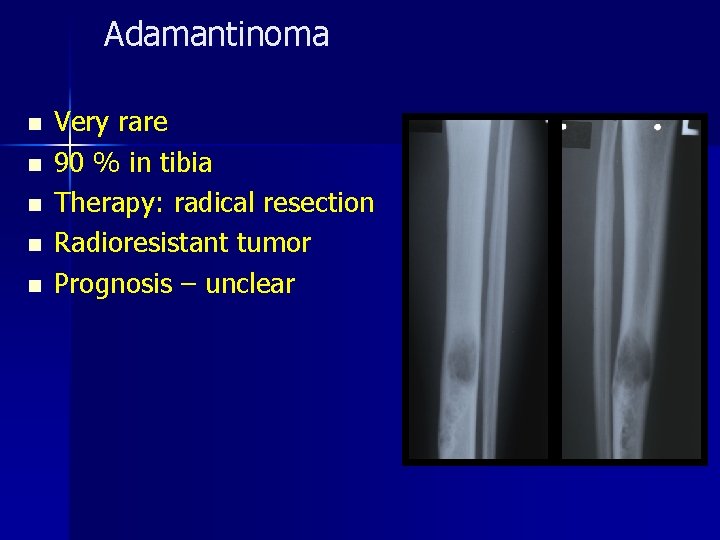
Adamantinoma n n n Very rare 90 % in tibia Therapy: radical resection Radioresistant tumor Prognosis – unclear
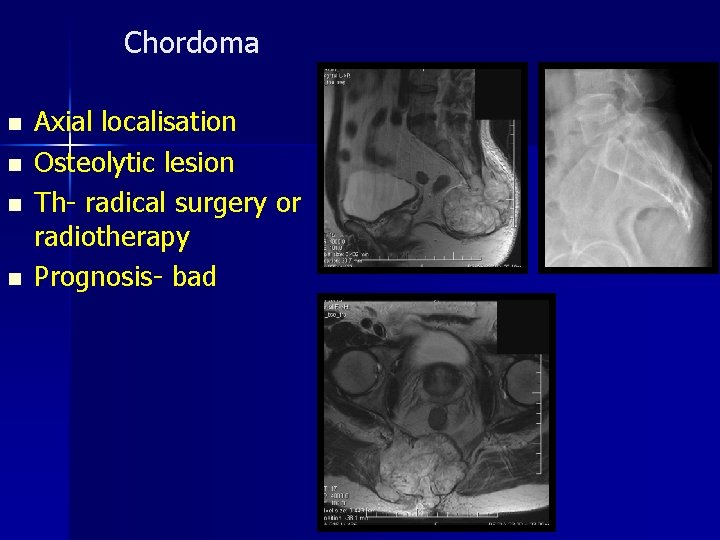
Chordoma n n Axial localisation Osteolytic lesion Th- radical surgery or radiotherapy Prognosis- bad
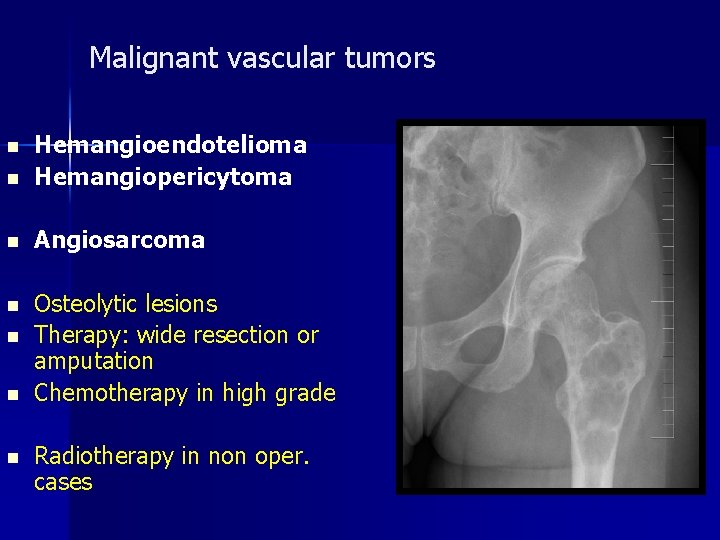
Malignant vascular tumors n Hemangioendotelioma Hemangiopericytoma n Angiosarcoma n Osteolytic lesions Therapy: wide resection or amputation Chemotherapy in high grade n n Radiotherapy in non oper. cases

Hemoblastosis in skeleton
n Primary bone tumors – Multiple myeloma (plasmocytoma) – Solitary plasmocytom (myelom) – Primary bone lymfoma n Secondary lesions – Hodgkin lymfoma – Non-Hodgkin lymfoma – Leukemia Therapy- chemotherapy and radiotherapy in hematooncology
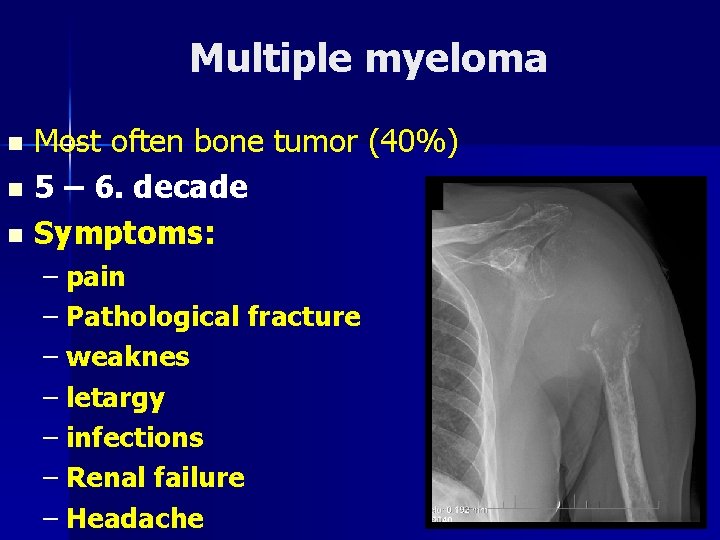
Multiple myeloma Most often bone tumor (40%) n 5 – 6. decade n Symptoms: n – pain – Pathological fracture – weaknes – letargy – infections – Renal failure – Headache
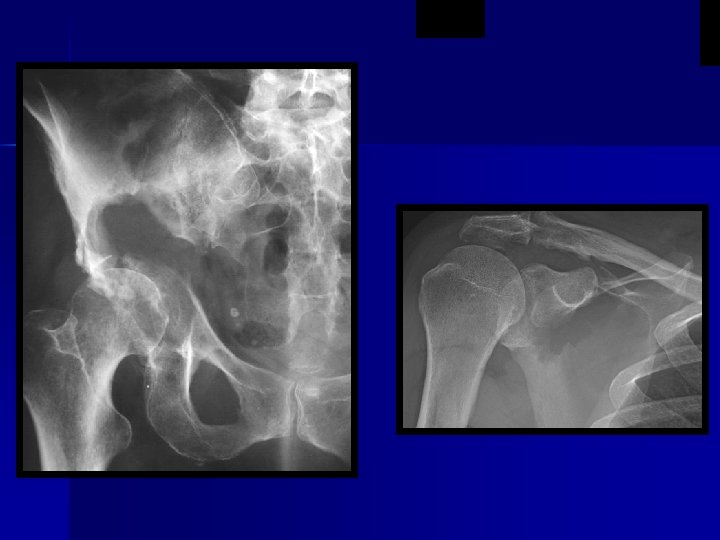
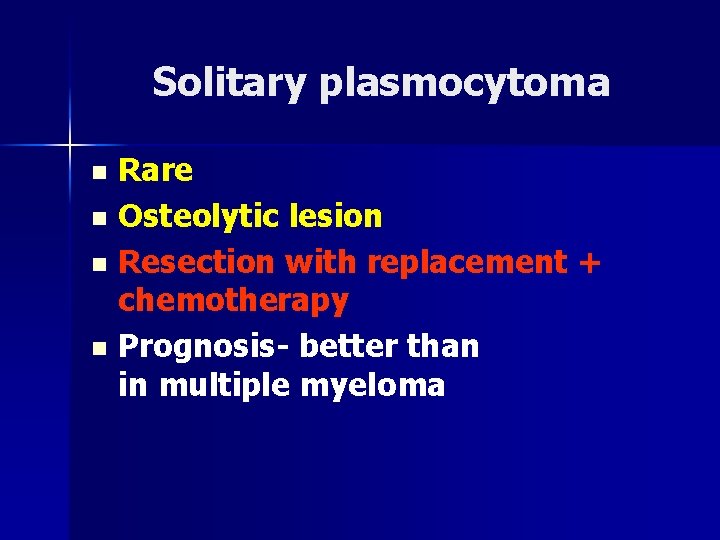
Solitary plasmocytoma Rare n Osteolytic lesion n Resection with replacement + chemotherapy n Prognosis- better than in multiple myeloma n
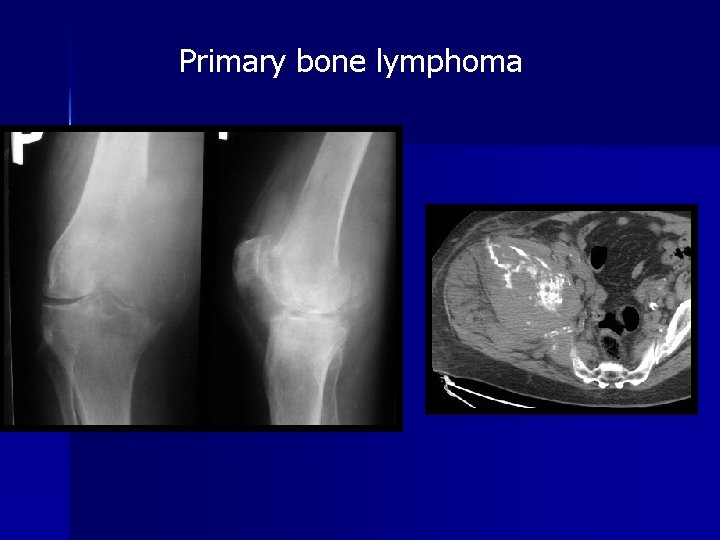
Primary bone lymphoma

Skeletal metastases
Carcinoma with MTS into the skeleton n Breast n Prostate n Lung n Kidney n Thyreoidal gland
Localisation n Axial skeleton, pelvis, ribs, proximal femur and humerus X-ray n Osteolysis, osteosclerosis, periostal reaction
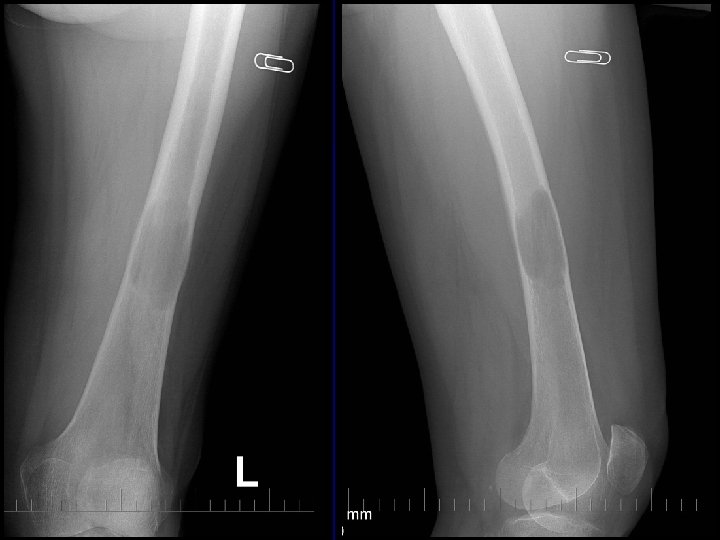
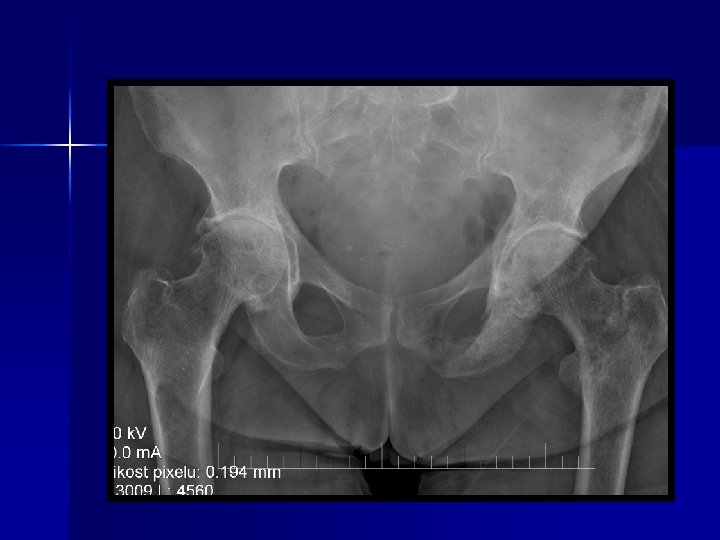
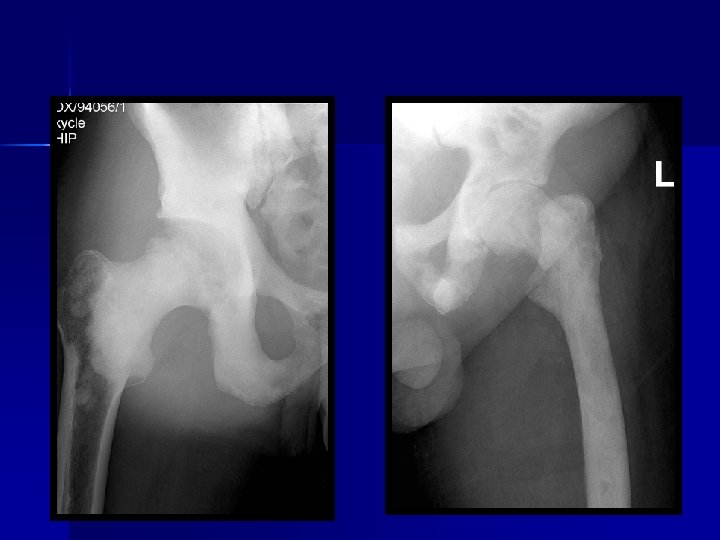
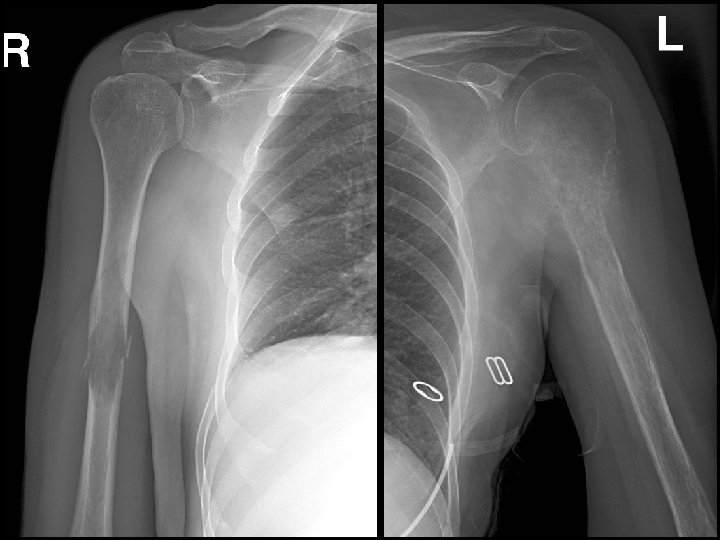

Diagnostics n History n Radiological findings n Scintigraphy n Oncoscreening n Biopsy
Complications n Pathological fracture n Hypercalcemia n Spinal cord lesion n Anemia
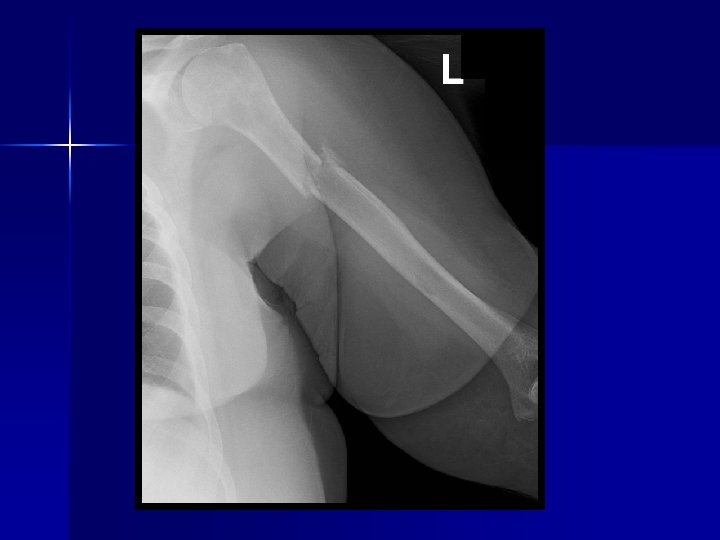
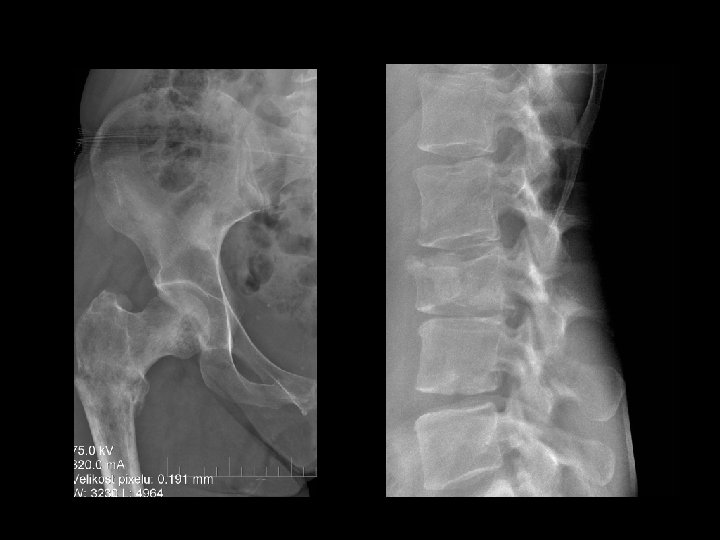
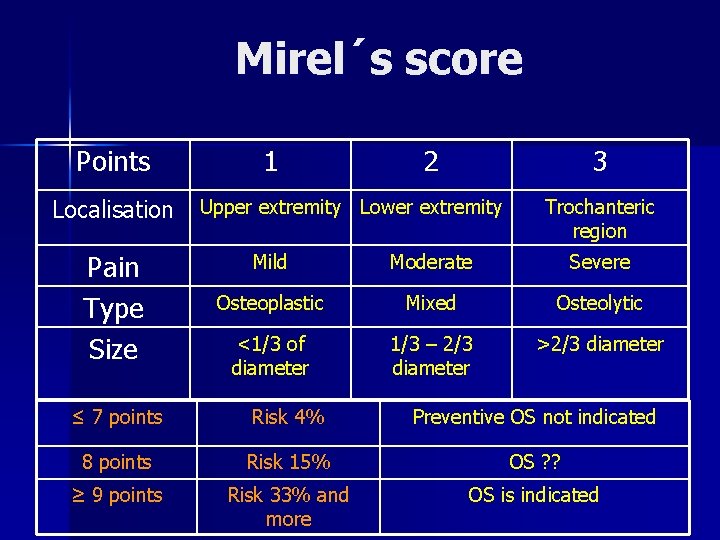
Mirel´s score Points 1 2 3 Localisation Upper extremity Lower extremity Pain Type Size Trochanteric region Mild Moderate Severe Osteoplastic Mixed Osteolytic <1/3 of diameter 1/3 – 2/3 diameter >2/3 diameter ≤ 7 points Risk 4% Preventive OS not indicated 8 points Risk 15% OS ? ? ≥ 9 points Risk 33% and more OS is indicated
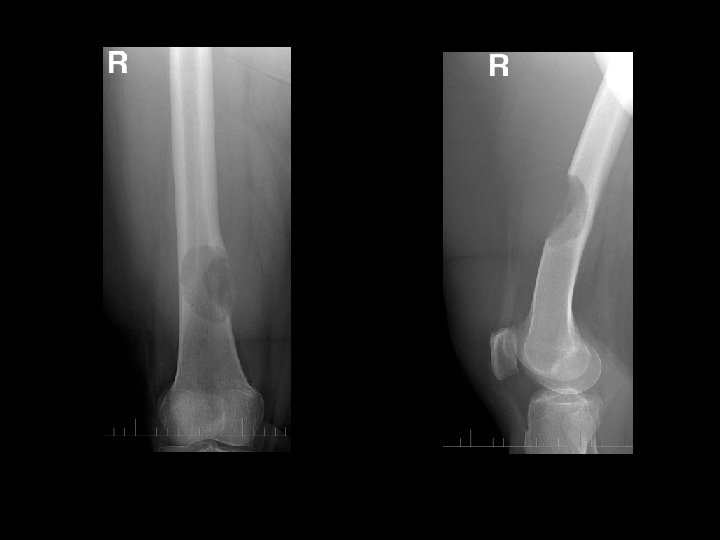
Therapy n Systemic therapy of carcinoma – – – n Therapy of bone metastases – – – n Chemotherapy Hormonal therapy Imunotherapie, biological therapy … Bisphonates Radioterapy Surgery: radical, paliative Conservative treatment Others - RFA, embolisation … Paliative management
Surgery of bone metastases Radical surgery – solitary MTS good prognosis Simple surgery with mobilisation – multiple metastases • worse prognosis
- Slides: 61