
Male Sterility Male sterility Types of male sterility

- Slides: 13
Male Sterility Male sterility: • Types of male sterility, • Commercial exploitation, • Utilization of male sterility in crop improvement, achievements, limitations.
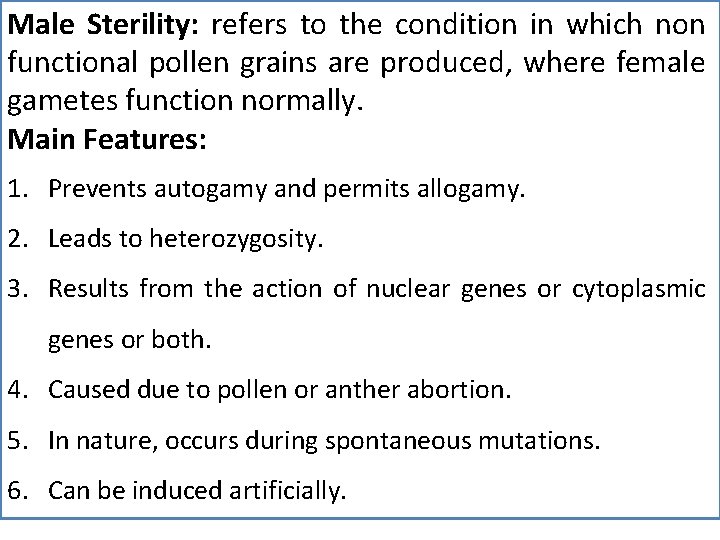
Male Sterility: refers to the condition in which non functional pollen grains are produced, where female gametes function normally. Main Features: 1. Prevents autogamy and permits allogamy. 2. Leads to heterozygosity. 3. Results from the action of nuclear genes or cytoplasmic genes or both. 4. Caused due to pollen or anther abortion. 5. In nature, occurs during spontaneous mutations. 6. Can be induced artificially.
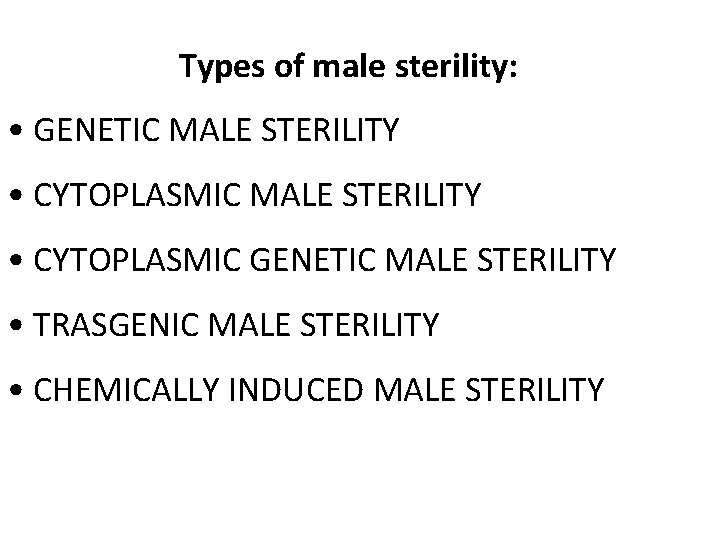
Types of male sterility: • GENETIC MALE STERILITY • CYTOPLASMIC GENETIC MALE STERILITY • TRASGENIC MALE STERILITY • CHEMICALLY INDUCED MALE STERILITY
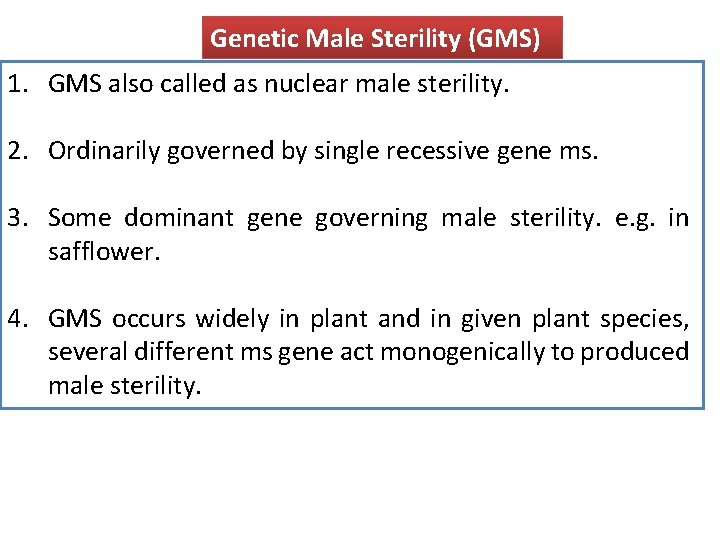
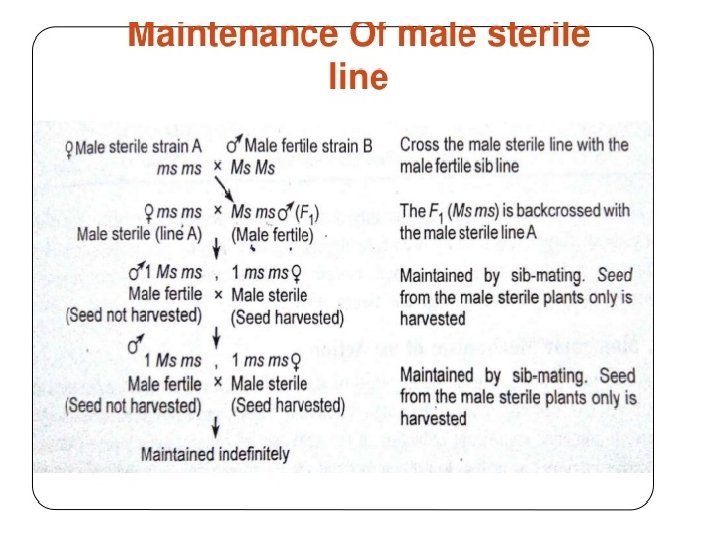
Genetic Male Sterility (GMS) 1. GMS also called as nuclear male sterility. 2. Ordinarily governed by single recessive gene ms. 3. Some dominant gene governing male sterility. e. g. in safflower. 4. GMS occurs widely in plant and in given plant species, several different ms gene act monogenically to produced male sterility.
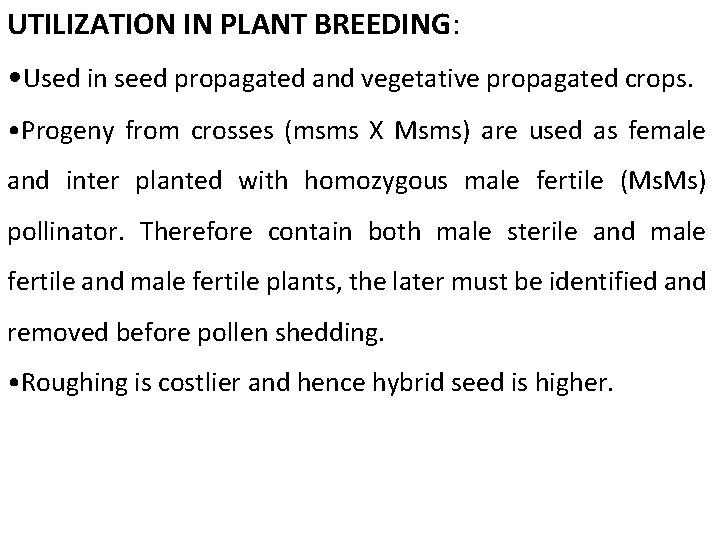
UTILIZATION IN PLANT BREEDING: • Used in seed propagated and vegetative propagated crops. • Progeny from crosses (msms X Msms) are used as female and inter planted with homozygous male fertile (Ms. Ms) pollinator. Therefore contain both male sterile and male fertile plants, the later must be identified and removed before pollen shedding. • Roughing is costlier and hence hybrid seed is higher.
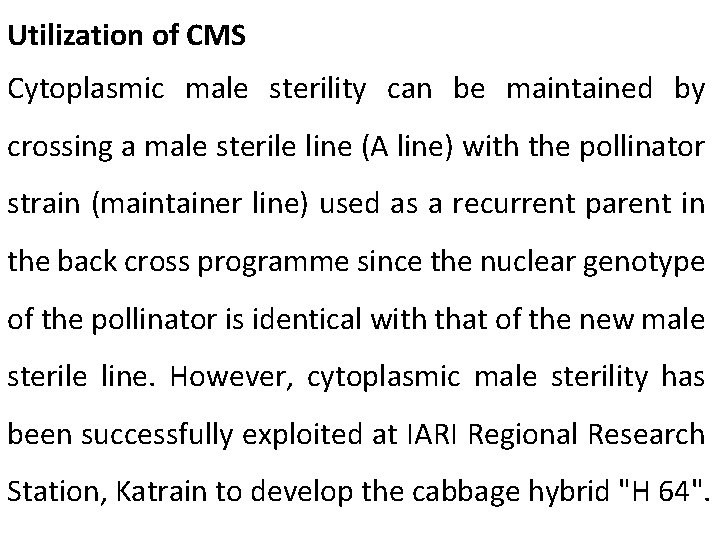
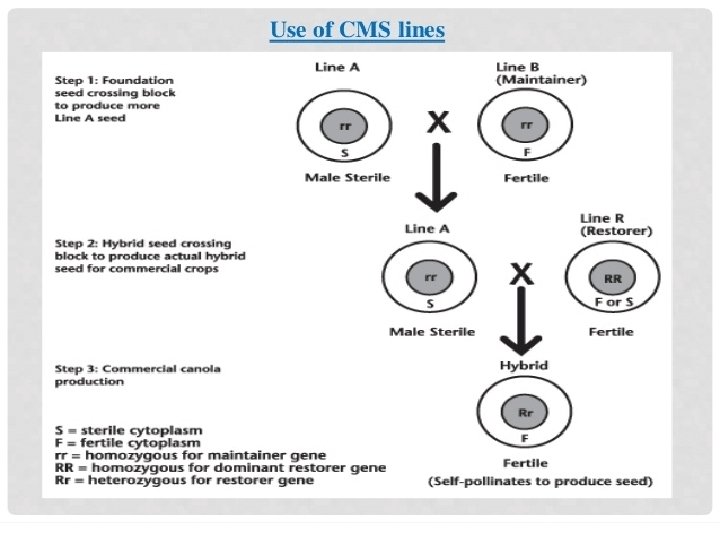
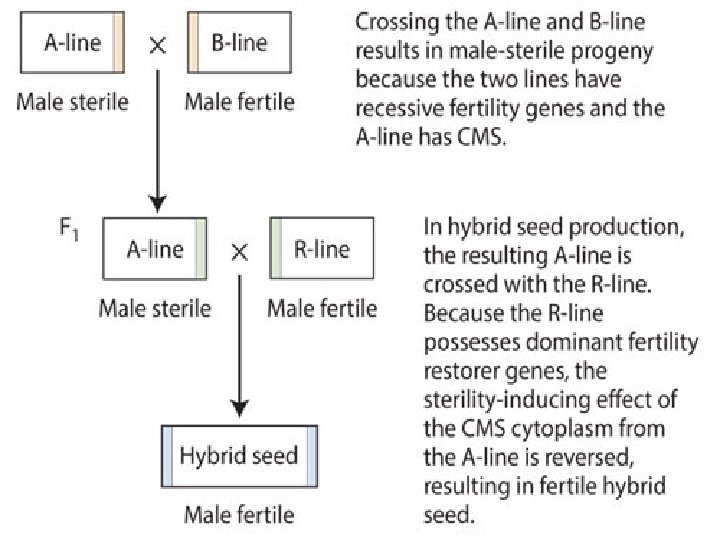
Utilization of CMS Cytoplasmic male sterility can be maintained by crossing a male sterile line (A line) with the pollinator strain (maintainer line) used as a recurrent parent in the back cross programme since the nuclear genotype of the pollinator is identical with that of the new male sterile line. However, cytoplasmic male sterility has been successfully exploited at IARI Regional Research Station, Katrain to develop the cabbage hybrid "H 64".
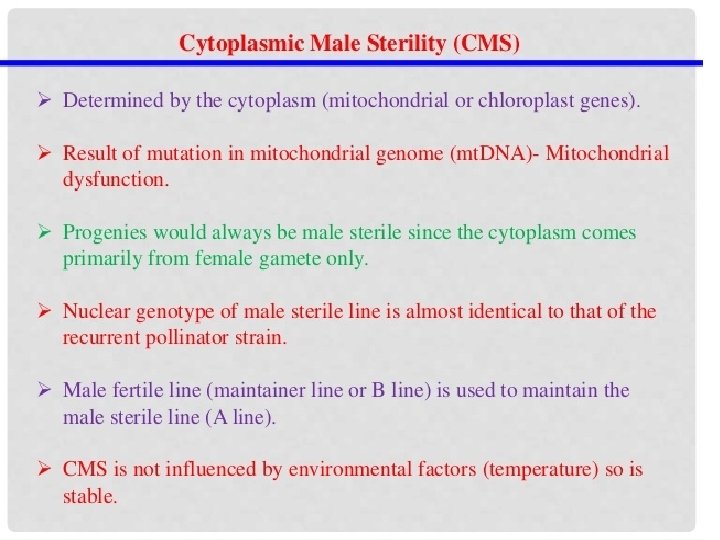
Cytoplasmic - genic male sterility: Once dominant restorer allele (located in nuclear genome) for pollen fertility of a cytoplasmic male sterile line is identified, it is commonly known as cytoplasmic- genic male sterility (CMS). Hence male sterility in CMS expressed under the presence of sterile mt genome located in cytoplasm (S-cytoplasm) and recessive allele of restorer (maintainer allele; r) located in the nuclear genome. This male sterility is conditioned by the interaction of nuclear gene and sterile cytoplasm but neither the genetic factor nor the cytoplasmic factor alone can regulate sterility. Fertility restorer gene should be present in homozygous Rf/Rf state i. e. either S Rf/Rf or N Rf/Rf where seed production is important.
Limitations of CGMS 1. Non availability of CGMS in many crops and their wild relatives. 2. Need of fertility restorer allele in fruit producing vegetables. 3. Undesirable pleiotropic effect of sterile cytoplasm on horticultural qualities. 4. Breakdown of environments. male sterility in particular
Self-incompatibility (SI) : It refers to the inability of a plant with functional pollen to set seeds when self pollinated. It is the failure of pollen from a flower to fertilize the same flower or other flowers of the same plant. Self incompatability was first reported by Koelreuter.