
Male Reproductive System I Can describe the structure
Male Reproductive System
I Can describe the structure and function of the male reproductive system including the following: • • • Testes Seminiferous tubules Interstitial cells Epididymis Vas deferens, Cowper`s gland Seminal vessicles Prostate gland Ejaculatory duct Urethra Penis
Review of Sexual Reproduction • Both parents donate genetic material • Offspring will be different than parents and each other • More variation in sexual reproduction than asexual – A parent cell divides to create two cells that are identical to one another and parent
Male Anatomy • Male and female sex organs originate in the abdominal cavity • During the third month the genes of the sex chromosomes cause differentiation • Testes descend through a canal in the scrotum
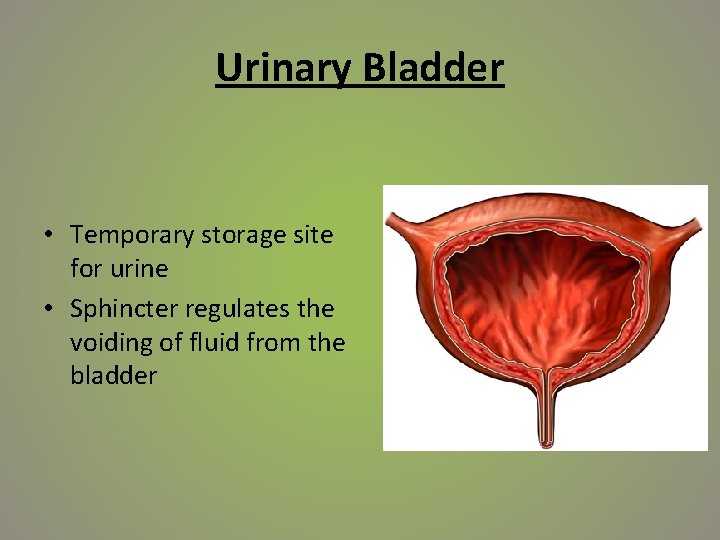
Urinary Bladder • Temporary storage site for urine • Sphincter regulates the voiding of fluid from the bladder
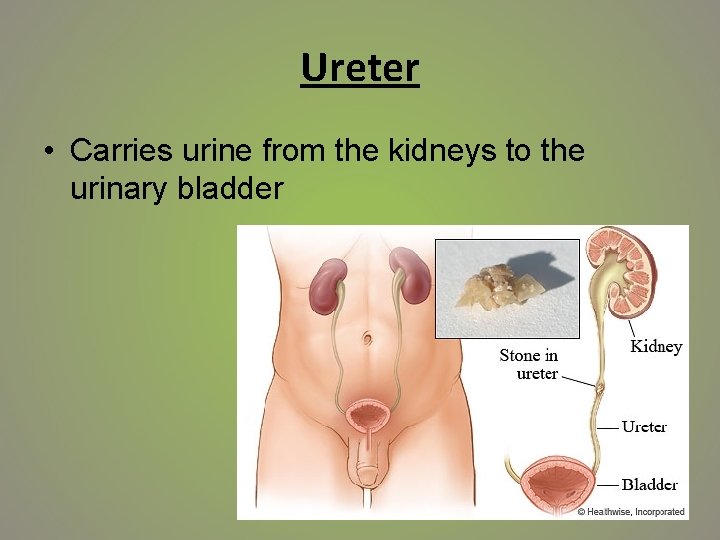
Ureter • Carries urine from the kidneys to the urinary bladder
Scrotum • Pouch of skin below the pelvis that contains the testes • Keeps testicles cool to allow production of sperm • Descend through small canal from abdominal cavity to scrotum during the last two months in utero • Membrane of skin forms over canal preventing testes from re-entering abdominal cavity
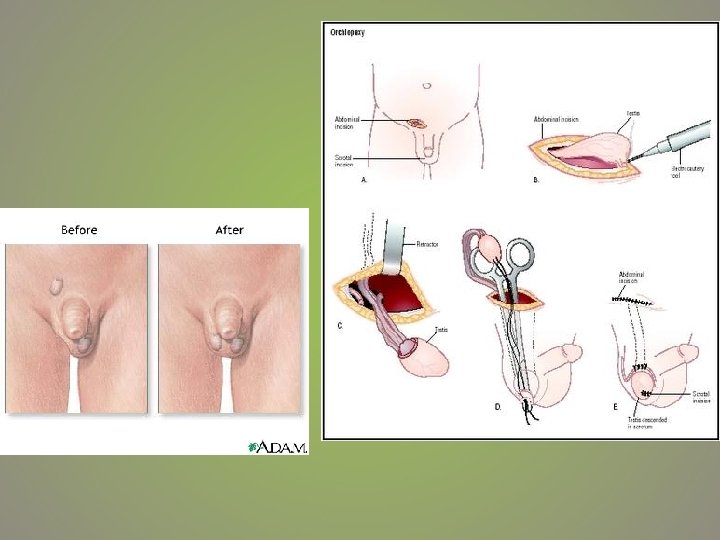
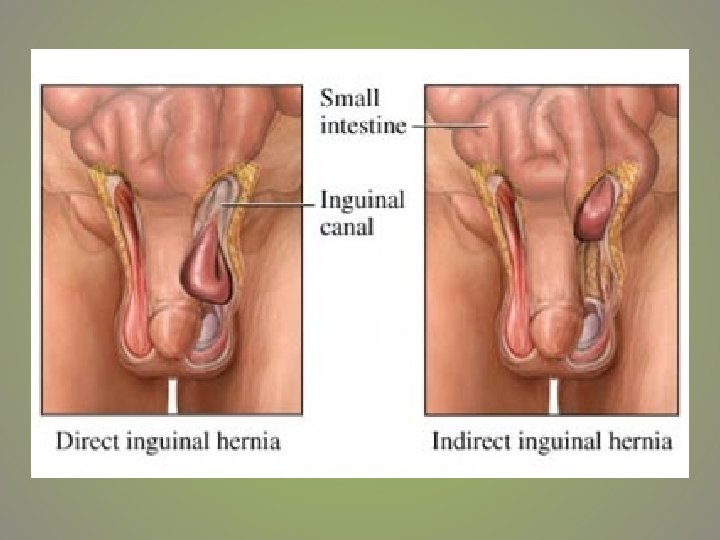
Scrotal Abnormalities • Deformities: – Undescended testicles • Testes fail to drop from body cavity • Abdominal cavity too warm to produce viable sperm; man is sterile – Inguinal hernia • Membrane separating abdominal cavity from scrotum gets ruptured, intestine can be forced into scrotum • Blood flow of testes and small intestine in danger due to pressure
y
u
Scrotal Abnormalities – Ruptured Testicle • Forceful, direct blow • 50% from sports related injuries • If treated within 72 hours, 80% chance of salvaging damaged testicle
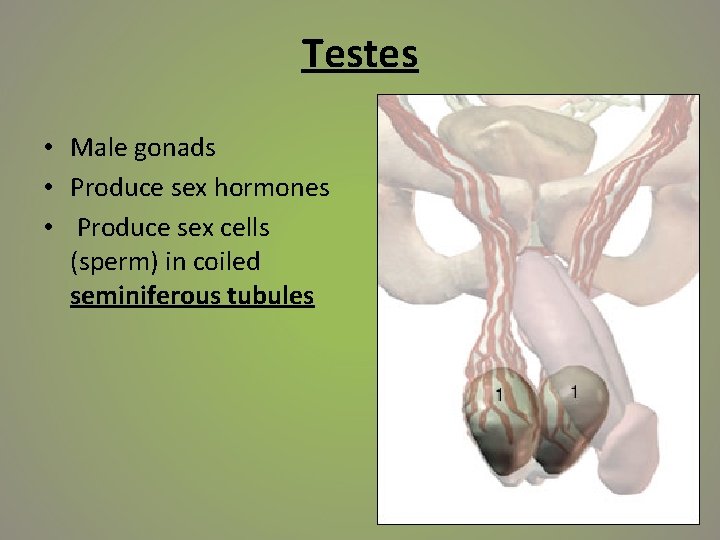
Testes • Male gonads • Produce sex hormones • Produce sex cells (sperm) in coiled seminiferous tubules
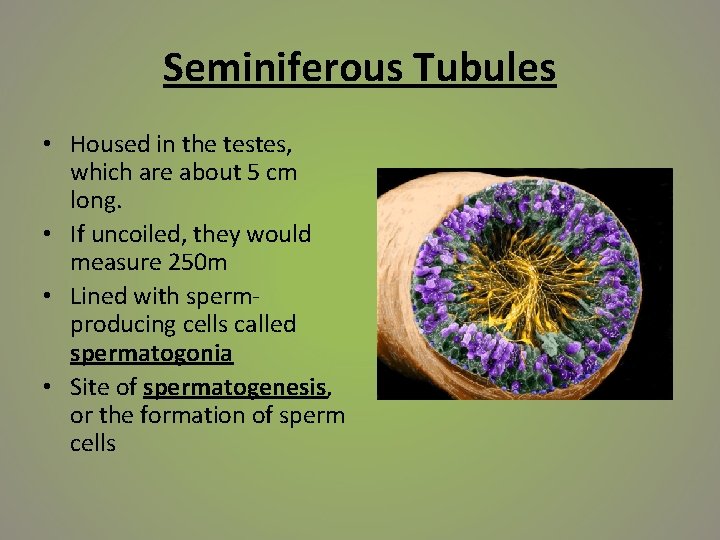
Seminiferous Tubules • Housed in the testes, which are about 5 cm long. • If uncoiled, they would measure 250 m • Lined with spermproducing cells called spermatogonia • Site of spermatogenesis, or the formation of sperm cells
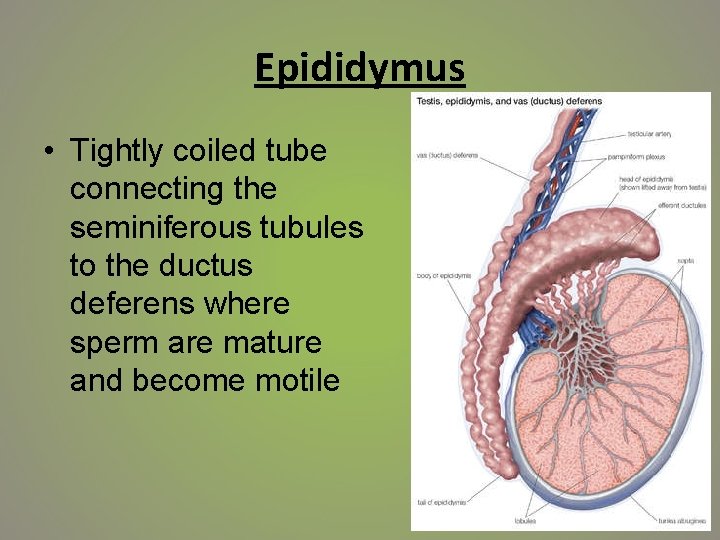
Epididymus • Tightly coiled tube connecting the seminiferous tubules to the ductus deferens where sperm are mature and become motile
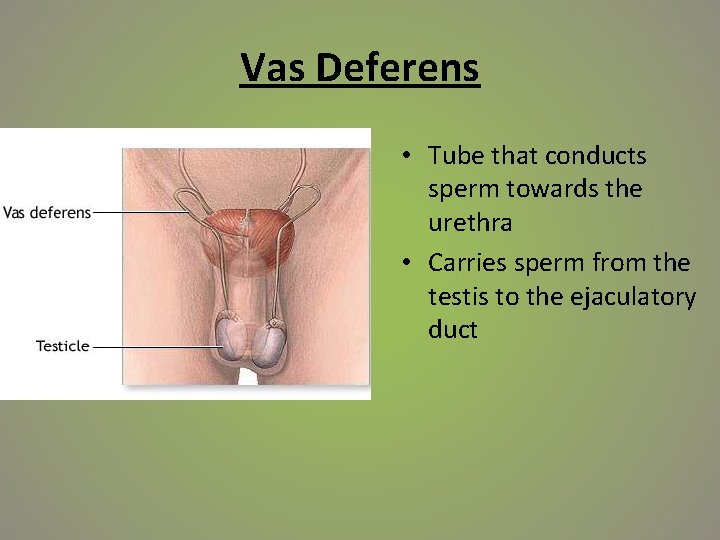
Vas Deferens • Tube that conducts sperm towards the urethra • Carries sperm from the testis to the ejaculatory duct
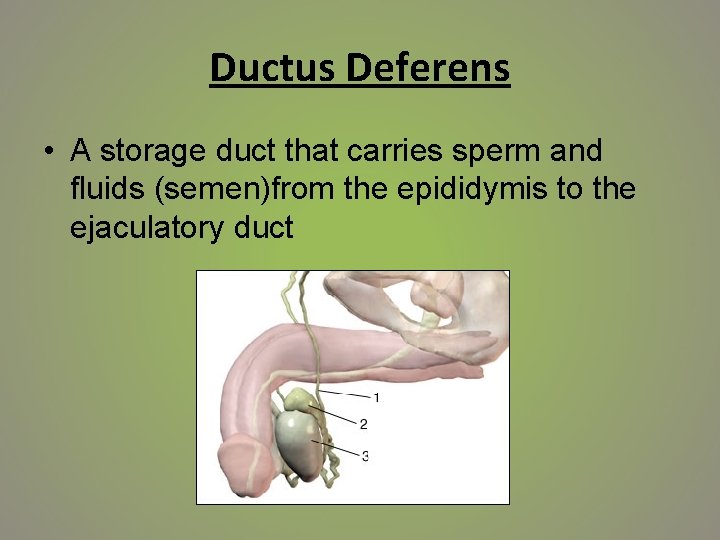
Ductus Deferens • A storage duct that carries sperm and fluids (semen)from the epididymis to the ejaculatory duct
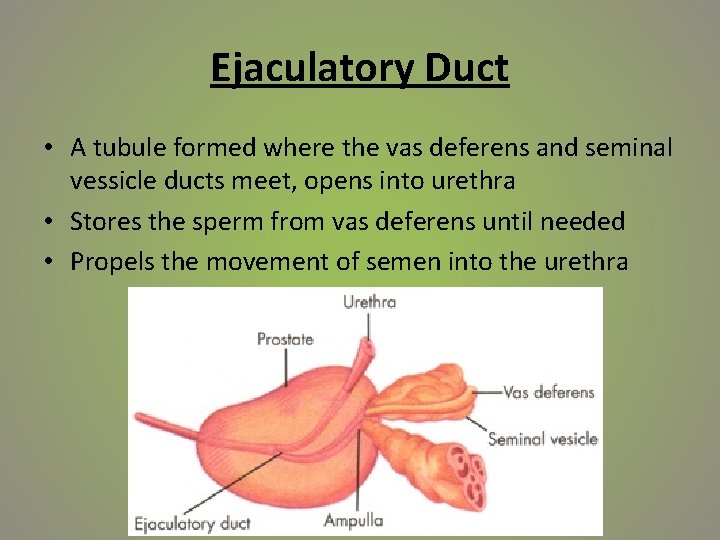
Ejaculatory Duct • A tubule formed where the vas deferens and seminal vessicle ducts meet, opens into urethra • Stores the sperm from vas deferens until needed • Propels the movement of semen into the urethra
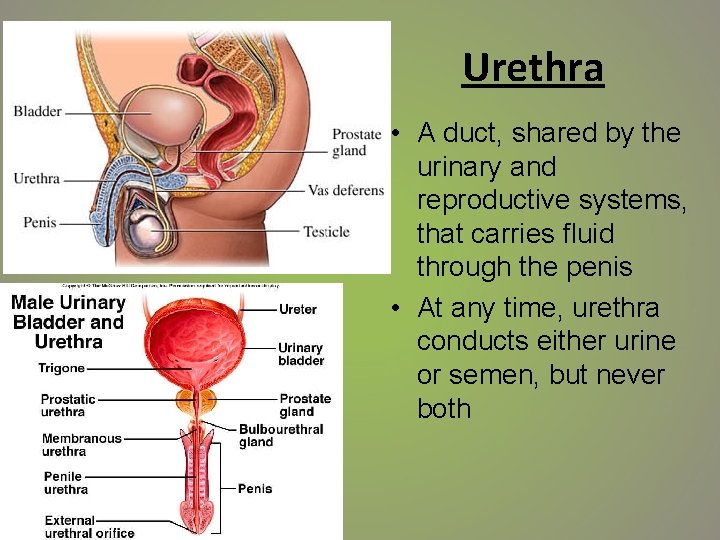
Urethra • A duct, shared by the urinary and reproductive systems, that carries fluid through the penis • At any time, urethra conducts either urine or semen, but never both
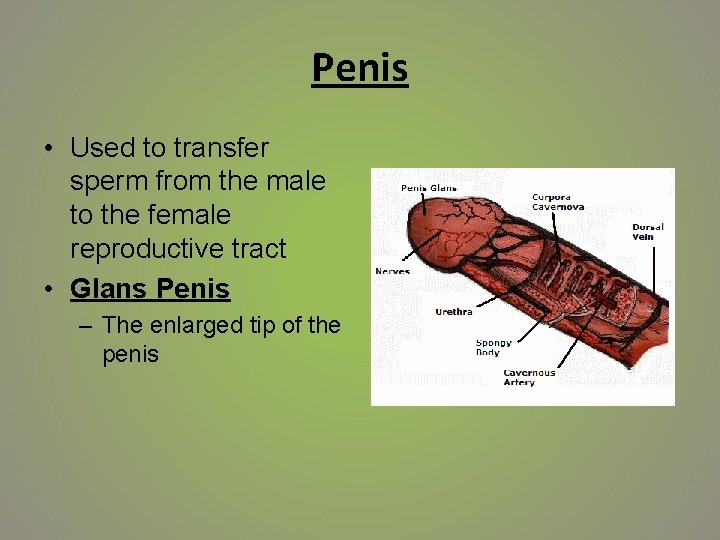
Penis • Used to transfer sperm from the male to the female reproductive tract • Glans Penis – The enlarged tip of the penis
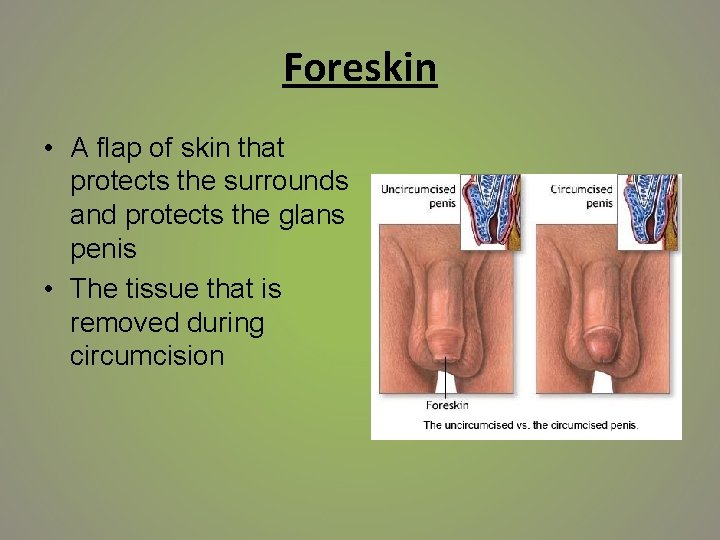
Foreskin • A flap of skin that protects the surrounds and protects the glans penis • The tissue that is removed during circumcision
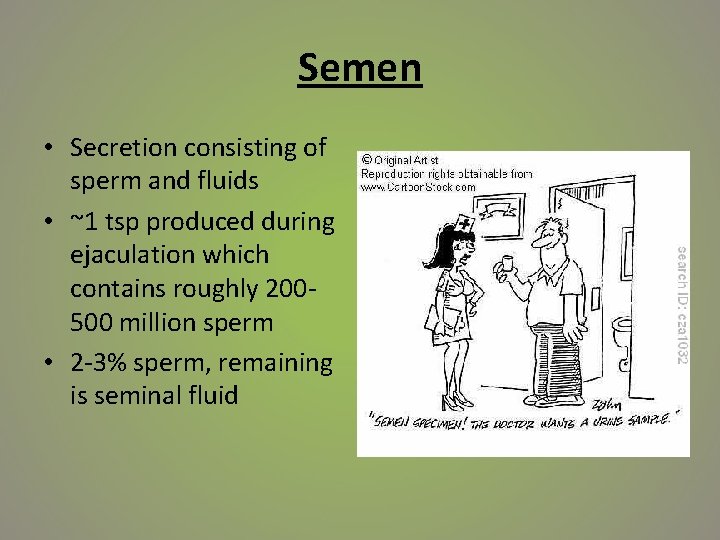
Semen • Secretion consisting of sperm and fluids • ~1 tsp produced during ejaculation which contains roughly 200500 million sperm • 2 -3% sperm, remaining is seminal fluid
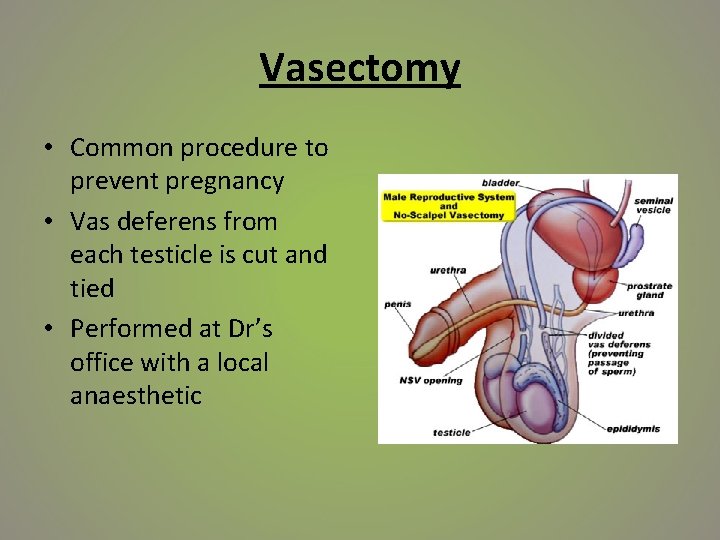
Vasectomy • Common procedure to prevent pregnancy • Vas deferens from each testicle is cut and tied • Performed at Dr’s office with a local anaesthetic
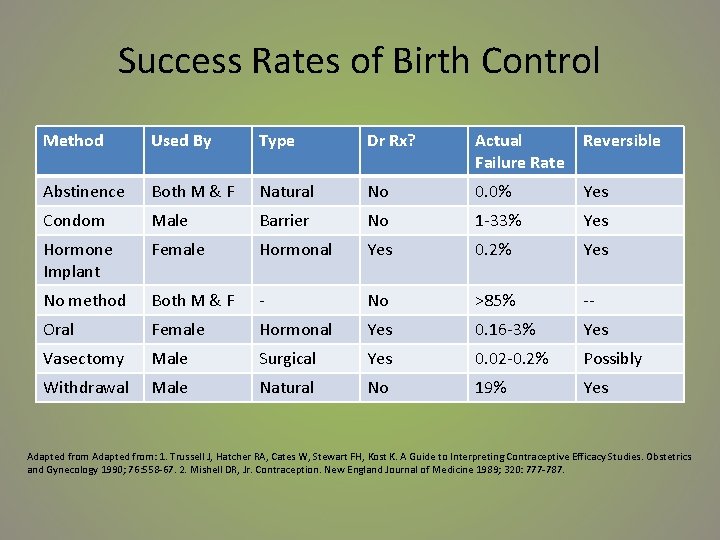
Success Rates of Birth Control Method Used By Type Dr Rx? Actual Failure Rate Reversible Abstinence Both M & F Natural No 0. 0% Yes Condom Male Barrier No 1 -33% Yes Hormone Implant Female Hormonal Yes 0. 2% Yes No method Both M & F - No >85% -- Oral Female Hormonal Yes 0. 16 -3% Yes Vasectomy Male Surgical Yes 0. 02 -0. 2% Possibly Withdrawal Male Natural No 19% Yes Adapted from: 1. Trussell J, Hatcher RA, Cates W, Stewart FH, Kost K. A Guide to Interpreting Contraceptive Efficacy Studies. Obstetrics and Gynecology 1990; 76: 558 -67. 2. Mishell DR, Jr. Contraception. New England Journal of Medicine 1989; 320: 777 -787.
The Glands Seminal vessicle Prostate gland Cowper`s gland Responsible for nourishing and lubricating sperm • Part of the endocrine system • •
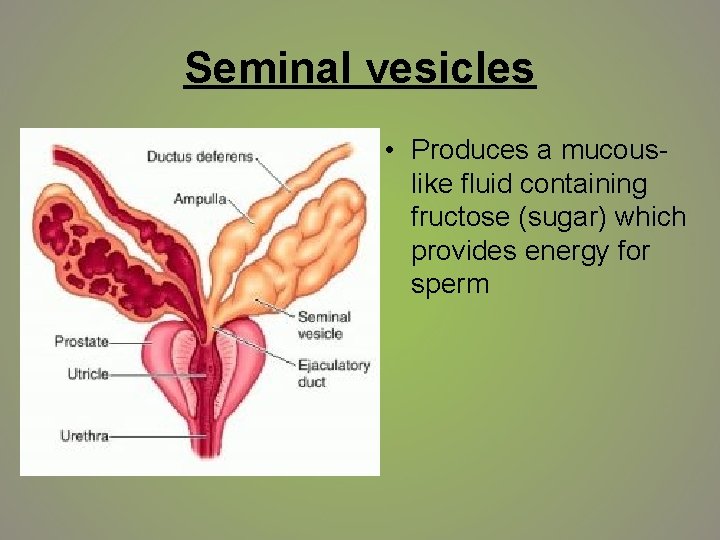
Seminal vesicles • Produces a mucouslike fluid containing fructose (sugar) which provides energy for sperm
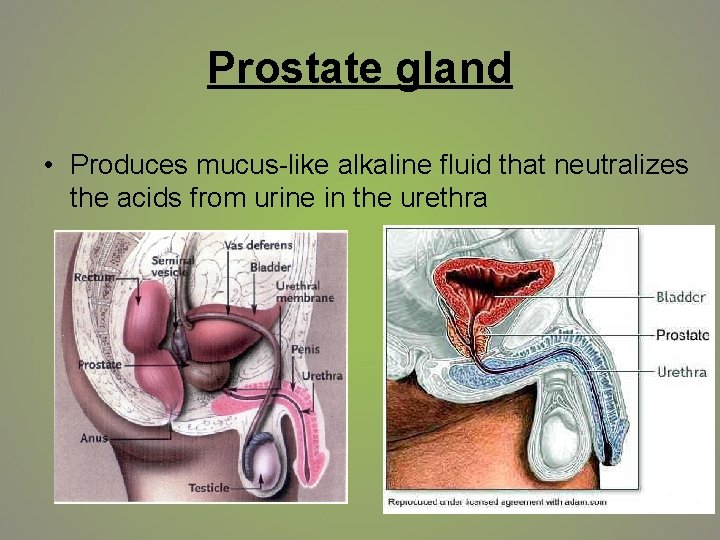
Prostate gland • Produces mucus-like alkaline fluid that neutralizes the acids from urine in the urethra
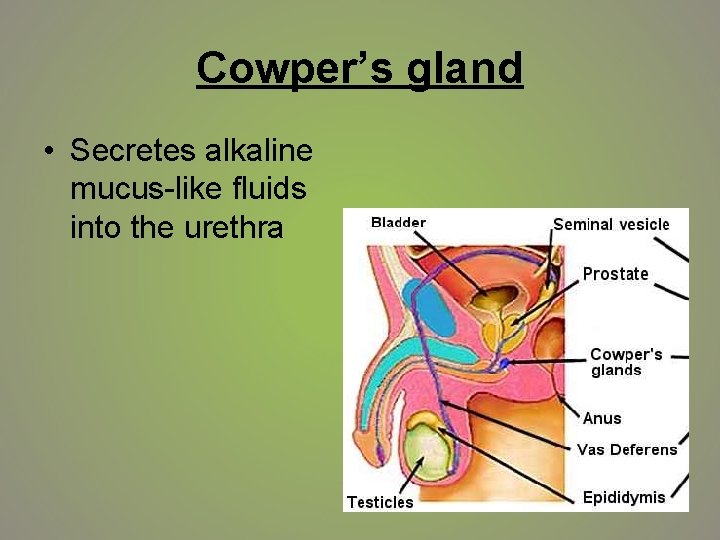
Cowper’s gland • Secretes alkaline mucus-like fluids into the urethra
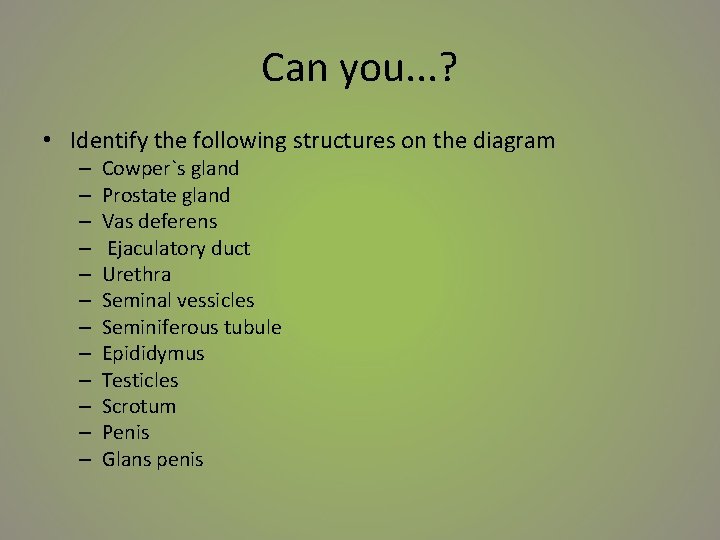
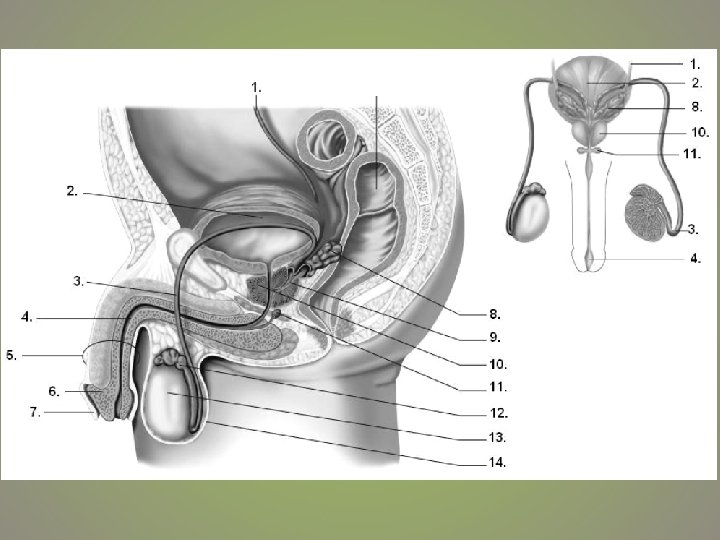
Can you. . . ? • Identify the following structures on the diagram – – – Cowper`s gland Prostate gland Vas deferens Ejaculatory duct Urethra Seminal vessicles Seminiferous tubule Epididymus Testicles Scrotum Penis Glans penis
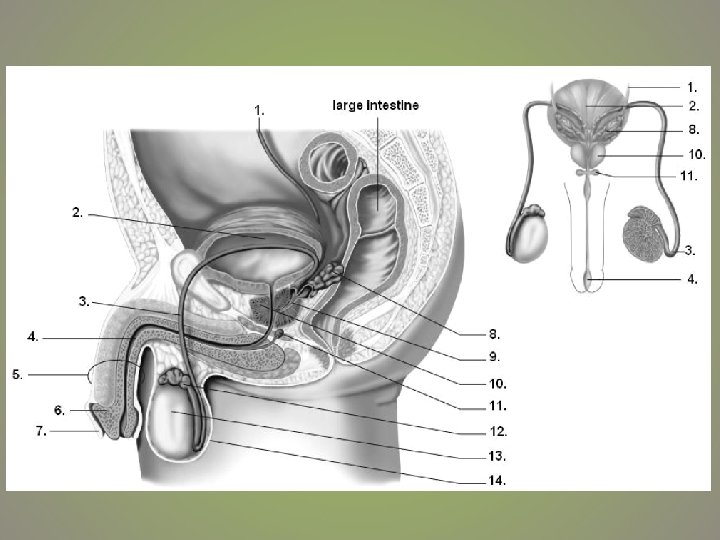
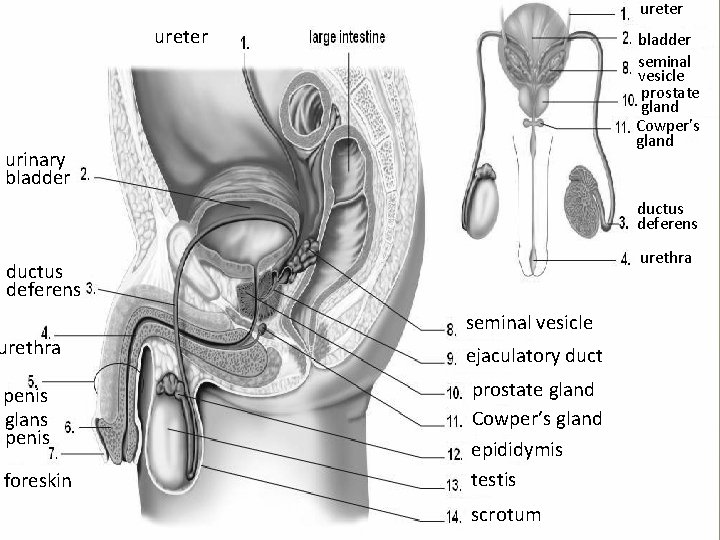
ureter bladder seminal vesicle prostate gland Cowper’s gland urinary bladder ductus deferens urethra penis glans penis foreskin seminal vesicle ejaculatory duct prostate gland Cowper’s gland epididymis testis scrotum

• So what is the path that sperm travel? ? ?
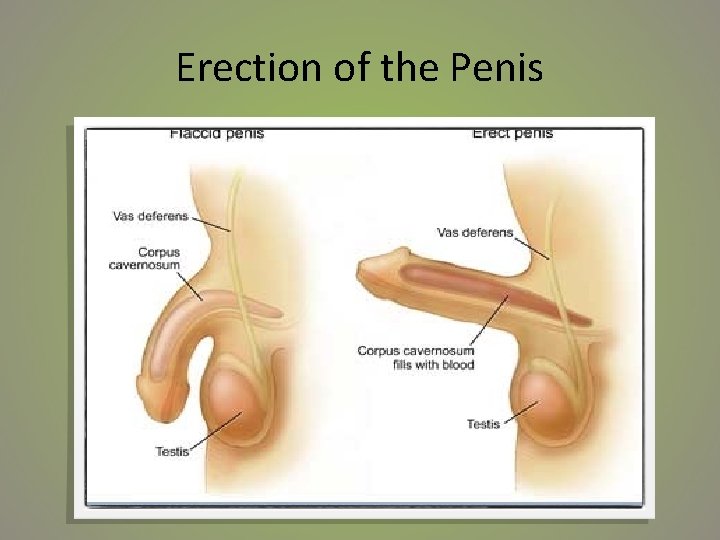
Erection of the Penis
• Sexual arousal: • Parasympathetic nerve causes arteries leading to the penis to dilate, increasing blood flow • Spongy tissue of the penis swells, squeezing veins that carry blood away from the penis • Penis engorges with blood and becomes erect
Spermatogenesis 1. Spermatogonia (sperm producing cells) divide to form spermacytes 2. Spermacytes differentiate into spermatids • Spermatids – Immature sperm cells – Contain only 23 chromosomes (half as much as other cells) – 9 -10 weeks to differentiate into sperm cell
Spermatogenesis 3. Sertoli cells found in the seminiferous tubules nourish the developing sperm cells to maturity • Sertoli cells – Provide a barrier between blood and testes – Barrier controls the entry/exit of hormones, nutrients; protecting the sperm cells – If barrier is damaged, body develops antibodies against its own sperm
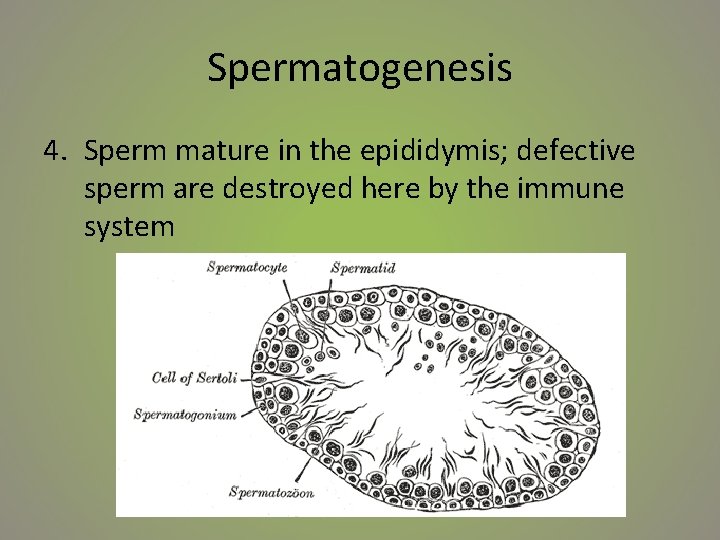
Spermatogenesis 4. Sperm mature in the epididymis; defective sperm are destroyed here by the immune system
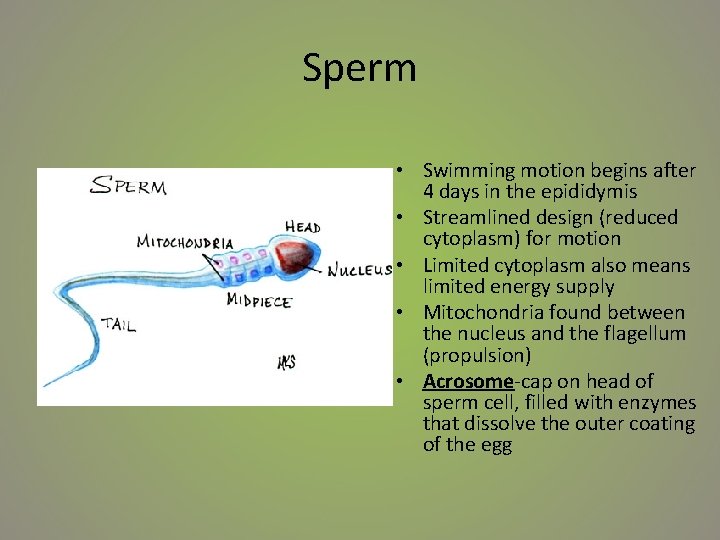
Sperm • Swimming motion begins after 4 days in the epididymis • Streamlined design (reduced cytoplasm) for motion • Limited cytoplasm also means limited energy supply • Mitochondria found between the nucleus and the flagellum (propulsion) • Acrosome-cap on head of sperm cell, filled with enzymes that dissolve the outer coating of the egg
Seminal Fluid • Ejaculation is the process where semen leaves a man body through the penis • Sperm is forced to the base of the penis by the contraction of the vas deferens, seminal vesicles, ejaculatory duct and prostate gland • Strong muscular contractions force the semen into the urethra and out the penis
Seminal Fluid • Seminal vesicles – Release fluid containing fructose and prostaglandins • Fructose-energy supply • Prostaglandins-stimulate rhythmic contractions of smooth muscle along the female reproductive tract • Prostate gland – Secretes an alkaline buffer that protects sperm from acidic environment of vagina • Cowpers gland – Secretes mucus-rich fluid prior to ejaculation – Protects sperm from acids in the urethra – May help with sperm motility
Affect of Hormones on Male System • Primary sexual characteristics – Physical characteristics of an organism that are directly involved in reproduction – Present at birth • Secondary sexual characteristics – External features other than reproductive organs, that indicate gender
Testosterone • Primary male sex hormone produced in interstitial cells of testes • Triggers maturation of tests and penis, as well as spermatogenesis • Promotes secondary characteristics – Facial and body hair – Growth of larynx (deepening voice) – Strengthening of muscles – Sex drive
• Hypothalamus and pituitary control production of sperm and sex hormones • Pituitary- produces and stores gonadotropic hormones (gonadotropins) which regulate the testes • 2 gonadotropins – Follicle-stimulating hormone (FSH) • Turns on production of sperm cells in seminiferous tubules – Luteinizing hormone (LH) • Promotes production of testosterone by interstitial cells
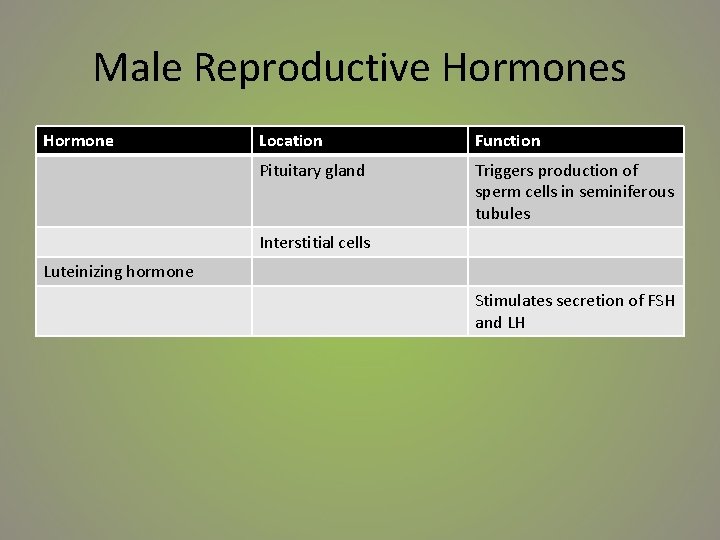
Male Reproductive Hormones Hormone Location Function Pituitary gland Triggers production of sperm cells in seminiferous tubules Interstitial cells Luteinizing hormone Stimulates secretion of FSH and LH
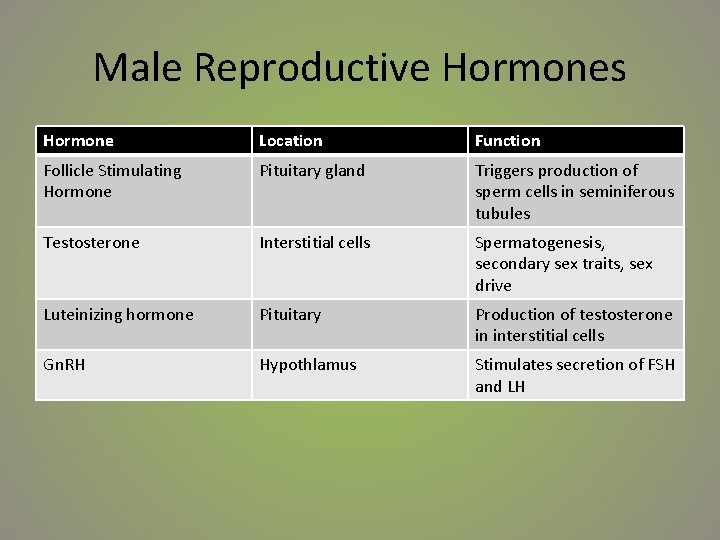
Male Reproductive Hormones Hormone Location Function Follicle Stimulating Hormone Pituitary gland Triggers production of sperm cells in seminiferous tubules Testosterone Interstitial cells Spermatogenesis, secondary sex traits, sex drive Luteinizing hormone Pituitary Production of testosterone in interstitial cells Gn. RH Hypothlamus Stimulates secretion of FSH and LH
• Negative feedback systems ensure that sperm cells and testosterone are maintained at constant levels • When testosterone is low: – – – Hypothalamus secretes Gn. RH activates pituitary gland to release FSH and LH FSH acts on sperm-producing cells in seminiferous tubules LH stimulates testosterone production Testosterone stimulates spermatogenesis Negative feedback regulates LH and testosterone • High testosterone reduces LH production directly by feedback inhibition of LH release from the pituitary and indirectly from Gn. RH release from the hypothalamus • When hypothalamus detects high testosterone, releases less Gn. RH, which leads to less LH • Decreased Gn. RH slows down LH, which means lower testosterone
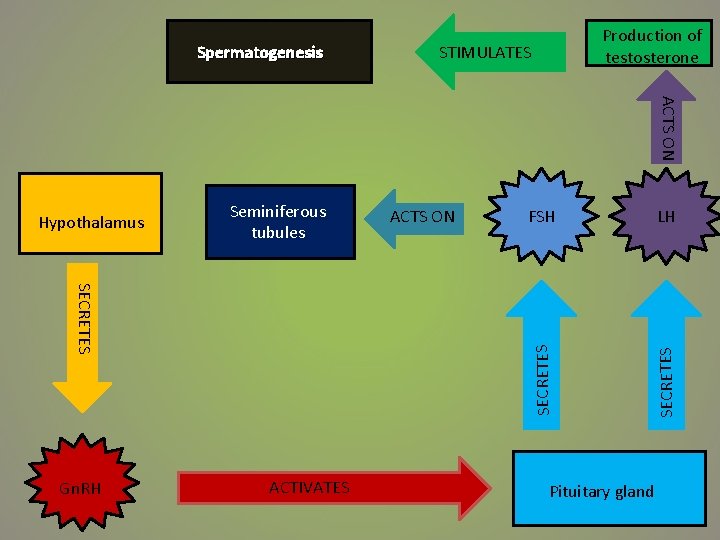
Spermatogenesis Production of testosterone STIMULATES SECRETES Gn. RH ACTIVATES ACTS ON FSH LH SECRETES Seminiferous tubules SECRETES ACTS ON Hypothalamus Pituitary gland
- Slides: 47