
Male Reproductive System Figure 80 1 Copyright 2011
- Slides: 48
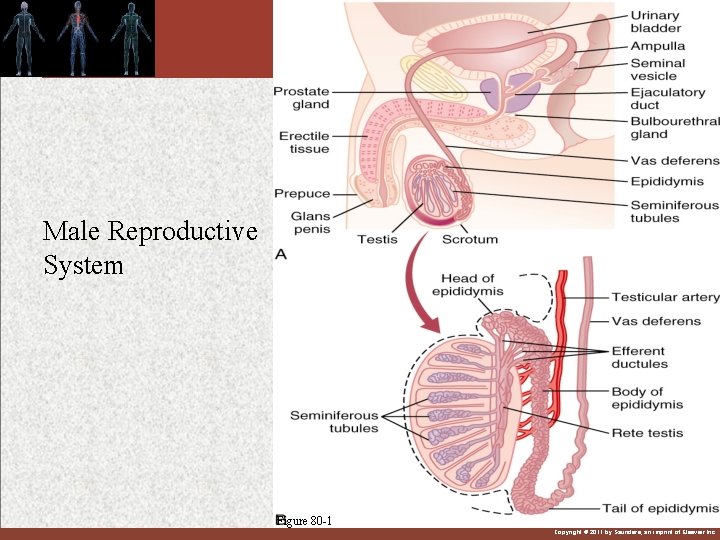
Male Reproductive System Figure 80 -1 Copyright © 2011 by Saunders, an imprint of Elsevier Inc.
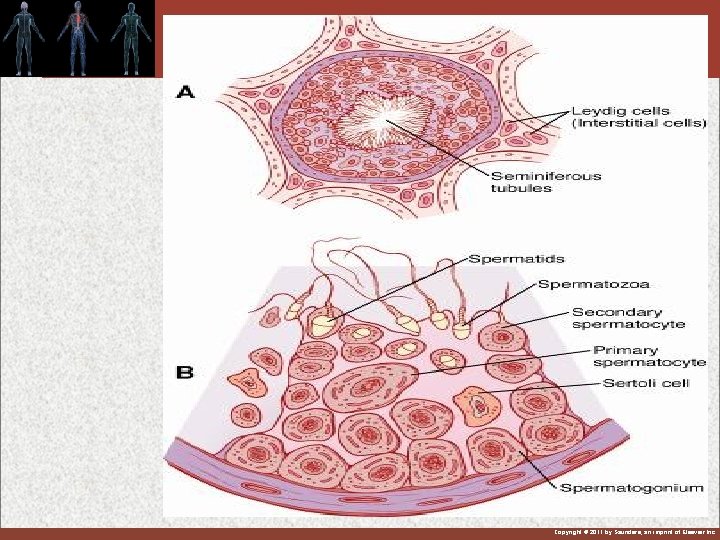
Copyright © 2011 by Saunders, an imprint of Elsevier Inc.
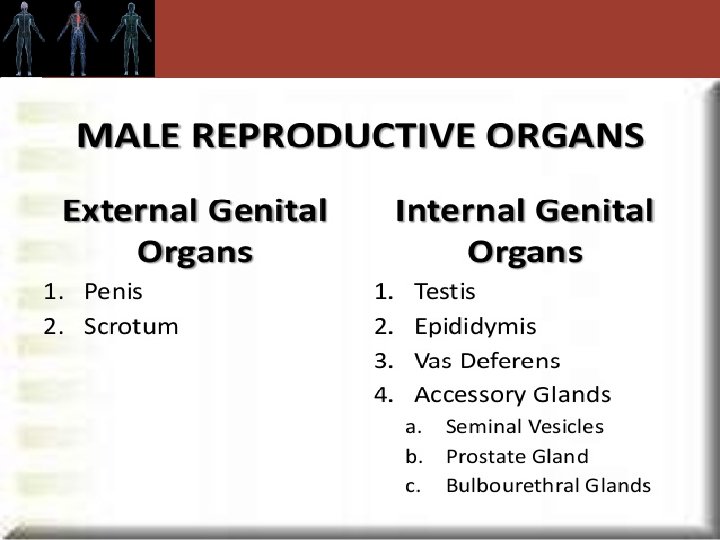
Figure 80 -2 Copyright © 2011 by Saunders, an imprint of Elsevier Inc.
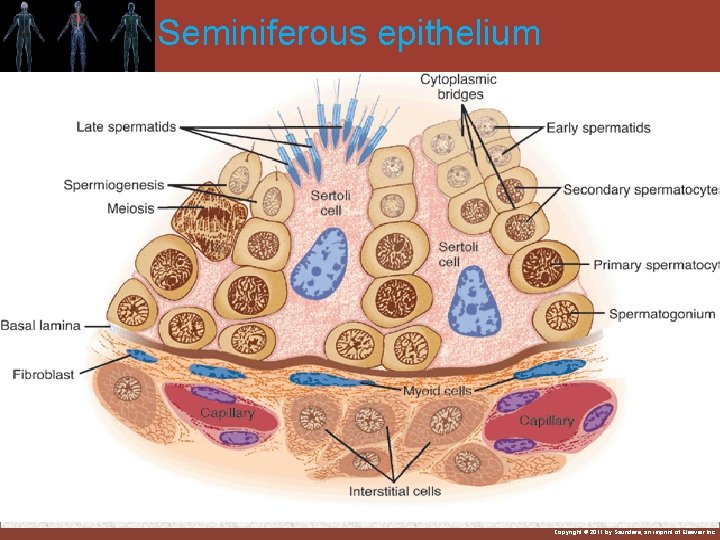
Seminiferous epithelium LH: 1) Stimulates Leydig cells → testosterone 2) Responsible for final maturation of ovarian follicles 3) Causes ovulation 4) Responsible for initial formation of corpus luteum and stimulation of E 2 & progesterone secretion Copyright © 2011 by Saunders, an imprint of Elsevier Inc.
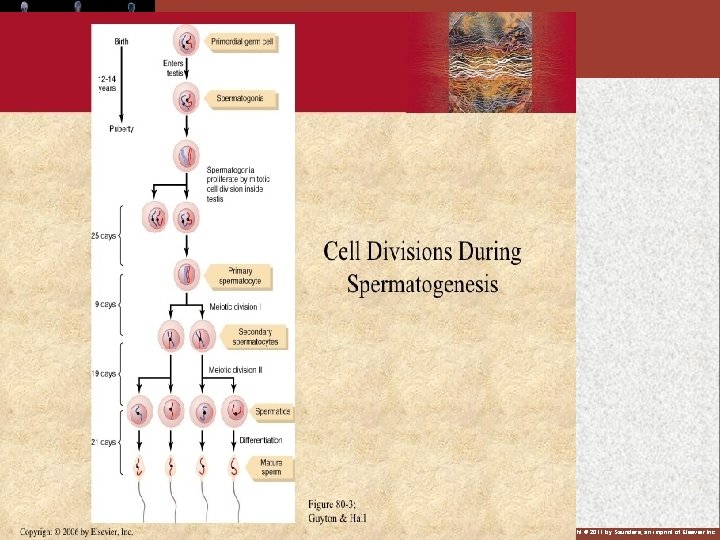
Spermatogenesis (74 days): -Formation of sperm, it occurs in the seminiferous tubules during active sexual life, begins at age of 13 years, continues throughout life & decreases in old age. -After formation in the seminiferous tubules, the sperm require several days to pass through the epididymis (still non-motile). -After the sperm have been in the epididymis for some 18 to 24 hour, they develop the capability of motility (some inhibitory proteins in the epididymal fluid prevent final motility until after ejaculation). Copyright © 2011 by Saunders, an imprint of Elsevier Inc.
Copyright © 2011 by Saunders, an imprint of Elsevier Inc.
Spermatogenesis, cont. Storage of sperm: The 2 testis of adult human form up to 120 million sperm each day. - Most of these sperms stored in the epididymis - Small quantity stored in the vas deferens. - They can remain stored and maintaining their fertility for at least a month. The sperm are kept inactive state by multiple inhibitory substances in the secretion of the ducts. But with high sexual activity they may store for few days. -After ejaculation they become motile and capable of fertilization of the ovum (maturation). The sertoli cells and epithelium of epididymis secrete nutrient fluid ejaculate with the sperm contain testosterone, estrogen, enzymes and special nutrients essential for sperm maturation. Copyright © 2011 by Saunders, an imprint of Elsevier Inc.
Physiology of mature sperm: Mature sperm are motile (velocity 1 -4 mm/min) & capable of fertilizing the ovum & their activity is enhanced in a neutral & slightly alkaline medium & depressed in mildly acidic medium. The activity & metabolism of the sperm increase with increase of temp making short life of the sperm. The life expectancy of ejaculated sperm in the female genital tract is only 1 to 2 days. Copyright © 2011 by Saunders, an imprint of Elsevier Inc.
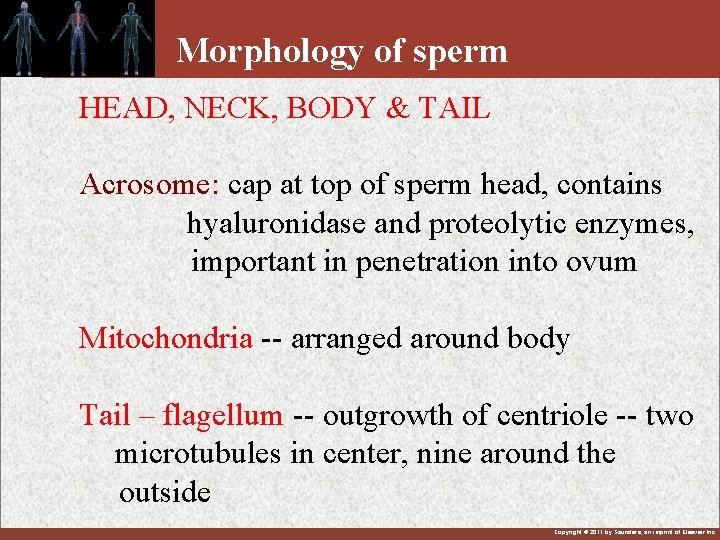
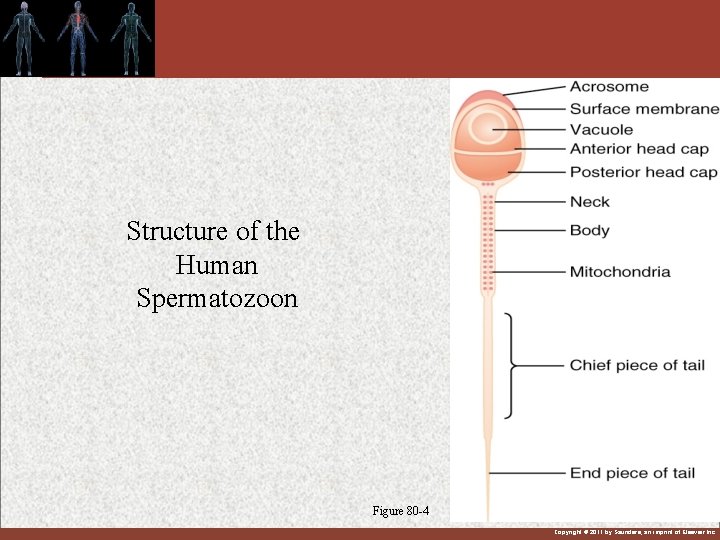
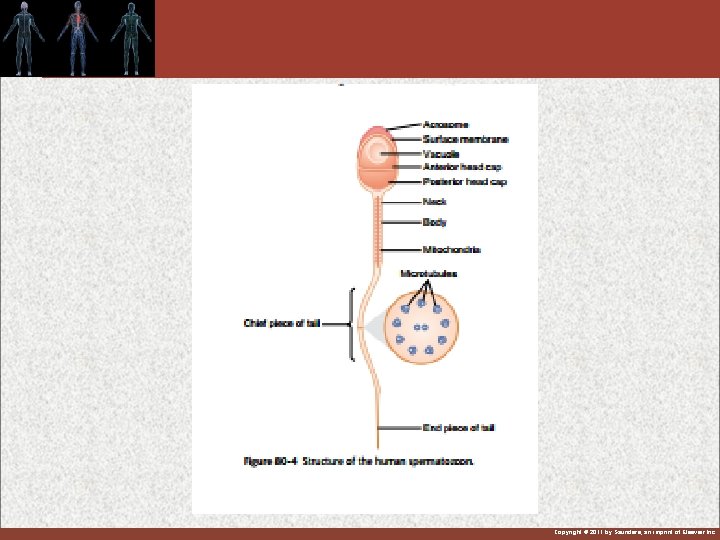
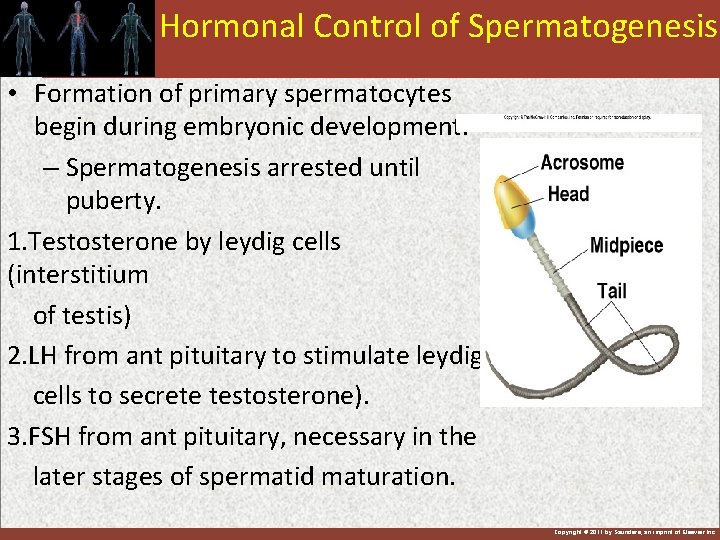
Morphology of sperm HEAD, NECK, BODY & TAIL Acrosome: cap at top of sperm head, contains hyaluronidase and proteolytic enzymes, important in penetration into ovum Mitochondria -- arranged around body Tail – flagellum -- outgrowth of centriole -- two microtubules in center, nine around the outside Copyright © 2011 by Saunders, an imprint of Elsevier Inc.
Structure of the Human Spermatozoon Figure 80 -4 Copyright © 2011 by Saunders, an imprint of Elsevier Inc.
Copyright © 2011 by Saunders, an imprint of Elsevier Inc.
Hormonal Control of Spermatogenesis • Formation of primary spermatocytes begin during embryonic development. – Spermatogenesis arrested until puberty. 1. Testosterone by leydig cells (interstitium of testis) 2. LH from ant pituitary to stimulate leydig cells to secrete testosterone). 3. FSH from ant pituitary, necessary in the later stages of spermatid maturation. Copyright © 2011 by Saunders, an imprint of Elsevier Inc.
4. Growth hormone , controlling metabolic function of the testis. 5. Estrogen formed from testosterone by sertoli cells when stimulated by FSH are probably also essential for spermatogenesis Copyright © 2011 by Saunders, an imprint of Elsevier Inc.
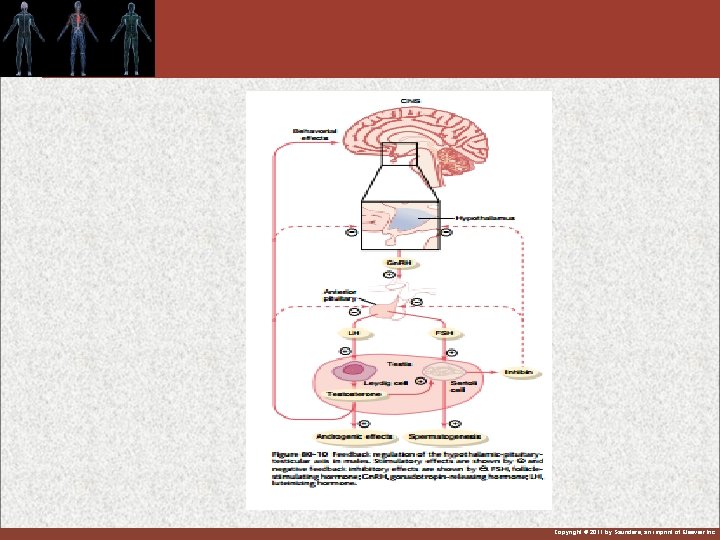
Functions of Sertoli cells: 1)Tight junctions between Sertoli cells form blood-testes barrier which maintains critical composition of tubular fluid for sperm maturation & prevents autoimmune destruction of sperm. 2) Secrete fluid for carrying sperm into the epididymis. 3) Provide nutrients for maturing sperm. 4) Secrete ABP (androgen-binding protein) that functions to maintain high levels of androgens in the tubular fluid. 5) Contain aromataze which converts androgens to estrogens. 6) Secrete inhibin. (Negative feedback on FSH from ant pit) 7) Phagocytosis of residual bodies Copyright © 2011 by Saunders, an imprint of Elsevier Inc.
Function of the seminal vesicles: - Secrete mucoid material containing fructose, citric acid & nutrient substances & large quantities of prostaglandins & fibrinogen. The prostaglandins aid fertilization: 1 - By reacting with the female cervical mucus making it more receptive to sperm movement. 2 - By causing backward reverse peristaltic contractions of the uterus & fallopian tubes to move the ejaculated sperm toward the ovaries. Few sperm reach upper end of fallopian tubes within 5 minutes. Copyright © 2011 by Saunders, an imprint of Elsevier Inc.
Function of the prostate gland: - The prostate gland secretes thin milky fluid contains Ca 2+ ion, citrate ion, phosphate ion, a clotting enzyme & profibrinolysin. The alkaline prostatic fluid is important for successful fertilization of the ovum. Functions of alkaline prostate fluid : 1. successful fertilization of the ovum by neutralizing the slightly acidic fluid of the vas deferens (due to the presence of citric acid and metabolic products of the sperm which inhibits sperm fertility). Also vaginal secretion of the female is acidic. 3. helps to neutralize the acidity of other seminal fluids during ejaculation & thus enhances motility & fertility of sperm Copyright © 2011 by Saunders, an imprint of Elsevier Inc.
Semen: - Ejaculated semen during sexual act is composed of fluid & sperm; fluid from the vas deferens (~10%), +fluid from the prostate gland (~30%), +fluid from the seminal vesicles (~60%), + small amounts from the mucous glands the bulbourethral glands. - The average p. H is about 7. 5, the alkaline prostatic fluid helps to neutralize the mild acidity of other portions of the semen & gives the semen a milky appearance. - Fluid from the seminal vesicles & mucous glands gives the semen its mucoid consistency. Copyright © 2011 by Saunders, an imprint of Elsevier Inc.
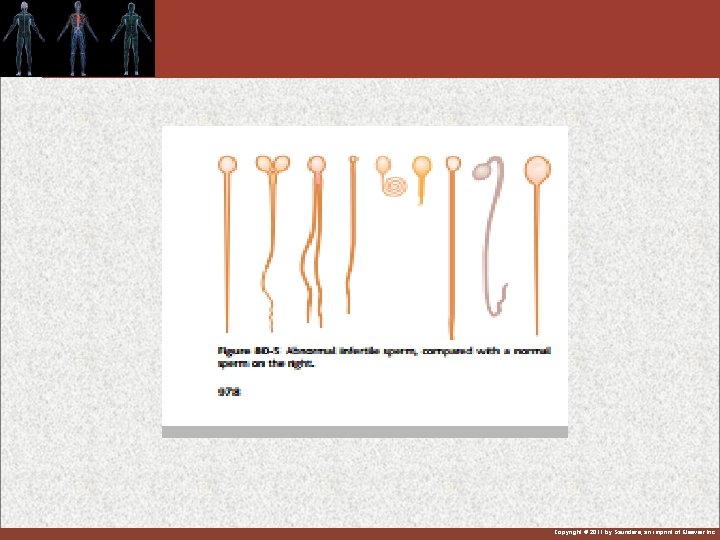
Semen: Effect of sperm count on fertility: - The quantity of ejaculated semen during coitus about 3 -5 ml, each milliliter contains about 120 million sperm (normal male count vary between 35 million to 200 million sperm). Average of 400 millions in each ejaculation. Sperm count below 20 million leads to infertility. Effect of sperm morphology and motility on fertility: - Sometimes sperm count is normal but still infertile when about one half of the sperm having abnormal shape. - Sometimes the shape of the sperm is normal but they either relatively non-motile or entirely non-motile which causes infertility. Copyright © 2011 by Saunders, an imprint of Elsevier Inc.
Capacitation of the spermatozoa: Making it possible for them to penetrate the ovum: - Sperm in the epididymis is kept inactive by multiple inhibitory factors secreted by the genital duct epithelia & they are activated in female genital tract, for the final processes of fertilization. These activation changes are called capacitation of the spermatozoa (require 1 to 10 hrs). - Uterine & fallopian fluids wash away the inhibitory factors which suppress the sperm activity in the male genital ducts. - The membrane of the sperm becomes permeable to Ca to enter to the sperm and becomes powerful in motion and to penetrates the ovum. Copyright © 2011 by Saunders, an imprint of Elsevier Inc.
Acrosome enzymes, the “Acrosome Reaction” and penetration of the ovum: The acrosome of the sperm stores large quantities of hyaluronidase and proteolytic enzymes. Hyaluronidase depolarizes hyaluronic acid polymers in the intracellular cement that hold the ovarian granulosa cells together. Also the proteolytic enzymes digest the proteins that adhere to ovum. When the sperm inside the ovum within 30 minutes, the membrane of sperm head fuse together to form single cell (fertilization) containing equal number of chromosomes and genes from mother and father. Copyright © 2011 by Saunders, an imprint of Elsevier Inc.
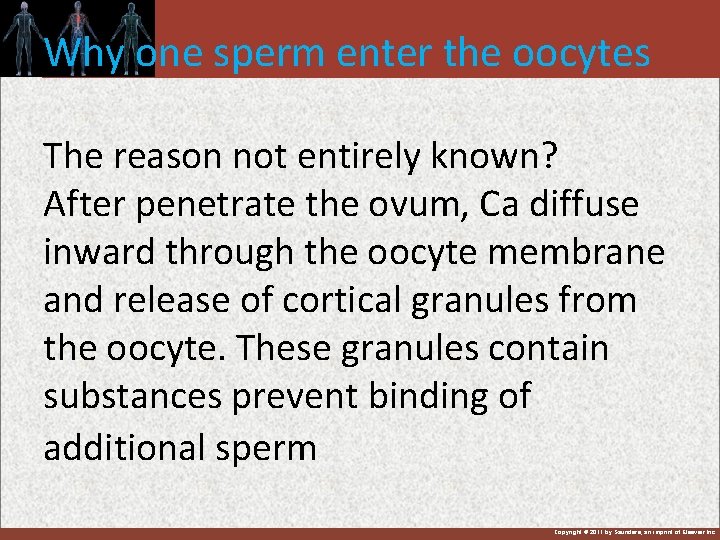
Why one sperm enter the oocytes The reason not entirely known? After penetrate the ovum, Ca diffuse inward through the oocyte membrane and release of cortical granules from the oocyte. These granules contain substances prevent binding of additional sperm Copyright © 2011 by Saunders, an imprint of Elsevier Inc.
SPERMATOGENESIS AND MALE FERTILITY 1 -Abnormal spermatogenesis : Orchitis & Mumps 2 - Effect of temperature 3 - Cryptorchidism 4 - Effect of sperm count 5 -Effect of sperm morphology and motility Copyright © 2011 by Saunders, an imprint of Elsevier Inc.
Copyright © 2011 by Saunders, an imprint of Elsevier Inc.
MALE SEXUAL ACT 1 -Neuronal stimulus A- Glans penis : sensory end organs –sexual signal through pudendal nerve-sacral portion of spinal cord-? Undefined areas in the brain B-Others : Scrotum, perineum, prostate, testes, vas deferens, mild infection and vascular congestion, aphrodisiac drugs. 2 - Psychic element : Thinking and dreams. Copyright © 2011 by Saunders, an imprint of Elsevier Inc.
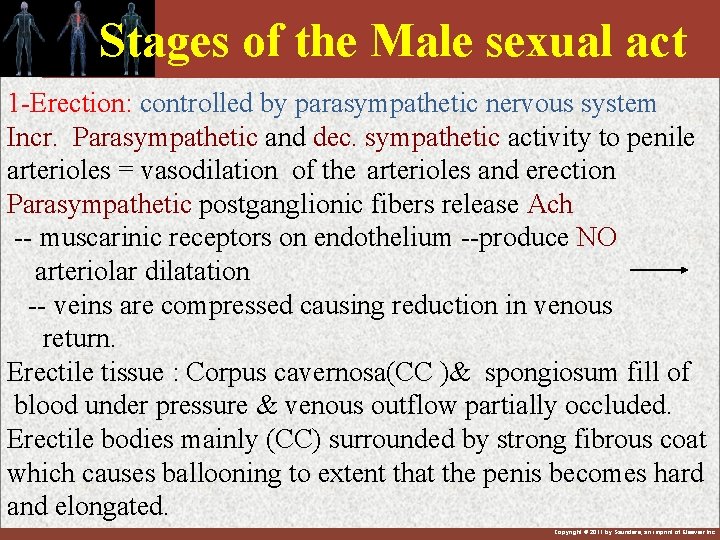
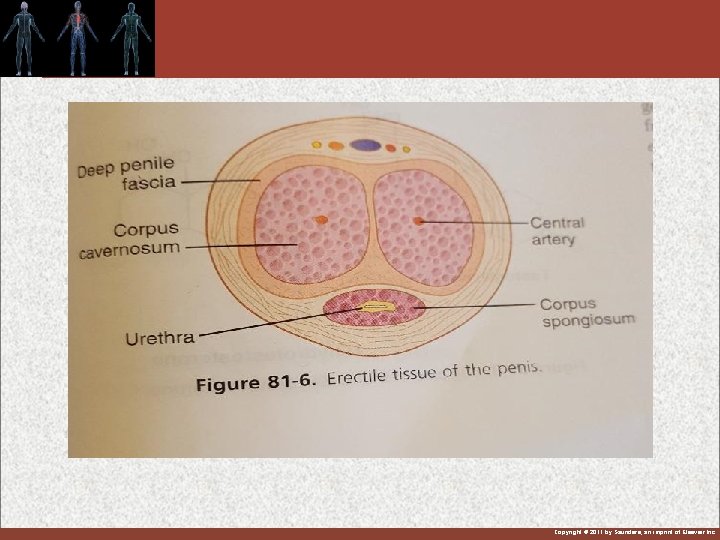
Stages of the Male sexual act 1 -Erection: controlled by parasympathetic nervous system Incr. Parasympathetic and dec. sympathetic activity to penile arterioles = vasodilation of the arterioles and erection Parasympathetic postganglionic fibers release Ach -- muscarinic receptors on endothelium --produce NO arteriolar dilatation -- veins are compressed causing reduction in venous return. Erectile tissue : Corpus cavernosa(CC )& spongiosum fill of blood under pressure & venous outflow partially occluded. Erectile bodies mainly (CC) surrounded by strong fibrous coat which causes ballooning to extent that the penis becomes hard and elongated. Copyright © 2011 by Saunders, an imprint of Elsevier Inc.
Copyright © 2011 by Saunders, an imprint of Elsevier Inc.
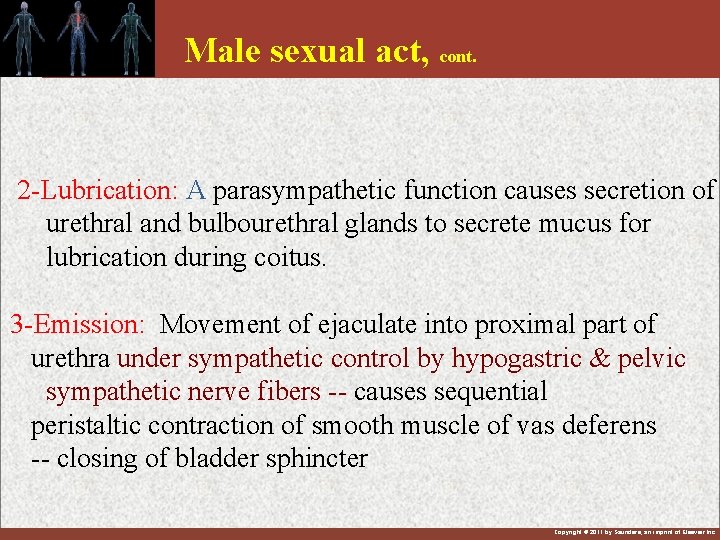
Male sexual act, cont. 2 -Lubrication: A parasympathetic function causes secretion of urethral and bulbourethral glands to secrete mucus for lubrication during coitus. 3 -Emission: Movement of ejaculate into proximal part of urethra under sympathetic control by hypogastric & pelvic sympathetic nerve fibers -- causes sequential peristaltic contraction of smooth muscle of vas deferens -- closing of bladder sphincter Copyright © 2011 by Saunders, an imprint of Elsevier Inc.
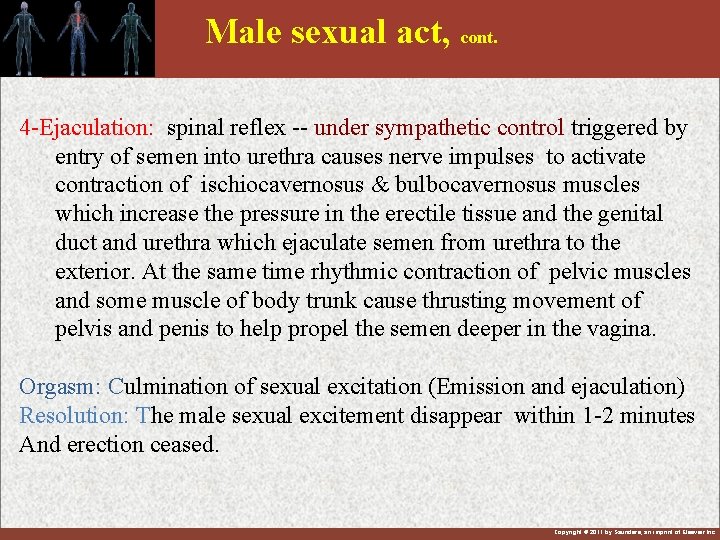
Male sexual act, cont. 4 -Ejaculation: spinal reflex -- under sympathetic control triggered by entry of semen into urethra causes nerve impulses to activate contraction of ischiocavernosus & bulbocavernosus muscles which increase the pressure in the erectile tissue and the genital duct and urethra which ejaculate semen from urethra to the exterior. At the same time rhythmic contraction of pelvic muscles and some muscle of body trunk cause thrusting movement of pelvis and penis to help propel the semen deeper in the vagina. Orgasm: Culmination of sexual excitation (Emission and ejaculation) Resolution: The male sexual excitement disappear within 1 -2 minutes And erection ceased. Copyright © 2011 by Saunders, an imprint of Elsevier Inc.
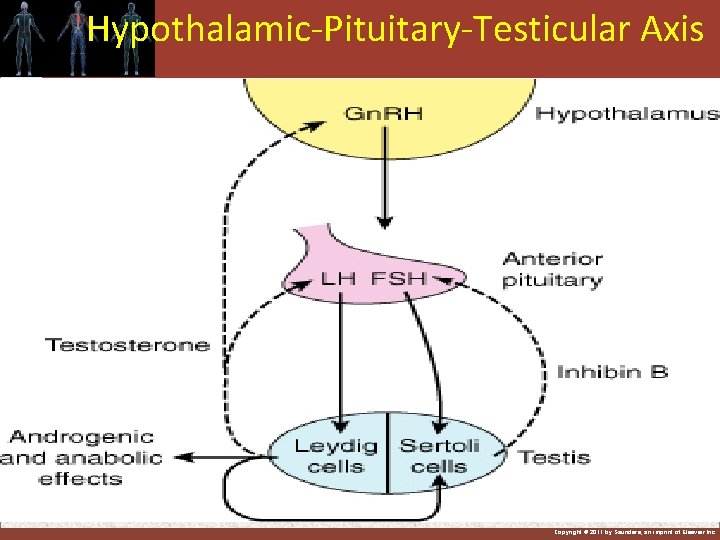
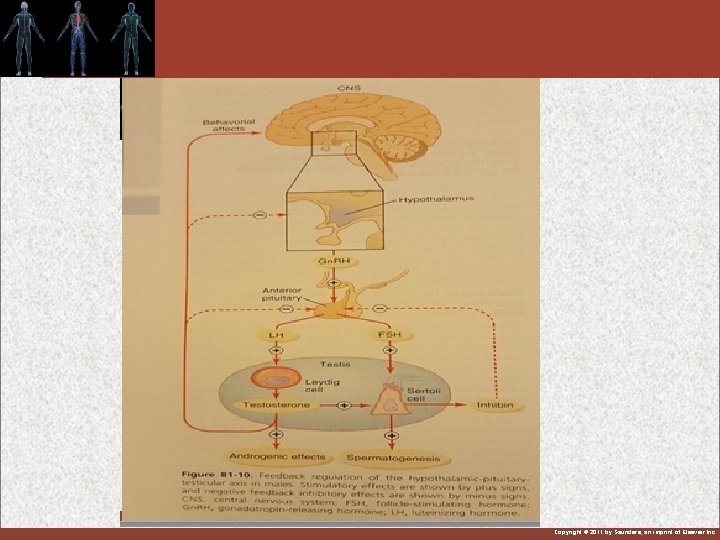
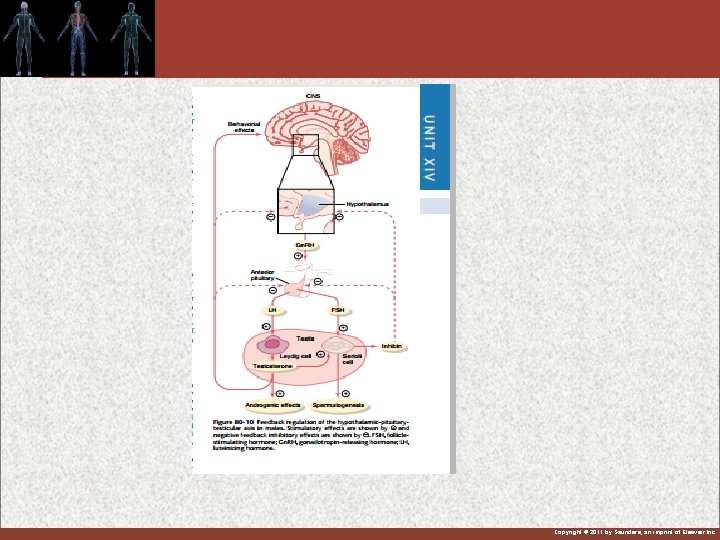
Hypothalamic-Pituitary-Testicular Axis Copyright © 2011 by Saunders, an imprint of Elsevier Inc.
Copyright © 2011 by Saunders, an imprint of Elsevier Inc.
Copyright © 2011 by Saunders, an imprint of Elsevier Inc.
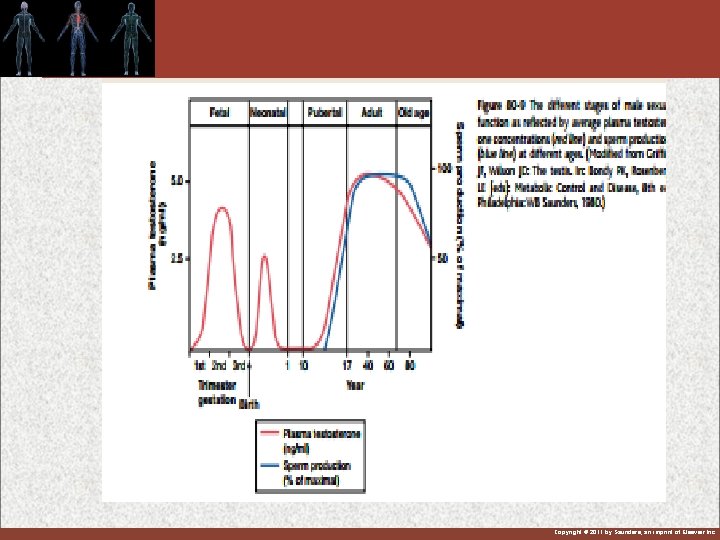
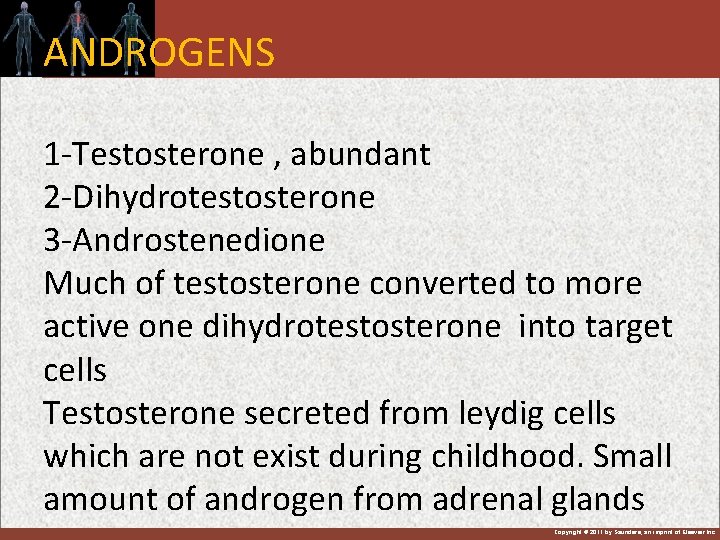
ANDROGENS 1 -Testosterone , abundant 2 -Dihydrotestosterone 3 -Androstenedione Much of testosterone converted to more active one dihydrotestosterone into target cells Testosterone secreted from leydig cells which are not exist during childhood. Small amount of androgen from adrenal glands Copyright © 2011 by Saunders, an imprint of Elsevier Inc.
Some estrogen also formed in the male (source not clear). Informations : 1 -By sertoli cells by converting testosterone to estradiol 2 - Much larger by converting testosterone to estrogen by the liver(80%) Copyright © 2011 by Saunders, an imprint of Elsevier Inc.
Functions of testosterone Adult primary and secondary characteristics: 1) body hair distribution (pubis, face, chest, back, etc) 2) voice: hypertrophy of laryngeal mucosa and larynx male = deep voice 3) skin: thickens skin and increases ruggedness of subcutaneous tissues, sebaceous glands (acne) and oil production 4) Protein formation and muscle development Copyright © 2011 by Saunders, an imprint of Elsevier Inc.
Functions of testosterone 5) Bone growth and calcium retention: thought to inhibit production of osteoclasts. Tall , Castrated male. 6) Increase basal metabolic rate. 7) Red blood cells -- causes increases in erythropoietin -- stimulates RBC production 8) Stimulates sodium and water reabsorption in PT of kidney (some effect on distal? ) Copyright © 2011 by Saunders, an imprint of Elsevier Inc.
Functions of testosterone • Development of behavioral aspects characteristic for the “male brain”. • Development of ♂ 2 o sex characteristics ( male sex drive & libido) • ↑ protein formation & ↑ Ca+2 deposition Copyright © 2011 by Saunders, an imprint of Elsevier Inc.
Functions of testosterone • It has growth promoting effects, however ↑ testosterone levels lead to a decrease in final height because testosterone causes premature closure of epiphyseal plates. • Testosterone →male pelvis (load-bearing with narrow outlet). • ↑ MR by 15% due to its protein anabolism. • Maintains spermatogenesis (with FSH) Copyright © 2011 by Saunders, an imprint of Elsevier Inc.
Functions of testosterone -- Fetal development: present at 2 nd month of embryonic life presence or absence of testosterone determines development of genital organs and characteristics + testosterone = male external genitalia - testosterone = female external genitalia -- causes descent of testes into scrotum during last 2 -3 months of pregnancy --Failure of testicular descent = cryptorchidism Copyright © 2011 by Saunders, an imprint of Elsevier Inc.
Functions of testosterone • Fetal development of epididymis, vas deferens, seminal vesicles • Pubertal growth of penis, seminal vesicles, musculature, skeleton, larynx, Spermatogenesis Copyright © 2011 by Saunders, an imprint of Elsevier Inc.
Functions of DHT • Fetal development of penis, penile urethra, scrotum, prostate • Pubertal growth of scrotum, prostate, sexual hair, sebaceous glands • Prostatic secretion • Development of ♂ 2 sex characteristics: (facial hair, acne, temporal recession of hair line, baldness, enlargement of prostate & ♂ sex organ) Copyright © 2011 by Saunders, an imprint of Elsevier Inc.
BASIC INTRACELLULAR MECHANISM OF ACTION OF TESTOSTERONE: Converted intracellular 5α-reductase Testosterone→→→→dihydrotestosterone (DHT) and Stimulate rate of protein formation virtually every where in the body and more specific on target cells responsible for development of sexual character Copyright © 2011 by Saunders, an imprint of Elsevier Inc.
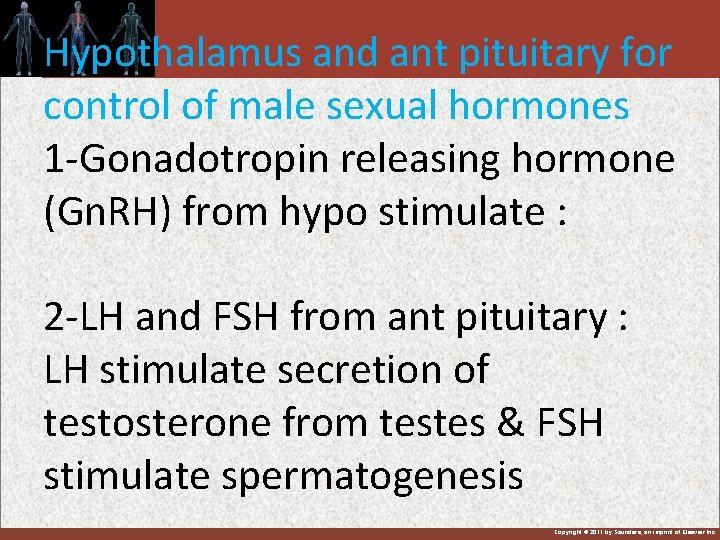
Hypothalamus and ant pituitary for control of male sexual hormones 1 -Gonadotropin releasing hormone (Gn. RH) from hypo stimulate : 2 -LH and FSH from ant pituitary : LH stimulate secretion of testosterone from testes & FSH stimulate spermatogenesis Copyright © 2011 by Saunders, an imprint of Elsevier Inc.
Copyright © 2011 by Saunders, an imprint of Elsevier Inc.
Copyright © 2011 by Saunders, an imprint of Elsevier Inc.
During pregnancy : If the fetus is male h. CG from the placenta cause the testes of the fetus to secrete testosterone for the formation of male sexual organs. Copyright © 2011 by Saunders, an imprint of Elsevier Inc.
Male sexual life 1 -normal sexual function till about 50 yr then decreases gradually 2 -Male climacteric : As menopause in female 3 -Prostate gland : Hypertrophy , cancer which is stimulated by testosterone and can be treated by estrogen Copyright © 2011 by Saunders, an imprint of Elsevier Inc.
Erectile dysfunction (Impotence) 1 -Trauma as prostate surgery 2 -Decrease testosterone 3 -Drugs : Nicotine, alcohol, antidepressents 4 -Vascular diseases as : Hypertension, DM, atheroscleosis (viagra and cialis) Copyright © 2011 by Saunders, an imprint of Elsevier Inc.
PINEAL GLAND ? ? 1. Pineal gland play some role in sexual and reproductive function in some animals 2. Perhaps it play at least some role in controlling sexual drive and reproduction in humans Copyright © 2011 by Saunders, an imprint of Elsevier Inc.