
Male Reproductive and Urinary System Unit 6 Production
- Slides: 25
Male Reproductive and Urinary System Unit 6
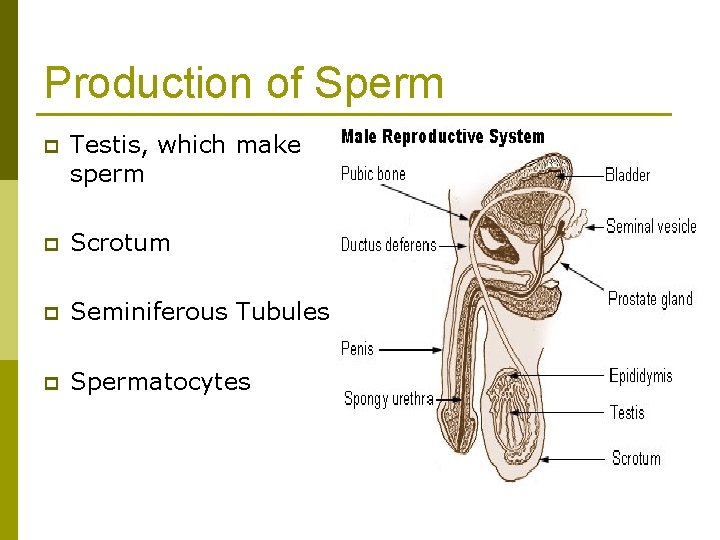
Production of Sperm p Testis, which make sperm p Scrotum p Seminiferous Tubules p Spermatocytes
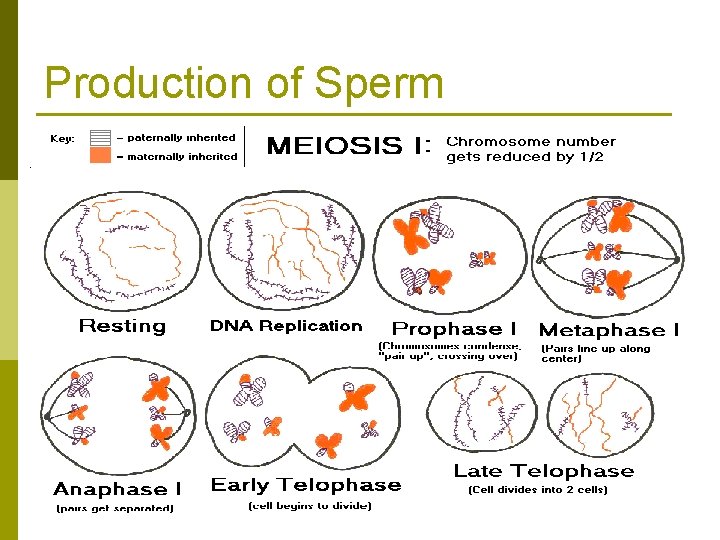
Production of Sperm
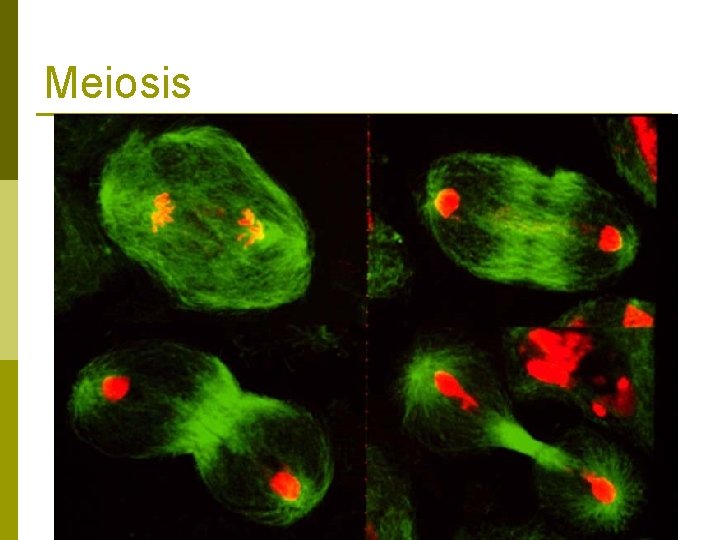
Meiosis
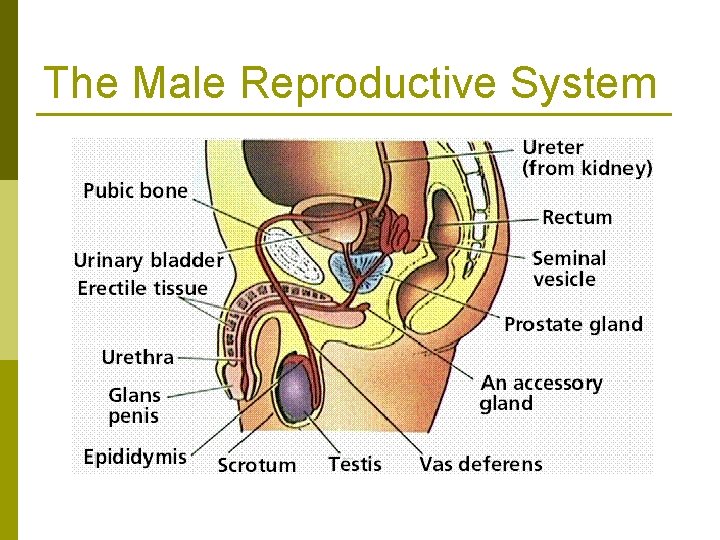
The Male Reproductive System
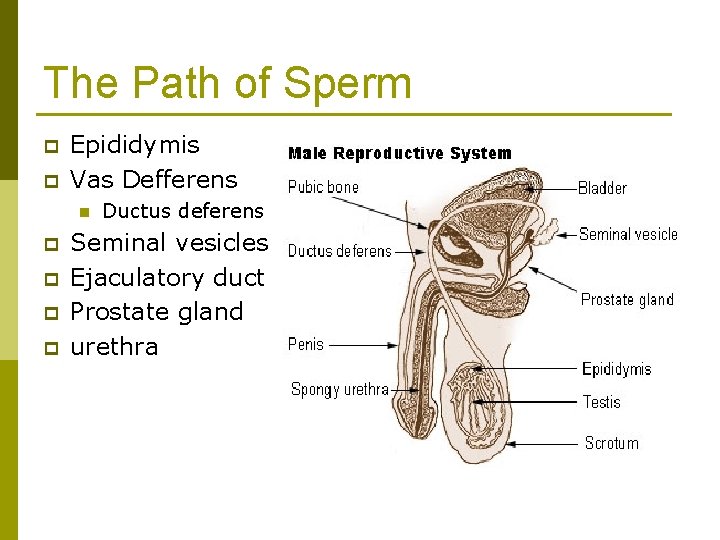
The Path of Sperm p p Epididymis Vas Defferens n p p Ductus deferens Seminal vesicles Ejaculatory duct Prostate gland urethra
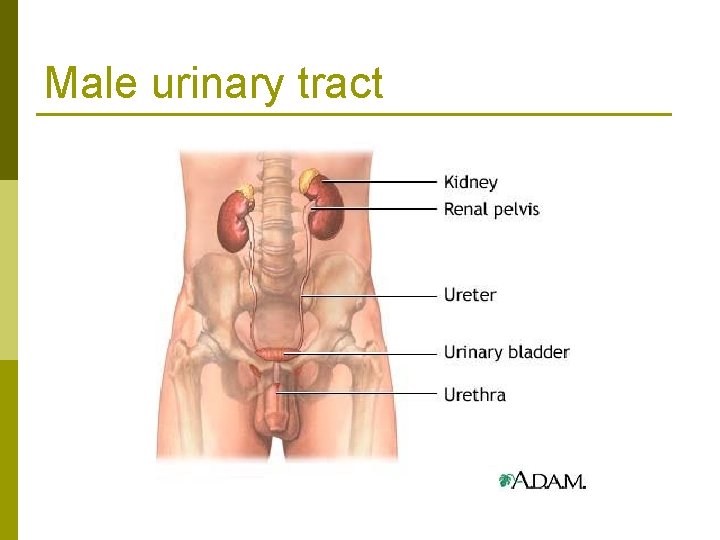
Male urinary tract
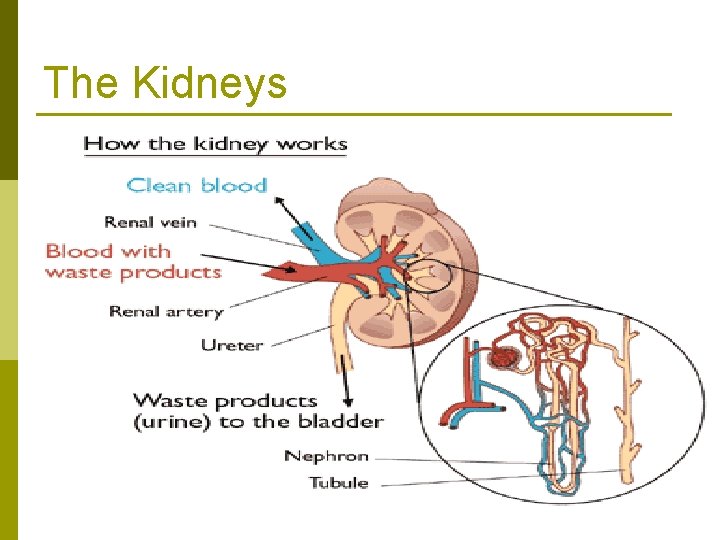
The Urinary System p The job of the urinary system is to remove waste from the blood and send it outside the body in the form of urine p Kidneys produce the urine p Ureters deliver the urine to the bladder p The urethra excretes the urine
The Kidneys
Renal Failure p p When the kidneys don’t work properly, the blood is not cleaned Waste product then accumulates in the blood and causes many problems n p Blood pressure, neural function, heart function, and muscle contractions Causes: physical damage to the kidneys, diabetes, chronic hypertension, or bacterial infection.
The Ureters Tubes that carry urine from the kidneys to the urinary bladder p There are two, one from each kidney p Smooth muscle in the walls of the ureters helps to move the urine toward the bladder p
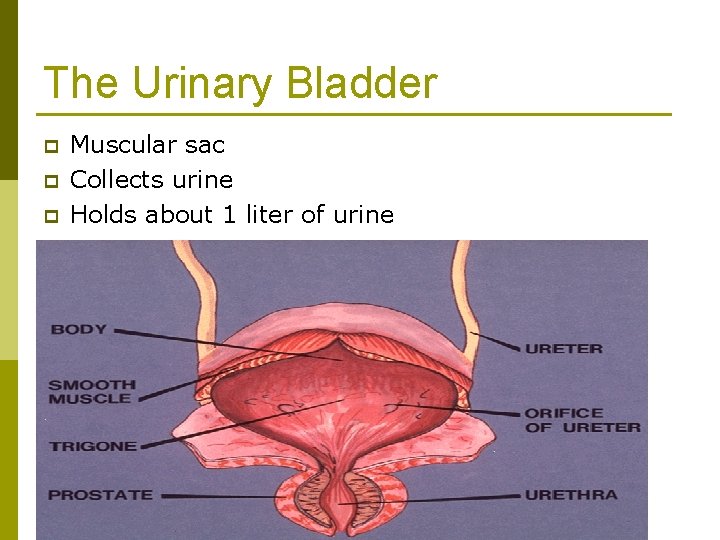
The Urinary Bladder p p p Muscular sac Collects urine Holds about 1 liter of urine
The Urethra The urethra is a tube that extends from the base of the bladder to the outside of the body p In females the urethra is short about 3 -5 cm p In males the urethra is about 18 -20 cm p
URINARY SYSTEM DISORDERS Urinary tract infections (UTIs) n p p Infection in one area can involve the entire system. Microbes can enter the system through the urethra. Common causes include: § Catheterization § Urological exams § Intercourse § Poor perineal hygiene § Immobility § Poor fluid intake UTI is a common healthcare-associated infection.
p p p Women are at high risk. § Microbes can easily enter the short female urethra. Prostate gland secretions help protect men from UTIs. § An enlarged prostate increases the risk of UTI in older men. The following increase the risk of UTIs in older men and women: § Incomplete bladder emptying § Perineal soiling from fecal incontinence § Poor fluid intake § Poor nutrition
Cystitis is a bladder infection caused by bacteria p p The following signs and symptoms are common: § Urinary frequency § Oliguria (scant amount of urine) § Urgency § Dysuria (difficult or painful urination) § Pain or burning on urination § Foul-smelling urine § Hematuria (blood in the urine) § Pyuria (pus in the urine) § Fever Treatment includes antibiotics and encouraging fluids
Pyelonephritis is inflammation of the kidney pelvis p p p Infection is the most common cause. Cloudy urine may contain pus, mucus, and blood. Signs and symptoms include: § Chills, fever, back pain § Nausea and vomiting § The signs and symptoms of cystitis Treatment involves antibiotics and fluids. If untreated, cystitis can lead to pyelonephritis.
Prostate enlargement p p p The prostate is a gland in men. § It lies in front of the rectum and just below the bladder. § The prostate surrounds the urethra. The prostrate enlarges as the man grows older. § This is called benign prostatic hyperplasia or benign prostatic hypertrophy (BPH). BPH causes urinary problems. § The enlarged prostate presses against the urethra. This obstructs urine flow through the urethra.
p p These problems are common: § A weak urine stream § Frequent voidings of small amounts of urine § Urgency and leaking or dribbling of urine § Frequent urination at night § Urinary retention Treatment depends on the extent of the problem. § The doctor may order drugs to shrink the prostate or stop its growth. § Some microwave and laser treatments destroy the excess prostate tissue. § Transurethral resection of the prostate (TURP) is a common surgical procedure.
Urinary diversions p p Sometimes the urinary bladder is surgically removed. § Cancer and bladder injuries are common reasons. A new pathway (urinary diversion) is needed for urine to exit the body. § Often an ostomy is involved. A urostomy is a surgically created opening between the ureter and the abdomen. A pouch is applied over the stoma. § Urine drains through the stoma into the pouch. § Pouches are changed every 5 to 7 days. § A pouch is replaced anytime it leaks.
Renal calculi p p Renal calculi are kidney stones. Risk factors include: § Being a white male between the ages of 20 and 40 years § Bedrest § Immobility § Poor fluid intake Stones vary in size. Stones may be as small as grains of sand or as large as pearls. Some are as large as golf balls.
Signs and symptoms include: § § § Severe, cramping pain in the back and side just below the ribs Pain in the abdomen, thigh, and urethra Nausea and vomiting Fever and chills Dysuria (difficult or painful urination) Urinary frequency Urinary urgency Burning on urination Oliguria (scant amount of urine) Hematuria (blood in the urine) Cloudy urine Foul-smelling urine
Treatment involves: § Drugs for pain relief § Drinking 2000 to 3000 m. L of fluid a day § Straining all urine § Surgical removal of the stone if necessary p Some dietary changes can prevent stones.
Renal failure (kidney failure) In renal failure, the kidneys do not function or are severely impaired. § Waste products are not removed from the blood. § The body retains fluid. § Heart failure and hypertension easily result. p Renal failure may be acute or chronic. The person is very ill. p
Confidentiality and Privacy In the United states it is illegal for a health -care provider to give a patients medical information to anyone. p The patient must give written permission to the doctor to share this information with even family members. p