
Male and Female Reproductive Systems DO NOW 1
- Slides: 52
Male and Female Reproductive Systems
DO NOW #1 p Why is it important to know and understand the functions of the male reproductive system (MRS)?
Male Reproduction System
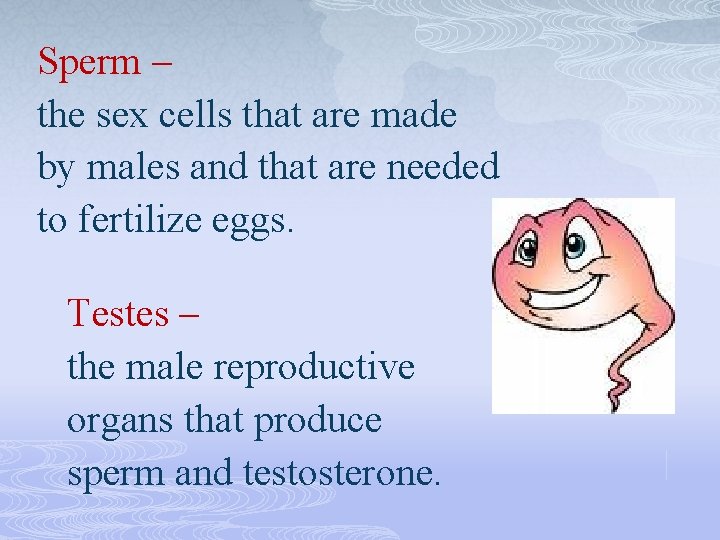
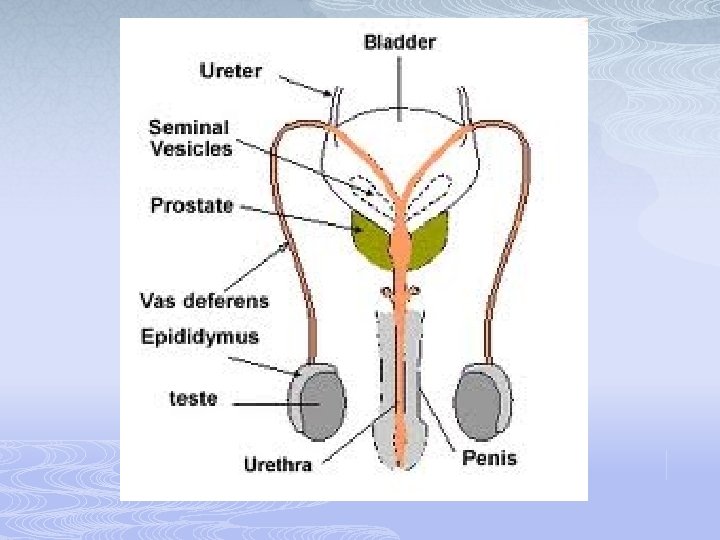
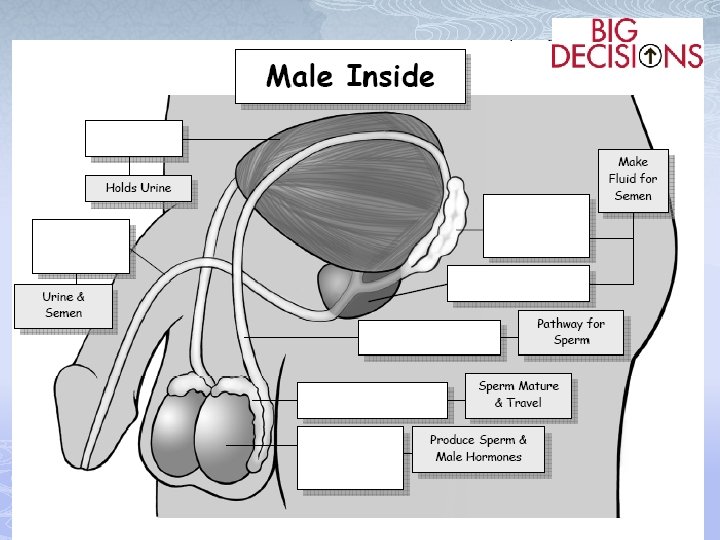
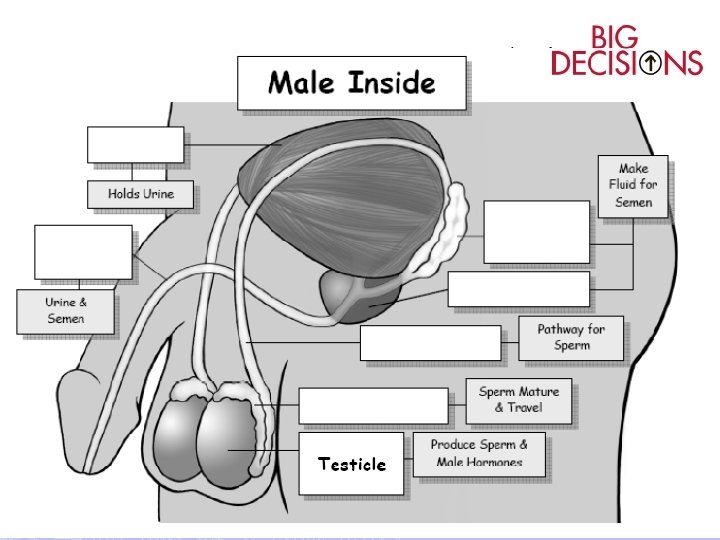
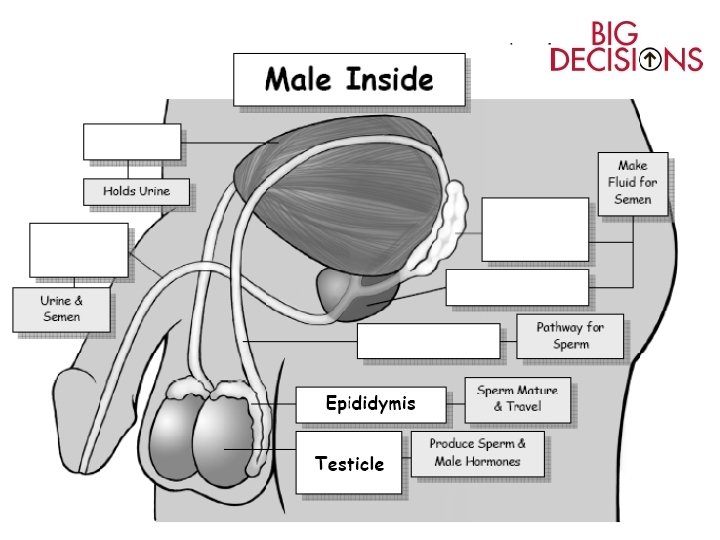
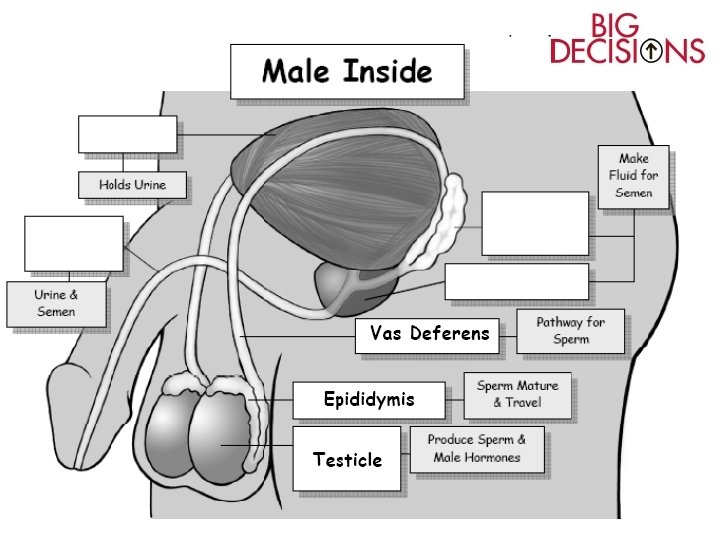
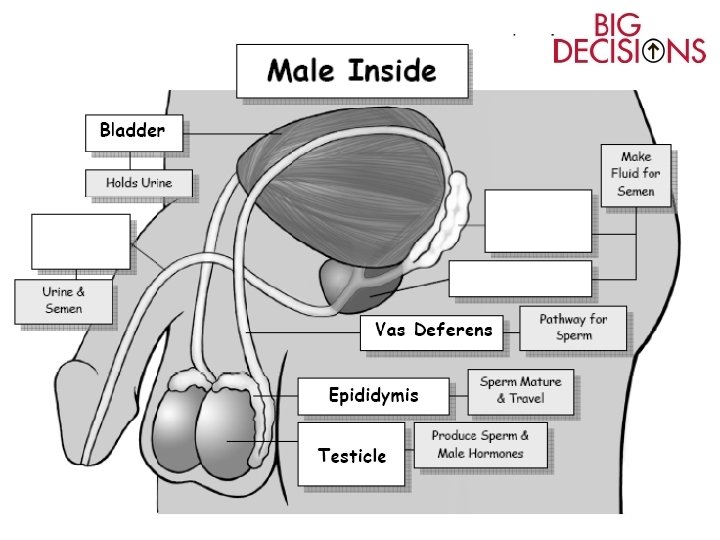
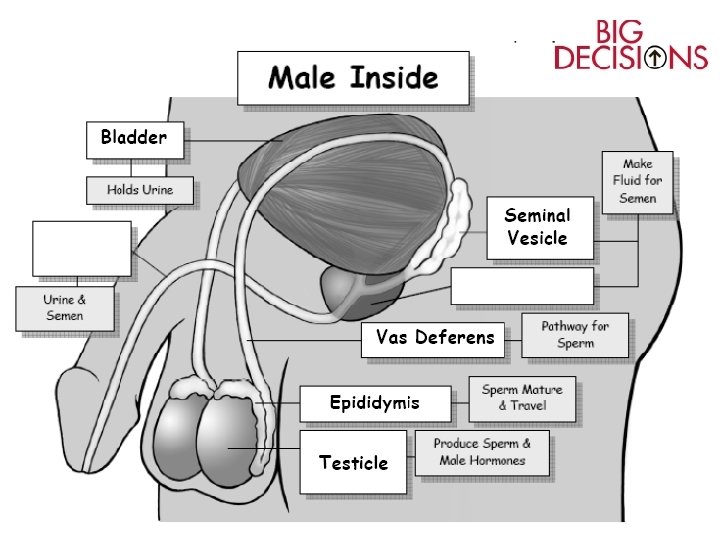
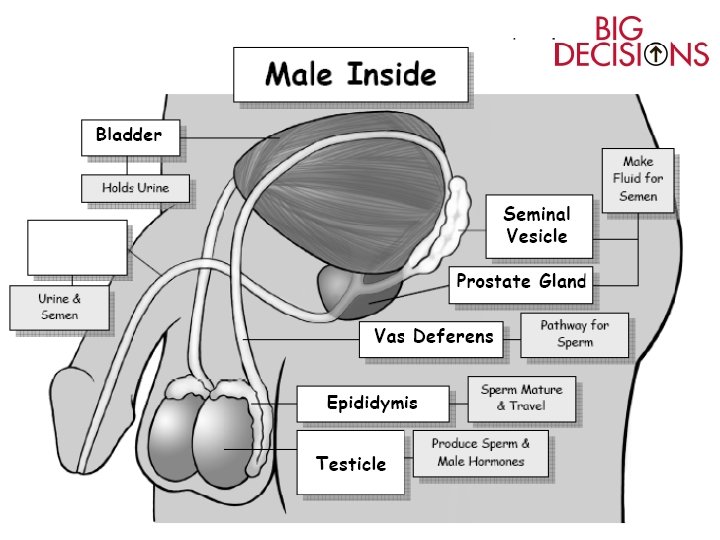
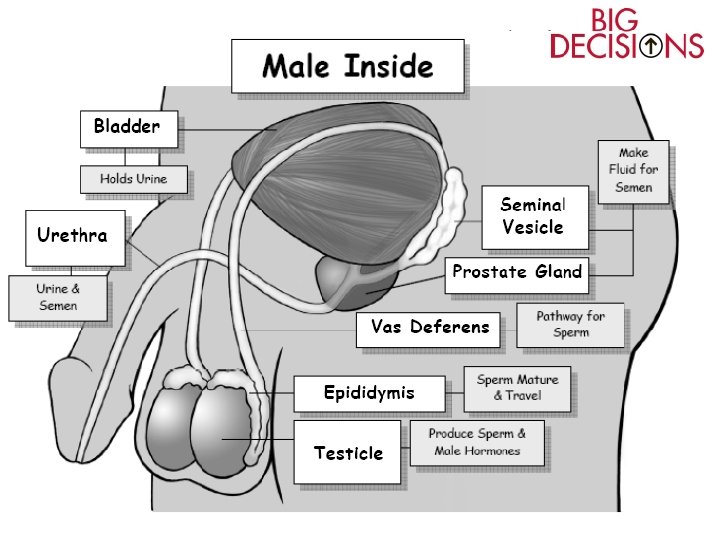
Sperm – the sex cells that are made by males and that are needed to fertilize eggs. Testes – the male reproductive organs that produce sperm and testosterone.
Scrotum – the skin covered sac that surround the testes. Epididymis – once sperm are made they move into this coiled tube Vas Deferens – once a sperm matures, it travels into this tube
Prostate Gland – the male gland that adds fluid to the sperm to nourish and protect it. Semen – sperm and the added fluids Urethra - the tube that passes through the penis. Semen leave the body during ejaculation via this tube
Penis - the organ that removes urine from the male body and that can deliver sperm to the female reproductive system
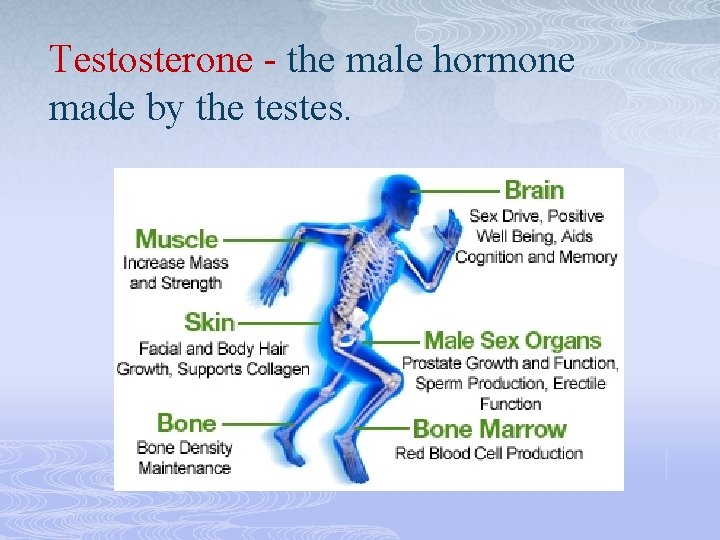
Testosterone - the male hormone made by the testes.
How long does it take an immature sperm to mature? An immature sperm takes 2 – 10 days to fully mature.
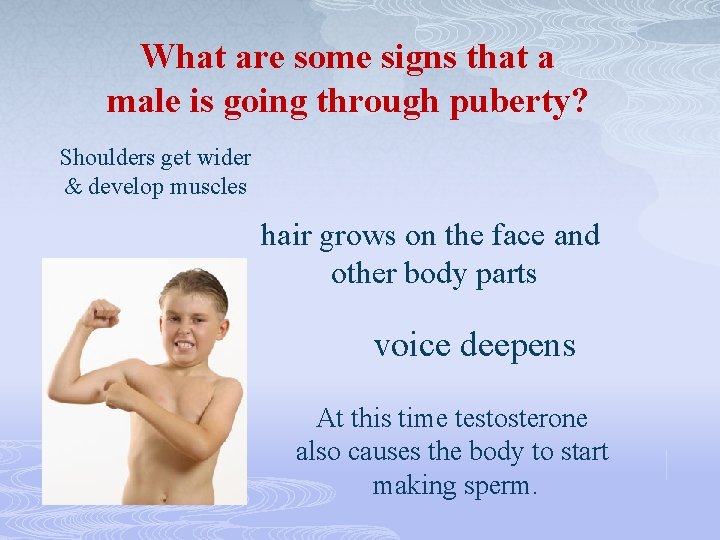
What are some signs that a male is going through puberty? Shoulders get wider & develop muscles hair grows on the face and other body parts voice deepens At this time testosterone also causes the body to start making sperm.
Female Reproductive System
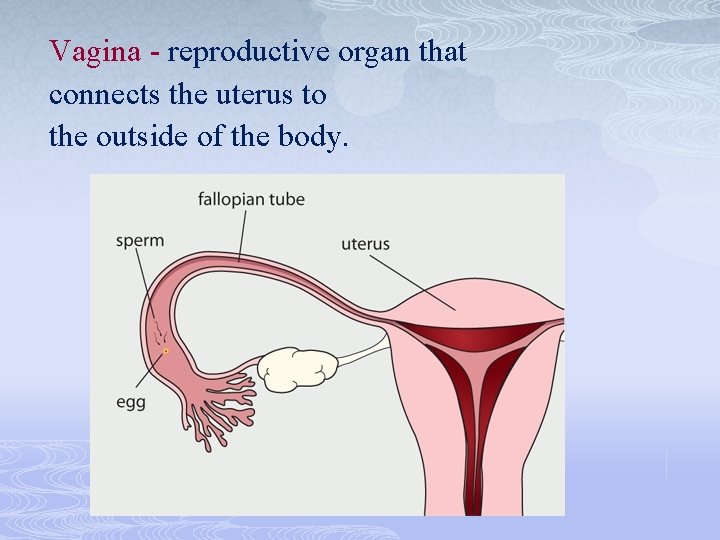
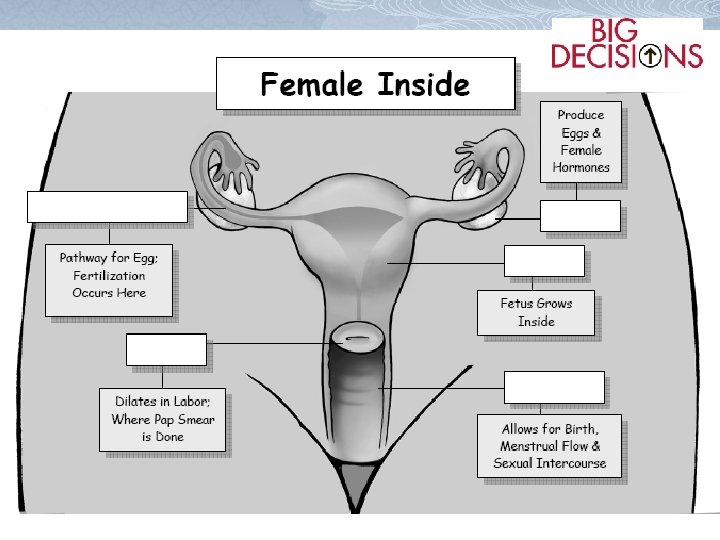
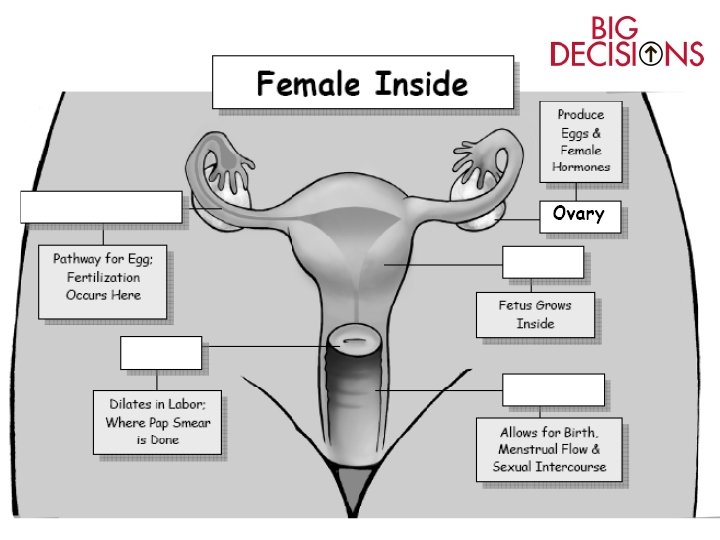
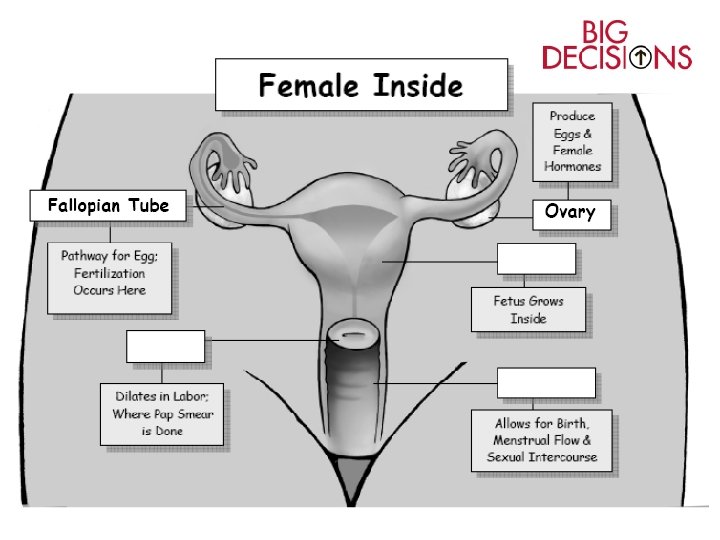
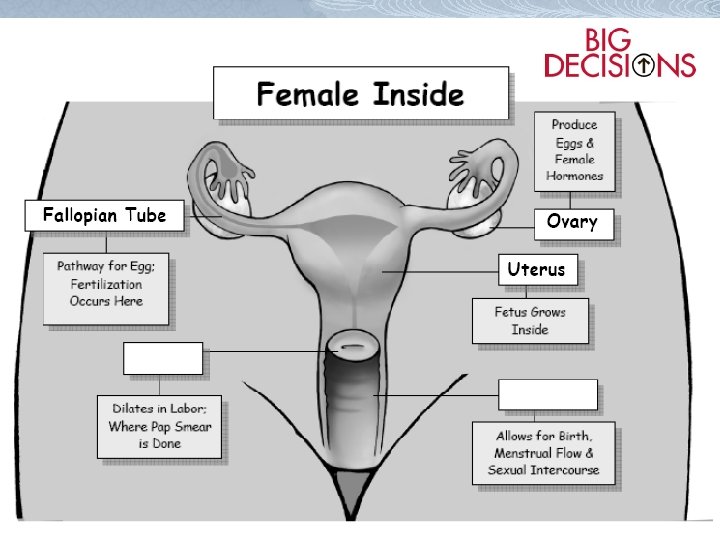
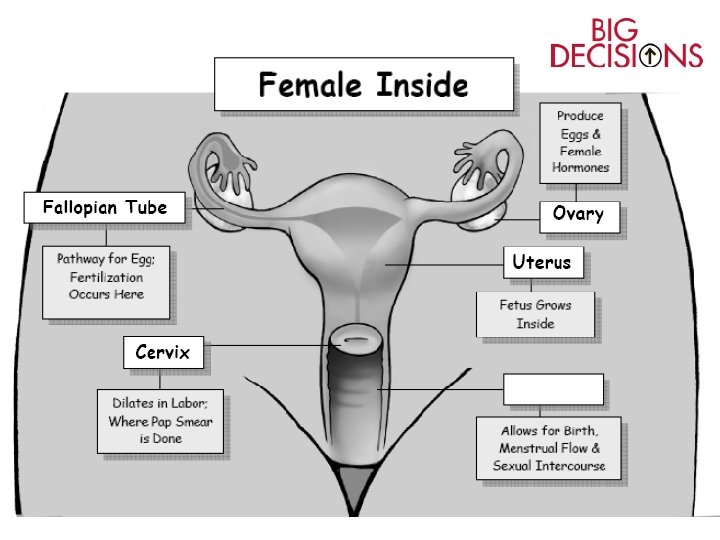
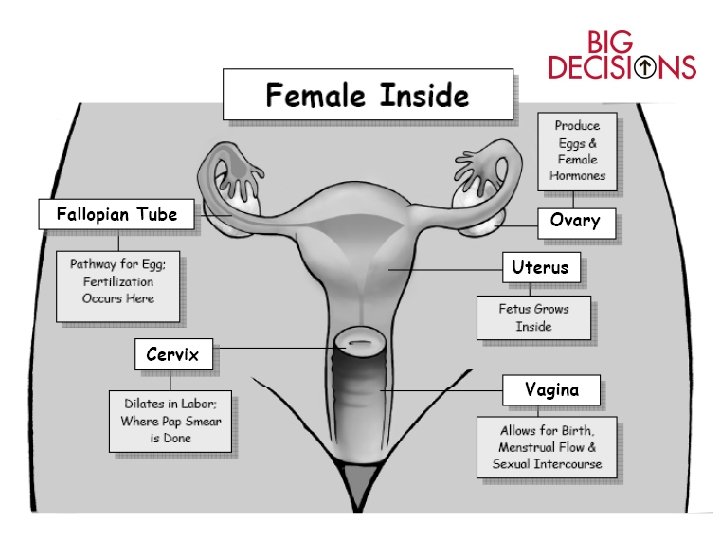
Eggs - the sex cells of females that can be fertilized by sperm Ovaries – the female reproductive organs that produce eggs and hormones
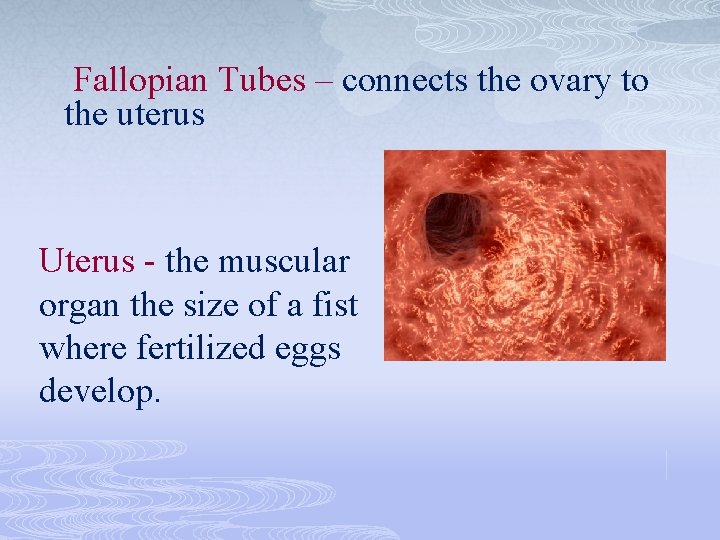
Fallopian Tubes – connects the ovary to the uterus Uterus - the muscular organ the size of a fist where fertilized eggs develop.
Cervix - the narrow base of the uterus Endometrium – the lining of the uterus that thickens as an egg matures Placenta - a blood vessel-rich tissue that forms in a mother’s uterus
Vagina - reproductive organ that connects the uterus to the outside of the body.
Menstruation If an egg is not fertilized, the blood vessels in the endometrium break down. The process in which the blood and tissue that built up in the uterus flows out of the body through the vagina.
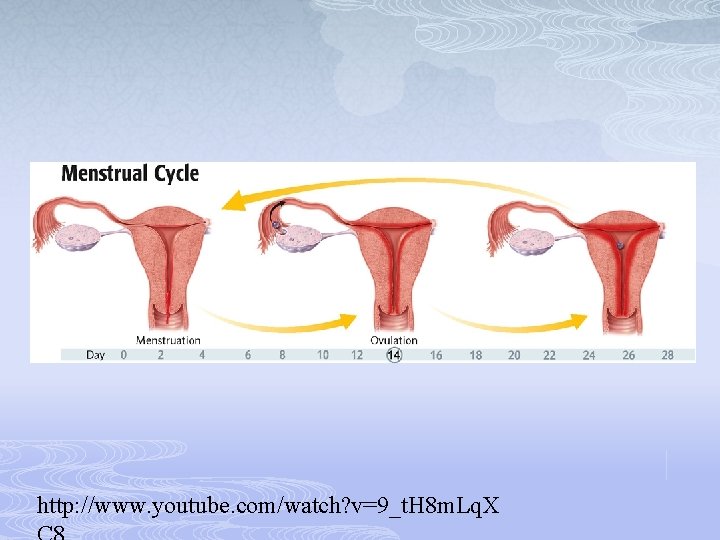
Menstrual Cycle a monthly series of hormone-controlled changes that mature an egg and prepare the uterus for pregnancy. Click on the picture above. This will take you to an animation. Make sure you click menstrual cycle at the top of the screen.
What are the two female hormones our body produces? Estrogen and Progesterone Girls have all their eggs at birth. On average, how many are there? Over 2 Million
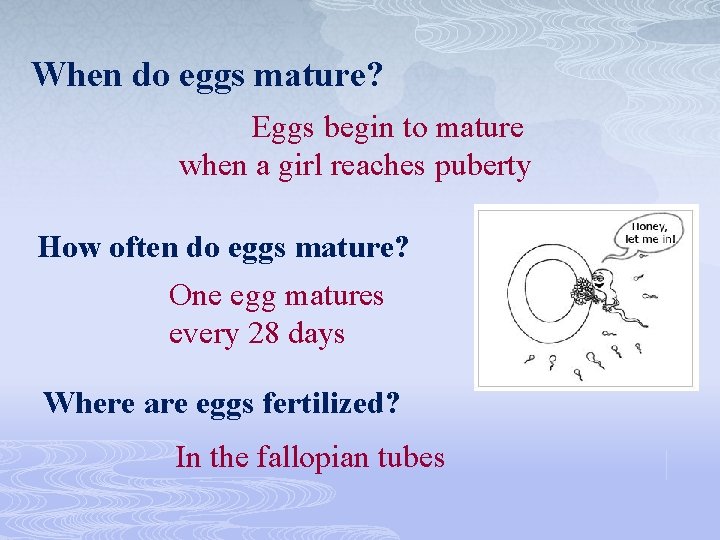
When do eggs mature? Eggs begin to mature when a girl reaches puberty How often do eggs mature? One egg matures every 28 days Where are eggs fertilized? In the fallopian tubes
What happens to the egg if it is not fertilized? If it is not fertilized the blood vessels in the endometrium break down and the body gets rid of it through the vagina in your monthly menstrual cycle.
What myths have you heard about reproduction?
http: //www. youtube. com/watch? v=9_t. H 8 m. Lq. X
Days 1 -6 p This is the time of bleeding n *menstruation
Day 7 -13 p The lining of the uterus begins to thicken
Day 14 (MIDPOINT OF CYCLE) p Ovulation occurs n When one ovary releases a mature egg into the fallopian tube
Days 15 -28 p Egg travels through the fallopian tube making its way to the uterus. n n **If the egg is fertilized by sperm cell then the fertilized egg attaches itself to the uterine wall to develop into an embryo fetus baby **If the egg is not fertilized then it continues to travel into the uterus
Health Concerns p p p p Menstrual Cramps Premenstrual Syndrome Toxic Shock Syndrome Ovarian Cyst Breast Cancer Cervical Cancer Yeast Infection Urinary Tract Infection
CRAMPS p Due to hormone production during menstruation p Symptoms: n n n Contractions of uterine muscles lower abdominal pain Occasional nausea
PMS p Premenstrual Syndrome n n Mental and physical changes related to menstrual cycle NOT completely understood p p Irritability Mood swings Abdominal bloating Breast tenderness
TSS p Toxic Shock Syndrome n Poisoning of the body from bacteria often related to tampon use p p Fever Chills Weakness Rash on palms of hands
Yeast Infection p What is it? n p How? n n n p Fungus Taking certain medications (ie. Birth control) Stress Illnesses affecting the immune system Urinary Tract Infection p p n n Itching/irritation in the vagina Redness, swelling Pain during urination Sexual intercourse What are the symptoms? n n p Bacteria in the bladder How? n Symptoms? n What is it? Frequent urination Burning or pain while urinating Foul smelling urine Mild fever How do I treat this? n Call your doctor * VERY COMMON
OVARIAN CYST p Failure of ovary to release an egg p Pain in lower abdomen or pelvis for up to a month
CERVICAL CANCER Abnormal cells in the cervix * May also be from an STI if left untreated p p Pap Smear Colposcopy
BREAST CANCER p Breast Self-Examination
Homework p Female Reproductive Health Worksheet