
Malaria Eradication in the Americas A Retrospective Analysis






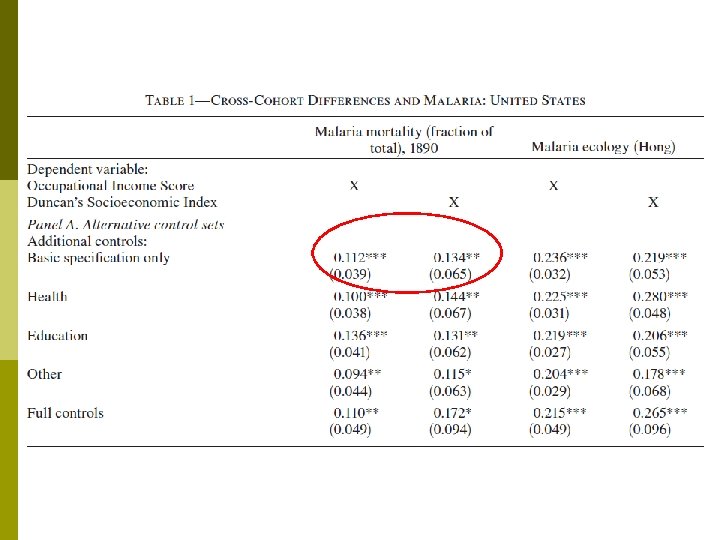
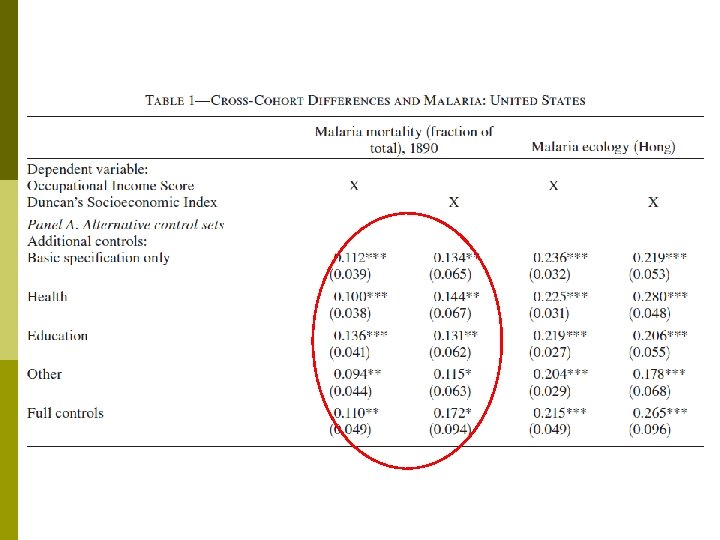
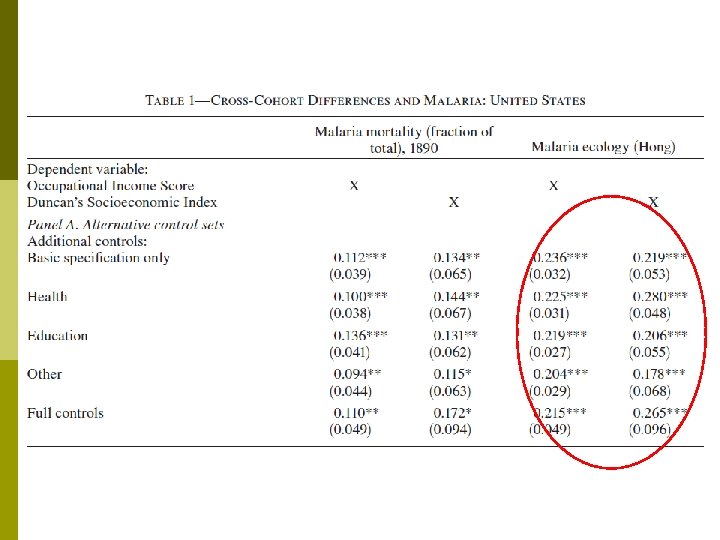
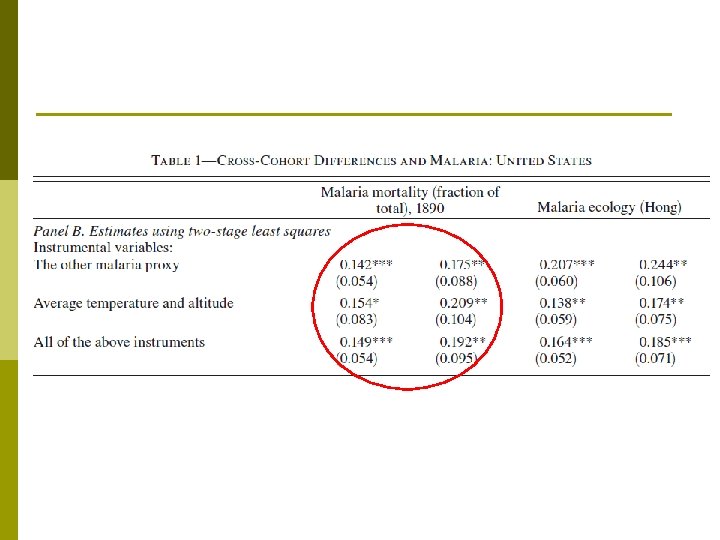
- Slides: 48
Malaria Eradication in the Americas: A Retrospective Analysis of Childhood Exposure Hoyt Bleakley
會感染人類的四種瘧疾 惡性瘧原蟲 三日瘧原蟲 間日瘧原蟲 卵形瘧原蟲 Plasmodium falciparum Plasmodium malariae Plasmodium vivax Plasmodium ovale 非洲 美洲 *重修蟲 美洲 圖片來源:Wikipedia
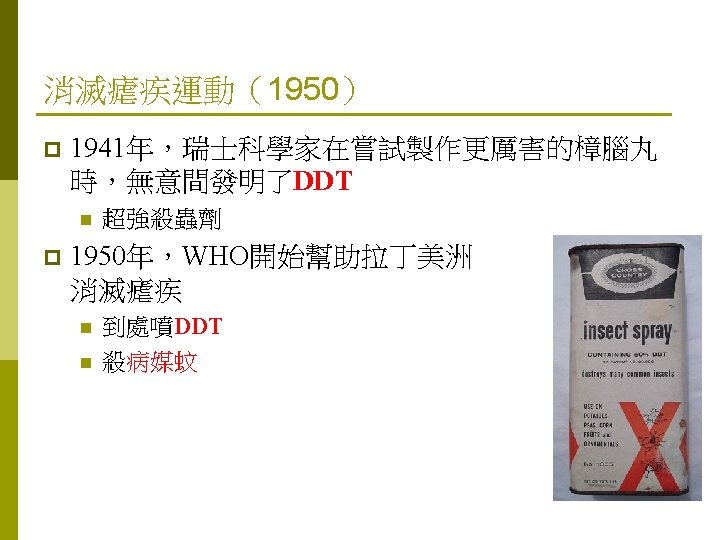
消滅瘧疾運動 Charles Louis Alphonse Laveran (法國軍醫) Ronald Ross (英國醫師)
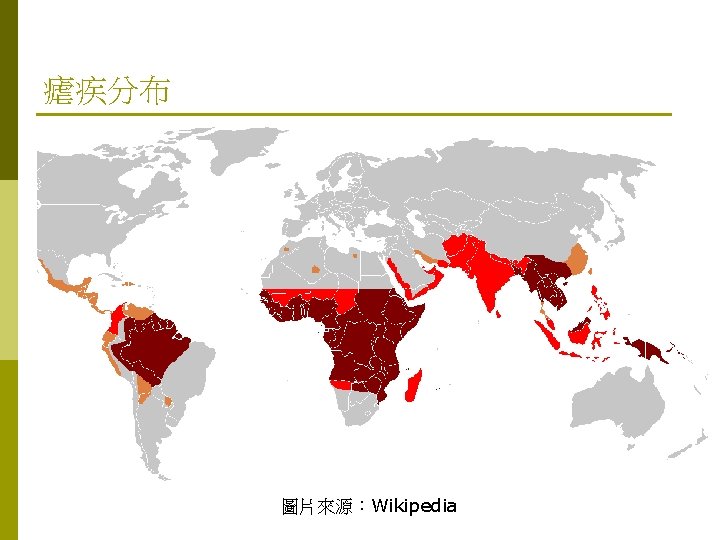
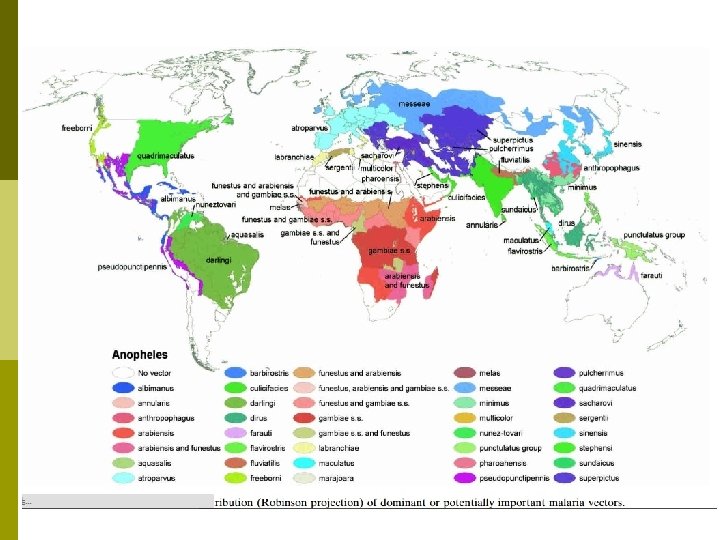
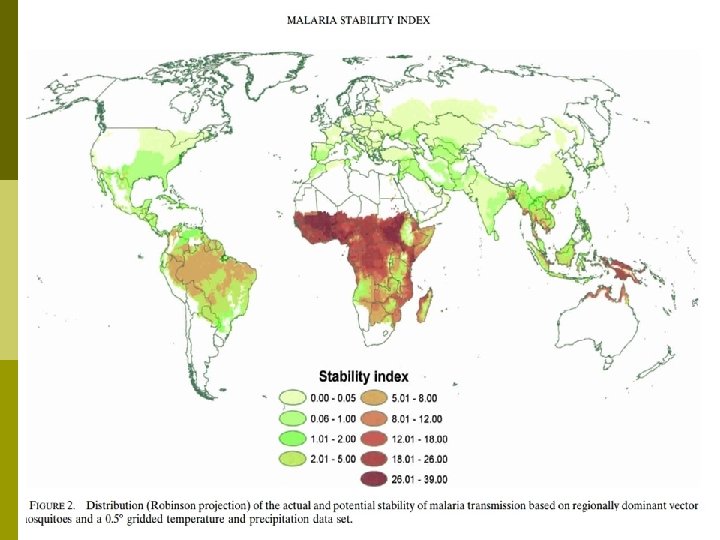
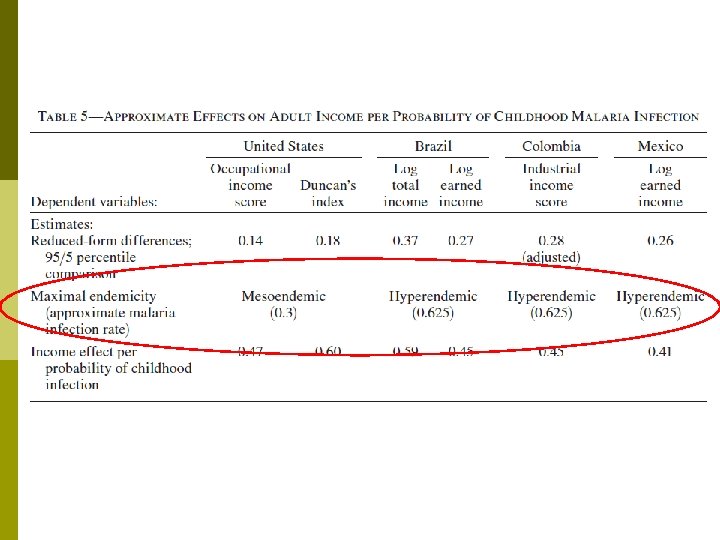
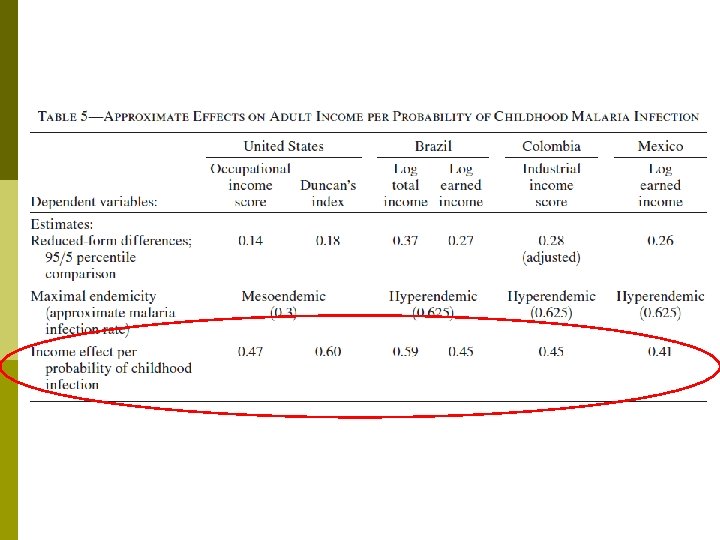
Malaria persists in tropical regions up to the present day� p Does malaria hold back economic progress? p n n p Sachs: yes, big time. Narrower (but still important!) question in this paper: Does childhood exposure to malaria inhibit learning and subsequent labor productivity. Why would we expect an effect?
Research Question p Childhood malaria ⇒ Learning, Wages?
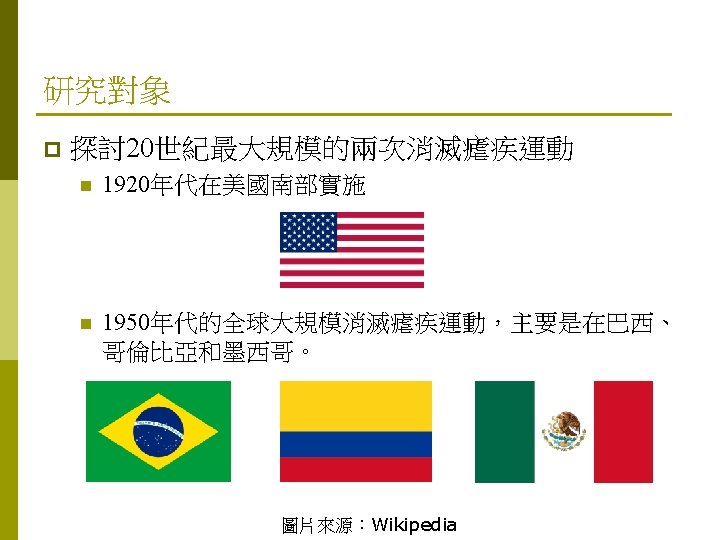
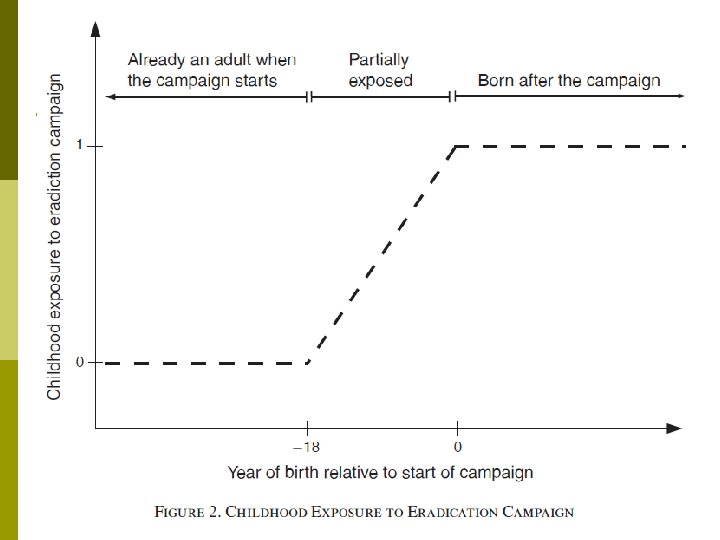
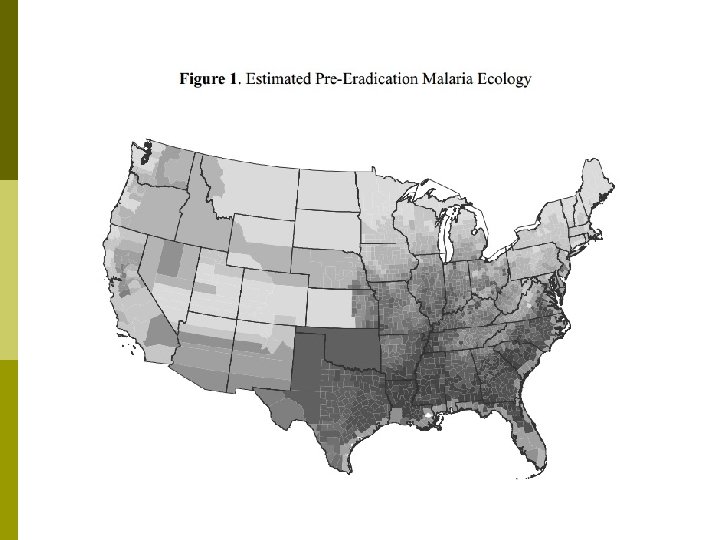
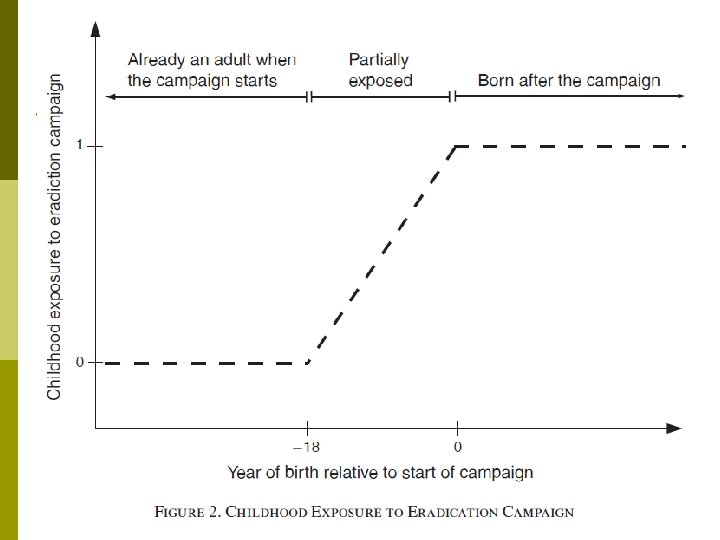
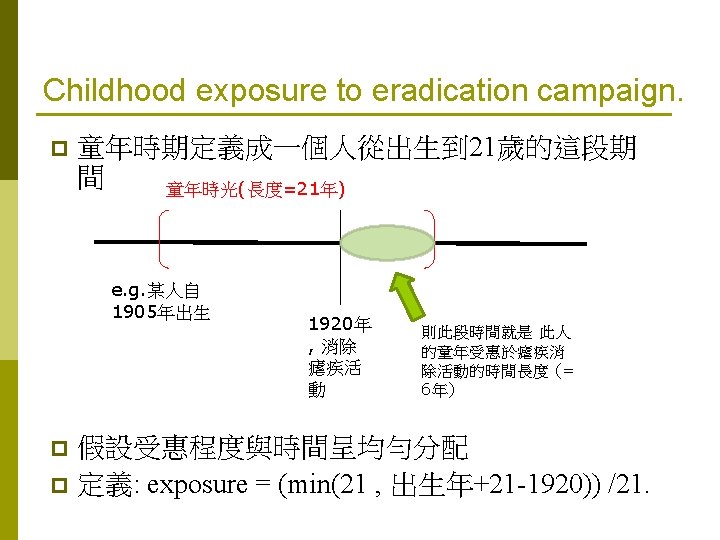
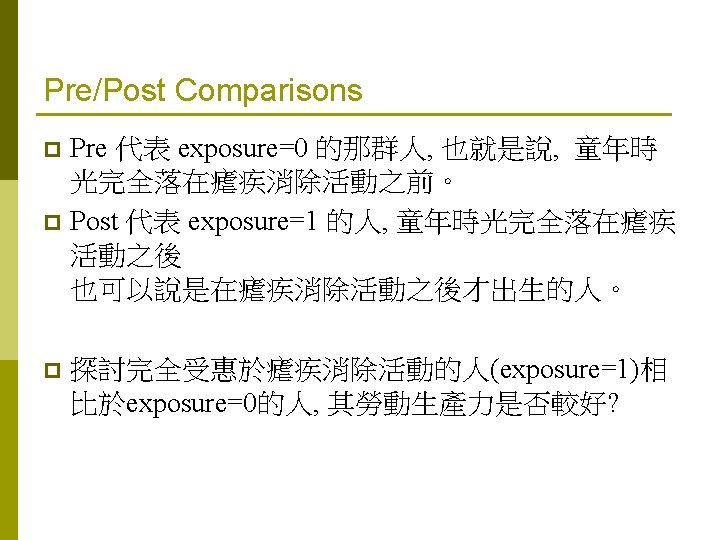
How does this paper try to answer it? Examine large malaria eradication program in Americas (US South, Brazil, Colombia, Mexico) p Eradication was suddenly possible for ‘exogenous’ reasons p Compare people born before the eradication to people born after it → first difference p Further compare across regions of counties in which pre-eradication malaria was high and low → second difference p ‘Difference-in-differences’ p
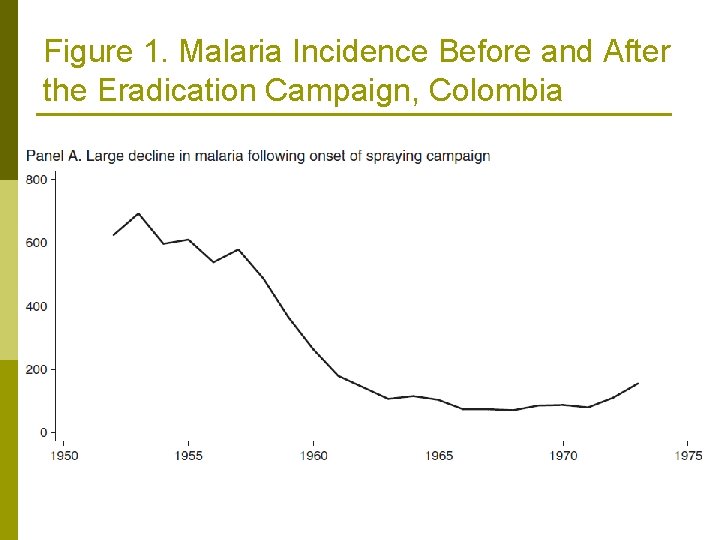
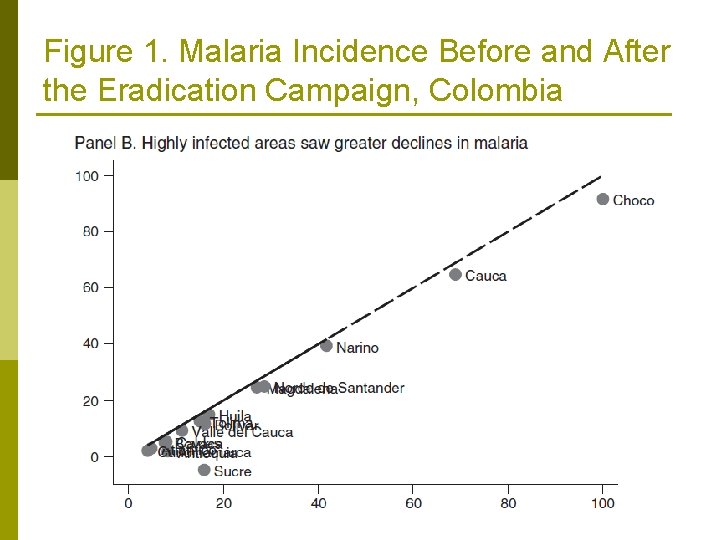
Figure 1. Malaria Incidence Before and After the Eradication Campaign, Colombia
Figure 1. Malaria Incidence Before and After the Eradication Campaign, Colombia
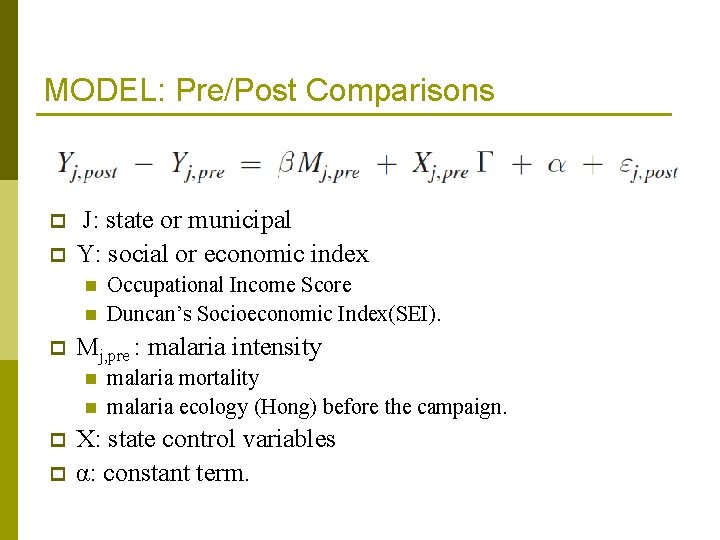
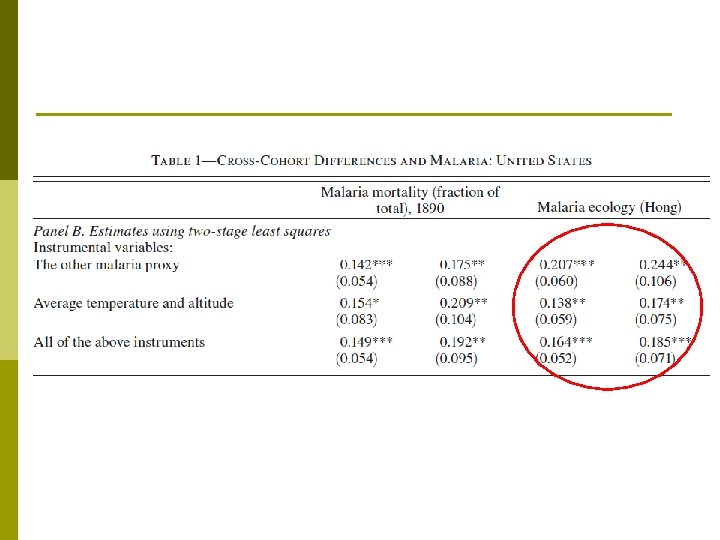
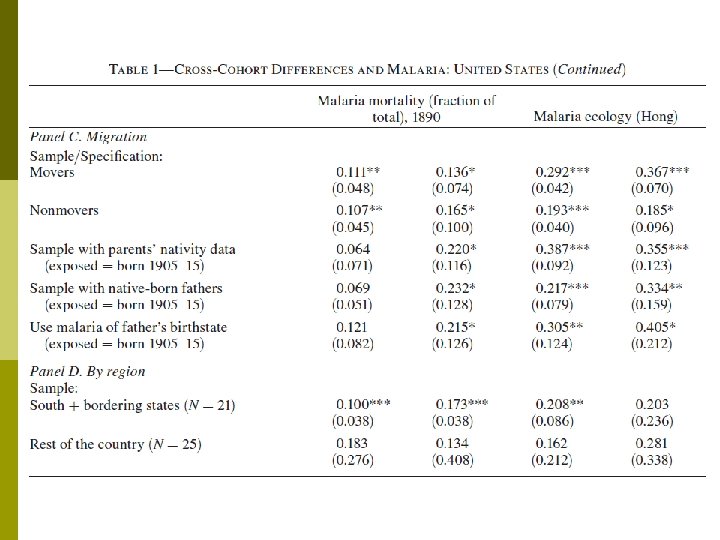
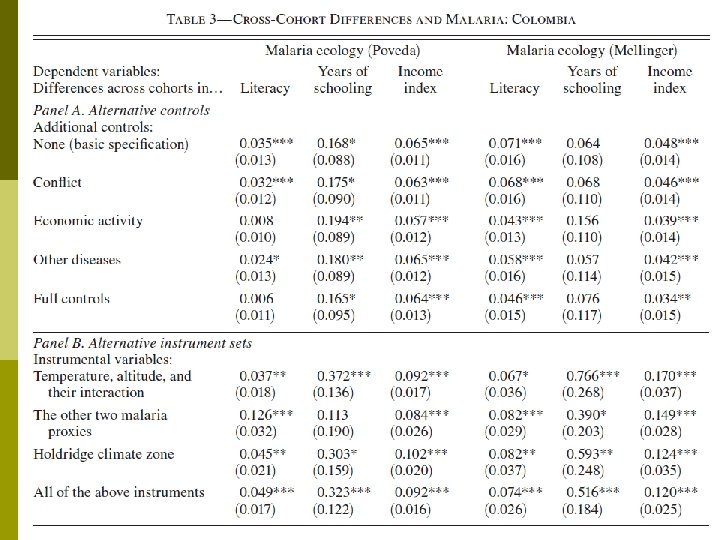
MODEL: Pre/Post Comparisons p p J: state or municipal Y: social or economic index n n p Mj, pre : malaria intensity n n p p Occupational Income Score Duncan’s Socioeconomic Index(SEI). malaria mortality malaria ecology (Hong) before the campaign. X: state control variables α: constant term.
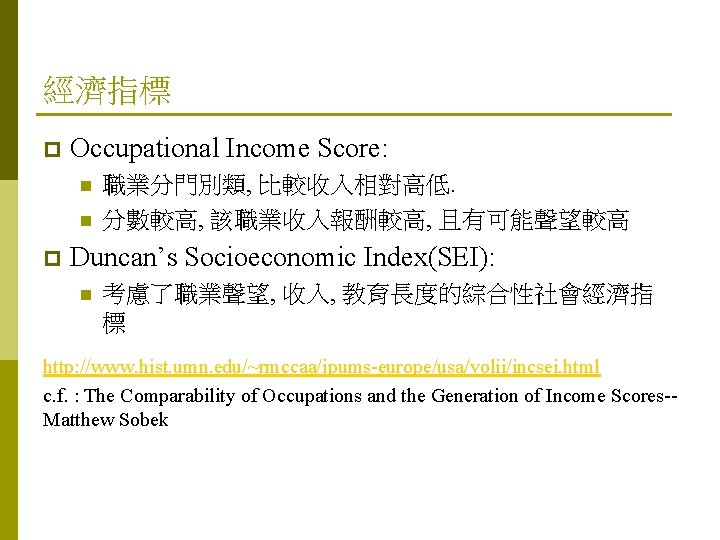
經濟指標 p Occupational Income Score: n n p 職業分門別類, 比較收入相對高低. 分數較高, 該職業收入報酬較高, 且有可能聲望較高 Duncan’s Socioeconomic Index(SEI): n 考慮了職業聲望, 收入, 教育長度的綜合性社會經濟指 標 http: //www. hist. umn. edu/~rmccaa/ipums-europe/usa/volii/incsei. html c. f. : The Comparability of Occupations and the Generation of Income Scores-Matthew Sobek
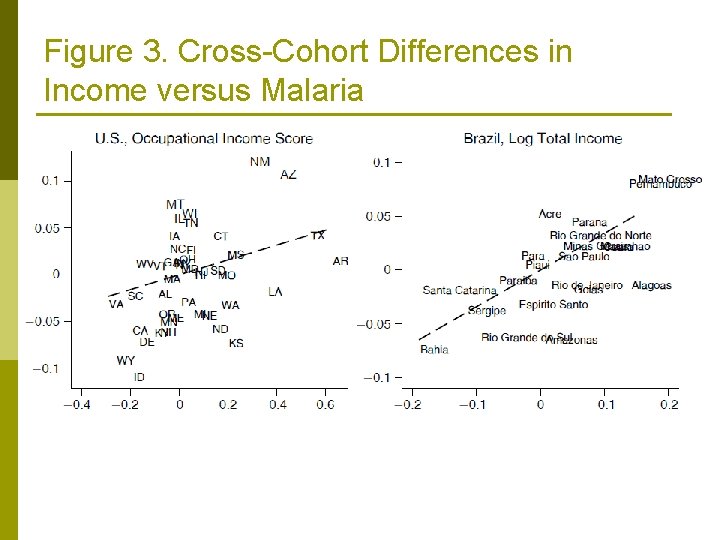
Figure 3. Cross-Cohort Differences in Income versus Malaria
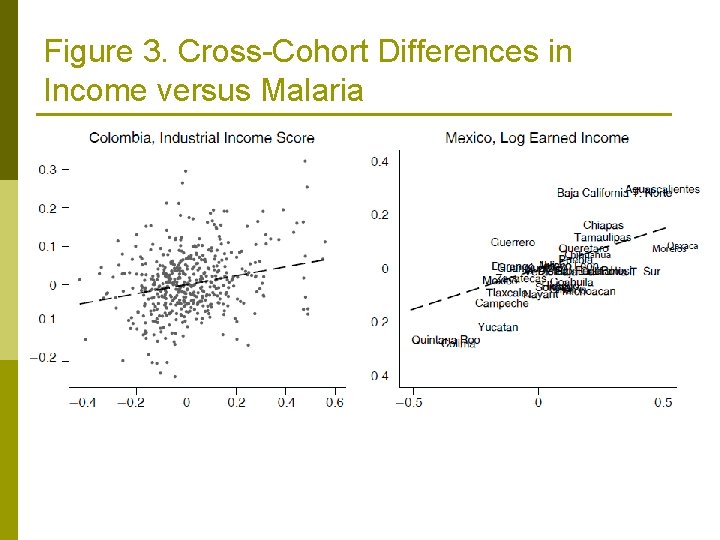
Figure 3. Cross-Cohort Differences in Income versus Malaria
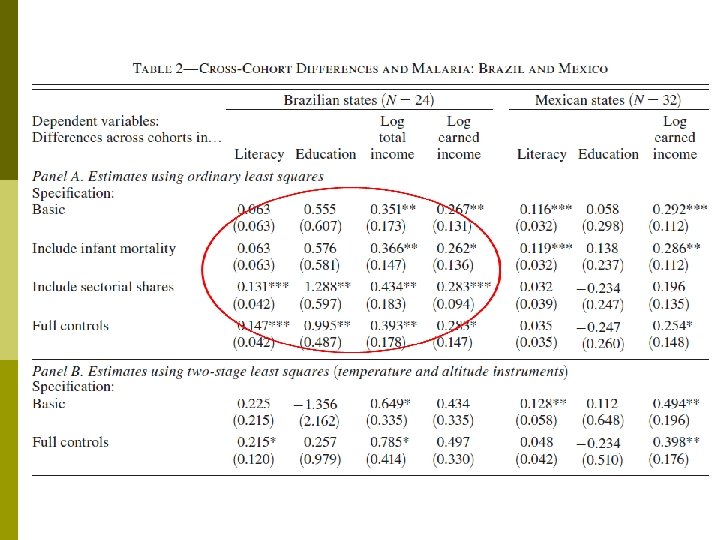
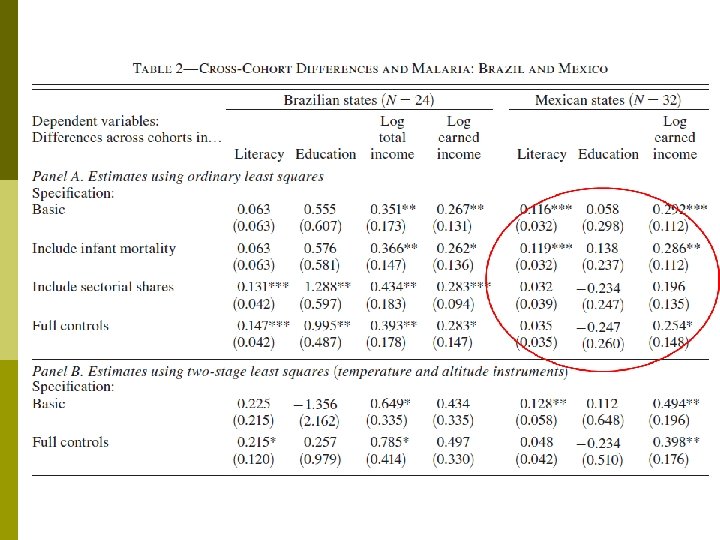
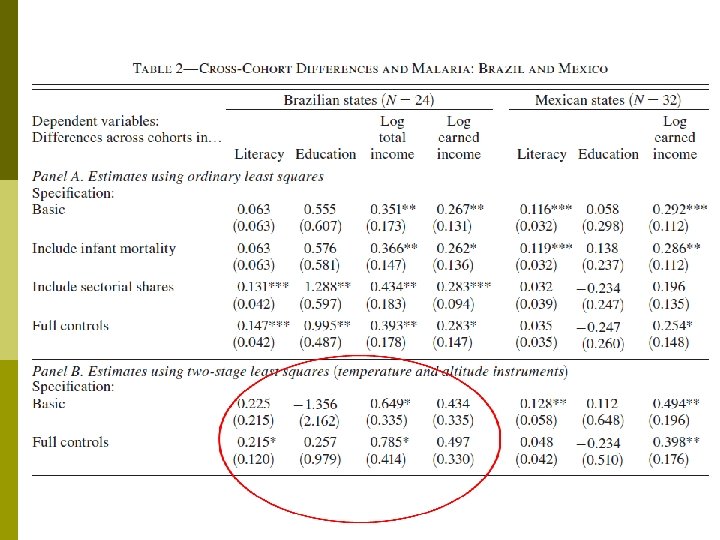
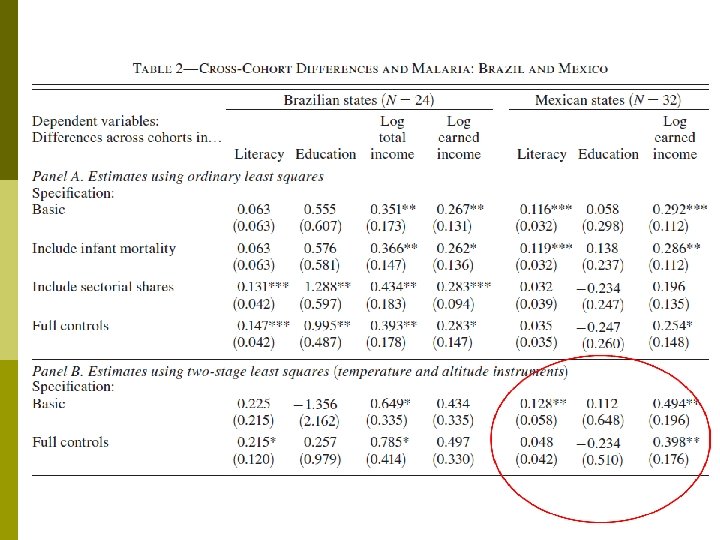
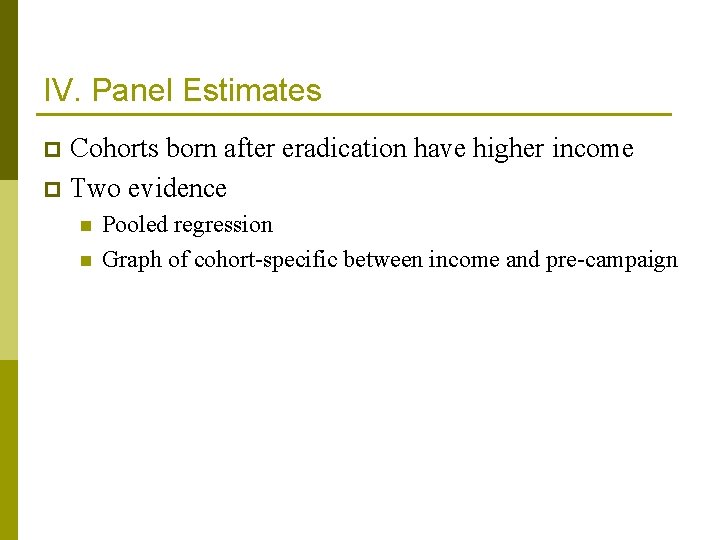
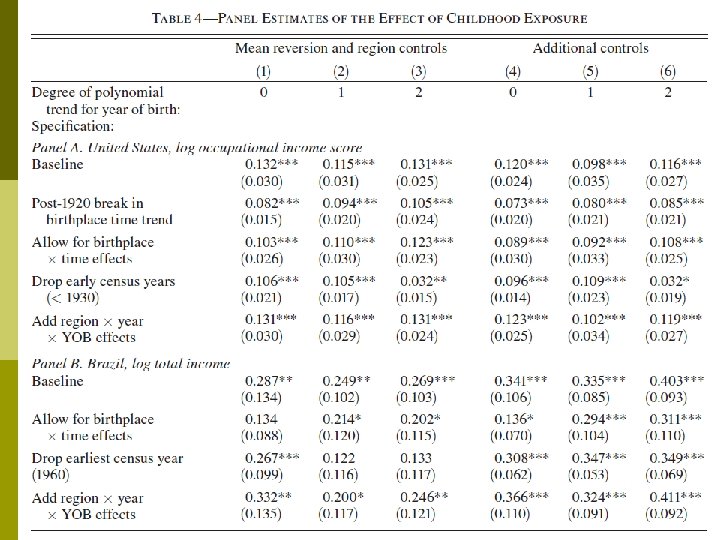
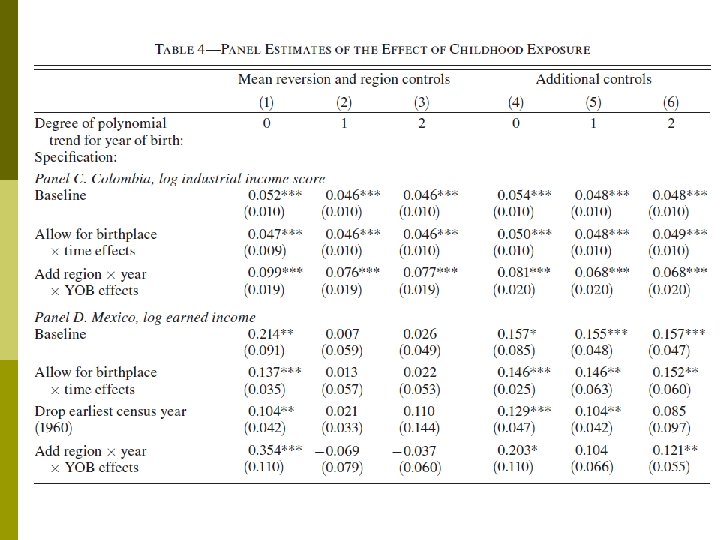
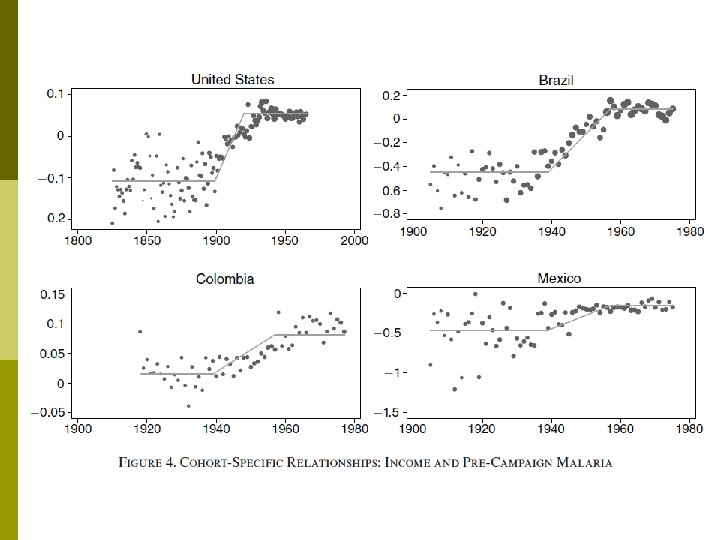
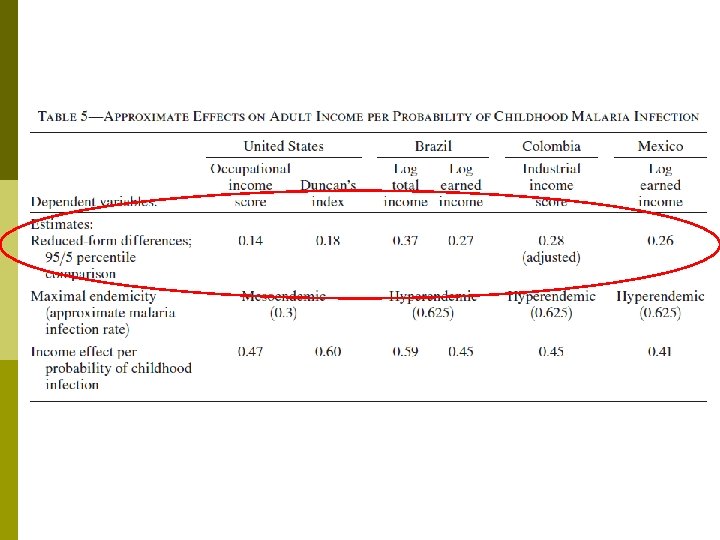
IV. Panel Estimates Cohorts born after eradication have higher income p Two evidence p n n Pooled regression Graph of cohort-specific between income and pre-campaign
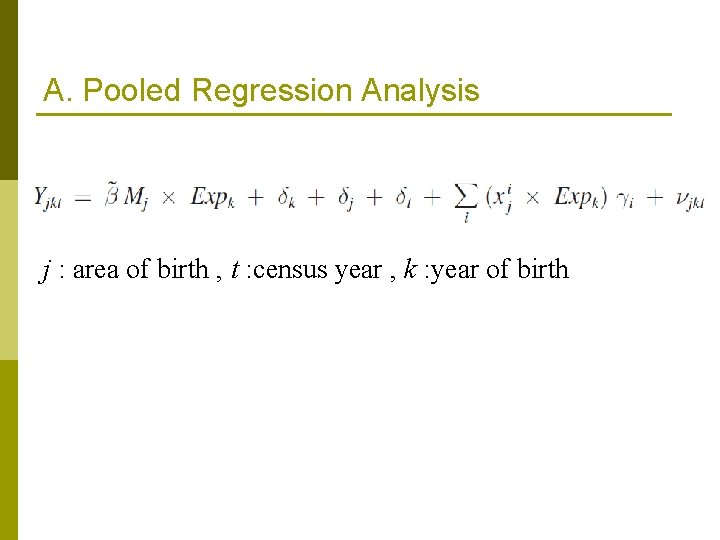
A. Pooled Regression Analysis j : area of birth , t : census year , k : year of birth
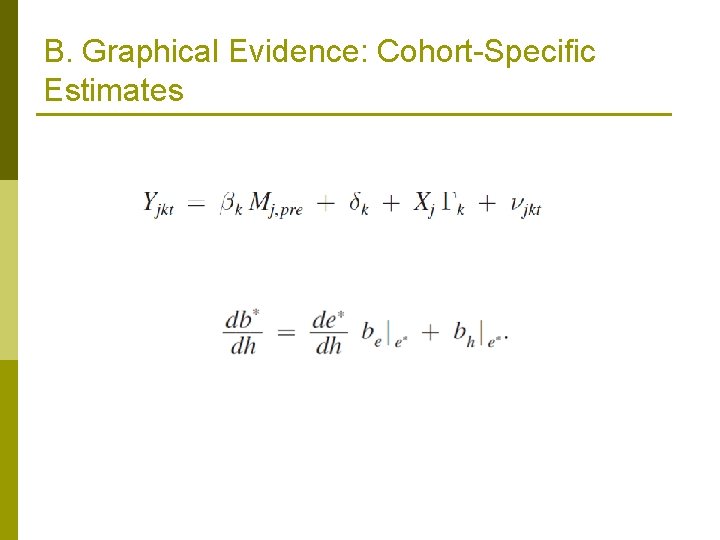
B. Graphical Evidence: Cohort-Specific Estimates