
Malaria entomology training Morphological identification of Anopheles Mosquitoes

- Slides: 47
Malaria entomology training Morphological identification of Anopheles Mosquitoes Accra, Ghana July 2015
Main malaria vectors in Africa • Anopheles gambiae s. l. • Anopheles funestus group • Other vectors and potential vectors: – An. pharoensis, An. nili, An. coustani, An. moucheti, An. rivolurum etc
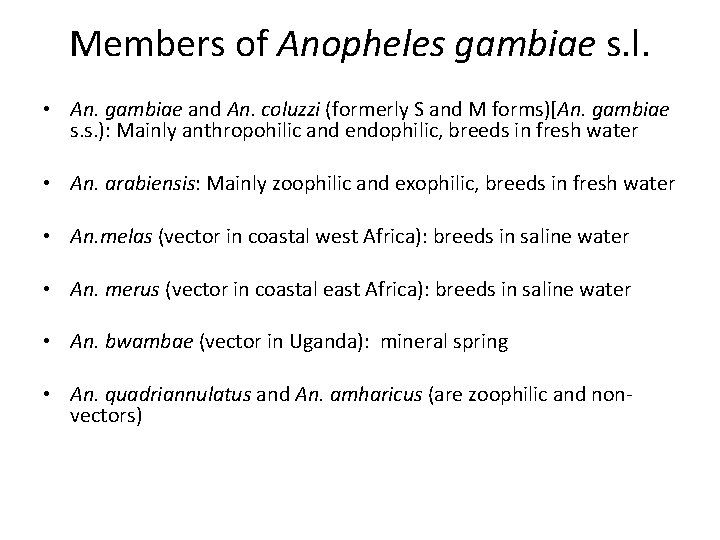
Members of Anopheles gambiae s. l. • An. gambiae and An. coluzzi (formerly S and M forms)[An. gambiae s. s. ): Mainly anthropohilic and endophilic, breeds in fresh water • An. arabiensis: Mainly zoophilic and exophilic, breeds in fresh water • An. melas (vector in coastal west Africa): breeds in saline water • An. merus (vector in coastal east Africa): breeds in saline water • An. bwambae (vector in Uganda): mineral spring • An. quadriannulatus and An. amharicus (are zoophilic and nonvectors)
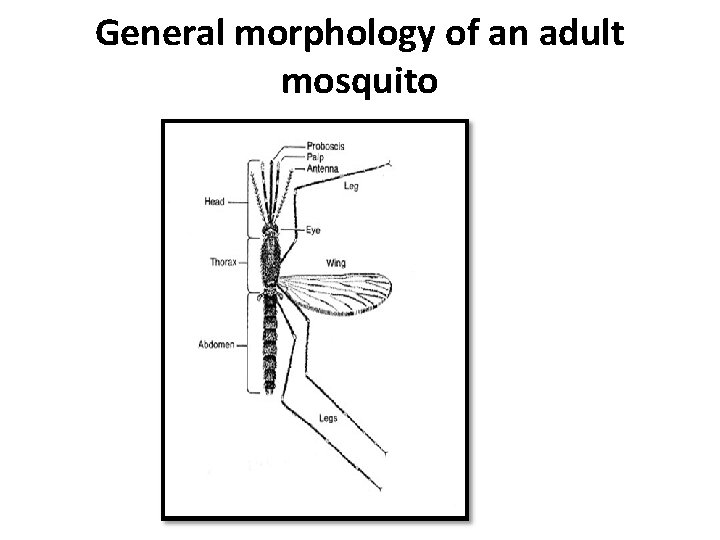
General morphology of an adult mosquito
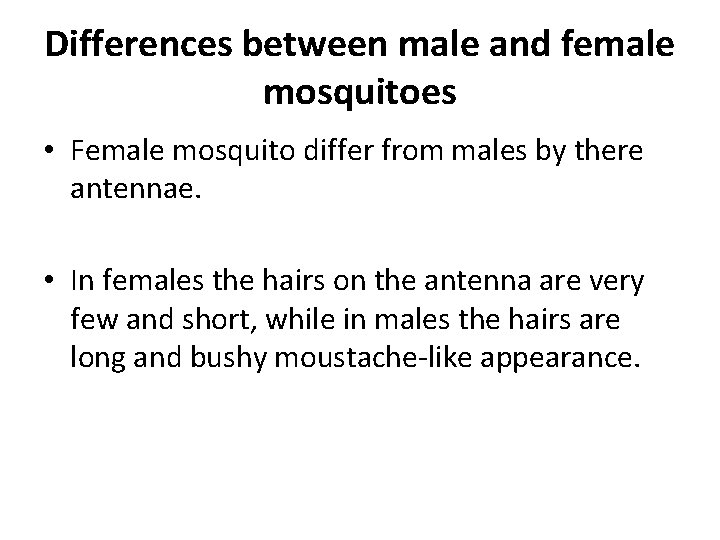
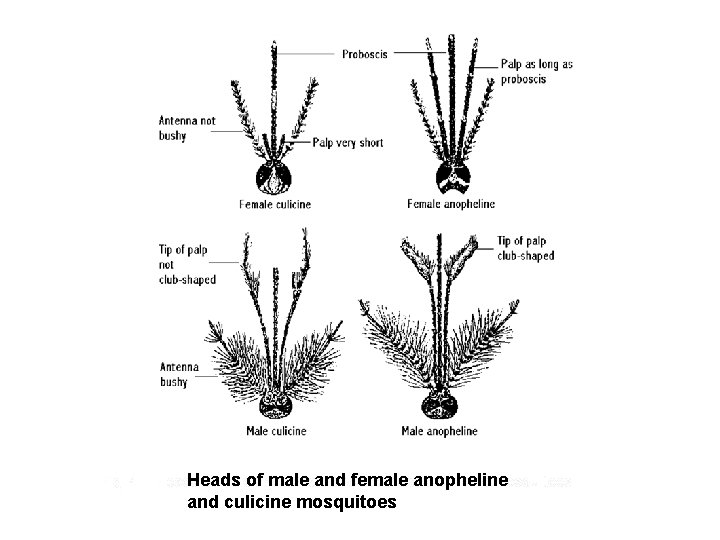
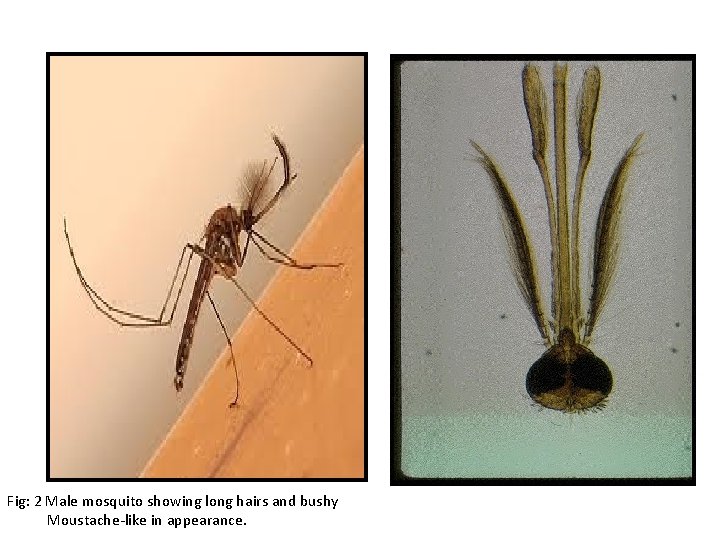
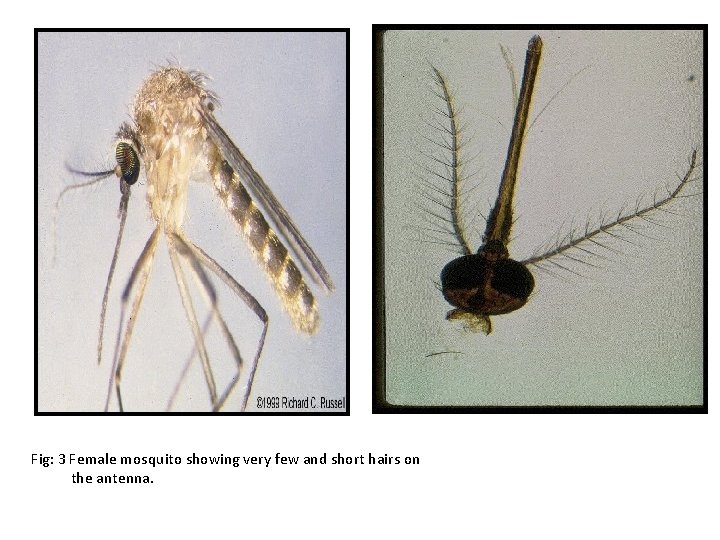
Differences between male and female mosquitoes • Female mosquito differ from males by there antennae. • In females the hairs on the antenna are very few and short, while in males the hairs are long and bushy moustache-like appearance.
Heads of male and female anopheline and culicine mosquitoes
Fig: 2 Male mosquito showing long hairs and bushy Moustache-like in appearance.
Fig: 3 Female mosquito showing very few and short hairs on the antenna.
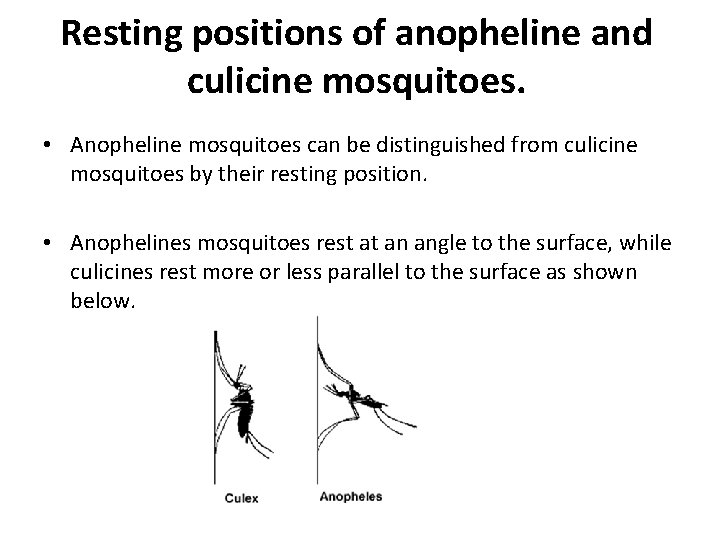
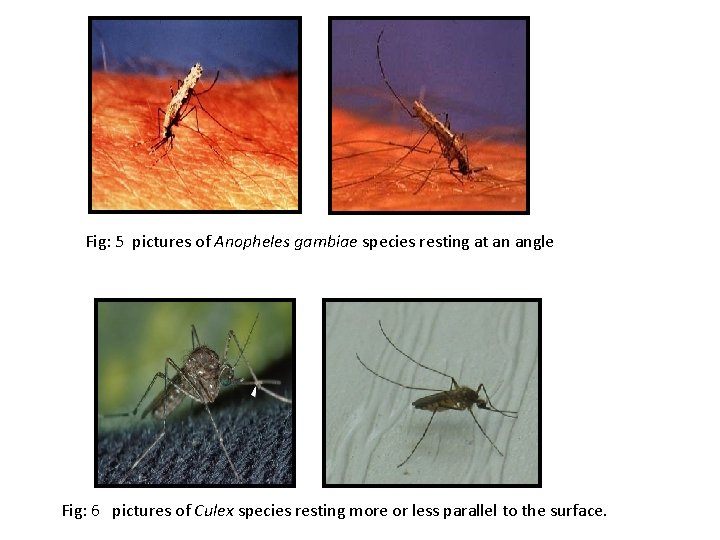
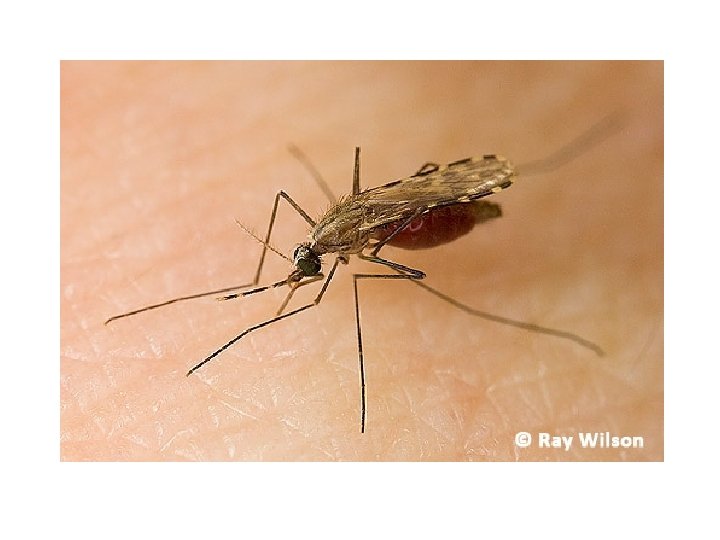
Resting positions of anopheline and culicine mosquitoes. • Anopheline mosquitoes can be distinguished from culicine mosquitoes by their resting position. • Anophelines mosquitoes rest at an angle to the surface, while culicines rest more or less parallel to the surface as shown below.
Fig: 5 pictures of Anopheles gambiae species resting at an angle Fig: 6 pictures of Culex species resting more or less parallel to the surface.
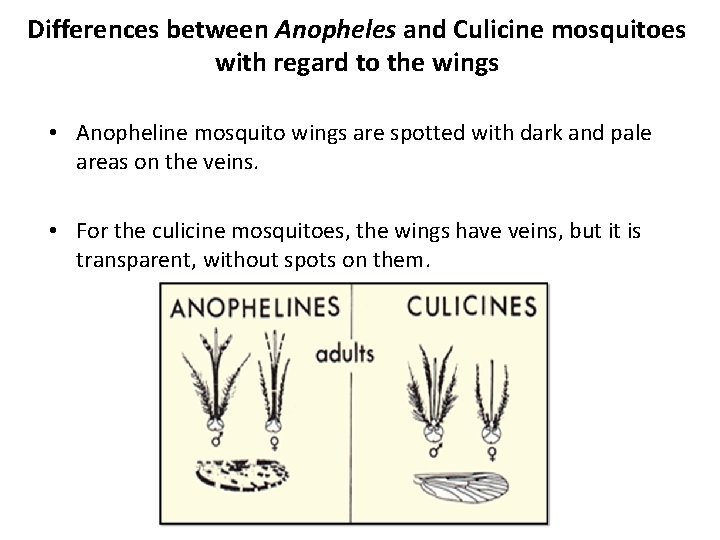
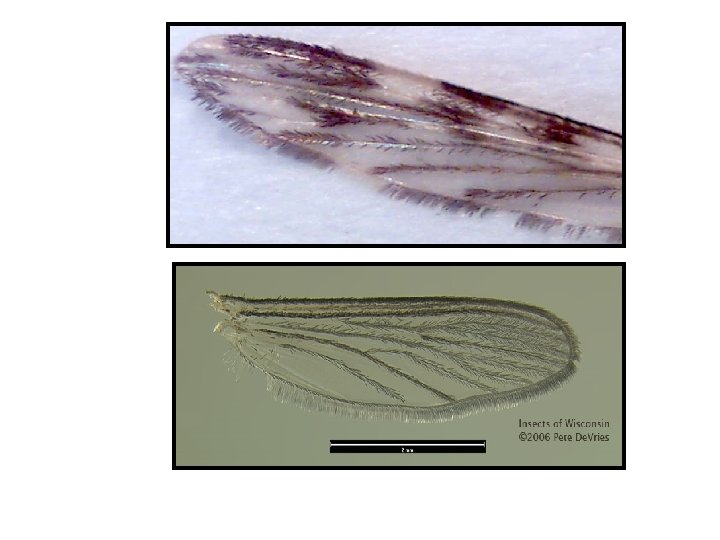
Differences between Anopheles and Culicine mosquitoes with regard to the wings • Anopheline mosquito wings are spotted with dark and pale areas on the veins. • For the culicine mosquitoes, the wings have veins, but it is transparent, without spots on them.
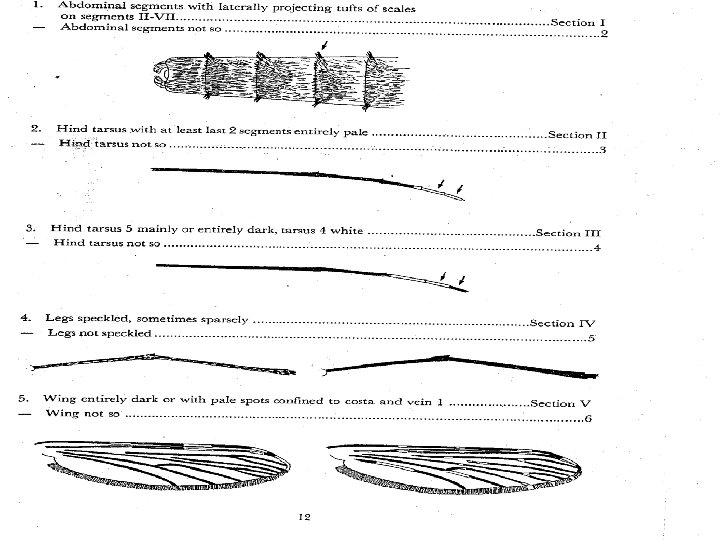
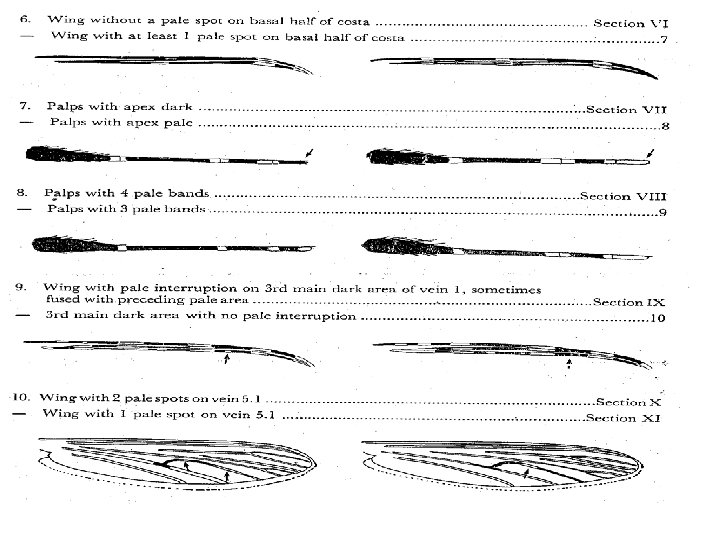
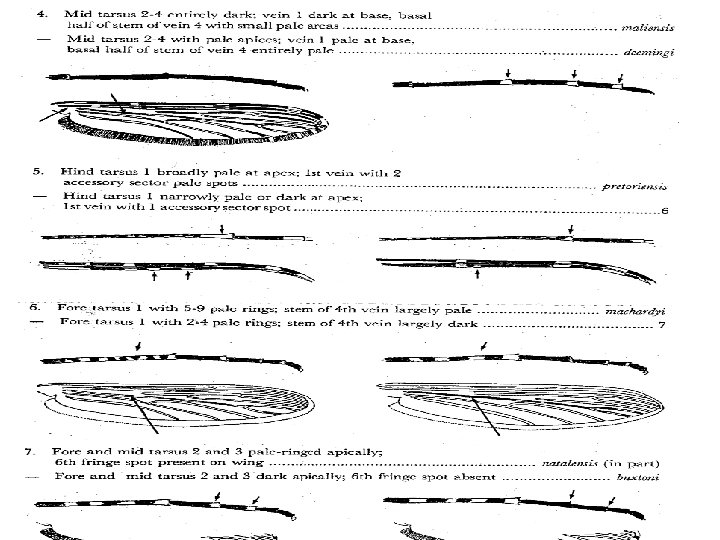
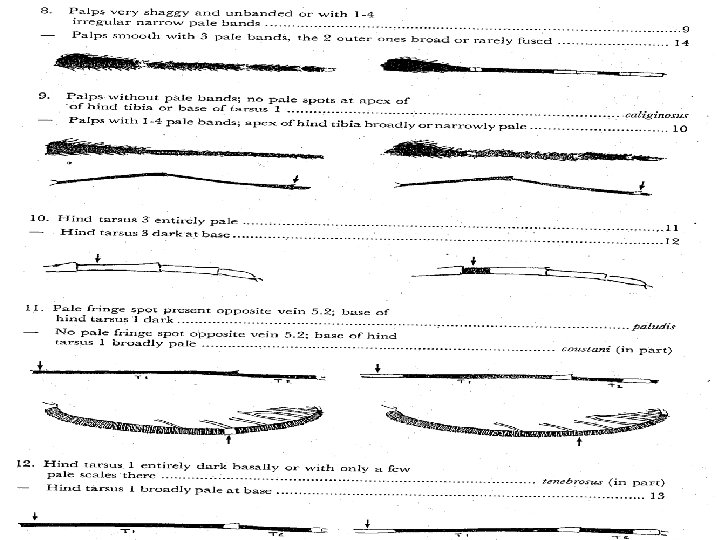
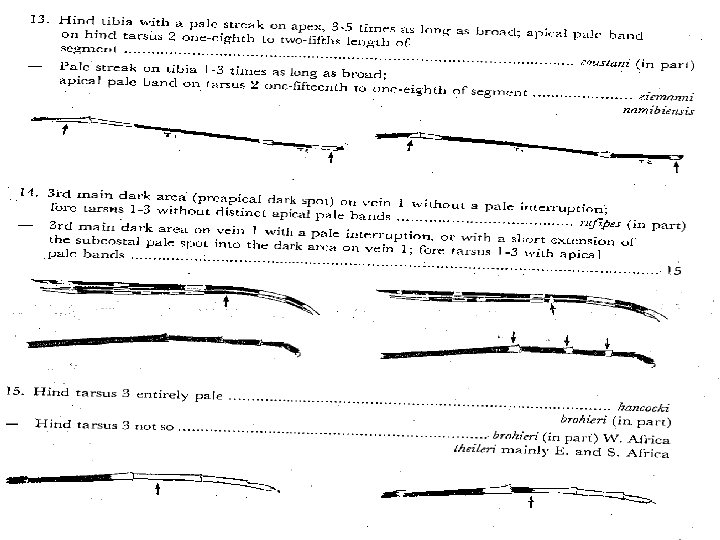
Identification of Anopheles mosquitoes to species Gilles and Coetzee, 1987
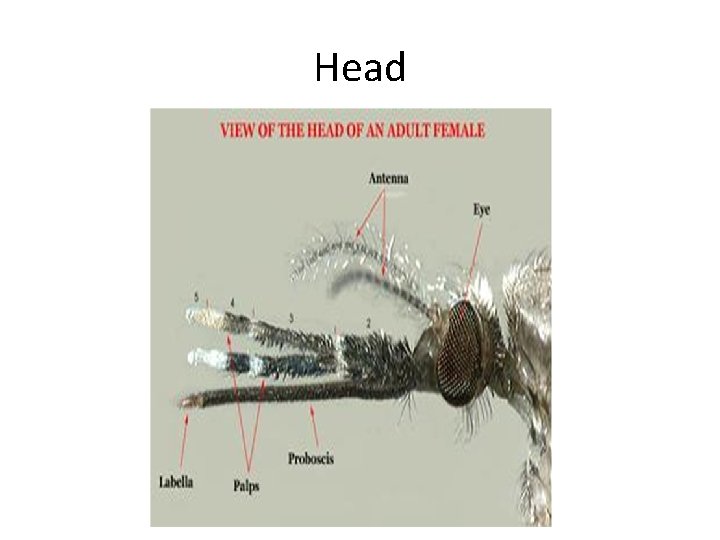
Head
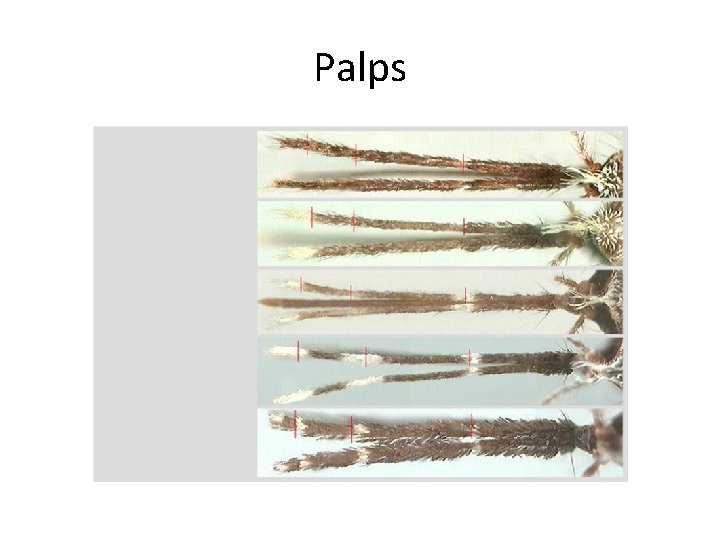
Palps
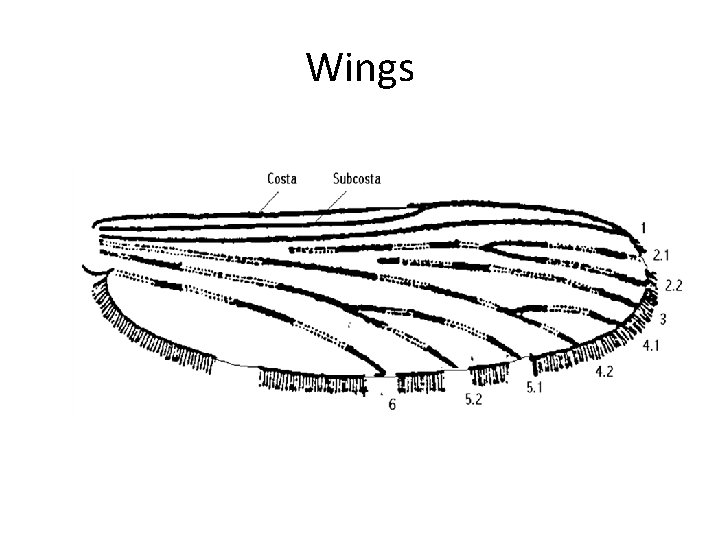
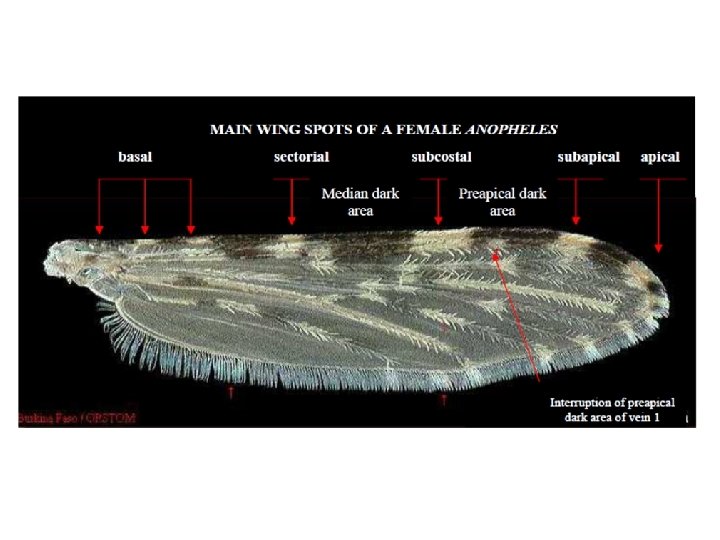
Wings
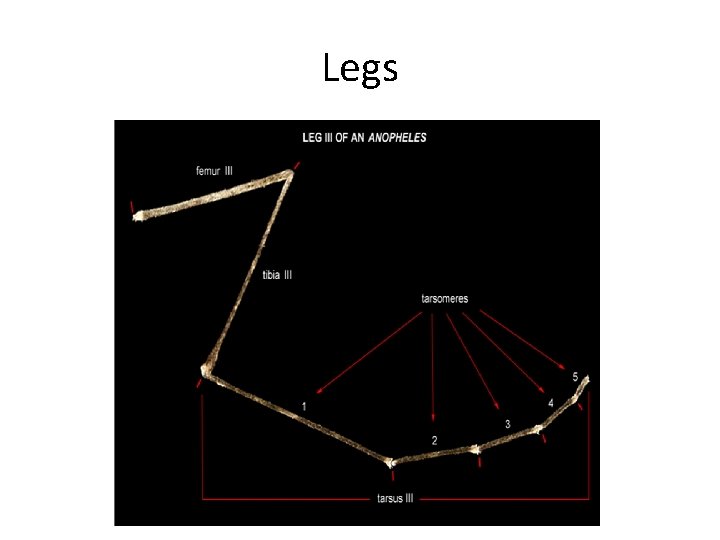
Legs
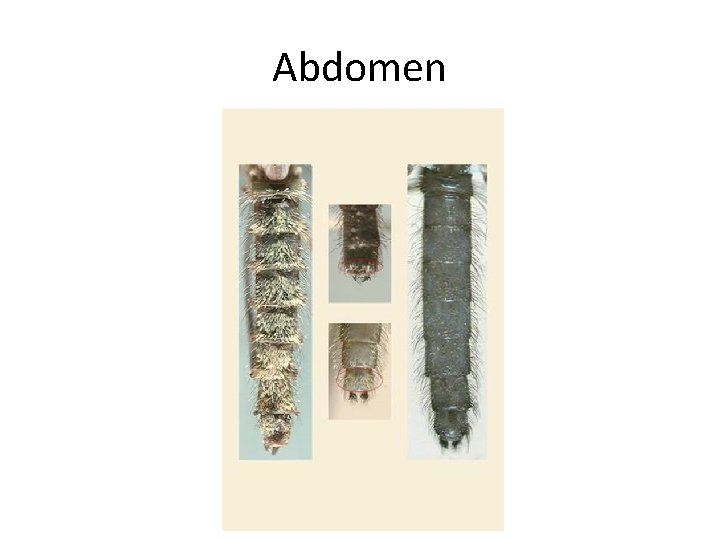
Abdomen
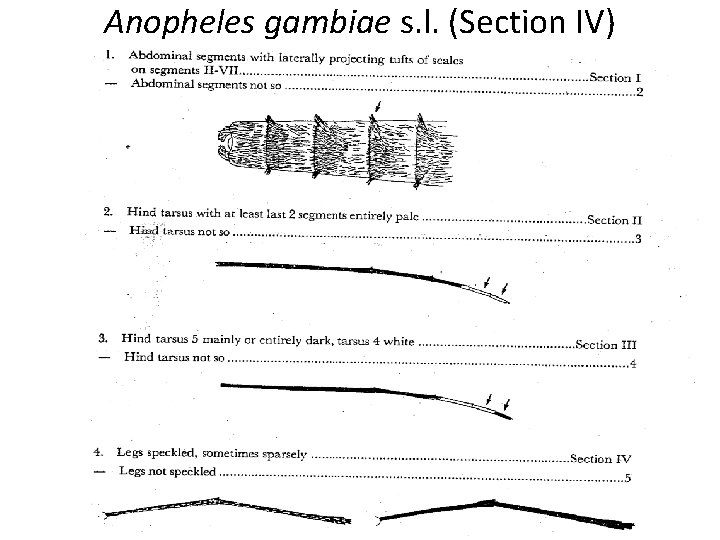
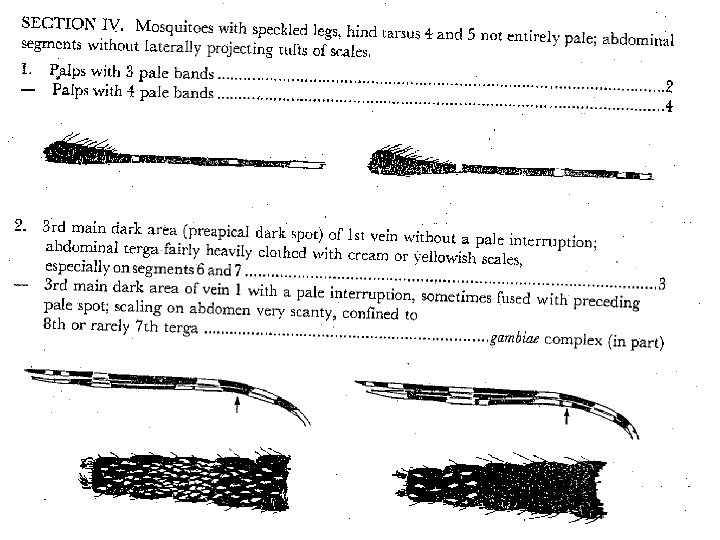
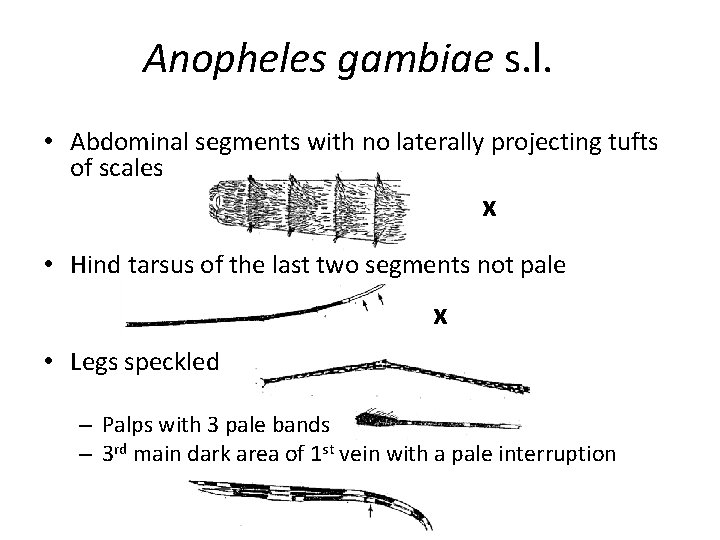
Anopheles gambiae s. l. (Section IV)
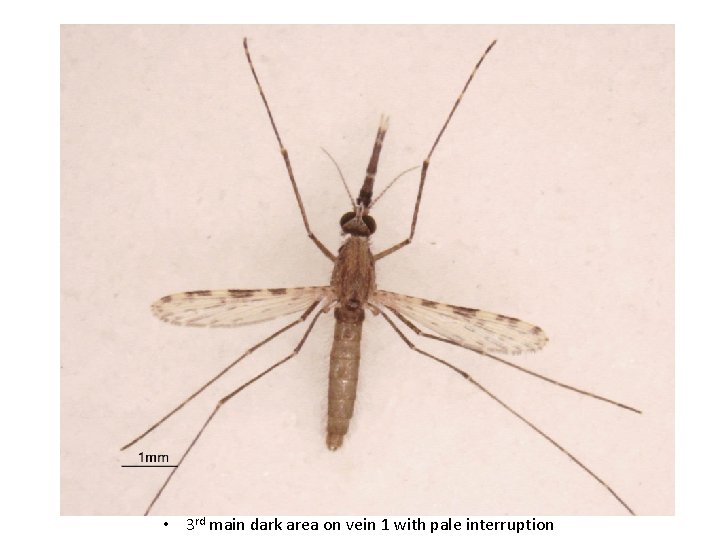
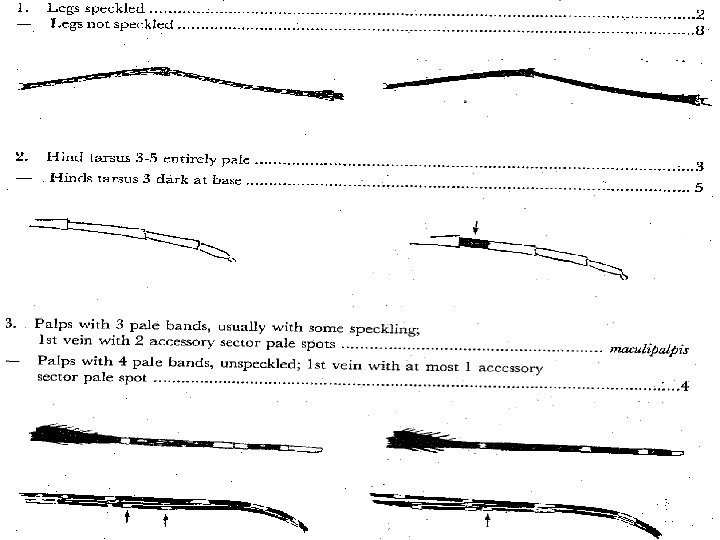
Anopheles gambiae s. l. • Abdominal segments with no laterally projecting tufts of scales x • Hind tarsus of the last two segments not pale x • Legs speckled – Palps with 3 pale bands – 3 rd main dark area of 1 st vein with a pale interruption
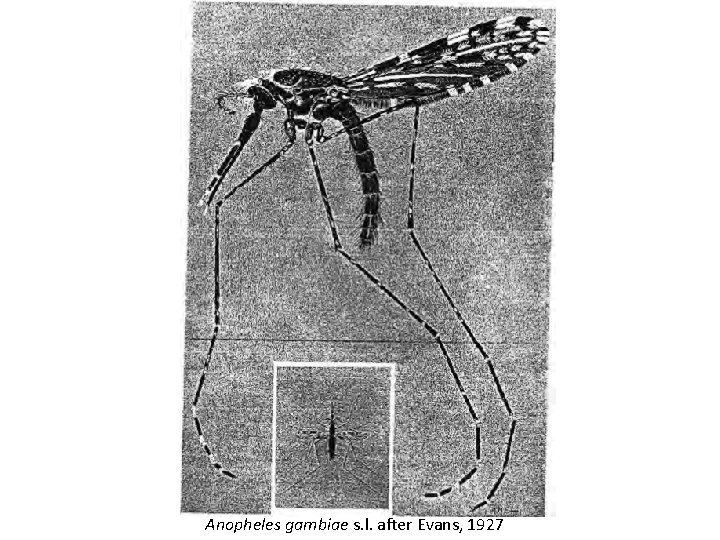
Anopheles gambiae s. l. after Evans, 1927
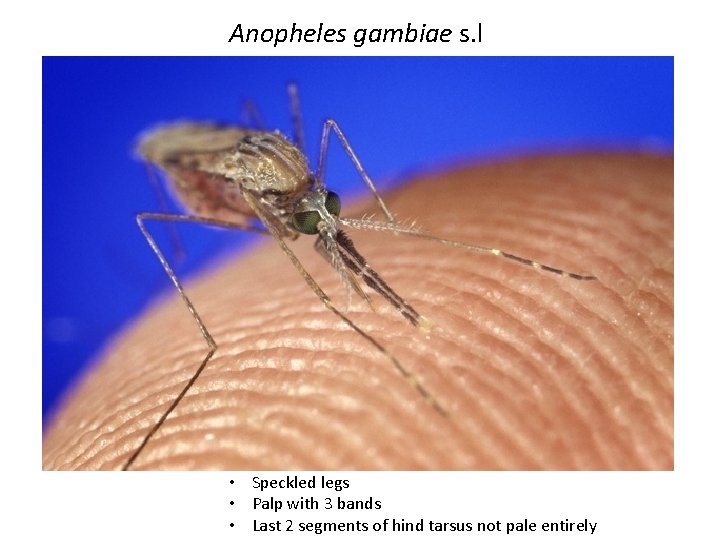
Anopheles gambiae s. l • Speckled legs • Palp with 3 bands • Last 2 segments of hind tarsus not pale entirely
• 3 rd main dark area on vein 1 with pale interruption
Anopheles funestus group Anopheles nili (Section XI)
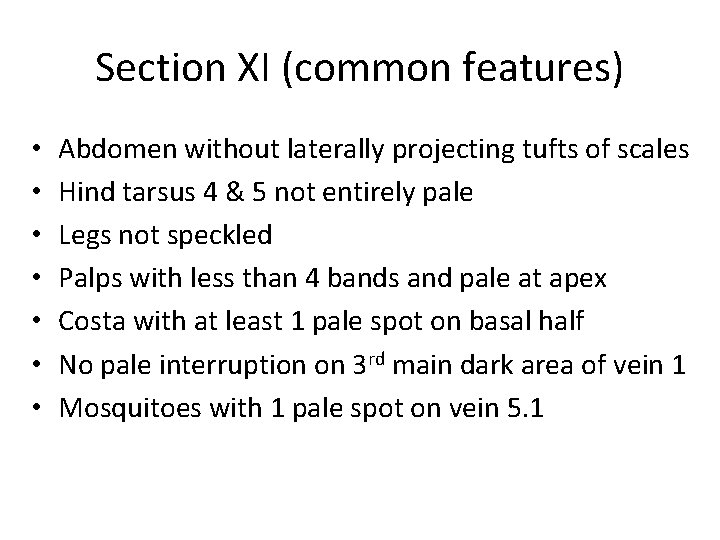
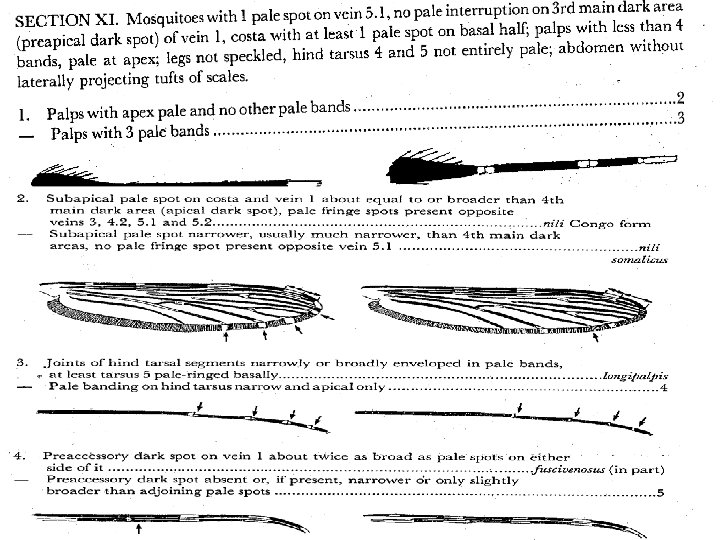
Section XI (common features) • • Abdomen without laterally projecting tufts of scales Hind tarsus 4 & 5 not entirely pale Legs not speckled Palps with less than 4 bands and pale at apex Costa with at least 1 pale spot on basal half No pale interruption on 3 rd main dark area of vein 1 Mosquitoes with 1 pale spot on vein 5. 1
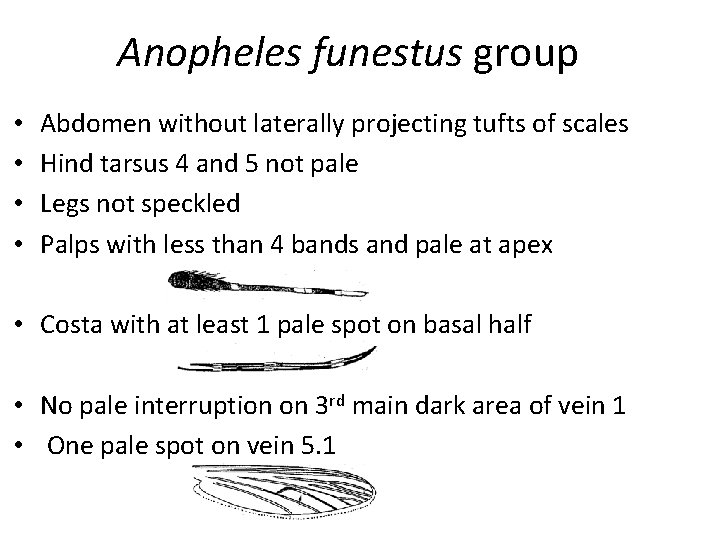
Anopheles funestus group • • Abdomen without laterally projecting tufts of scales Hind tarsus 4 and 5 not pale Legs not speckled Palps with less than 4 bands and pale at apex • Costa with at least 1 pale spot on basal half • No pale interruption on 3 rd main dark area of vein 1 • One pale spot on vein 5. 1
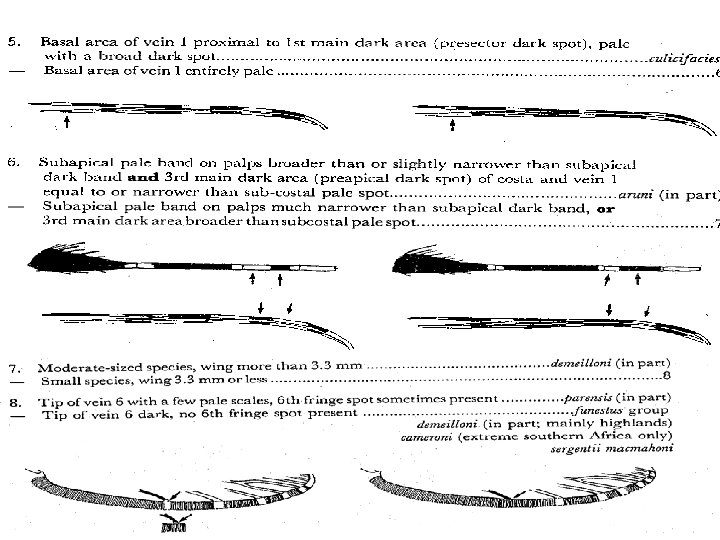
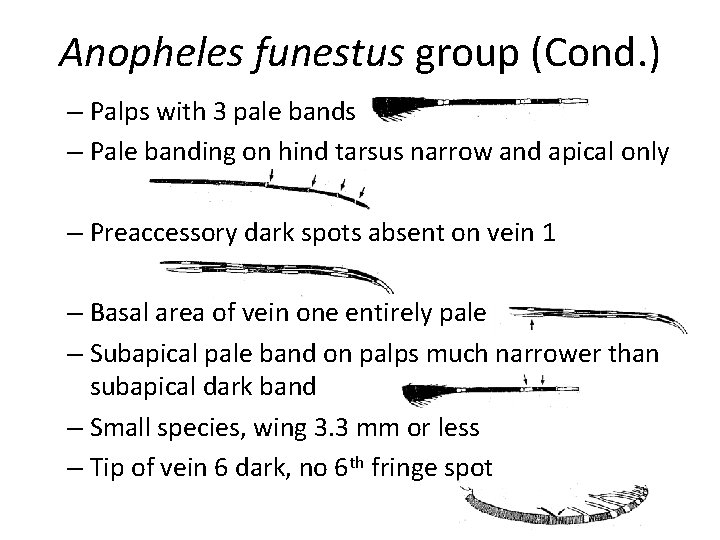
Anopheles funestus group (Cond. ) – Palps with 3 pale bands – Pale banding on hind tarsus narrow and apical only – Preaccessory dark spots absent on vein 1 – Basal area of vein one entirely pale – Subapical pale band on palps much narrower than subapical dark band – Small species, wing 3. 3 mm or less – Tip of vein 6 dark, no 6 th fringe spot
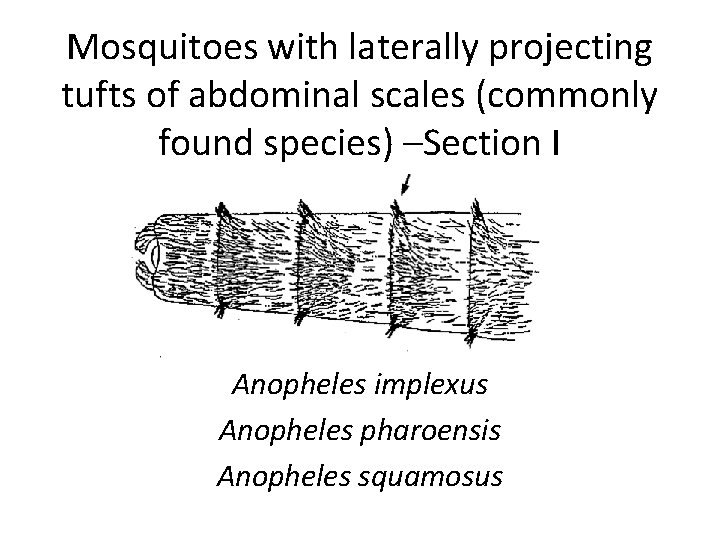
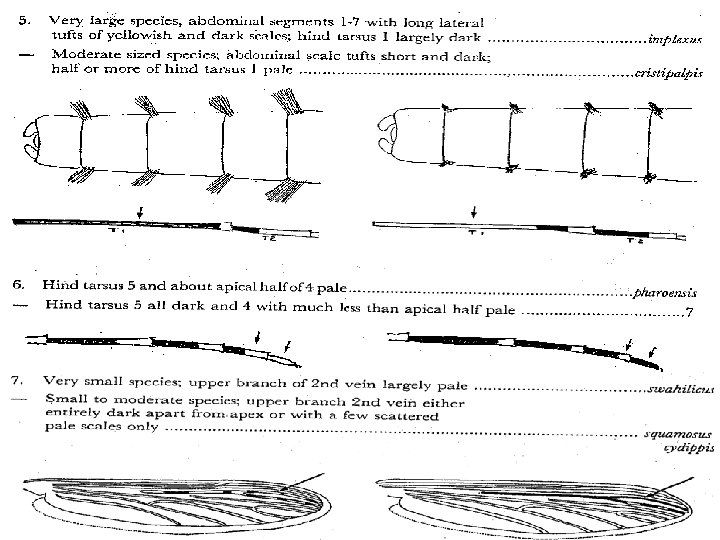
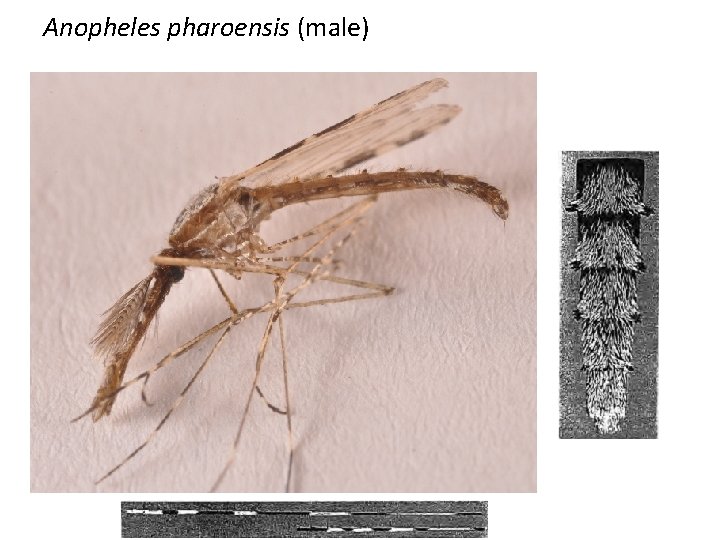
Mosquitoes with laterally projecting tufts of abdominal scales (commonly found species) –Section I Anopheles implexus Anopheles pharoensis Anopheles squamosus
Anopheles pharoensis (male)
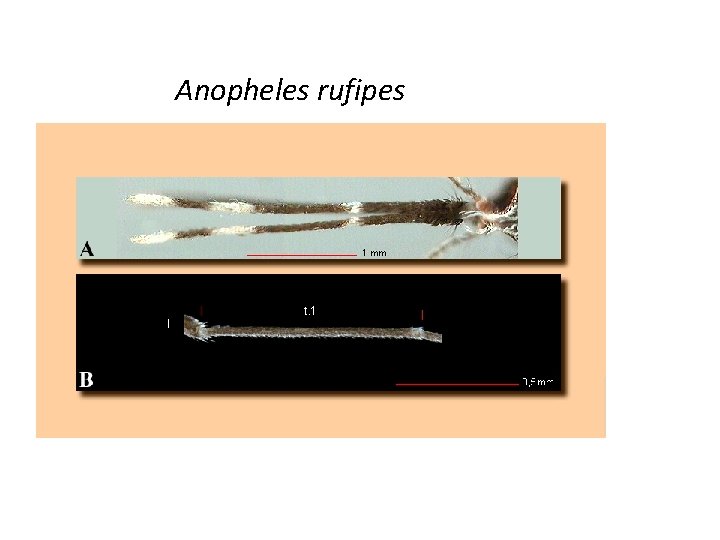
Mosquitoes with hind tarsal segments 4 & 5 entirely white; abdomen without laterally projecting tufts of scales (common species) - Section II Anopheles maculipalpis Anopheles pretoriensis Anopheles paludis Anopheles coustani Anopheles rufipes Anopheles hancocki Anopheles tenebrosus
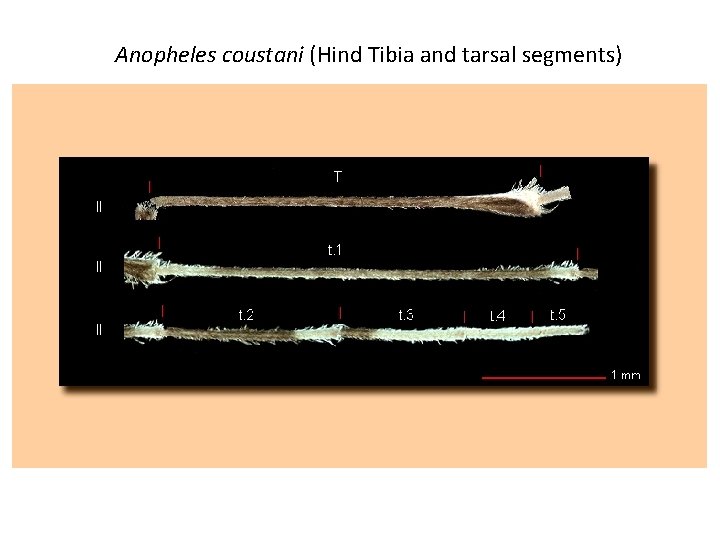
Anopheles coustani (Hind Tibia and tarsal segments)
Anopheles rufipes
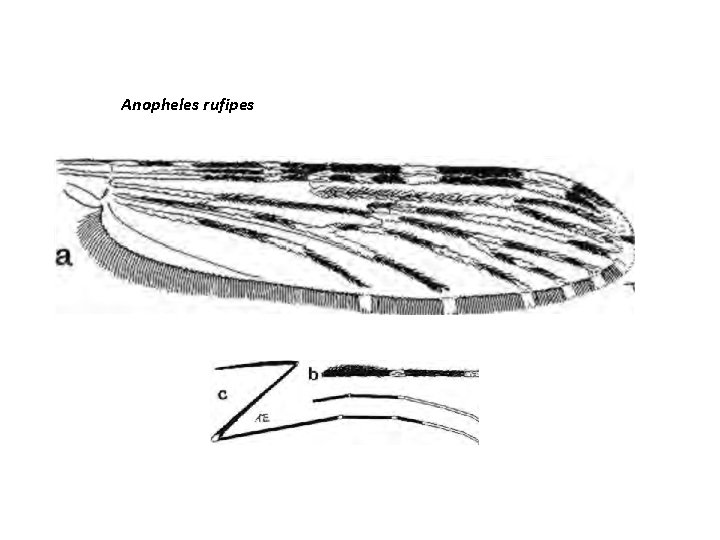
Anopheles rufipes