
malaria Dr Suchita K Introduction Definition Incubation Period
malaria Dr. Suchita K.
� Introduction � Definition � Incubation Period � Investigation � Pathophysiology � Sign &Symptoms � Treatment � Prevention & Precautions

Malaria is a Mosquito-Borne febrile Protozoal Infection � Caused by members of the protozoan genus Plasmodium � Parasites primarily affects the human liver and red blood cells. � � Humans are infected with Plasmodium protozoa when bitten by an infective female Anopheles mosquito vector.
THERE ARE 5 SPECIES OF MALARIA PARASITES : 1. 2. 3. 4. 5. Plasmodium Falciparum Plasmodium Vivax Plasmodium Ovale Plasmodium Malaria Plasmodium Knowlesi Malaria found in about 100 countries in the world � Maximum prevalence of malaria is found in warm & humid environment and mostly seen in july to november in india � Optimal temp & humidity for the development of parasite is 20 to 30 F and about 60% humidity. �
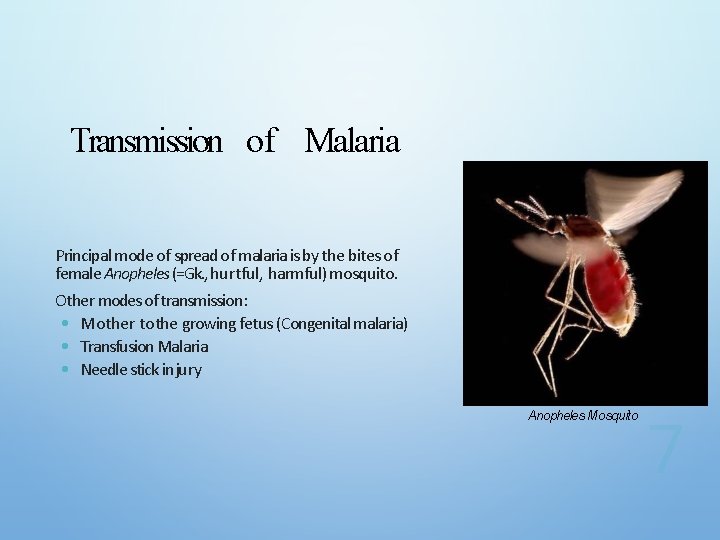
Transmission of Malaria Principal mode of spread of malaria is by the bites of female Anopheles (=Gk. , hurtful, harmful) mosquito. Other modes of transmission: • Mother tothe growing fetus (Congenital malaria) • Transfusion Malaria • Needle stick injury Anopheles Mosquito
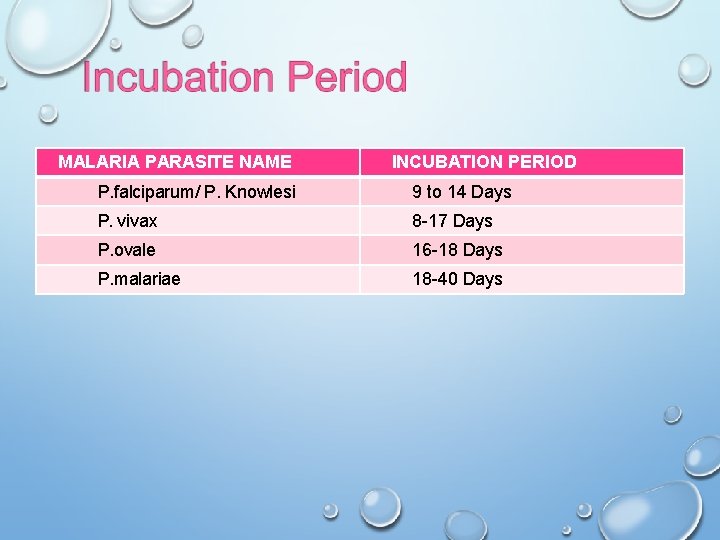
MALARIA PARASITE NAME INCUBATION PERIOD P. falciparum/ P. Knowlesi 9 to 14 Days P. vivax 8 -17 Days P. ovale 16 -18 Days P. malariae 18 -40 Days
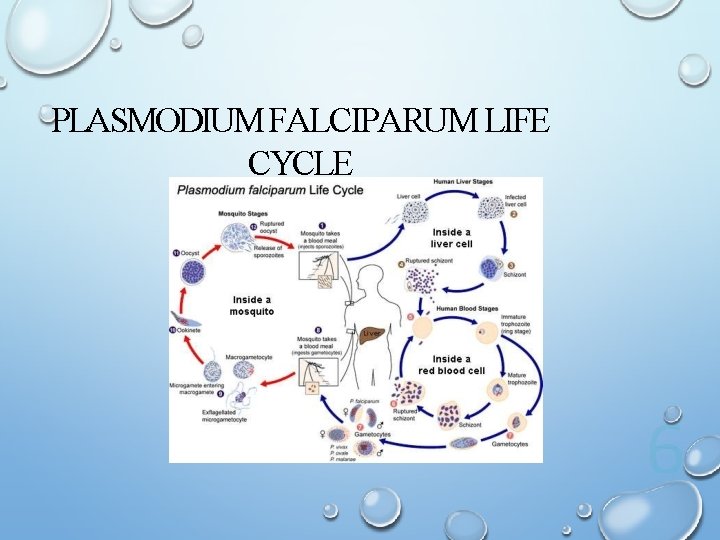
PLASMODIUM FALCIPARUM LIFE CYCLE
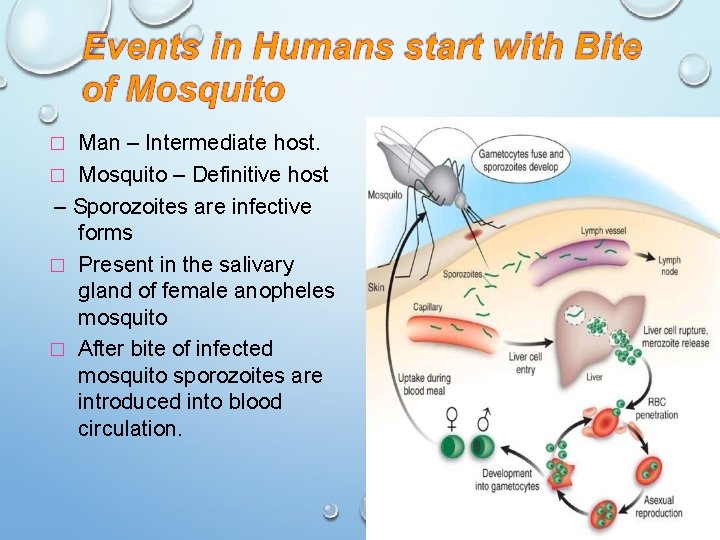
Man – Intermediate host. � Mosquito – Definitive host – Sporozoites are infective forms � Present in the salivary gland of female anopheles mosquito � After bite of infected mosquito sporozoites are introduced into blood circulation. �
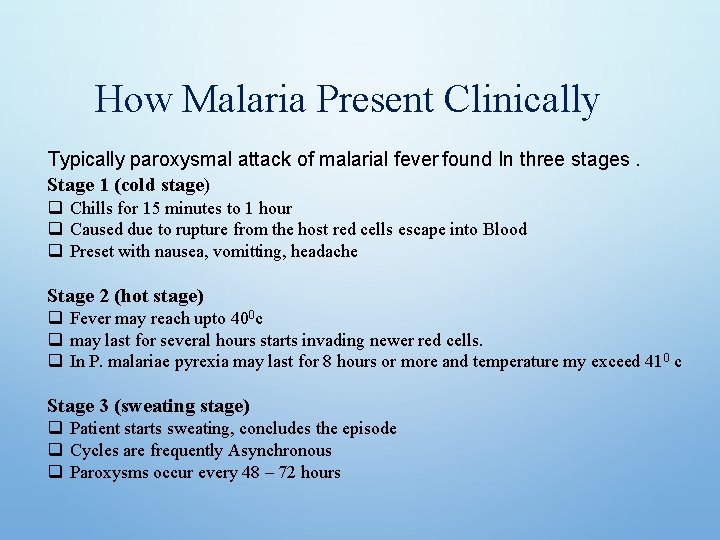
How Malaria Present Clinically Typically paroxysmal attack of malarial fever found In three stages. Stage 1 (cold stage) q Chills for 15 minutes to 1 hour q Caused due to rupture from the host red cells escape into Blood q Preset with nausea, vomitting, headache Stage 2 (hot stage) q Fever may reach upto 400 c q may last for several hours starts invading newer red cells. q In P. malariae pyrexia may last for 8 hours or more and temperature my exceed 410 c Stage 3 (sweating stage) q Patient starts sweating, concludes the episode q Cycles are frequently Asynchronous q Paroxysms occur every 48 – 72 hours
� High fever with Chills with Rigors � Headache � Restlessness , Anorexia , Diarrhoea � arthralgia (joint pain) � vomiting, anemia (caused by hemolysis) � Hepatospleenomegaly � Convulsions � Coma ( If Severe )
Uncomplicated Malaria First symptoms are non specific: • Headache, Lassitude, Fatigue • Abdominal discomfort, muscle and joint aches, diarrhea • Followed by fever(irregular at first), chills, rigors, perspiration, anorexia. Insome cases palpable spleen and slight enlargement of liver are alsopresent • Nausea, vomiting, & orthostatic hypotension are common Signs: • Anemia, splenomegaly, hepatomegaly
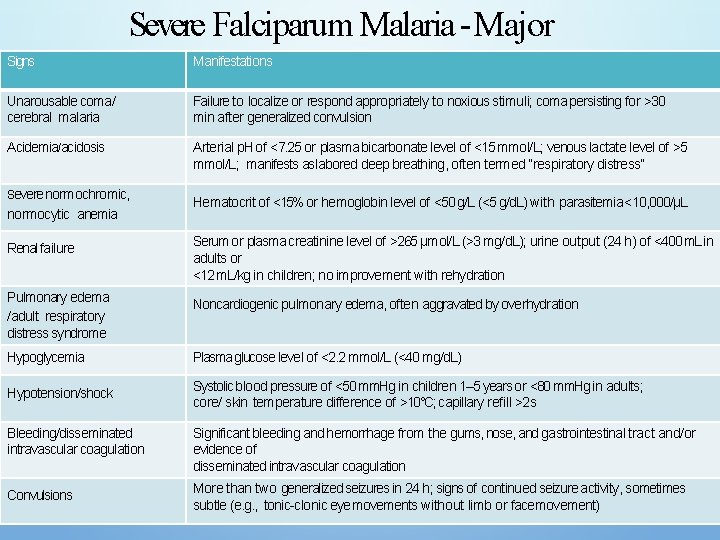
Severe Falciparum Malaria -Major Signs Manifestations Unarousable coma/ cerebral malaria Failure to localize or respond appropriately to noxious stimuli; coma persisting for >30 min after generalized convulsion Acidemia/acidosis Arterial p. H of <7. 25 or plasma bicarbonate level of <15 mmol/L; venous lactate level of >5 mmol/L; manifests as labored deep breathing, often termed “respiratory distress” Severe normochromic, normocytic anemia Renal failure Pulmonary edema /adult respiratory distress syndrome Hematocrit of <15% or hemoglobin level of <50 g/L (<5 g/d. L) with parasitemia <10, 000/μL Serum or plasma creatinine level of >265 μmol/L (>3 mg/d. L); urine output (24 h) of <400 m. L in adults or <12 m. L/kg in children; no improvement with rehydration Noncardiogenic pulmonary edema, often aggravated by overhydration Hypoglycemia Plasma glucose level of <2. 2 mmol/L (<40 mg/d. L) Hypotension/shock Systolic blood pressure of <50 mm. Hg in children 1– 5 years or <80 mm. Hg in adults; core/ skin temperature difference of >10°C; capillary refill >2 s Bleeding/disseminated intravascular coagulation Convulsions Significant bleeding and hemorrhage from the gums, nose, and gastrointestinal tract and/or evidence of disseminated intravascular coagulation More than two generalized seizures in 24 h; signs of continued seizure activity, sometimes subtle (e. g. , tonic-clonic eye movements without limb or face movement)
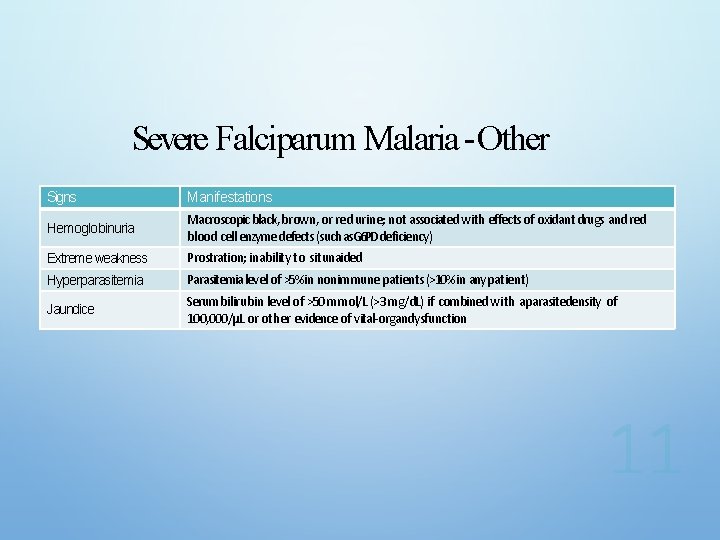
Severe Falciparum Malaria -Other Signs Manifestations Hemoglobinuria Macroscopic black, brown, or red urine; not associated with effects of oxidant drugs and red blood cell enzyme defects (such as. G 6 PDdeficiency) Extreme weakness Prostration; inability to situnaided Hyperparasitemia Parasitemia level of >5%in nonimmune patients (>10%in anypatient) Jaundice Serum bilirubin level of >50 mmol/L (>3 mg/d. L) if combined with aparasitedensity of 100, 000/μL or other evidence of vital-organdysfunction
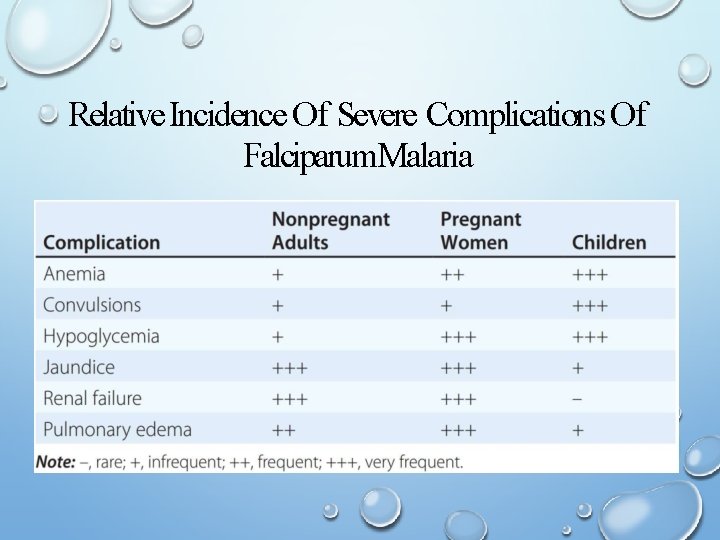
Relative Incidence Of Severe Complications Of Falciparum. Malaria
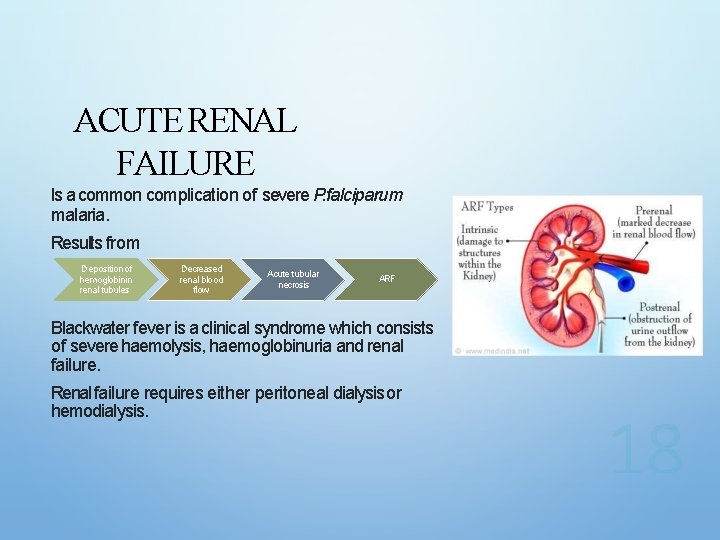
ACUTE RENAL FAILURE Is a common complication of severe P. falciparum malaria. Results from Deposition of hemoglobinin renal tubules Decreased renal blood flow Acute tubular necrosis ARF Blackwater fever is a clinical syndrome which consists of severe haemolysis, haemoglobinuria and renal failure. Renal failure requires either peritoneal dialysis or hemodialysis.
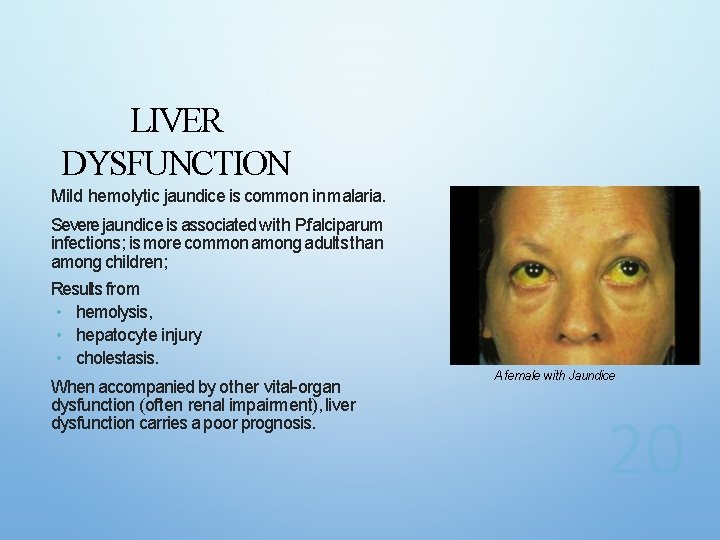
LIVER DYSFUNCTION Mild hemolytic jaundice is common in malaria. Severe jaundice is associated with P. falciparum infections; is more common among adults than among children; Results from • hemolysis, • hepatocyte injury • cholestasis. When accompanied by other vital-organ dysfunction (often renal impairment), liver dysfunction carries a poor prognosis. A female with Jaundice
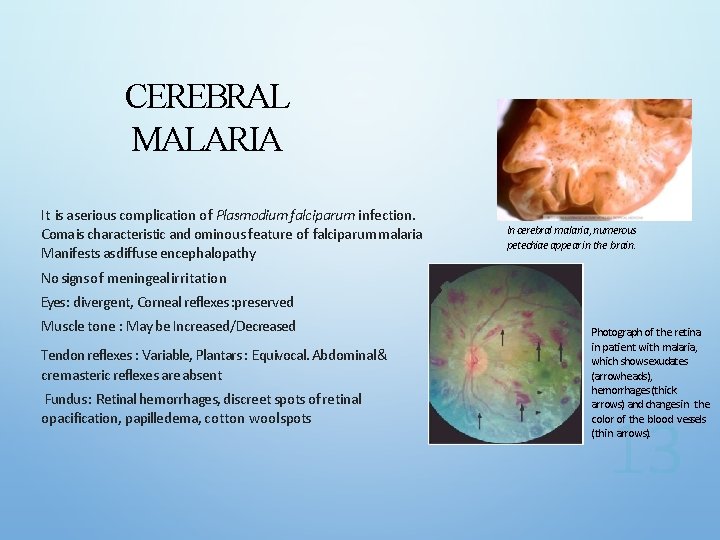
CEREBRAL MALARIA It is a serious complication of Plasmodium falciparum infection. Coma is characteristic and ominous feature of falciparummalaria Manifests as diffuse encephalopathy In cerebral malaria, numerous petechiae appear in the brain. No signs of meningeal irritation Eyes: divergent, Corneal reflexes : preserved Muscle tone : May be Increased/Decreased Tendon reflexes : Variable, Plantars : Equivocal. Abdominal& cremasteric reflexes are absent Fundus : Retinal hemorrhages, discreet spots of retinal opacification, papilledema, cotton wool spots Photograph of the retina in patient with malaria, which shows exudates (arrowheads), hemorrhages (thick arrows) and changes in the color of the blood vessels (thin arrows).
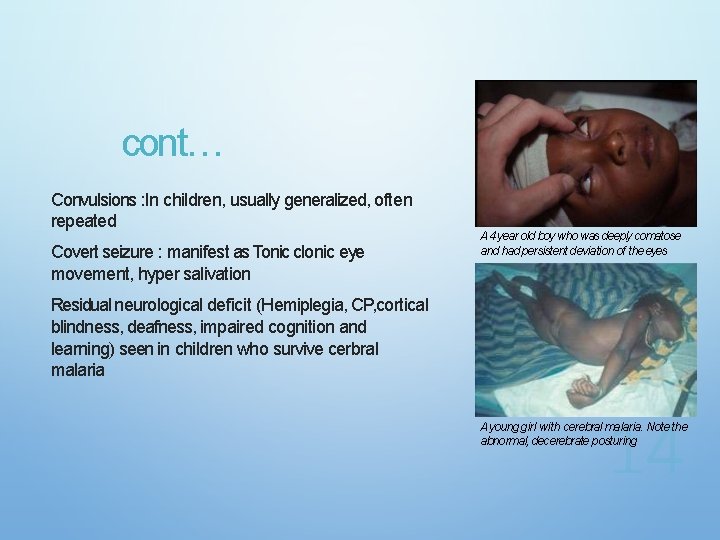
cont… Convulsions : In children, usually generalized, often repeated Covert seizure : manifest as Tonic clonic eye movement, hyper salivation A 4 year old boy who was deeply comatose and had persistent deviation of the eyes Residual neurological deficit (Hemiplegia, CP, cortical blindness, deafness, impaired cognition and learning) seen in children who survive cerbral malaria A young girl with cerebral malaria. Note the abnormal, decerebrate posturing
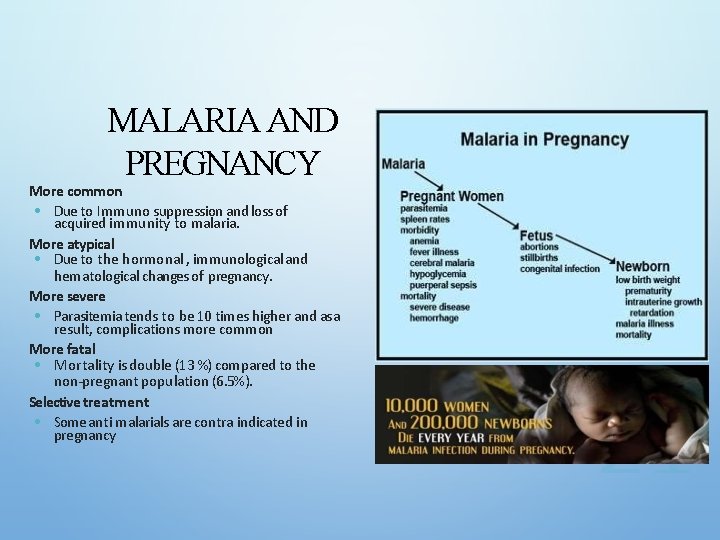
MALARIA AND PREGNANCY More common • Due to Immuno suppression and loss of acquired immunity to malaria. More atypical • Due to the hormonal , immunological and hematological changes of pregnancy. More severe • Parasitemia tends to be 10 times higher and asa result, complications more common More fatal • Mortality is double (13 %) compared to the non-pregnant population (6. 5%). Selective treatment • Some anti malarials are contra indicated in pregnancy
All clinically suspected malaria cases require laboratory examination and confirmation. � History Collection � Physical Examination � M. P. (Malaria Parasite) Test � The Peripheral Smear � Bone Marrow Smear � CBC, TC, DC, LFT, RFT �

Lab Findings In Severe Falciparum Malaria • Biochemistry • Hypoglycemia (<2. 2 Mmol/L) • Coagulopathy • Hyperlactatemia (>5 Mmol/L) • Decreased Platelet Count (<50, 000/Μl) • Acidosis (Arterial Ph <7. 3, Serum HCO 3 • Prolonged Prothrombin Time (>3 S) • <15 Mmol/L) • Prolonged Partial Thromboplastin Time • Elevated Serum Creatinine (>265 Μmol/L) • Decreased Fibrinogen (<200 Mg/Dl) • Elevated Total Bilirubin (>50 Μmol/L) • Elevated Liver Enzymes (AST/ALT 3 Times Upper Limit Of Normal) • Elevated Muscle Enzymes (CPK↑ , Myoglobin ↑ ) • Elevated Urate (>600 Μmol/L) • Hematology • Leukocytosis (>12, 000/Μl) • Severe Anemia (PCV <15%) • Parasitology • Hyperparasitemia Increased Mortality At >100, 000/Μl High Mortality At >500, 000/Μl >20% Of Parasites Identified As Pigment. Containing Trophozoites And Schizonts >5%Of Neutrophils With Visible Pigment
Management of Malaria includes Following Measures. . Early Detection & Early Treatment 2. Mosquito Control Measures 3. Community Education 1.
Early Detection of Fever Cases in the Community by House to House Visit by the Health Workers in Every 15 Days � Early Administration of Chloroquine(CHQ) to All Fevers � Collection of Blood Films(Thick & Thin) from Fever Cases & Laboratory Examinations for Malaria Parasite � Administration of Medical Treatment to All Positive Cases of Malaria �
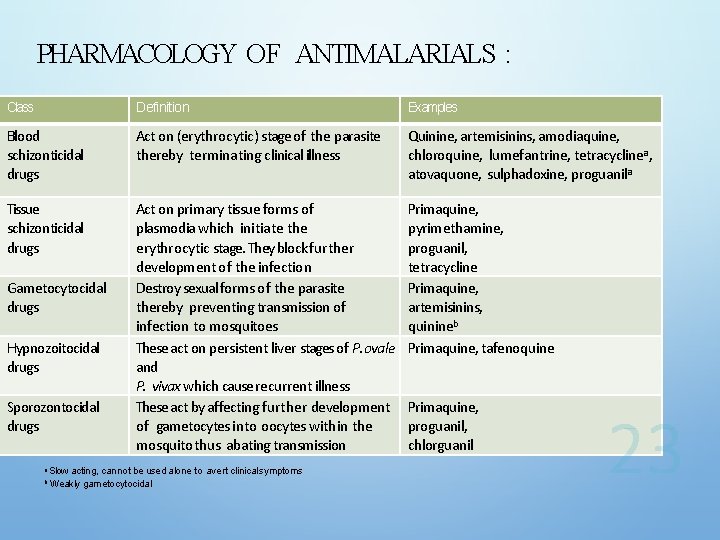
PHARMACOLOGY OF ANTIMALARIALS : Class Definition Examples Blood schizonticidal drugs Act on (erythrocytic) stage of the parasite thereby terminating clinical illness Quinine, artemisinins, amodiaquine, chloroquine, lumefantrine, tetracyclinea , atovaquone, sulphadoxine, proguanila Tissue schizonticidal drugs Act on primary tissue forms of plasmodia which initiate the erythrocytic stage. They block further development of the infection Destroy sexual forms of the parasite thereby preventing transmission of infection to mosquitoes These act on persistent liver stages of P. ovale and P. vivax which cause recurrent illness These act by affecting further development of gametocytes into oocytes within the mosquito thus abating transmission Primaquine, pyrimethamine, proguanil, tetracycline Primaquine, artemisinins, quinineb Primaquine, tafenoquine Gametocytocidal drugs Hypnozoitocidal drugs Sporozontocidal drugs a Slow acting, b Weakly cannot be used alone to avert clinical symptoms gametocytocidal Primaquine, proguanil, chlorguanil
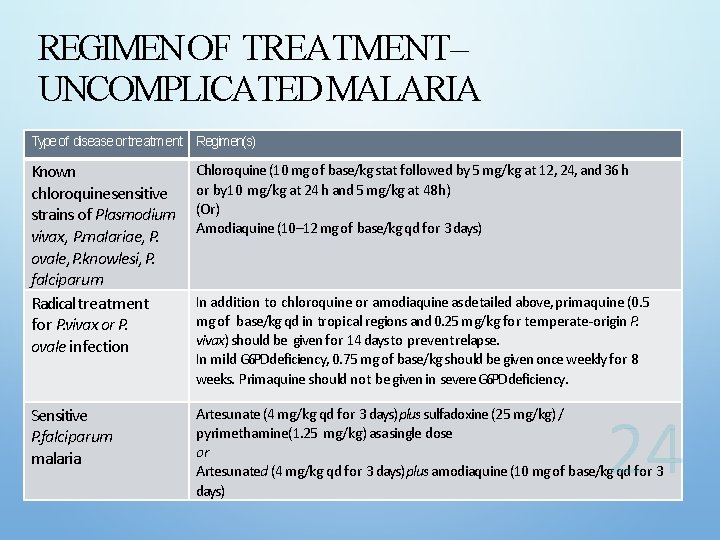
REGIMEN OF TREATMENT– UNCOMPLICATED MALARIA Type of disease or treatment Regimen(s) Known chloroquinesensitive strains of Plasmodium vivax, P. malariae, P. ovale, P. knowlesi, P. falciparum Radical treatment for P. vivax or P. ovale infection Chloroquine (10 mg of base/kg stat followed by 5 mg/kg at 12, 24, and 36 h or by 10 mg/kg at 24 h and 5 mg/kg at 48 h) (Or) Amodiaquine (10– 12 mg of base/kg qd for 3 days) Sensitive P. falciparum malaria Artesunate (4 mg/kg qd for 3 days) plus sulfadoxine (25 mg/kg) / pyrimethamine(1. 25 mg/kg) asa single dose or Artesunated (4 mg/kg qd for 3 days) plus amodiaquine (10 mg of base/kg qd for 3 days) In addition to chloroquine or amodiaquine asdetailed above, primaquine (0. 5 mg of base/kg qd in tropical regions and 0. 25 mg/kg for temperate-origin P. vivax) should be given for 14 days to prevent relapse. In mild G 6 PDdeficiency, 0. 75 mg of base/kg should be given once weekly for 8 weeks. Primaquine should not be given in severe G 6 PDdeficiency.
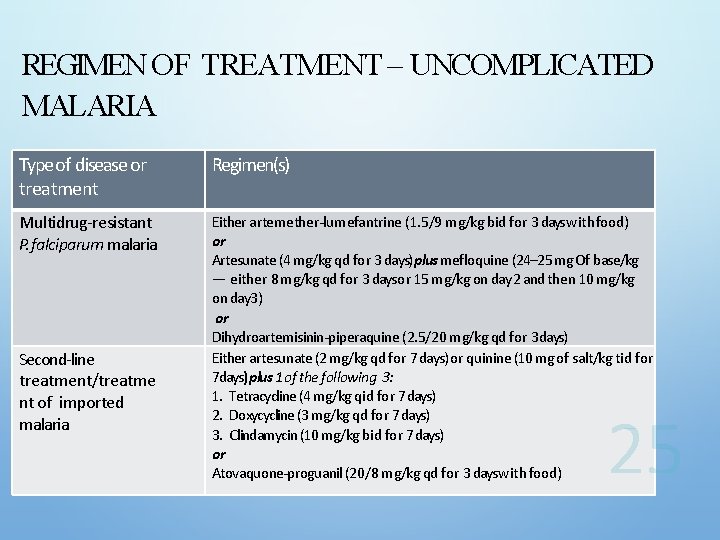
REGIMEN OF TREATMENT – UNCOMPLICATED MALARIA Type of disease or treatment Regimen(s) Multidrug-resistant P. falciparum malaria Either artemether-lumefantrine (1. 5/9 mg/kg bid for 3 days with food) or Artesunate (4 mg/kg qd for 3 days) plus mefloquine (24– 25 mg Of base/kg — either 8 mg/kg qd for 3 days or 15 mg/kg on day 2 and then 10 mg/kg on day 3) or Dihydroartemisinin-piperaquine (2. 5/20 mg/kg qd for 3 days) Either artesunate (2 mg/kg qd for 7 days) or quinine (10 mg of salt/kg tid for 7 days) plus 1 of the following 3: 1. Tetracycline (4 mg/kg qid for 7 days) 2. Doxycycline (3 mg/kg qd for 7 days) 3. Clindamycin (10 mg/kg bid for 7 days) or Atovaquone-proguanil (20/8 mg/kg qd for 3 days with food) Second-line treatment/treatme nt of imported malaria
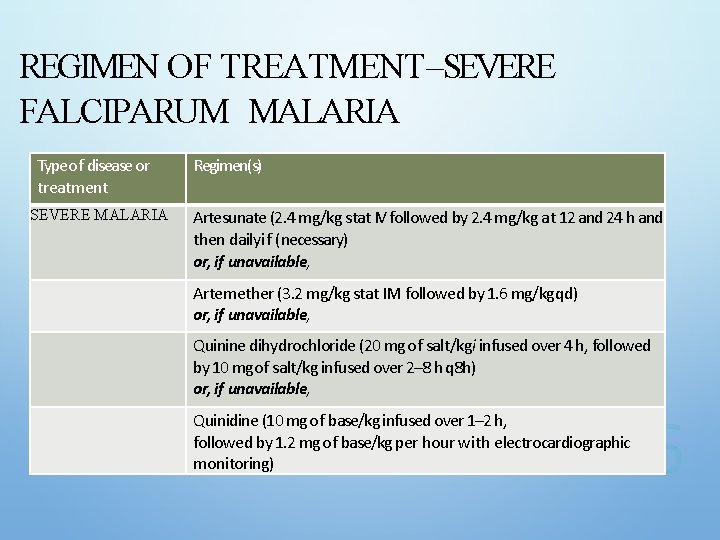
REGIMEN OF TREATMENT–SEVERE FALCIPARUM MALARIA Type of disease or treatment SEVERE MALARIA Regimen(s) Artesunate (2. 4 mg/kg stat IV followed by 2. 4 mg/kg at 12 and 24 h and then daily if (necessary) or, if unavailable, Artemether (3. 2 mg/kg stat IM followed by 1. 6 mg/kgqd) or, if unavailable, Quinine dihydrochloride (20 mg of salt/kgi infused over 4 h, followed by 10 mgof salt/kg infused over 2– 8 h q 8 h) or, if unavailable, Quinidine (10 mg of base/kg infused over 1– 2 h, followed by 1. 2 mg of base/kg per hour with electrocardiographic monitoring)
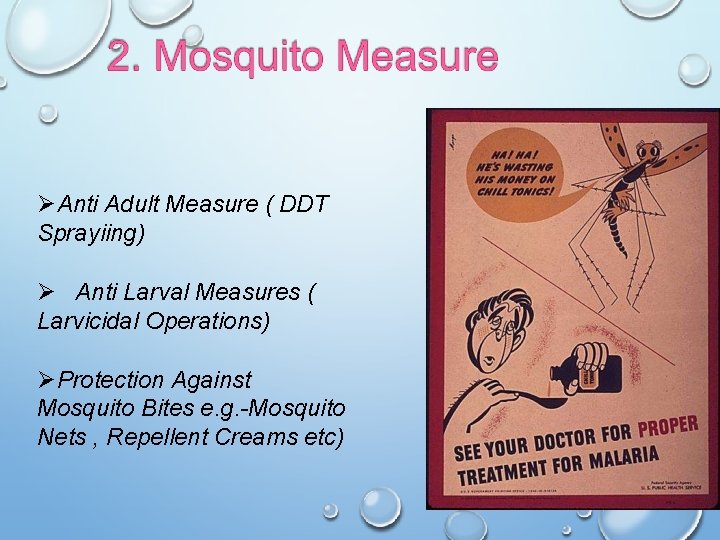
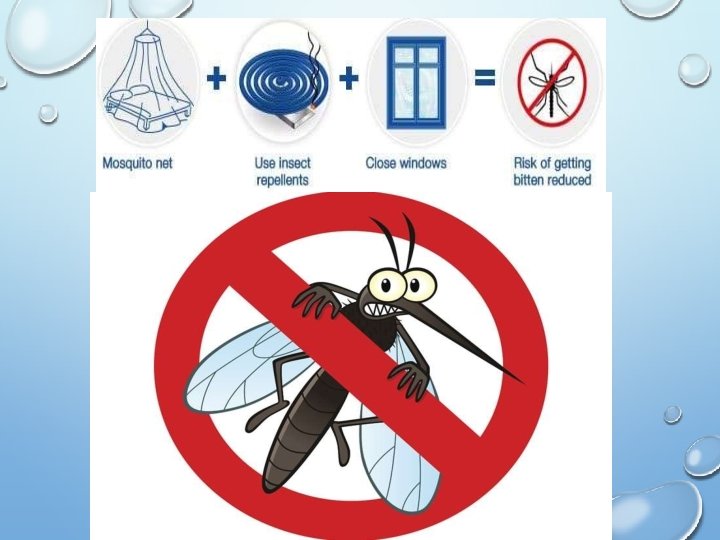
Anti Adult Measure ( DDT Sprayiing) Anti Larval Measures ( Larvicidal Operations) Protection Against Mosquito Bites e. g. -Mosquito Nets , Repellent Creams etc)
removing or poisoning the breeding grounds of the mosquitoes or the aquatic habitats of the larva stages, for example by filling or applying oil to places with standing water � spraying with DDT. � early management and disease surveillance � monitoring and evaluation – drug and insecticide resistance monitoring �

- Slides: 31