
Malaria and Babesia Malaria Plasmodium falciparum Plasmodium vivax
Malaria and Babesia

Malaria Ø Ø Plasmodium falciparum Plasmodium vivax Plasmodium ovale Plasmodium malariae
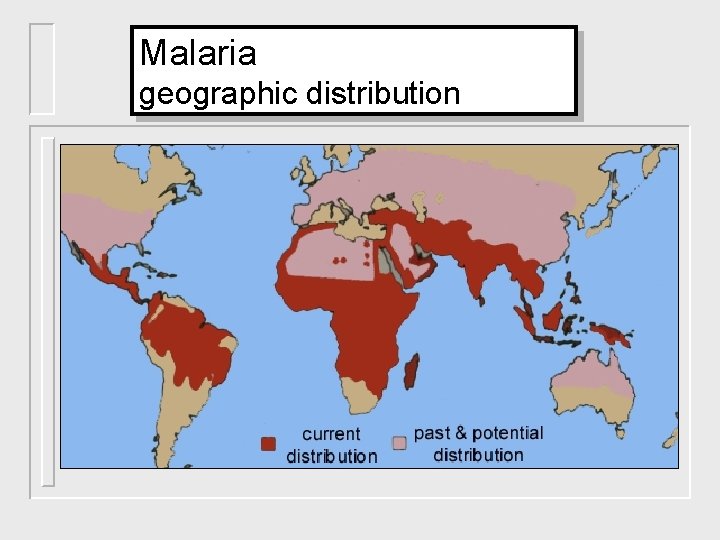
Malaria geographic distribution

Malarial parasites: morphology Ø Malignant tertian malaria Ø Benign tertian malaria Ø Ovale tertian malaria Ø Quartan malaria
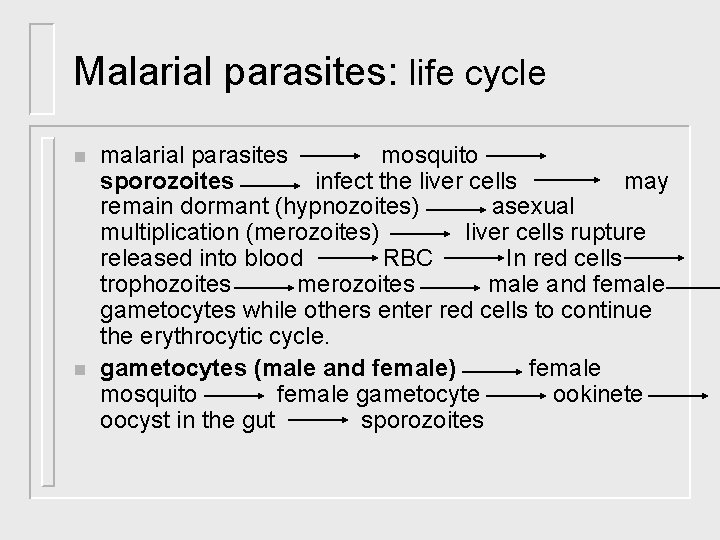
Malarial parasites: life cycle n n malarial parasites mosquito sporozoites infect the liver cells may remain dormant (hypnozoites) asexual multiplication (merozoites) liver cells rupture released into blood RBC In red cells trophozoites merozoites male and female gametocytes while others enter red cells to continue the erythrocytic cycle. gametocytes (male and female) female mosquito female gametocyte ookinete oocyst in the gut sporozoites
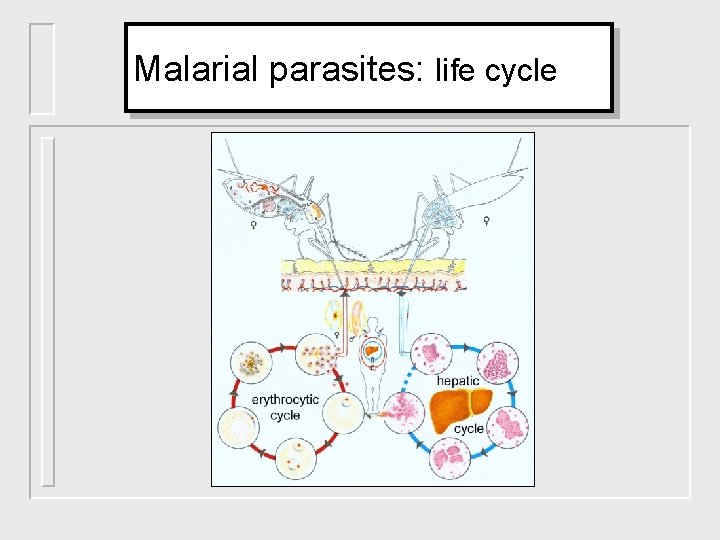
Malarial parasites: life cycle

Malarial symptoms type organ Involved symptoms tertian spleen, (vivax and liver, ovale) erythrocytes systemic headache, lassitude, vague aching of bones and joints, chills and high fever (103 -106 F), nausea and vomiting, convulsion, euphoria, profuse sweating. Symptoms every other day and last 8 -12 hours. Spontaneous recovery falciparum (malignant tertian) same as above but no tertian pattern: there may be daily spiking; no spontaneous recovery and ultimately fatal. Renal & CNS involvement quartan (malariae) same as tertian, but paroxysm occurs every three days (2 clear days)
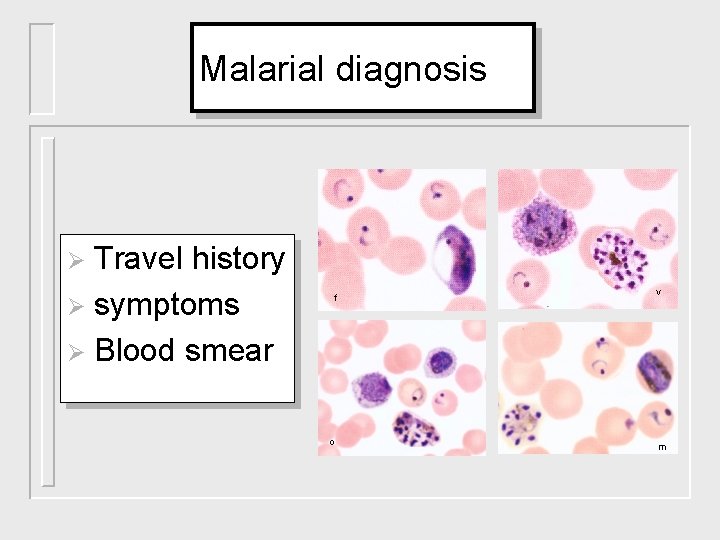
Malarial diagnosis Travel history Ø symptoms Ø Blood smear Ø f o v m
Malaria control and treatment Ø Treatment: Ø Quinine derivatives Ø P. falciparum often drug resistant Ø Quinine can be use prophylactically
Malaria control and treatment Ø Control mosquito population Ø Mosquito netting
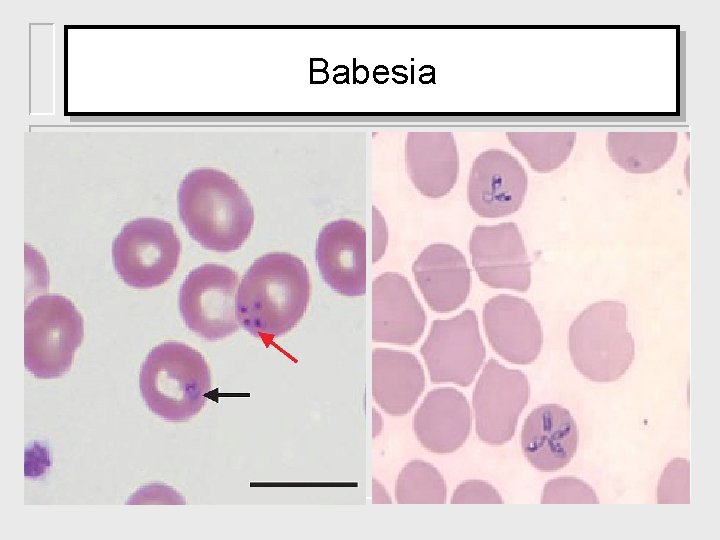
Babesia
Babesiosis geography and etiology Ø Ø Etiologic agent is Babesia microti Zoonotic infection Deer are primary reservoir Cases reported in north-eastern part of the US and Europe
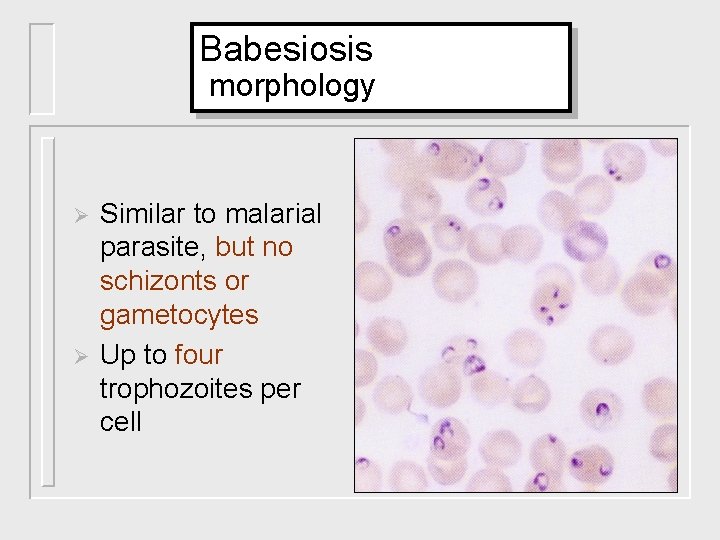
Babesiosis morphology Ø Ø Similar to malarial parasite, but no schizonts or gametocytes Up to four trophozoites per cell
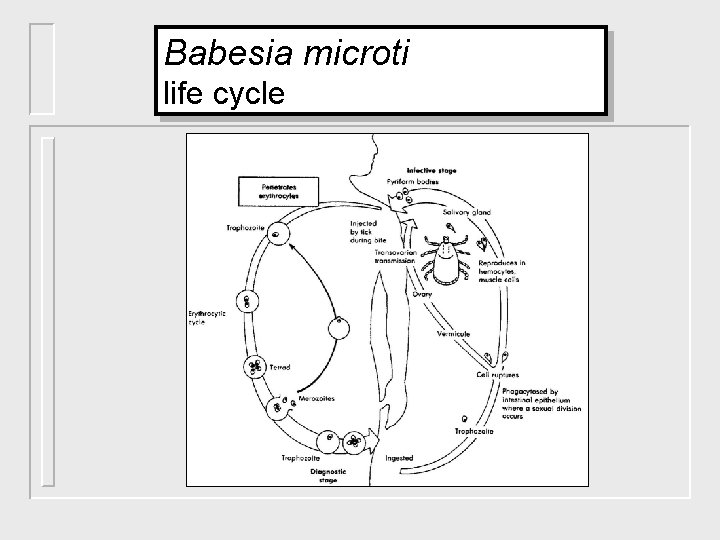
Babesia microti life cycle
Babesiosis symptoms Ø Ø Mild chills and fever Hemolytic anemia Jaundice Hepatomegaly No malarial paroxysm
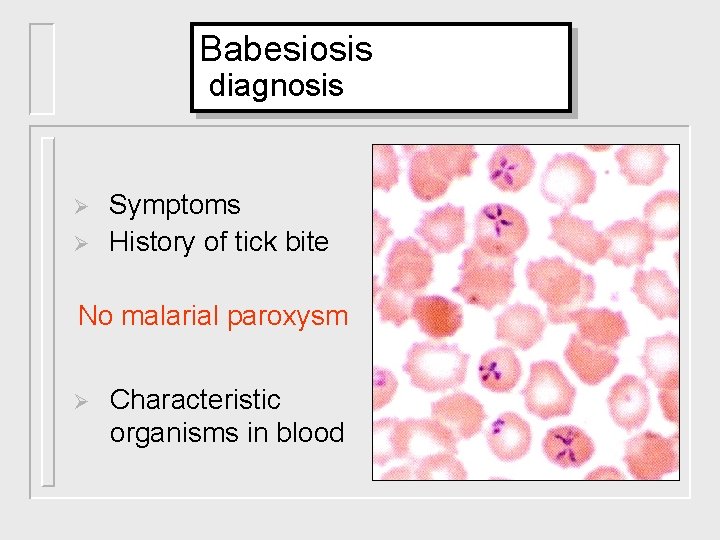
Babesiosis diagnosis Ø Ø Symptoms History of tick bite No malarial paroxysm Ø Characteristic organisms in blood
Babesiosis treatment Ø Clindamycin with quinine is effective
Babesiosis prevention Ø Avoid tick bites Ø Recovery may be spontaneous
- Slides: 18