
Making Your Farm Business More Efficient Through Lean
Making Your Farm Business More Efficient Through Lean Thinking Principles Presented By: Jim Cooper & Avery Murphy 1
Why Lean Thinking? § The ability to adapt to the mindset as an early adopter should provide a competitive advantage to the farm operation, as your operation can act as a partner in improving the entire chain from field to table 2
What is Lean Thinking? Lean Thinking is a systematic approach to identifying and eliminating waste while focusing on adding value to your internal and external customers. 3
What is Lean Thinking? § Lean thinking describes an approach to business that aims to deliver more and more with less and less. § § Less human effort, Less equipment, Less time Less space § Lean thinking involves identifying and eliminating all forms of waste in supply chains and focusing instead on what delivers value for consumers. 4

The Lean Drivers • Lean Thinking • Employee Involvement People Customer Success Process • Flow • Elimination of Waste Technology • Tools to support people and process 5
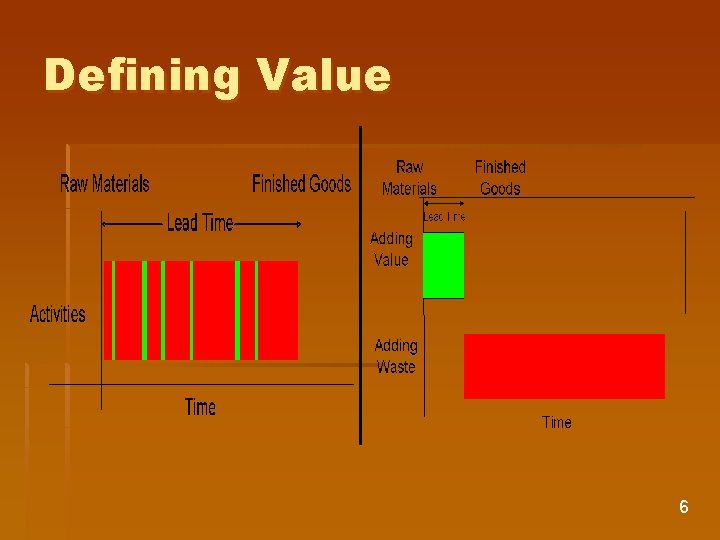
Defining Value 6
Defining Waste is anything that consumes time or resources but does not add value to the product or service, as viewed from the perspective of the customer. 7
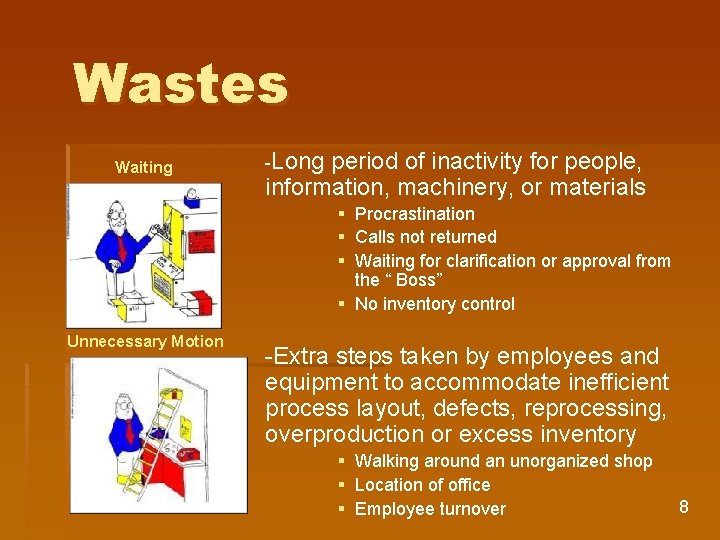
Wastes Waiting -Long period of inactivity for people, information, machinery, or materials § § § Procrastination Calls not returned Waiting for clarification or approval from the “ Boss” § No inventory control Unnecessary Motion -Extra steps taken by employees and equipment to accommodate inefficient process layout, defects, reprocessing, overproduction or excess inventory § Walking around an unorganized shop § Location of office § Employee turnover 8
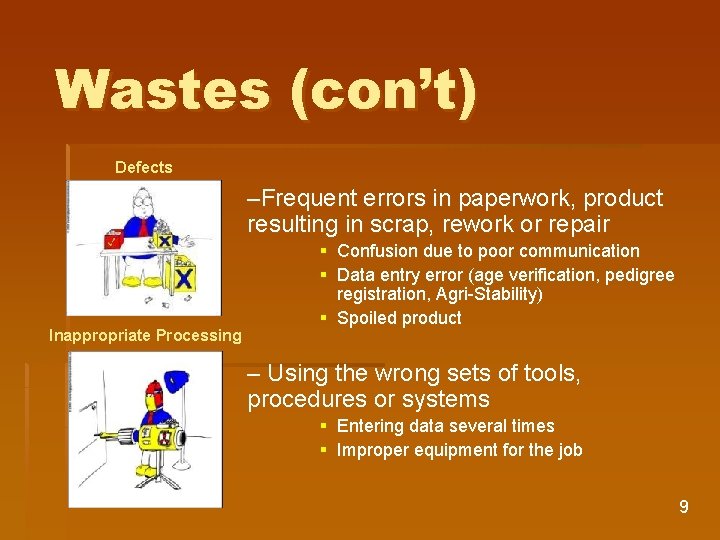
Wastes (con’t) Defects –Frequent errors in paperwork, product resulting in scrap, rework or repair Inappropriate Processing § Confusion due to poor communication § Data entry error (age verification, pedigree registration, Agri-Stability) § Spoiled product – Using the wrong sets of tools, procedures or systems § § Entering data several times Improper equipment for the job 9
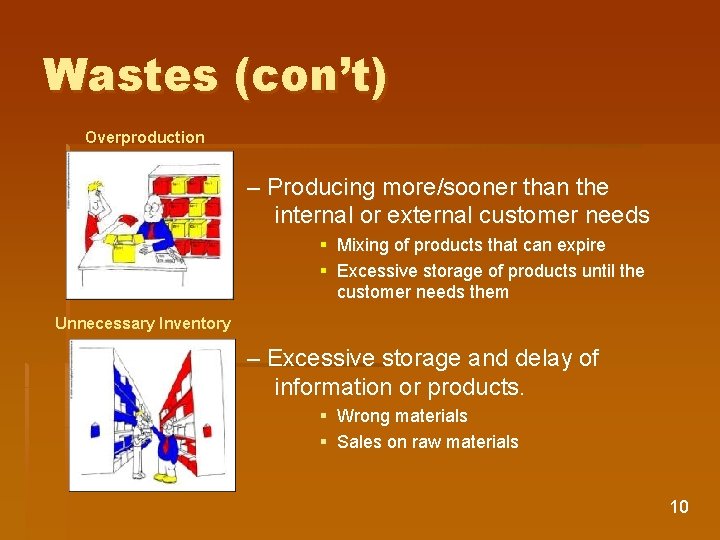
Wastes (con’t) Overproduction – Producing more/sooner than the internal or external customer needs § Mixing of products that can expire § Excessive storage of products until the customer needs them Unnecessary Inventory – Excessive storage and delay of information or products. § Wrong materials § Sales on raw materials 10
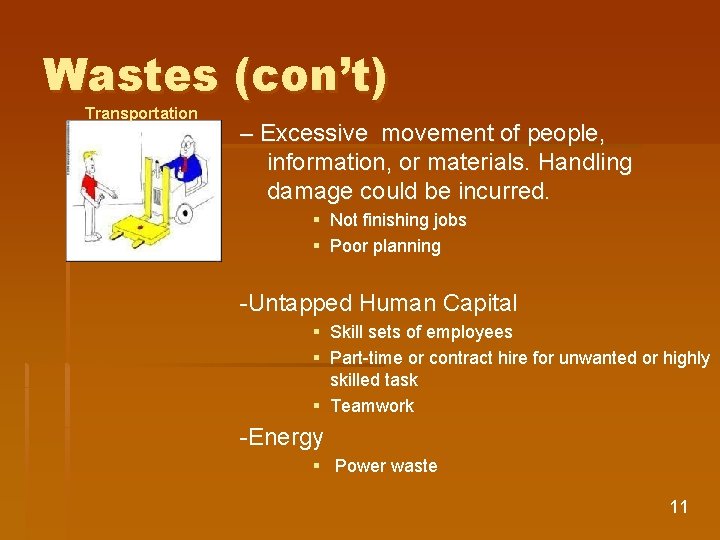
Wastes (con’t) Transportation – Excessive movement of people, information, or materials. Handling damage could be incurred. § Not finishing jobs § Poor planning -Untapped Human Capital § Skill sets of employees § Part-time or contract hire for unwanted or highly skilled task § Teamwork -Energy § Power waste 11
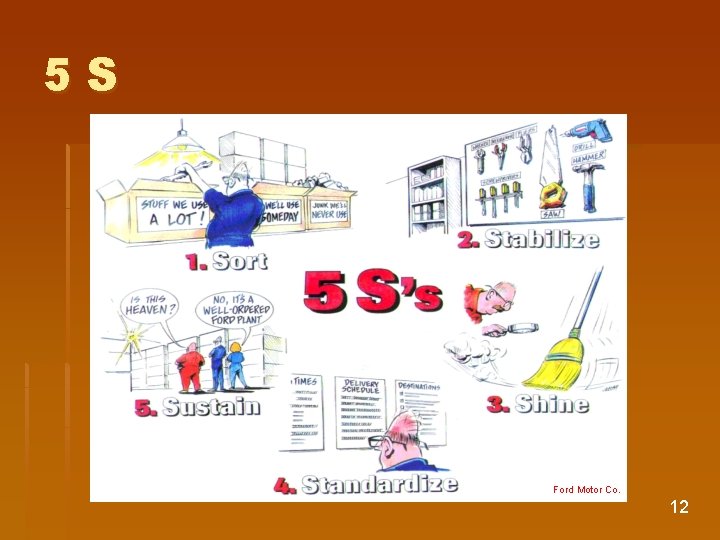
5 S Ford Motor Co. 12
Lean Thinking for Producers in Alberta § 5 primary producers from both crop and livestock production have taken advantage of program funding. 13
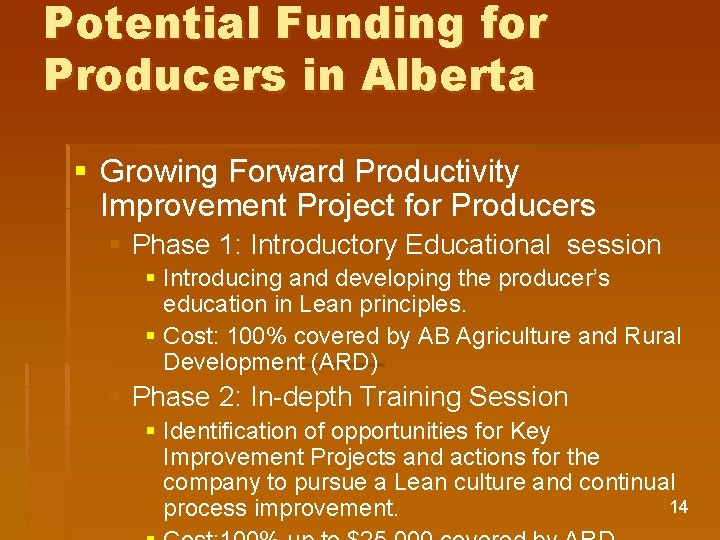
Potential Funding for Producers in Alberta § Growing Forward Productivity Improvement Project for Producers § Phase 1: Introductory Educational session § Introducing and developing the producer’s education in Lean principles. § Cost: 100% covered by AB Agriculture and Rural Development (ARD) § Phase 2: In-depth Training Session § Identification of opportunities for Key Improvement Projects and actions for the company to pursue a Lean culture and continual 14 process improvement.
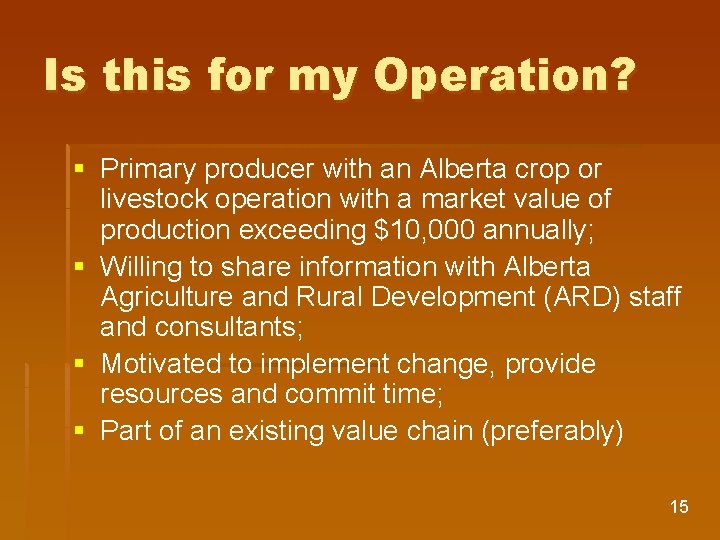
Is this for my Operation? § Primary producer with an Alberta crop or livestock operation with a market value of production exceeding $10, 000 annually; § Willing to share information with Alberta Agriculture and Rural Development (ARD) staff and consultants; § Motivated to implement change, provide resources and commit time; § Part of an existing value chain (preferably) 15

Questions? 16
- Slides: 16