
Making Virtual Teams Work Virtual Teams Project Team
- Slides: 30
Making Virtual Teams Work Virtual Teams Project Team Chris Parker Parsons Energy & Chemicals Group CII Annual Conference 2001
Making Virtual Teams Work Virtual Teams Project Team Chris Parker Parsons Energy & Chemicals Group CII Annual Conference 2001
Research Mandate Discovering and responding to the issues and challenges associated with the implementation and execution of virtual teams in the EPC industry.
Research Mandate Discovering and responding to the issues and challenges associated with the implementation and execution of virtual teams in the EPC industry.
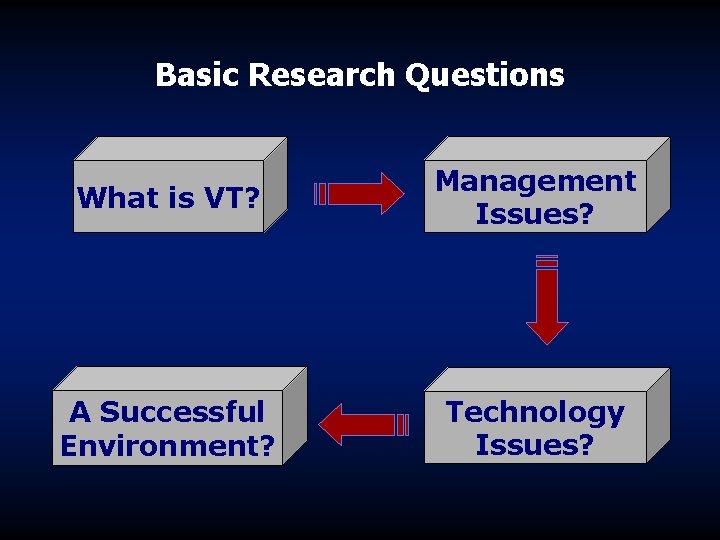
Basic Research Questions What is VT? Management Issues? A Successful Environment? Technology Issues?
Basic Research Questions What is VT? Management Issues? A Successful Environment? Technology Issues?
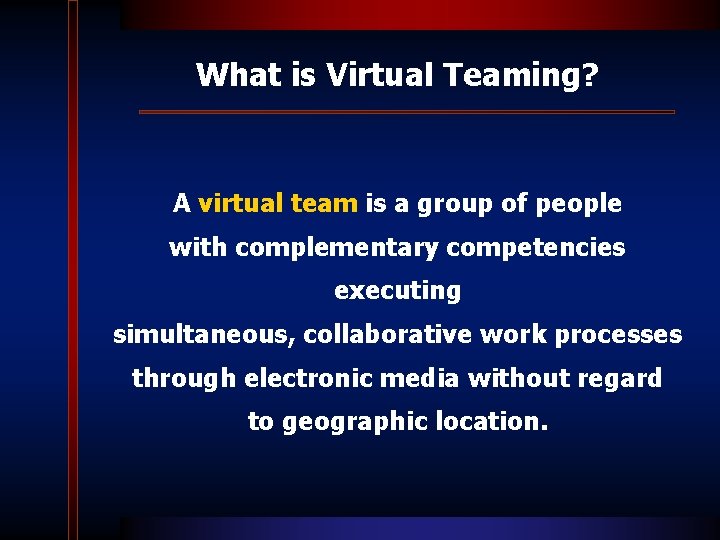
What is Virtual Teaming? A virtual team is a group of people with complementary competencies executing simultaneous, collaborative work processes through electronic media without regard to geographic location.
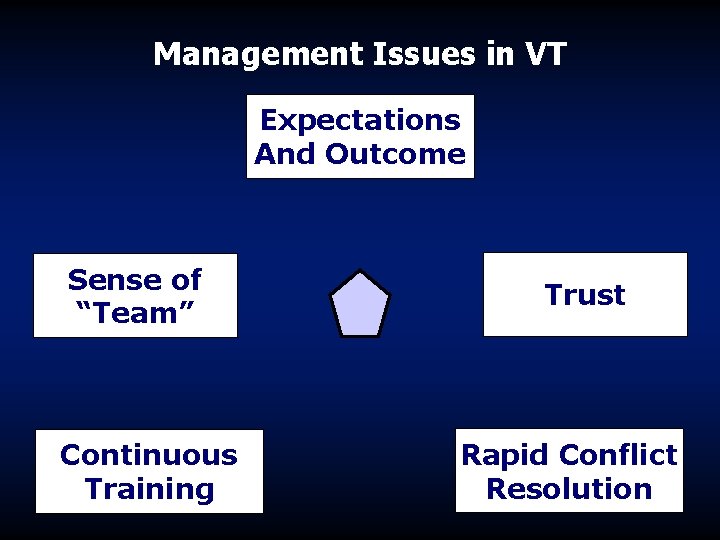
Management Issues in VT Expectations And Outcome Sense of “Team” Continuous Training Trust Rapid Conflict Resolution
Cultural and Social Issues • Communication, collaboration are impacted by: - how individual preferences influence work and collaboration - how these differences impact team dynamics and productivity - how these differences affect trusting relationships • People do not recognize the impact of removing social interaction from the team environment.
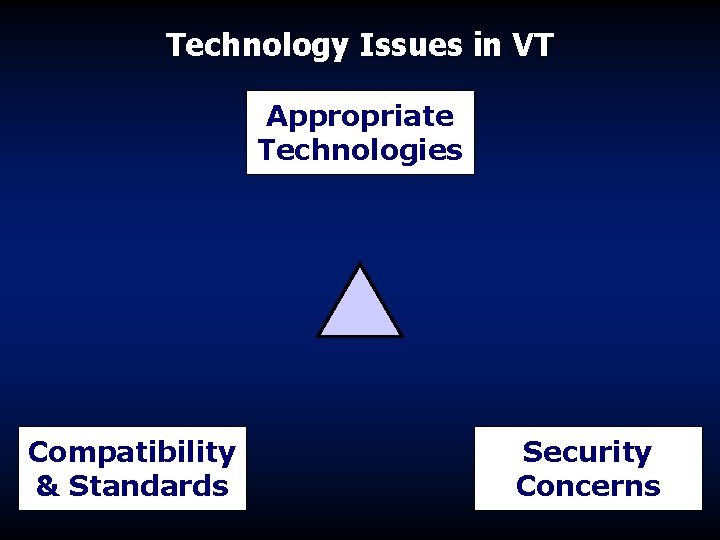
Technology Issues in VT Appropriate Technologies Compatibility & Standards Security Concerns
Immediate Impact and Opportunity • Efficiency of project execution • Removal of boundaries • Integration and optimization of competencies • New partnerships
Appendix – Survey Data • 31 CII companies participated. - 20 owners, 11 contractors
Appendix – Survey Data Findings • Only five companies use virtual teams as integral to all projects – eight not using at all. • Pre-design and design are primary uses of virtual teams. • Security as primary concern for not using virtual teams – 65% of survey. • Virtual teams will increase significantly or be standard practice in five years – 93% of survey.
Appendix – Survey Data Findings (continued) • More difficult to engage people in achieving objectives – 73% of survey. • More management visits to remote team. • More time spent on e-communications. • Majority has not studied impact of virtual teams on management issues, but realize this is central concern for success of virtual teams.
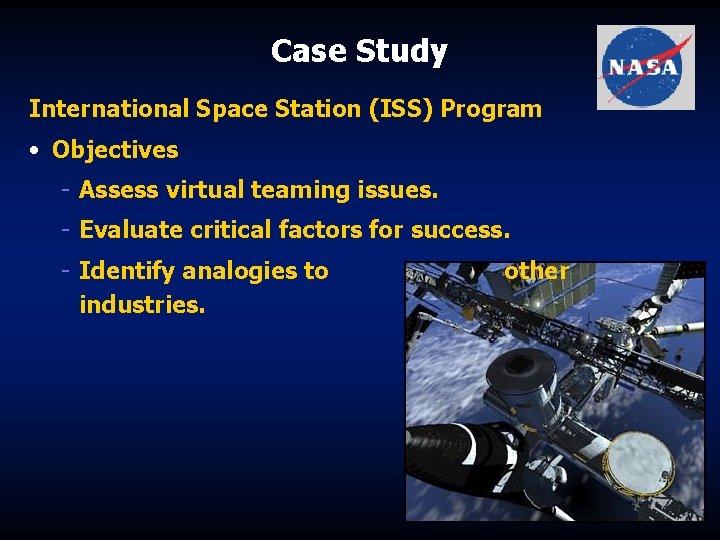
Case Study International Space Station (ISS) Program • Objectives - Assess virtual teaming issues. - Evaluate critical factors for success. - Identify analogies to industries. other
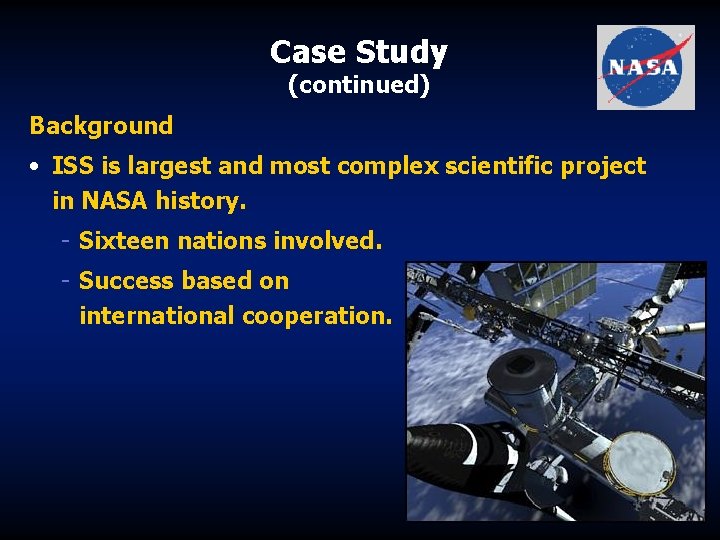
Case Study (continued) Background • ISS is largest and most complex scientific project in NASA history. - Sixteen nations involved. - Success based on international cooperation.
Case Study Key Findings • Cultural issues, not technology issues, dominate. • Relationships are critical. • Control of information was identified as a key success factor. • There is no substitute for face-to-face meetings.
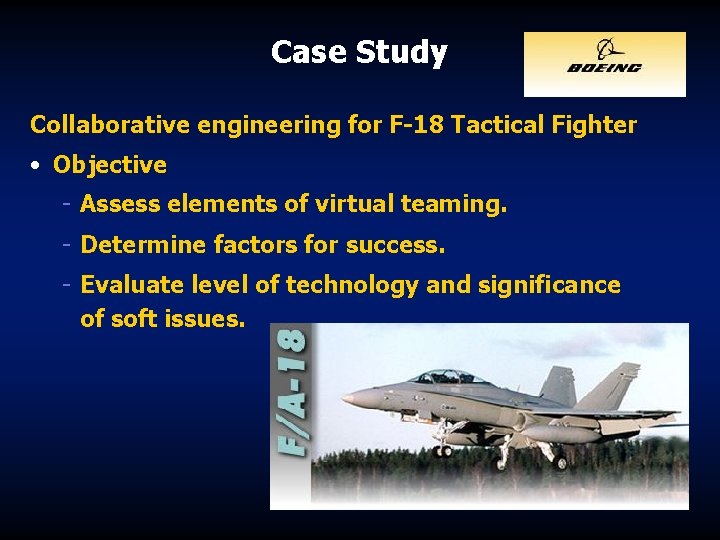
Case Study Collaborative engineering for F-18 Tactical Fighter • Objective - Assess elements of virtual teaming. - Determine factors for success. - Evaluate level of technology and significance of soft issues.
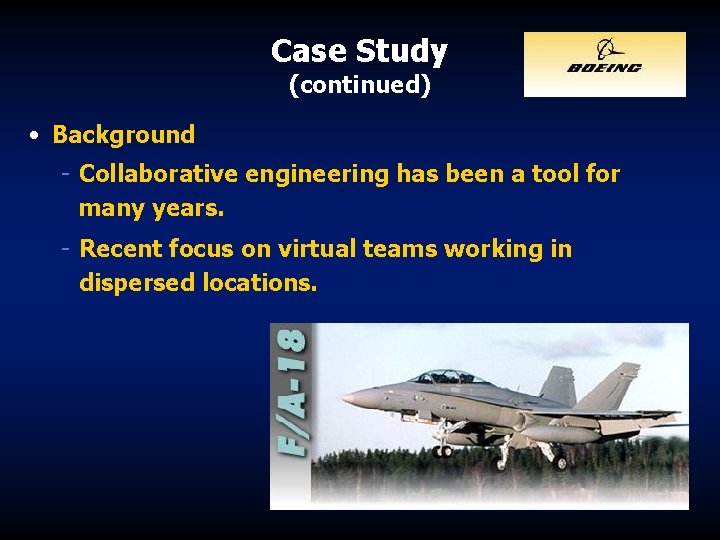
Case Study (continued) • Background - Collaborative engineering has been a tool for many years. - Recent focus on virtual teams working in dispersed locations.
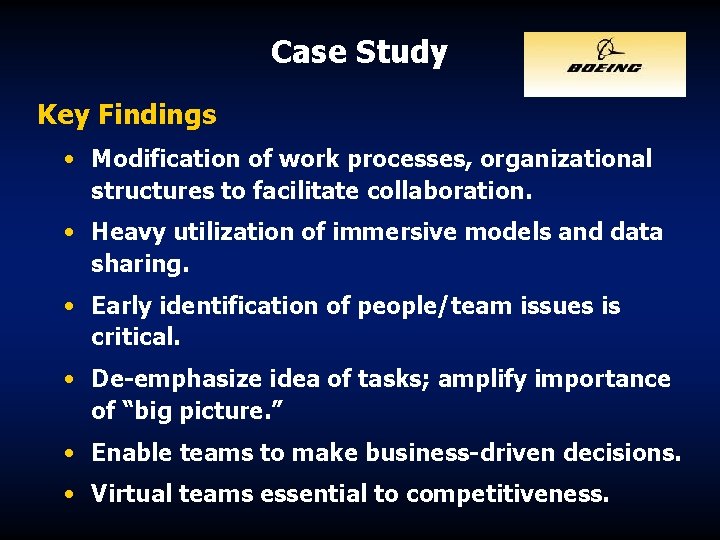
Case Study Key Findings • Modification of work processes, organizational structures to facilitate collaboration. • Heavy utilization of immersive models and data sharing. • Early identification of people/team issues is critical. • De-emphasize idea of tasks; amplify importance of “big picture. ” • Enable teams to make business-driven decisions. • Virtual teams essential to competitiveness.
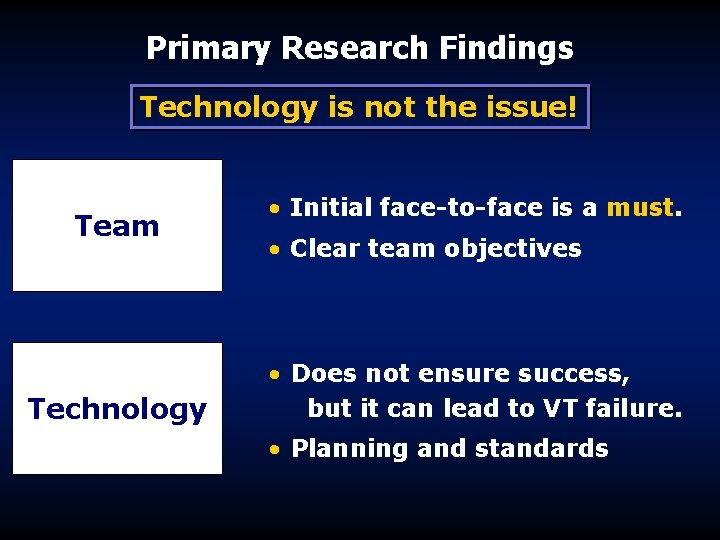
Primary Research Findings Technology is not the issue! Team Technology • Initial face-to-face is a must. • Clear team objectives • Does not ensure success, but it can lead to VT failure. • Planning and standards
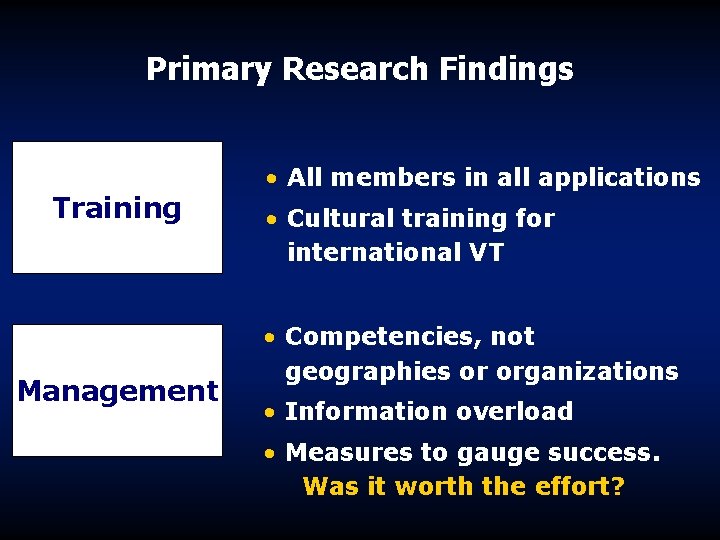
Primary Research Findings Training Management • All members in all applications • Cultural training for international VT • Competencies, not geographies or organizations • Information overload • Measures to gauge success. Was it worth the effort?
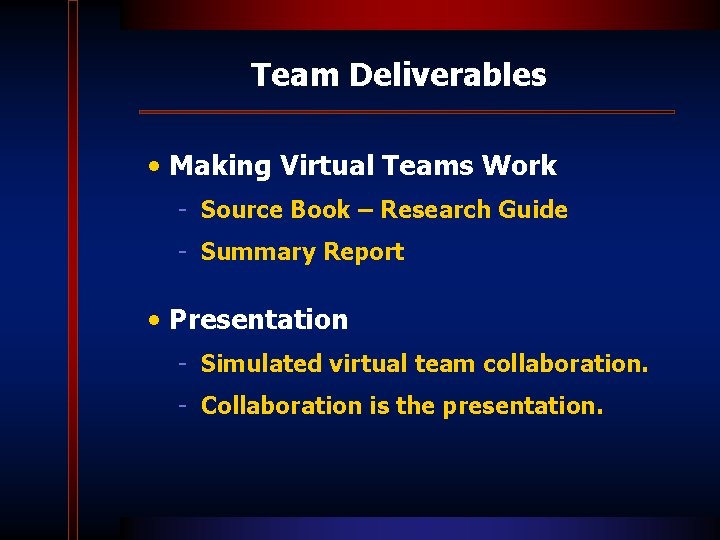
Team Deliverables • Making Virtual Teams Work - Source Book – Research Guide - Summary Report • Presentation - Simulated virtual team collaboration. - Collaboration is the presentation.
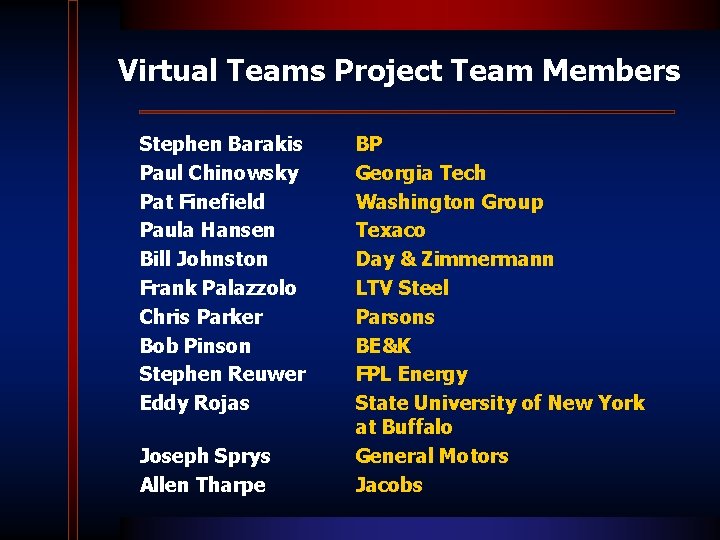
Virtual Teams Project Team Members Stephen Barakis Paul Chinowsky Pat Finefield Paula Hansen Bill Johnston Frank Palazzolo Chris Parker Bob Pinson Stephen Reuwer Eddy Rojas Joseph Sprys Allen Tharpe BP Georgia Tech Washington Group Texaco Day & Zimmermann LTV Steel Parsons BE&K FPL Energy State University of New York at Buffalo General Motors Jacobs
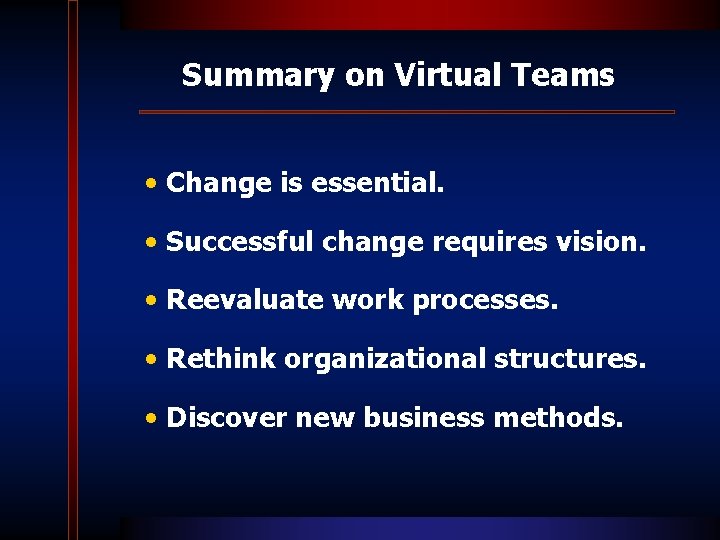
Summary on Virtual Teams • Change is essential. • Successful change requires vision. • Reevaluate work processes. • Rethink organizational structures. • Discover new business methods.
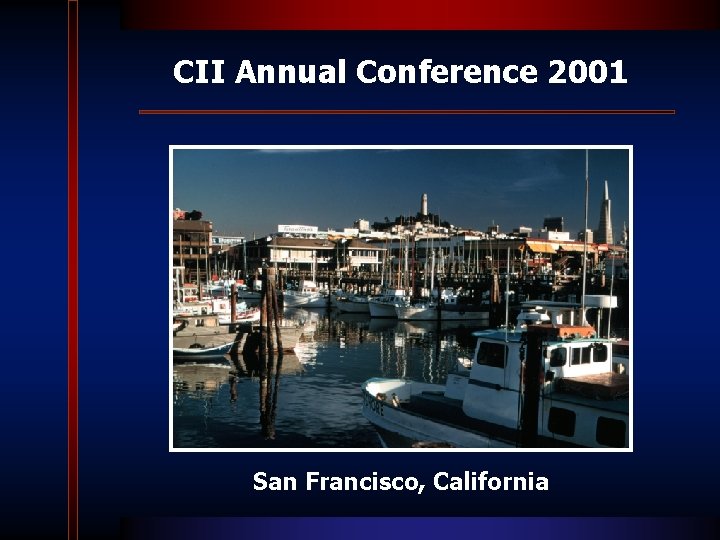
CII Annual Conference 2001 San Francisco, California
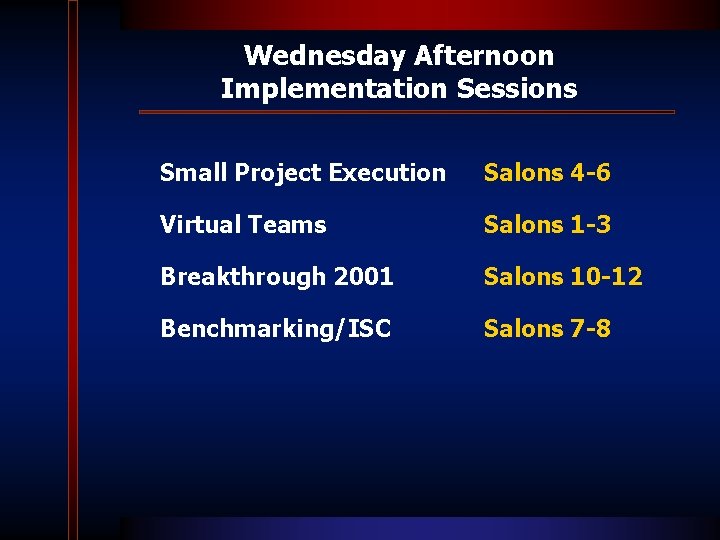
Wednesday Afternoon Implementation Sessions Small Project Execution Salons 4 -6 Virtual Teams Salons 1 -3 Breakthrough 2001 Salons 10 -12 Benchmarking/ISC Salons 7 -8
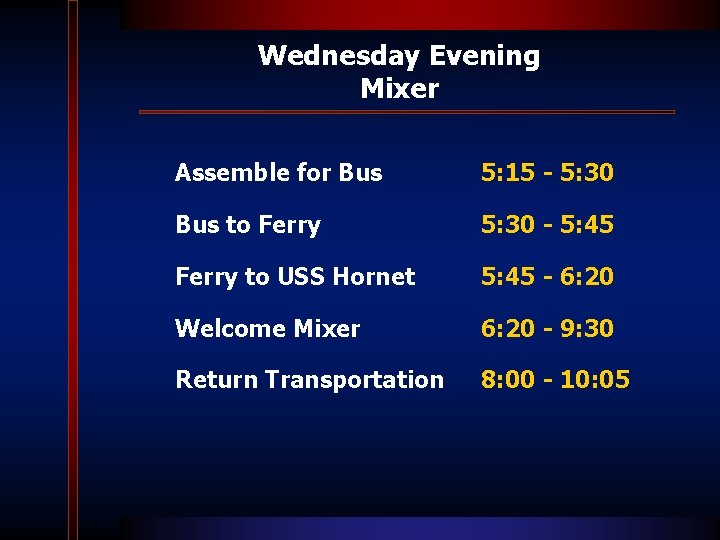
Wednesday Evening Mixer Assemble for Bus 5: 15 - 5: 30 Bus to Ferry 5: 30 - 5: 45 Ferry to USS Hornet 5: 45 - 6: 20 Welcome Mixer 6: 20 - 9: 30 Return Transportation 8: 00 - 10: 05
CII Annual Conference 2001 San Francisco, California