
Making the Case for Lean Management in Medical
- Slides: 37
Making the Case for Lean Management in Medical Staff Services Michelle Butler, MS, RHIA, CPCS, CPMSM Roxanne Chamberlain, MBA, FACHE, CPCS, CPMSM
Making the Case… Why is lean management important?
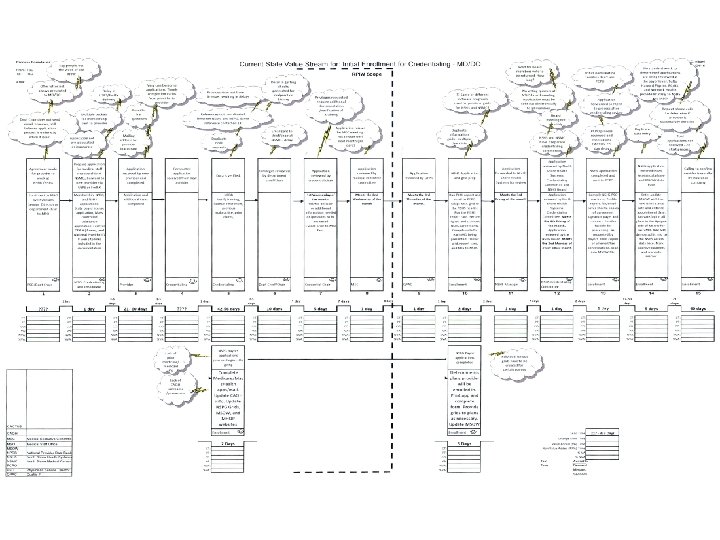
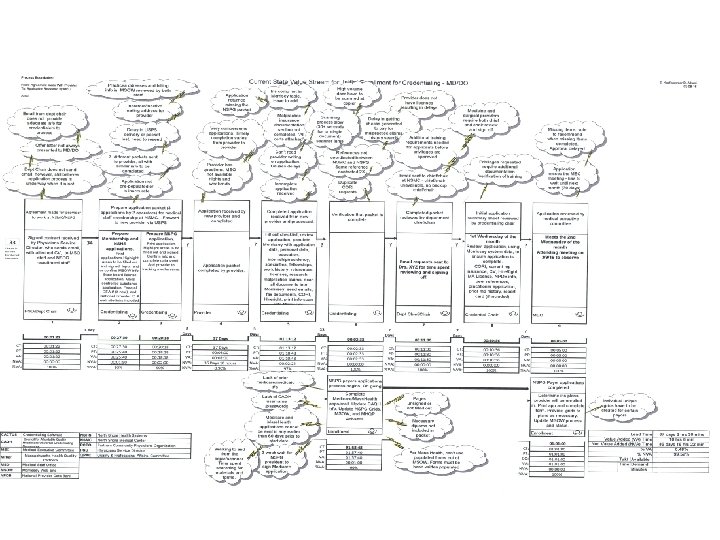
Baystate Health, Inc. Process…. . – Educate staff: pick a staff champion – Focus on a target – Define the process – Create visual controls
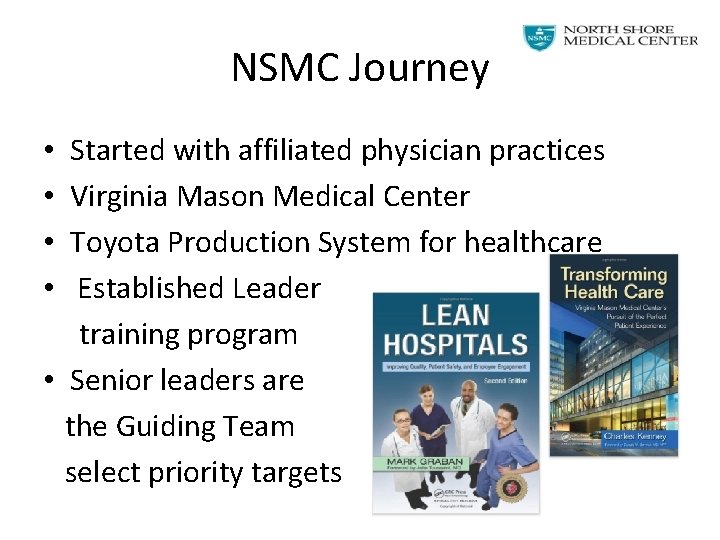
NSMC Journey Started with affiliated physician practices Virginia Mason Medical Center Toyota Production System for healthcare Established Leader training program • Senior leaders are the Guiding Team select priority targets • •
Baystate Health, Inc. MSS Objectives • Decrease processing timeframe • Decrease # of handoffs • Decrease revenue loss • Improve customer satisfaction • Improve start date reliability
NSMC MSS Objectives Issues: Lengthy credentialing process resulting in delays in patient care and lost revenue. Production pressure on MSO staff, duplicate processing for recruiters, MSO staff, and physician applicants. Theme: Delays in credentialing ultimately cause delays in patient care and lost revenue. With quicker credentialing, patient access improves and patients get more timely care with the doctor they want to see and more revenue is generated.
5 Principles of Lean: 1. 2. 3. 4. 5. Identify Customer & Specify Values Map the Value Stream Eliminate Waste Respond to Customer Pull Pursue Perfection
#1. Identify Customer & Specific Values only a small fraction of the total time and effort in any department actually adds value for the end customer. Clearly define the value for a specific product or service from the end customer’s perspective, then target nonvalue added activities – or waste –for removal. In our case, we targeted the initial credentialing process, the re-credentialing process and the focused professional practice evaluation (FPPE) process.
#3. Eliminate Waste What is waste? Waste is any task or item that does not add value from the perspective of the customer. There are different kinds of waste: • Type 1: Non-value added activities that are currently required, such as work to comply with regulations. • Type 2: Non-value added activities that can be stopped immediately with no detrimental effect
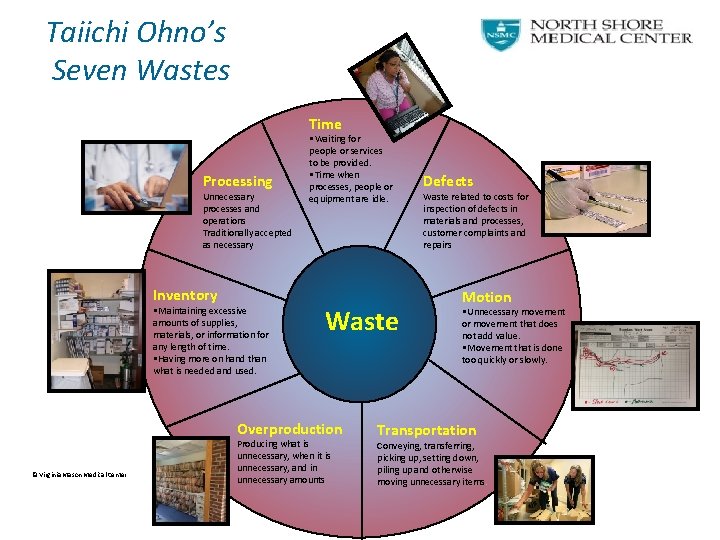
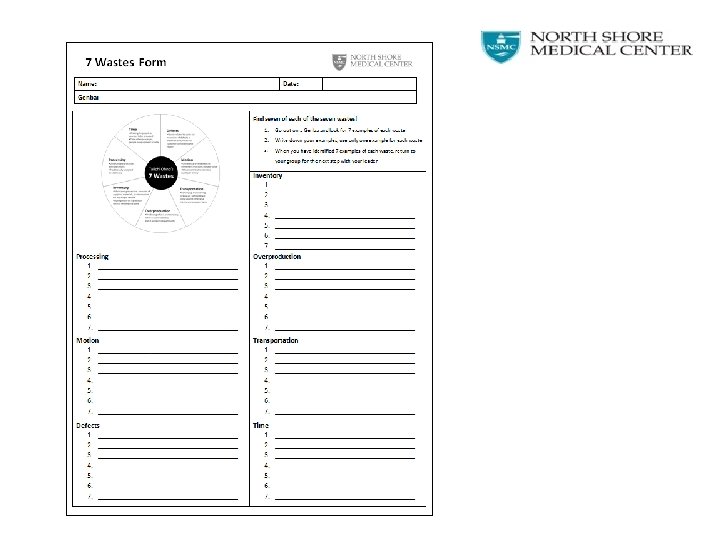
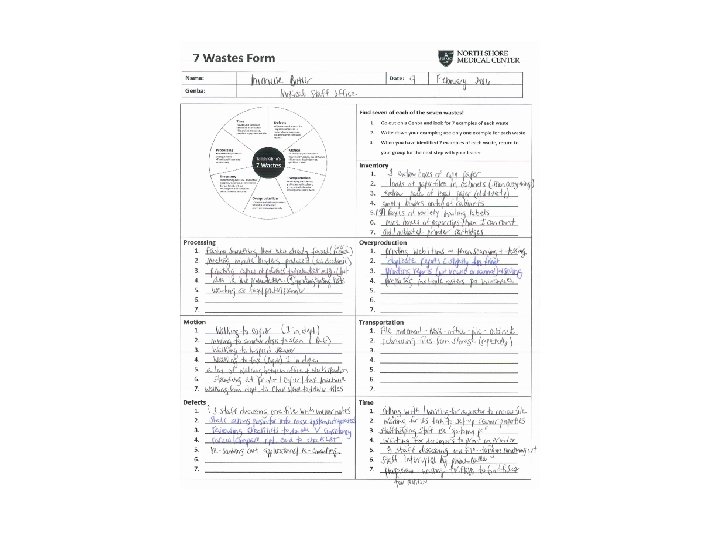
Taiichi Ohno’s Seven Wastes Time Processing Unnecessary processes and operations Traditionally accepted as necessary Inventory • Maintaining excessive amounts of supplies, materials, or information for any length of time. • Having more on hand than what is needed and used. • Waiting for people or services to be provided. • Time when processes, people or equipment are idle. Waste Overproduction © Virginia Mason Medical Center Producing what is unnecessary, when it is unnecessary, and in unnecessary amounts Defects Waste related to costs for inspection of defects in materials and processes, customer complaints and repairs Motion • Unnecessary movement or movement that does not add value. • Movement that is done too quickly or slowly. Transportation Conveying, transferring, picking up, setting down, piling up and otherwise moving unnecessary items.
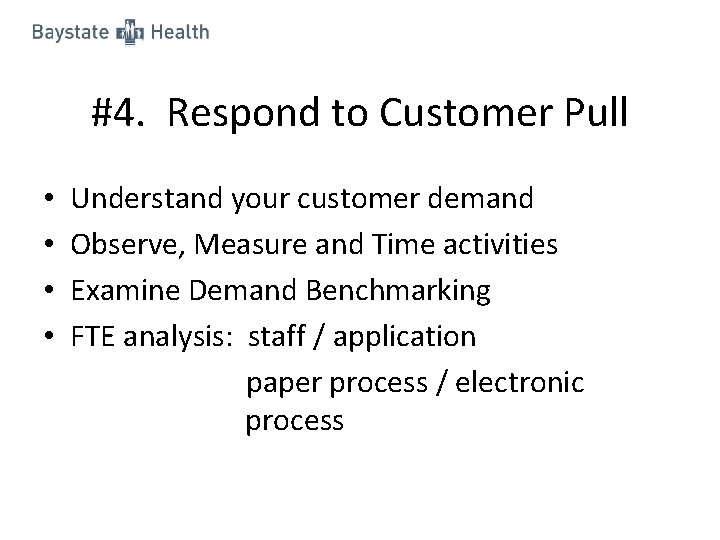
#4. Respond to Customer Pull • • Understand your customer demand Observe, Measure and Time activities Examine Demand Benchmarking FTE analysis: staff / application paper process / electronic process
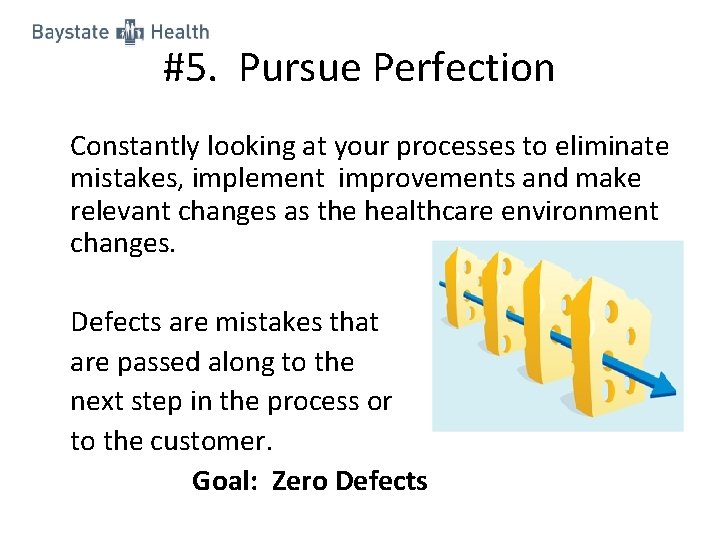
#5. Pursue Perfection Constantly looking at your processes to eliminate mistakes, implement improvements and make relevant changes as the healthcare environment changes. Defects are mistakes that are passed along to the next step in the process or to the customer. Goal: Zero Defects
4 Elements of Lean: 1. 2. 3. 4. Define Standard Work Create Visual Controls Implement Daily Accountability Process Maintain Leadership Discipline
#1. Define Standard Work Without standards, there can be no improvement” Taiichi Ohno Founder of the Toyota Production System
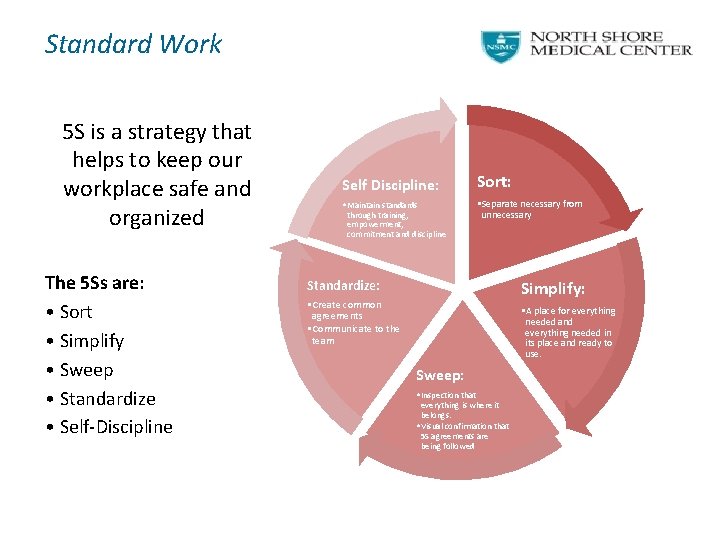
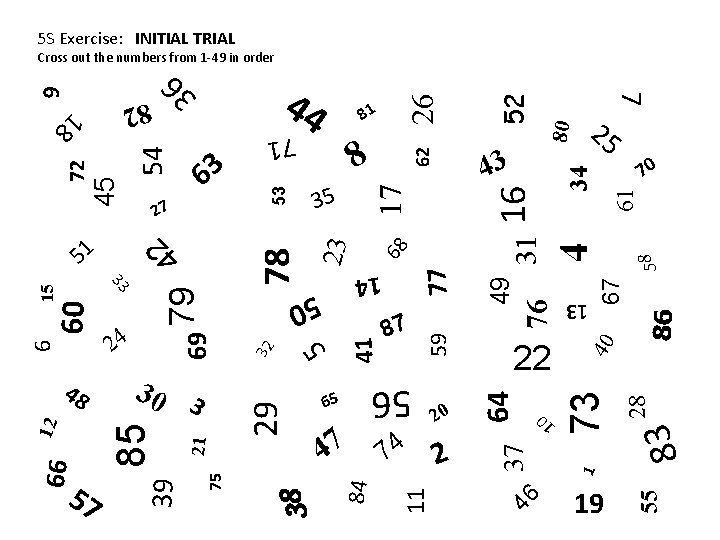
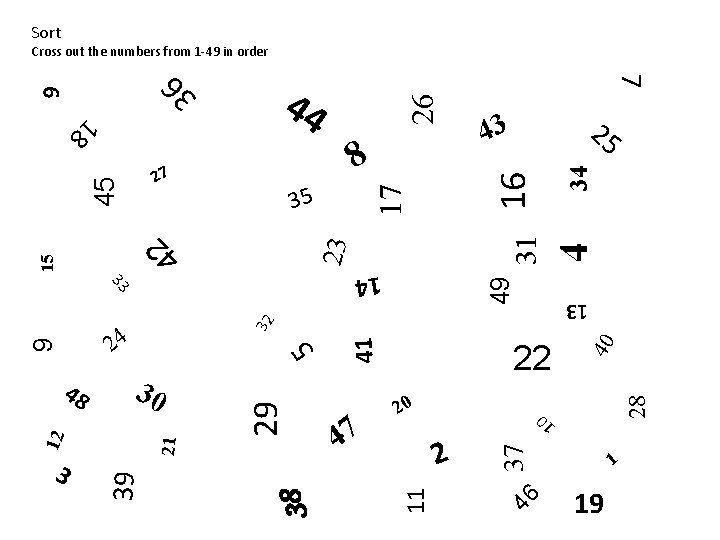
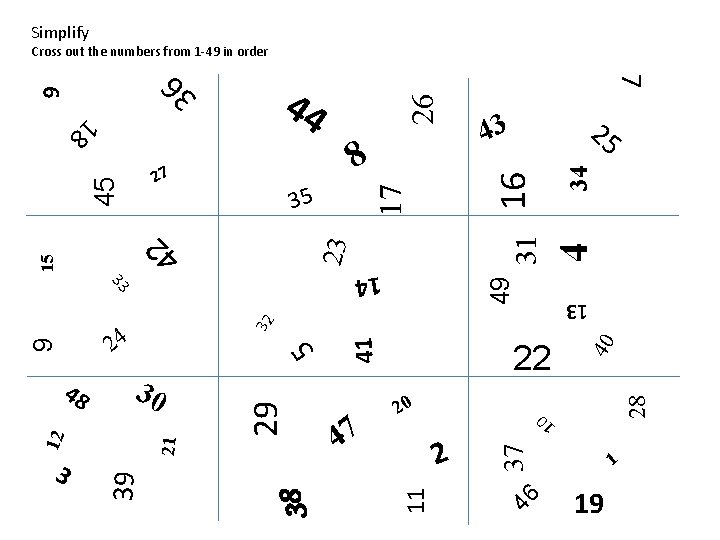
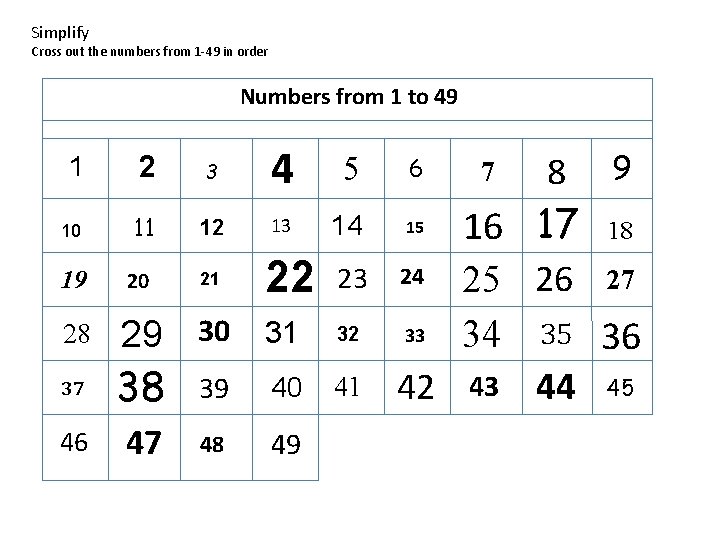
Standard Work 5 S is a strategy that helps to keep our workplace safe and organized The 5 Ss are: • Sort • Simplify • Sweep • Standardize • Self-Discipline Self Discipline: Sort: • Maintain standards • Separate necessary from unnecessary through training, empowerment, commitment and discipline Simplify: Standardize: • Create common agreements • Communicate to the team • A place for everything needed and everything needed in its place and ready to use. Sweep: • Inspection that everything is where it belongs. • Visual confirmation that 5 S agreements are being followed
Standard Work Exercises
5 S Exercise: INITIAL TRIAL 58 28 86 67 40 73 19 55 1 76 4 61 34 70 83 80 16 49 31 2 46 11 84 74 20 22 64 37 77 59 41 5 47 52 26 62 17 68 23 78 32 38 75 21 29 69 79 39 53 54 45 72 60 15 6 85 65 87 56 12 50 66 43 10 35 25 13 8 14 42 33 30 3 81 71 82 18 57 44 7 6 24 63 27 51 48 36 Cross out the numbers from 1 -49 in order
Sort 16 34 4 49 31 46 37 2 11 28 5 38 29 41 32 39 21 12 47 20 10 30 22 40 26 17 23 45 15 14 9 35 42 33 3 8 25 43 13 18 44 27 24 48 7 6 36 Cross out the numbers from 1 -49 in order 1 19
Simplify 16 34 4 49 31 46 37 2 11 28 5 38 29 41 32 39 21 12 47 20 10 30 22 40 26 17 23 45 15 14 9 35 42 33 3 8 25 43 13 18 44 27 24 48 7 6 36 Cross out the numbers from 1 -49 in order 1 19
Simplify Cross out the numbers from 1 -49 in order Numbers from 1 to 49 1 2 3 4 5 6 10 11 12 13 14 15 16 17 18 19 20 21 28 7 8 9 22 23 24 25 26 27 29 30 31 32 33 34 35 37 38 36 39 40 41 42 43 44 45 46 47 48 49
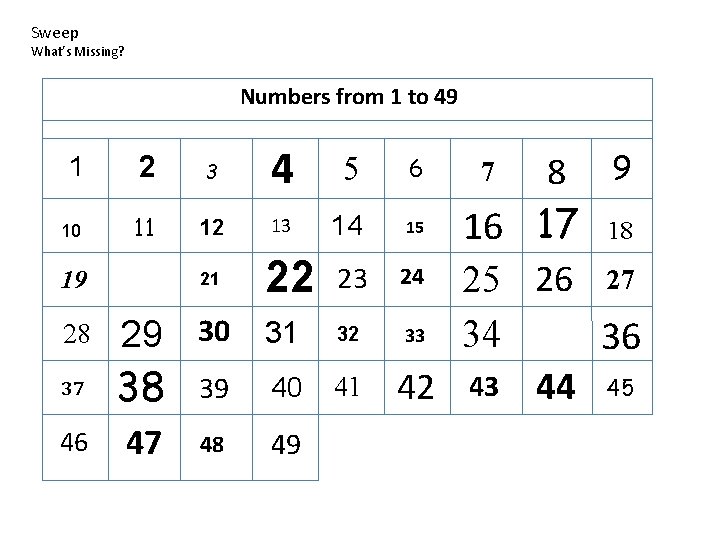
Sweep What’s Missing? Numbers from 1 to 49 1 2 3 4 5 6 10 11 12 13 14 15 16 17 18 19 21 7 8 9 22 23 24 25 26 27 36 28 29 30 31 32 33 34 37 38 39 40 41 42 43 46 47 48 49 44 45
#2. Create Visual Controls • Visual controls are methods, devices, or mechanisms to visually manage operations. How do visual controls work? Everyone: • Accountability to the rules • Knows what to do because of standards • Knows when and where because of visual controls
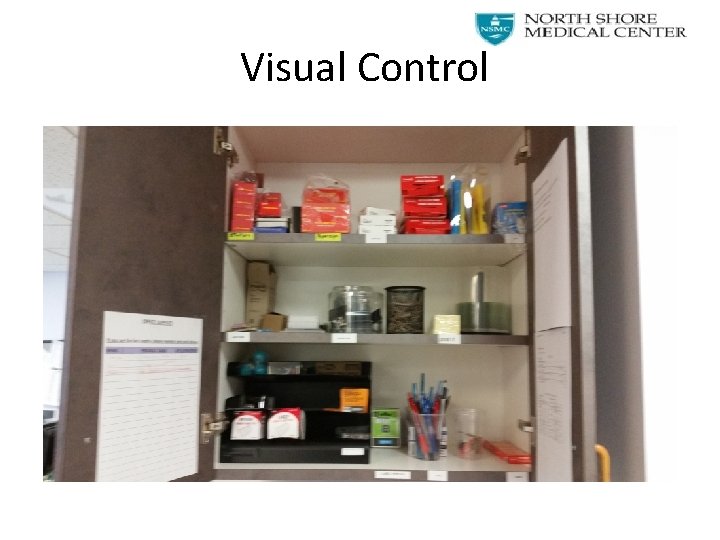
Visual Control
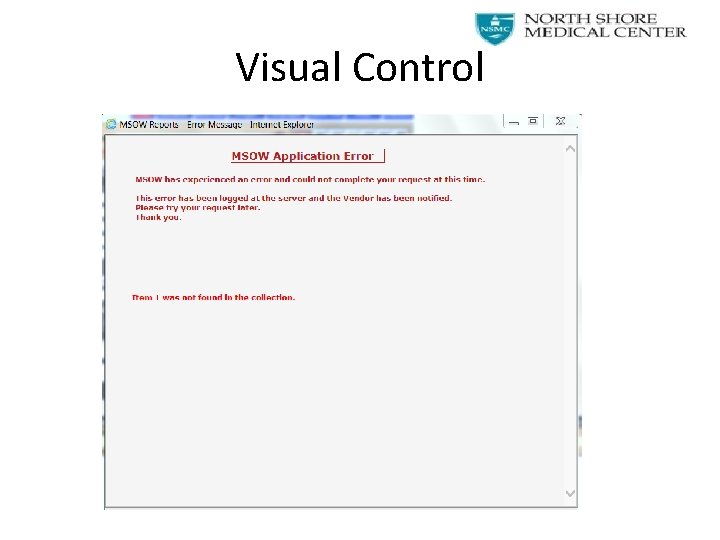
Visual Control
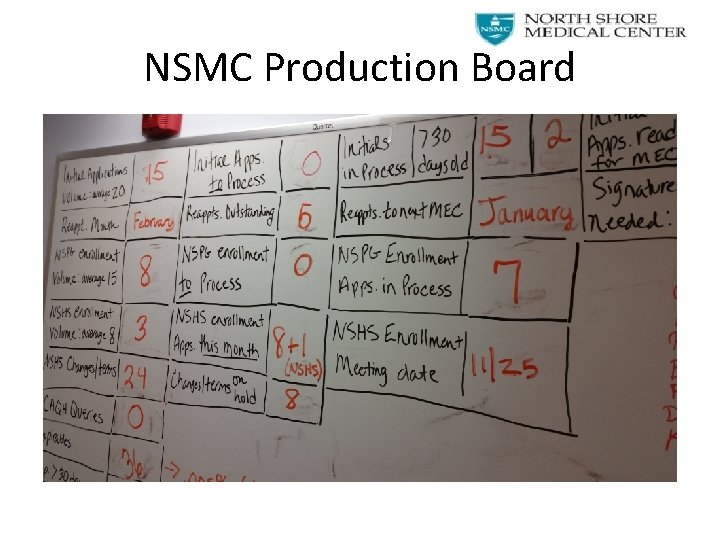
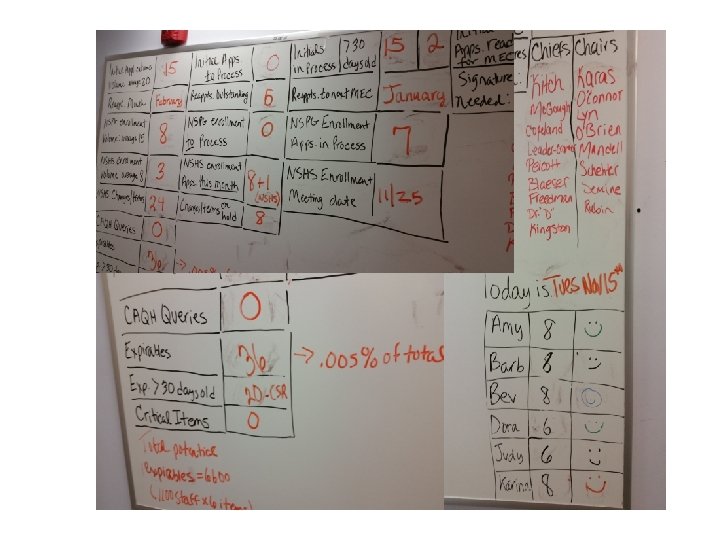
Daily Accountability Baystate Health, Inc. “Huddle” NSMC “Production Board”
NSMC Production Board
Leadership discipline It is the leader’s responsibility to sustain a Lean environment. The leader is the force that can motivate and sustain Lean management in your department. Defining expectations and holding people accountable to them is key to a successful Lean implementation.
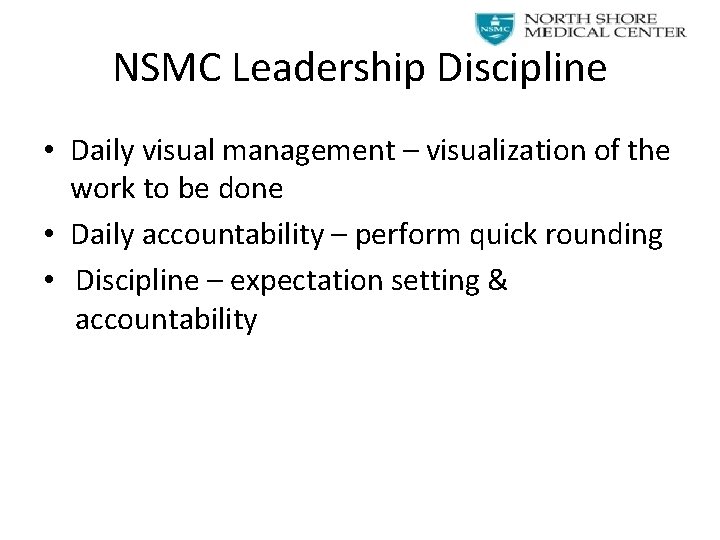
NSMC Leadership Discipline • Daily visual management – visualization of the work to be done • Daily accountability – perform quick rounding • Discipline – expectation setting & accountability
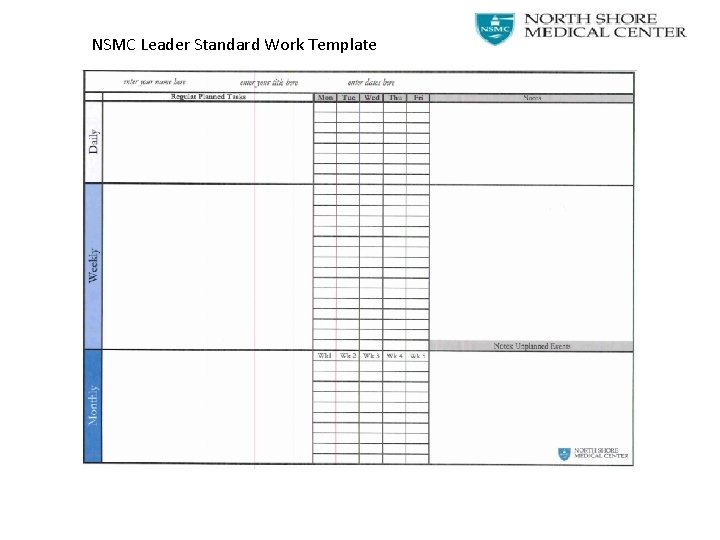
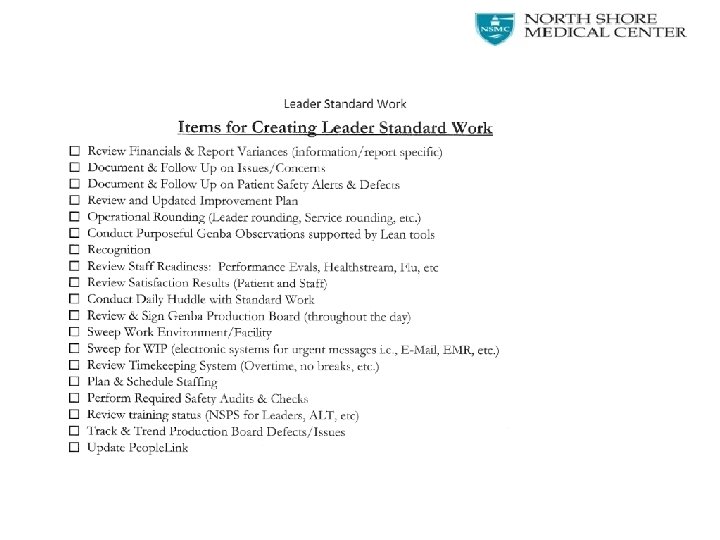
NSMC Leader Standard Work Template
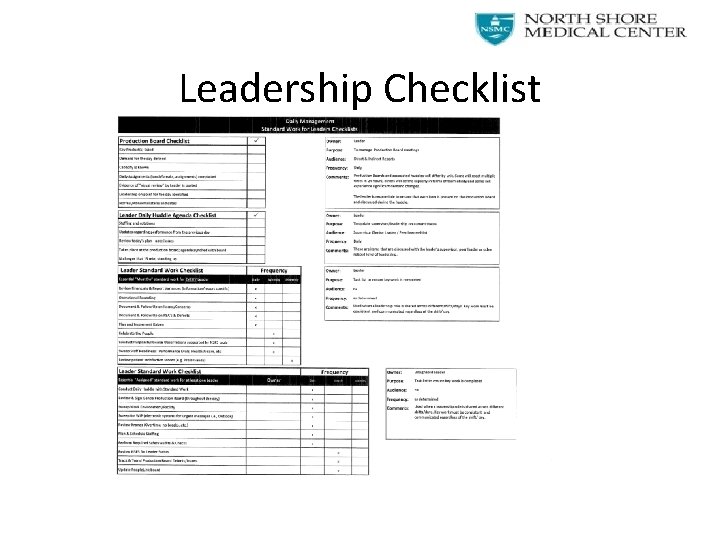
Leadership Checklist
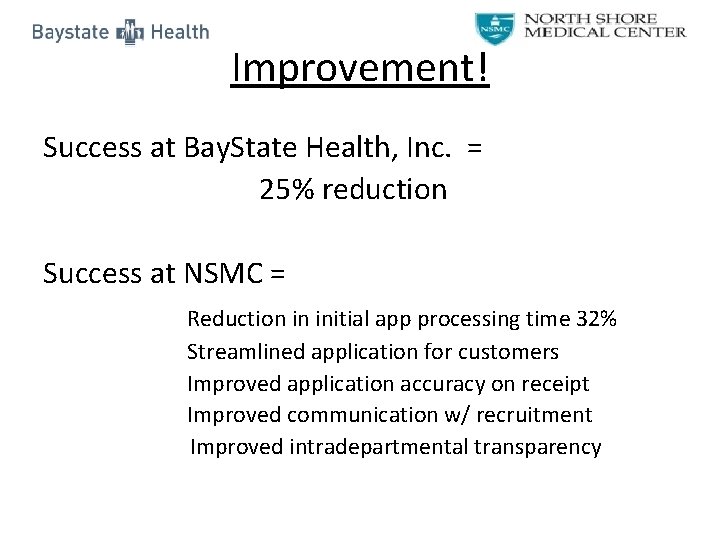
Improvement! Success at Bay. State Health, Inc. = 25% reduction Success at NSMC = Reduction in initial app processing time 32% Streamlined application for customers Improved application accuracy on receipt Improved communication w/ recruitment Improved intradepartmental transparency