
Making social protection central in the fight against
- Slides: 50
Making social protection central in the fight against poverty, inequality and social exclusion Trade Union Training on Social Protection ITC/ILO Turin ACI Creating and Extending Social Protection Floors
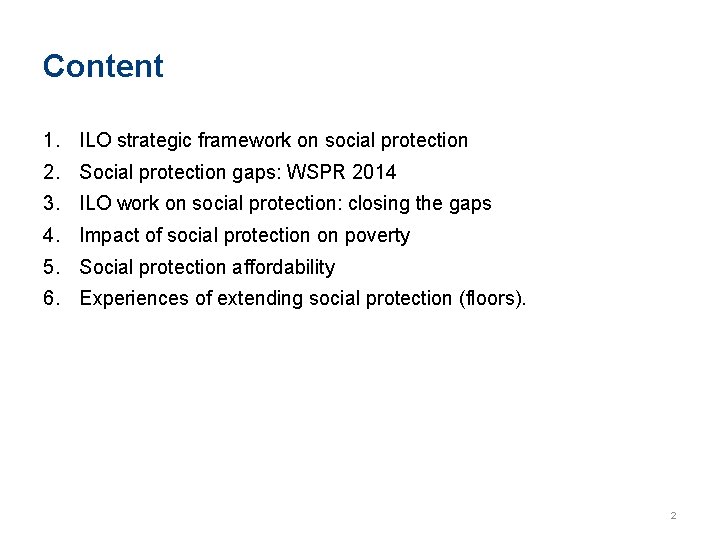
Content 1. ILO strategic framework on social protection 2. Social protection gaps: WSPR 2014 3. ILO work on social protection: closing the gaps 4. Impact of social protection on poverty 5. Social protection affordability 6. Experiences of extending social protection (floors). 2
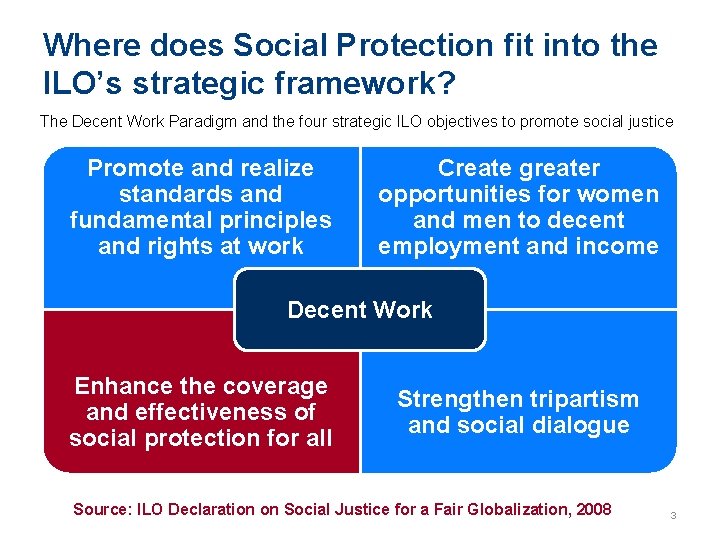
Where does Social Protection fit into the ILO’s strategic framework? The Decent Work Paradigm and the four strategic ILO objectives to promote social justice Promote and realize standards and fundamental principles and rights at work Create greater opportunities for women and men to decent employment and income Decent Work Enhance the coverage and effectiveness of social protection for all Strengthen tripartism and social dialogue Source: ILO Declaration on Social Justice for a Fair Globalization, 2008 3
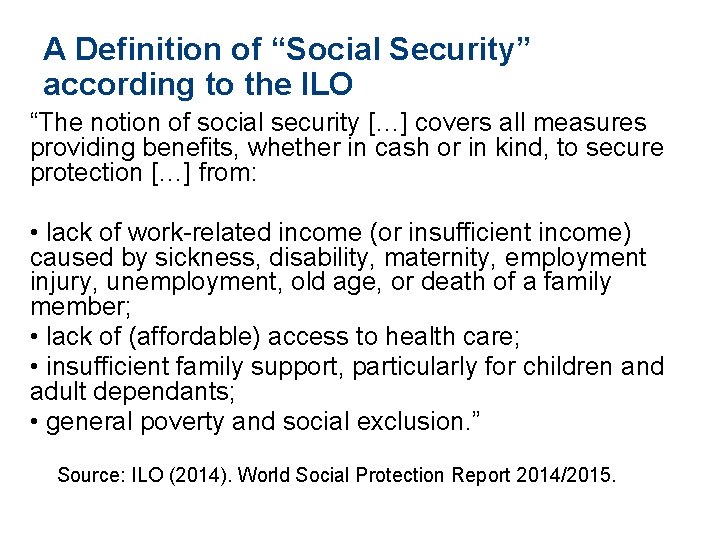
A Definition of “Social Security” according to the ILO “The notion of social security […] covers all measures providing benefits, whether in cash or in kind, to secure protection […] from: • lack of work-related income (or insufficient income) caused by sickness, disability, maternity, employment injury, unemployment, old age, or death of a family member; • lack of (affordable) access to health care; • insufficient family support, particularly for children and adult dependants; • general poverty and social exclusion. ” Source: ILO (2014). World Social Protection Report 2014/2015.
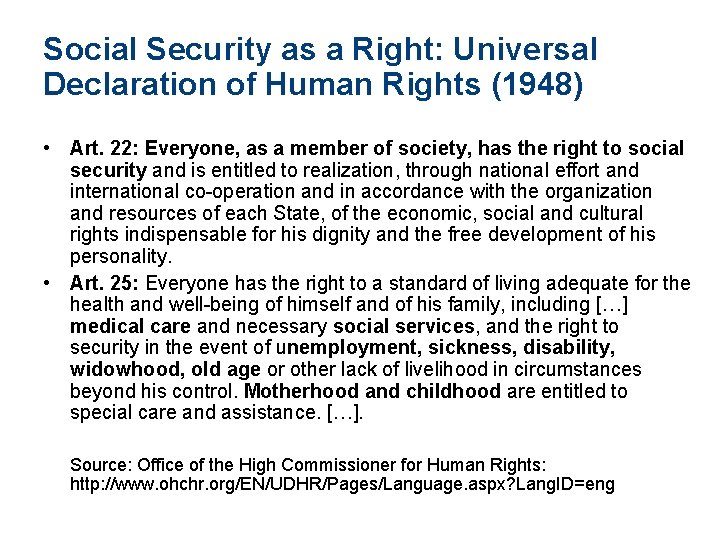
Social Security as a Right: Universal Declaration of Human Rights (1948) • Art. 22: Everyone, as a member of society, has the right to social security and is entitled to realization, through national effort and international co-operation and in accordance with the organization and resources of each State, of the economic, social and cultural rights indispensable for his dignity and the free development of his personality. • Art. 25: Everyone has the right to a standard of living adequate for the health and well-being of himself and of his family, including […] medical care and necessary social services, and the right to security in the event of unemployment, sickness, disability, widowhood, old age or other lack of livelihood in circumstances beyond his control. Motherhood and childhood are entitled to special care and assistance. […]. Source: Office of the High Commissioner for Human Rights: http: //www. ohchr. org/EN/UDHR/Pages/Language. aspx? Lang. ID=eng
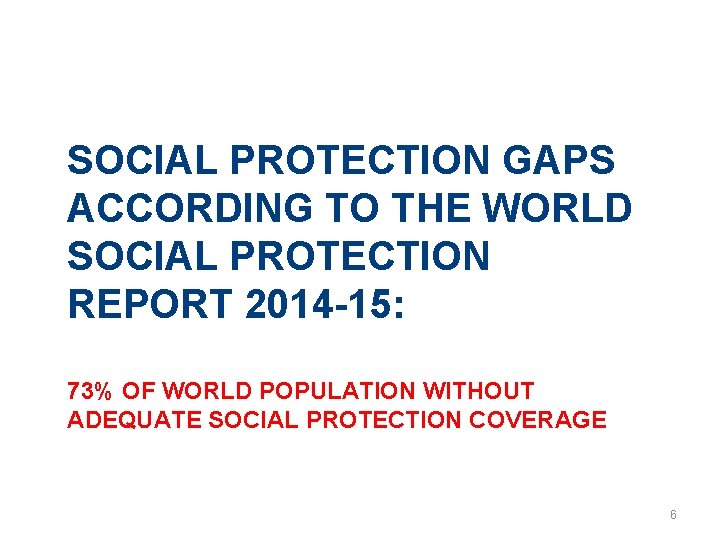
SOCIAL PROTECTION GAPS ACCORDING TO THE WORLD SOCIAL PROTECTION REPORT 2014 -15: 73% OF WORLD POPULATION WITHOUT ADEQUATE SOCIAL PROTECTION COVERAGE 6
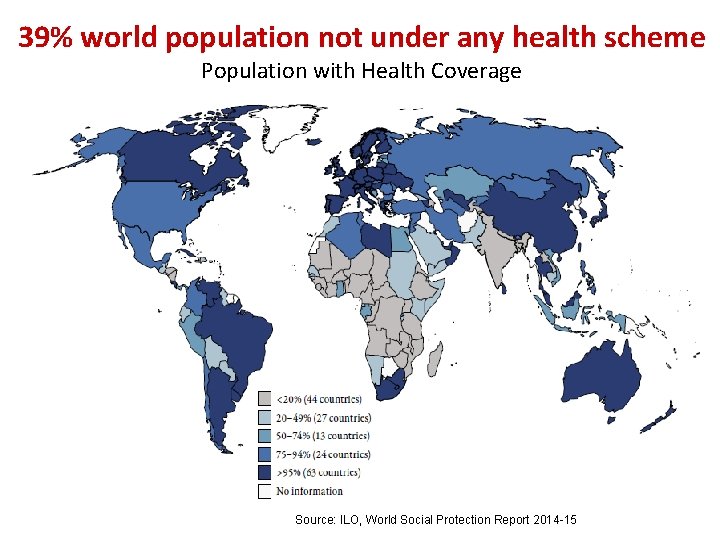
39% world population not under any health scheme Population with Health Coverage Source: ILO, World Social Protection Report 2014 -15
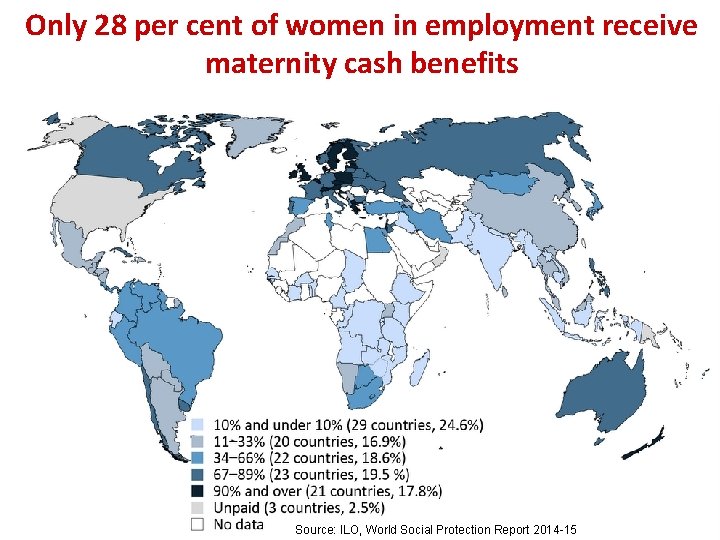
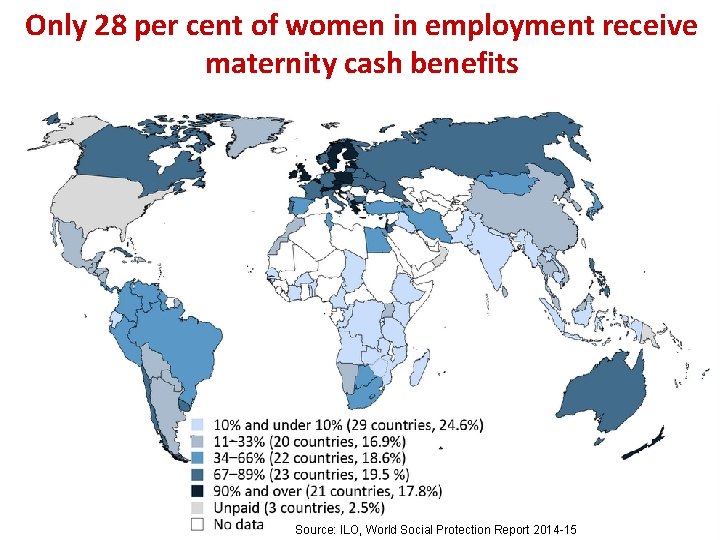
Only 28 per cent of women in employment receive maternity cash benefits Source: ILO, World Social Protection Report 2014 -15
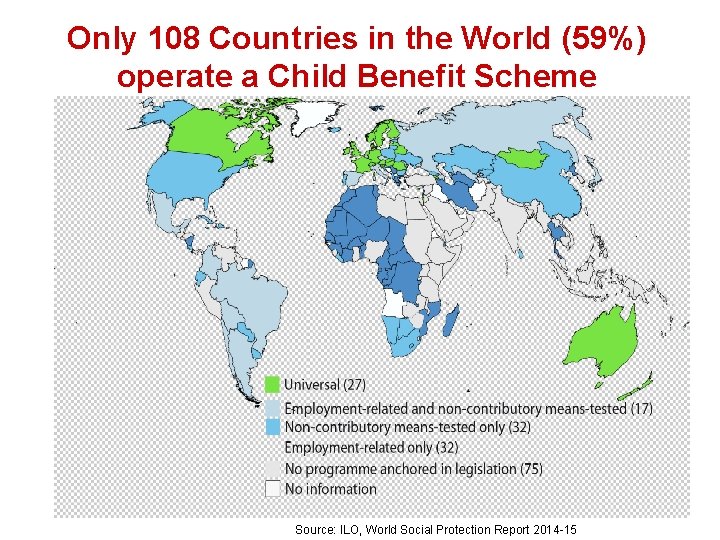
Only 108 Countries in the World (59%) operate a Child Benefit Scheme Source: ILO, World Social Protection Report 2014 -15
Only 28 per cent of women in employment receive maternity cash benefits Source: ILO, World Social Protection Report 2014 -15
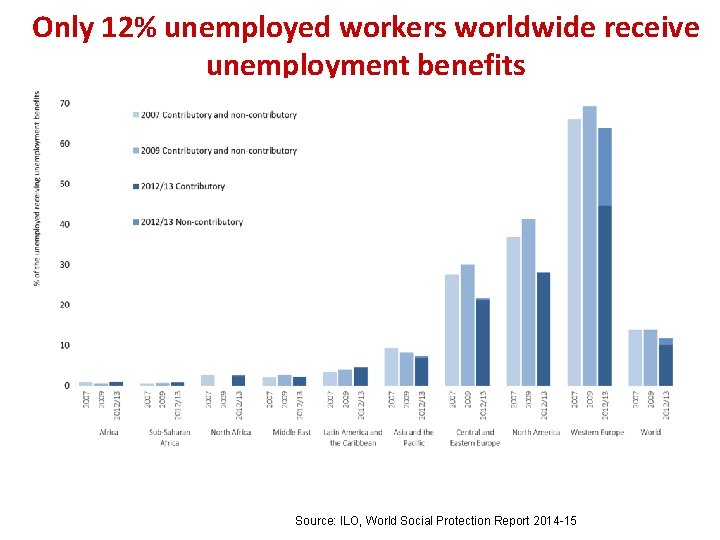
Only 12% unemployed workers worldwide receive unemployment benefits Source: ILO, World Social Protection Report 2014 -15
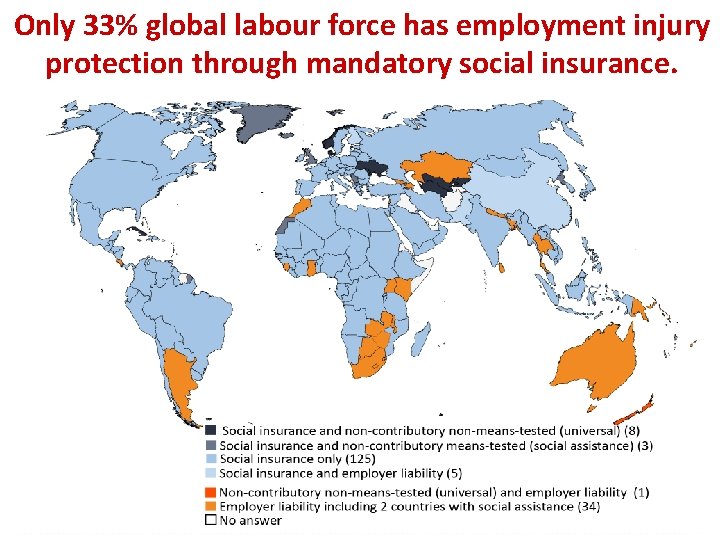
Only 33% global labour force has employment injury protection through mandatory social insurance.
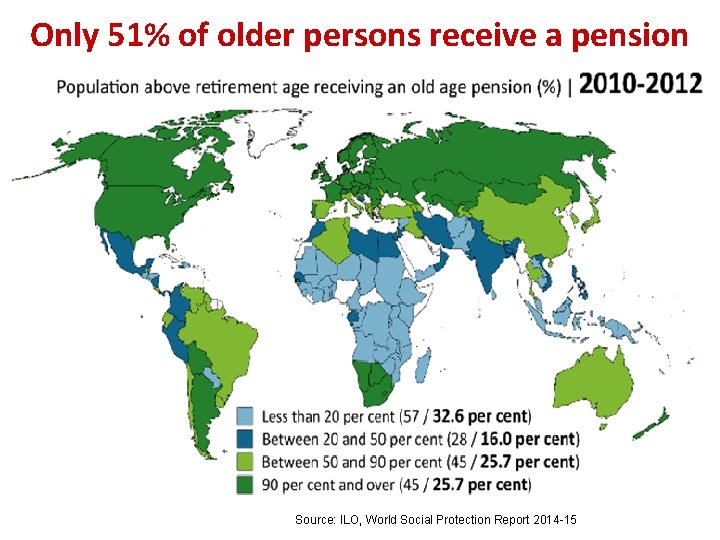
Only 51% of older persons receive a pension Source: ILO, World Social Protection Report 2014 -15
ILO WORK ON SOCIAL PROTECTION AND THE SOCIAL PROTECTION FLOORS: HOW TO COPE WITH GAPS? 14
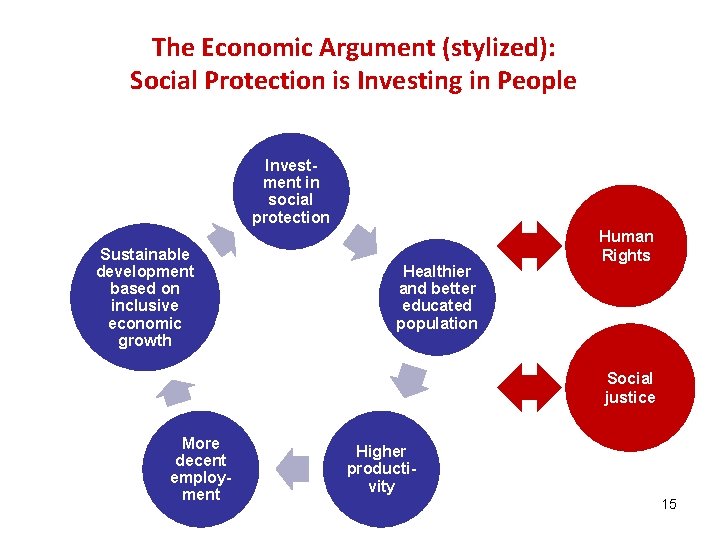
The Economic Argument (stylized): Social Protection is Investing in People Investment in social protection Sustainable development based on inclusive economic growth Healthier and better educated population Human Rights Social justice More decent employment Higher productivity 15
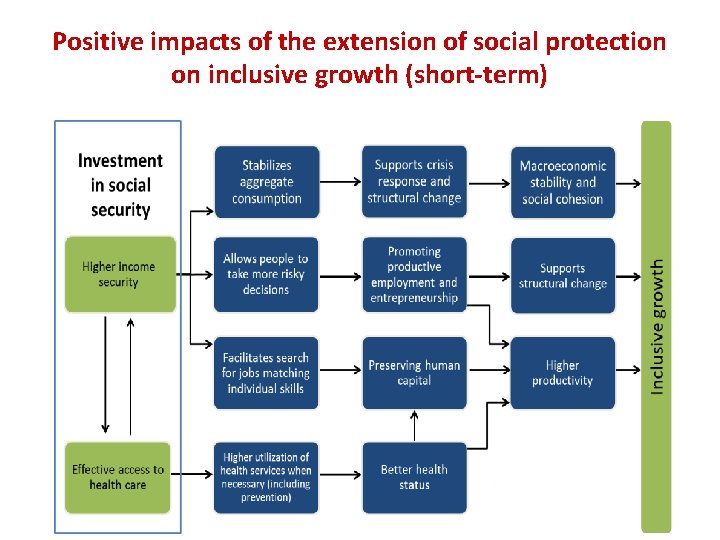
Positive impacts of the extension of social protection on inclusive growth (short-term)
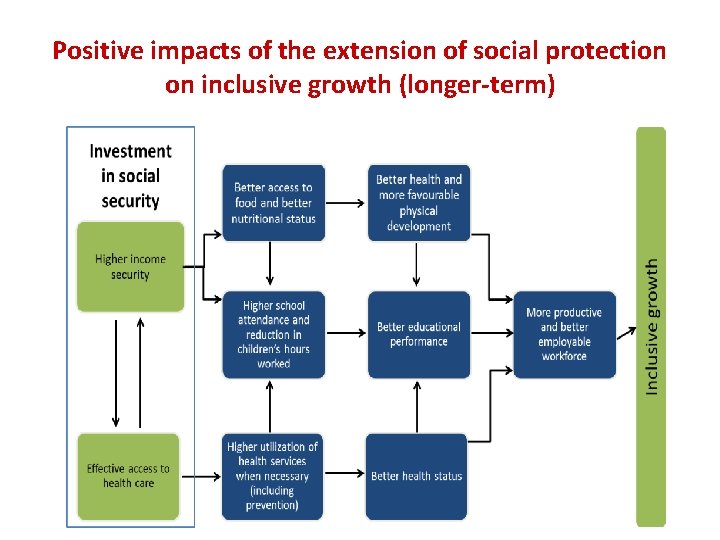
Positive impacts of the extension of social protection on inclusive growth (longer-term)
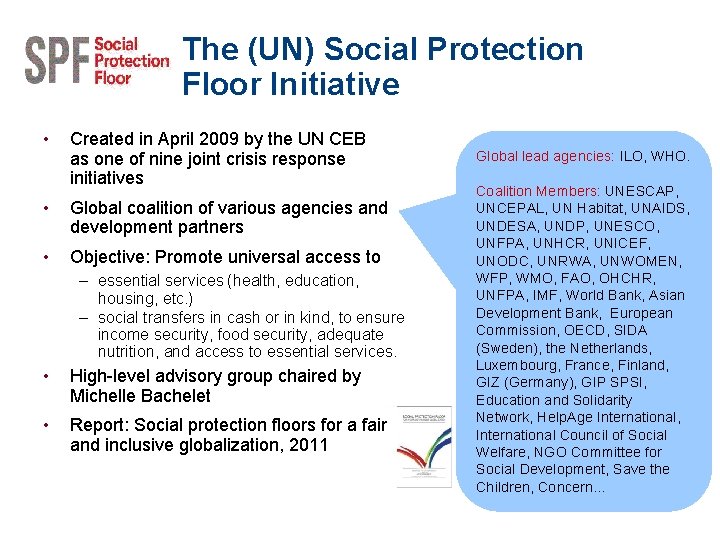
The (UN) Social Protection Floor Initiative • Created in April 2009 by the UN CEB as one of nine joint crisis response initiatives • Global coalition of various agencies and development partners • Objective: Promote universal access to – essential services (health, education, housing, etc. ) – social transfers in cash or in kind, to ensure income security, food security, adequate nutrition, and access to essential services. • High-level advisory group chaired by Michelle Bachelet • Report: Social protection floors for a fair and inclusive globalization, 2011 Global lead agencies: ILO, WHO. Coalition Members: UNESCAP, UNCEPAL, UN Habitat, UNAIDS, UNDESA, UNDP, UNESCO, UNFPA, UNHCR, UNICEF, UNODC, UNRWA, UNWOMEN, WFP, WMO, FAO, OHCHR, UNFPA, IMF, World Bank, Asian Development Bank, European Commission, OECD, SIDA (Sweden), the Netherlands, Luxembourg, France, Finland, GIZ (Germany), GIP SPSI, Education and Solidarity Network, Help. Age International, International Council of Social Welfare, NGO Committee for Social Development, Save the Children, Concern. . .
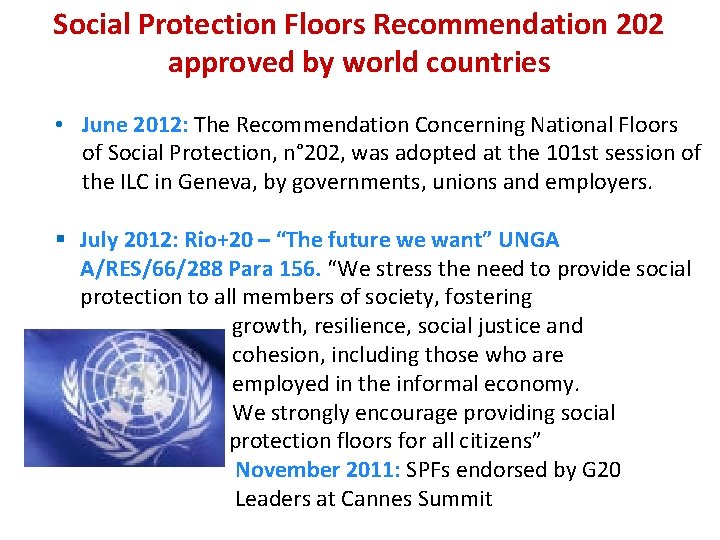
Social Protection Floors Recommendation 202 approved by world countries • June 2012: The Recommendation Concerning National Floors of Social Protection, n° 202, was adopted at the 101 st session of the ILC in Geneva, by governments, unions and employers. § July 2012: Rio+20 – “The future we want” UNGA A/RES/66/288 Para 156. “We stress the need to provide social protection to all members of society, fostering growth, resilience, social justice and cohesion, including those who are employed in the informal economy. We strongly encourage providing social protection floors for all citizens” November 2011: SPFs endorsed by G 20 Leaders at Cannes Summit
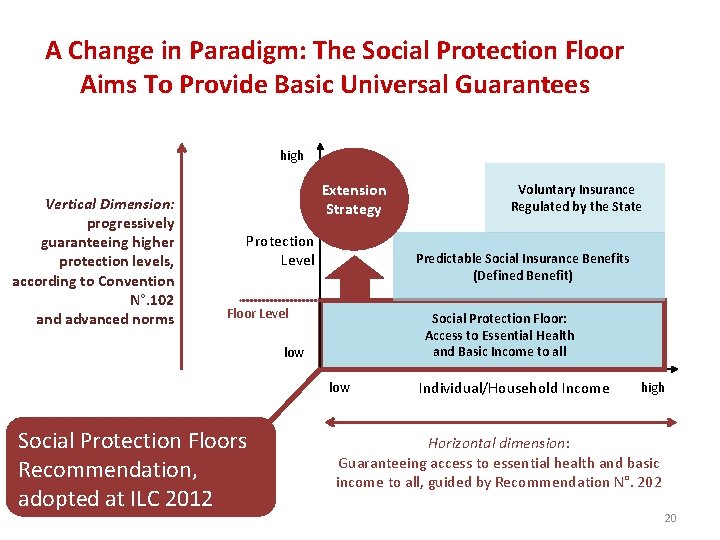
A Change in Paradigm: The Social Protection Floor Aims To Provide Basic Universal Guarantees high Vertical Dimension: progressively guaranteeing higher protection levels, according to Convention N°. 102 and advanced norms Extension Strategy Protection Level Predictable Social Insurance Benefits (Defined Benefit) Floor Level Social Protection Floor: Access to Essential Health and Basic Income to all low Social Protection Floors Recommendation, adopted at ILC 2012 Voluntary Insurance Regulated by the State Individual/Household Income high Horizontal dimension: Guaranteeing access to essential health and basic income to all, guided by Recommendation N°. 202 20
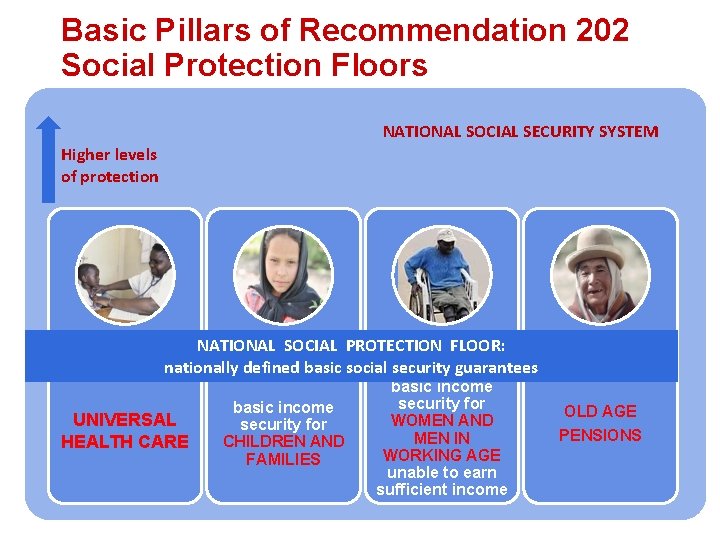
Basic Pillars of Recommendation 202 Social Protection Floors NATIONAL SOCIAL SECURITY SYSTEM Higher levels of protection NATIONAL SOCIAL PROTECTION FLOOR: nationally defined basic social security guarantees UNIVERSAL HEALTH CARE basic income security for CHILDREN AND FAMILIES basic income security for WOMEN AND MEN IN WORKING AGE unable to earn sufficient income OLD AGE PENSIONS
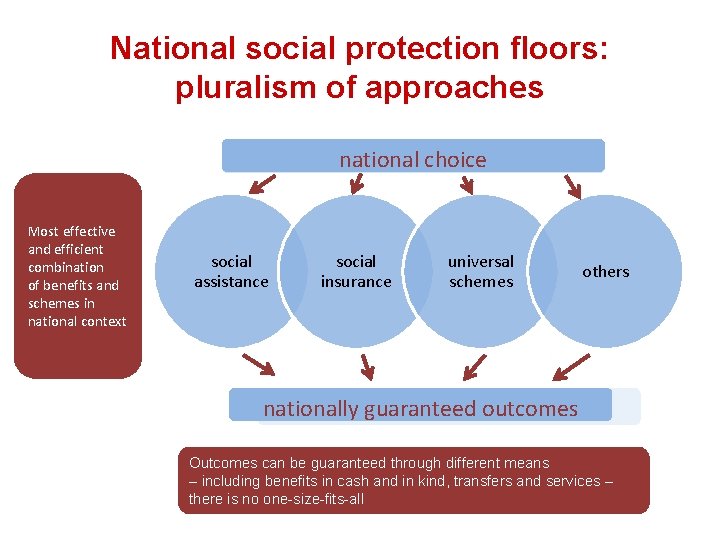
National social protection floors: pluralism of approaches national choice Most effective and efficient combination of benefits and schemes in national context social assistance social insurance universal schemes others nationally guaranteed outcomes Outcomes can be guaranteed through different means – including benefits in cash and in kind, transfers and services – there is no one-size-fits-all
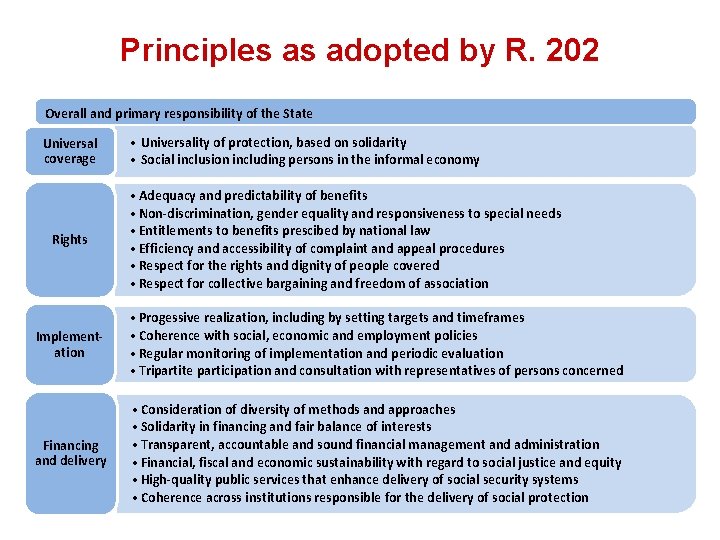
Principles as adopted by R. 202 Overall and primary responsibility of the State Universal coverage Rights • Universality of protection, based on solidarity • Social inclusion including persons in the informal economy • Adequacy and predictability of benefits • Non-discrimination, gender equality and responsiveness to special needs • Entitlements to benefits prescibed by national law • Efficiency and accessibility of complaint and appeal procedures • Respect for the rights and dignity of people covered • Respect for collective bargaining and freedom of association Implementation • Progessive realization, including by setting targets and timeframes • Coherence with social, economic and employment policies • Regular monitoring of implementation and periodic evaluation • Tripartite participation and consultation with representatives of persons concerned Financing and delivery • Consideration of diversity of methods and approaches • Solidarity in financing and fair balance of interests • Transparent, accountable and sound financial management and administration • Financial, fiscal and economic sustainability with regard to social justice and equity • High-quality public services that enhance delivery of social security systems • Coherence across institutions responsible for the delivery of social protection
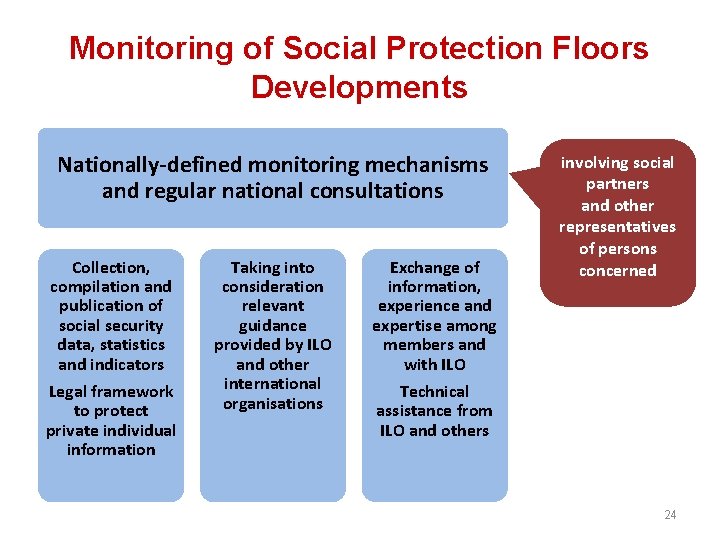
Monitoring of Social Protection Floors Developments Nationally-defined monitoring mechanisms and regular national consultations Collection, compilation and publication of social security data, statistics and indicators Legal framework to protect private individual information Taking into consideration relevant guidance provided by ILO and other international organisations Exchange of information, experience and expertise among members and with ILO Technical assistance from ILO and others involving social partners and other representatives of persons concerned 24
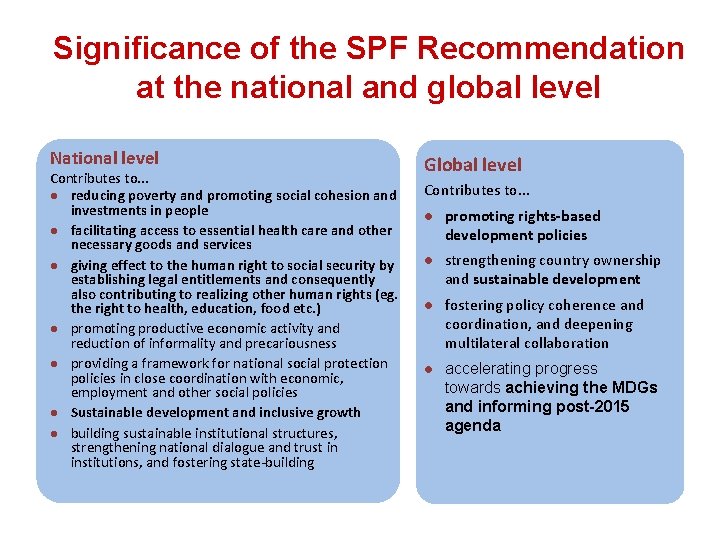
Significance of the SPF Recommendation at the national and global level National level Contributes to. . . ● reducing poverty and promoting social cohesion and investments in people ● facilitating access to essential health care and other necessary goods and services ● giving effect to the human right to social security by establishing legal entitlements and consequently also contributing to realizing other human rights (eg. the right to health, education, food etc. ) ● promoting productive economic activity and reduction of informality and precariousness ● providing a framework for national social protection policies in close coordination with economic, employment and other social policies ● Sustainable development and inclusive growth ● building sustainable institutional structures, strengthening national dialogue and trust in institutions, and fostering state-building Global level Contributes to. . . ● promoting rights-based development policies ● strengthening country ownership and sustainable development ● fostering policy coherence and coordination, and deepening multilateral collaboration ● accelerating progress towards achieving the MDGs and informing post-2015 agenda
EXPERIENCES OF EXTENDING SOCIAL PROTECTION (FLOORS) ACI Creating and Extending Social Protection Floors 26
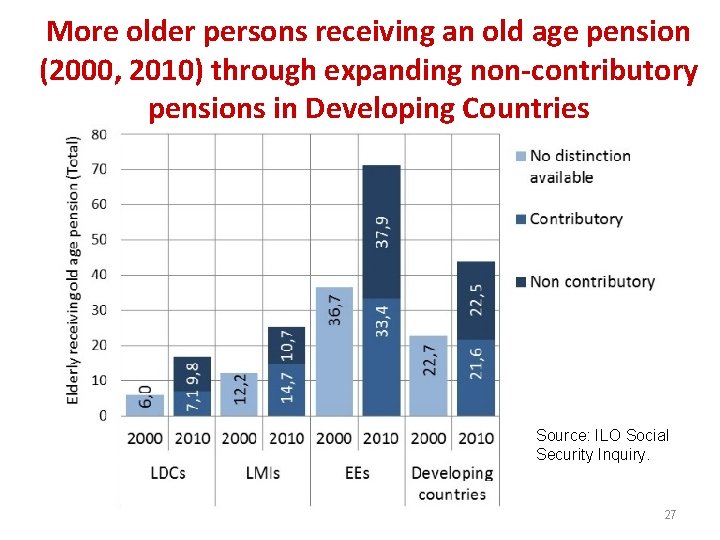
More older persons receiving an old age pension (2000, 2010) through expanding non-contributory pensions in Developing Countries Source: ILO Social Security Inquiry. 27
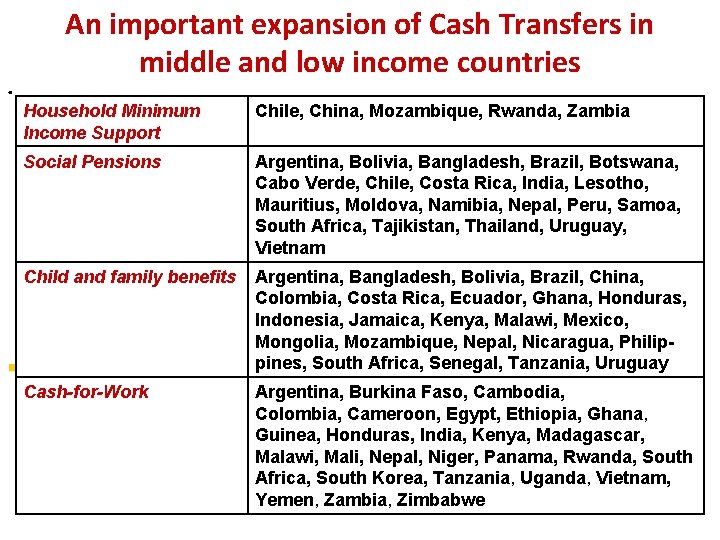
An important expansion of Cash Transfers in middle and low income countries . Household Minimum Income Support Chile, China, Mozambique, Rwanda, Zambia Social Pensions Argentina, Bolivia, Bangladesh, Brazil, Botswana, Cabo Verde, Chile, Costa Rica, India, Lesotho, Mauritius, Moldova, Namibia, Nepal, Peru, Samoa, South Africa, Tajikistan, Thailand, Uruguay, Vietnam Child and family benefits Argentina, Bangladesh, Bolivia, Brazil, China, Colombia, Costa Rica, Ecuador, Ghana, Honduras, Indonesia, Jamaica, Kenya, Malawi, Mexico, How older poor spend Mongolia, Mozambique, Nepal, Nicaragua, Philippension cash pines, South Africa, Senegal, Tanzania, Uruguay transfer § Cash-for-Work Argentina, Burkina Faso, Cambodia, Colombia, Cameroon, Egypt, Ethiopia, Ghana, Guinea, Honduras, India, Kenya, Madagascar, Malawi, Mali, Nepal, Niger, Panama, Rwanda, South Africa, South Korea, Tanzania, Uganda, Vietnam, Yemen, Zambia, Zimbabwe
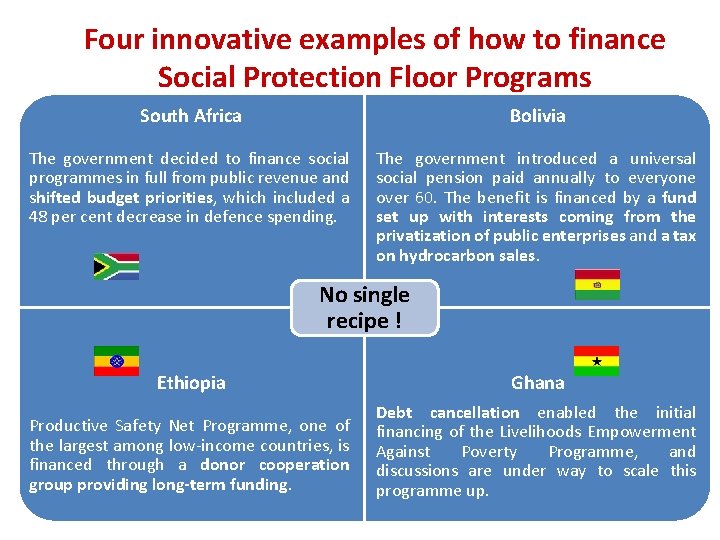
Four innovative examples of how to finance Social Protection Floor Programs South Africa Bolivia The government decided to finance social programmes in full from public revenue and shifted budget priorities, which included a 48 per cent decrease in defence spending. The government introduced a universal social pension paid annually to everyone over 60. The benefit is financed by a fund set up with interests coming from the privatization of public enterprises and a tax on hydrocarbon sales. No single recipe ! Ethiopia Ghana Productive Safety Net Programme, one of the largest among low-income countries, is financed through a donor cooperation group providing long-term funding. Debt cancellation enabled the initial financing of the Livelihoods Empowerment Against Poverty Programme, and discussions are under way to scale this programme up.
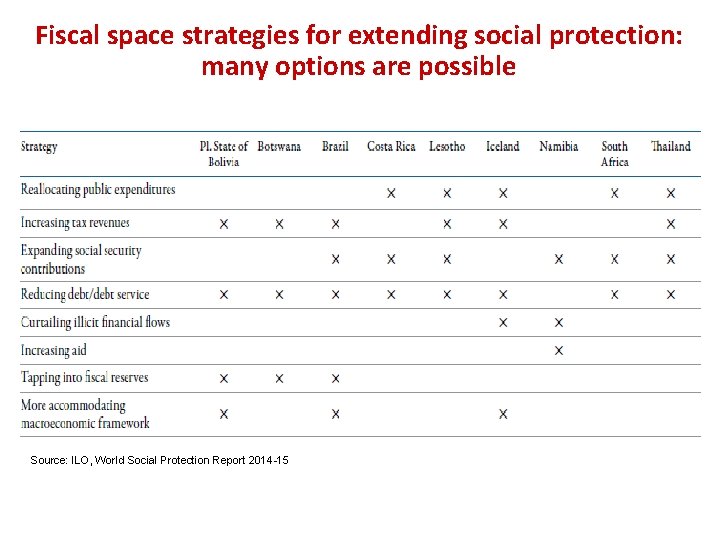
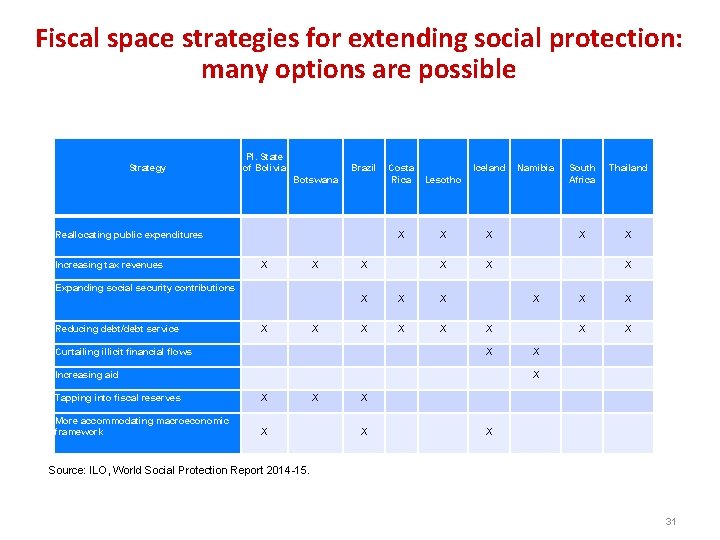
Fiscal space strategies for extending social protection: many options are possible Source: ILO, World Social Protection Report 2014 -15
Fiscal space strategies for extending social protection: many options are possible Strategy Pl. State of Bolivia Brazil Botswana X X Expanding social security contributions Iceland Reallocating public expenditures Increasing tax revenues Costa Rica Lesotho Namibia South Africa Thailand X X X X X X Reducing debt/debt service X X X X Curtailing illicit financial flows X X Increasing aid X Tapping into fiscal reserves X X X More accommodating macroeconomic framework X X X Source: ILO, World Social Protection Report 2014 -15. 31
SOCIAL PROTECTION AND POVERTY: SOME EVIDENCE ACI Creating and Extending Social Protection Floors 32
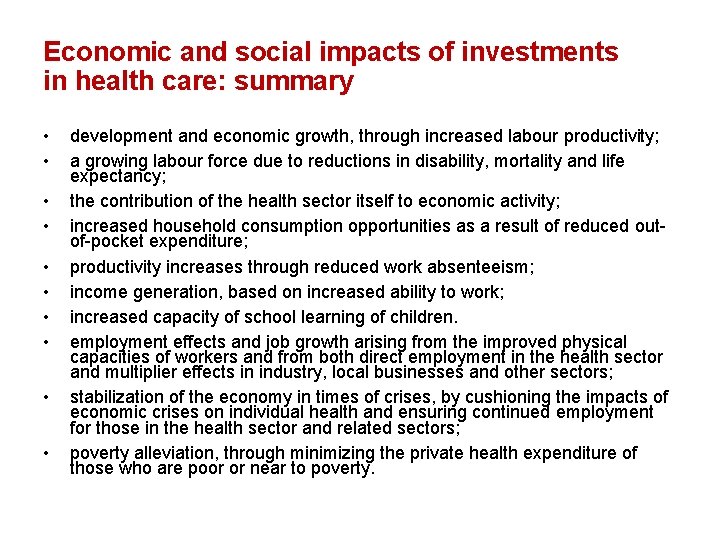
Economic and social impacts of investments in health care: summary • • • development and economic growth, through increased labour productivity; a growing labour force due to reductions in disability, mortality and life expectancy; the contribution of the health sector itself to economic activity; increased household consumption opportunities as a result of reduced outof-pocket expenditure; productivity increases through reduced work absenteeism; income generation, based on increased ability to work; increased capacity of school learning of children. employment effects and job growth arising from the improved physical capacities of workers and from both direct employment in the health sector and multiplier effects in industry, local businesses and other sectors; stabilization of the economy in times of crises, by cushioning the impacts of economic crises on individual health and ensuring continued employment for those in the health sector and related sectors; poverty alleviation, through minimizing the private health expenditure of those who are poor or near to poverty.
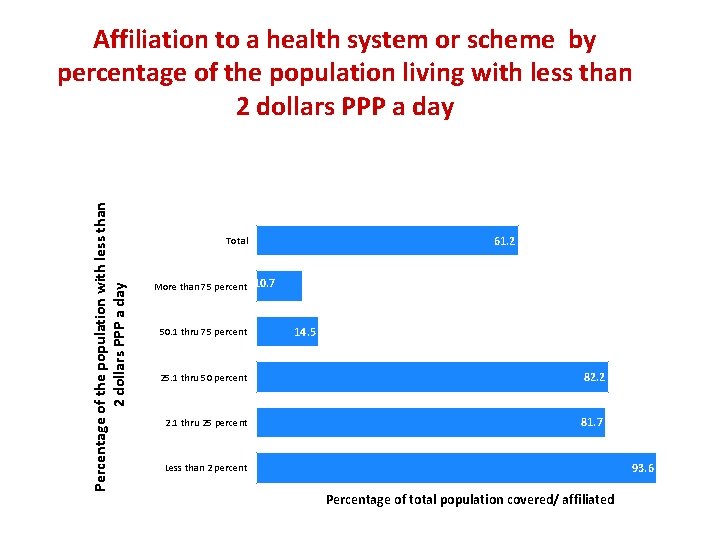
Relationship between coverage and poverty at Affiliation to a health system or scheme by global level Percentage of the population with less than 2 dollars PPP a day percentage of the population living with less than 2 dollars PPP a day 61. 2 Total More than 75 percent 10. 7 50. 1 thru 75 percent 14. 5 25. 1 thru 50 percent 82. 2 2. 1 thru 25 percent 81. 7 93. 6 Less than 2 percent Percentage of total population covered/ affiliated
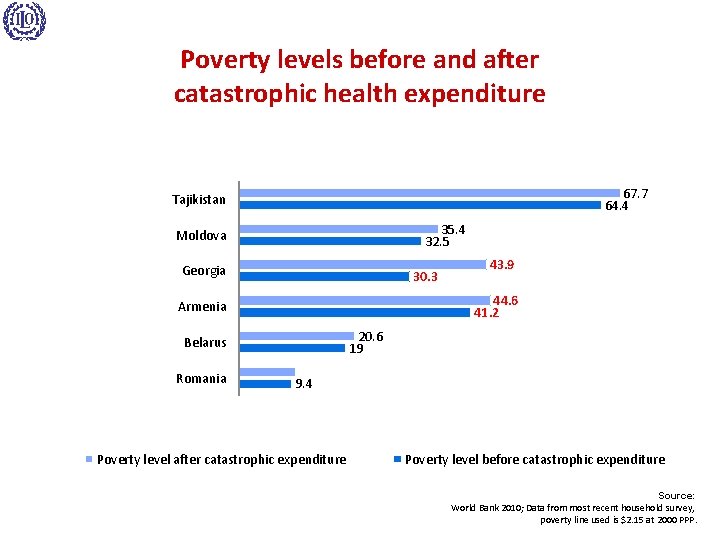
Poverty levels before and after catastrophic health expenditure 67. 7 64. 4 Tajikistan 35. 4 32. 5 Moldova Georgia 30. 3 44. 6 41. 2 Armenia 20. 6 19 Belarus Romania 43. 9 10. 1 9. 4 Poverty level after catastrophic expenditure Poverty level before catastrophic expenditure Source: World Bank 2010; Data from most recent household survey, poverty line used is $2. 15 at 2000 PPP.
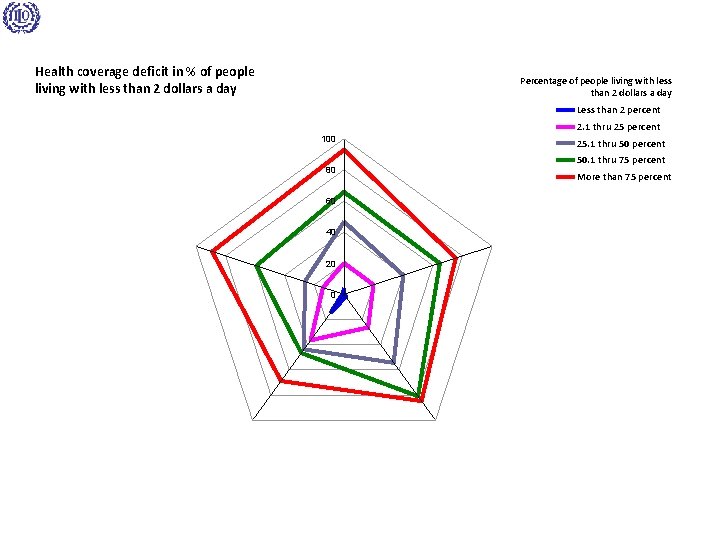
Global results: Deficits in health coverage by level of poverty Health coverage deficit in % of people living with less than 2 dollars a day Percentage of people living with less than 2 dollars a day Less than 2 percent 2. 1 thru 25 percent 100 80 60 40 20 0 25. 1 thru 50 percent 50. 1 thru 75 percent More than 75 percent
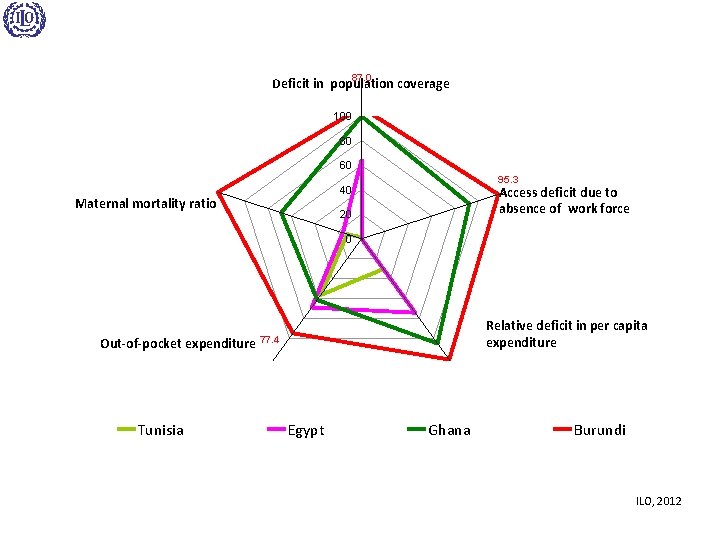
National deficits in health coverage: Selected African countries PMAC 2012, January 24 -28 2012, Bangkok, Thailand 87. 0 Deficit in population coverage 100 80 60 95. 3 Access deficit due to absence of work force 40 Maternal mortality ratio 20 0 Out-of-pocket expenditure Tunisia Relative deficit in per capita expenditure 77. 4 Egypt Ghana Burundi ILO, 2012
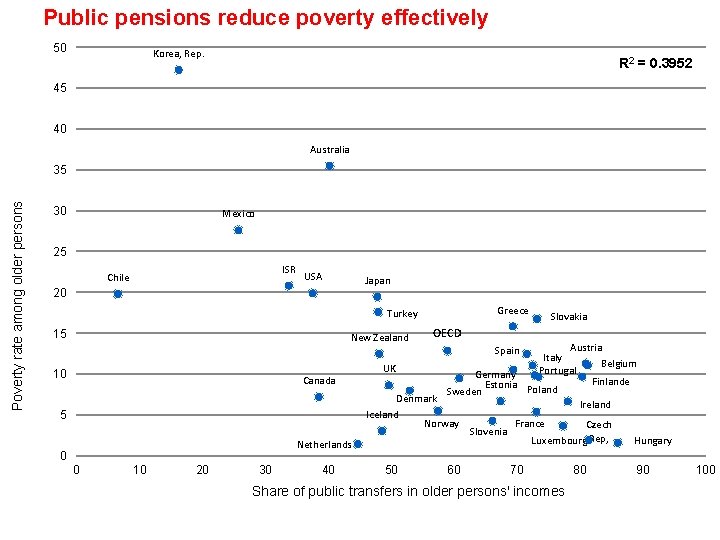
Public pensions reduce poverty effectively 50 Korea, Rep. R 2 = 0. 3952 45 40 Australia Poverty rate among older persons 35 30 Mexico 25 ISR Chile USA Japan 20 Greece Turkey 15 New Zealand Slovakia OECD Austria Italy Belgium UK Portugal Germany Finlande Estonia Poland Sweden Denmark Ireland Iceland France Norway Czech Slovenia Hungary Luxembourg Rep, Spain 10 Canada 5 Netherlands 0 0 10 20 30 40 50 60 70 Share of public transfers in older persons' incomes 80 90 100
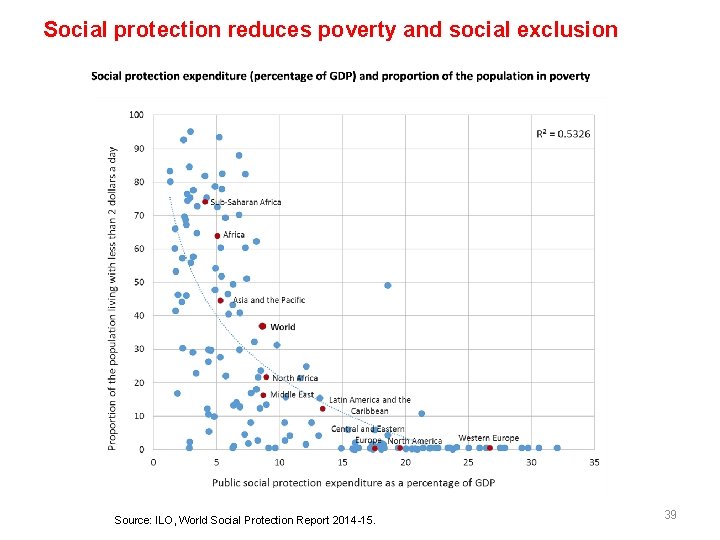
Social protection reduces poverty and social exclusion Source: ILO, World Social Protection Report 2014 -15. 39
SOCIAL PROTECTION FLOOR IS AFFORDABLE: EVEN IN LOW-INCOME COUNTRIES ACI Creating and Extending Social Protection Floors 40
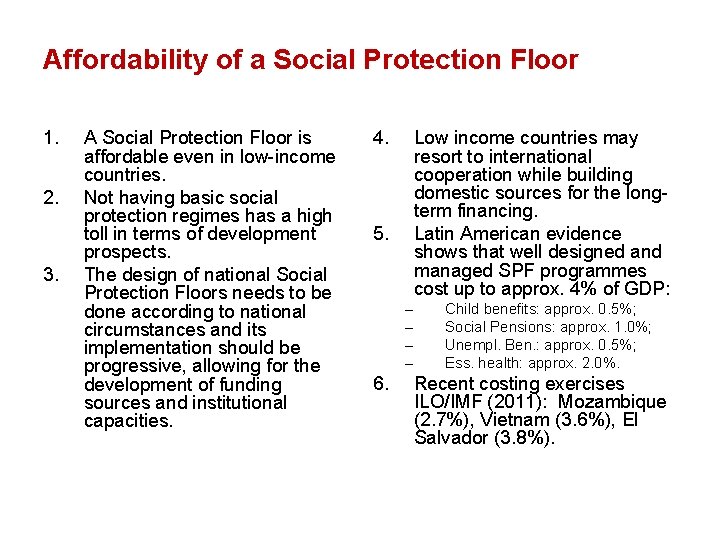
Affordability of a Social Protection Floor 1. 2. 3. A Social Protection Floor is affordable even in low-income countries. Not having basic social protection regimes has a high toll in terms of development prospects. The design of national Social Protection Floors needs to be done according to national circumstances and its implementation should be progressive, allowing for the development of funding sources and institutional capacities. 4. Low income countries may resort to international cooperation while building domestic sources for the longterm financing. Latin American evidence shows that well designed and managed SPF programmes cost up to approx. 4% of GDP: 5. – – 6. Child benefits: approx. 0. 5%; Social Pensions: approx. 1. 0%; Unempl. Ben. : approx. 0. 5%; Ess. health: approx. 2. 0%. Recent costing exercises ILO/IMF (2011): Mozambique (2. 7%), Vietnam (3. 6%), El Salvador (3. 8%).
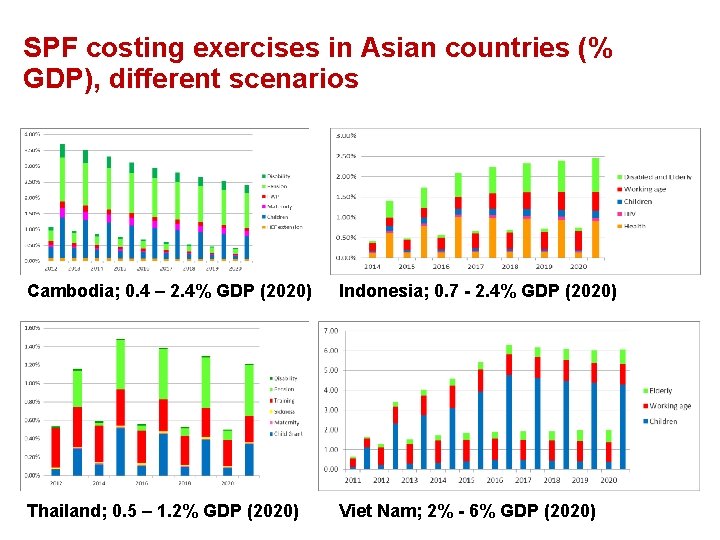
SPF costing exercises in Asian countries (% GDP), different scenarios Cambodia; 0. 4 – 2. 4% GDP (2020) Indonesia; 0. 7 - 2. 4% GDP (2020) Thailand; 0. 5 – 1. 2% GDP (2020) Viet Nam; 2% - 6% GDP (2020)
WHAT NEXT? STEPS FOR DEVELOPING SOCIAL PROTECTION FLOORS TOWARDS 2030 43
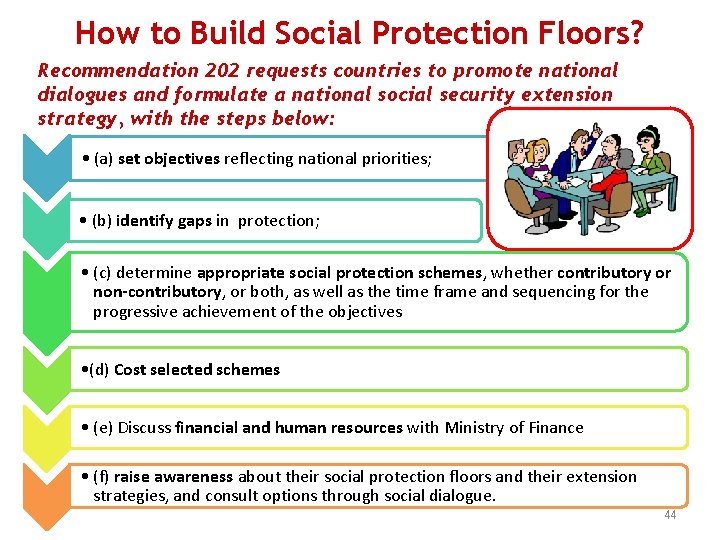
How to Build Social Protection Floors? Recommendation 202 requests countries to promote national dialogues and formulate a national social security extension strategy, with the steps below: • (a) set objectives reflecting national priorities; • (b) identify gaps in protection; • (c) determine appropriate social protection schemes, whether contributory or non-contributory, or both, as well as the time frame and sequencing for the progressive achievement of the objectives • (d) Cost selected schemes • (e) Discuss financial and human resources with Ministry of Finance • (f) raise awareness about their social protection floors and their extension strategies, and consult options through social dialogue. 44
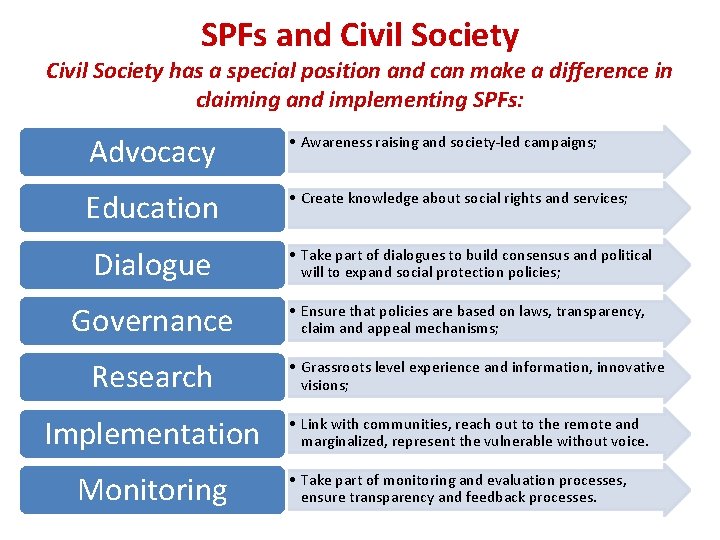
SPFs and Civil Society has a special position and can make a difference in claiming and implementing SPFs: Advocacy • Awareness raising and society-led campaigns; Education • Create knowledge about social rights and services; Dialogue • Take part of dialogues to build consensus and political will to expand social protection policies; Governance • Ensure that policies are based on laws, transparency, claim and appeal mechanisms; Research Implementation Monitoring • Grassroots level experience and information, innovative visions; • Link with communities, reach out to the remote and marginalized, represent the vulnerable without voice. • Take part of monitoring and evaluation processes, ensure transparency and feedback processes.
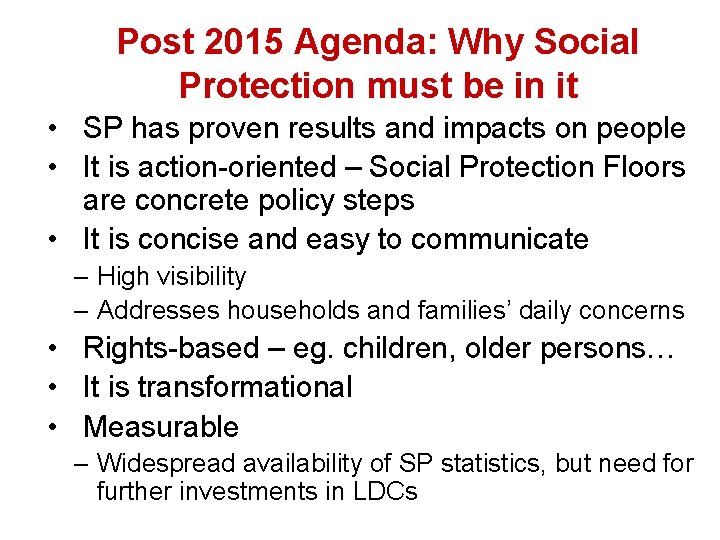
Post 2015 Agenda: Why Social Protection must be in it • SP has proven results and impacts on people • It is action-oriented – Social Protection Floors are concrete policy steps • It is concise and easy to communicate – High visibility – Addresses households and families’ daily concerns • Rights-based – eg. children, older persons… • It is transformational • Measurable – Widespread availability of SP statistics, but need for further investments in LDCs
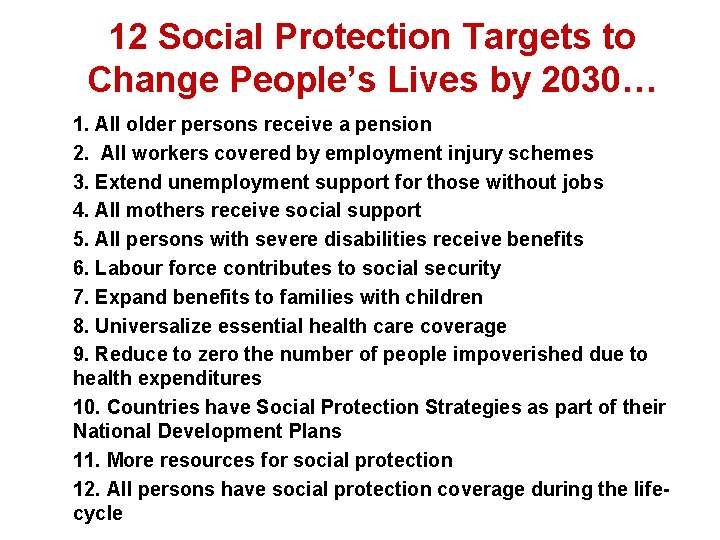
12 Social Protection Targets to Change People’s Lives by 2030… 1. All older persons receive a pension 2. All workers covered by employment injury schemes 3. Extend unemployment support for those without jobs 4. All mothers receive social support 5. All persons with severe disabilities receive benefits 6. Labour force contributes to social security 7. Expand benefits to families with children 8. Universalize essential health care coverage 9. Reduce to zero the number of people impoverished due to health expenditures 10. Countries have Social Protection Strategies as part of their National Development Plans 11. More resources for social protection 12. All persons have social protection coverage during the lifecycle
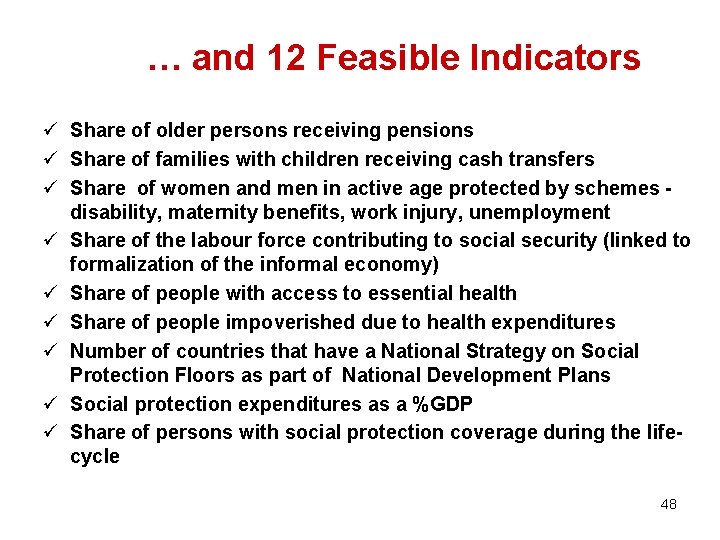
… and 12 Feasible Indicators ü Share of older persons receiving pensions ü Share of families with children receiving cash transfers ü Share of women and men in active age protected by schemes disability, maternity benefits, work injury, unemployment ü Share of the labour force contributing to social security (linked to formalization of the informal economy) ü Share of people with access to essential health ü Share of people impoverished due to health expenditures ü Number of countries that have a National Strategy on Social Protection Floors as part of National Development Plans ü Social protection expenditures as a %GDP ü Share of persons with social protection coverage during the lifecycle 48
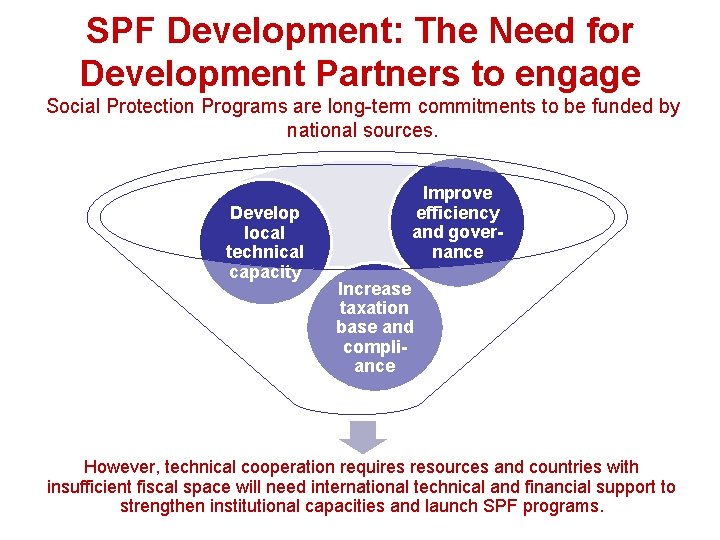
SPF Development: The Need for Development Partners to engage Social Protection Programs are long-term commitments to be funded by national sources. Develop local technical capacity Improve efficiency and governance Increase taxation base and compliance However, technical cooperation requires resources and countries with insufficient fiscal space will need international technical and financial support to strengthen institutional capacities and launch SPF programs.
Thank you