
Making Sense of Uncertainty Step 1 Whole Genome
- Slides: 14
Making Sense of Uncertainty
Step 1 Whole Genome Sequencing: Exploring the human genome 3 billion DNA letters ~22, 000 genes (genes only make up 1% of overall genome)
when might whole genome sequencing be used?
get to know your patient
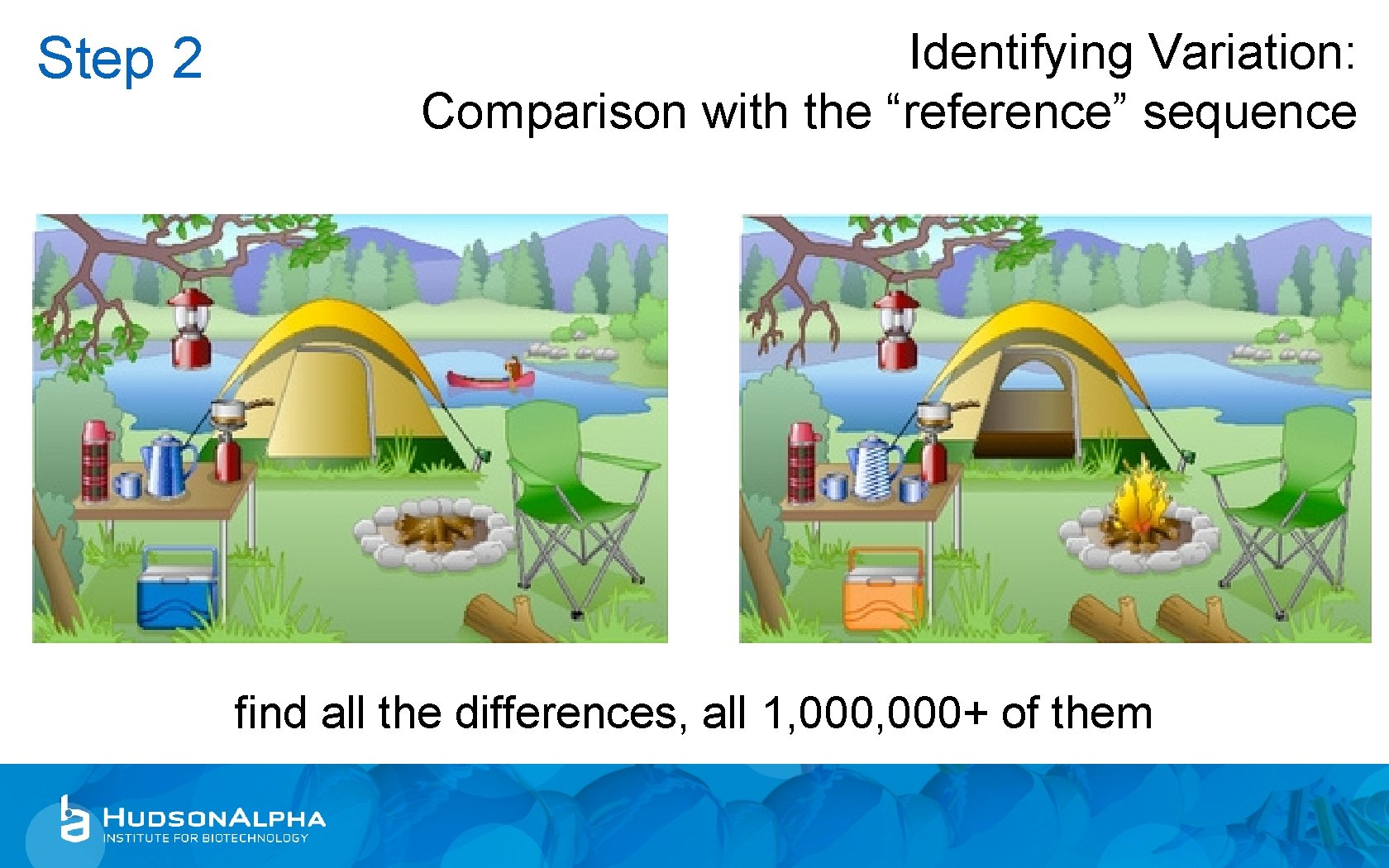
Step 2 Identifying Variation: Comparison with the “reference” sequence find all the differences, all 1, 000+ of them
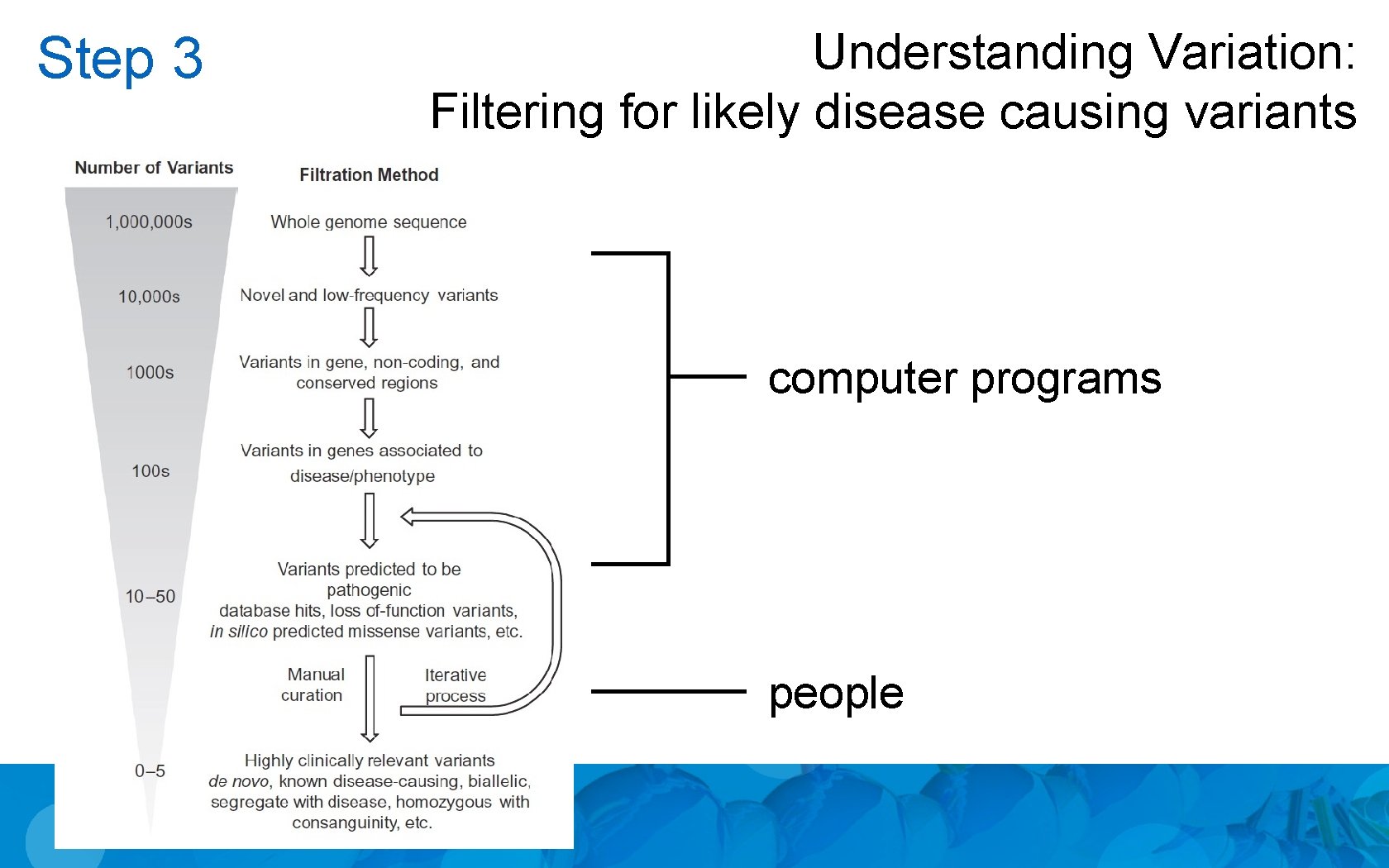
Step 3 Understanding Variation: Filtering for likely disease causing variants computer programs people
get to know your variant(s)
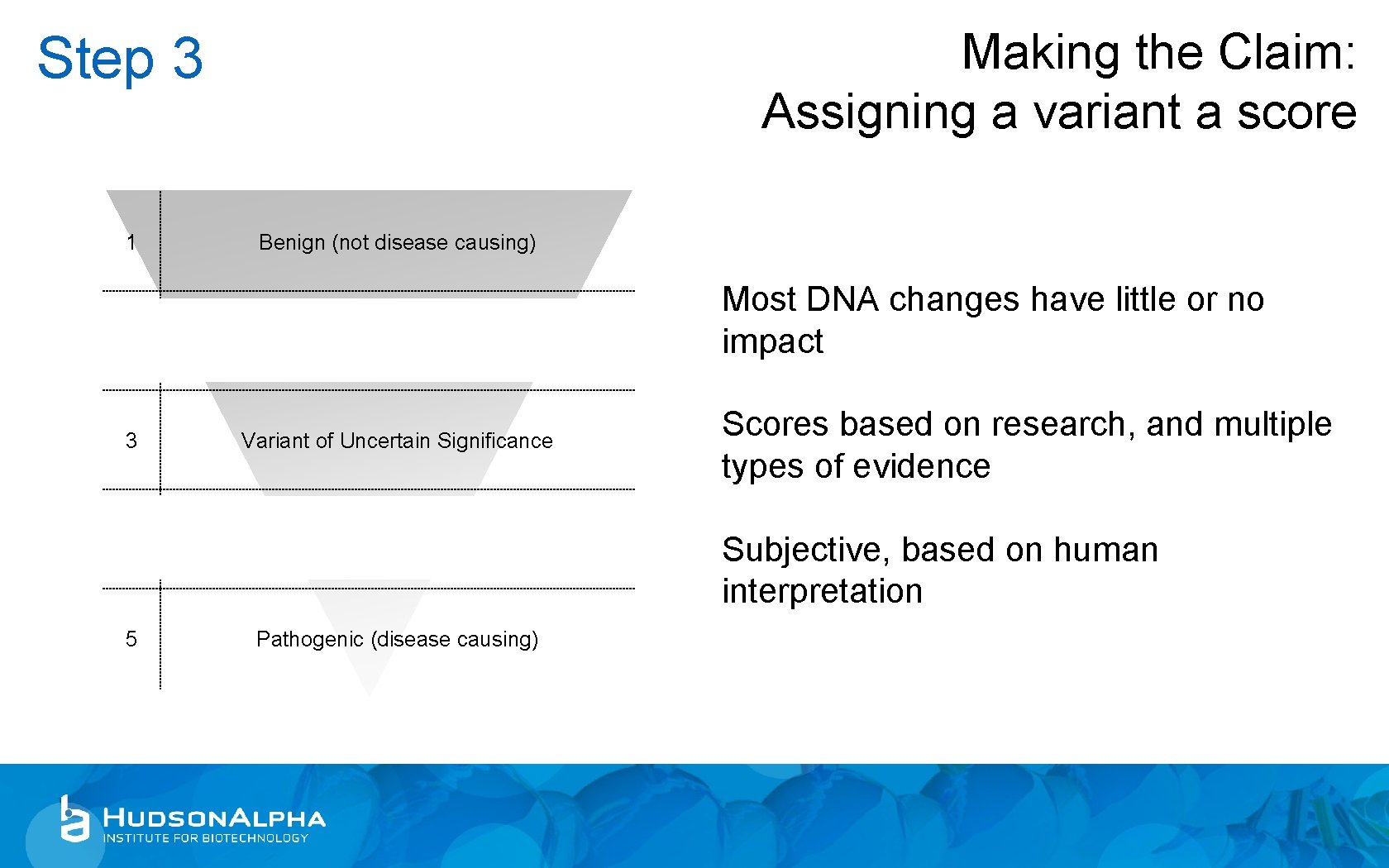
Making the Claim: Assigning a variant a score Step 3 1 2 Benign (not disease causing) Likely benign 3 Variant of Uncertain Significance 4 Likely pathogenic 5 Pathogenic (disease causing) Most DNA changes have little or no impact Scores based on research, and multiple types of evidence Subjective, based on human interpretation
Your Turn… You will be given a case study (patient and reason for testing) and a variant to analyze This variant is the “top hit”: most likely candidate after computerized filtering Analyze each piece of evidence individually Does it support the variant being pathogenic? benign? uncertain? Put it all together and make a final call about your variant Would you call your variant pathogenic? benign? uncertain? Why?
Wrap Up What did you “call” your variant? Did you make a diagnosis? Why or why not? Would you advocate for returning the variant to a physician and patient? Why or why not?
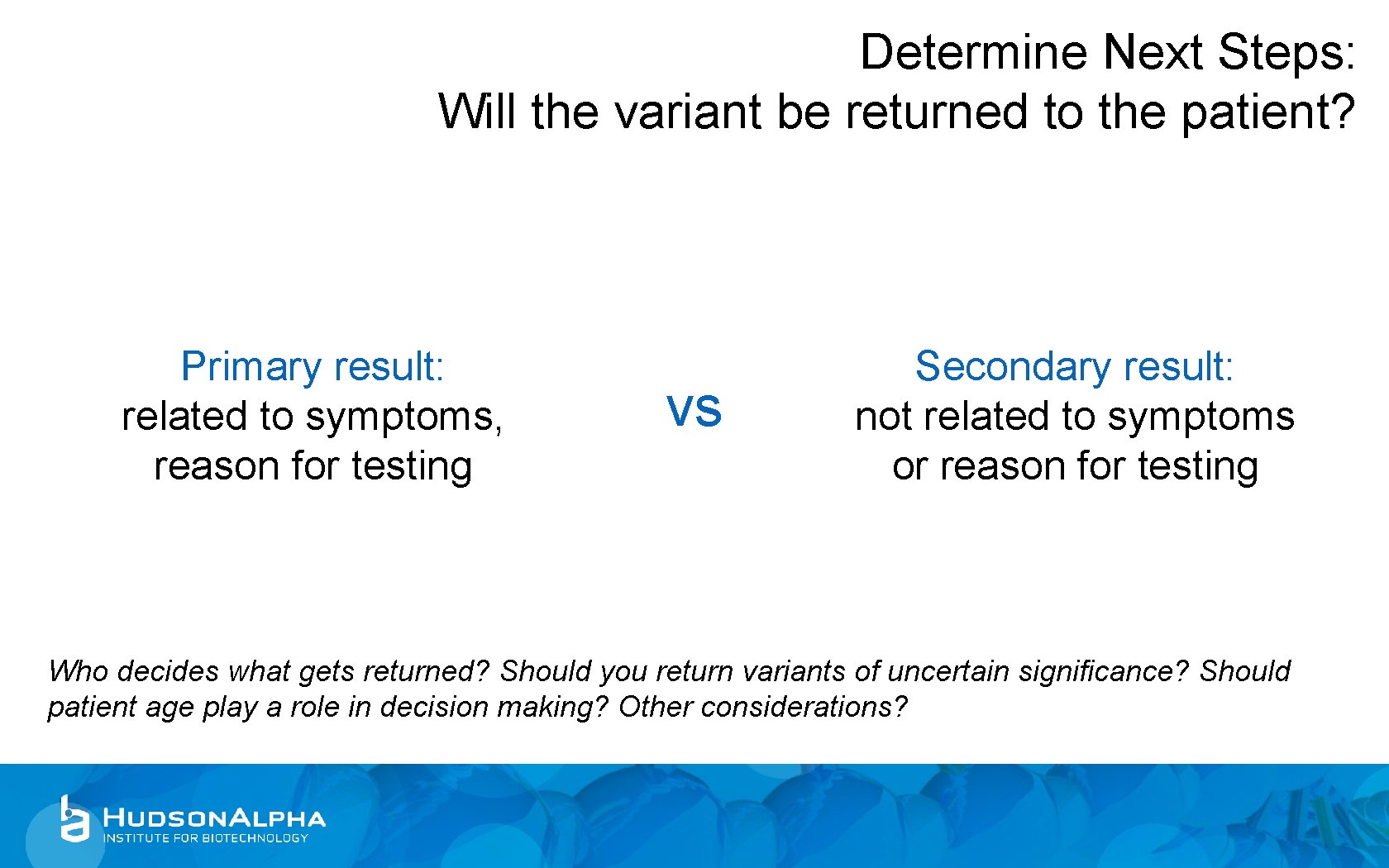
Determine Next Steps: Will the variant be returned to the patient? Primary result: related to symptoms, reason for testing vs Secondary result: not related to symptoms or reason for testing Who decides what gets returned? Should you return variants of uncertain significance? Should patient age play a role in decision making? Other considerations?
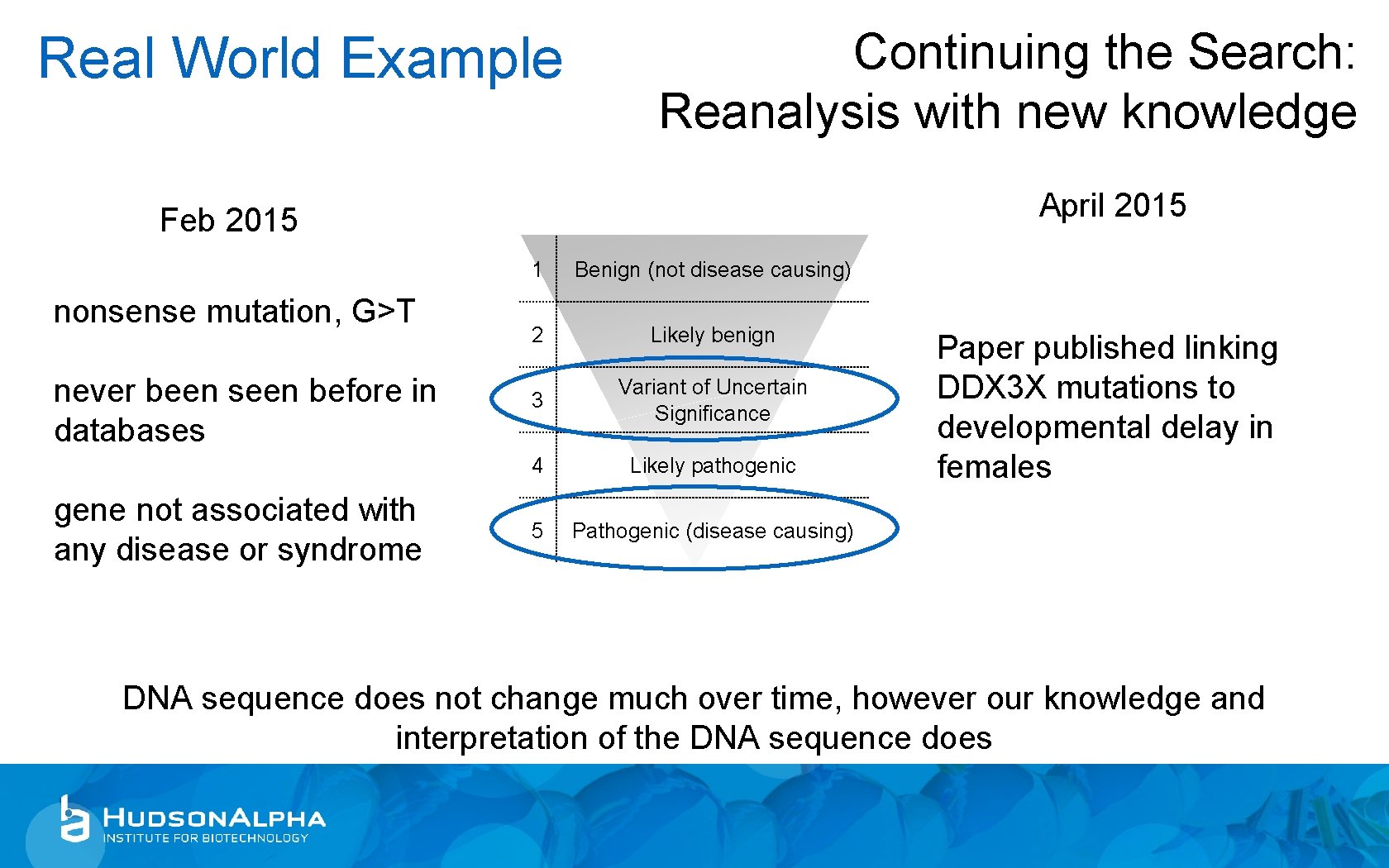
Real World Example Continuing the Search: Reanalysis with new knowledge Case Study: 5 year old female with moderate developmental delay Whole genome sequencing identified de novo (new) mutation in the DDX 3 X gene DNA sequence does not change much over time, however our knowledge and interpretation of the DNA sequence does
Real World Example Continuing the Search: Reanalysis with new knowledge April 2015 Feb 2015 nonsense mutation, G>T never been seen before in databases gene not associated with any disease or syndrome 1 Benign (not disease causing) 2 Likely benign 3 Variant of Uncertain Significance 4 Likely pathogenic 5 Pathogenic (disease causing) Paper published linking DDX 3 X mutations to developmental delay in females DNA sequence does not change much over time, however our knowledge and interpretation of the DNA sequence does
Acknowledgements Kelly East, MS, CGC Genetic Counselor Clinical Applications Lead Hudson. Alpha Educational Outreach keast@hudsonalpha. org Madelene Loftin Educator Professional Dev’t Lead Hudson. Alpha Educational Outreach mloftin@hudsonalpha. org The GREAT workshop and associated materials are made possible through support from the State of Alabama.