
Making Sense of Threshold Concepts Through Graphic Design

- Slides: 14
Making Sense of Threshold Concepts Through Graphic Design Collaboration and the Student Lens Amanda Meeks, Research and Instruction Librarian Teresa Burk, Head Librarian
The Role of Graphic Design in Social Awareness Class Goals and Objectives: • Assess the role designers have played as shapers of public perception • Evaluate an array of historical and contemporary data and analyze its implications within the culture for which they are designing • Generate visual campaigns which address social and political issues • Create and present an effective plan for promoting public awareness or consciousness • Discuss their own visual constructs and that of others in an intelligent and constructive manner
Overall Goal: Empower students by demystifying what research is, particularly in art and design. Why Threshold Concepts? The framework has shifted the focus of information literacy from procedural instruction to a more conceptual model with room for creativity and interpretation. Why Students? Feminist or Critical pedagogy includes the practice of validating learners in what they already know, valuing their intuition, and collaborative knowledge creation. Ask More Questions: Encourage students to reflect and think more critically about their research practice as artists and designers.
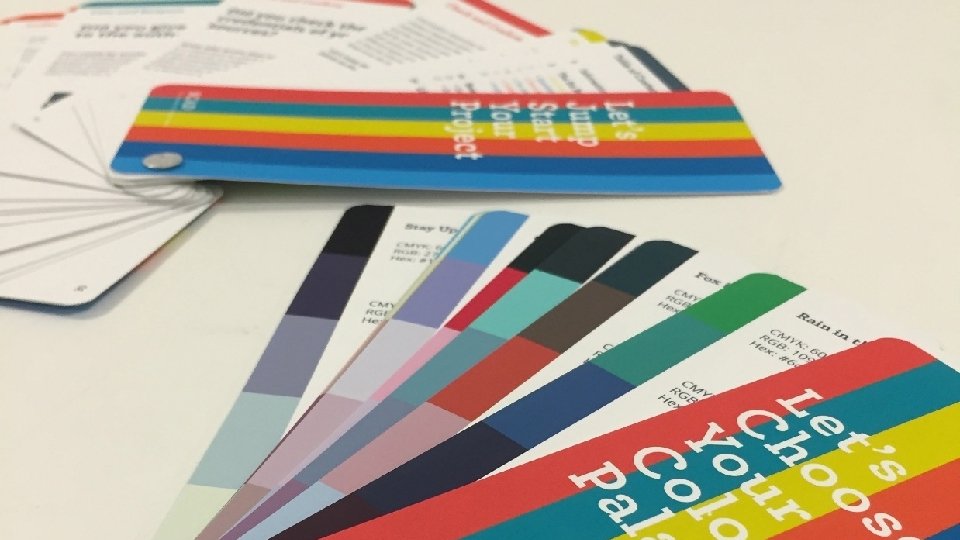
Creative Brief Goals: • Empower students to do better research • Develop an understanding of the [info lit framework] concepts • Enable critical thinking through visual literacy Tone: • • Approachable Energetic Fun Reassuring Big Question: What does each of these concepts mean in the SCAD context and in art and design education as a whole?
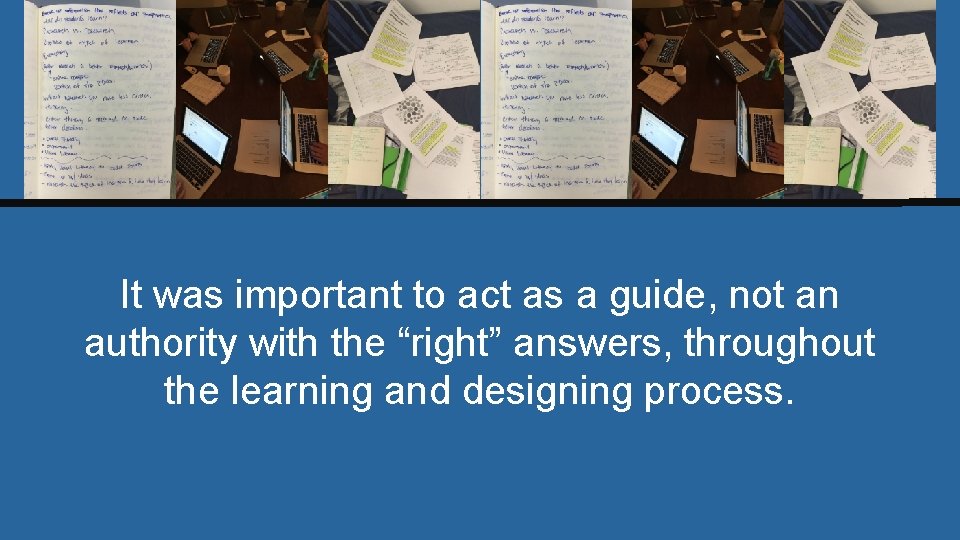
It was important to act as a guide, not an authority with the “right” answers, throughout the learning and designing process.
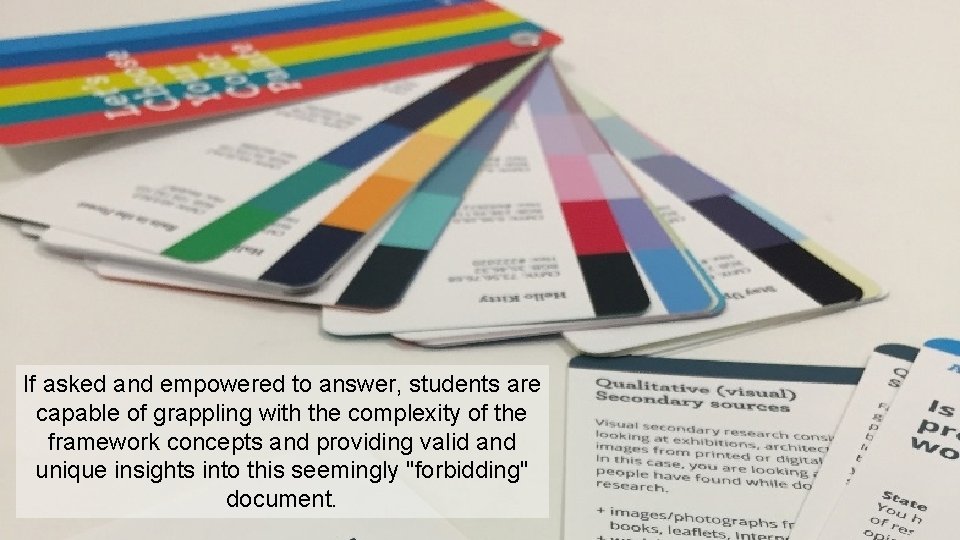
If asked and empowered to answer, students are capable of grappling with the complexity of the framework concepts and providing valid and unique insights into this seemingly "forbidding" document.
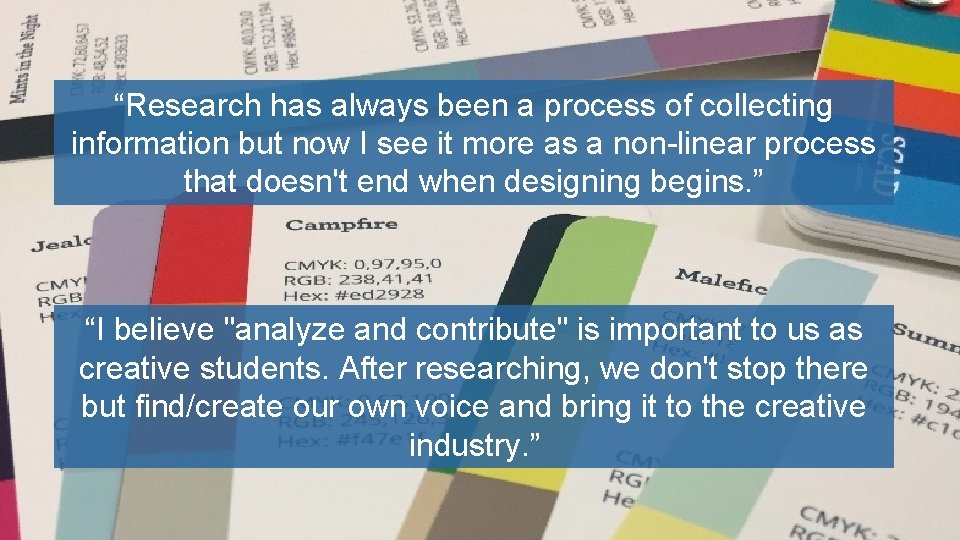
“Research has always been a process of collecting information but now I see it more as a non-linear process that doesn't end when designing begins. ” “I believe "analyze and contribute" is important to us as creative students. After researching, we don't stop there but find/create our own voice and bring it to the creative industry. ”
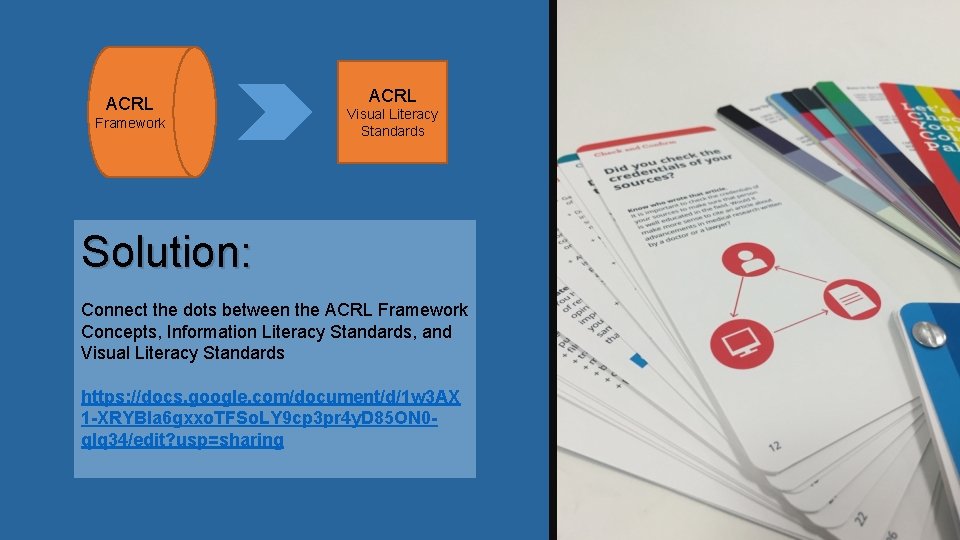
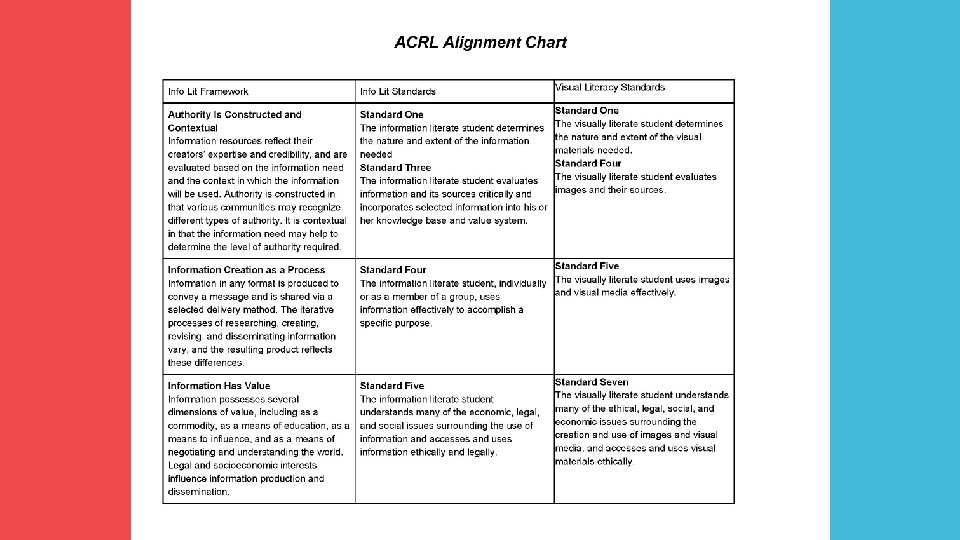
ACRL Framework ACRL Visual Literacy Standards Solution: Connect the dots between the ACRL Framework Concepts, Information Literacy Standards, and Visual Literacy Standards https: //docs. google. com/document/d/1 w 3 AX 1 -XRYBla 6 gxxo. TFSo. LY 9 cp 3 pr 4 y. D 85 ON 0 qlq 34/edit? usp=sharing
Evolution of the Project • Broker conversations with administration about the importance of information literacy and the library’s role as collaborator • Spark new ideas about instruction services across SCAD Libraries • Embed the guide into faculty partner courses • Produce and distribute the guide to the SCAD community
Takeaways • Include students in your conversation around information literacy • Find creative solutions and seek collaborations • Test, stretch, and experiment with the Framework • Your context is important
Bibliography and Recommended Readings "Framework for Information Literacy for Higher Education", American Library Association, February 9, 2015. http: //www. ala. org/acrl/standards/ilframework (Accessed January 28, 2016) Document ID: b 910 a 6 c 4 -6 c 8 a-0 d 44 -7 dbca 5 dcbd 509 e 3 f Gendron, H. , & Sclippa, E. , sclippa@alfred. edu. (2014). Where Visual and Information Literacies Meet: Redesigning Research Skills Teaching and Assessment for Large Art History Survey Courses. Art Documentation: Bulletin of the Art Libraries Society of North America, 33(2), 327– 344. Kuglitsch, R. Z. (2015). Teaching for Transfer: Reconciling the Framework with Disciplinary Information Literacy. Portal: Libraries and the Academy, 15(3), 457– 470. http: //doi. org/10. 1353/pla. 2015. 0040 Reale, M. (2012). Critical Pedagogy in the Classroom: Library Instruction that Gives Voice to Students and Builds a Community of Scholars. Journal of Library Innovation, 3(2), 80– 88. Scott, R. E. (2016). If We Frame It, They Will Respond: Undergraduate Student Responses to the Framework for Information Literacy for Higher Education. The Reference Librarian, Forthcoming - http: //www. tandfonline. com/toc/wref 20/current.