
Making sense of SMART target setting What is

- Slides: 26
Making sense of SMART target setting!
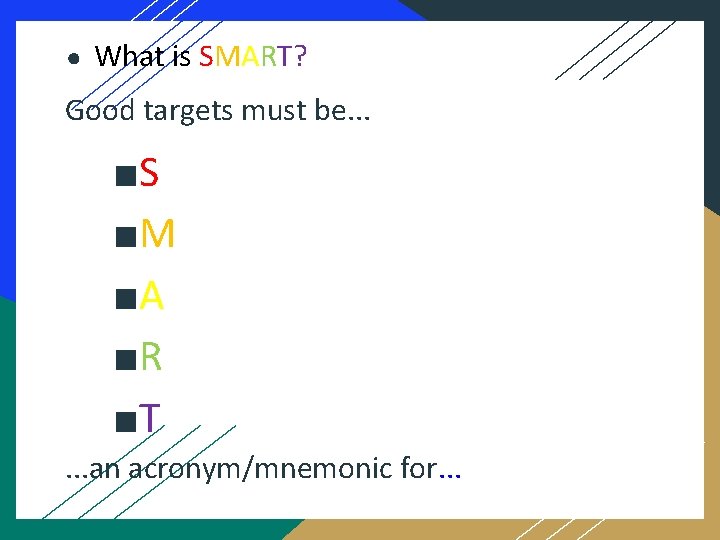
● What is SMART? Good targets must be. . . ■S ■M ■A ■R ■T. . . an acronym/mnemonic for. . .
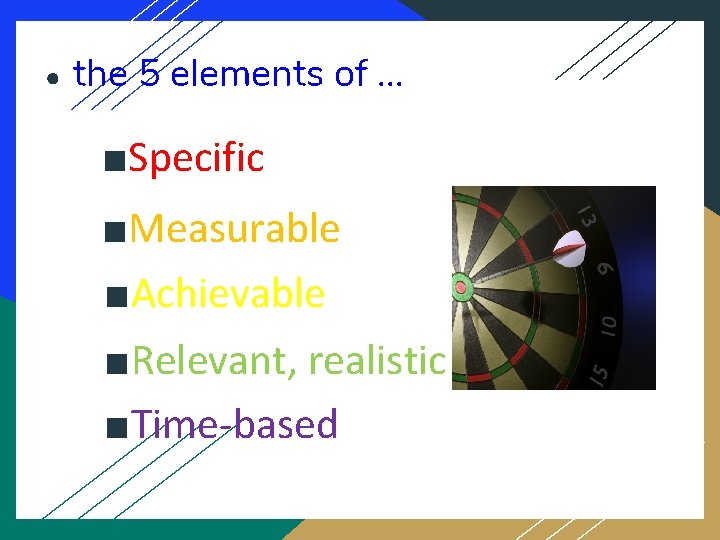
● the 5 elements of. . . ■Specific ■Measurable ■Achievable ■Relevant, realistic ■Time-based
Why? ● If you set targets for yourself that are not SMART, you can’t tell if you’ve succeeded.
An example of a poor target I want more free time. ● Have I achieved this if I get 5 minutes a day? ● ● What if I have 30 mins a day? How do I know I have achieved my target?
Specific “Specific” your goal should be clear. So you know ‘what’ you want to accomplish and ‘which’ resources or limits are involved.
Specific Targets ‘what’ you want to accomplish. ‘To improve my level in English. ’ Is not specific. Level 4 ‘I can statement’ ● ‘I can vary sentence types and structures and use vocabulary appropriately in my writing. ’ Is specific.
Who is involved? Each time a target is set this should come directly from the subject teacher in collaboration with the student. Ownership. Accountability. Going forward. As the PEP is a working document new targets can be added, as and when necessary. Again a student may feel they have met their target and want to set themselves another.
M is for Measurable (meaningful, motivated) Measurable targets mean you can track your progress, stay motivated and when ready, move on to the next target. Assessing and measuring progress helps deadlines to be met and also helps you to stay focussed as you get closer to achieving your goal. (Karen’s progress tracker)
Measurable target ‘I want to do well in my GCSE exams. ’ Is not measurable. A measurable target should address questions like: ‘What have I done so far to help me in reaching my goal? ‘What do I need to do next to reach my target? ’ e. g. A measurable target can be taken from the ‘I can statements. ’
Achievable, should stretch abilities, but also be possible for you to achieve success. ‘What resources do I need to help bring me closer to accomplishing my goal? ’
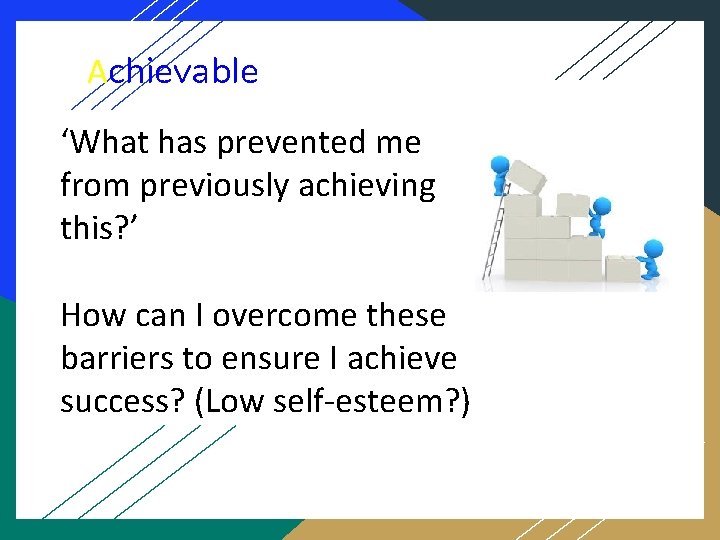
Achievable ‘What has prevented me from previously achieving this? ’ How can I overcome these barriers to ensure I achieve success? (Low self-esteem? )
Relevant - realistic, reasonable Relevant Will it make a difference to me or matter to me? Realistic/reasonable? Can I possibly achieve this with the availability of resources, knowledge and time?
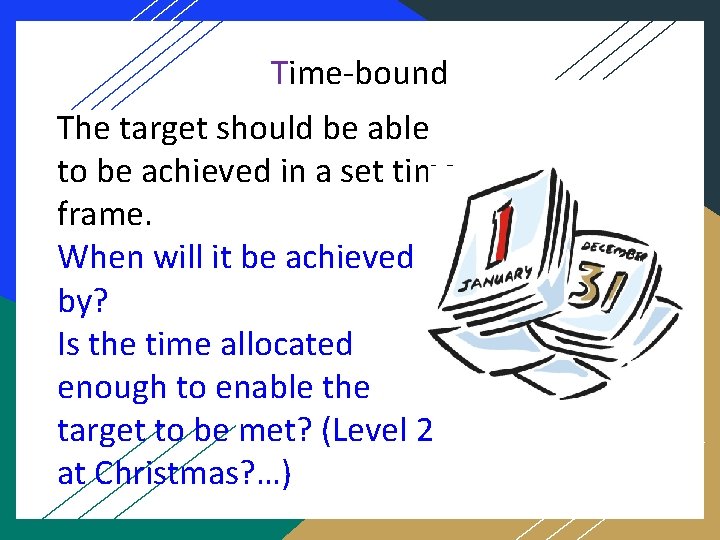
Time-bound The target should be able to be achieved in a set time frame. When will it be achieved by? Is the time allocated enough to enable the target to be met? (Level 2 at Christmas? …)
Remember Good targets need to be: ● Specific ● Measurable ● Achievable ● Relevant ● Timed Some examples follow. . .
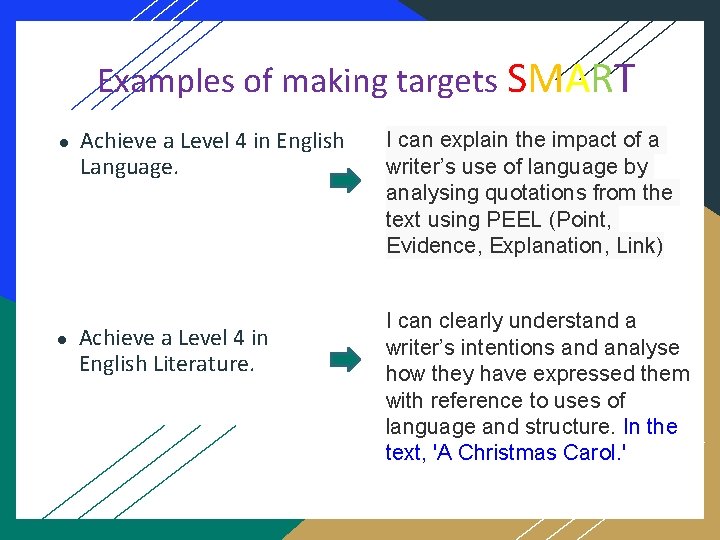
Examples of making targets SMART ● ● Achieve a Level 4 in English Language. Achieve a Level 4 in English Literature. I can explain the impact of a writer’s use of language by analysing quotations from the text using PEEL (Point, Evidence, Explanation, Link) I can clearly understand a writer’s intentions and analyse how they have expressed them with reference to uses of language and structure. In the text, 'A Christmas Carol. '
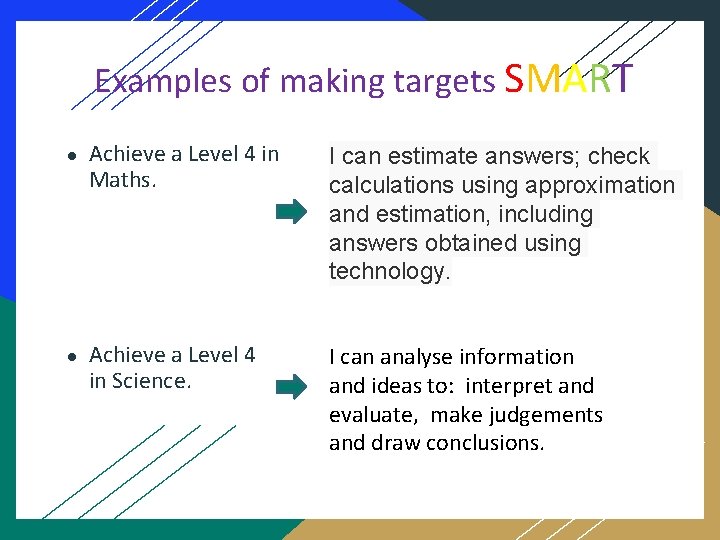
Examples of making targets SMART ● Achieve a Level 4 in Maths. I can estimate answers; check calculations using approximation and estimation, including answers obtained using technology. ● Achieve a Level 4 in Science. I can analyse information and ideas to: interpret and evaluate, make judgements and draw conclusions.
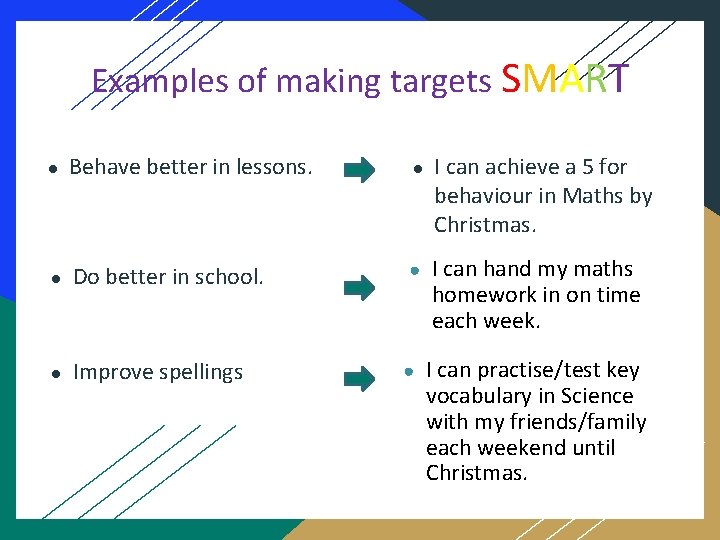
Examples of making targets SMART ● Behave better in lessons. ● I can achieve a 5 for behaviour in Maths by Christmas. ● Do better in school. ● I can hand my maths homework in on time each week. ● Improve spellings ● I can practise/test key vocabulary in Science with my friends/family each weekend until Christmas.
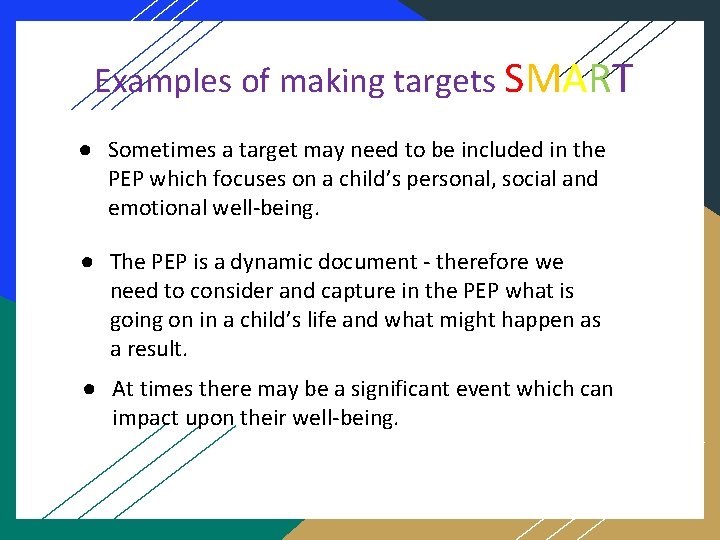
Examples of making targets SMART ● Sometimes a target may need to be included in the PEP which focuses on a child’s personal, social and emotional well-being. ● The PEP is a dynamic document - therefore we need to consider and capture in the PEP what is going on in a child’s life and what might happen as a result. ● At times there may be a significant event which can impact upon their well-being.
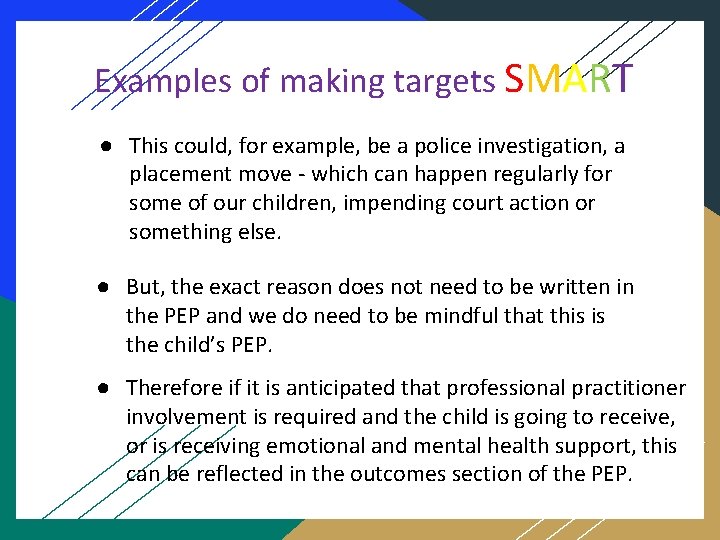
Examples of making targets SMART ● This could, for example, be a police investigation, a placement move - which can happen regularly for some of our children, impending court action or something else. ● But, the exact reason does not need to be written in the PEP and we do need to be mindful that this is the child’s PEP. ● Therefore if it is anticipated that professional practitioner involvement is required and the child is going to receive, or is receiving emotional and mental health support, this can be reflected in the outcomes section of the PEP.
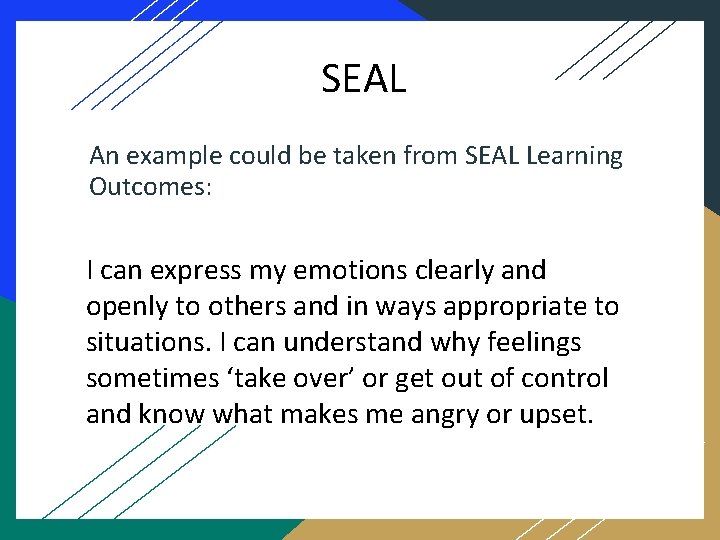
SEAL An example could be taken from SEAL Learning Outcomes: I can express my emotions clearly and openly to others and in ways appropriate to situations. I can understand why feelings sometimes ‘take over’ or get out of control and know what makes me angry or upset.
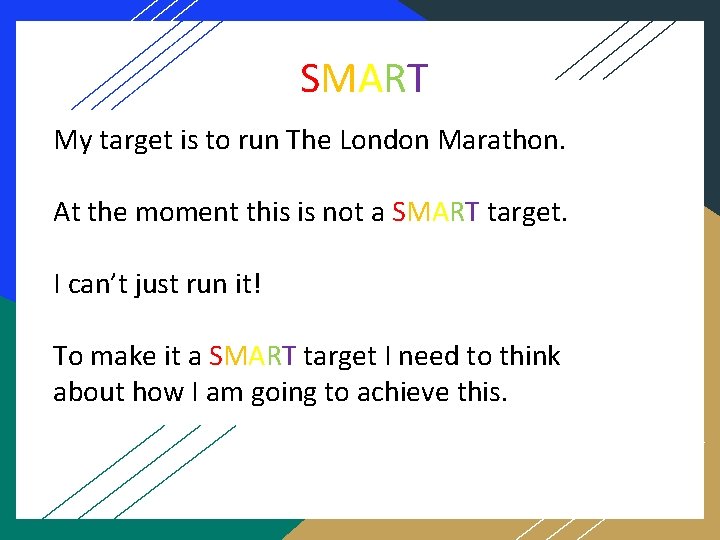
SMART My target is to run The London Marathon. At the moment this is not a SMART target. I can’t just run it! To make it a SMART target I need to think about how I am going to achieve this.
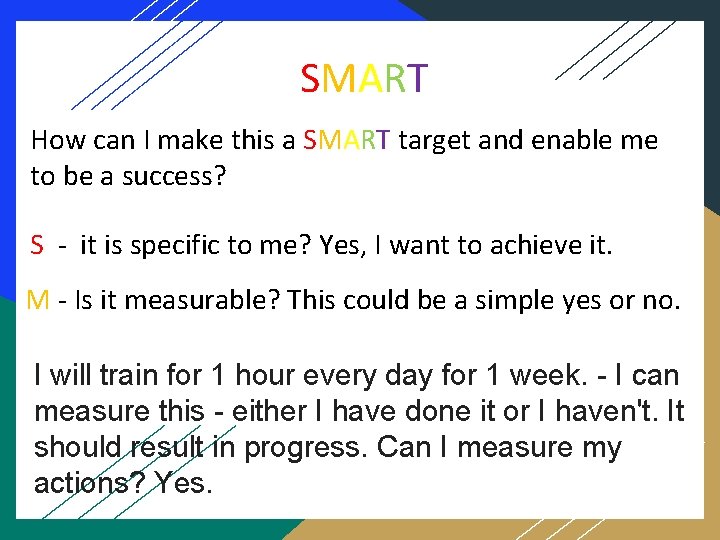
SMART How can I make this a SMART target and enable me to be a success? S - it is specific to me? Yes, I want to achieve it. M - Is it measurable? This could be a simple yes or no. I will train for 1 hour every day for 1 week. - I can measure this - either I have done it or I haven't. It should result in progress. Can I measure my actions? Yes.
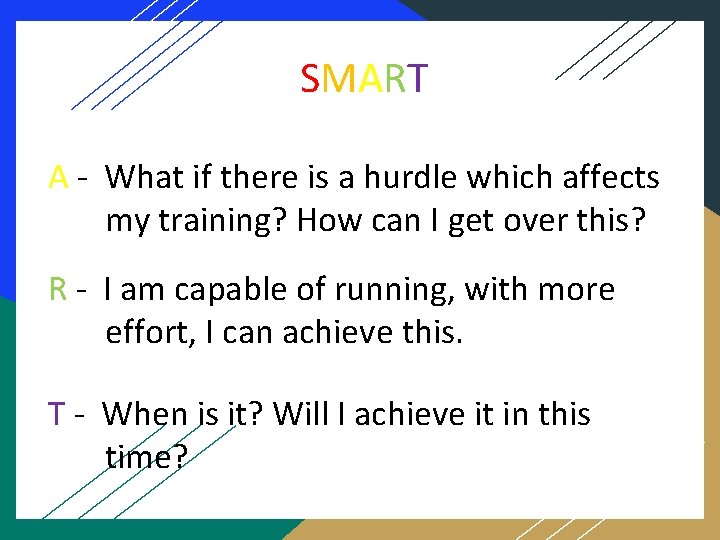
SMART A - What if there is a hurdle which affects my training? How can I get over this? R - I am capable of running, with more effort, I can achieve this. T - When is it? Will I achieve it in this time?
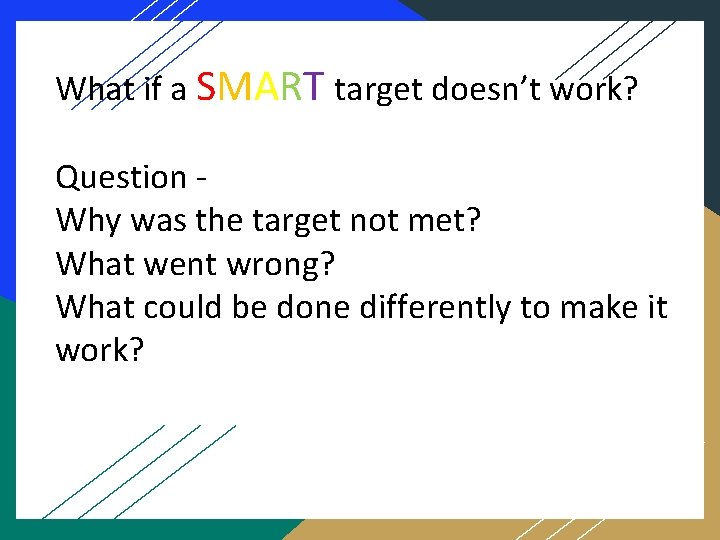
What if a SMART target doesn’t work? Question Why was the target not met? What went wrong? What could be done differently to make it work?
SMART Using SMART targets sets everyone up for success. Any questions? Please email: carolyn. henzellhill@northumberland. gov. uk