
Making Sense of Numbers in the NICU Pediatrics
Making Sense of Numbers in the NICU Pediatrics Workshop National SOMA Spring Convention Washington, D. C. March 10, 2012 Lisa Marie Piwoszkin, OMS IV National SOMA VP & Speaker CCOM
Objectives � Introduce the basics of the newborn resuscitation period � Practice calculations for TPN orders � Learn how to manage basic ventilator settings

WHY do you care? � Complex concepts you may be expected to know � Not taught this in class � Everyone required to do a pediatric rotation!
WHAT is the Newborn Resuscitation? � Special skill set used in the period immediately after delivery to assist the newborn transition from intrauterine to extrauterine life
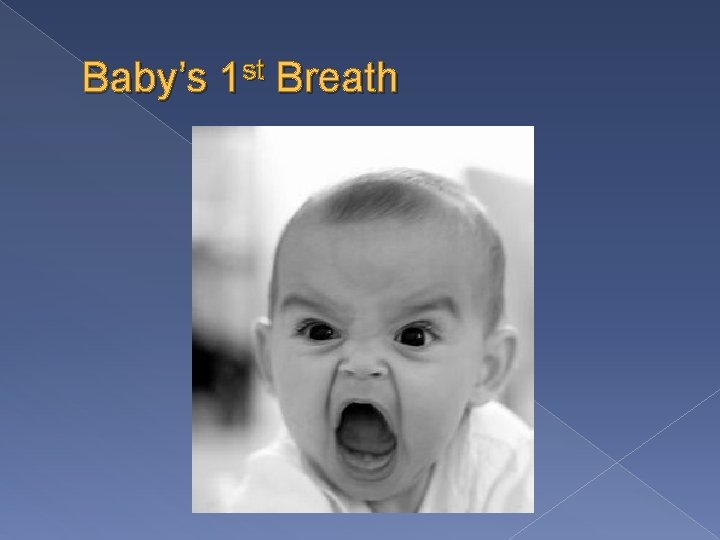
Baby’s 1 st Breath

WHERE does the Newborn Resuscitation take place? � Delivery Room � Operating Room
WHO is present during the Newborn Resuscitation? � OB crew � OB/Neonatal nurse(s) � Neonatologist/Pediatrician � Resident(s) � Medical Student(s)- YOU!
WHAT skills are involved in the Newborn Resuscitation? � Thermoregulation (37˚C) � Airway Management � Stimulation � Cardiovascular Support � Medications
HOW can YOU prepare? � � � � Wear gloves and mask Be aware of surroundings Make sure the appropriate help is in the room Make sure suction kit, intubation kits, and resuscitation medications are in the room and readily available Make sure oxygen is flowing, bag valve mask working properly and at appropriate pressure Make sure blankets are laid out and warmer is set to 37˚C Make sure timer is reset on warmer


HOW can YOU participate? � � � � “Catch the Baby!” Start the timer… CONSTANTLY ASSESS THE BABY Bulb suction Dry with blankets Check for pulse Listen to lungs Watch the timer… Quick exam Put on the cap Record APGAR scores Secure side rails Congratulate the parents!
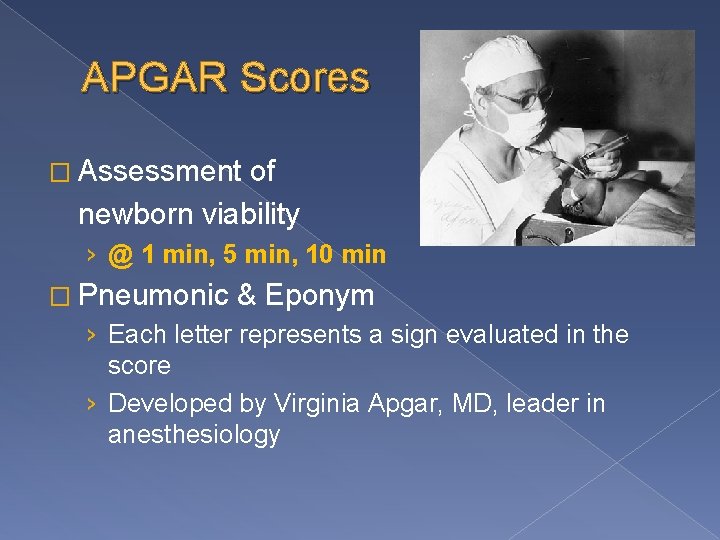
APGAR Scores � Assessment of newborn viability › @ 1 min, 5 min, 10 min � Pneumonic & Eponym › Each letter represents a sign evaluated in the score › Developed by Virginia Apgar, MD, leader in anesthesiology
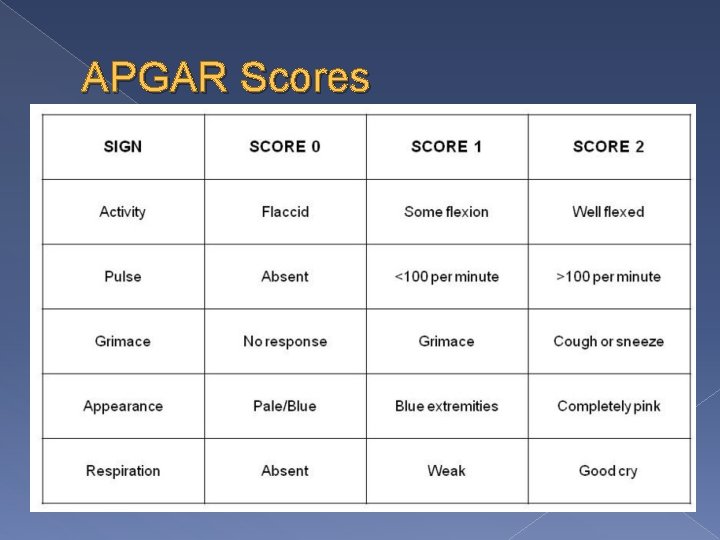
APGAR Scores
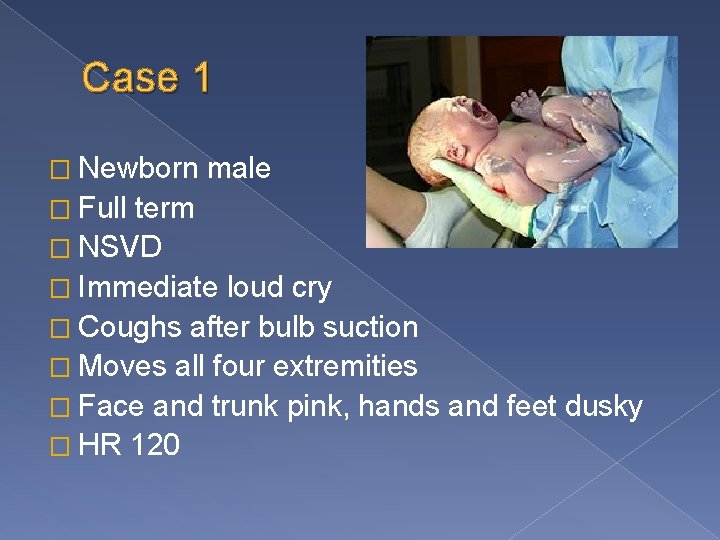
Case 1 � Newborn � Full male term � NSVD � Immediate loud cry � Coughs after bulb suction � Moves all four extremities � Face and trunk pink, hands and feet dusky � HR 120

Case 1 � 9/10 � 1 pt loss for color � Most 9/10 NORMAL newborns only ever achieve
Case 2 � 27 5/7 weeks premature female � Born to G 1 P 1 26 y/o female � PPROM, NSVD � Newborn required vigorous resuscitation � APGARs: 6 @1 min and 7 @ 5 min � Birth weight: 1 kg � Transported to NICU, currently stable, intubated, UVC placed
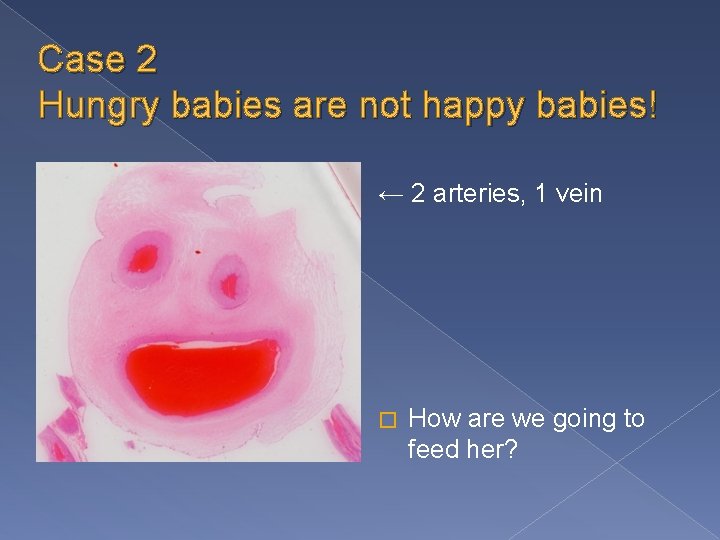
Case 2 Hungry babies are not happy babies! ← 2 arteries, 1 vein � How are we going to feed her?
Parenteral Nutrition � Intravenous nutritional support � Can be started as soon as venous access obtained
Parenteral Nutrition � TERMINOLOGY › TPN- Total Parenteral Nutrition �ALL IV, patient NPO › PPN- Partial Parenteral Nutrition �SOME IV, patient supplementing with PO
WHAT is in TPN? � Macronutrients › � Carbohydrate (dextrose) › � Protein (amino acids) › � Fat (fat emulsion) � � Micronutrients › � Vitamins & Minerals › � Electrolytes › � Trace elements � � Miscellaneous constituents › � Heparin protects line integrity › � Carnitine aids fat metabolism › � Famotidine protects stomach mucosa

HOW to order TPN?

Filling out the TPN Form… � Identifying › › information Patient Sticker (be careful with multiples!) Date Day # TPN Current GA (weeks days/7)

Filling out the TPN Form… � Daily Information › Dosing weight (kg) (A) › Line Access �Central- UVC, PICC, CVL �Peripheral- PIV �Heparin? › Labs �BMP every 1 -2 days �LFTs and TG at least every week
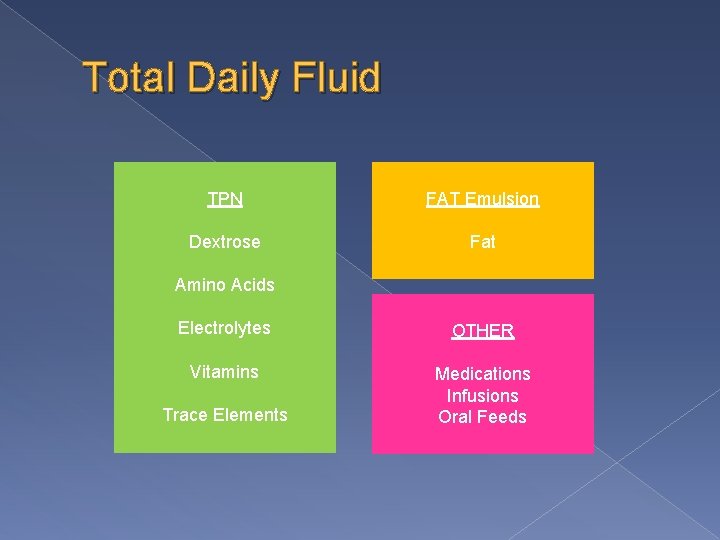
Total Daily Fluid TPN FAT Emulsion Dextrose Fat Amino Acids Electrolytes OTHER Vitamins Medications Infusions Oral Feeds Trace Elements
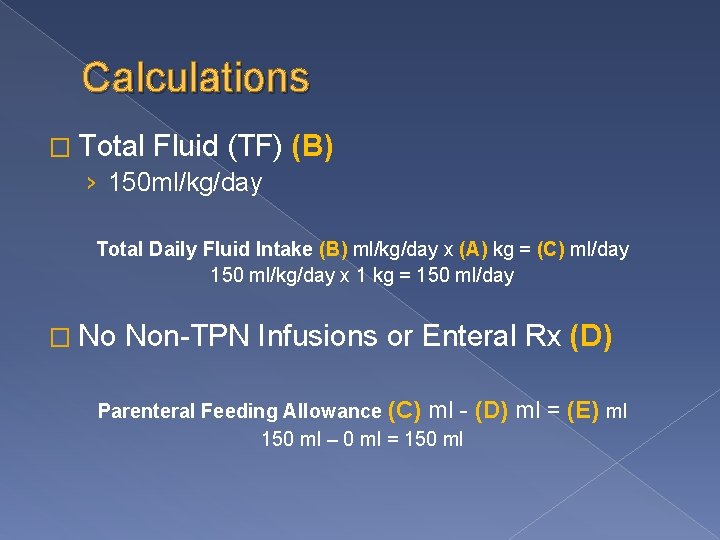
Calculations � Total Fluid (TF) › 150 ml/kg/day (B) Total Daily Fluid Intake (B) ml/kg/day x (A) kg = (C) ml/day 150 ml/kg/day x 1 kg = 150 ml/day � No Non-TPN Infusions or Enteral Rx (D) Parenteral Feeding Allowance (C) ml 150 ml – 0 ml = 150 ml (D) ml = (E) ml
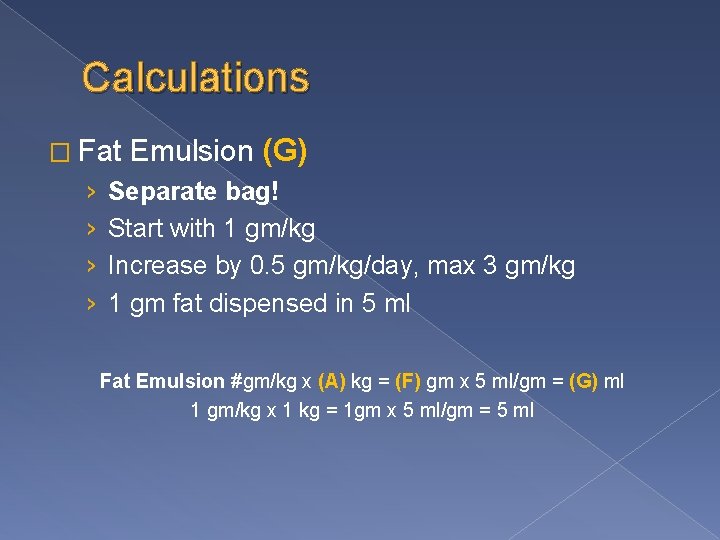
Calculations � Fat › › Emulsion (G) Separate bag! Start with 1 gm/kg Increase by 0. 5 gm/kg/day, max 3 gm/kg 1 gm fat dispensed in 5 ml Fat Emulsion #gm/kg x (A) kg = (F) gm x 5 ml/gm = (G) ml 1 gm/kg x 1 kg = 1 gm x 5 ml/gm = 5 ml
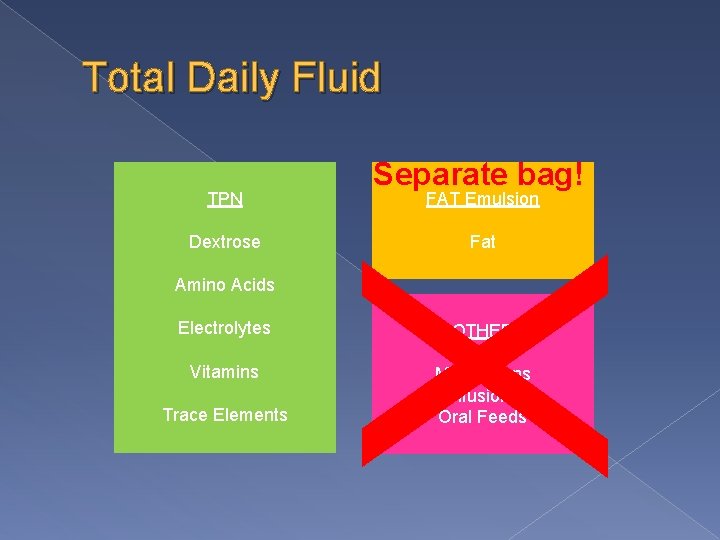
Total Daily Fluid Dextrose Amino Acids Electrolytes Vitamins Trace Elements FAT Emulsion Fat X TPN Separate bag! OTHER Medications Infusions Oral Feeds

Calculations � TPN Volume over 24 hours (H) › Parenteral feeding allowance – intralipid volume TPN Volume/24 hours (E) ml - (G) ml = (H) ml 150 ml - 5 ml = 145 ml
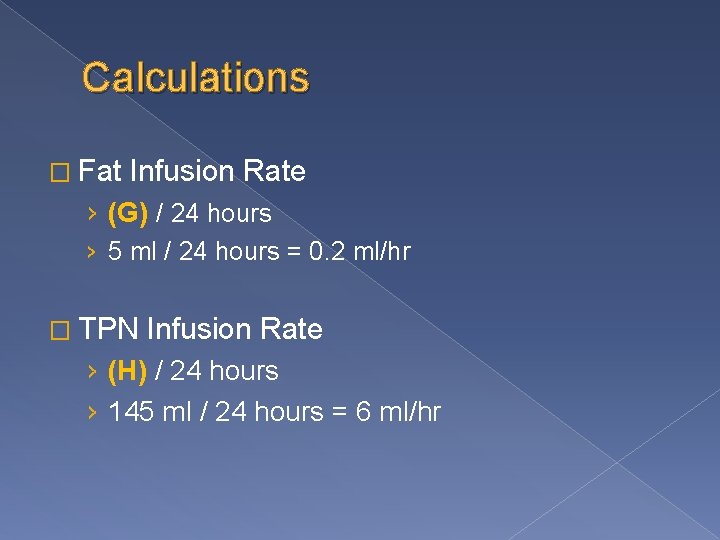
Calculations � Fat Infusion Rate › (G) / 24 hours › 5 ml / 24 hours = 0. 2 ml/hr � TPN Infusion Rate › (H) / 24 hours › 145 ml / 24 hours = 6 ml/hr
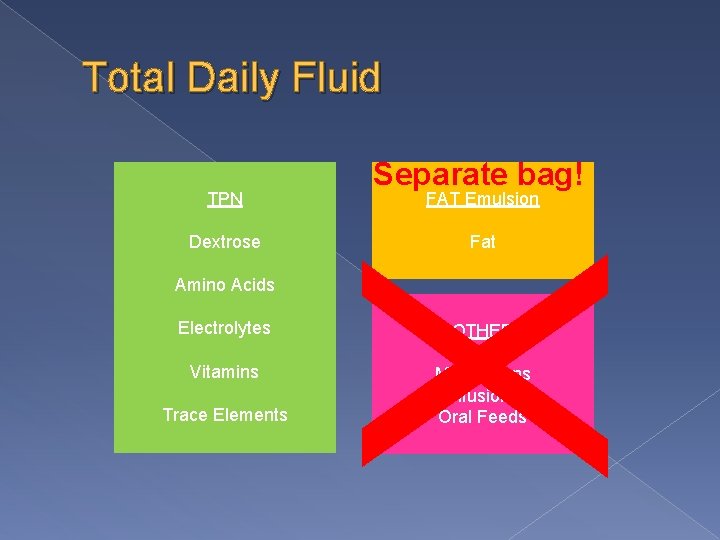
Total Daily Fluid Dextrose Amino Acids Electrolytes Vitamins Trace Elements FAT Emulsion Fat X TPN Separate bag! OTHER Medications Infusions Oral Feeds
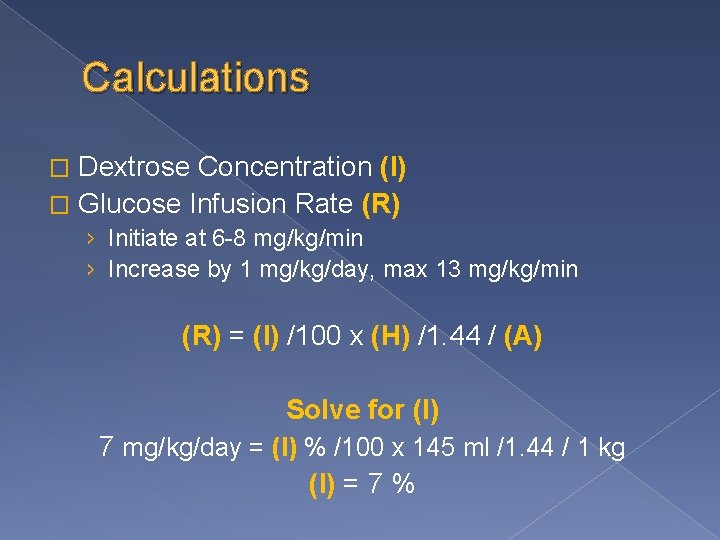
Calculations Dextrose Concentration (I) � Glucose Infusion Rate (R) � › Initiate at 6 -8 mg/kg/min › Increase by 1 mg/kg/day, max 13 mg/kg/min (R) = (I) /100 x (H) /1. 44 / (A) Solve for (I) 7 mg/kg/day = (I) % /100 x 145 ml /1. 44 / 1 kg (I) = 7 %

Your New Best Friends!
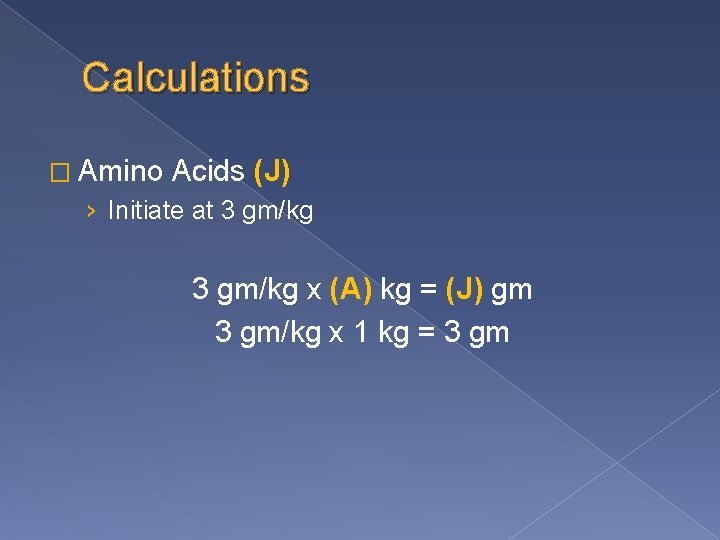
Calculations � Amino Acids (J) › Initiate at 3 gm/kg x (A) kg = (J) gm 3 gm/kg x 1 kg = 3 gm
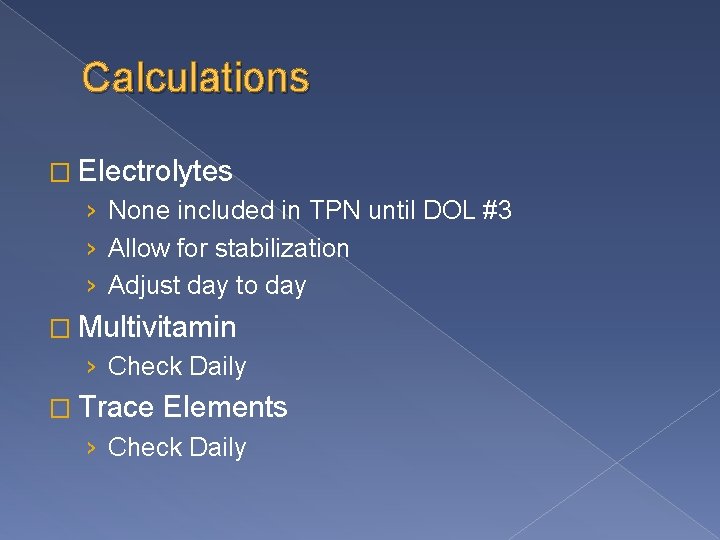
Calculations � Electrolytes › None included in TPN until DOL #3 › Allow for stabilization › Adjust day to day � Multivitamin › Check Daily � Trace Elements › Check Daily
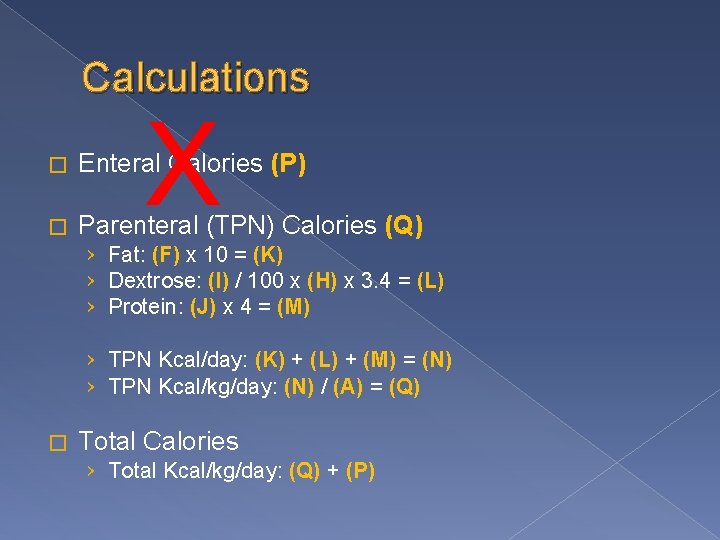
Calculations X � Enteral Calories (P) � Parenteral (TPN) Calories (Q) › Fat: (F) x 10 = (K) › Dextrose: (I) / 100 x (H) x 3. 4 = (L) › Protein: (J) x 4 = (M) › TPN Kcal/day: (K) + (L) + (M) = (N) › TPN Kcal/kg/day: (N) / (A) = (Q) � Total Calories › Total Kcal/kg/day: (Q) + (P)
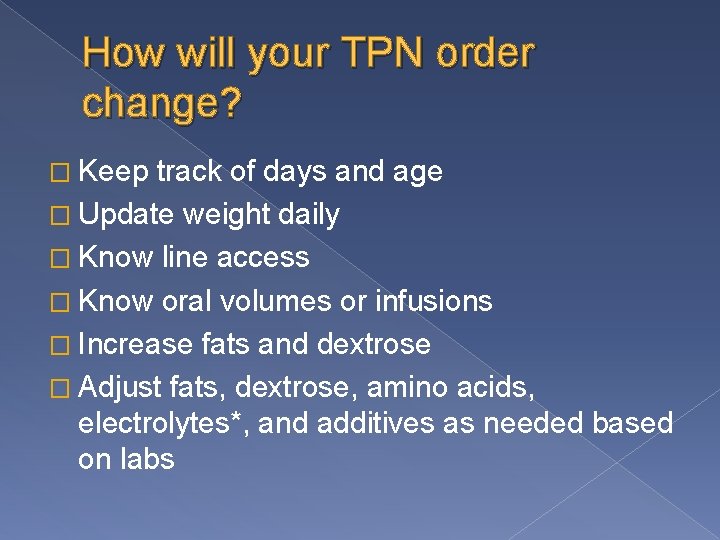
How will your TPN order change? � Keep track of days and age � Update weight daily � Know line access � Know oral volumes or infusions � Increase fats and dextrose � Adjust fats, dextrose, amino acids, electrolytes*, and additives as needed based on labs
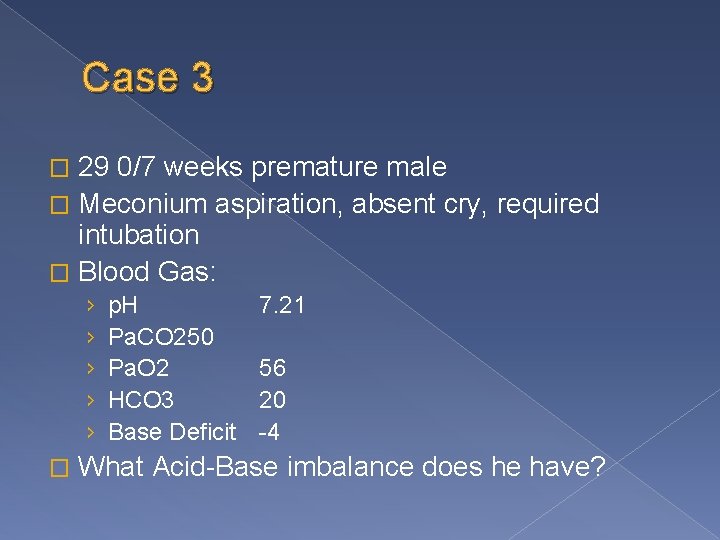
Case 3 29 0/7 weeks premature male � Meconium aspiration, absent cry, required intubation � Blood Gas: � › › › � p. H Pa. CO 250 Pa. O 2 HCO 3 Base Deficit 7. 21 56 20 -4 What Acid-Base imbalance does he have?
Case 3 � Respiratory � How acidosis can we help reduce his acidosis?
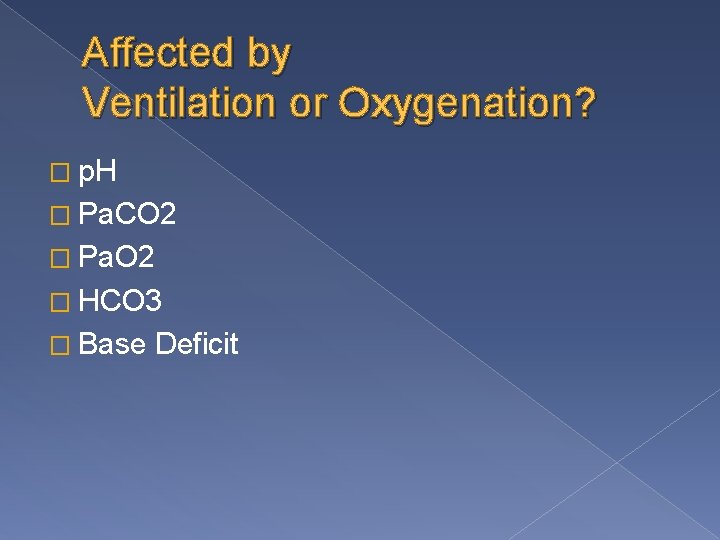
Affected by Ventilation or Oxygenation? � p. H � Pa. CO 2 � Pa. O 2 � HCO 3 � Base Deficit
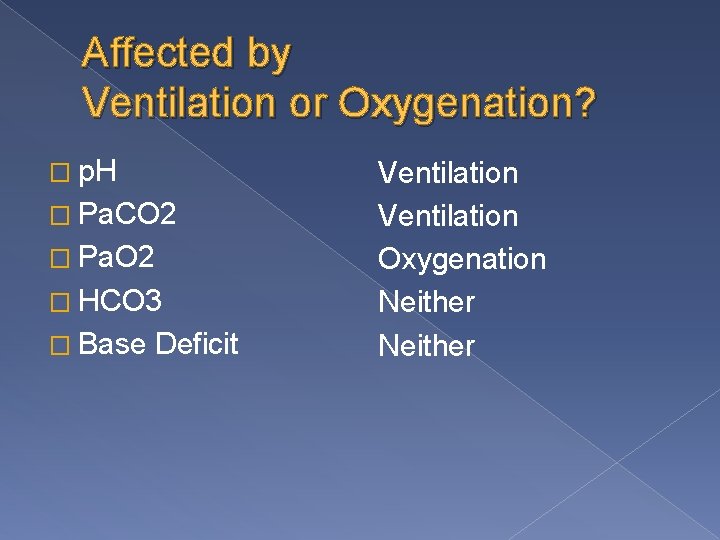
Affected by Ventilation or Oxygenation? � p. H � Pa. CO 2 � Pa. O 2 � HCO 3 � Base Deficit Ventilation Oxygenation Neither
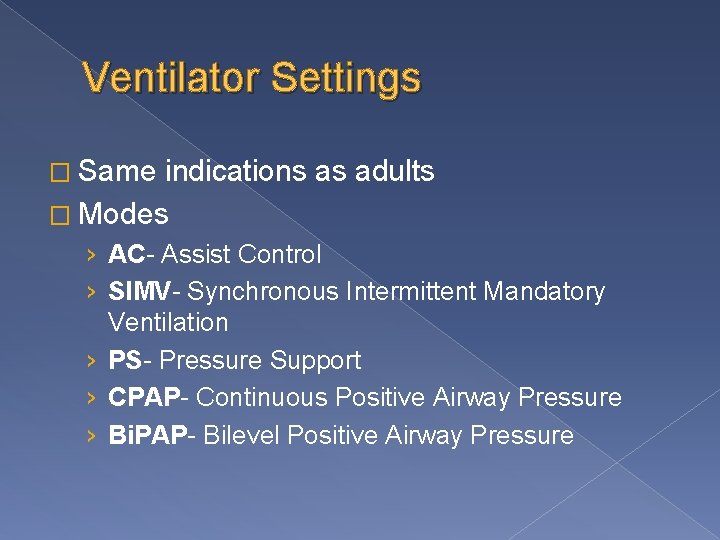
Ventilator Settings � Same indications as adults � Modes › AC- Assist Control › SIMV- Synchronous Intermittent Mandatory Ventilation › PS- Pressure Support › CPAP- Continuous Positive Airway Pressure › Bi. PAP- Bilevel Positive Airway Pressure
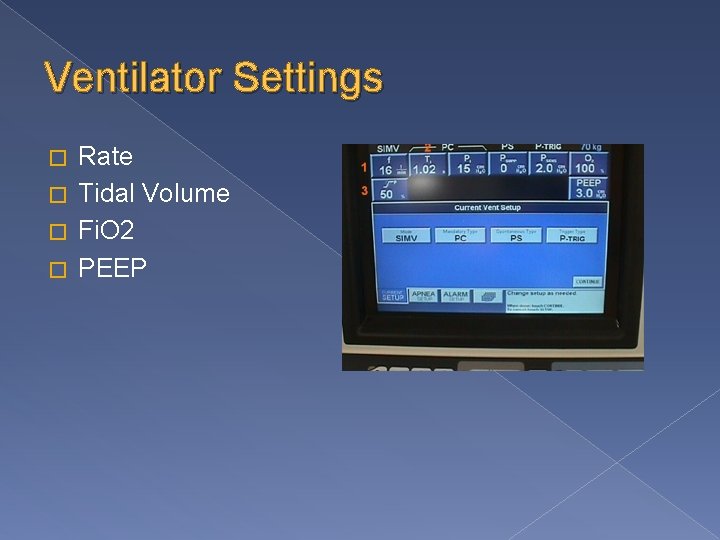
Ventilator Settings Rate � Tidal Volume � Fi. O 2 � PEEP �
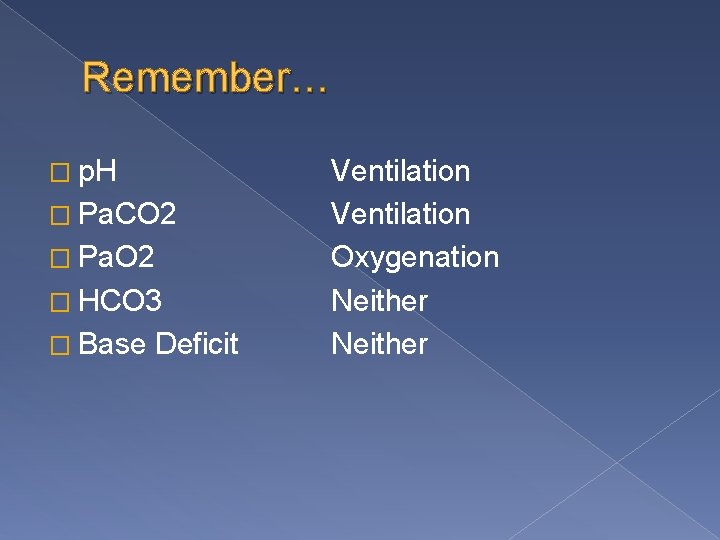
Remember… � p. H � Pa. CO 2 � Pa. O 2 � HCO 3 � Base Deficit Ventilation Oxygenation Neither
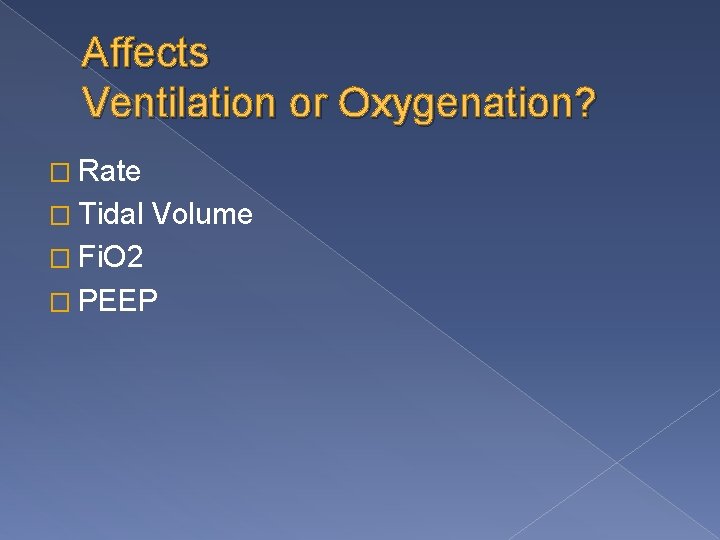
Affects Ventilation or Oxygenation? � Rate � Tidal Volume � Fi. O 2 � PEEP
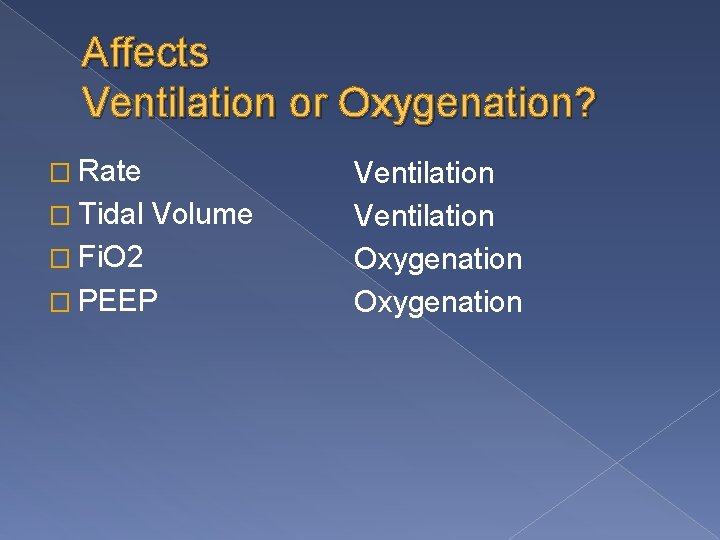
Affects Ventilation or Oxygenation? � Rate � Tidal Volume � Fi. O 2 � PEEP Ventilation Oxygenation
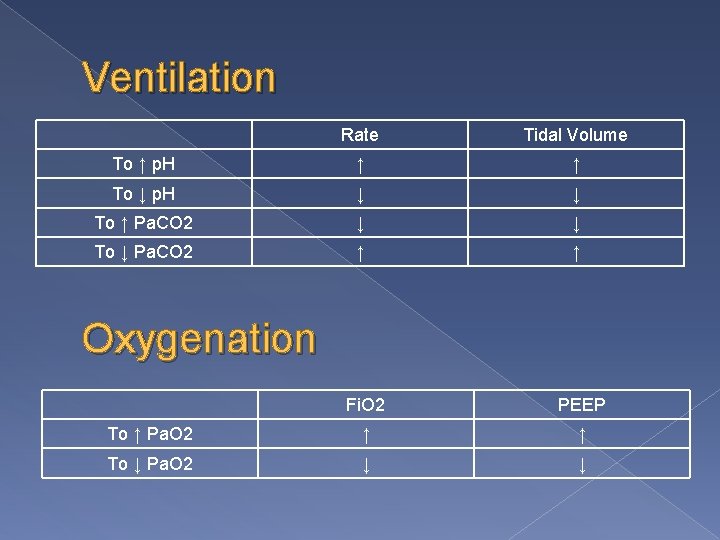
Ventilation Rate Tidal Volume To ↑ p. H ↑ ↑ To ↓ p. H ↓ ↓ To ↑ Pa. CO 2 ↓ ↓ To ↓ Pa. CO 2 ↑ ↑ Oxygenation Fi. O 2 PEEP To ↑ Pa. O 2 ↑ ↑ To ↓ Pa. O 2 ↓ ↓
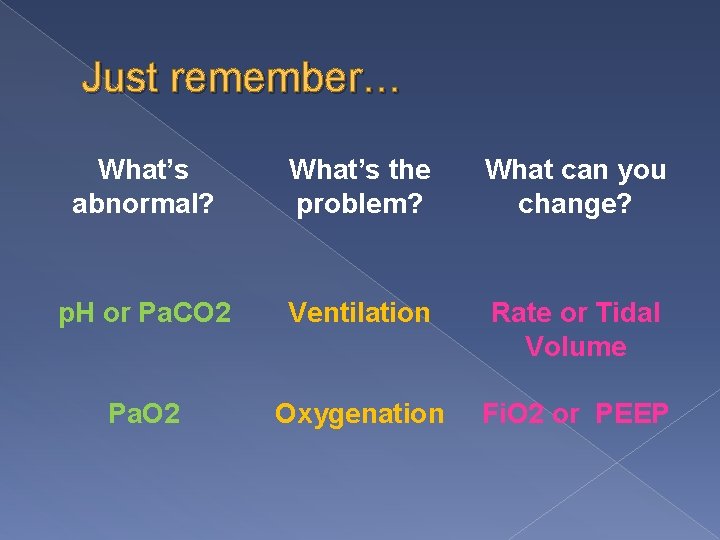
Just remember… What’s abnormal? What’s the problem? What can you change? p. H or Pa. CO 2 Ventilation Rate or Tidal Volume Pa. O 2 Oxygenation Fi. O 2 or PEEP

Take Home Points

� Be an active participant in the newborn resuscitation!

� TPN looks hard, but doesn’t have to be.
� Know why your blood gasses are abnormal, and fix them!

� Feel smarter than a 5 th grader… and some interns.

� Have Fun on Peds & Share the wealth!
Referneces � Emedicine: Neonatal Resuscitation › http: //emedicine. medscape. com/article/977002 overview#a 1 � Neonatology: Newborn and Acid Base Balance. › http: //www. kairos 2. com/14_Acid%20 base%20 bal ance. pdf

Contact Information � Lisa Marie Piwoszkin � OMS IV, CCOM � piwoszkin. L@gmail. com
- Slides: 55