
Making sense of complexity in open information environments
- Slides: 57
Making sense of complexity in open information environments George Siemens October 26, 2011
Openness is a control tradeoff And it means we have to do different things
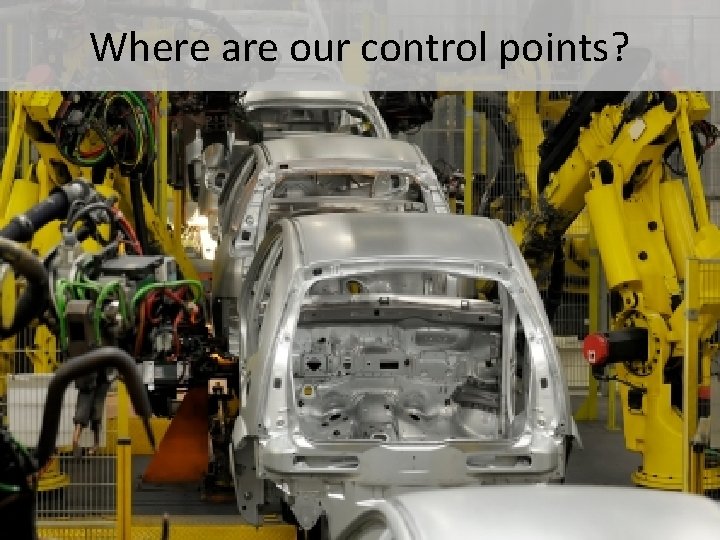
Where are our control points?
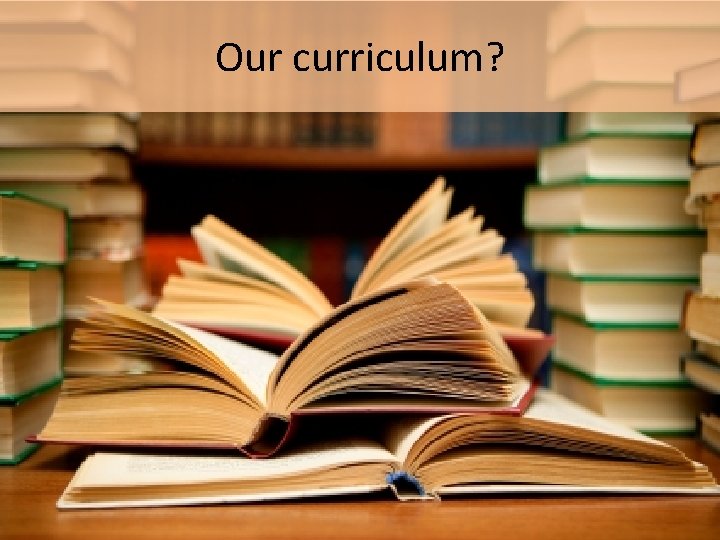
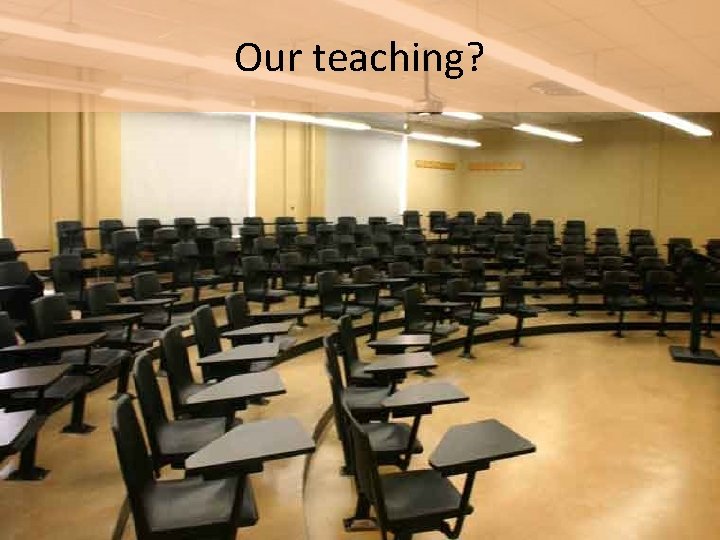
Our curriculum?
Our teaching?
Fragmentation is a new reality. Our Fragmentary learning models experience need to embrace (reflect) it. • Conversations, content, context not (only) shaped by the school/educator • Learners are in control
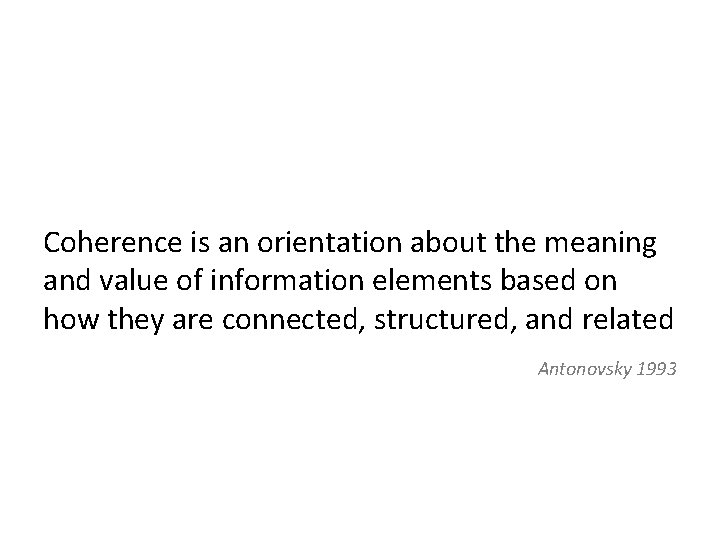
Coherence is an orientation about the meaning and value of information elements based on how they are connected, structured, and related Antonovsky 1993
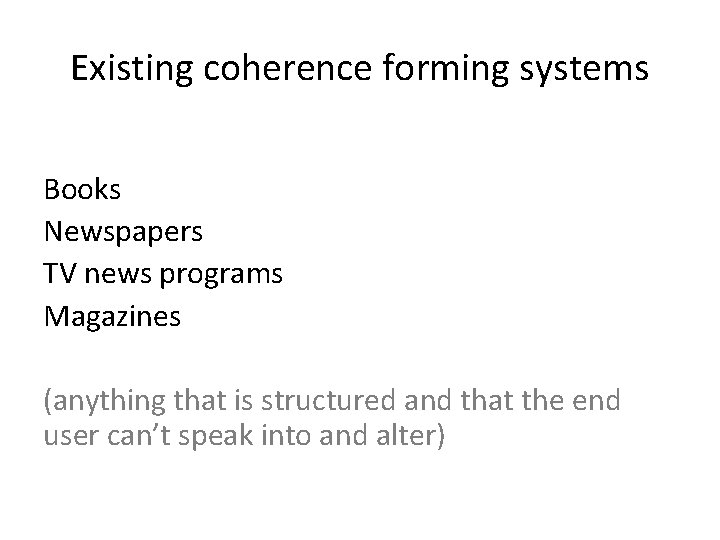
Existing coherence forming systems Books Newspapers TV news programs Magazines (anything that is structured and that the end user can’t speak into and alter)
Openness messes up coherence (and control)
Fragmentation of information requires that we weave together elements into some type of coherent framework Youtube Blogs Twitter Facebook TEDtalks Kahn Academy Online news/information sites Traditional coherence frameworks
Networked information doesn’t have a centre
Information fragmentation…loss of narratives of coherence
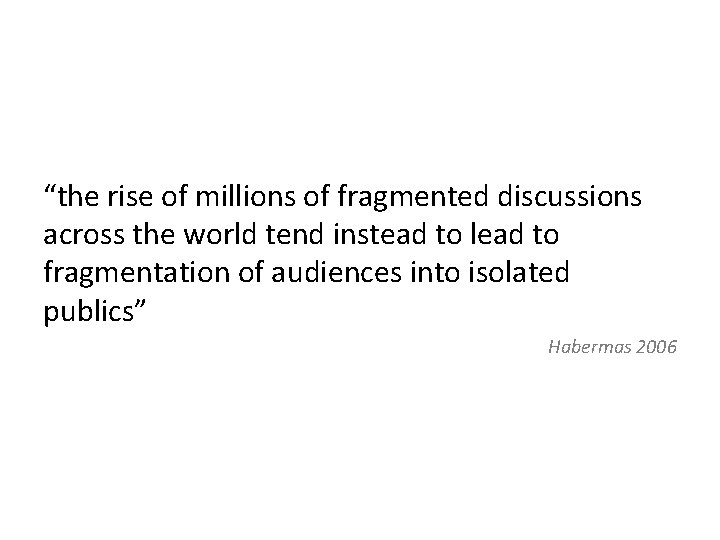
“the rise of millions of fragmented discussions across the world tend instead to lead to fragmentation of audiences into isolated publics” Habermas 2006
Argument: we socialize to make sense of information … i. e. it is our ability to work with information (abstraction, representation, “point to”) that defines humanity
As information quantity and complexity increase… We adopt two approaches: 1. Better technical systems 2. Better connected social systems
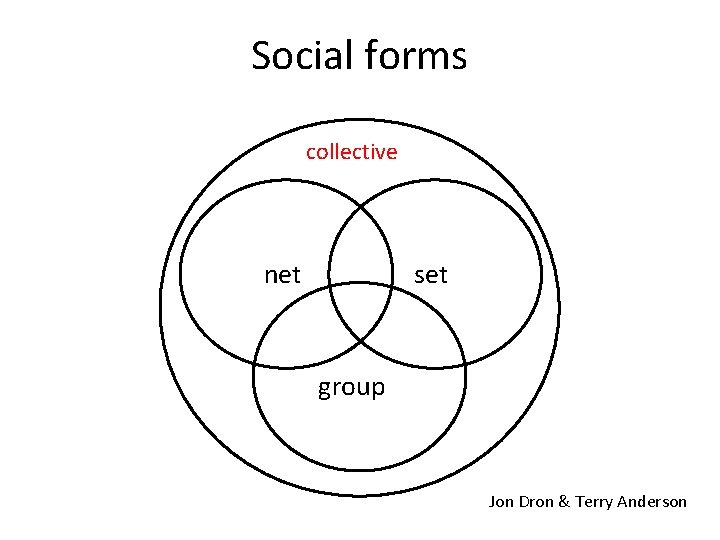
Social forms collective net set group Jon Dron & Terry Anderson
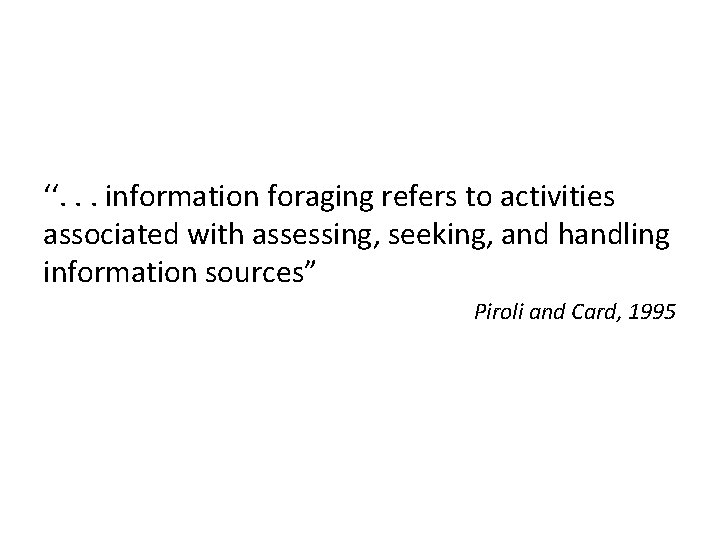
‘‘. . . information foraging refers to activities associated with assessing, seeking, and handling information sources” Piroli and Card, 1995
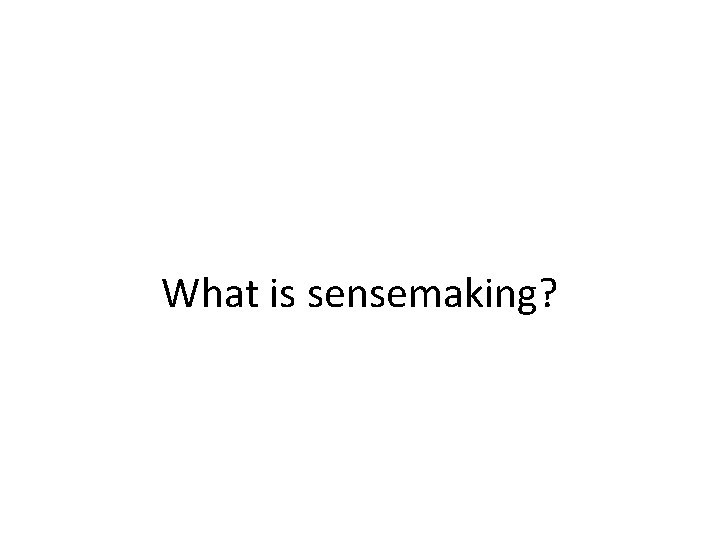
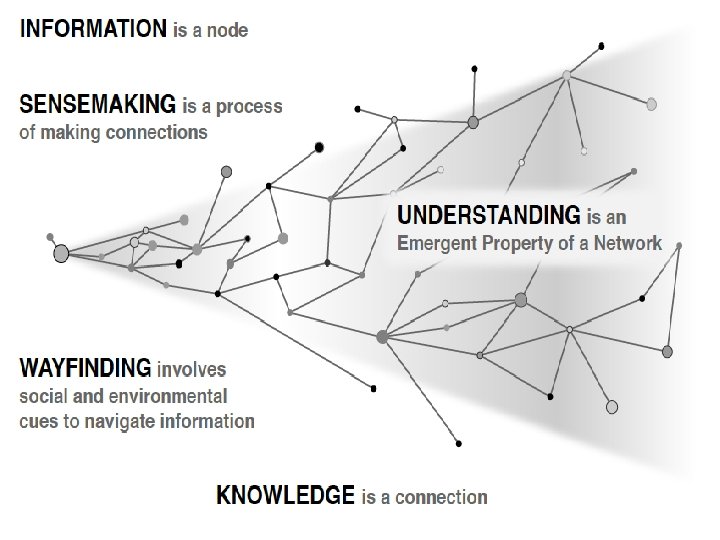
What is sensemaking?
“Sensemaking is about labelling and categorizing to stabilize the streaming of experience” Weick et al. 2005
“a motivated, continuous effort to understand connections. . . in order to anticipate their trajectories and act effectively” Klein et al. 2006
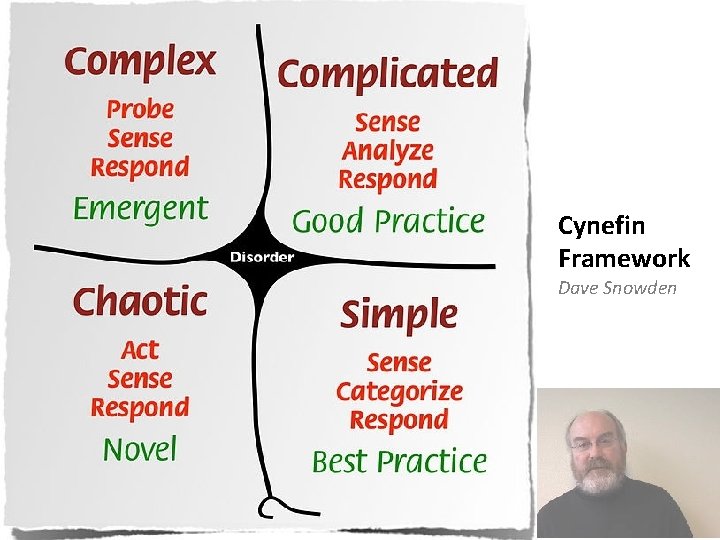
Cynefin Framework Dave Snowden
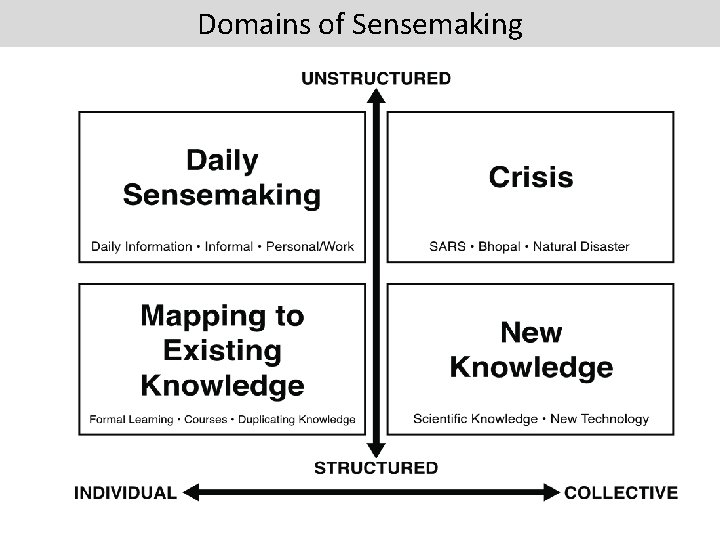
Domains of Sensemaking
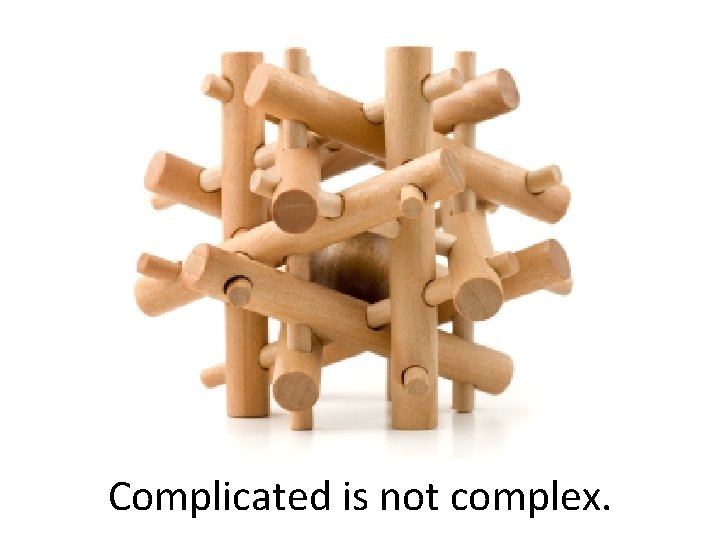
Complicated is not complex.
When an answer and path is known, but requires time and effort, it is complicated.
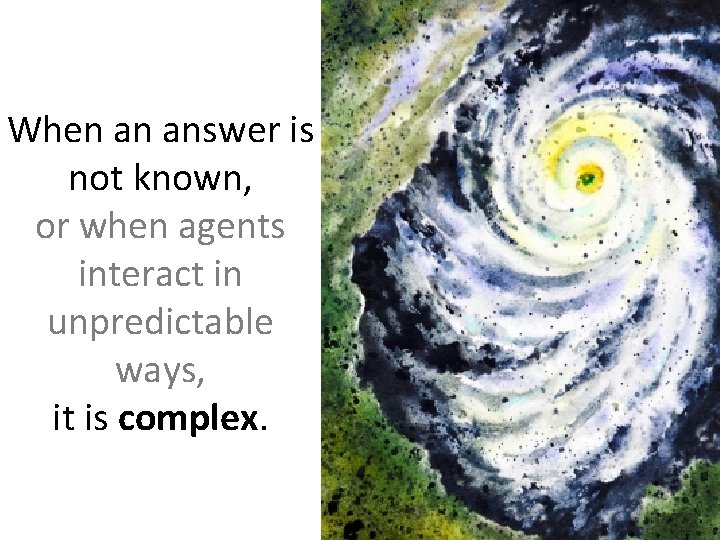
When an answer is not known, or when agents interact in unpredictable ways, it is complex.
Lessons #1 in Paths to Failure: Education system is treating a complex problem as a complicated one.
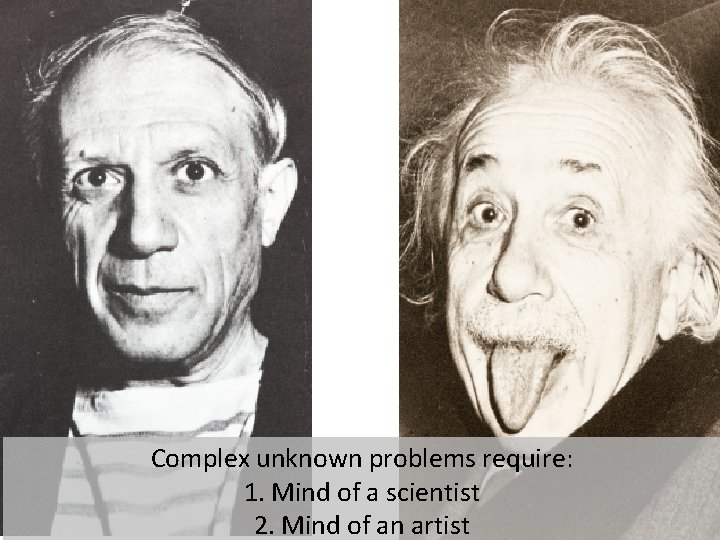
Complex unknown problems require: 1. Mind of a scientist 2. Mind of an artist
What is wayfinding?
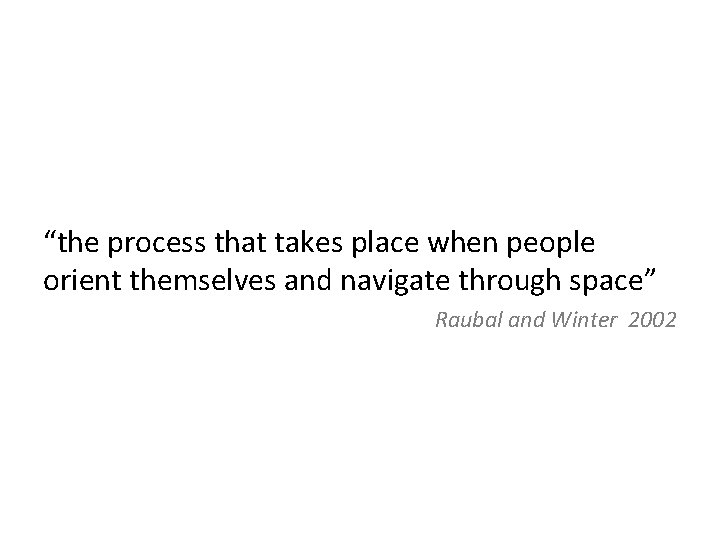
“the process that takes place when people orient themselves and navigate through space” Raubal and Winter 2002
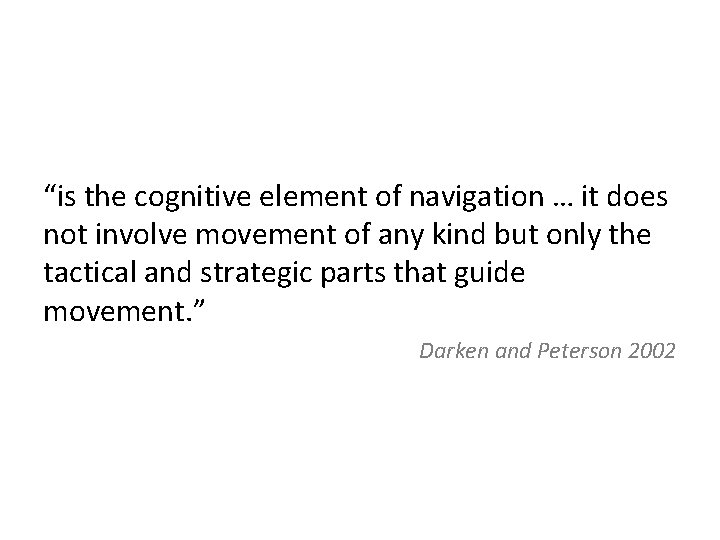
“is the cognitive element of navigation … it does not involve movement of any kind but only the tactical and strategic parts that guide movement. ” Darken and Peterson 2002
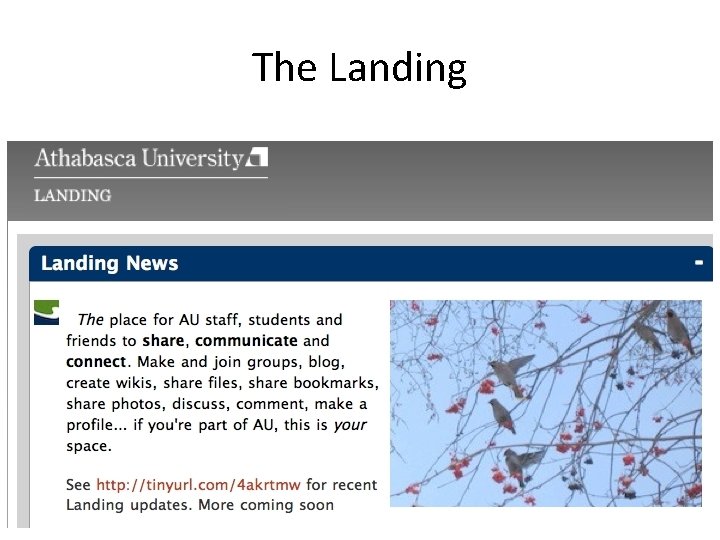
The Landing
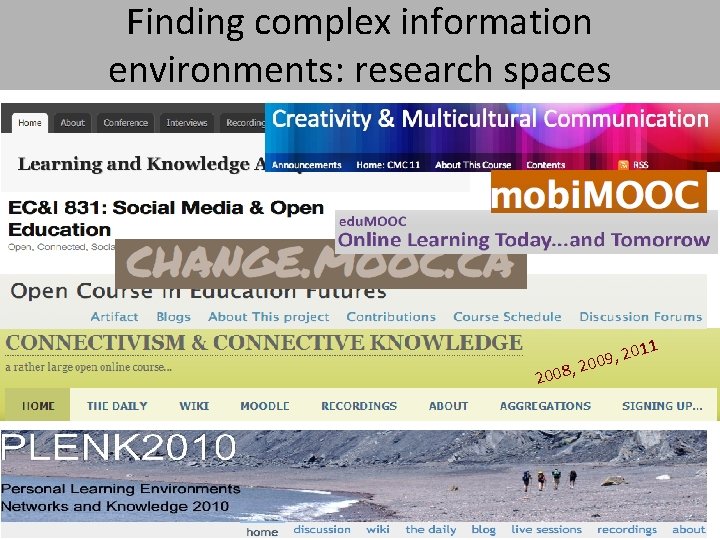
Finding complex information environments: research spaces 011 2008 , 2 9 0 0 , 2
The data set Connectivism and Connective Knowledge 2008 (CCK 08)
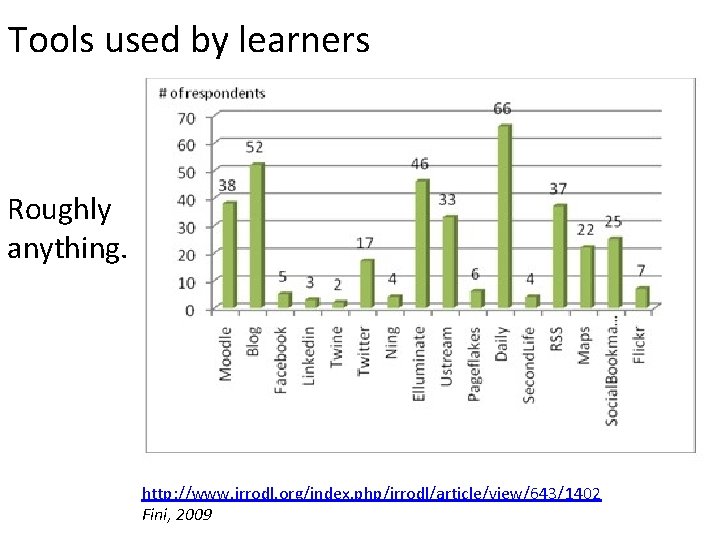
Tools used by learners Roughly anything. http: //www. irrodl. org/index. php/irrodl/article/view/643/1402 Fini, 2009
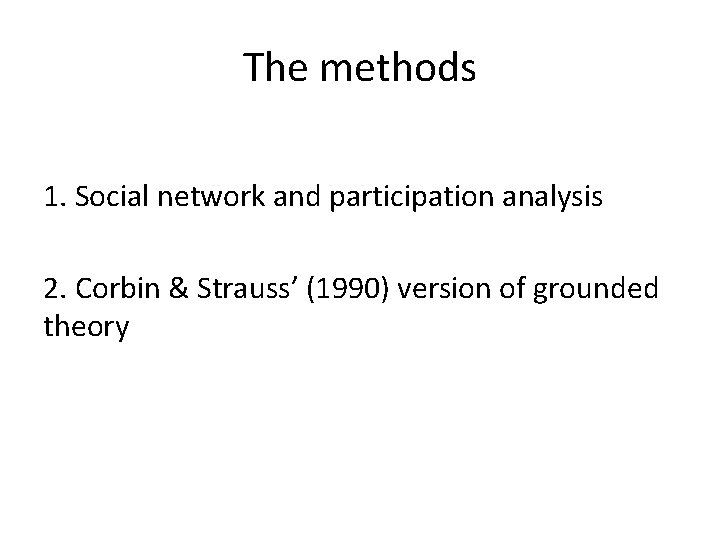
The methods 1. Social network and participation analysis 2. Corbin & Strauss’ (1990) version of grounded theory
SNA & Participation Habits
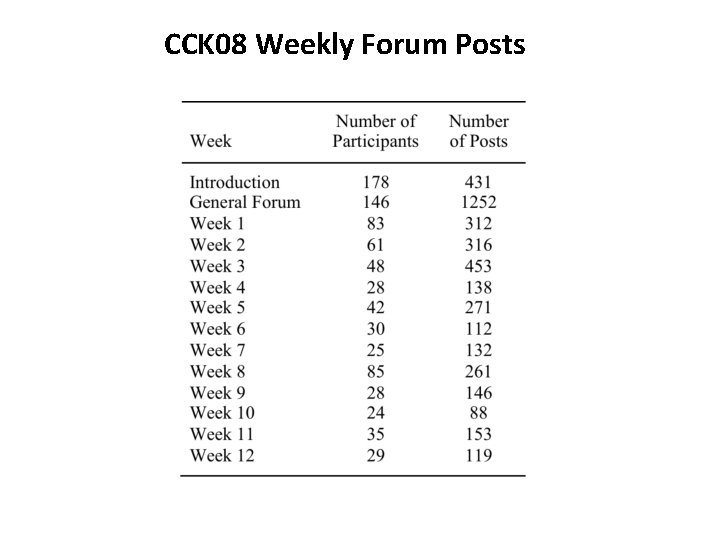
CCK 08 Weekly Forum Posts
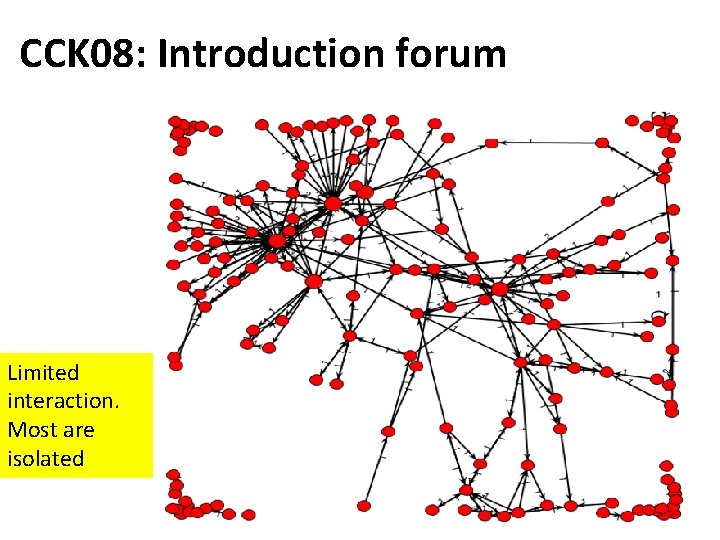
CCK 08: Introduction forum Limited interaction. Most are isolated
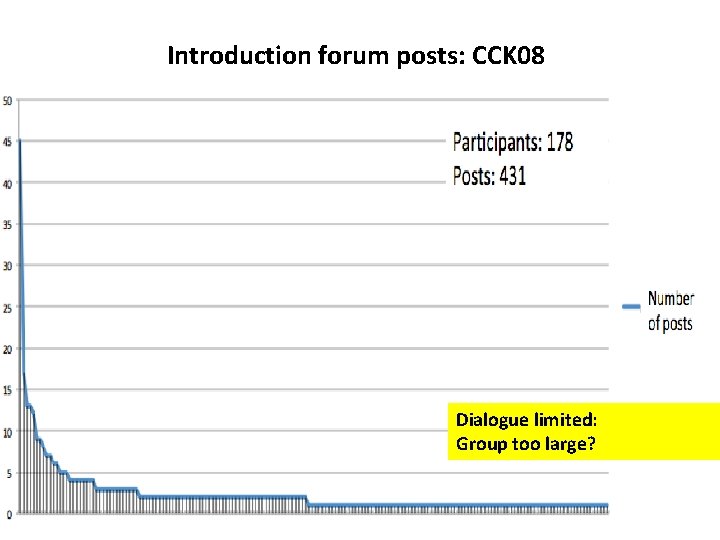
Introduction forum posts: CCK 08 Dialogue limited: Group too large?
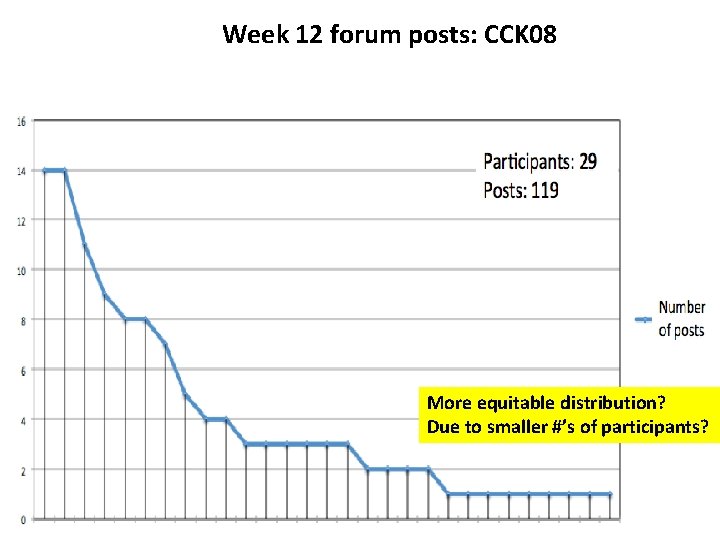
Week 12 forum posts: CCK 08 More equitable distribution? Due to smaller #’s of participants?
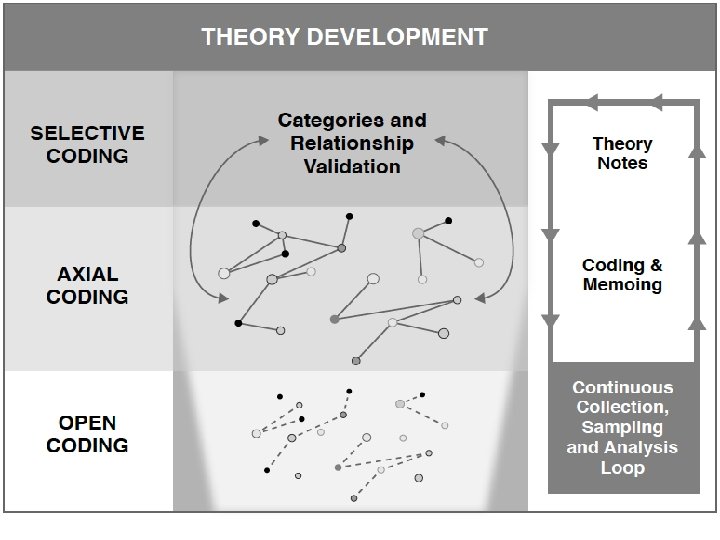
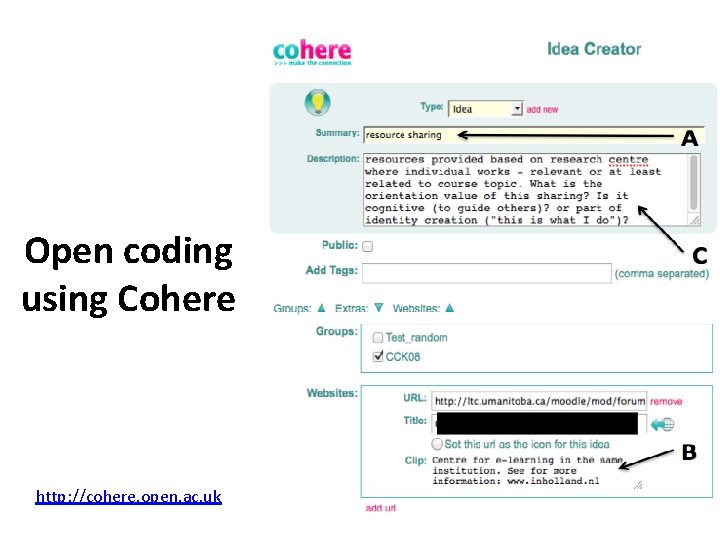
Open coding using Cohere http: //cohere. open. ac. uk
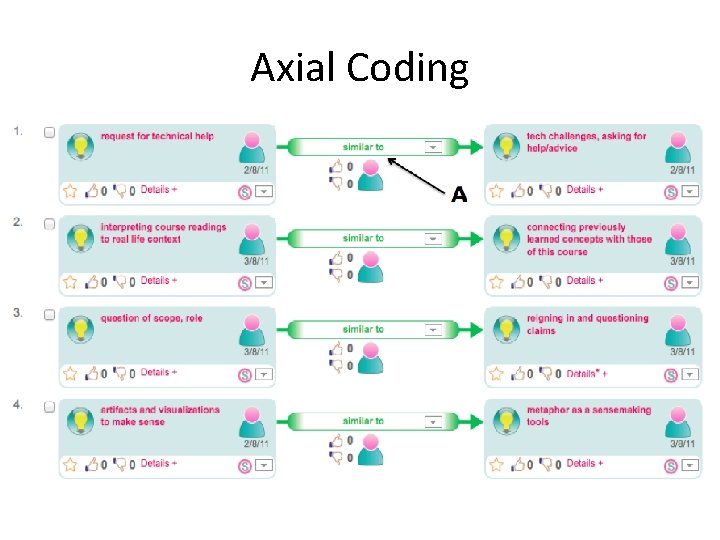
Axial Coding
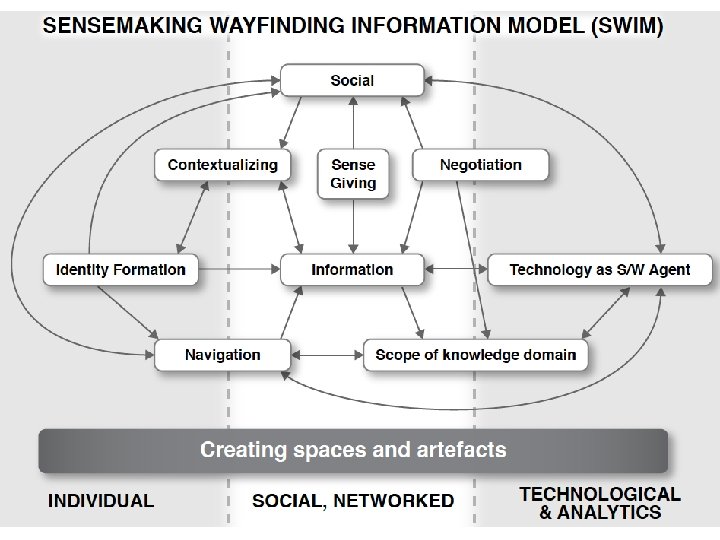
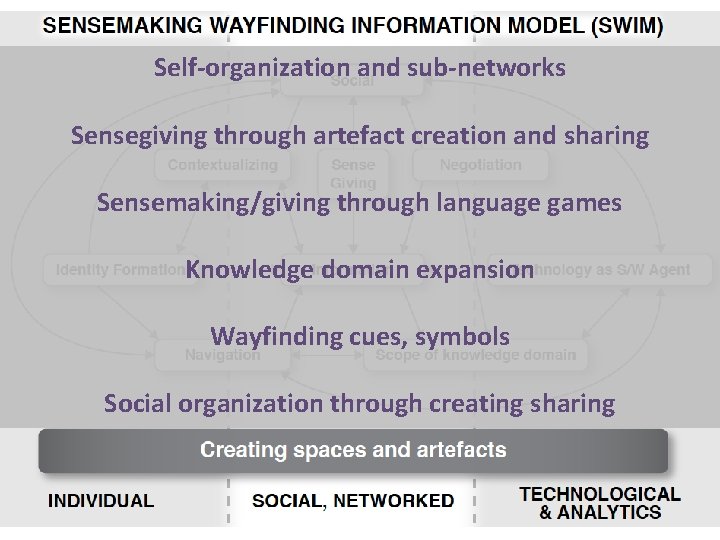
Self-organization and sub-networks Sensegiving through artefact creation and sharing Sensemaking/giving through language games Knowledge domain expansion Wayfinding cues, symbols Social organization through creating sharing
Coherence expression (sensegiving) Artifacts Narratives
Participatory sensemaking: “the coordination of intentional activity in interaction, whereby individual sense-making processes are affected and new domains of social sense-making can be generated that were not available to each individual on her own” De Jaegher and Di Paolo 2007
Artefacts re-centre the learning conversation
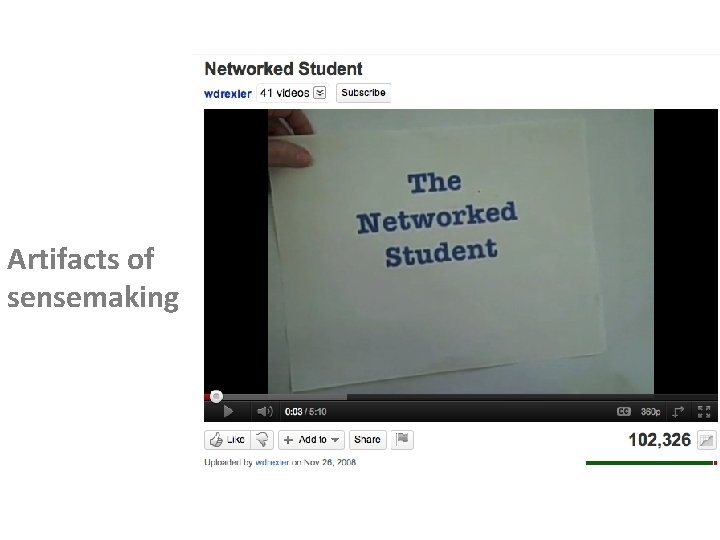
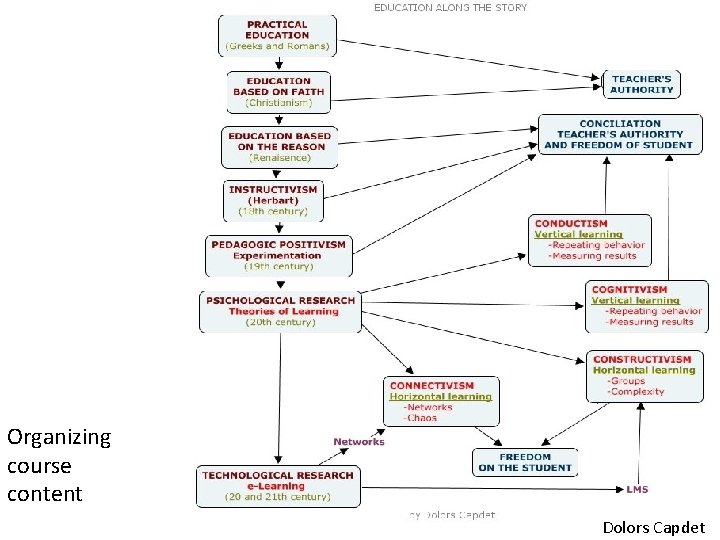
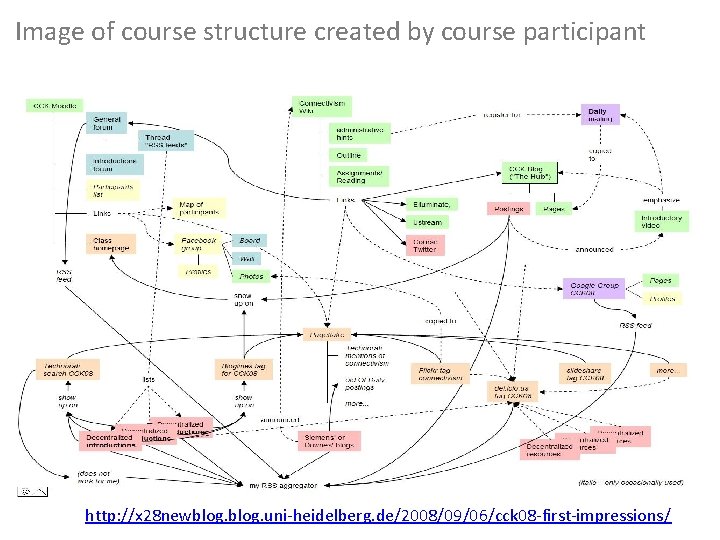
Artifacts of sensemaking
Organizing course content Dolors Capdet
Image of course structure created by course participant http: //x 28 newblog. uni-heidelberg. de/2008/09/06/cck 08 -first-impressions/
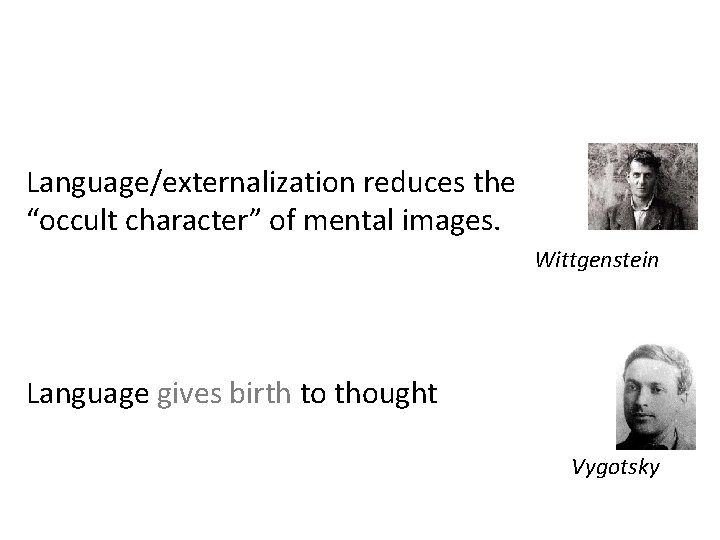
Language/externalization reduces the “occult character” of mental images. Wittgenstein Language gives birth to thought Vygotsky
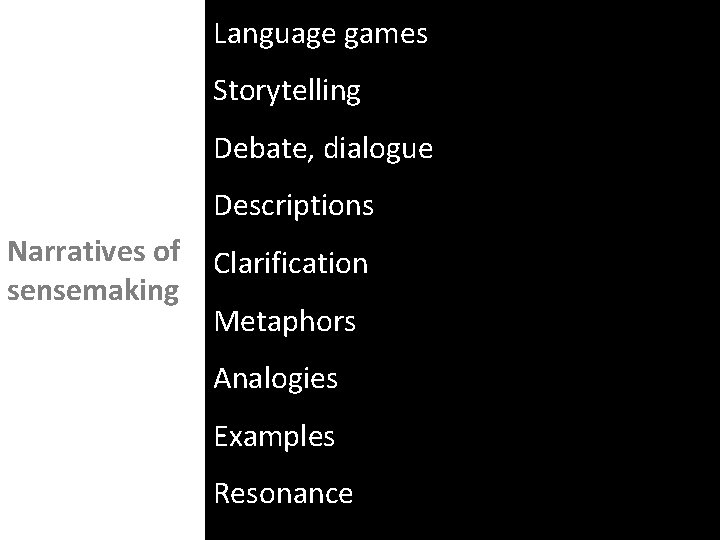
Language games Storytelling Debate, dialogue Descriptions Narratives of sensemaking Clarification Metaphors Analogies Examples Resonance
change. mooc. ca Twitter: gsiemens www. elearnspace. org/blog http: //www. solaresearch. org/ Learning Analytics & Knowledge 2012: Vancouver http: //lak 12. sites. olt. ubc. ca/