
Making sense of behaviour the COMB framework Robert
Making sense of behaviour: the COM-B framework Robert West Susan Michie University College London Centre for Behaviour Change

Outline • Developing behaviour change interventions • Developing ‘the concept’ • The behavioural diagnosis: applying COM-B • Capability • Opportunity • Motivation • Behaviour

Developing behaviour change interventions

Concept Knowledge Goals Development Testing Constraints Implementation Abandonment Stakeholders Collaborators Promotion Risks Context Activity map Opportunities

Concept Knowledge Goals Development Testing Constraints Implementation Abandonment Stakeholders Collaborators Promotion Risks Context Activity map Opportunities

Developing the concept
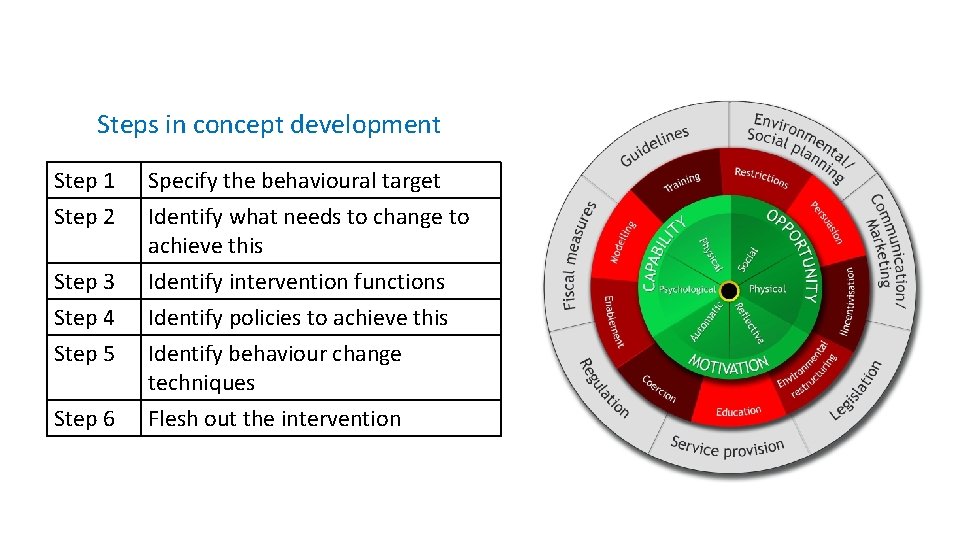
Steps in concept development Step 1 Step 2 Step 3 Step 4 Step 5 Step 6 Specify the behavioural target Identify what needs to change to achieve this Identify intervention functions Identify policies to achieve this Identify behaviour change techniques Flesh out the intervention
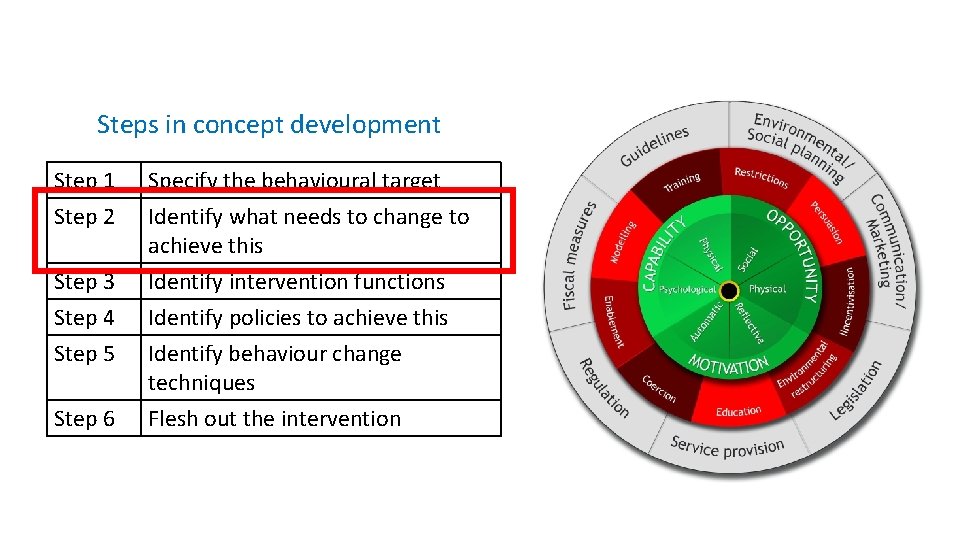
Steps in concept development Step 1 Step 2 Step 3 Step 4 Step 5 Step 6 Specify the behavioural target Identify what needs to change to achieve this Identify intervention functions Identify policies to achieve this Identify behaviour change techniques Flesh out the intervention

The behavioural diagnosis
For someone to enact a given behaviour at a given moment s/he has to have the capability and opportunity and to be more motivated to enact the behaviour than other behaviours
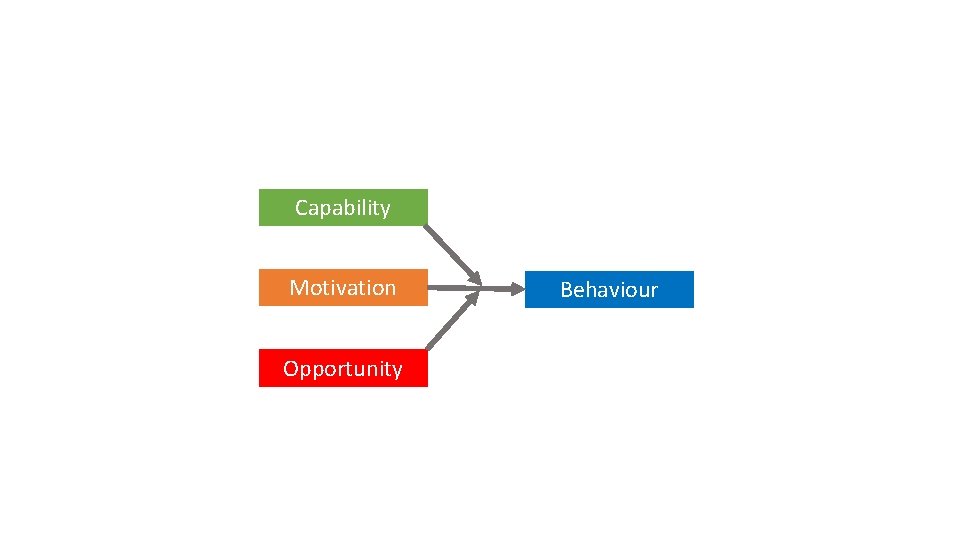
Capability Motivation Opportunity Behaviour

Capability, opportunity, motivation and behaviour form a dynamic interacting system Each influences the other
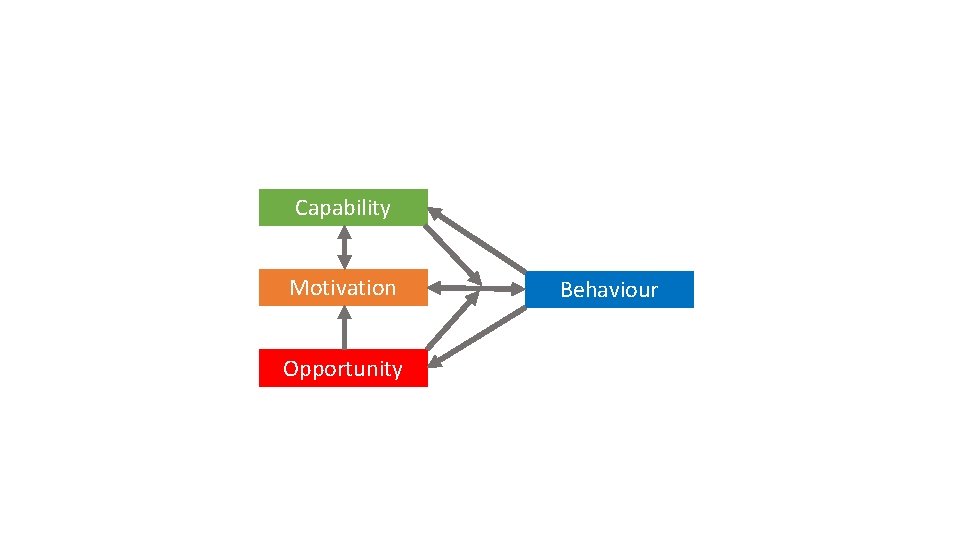
Capability Motivation Opportunity Behaviour

Capability
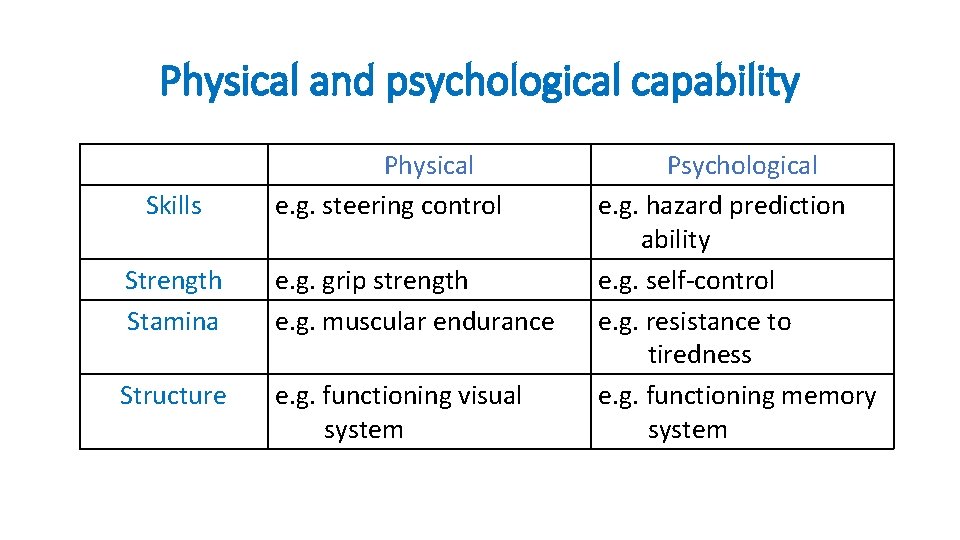
Physical and psychological capability Skills Physical e. g. steering control Strength Stamina e. g. grip strength e. g. muscular endurance Structure e. g. functioning visual system Psychological e. g. hazard prediction ability e. g. self-control e. g. resistance to tiredness e. g. functioning memory system

Opportunity
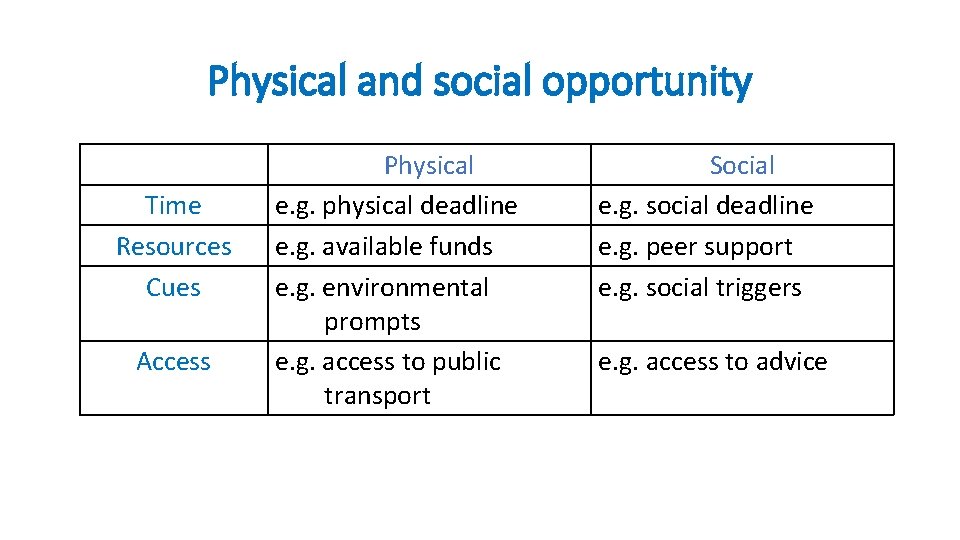
Physical and social opportunity Time Resources Cues Access Physical e. g. physical deadline e. g. available funds e. g. environmental prompts e. g. access to public transport Social e. g. social deadline e. g. peer support e. g. social triggers e. g. access to advice

Motivation
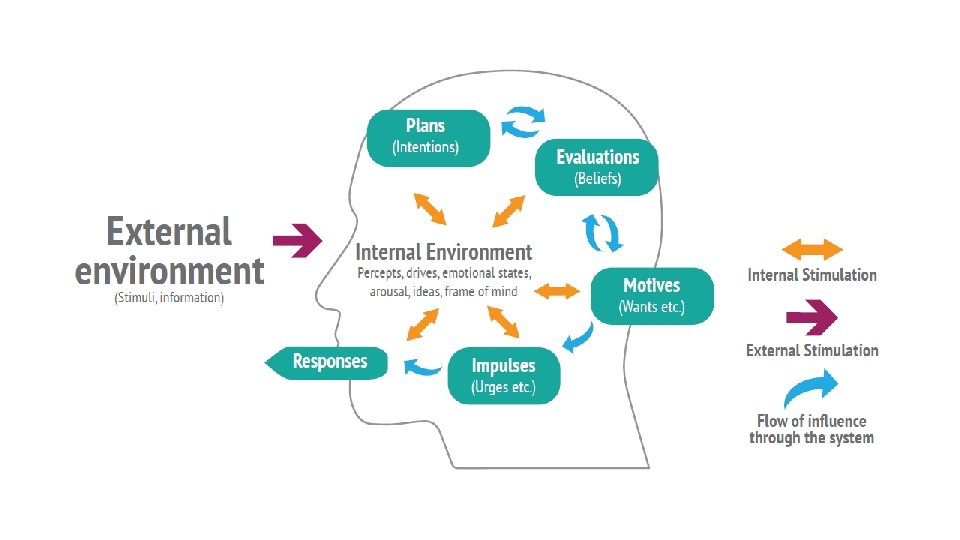
Behaviour
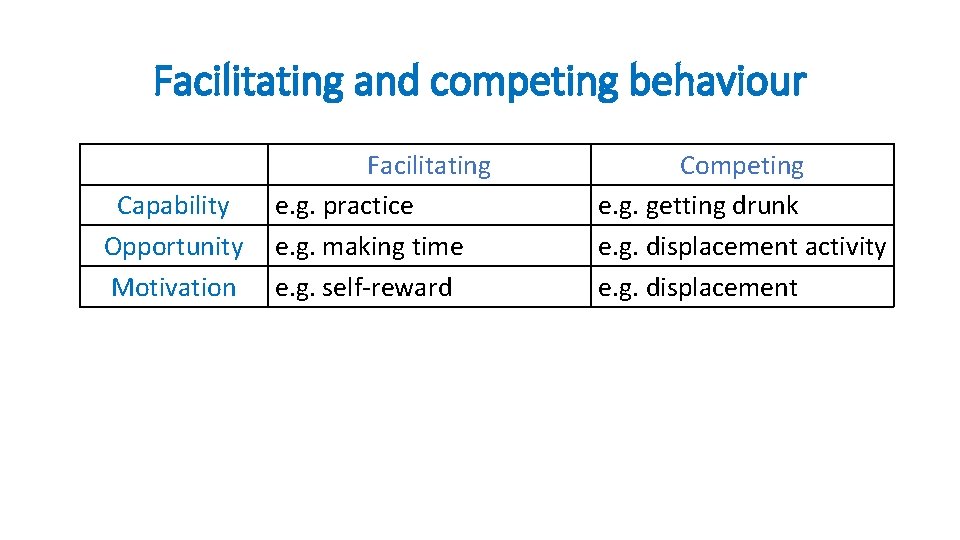
Facilitating and competing behaviour Capability Opportunity Motivation Facilitating e. g. practice e. g. making time e. g. self-reward Competing e. g. getting drunk e. g. displacement activity e. g. displacement

Key points
For behaviour change interventions • Concept development requires a behavioural analysis • The COM-B model provides a way of structuring this analysis • This can guide the search of evidence to identify relevant intervention functions and ultimately the fleshed out intervention

www. behaviourchangewheel. com/
- Slides: 24