
Making Sense Of African Foods Learning Objectives To
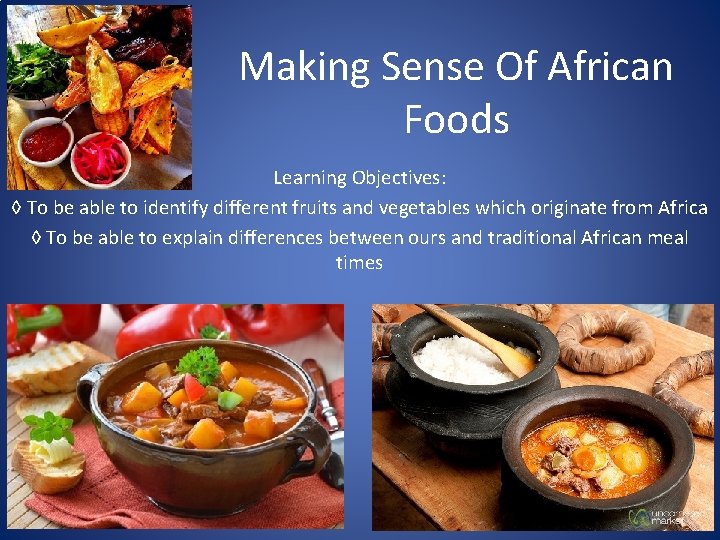
Making Sense Of African Foods Learning Objectives: ◊ To be able to identify different fruits and vegetables which originate from Africa ◊ To be able to explain differences between ours and traditional African meal times
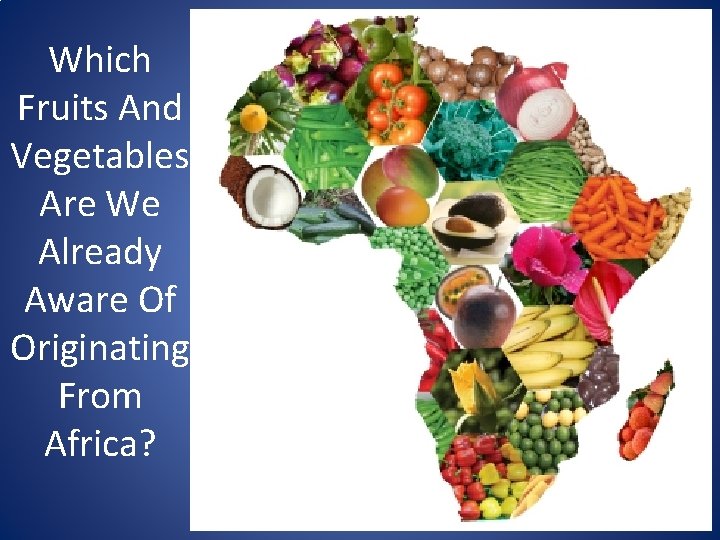
Which Fruits And Vegetables Are We Already Aware Of Originating From Africa?
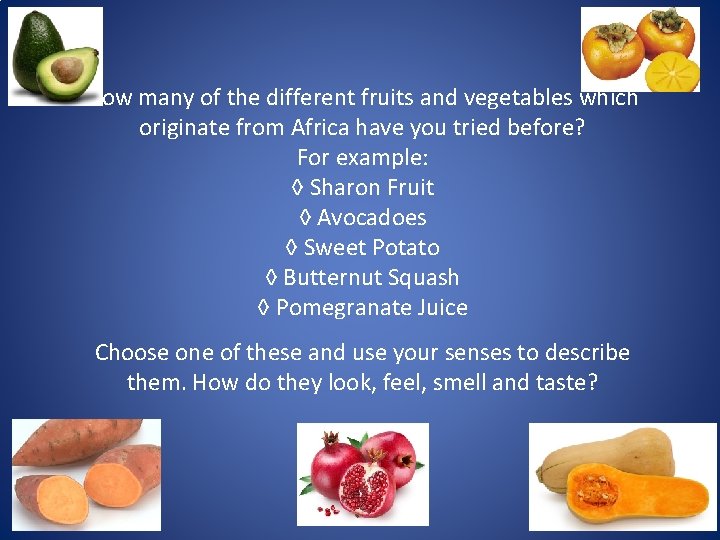
How many of the different fruits and vegetables which originate from Africa have you tried before? For example: ◊ Sharon Fruit ◊ Avocadoes ◊ Sweet Potato ◊ Butternut Squash ◊ Pomegranate Juice Choose one of these and use your senses to describe them. How do they look, feel, smell and taste?
In Africa, lunch is traditionally the main meal of the day which is usually made up of vegetables, pulses, and on special occasions, meat. This Is because beef, goat and sheep (mutton) are expensive in Africa. However, fish is always available in coastal areas and in lakes and rivers. Stews are served over a porridge or mash of root vegetables, such as potatoes. Regional differences are shown through the use of different spices due to histories of trade. Fish and meat are not the focus of the meal but instead are used to highlight the importance of the meal and occasion. Cooking traditionally involves steaming food wrapped in banana leaves, boiling, frying, grilling, roasting and baking in the ashes. Africans usually cook outdoors or in a building separate to their home. The cooking pot sits on three stones over an open fire with food being eaten with their hands. What similarities and differences can you see between ours and traditional African meal times? Find three for each
- Slides: 4