
Making school health promotion a participatory learning process
- Slides: 13
Making school health promotion a participatory learning process! Aspects of a Ph. D –study Nanna Wurr Stjernqvist 22 nd IUHPE, 25 May 2016, Curitiba - Brazil
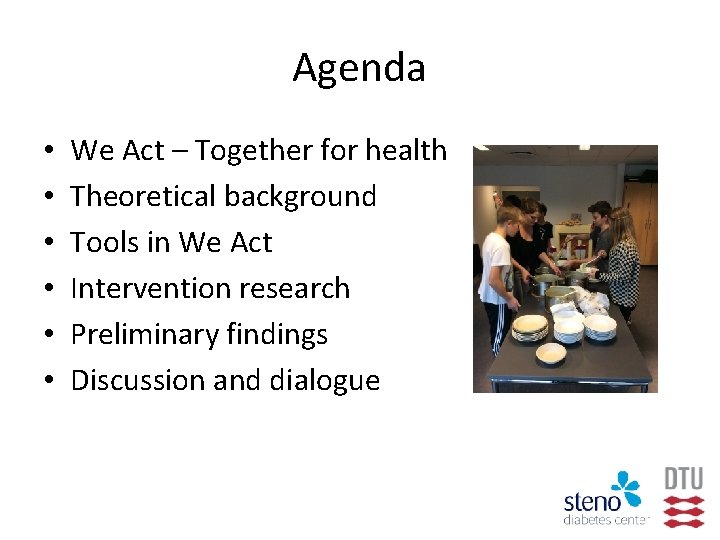
Agenda • • • We Act – Together for health Theoretical background Tools in We Act Intervention research Preliminary findings Discussion and dialogue
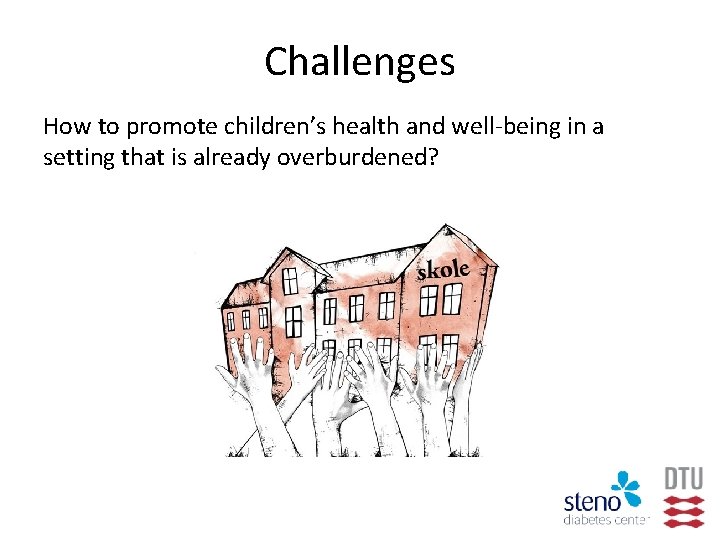
Challenges How to promote children’s health and well-being in a setting that is already overburdened?
Theoretical background • The Health Promotion School (HPS) approach • Democratic Health Education • IVAC approach (Investigation – Vision – Action – Change) Objective • Promote children’s action competence in health and health • Promote healthy settings • Build tools for schools
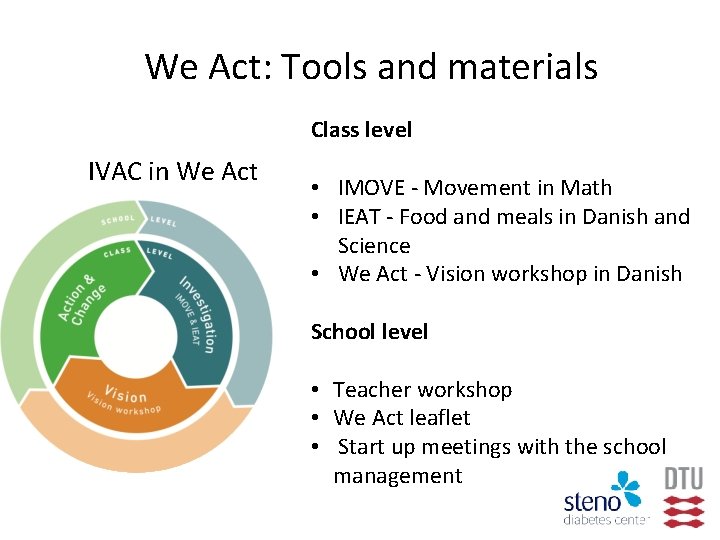
We Act: Tools and materials Class level IVAC in We Act • IMOVE - Movement in Math • IEAT - Food and meals in Danish and Science • We Act - Vision workshop in Danish School level • Teacher workshop • We Act leaflet • Start up meetings with the school management
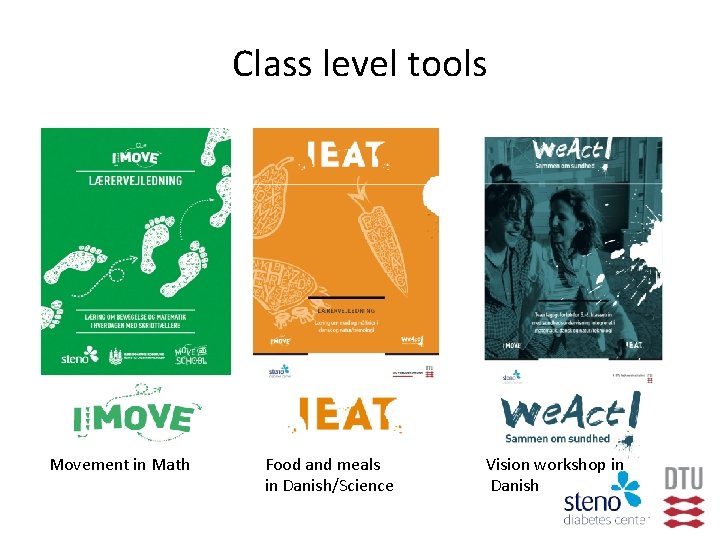
Class level tools Movement in Math Food and meals in Danish/Science Vision workshop in Danish
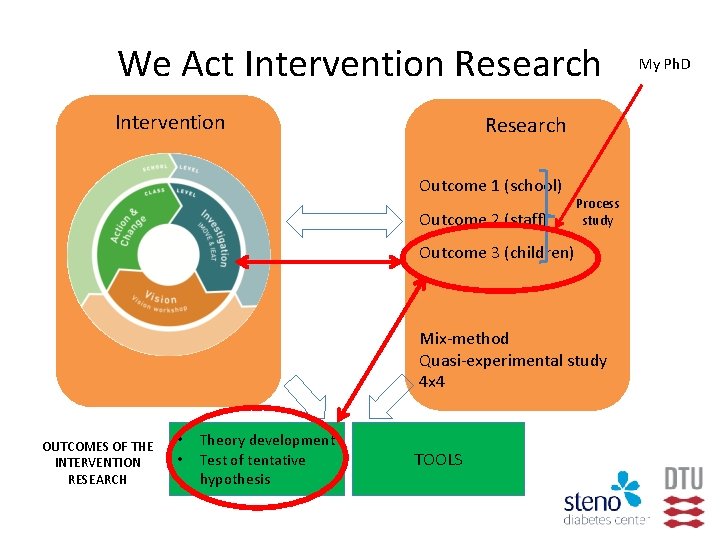
We Act Intervention Research Outcome 1 (school) Outcome 2 (staff) I Process study Outcome 3 (children) Mix-method Quasi-experimental study 4 x 4 OUTCOMES OF THE INTERVENTION RESEARCH • • Theory development Test of tentative hypothesis TOOLS My Ph. D
Research Question How do children perceive and negotiate their participation in We Act – Together for health, compared to their everyday school participation and how is this related to the social environment of the classroom?
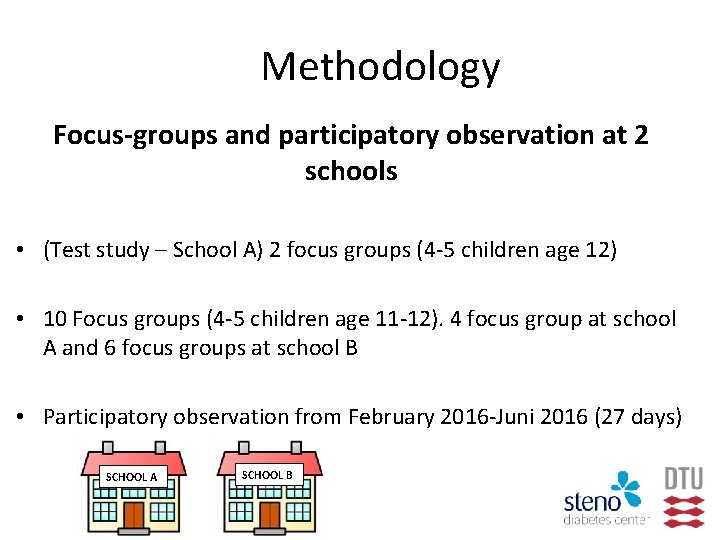
Methodology Focus-groups and participatory observation at 2 schools • (Test study – School A) 2 focus groups (4 -5 children age 12) • 10 Focus groups (4 -5 children age 11 -12). 4 focus group at school A and 6 focus groups at school B • Participatory observation from February 2016 -Juni 2016 (27 days) SCHOOL A SCHOOL B
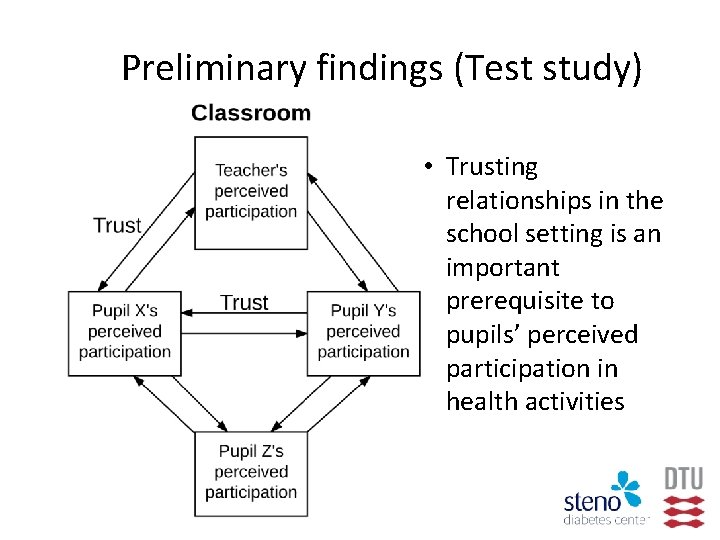
Preliminary findings (Test study) • Trusting relationships in the school setting is an important prerequisite to pupils’ perceived participation in health activities
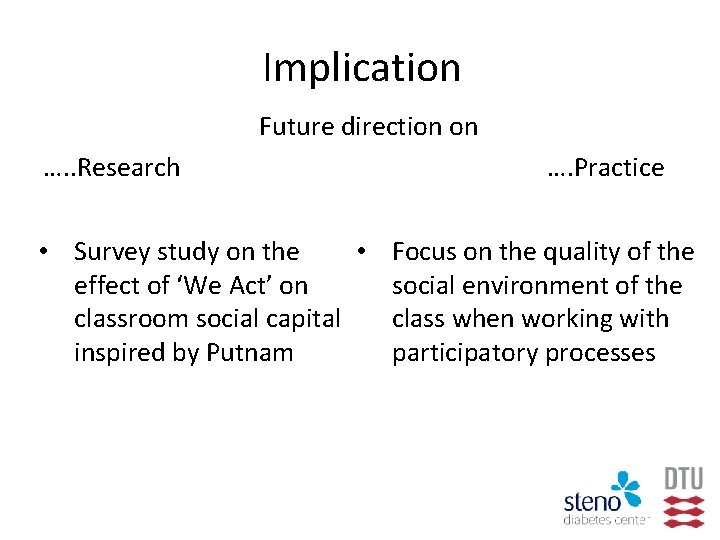
Implication Future direction on …. . Research …. Practice • Survey study on the • Focus on the quality of the effect of ‘We Act’ on social environment of the classroom social capital class when working with inspired by Putnam participatory processes
Acknowledgement Co-authors: Maria Bruselius-Jensen 2, Ane Høstgaard Bonde 2, Marianne Sabinsky 1, Supervisors: Inge Tetens 1 and Bjarne Bruun Jensen 2 And to Steno – Diabetes Center A/S and the Danish Technical University for financial support The participatory children and teachers 1 National Food Institute, Technical University of Denmark, DK - Søborg and 2 Steno – Health, Promotion Research, Steno Diabetes Center A/S, DK- Gentofte
Dialogue with the person next to you • What are the challenges in your home country for school health policy inspired by Goof’s presentation? • What would you consider to be the challenges of integrating democratic health education into the curriculum in your home country inspired by Nanna’s presentation?