
Making Rich Tasks Work Assessment for Learning in
- Slides: 18
Making Rich Tasks Work: Assessment for Learning in Action William Thill PCMI-LA Scaling the Teaching Curve Saturday, January 21, 2017
Schedule For the Workshop • Do/ Analyze the math task (Part 1) • Designing (Part II) • Give receive Feedback (Part II)
Goals to take away from this • See how analyzing the mathematics of a task influences how you’ll engineer classroom time with your students. • Use “five non-negotiables” of assessment for learning as a framework to use rich tasks effectively in your classroom
Park City Mathematics Institute/IAS Teacher Leadership Program A 3 -week residential program for secondary school teachers: Do meaningful mathematics Reflect Deeply on effective teaching Become a Resource for other teachers To learn more: http: //pcmi. ias. edu/program-sstp/ OR http: //mathforum. org/pcmi/
What I don’t plan to do • Give handouts of lessons. • Tell you what will work in your class. • Be an authority
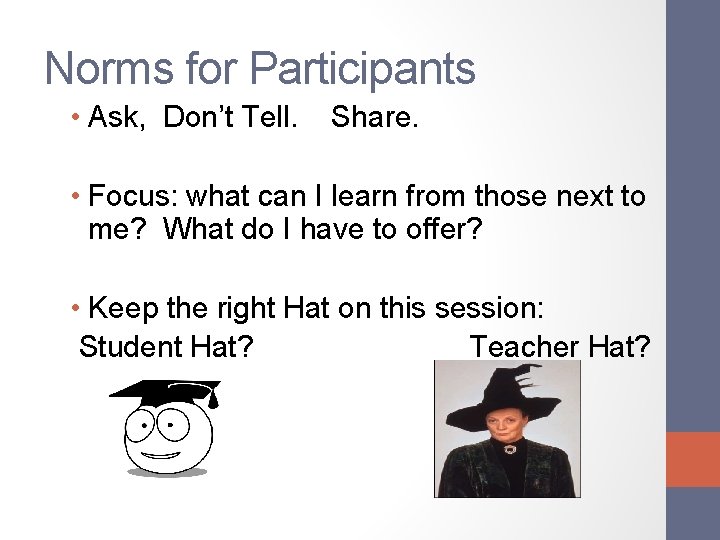
Norms for Participants • Ask, Don’t Tell. Share. • Focus: what can I learn from those next to me? What do I have to offer? • Keep the right Hat on this session: Student Hat? Teacher Hat?
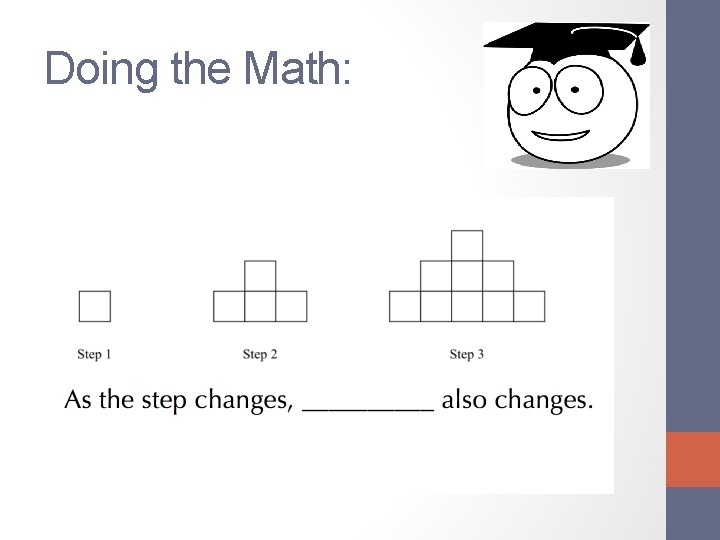
Doing the Math:
Our Task: Mathematical TOPICS? Mathematical Practices?
What’s in this task? Mathematical PRACTICES Brainstorm. PS Common Core mathematical practices in your packet.
Using the patterns problem to help students learn • “This is a cool problem. ” • “ I will use this in my class. ” • Let’s go beyond this. … HOW? With what goal in mind?
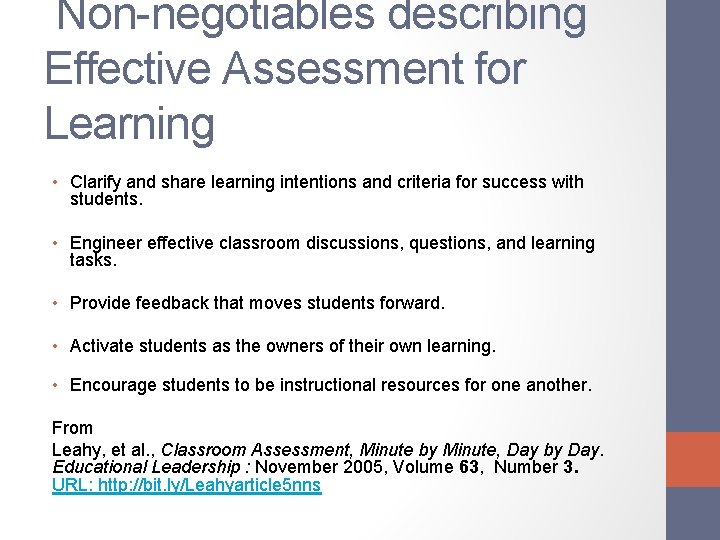
Non-negotiables describing Effective Assessment for Learning • Clarify and share learning intentions and criteria for success with students. • Engineer effective classroom discussions, questions, and learning tasks. • Provide feedback that moves students forward. • Activate students as the owners of their own learning. • Encourage students to be instructional resources for one another. From Leahy, et al. , Classroom Assessment, Minute by Minute, Day by Day. Educational Leadership : November 2005, Volume 63, Number 3. URL: http: //bit. ly/Leahyarticle 5 nns
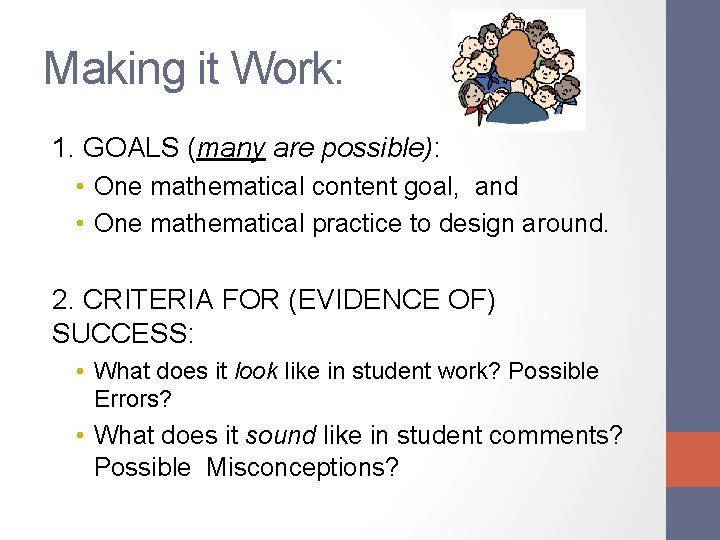
Making it Work: 1. GOALS (many are possible): • One mathematical content goal, and • One mathematical practice to design around. 2. CRITERIA FOR (EVIDENCE OF) SUCCESS: • What does it look like in student work? Possible Errors? • What does it sound like in student comments? Possible Misconceptions?
The Design 3. QUESTIONS / CHECKPOINTS: • Plan at one or two questions/checkpoints that will give you good feedback about student progress on your goals. Why will these work? 4. FEEDBACK to students: • How will students receive feedback about their progress? Who will deliver the feedback? How can it be delivered?
On Poster Paper • Goals • Questions / Checks • Evidence • Feedback
Gallery Walk (Post-its) • Specific Feedback on the LINKAGE between: Their goals Their Evidence, Questions, Feedback • Then see what your colleagues said about your design work
My Experience with another task • The mathematics I saw in this task • Goals for my students topics and practices • What I looked for in student work • What I learned about student understanding • What I would do differently
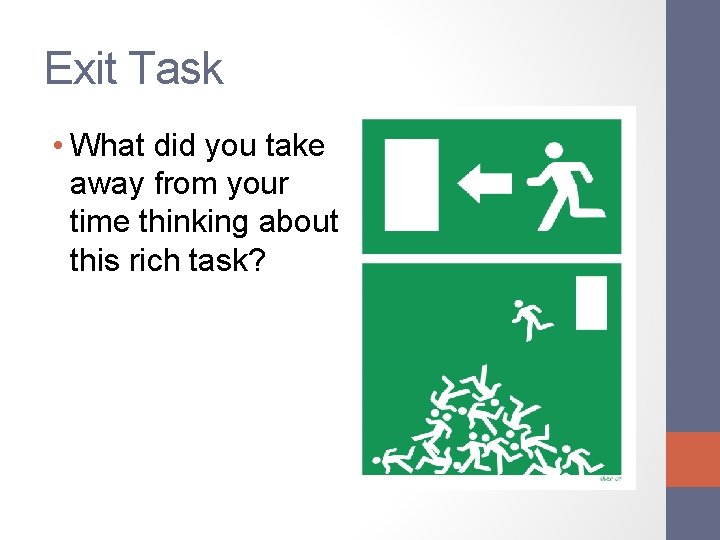
Exit Task • What did you take away from your time thinking about this rich task?
To Learn More: • Leahy, et al. , Classroom Assessment, Minute by Minute, Day by Day. Educational Leadership : November 2005 | Volume 63 | Number 3 URL: http: //bit. ly/Leahyarticle 5 nns