
Making research better by enabling people to find

Making research better by enabling people to find, share, use, and cite data
Mission • Data. Cite was founded in 2009 as an international organization which aims to: • establish easier access to research data • increase acceptance of research data as legitimate contributions in the scholarly record • support data archiving to permit results to be verified and re-purposed for future study
Principles • Our purpose is to develop and support methods to locate, identify and cite data and other research objects • Through collaboration, we: • support researchers by helping them to find, identify, and cite research data and other research objects with confidence • support data centers by providing persistent identifiers for datasets, workflows and standards for data publication • support journal publishers by enabling research articles to be linked to the underlying data/objects
Our structure • Data. Cite has 42 members and more than 800 data centers around the world • Allocating members: they allocate DOI names and use the Registration Agency of Data. Cite in their capacity as allocating agents. They work actively with data centers and users for the purpose of issuing DOIs. • Non-allocating members: those who support Data. Cite's mission but do not wish to allocate DOI names. They work actively with Data. Cite and the wide research data community, but do not act as allocating agents.
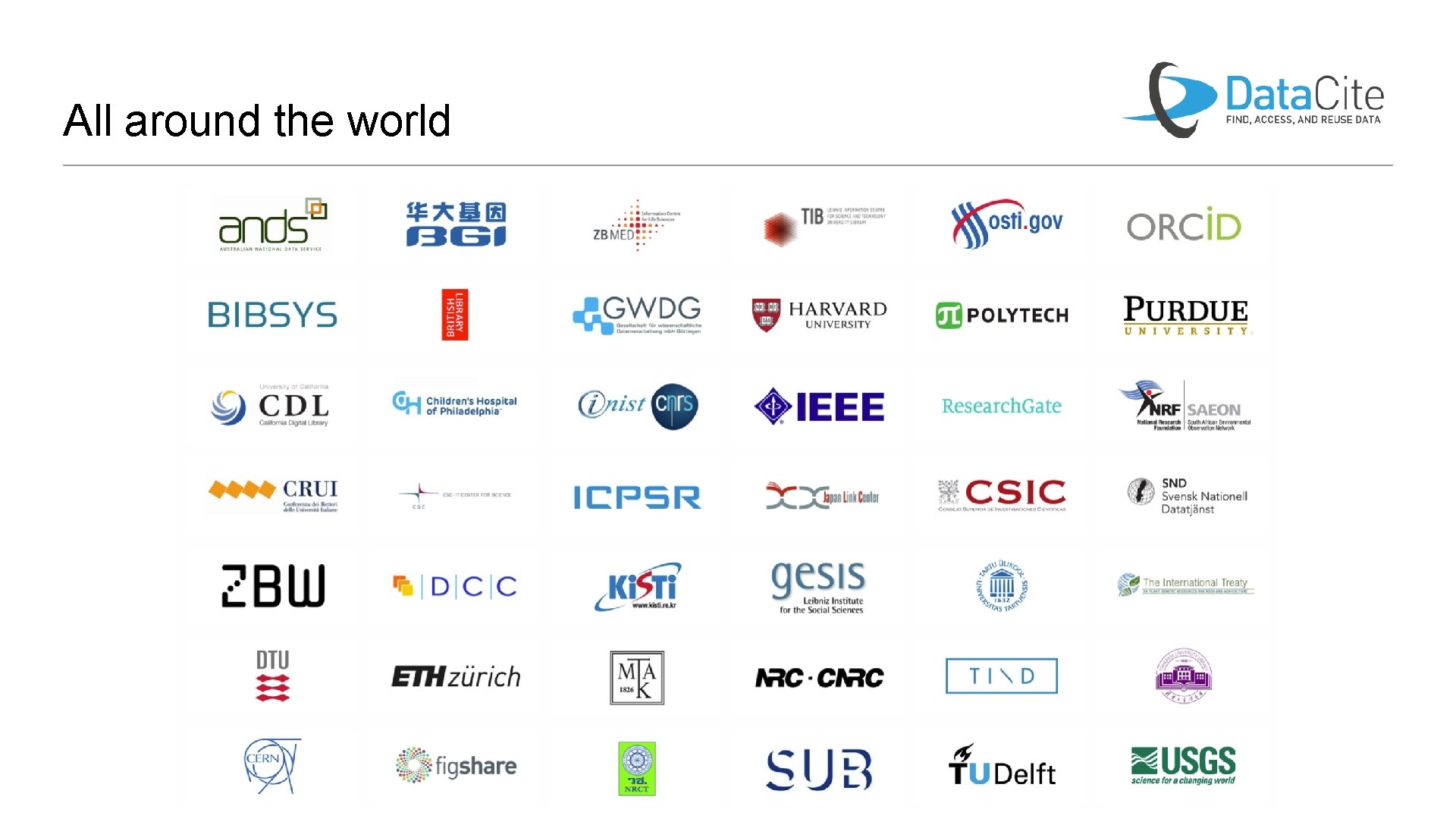
All around the world
What is a Persistent Identifier? • A Persistent Identifier (PID) is a long-lasting reference to an object, a single file or set of them • There are multiple types of PIDs. Data. Cite uses DOIs to reference research data • DOI stands for Digital Object Identifier and it has been used for many years to reference research articles in scholarly communication
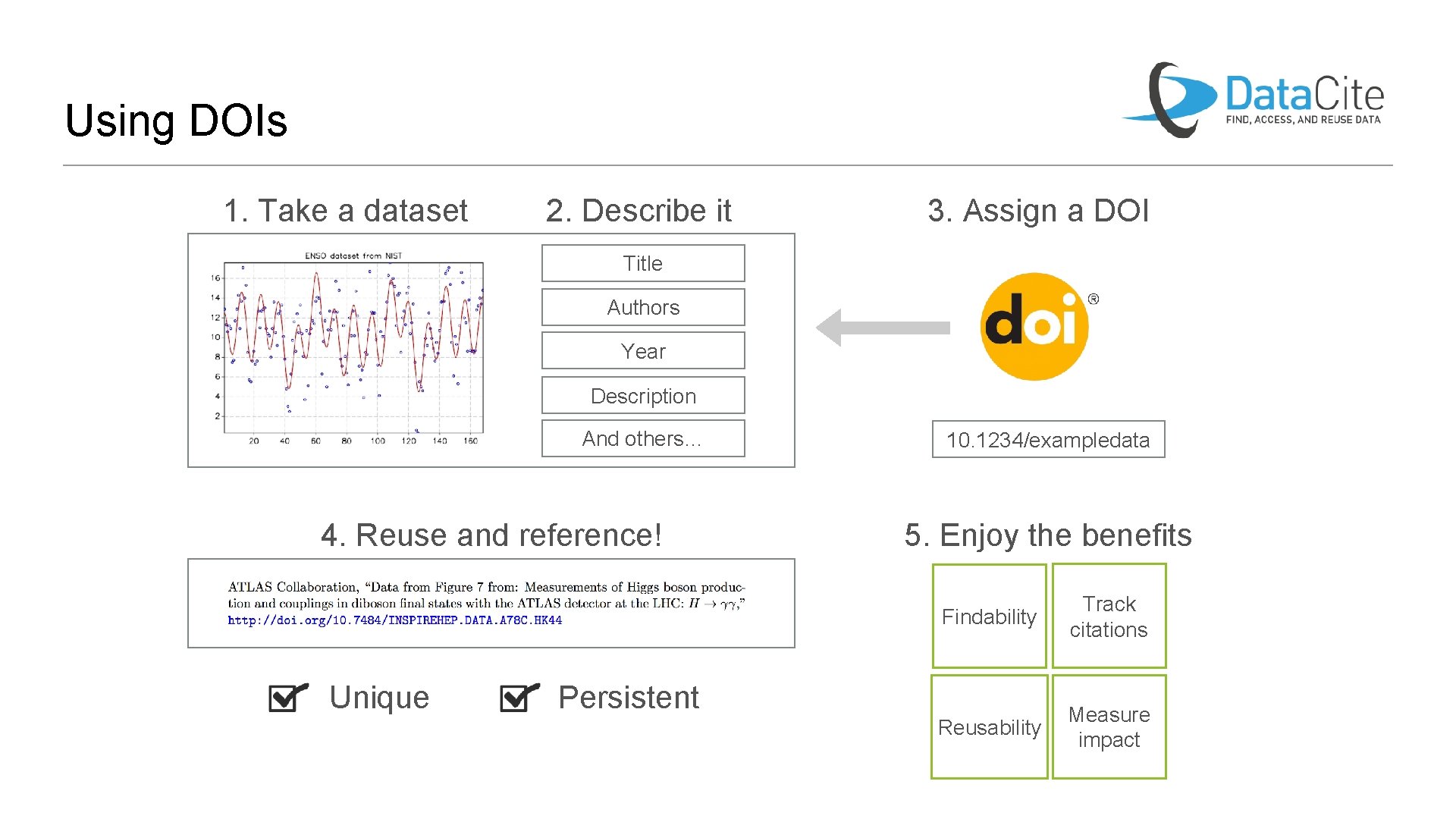
Using DOIs 1. Take a dataset 2. Describe it 3. Assign a DOI Title Authors Year Description And others… 4. Reuse and reference! Unique Persistent 10. 1234/exampledata 5. Enjoy the benefits Findability Track citations Reusability Measure impact
Become a member and help us make research better! https: //www. datacite. org/join-datacite
- Slides: 8