
Making Positive Decisions Lesson Overview A goalsetting process
- Slides: 23
Making Positive Decisions
Lesson Overview Ø A goal-setting process to arrive at healthful decisions Ø Impact of communication skills on leadership Ø Responsible use of electronic media Chapter 2, Lesson 3
Quick Write List three decisions you made since getting up this morning. Place a check next to those that had an influence on your health. (Note to teacher: Use “Pick a Student” button in CPS) Chapter 2, Lesson 3 Photo Courtesy of Fotolia
Decision-Making and Goal-Setting Skills Even a small decision can have great significance Ø Decision-making skills Ø Help you make the best choices and find healthy solutions to problems Ø Goal-setting skills Ø Help you take control over your life and give it purpose and direction Ø Chapter 2, Lesson 3 Photo Courtesy of Fotolia
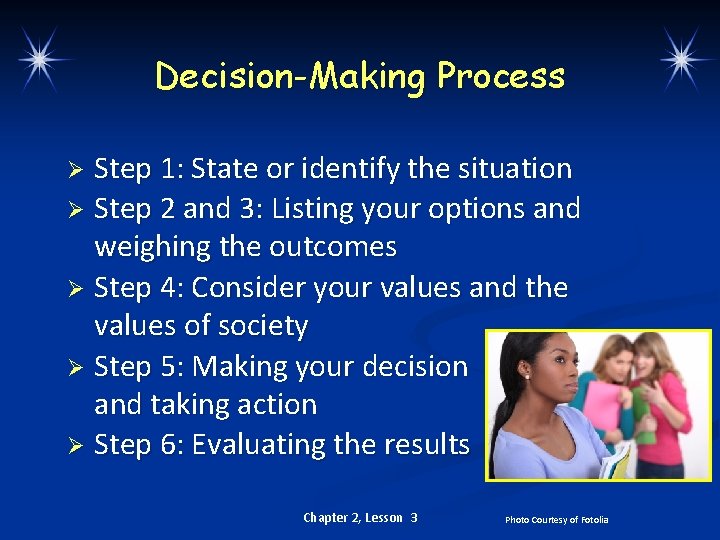
Decision-Making Process Step 1: State or identify the situation Ø Step 2 and 3: Listing your options and weighing the outcomes Ø Step 4: Consider your values and the values of society Ø Step 5: Making your decision and taking action Ø Step 6: Evaluating the results Ø Chapter 2, Lesson 3 Photo Courtesy of Fotolia
Why Set Goals? Ø Goals help you use your time, energy, and other resources wisely Ø Short-term goals Ø Intermediate goals Ø Long-term goals Chapter 2, Lesson 3 Photo Courtesy of Fotolia
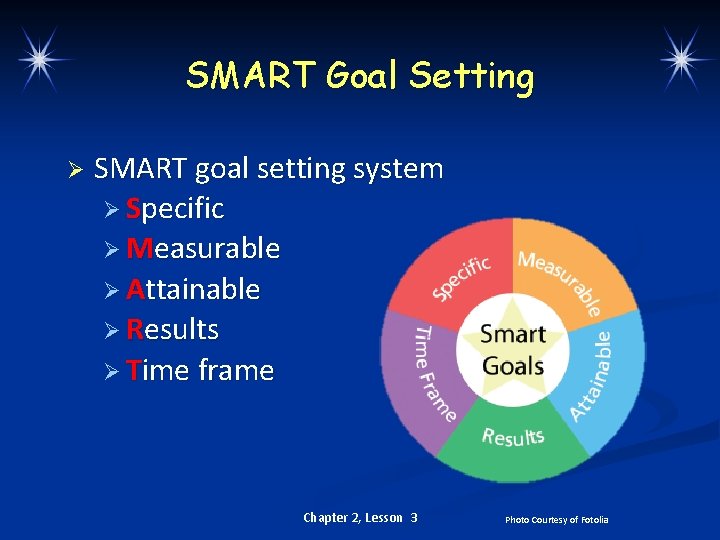
SMART Goal Setting Ø SMART goal setting system Ø Specific Ø Measurable Ø Attainable Ø Results Ø Time frame Chapter 2, Lesson 3 Photo Courtesy of Fotolia
Activity 2: Goal Setting Review the section in your textbook on goal setting Ø Create a plan to accomplish a goal you want to achieve Ø Identify the long-term and intermediate goals Ø Develop three supporting short-term goals to help you reach the long-term goal Chapter 2, Lesson 3 Ø
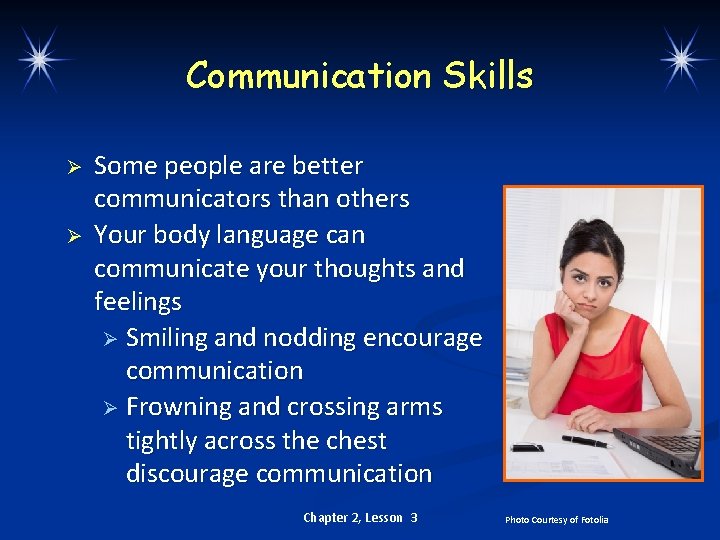
Communication Skills Ø Ø Some people are better communicators than others Your body language can communicate your thoughts and feelings Ø Smiling and nodding encourage communication Ø Frowning and crossing arms tightly across the chest discourage communication Chapter 2, Lesson 3 Photo Courtesy of Fotolia
“I” Message Ø “I” messages usually contain four elements: Ø How you feel about the behavior and its effects Ø A description of the behavior Ø The actual, concrete, tangible effects of that behavior on you Ø The behavior you would prefer Chapter 2, Lesson 3 Photo Courtesy of Fotolia
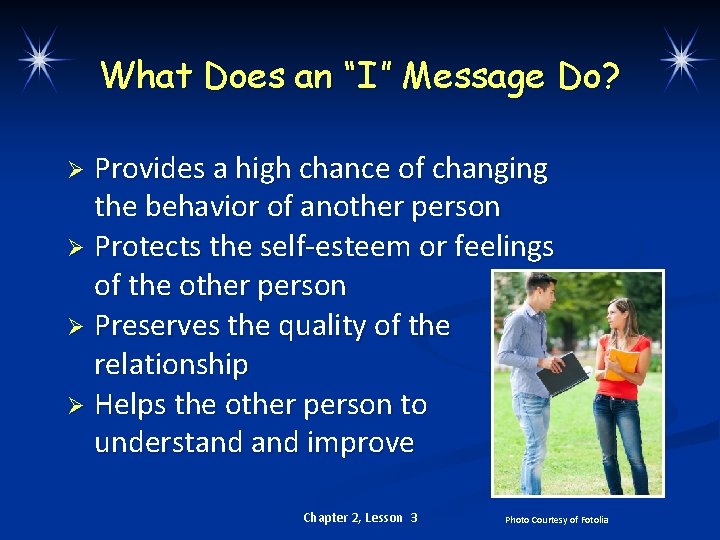
What Does an “I” Message Do? Provides a high chance of changing the behavior of another person Ø Protects the self-esteem or feelings of the other person Ø Preserves the quality of the relationship Ø Helps the other person to understand improve Ø Chapter 2, Lesson 3 Photo Courtesy of Fotolia
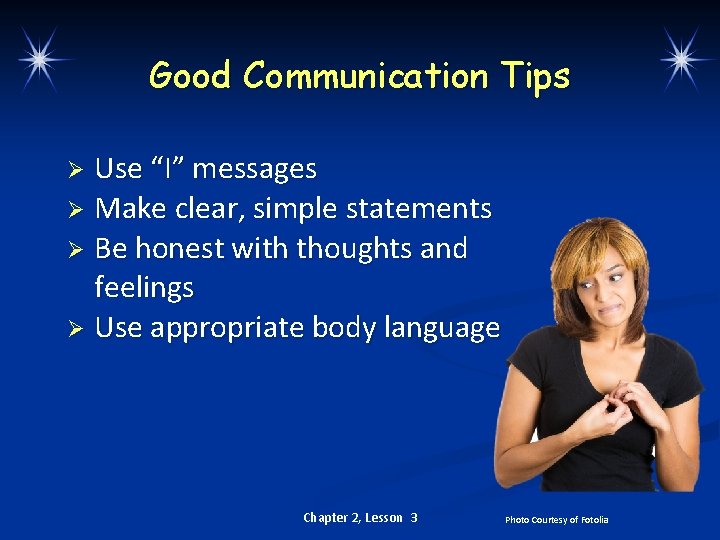
Good Communication Tips Use “I” messages Ø Make clear, simple statements Ø Be honest with thoughts and feelings Ø Use appropriate body language Ø Chapter 2, Lesson 3 Photo Courtesy of Fotolia
Activity 3: Sending “I” Messages Review the section in your textbook on using “I” messages Ø Identify everyday situations where “you” messages might occur Ø Change that same message to an “I” message Ø Answer the questions Ø Chapter 2, Lesson 3
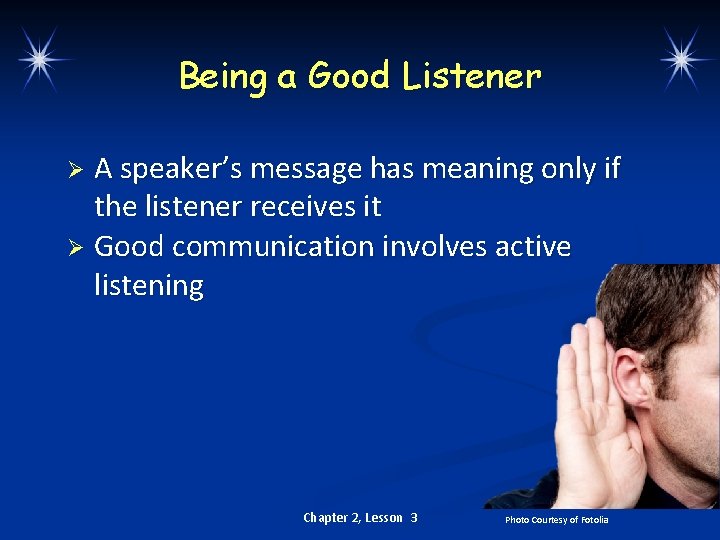
Being a Good Listener A speaker’s message has meaning only if the listener receives it Ø Good communication involves active listening Ø Chapter 2, Lesson 3 Photo Courtesy of Fotolia
How to Improve Listening Skills Ø Ø Listen carefully and use appropriate body language Nod or ask questions to show you are listening Repeat what the person said After the person has finished speaking, ask questions or add your own comments or opinions Chapter 2, Lesson 3 Photo Courtesy of Fotolia
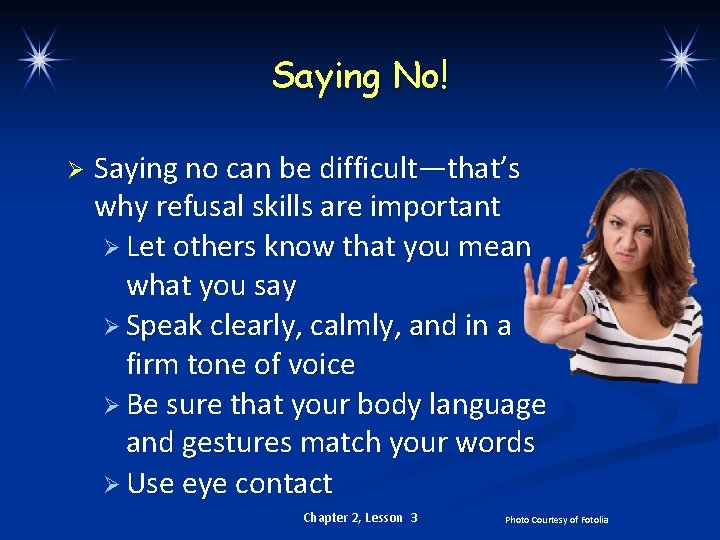
Saying No! Ø Saying no can be difficult—that’s why refusal skills are important Ø Let others know that you mean what you say Ø Speak clearly, calmly, and in a firm tone of voice Ø Be sure that your body language and gestures match your words Ø Use eye contact Chapter 2, Lesson 3 Photo Courtesy of Fotolia
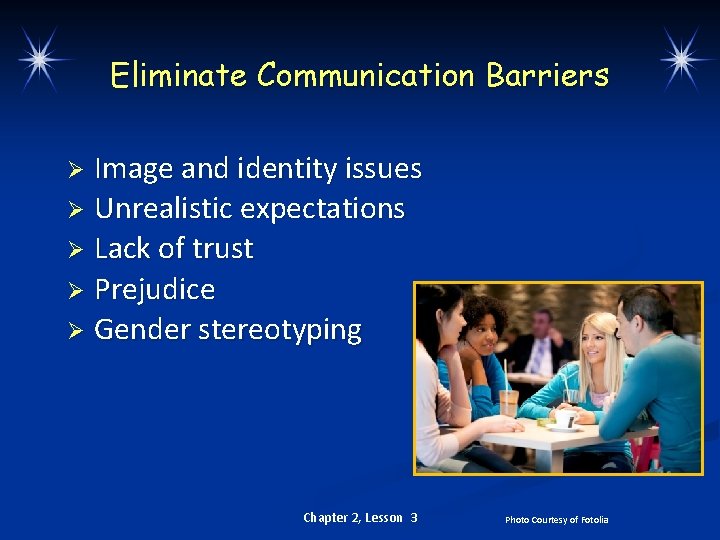
Eliminate Communication Barriers Image and identity issues Ø Unrealistic expectations Ø Lack of trust Ø Prejudice Ø Gender stereotyping Ø Chapter 2, Lesson 3 Photo Courtesy of Fotolia
Activity 4: “Saying No!” Role-Play Ø Choose a “persuader” and “participant” for the activity Ø The “persuader” will read the scenario and the “participant” will react to the scenario in front of the class Chapter 2, Lesson 3
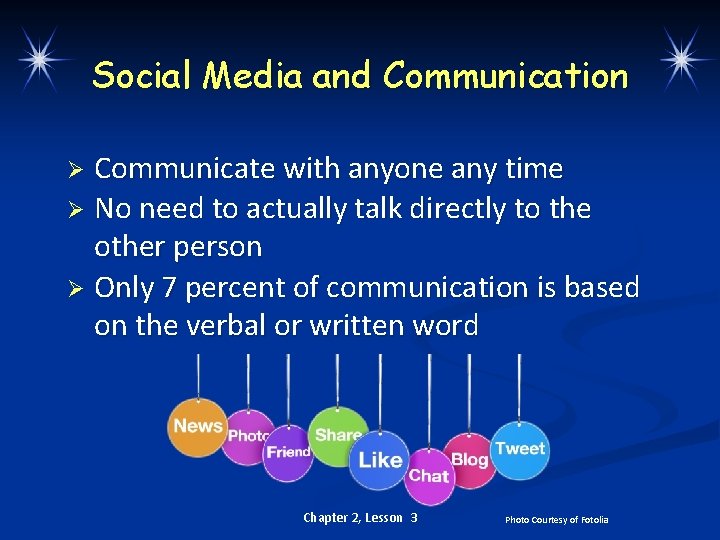
Social Media and Communication Communicate with anyone any time Ø No need to actually talk directly to the other person Ø Only 7 percent of communication is based on the verbal or written word Ø Chapter 2, Lesson 3 Photo Courtesy of Fotolia
Responsible and Safe Social Networking Posting information on illegal activities Ø Bullying Ø Trashing your teachers or school Ø Posting objectionable content from school computers or network Ø Posting confidential or personal information Ø Providing overly specific locations when communicating Ø Chapter 2, Lesson 3 Photo Courtesy of Fotolia
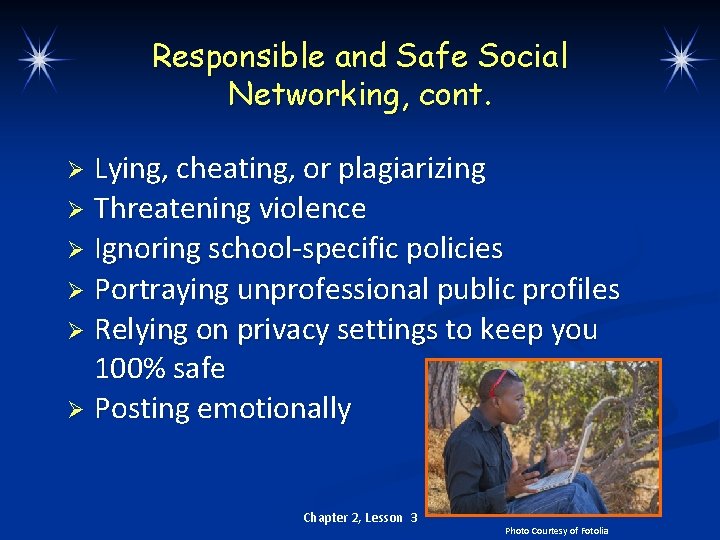
Responsible and Safe Social Networking, cont. Lying, cheating, or plagiarizing Ø Threatening violence Ø Ignoring school-specific policies Ø Portraying unprofessional public profiles Ø Relying on privacy settings to keep you 100% safe Ø Posting emotionally Ø Chapter 2, Lesson 3 Photo Courtesy of Fotolia
Summary Ø A goal-setting process to arrive at healthful decisions Ø Impact of communication skills on leadership Ø Responsible use of electronic media Chapter 2, Lesson 3
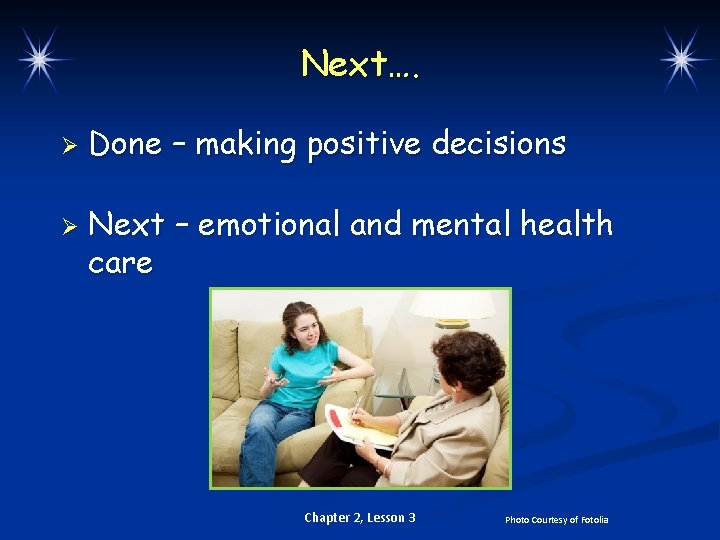
Next…. Ø Ø Done – making positive decisions Next – emotional and mental health care Chapter 2, Lesson 3 Photo Courtesy of Fotolia