
MAKING OF THE MODERN WORLD Asst Prof Dr


- Slides: 36
MAKING OF THE MODERN WORLD Asst. Prof. Dr. Ülke Evrim Uysal Department of Political Science and Public Administration evrimuysal@beykent. edu. tr E-41 (Office Hours. Monday 14: 00 -16: 00)
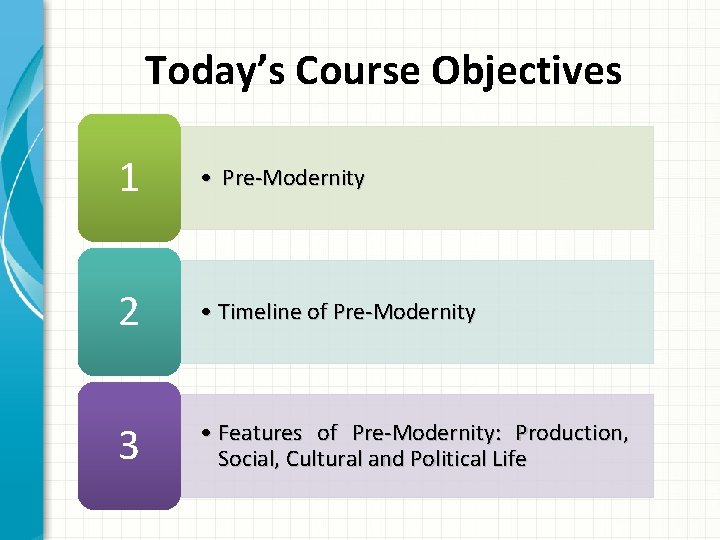
Today’s Course Objectives 1 • Pre-Modernity 2 • Timeline of Pre-Modernity 3 • Features of Pre-Modernity: Production, Social, Cultural and Political Life
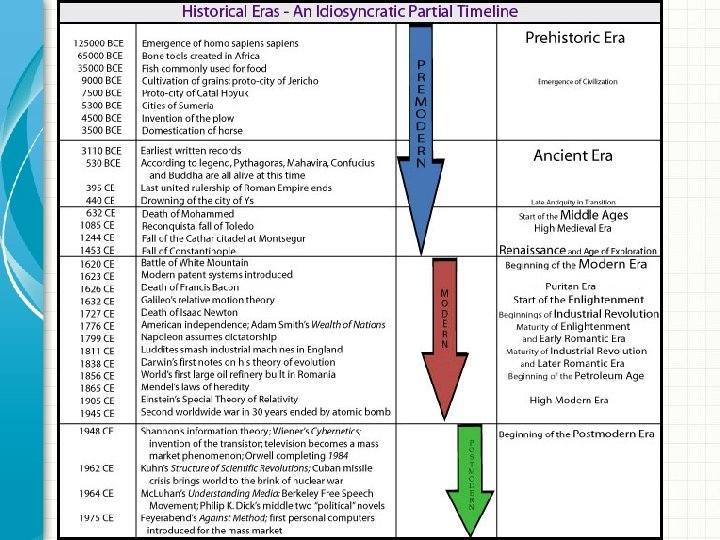
World History: Timeline Pre-Modernity: 1 -) Pre-historic Era 2 -) Ancient era 3 -) Medieval Ages
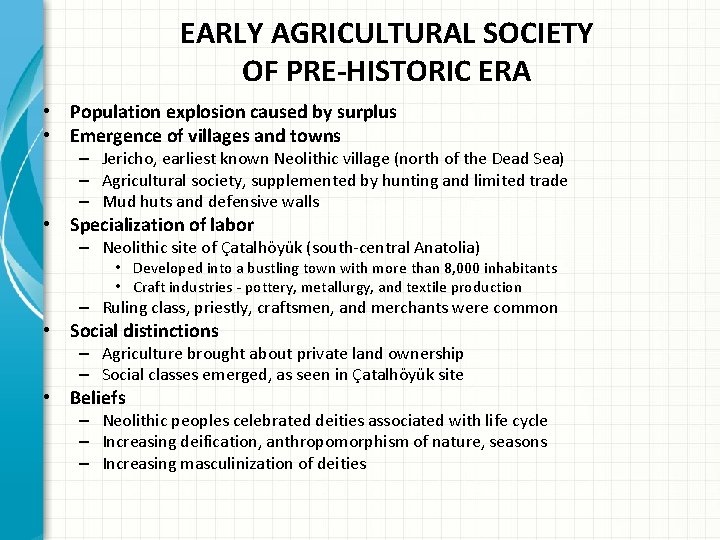
EARLY AGRICULTURAL SOCIETY OF PRE-HISTORIC ERA • Population explosion caused by surplus • Emergence of villages and towns – Jericho, earliest known Neolithic village (north of the Dead Sea) – Agricultural society, supplemented by hunting and limited trade – Mud huts and defensive walls • Specialization of labor – Neolithic site of Çatalhöyük (south-central Anatolia) • Developed into a bustling town with more than 8, 000 inhabitants • Craft industries - pottery, metallurgy, and textile production – Ruling class, priestly, craftsmen, and merchants were common • Social distinctions – Agriculture brought about private land ownership – Social classes emerged, as seen in Çatalhöyük site • Beliefs – Neolithic peoples celebrated deities associated with life cycle – Increasing deification, anthropomorphism of nature, seasons – Increasing masculinization of deities
ORIGINS OF URBAN LIFE • Emergence of cities – – • • Tended to emerge in hostile environments Harsh environments required stronger organization Cities were larger and more complex Cities influenced life of large regions Earliest cities in Southern Mesopotamia Other hearths of urban civilization – – Indus River Valley Nile River Valley of the Huang He Coastal Jungles of Mexico
Farming: Birth of Civilization • Agriculture is the planting of seeds to raise crops. • Societies started where water was in supply and people learned irrigation • Irrigation -moving water from one place to another • They also began to specialize in different activities, including weaving cloth for clothes.
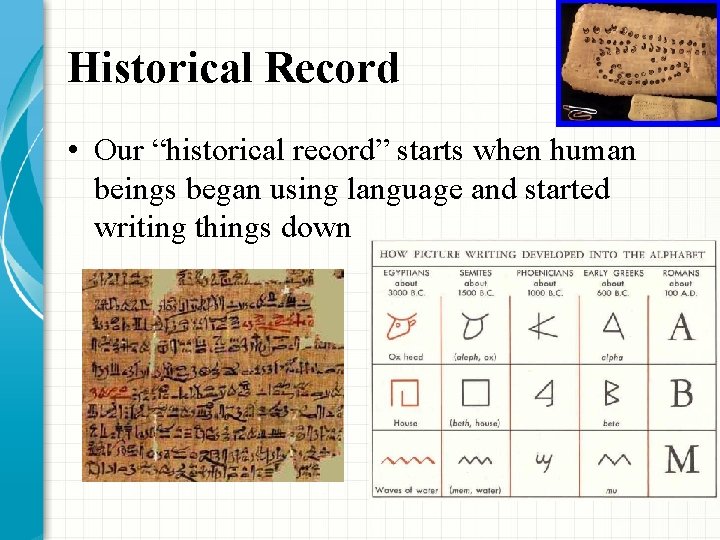
Historical Record • Our “historical record” starts when human beings began using language and started writing things down
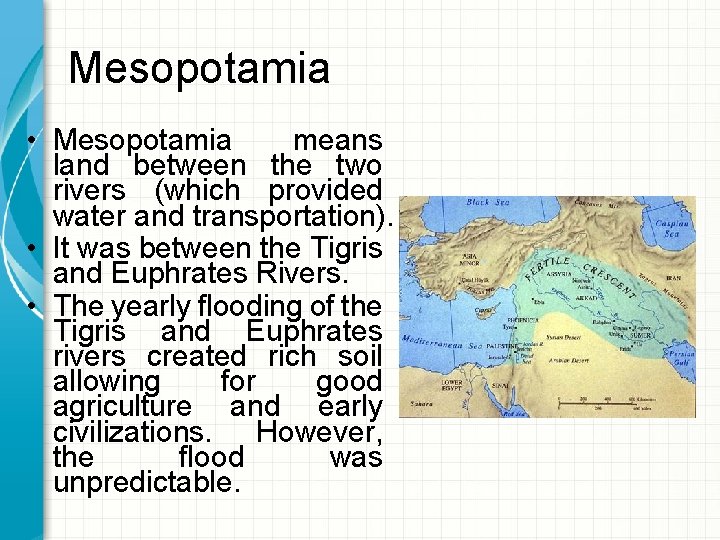
Mesopotamia • Mesopotamia means land between the two rivers (which provided water and transportation). • It was between the Tigris and Euphrates Rivers. • The yearly flooding of the Tigris and Euphrates rivers created rich soil allowing for good agriculture and early civilizations. However, the flood was unpredictable.
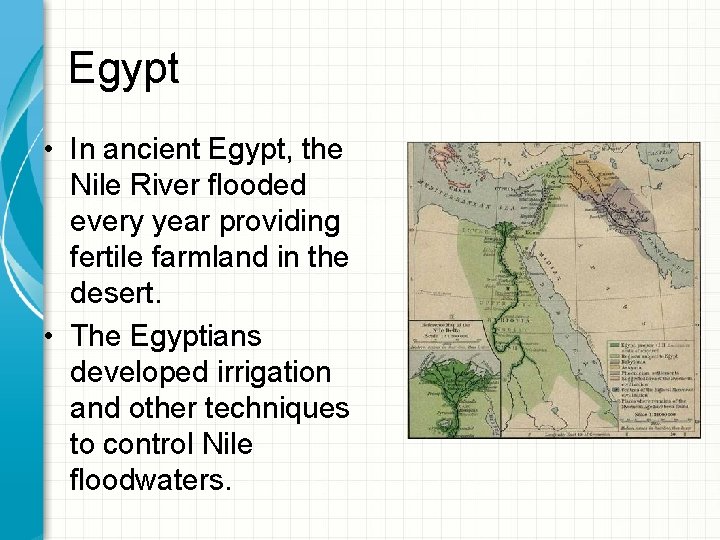
Egypt • In ancient Egypt, the Nile River flooded every year providing fertile farmland in the desert. • The Egyptians developed irrigation and other techniques to control Nile floodwaters.
Ancient India • Began near the Indus River. • India’s first major religion was Hinduism Vedas (meaning knowledge) are a collection of sacred hymns and poems. • India developed great literature in Sanskrit, such as the Bhagavad Gita, and developed algebra, and the zero.
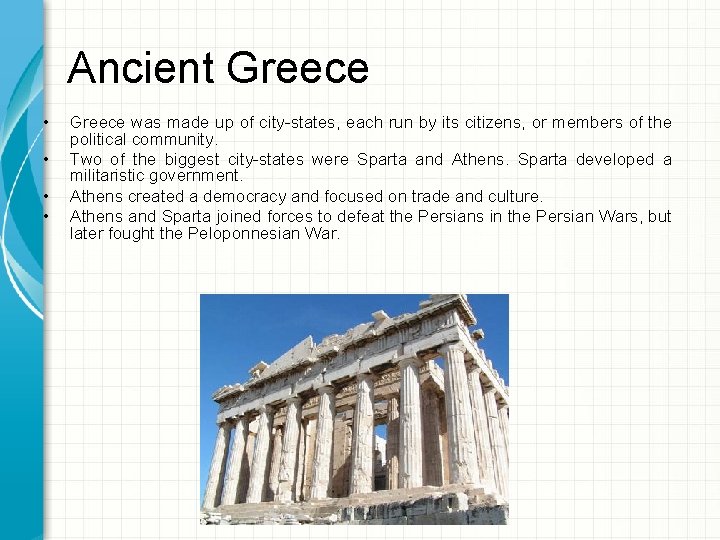
Ancient Greece • • Greece was made up of city-states, each run by its citizens, or members of the political community. Two of the biggest city-states were Sparta and Athens. Sparta developed a militaristic government. Athens created a democracy and focused on trade and culture. Athens and Sparta joined forces to defeat the Persians in the Persian Wars, but later fought the Peloponnesian War.
Accomplishments of Greece • Alexander conquered the Persian Empire and spread Hellenism throughout southwest Asia. • The Greeks spread their art, architecture, literature, theater, philosophy, and mathematics. • Some of the great Greek writers include the dramatists Sophocles, Euripides, and Aeschylus. • Greek ideas of art and architecture influence styles today. • Greek philosophers tried to answer life’s big questions. • Major accomplishments included first Olympic games, world’s first democracy, philosophy (Socrates, Plato, Aristotle), literature, geometry, and written history.
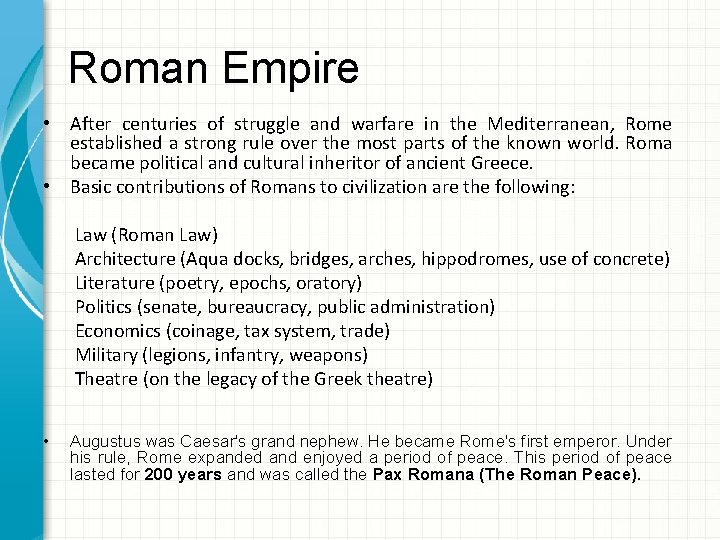
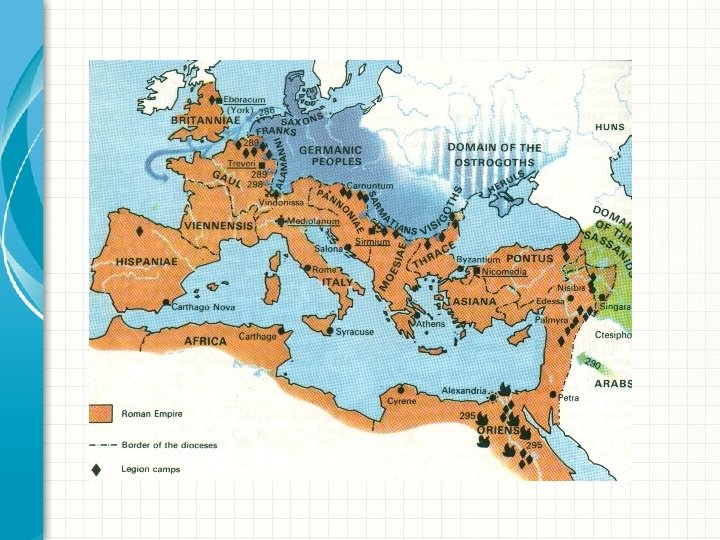
Roman Empire • After centuries of struggle and warfare in the Mediterranean, Rome established a strong rule over the most parts of the known world. Roma became political and cultural inheritor of ancient Greece. • Basic contributions of Romans to civilization are the following: Law (Roman Law) Architecture (Aqua docks, bridges, arches, hippodromes, use of concrete) Literature (poetry, epochs, oratory) Politics (senate, bureaucracy, public administration) Economics (coinage, tax system, trade) Military (legions, infantry, weapons) Theatre (on the legacy of the Greek theatre) • Augustus was Caesar's grand nephew. He became Rome's first emperor. Under his rule, Rome expanded and enjoyed a period of peace. This period of peace lasted for 200 years and was called the Pax Romana (The Roman Peace).
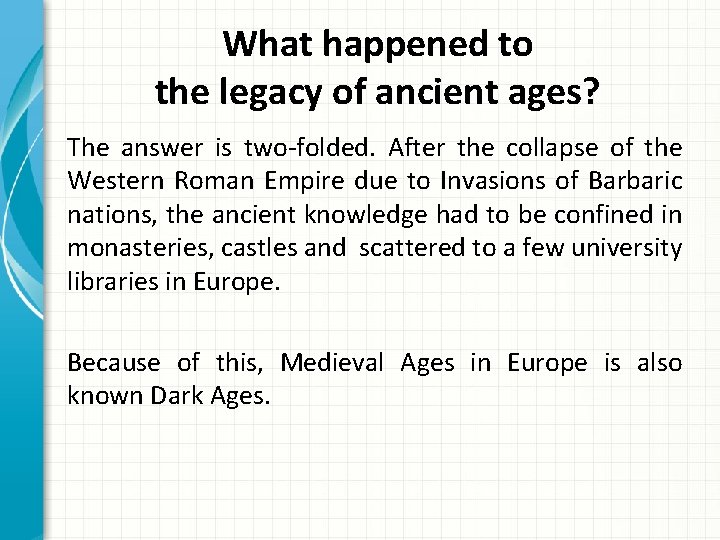
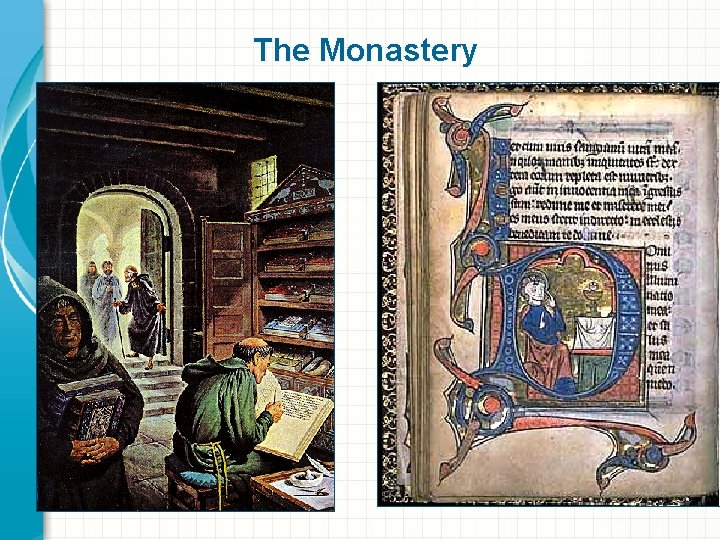
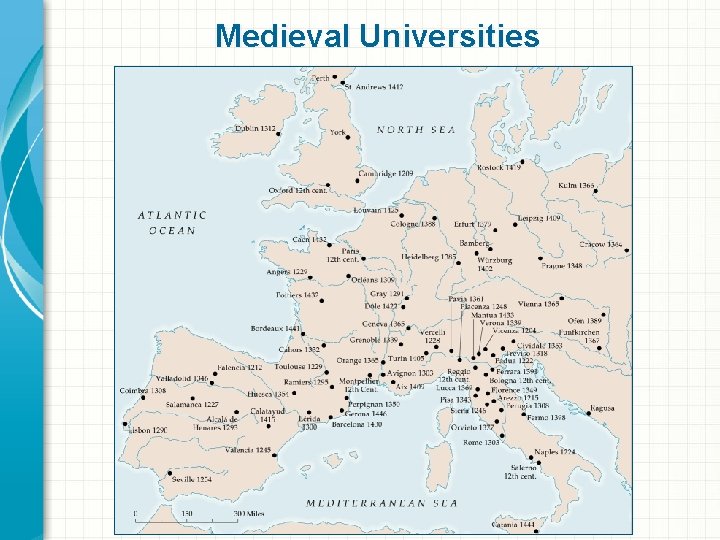
What happened to the legacy of ancient ages? The answer is two-folded. After the collapse of the Western Roman Empire due to Invasions of Barbaric nations, the ancient knowledge had to be confined in monasteries, castles and scattered to a few university libraries in Europe. Because of this, Medieval Ages in Europe is also known Dark Ages.
The Monastery
Medieval Universities
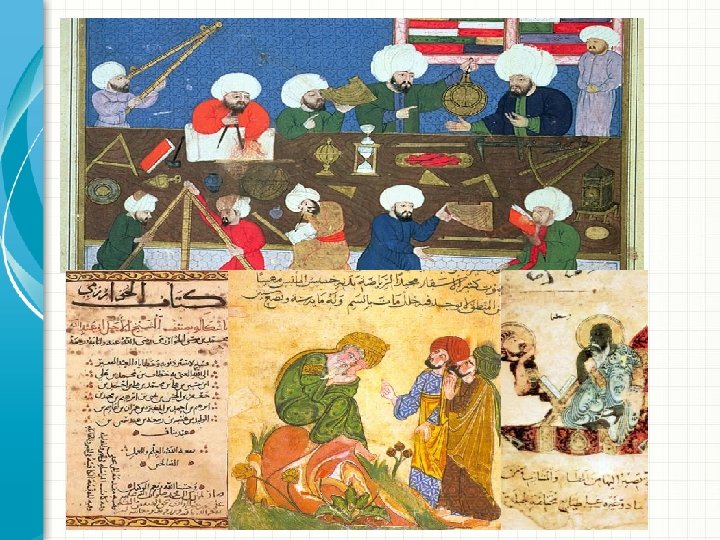
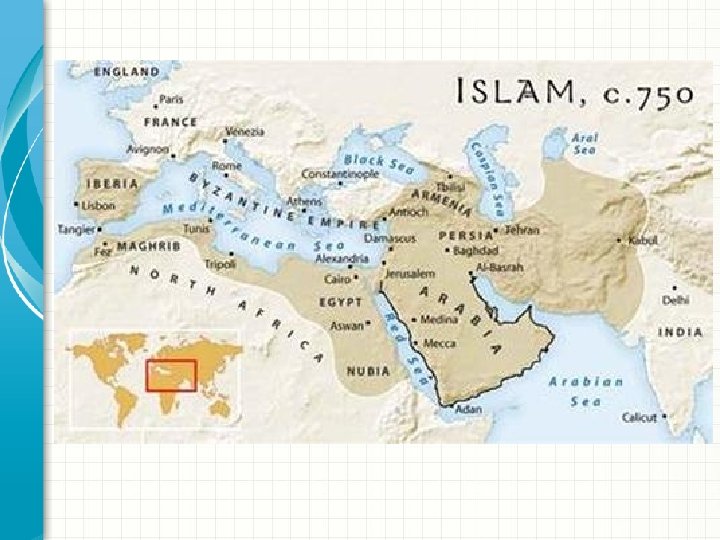
What happened to the legacy of ancient ages? The answer is two-folded. The accumulation of ancient knowledge remained in the Eastern (Byzantine) Roman Empire and later in Islamic Empire. In other words, while the West part of the knownworld is shrinking, the Eastern part was able to conserve the legacy of ancient civilizations.
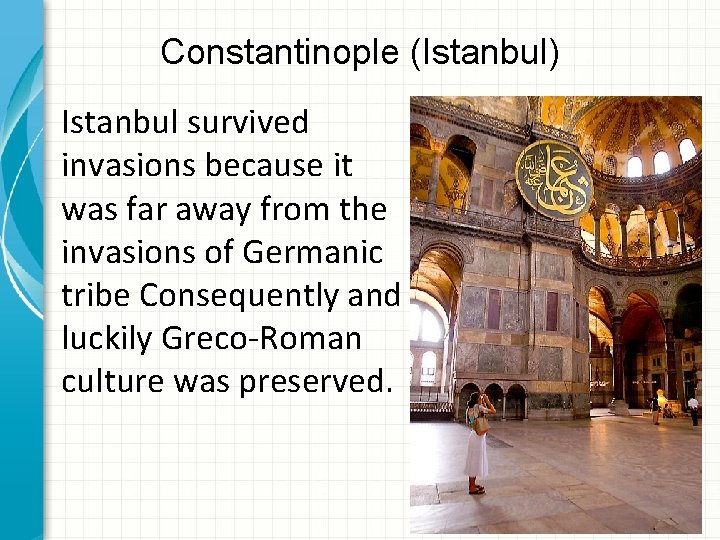
Constantinople (Istanbul) Istanbul survived invasions because it was far away from the invasions of Germanic tribe Consequently and luckily Greco-Roman culture was preserved.
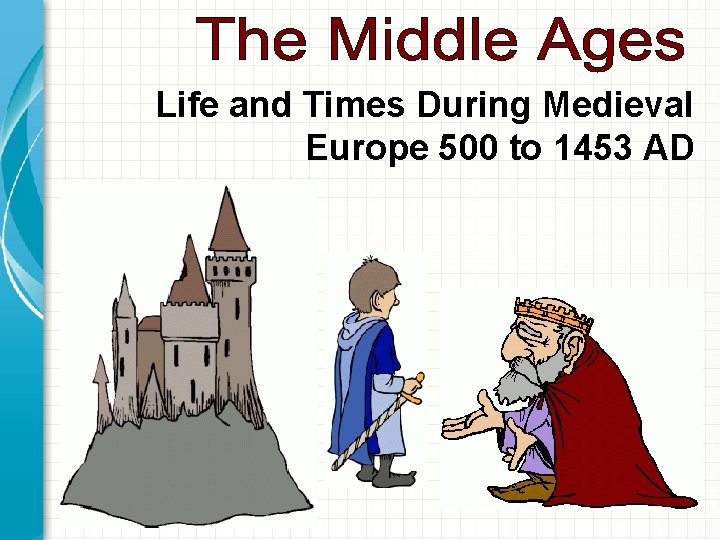
Life and Times During Medieval Europe 500 to 1453 AD
• Repeated invasions and constant warfare ended the Western Roman Empire: – Disruption of Trade--Merchants faced invasions from land sea. Businesses collapse and money becomes scarce. – Downfall of Cities--Cities were abandoned. – Population Shift--Population moves from cities to countryside (rural).
• People turned to church for order and security. – Germanic people called the Franks were led by Clovis, who converted to Christianity. – The Church adapts to the rural conditions of Western Europe. The Church built religious communities called monasteries.
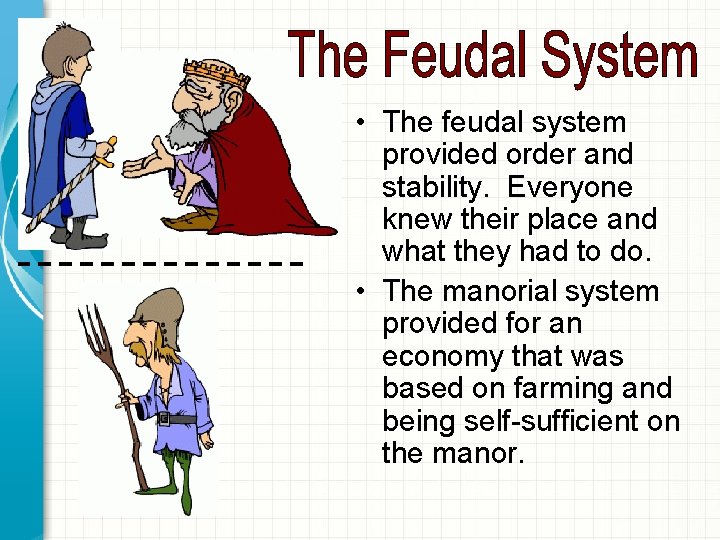
• The feudal system provided order and stability. Everyone knew their place and what they had to do. • The manorial system provided for an economy that was based on farming and being self-sufficient on the manor.
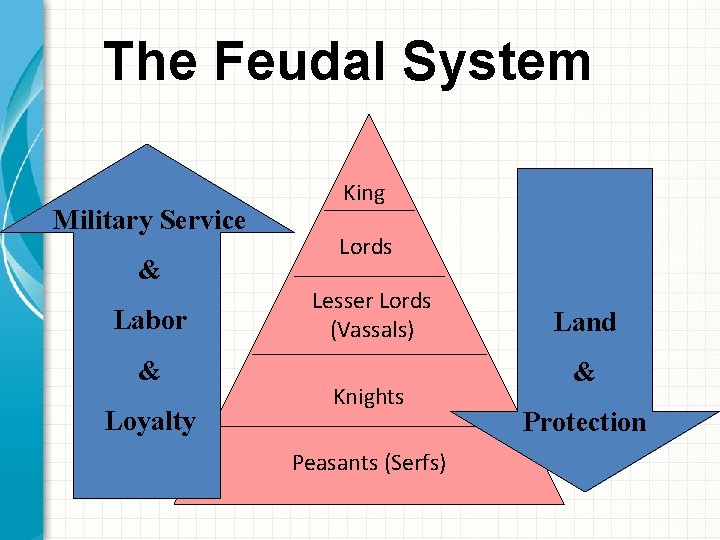
The Feudal System Military Service & Labor & Loyalty King Lords Lesser Lords (Vassals) Knights Peasants (Serfs) Land & Protection
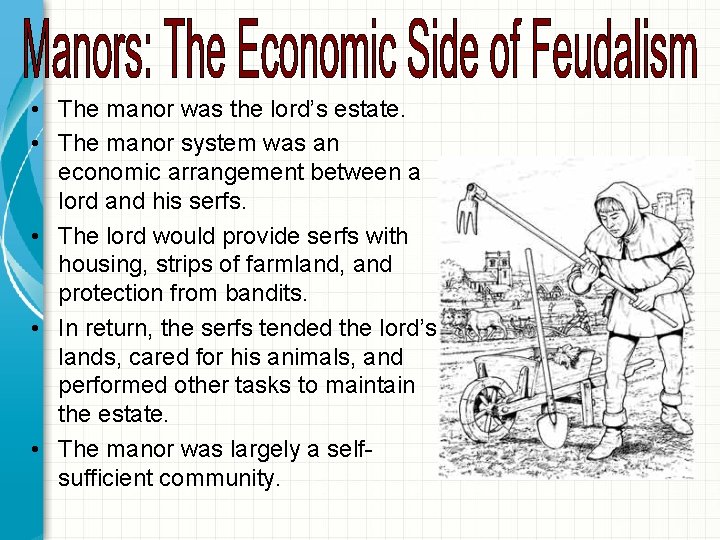
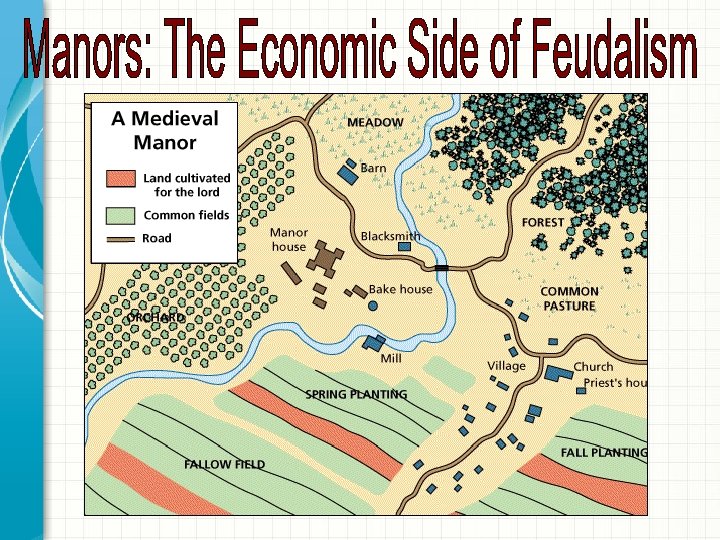
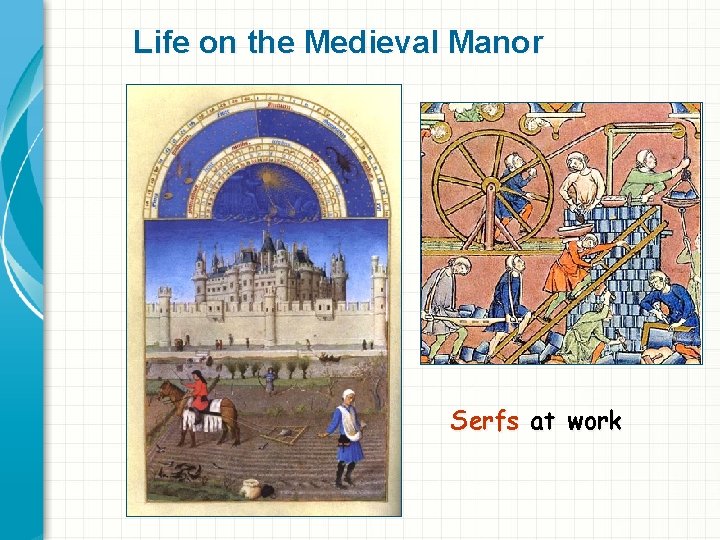
• The manor was the lord’s estate. • The manor system was an economic arrangement between a lord and his serfs. • The lord would provide serfs with housing, strips of farmland, and protection from bandits. • In return, the serfs tended the lord’s lands, cared for his animals, and performed other tasks to maintain the estate. • The manor was largely a selfsufficient community.
Life on the Medieval Manor Serfs at work
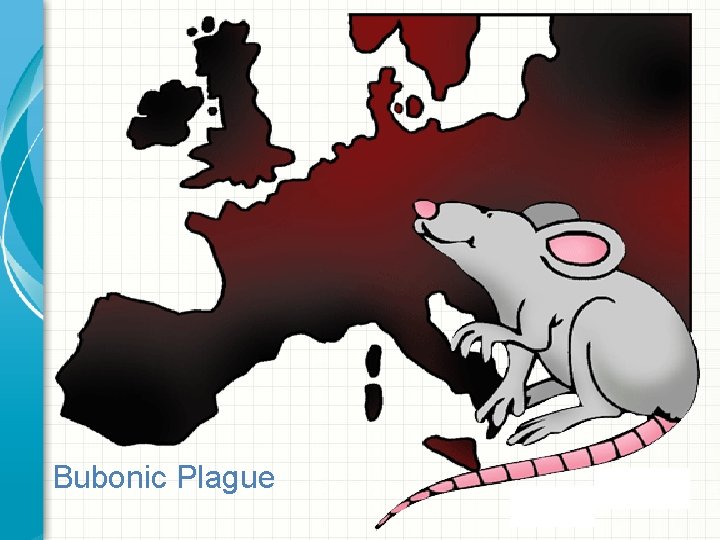
Economy - Agriculture and Trade (limited number of manufacturing facilities) - Limited population growth due to epidemics, (particularly plague), high child death rates, conflicts, wars and poor hygiene. Black Death (1348 -1351) killed about 25 million Europeans (1/3 of total population)
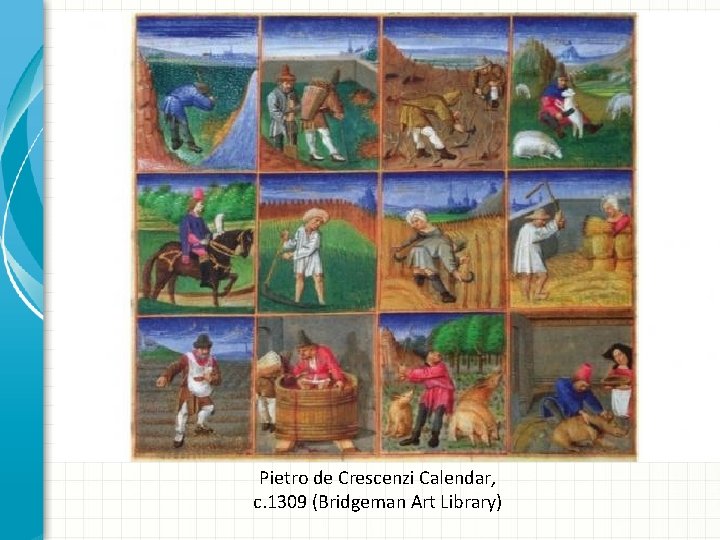
Pietro de Crescenzi Calendar, c. 1309 (Bridgeman Art Library)
Bubonic Plague
Next Week: Late Middle Ages • Revival of trade cities in northern and southern Europe • First travels to the East and beneficial contacts. • Rising interests to ancient works of philosophy and the Renaissance in Italy. • Humanism and the very first signs of modernity