
MAKING MISTAKES IS A NATURAL PART OF LEARNING

- Slides: 20
MAKING MISTAKES IS A NATURAL PART OF LEARNING A SECOND LANGUAGE
Did your teachers put a strong emphasis on correcting mistakes, or did they make you feel that it was acceptable to make mistakes? How did this make you feel – in either of these situations?
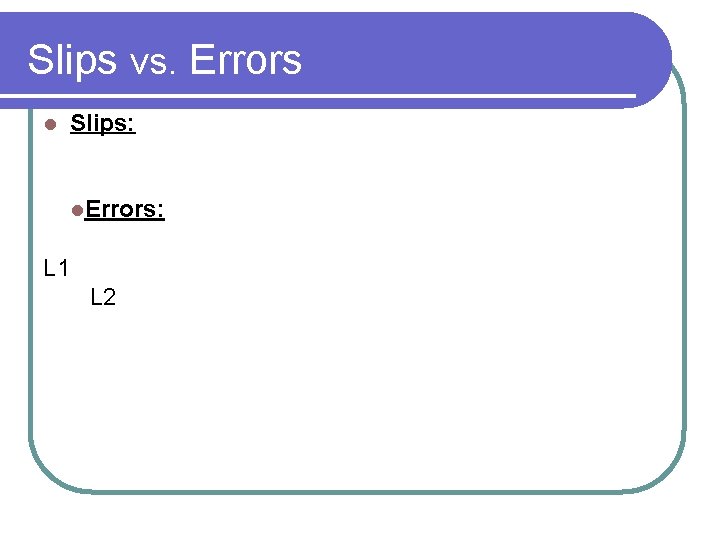
Slips vs. Errors Slips: Errors: L 1 L 2
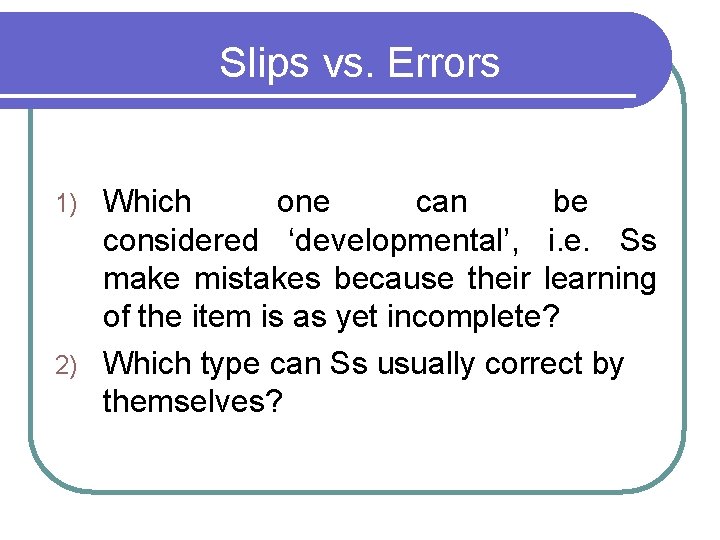
Slips vs. Errors Which one can be considered ‘developmental’, i. e. Ss make mistakes because their learning of the item is as yet incomplete? 2) Which type can Ss usually correct by themselves? 1)
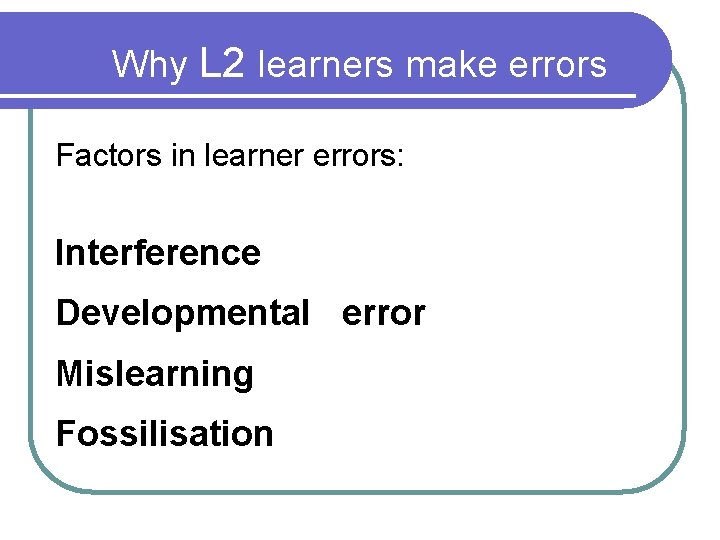
Why L 2 learners make errors Factors in learner errors: Interference Developmental error Mislearning Fossilisation
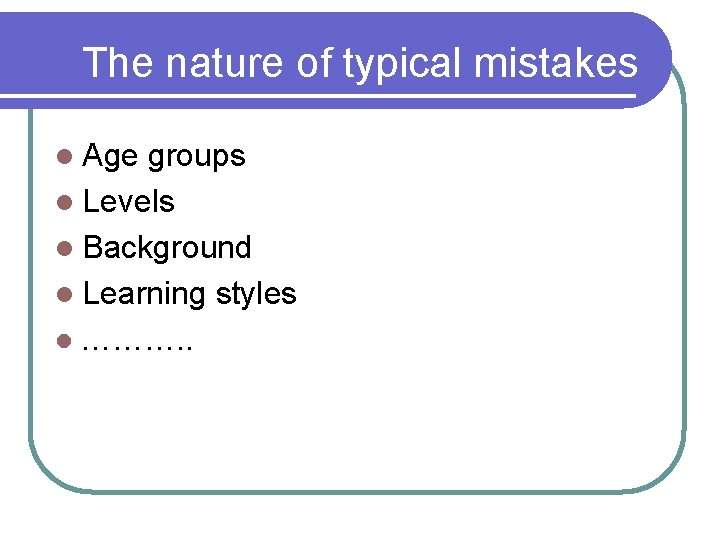
The nature of typical mistakes Age groups Levels Background Learning styles ………. .
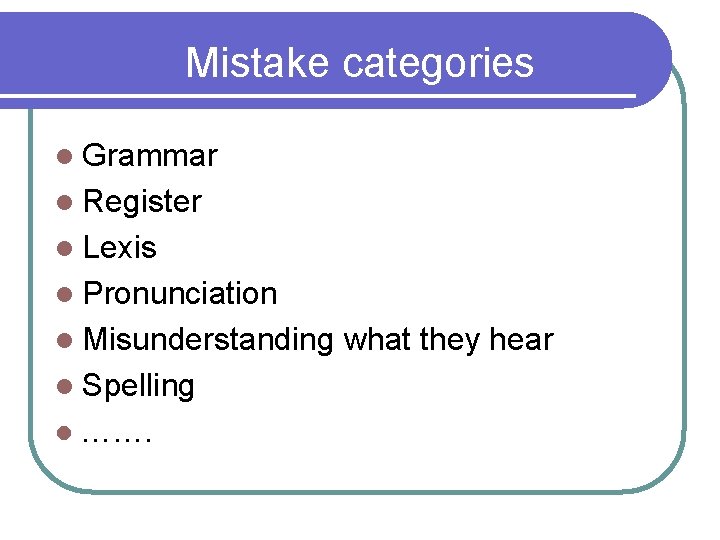
Mistake categories Grammar Register Lexis Pronunciation Misunderstanding Spelling ……. what they hear
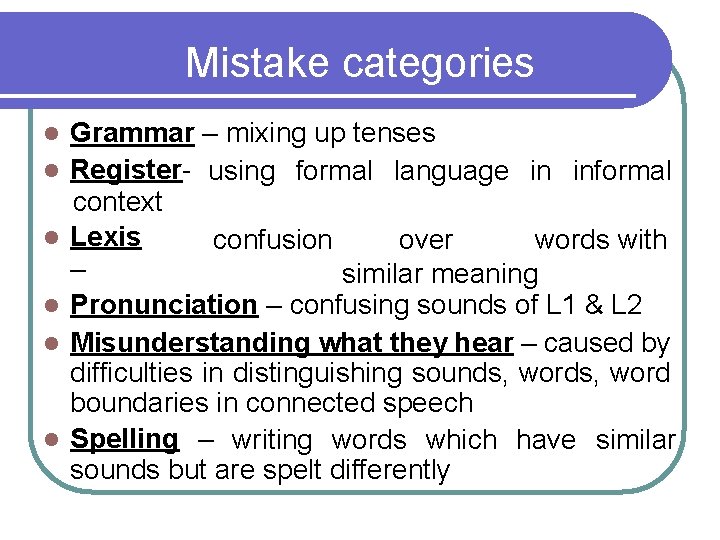
Mistake categories Grammar – mixing up tenses Register- using formal language in informal context Lexis confusion over words with – similar meaning Pronunciation – confusing sounds of L 1 & L 2 Misunderstanding what they hear – caused by difficulties in distinguishing sounds, word boundaries in connected speech Spelling – writing words which have similar sounds but are spelt differently
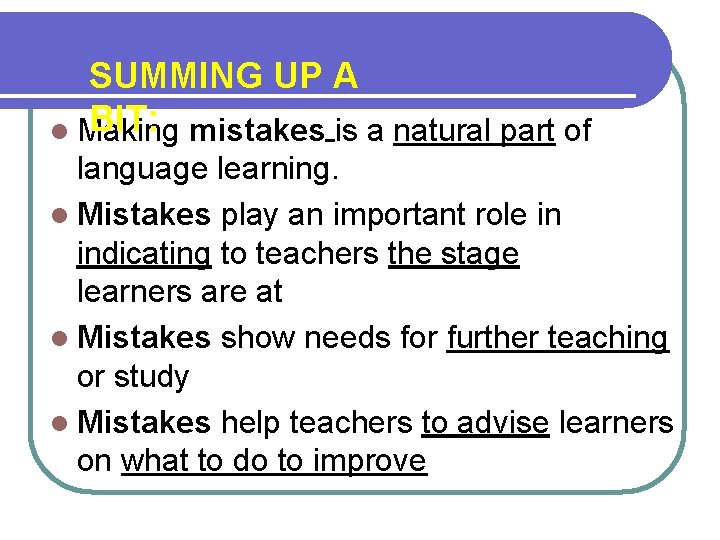
SUMMING UP A BIT: mistakes is a natural part of Making language learning. Mistakes play an important role in indicating to teachers the stage learners are at Mistakes show needs for further teaching or study Mistakes help teachers to advise learners on what to do to improve
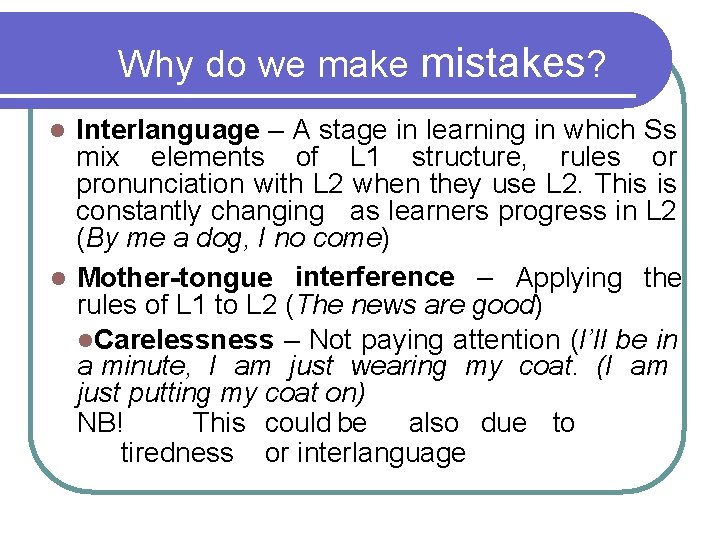
Why do we make mistakes? Interlanguage – A stage in learning in which Ss mix elements of L 1 structure, rules or pronunciation with L 2 when they use L 2. This is constantly changing as learners progress in L 2 (By me a dog, I no come) Mother-tongue interference – Applying the rules of L 1 to L 2 (The news are good) Carelessness – Not paying attention (I’ll be in a minute, I am just wearing my coat. (I am just putting my coat on) NB! This could be also due to tiredness or interlanguage
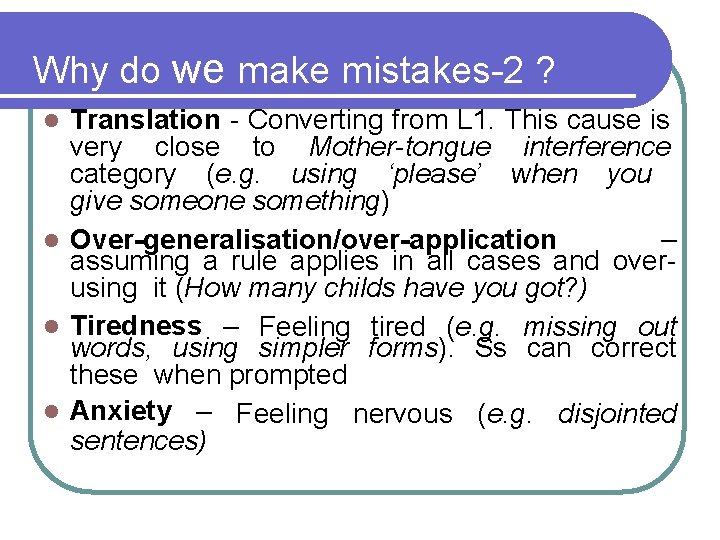
Why do we make mistakes-2 ? Translation - Converting from L 1. This cause is very close to Mother-tongue interference category (e. g. using ‘please’ when you give someone something) – Over-generalisation/over-application assuming a rule applies in all cases and overusing it (How many childs have you got? ) Tiredness – Feeling tired (e. g. missing out words, using simpler forms). Ss can correct these when prompted Anxiety – Feeling nervous (e. g. disjointed sentences)
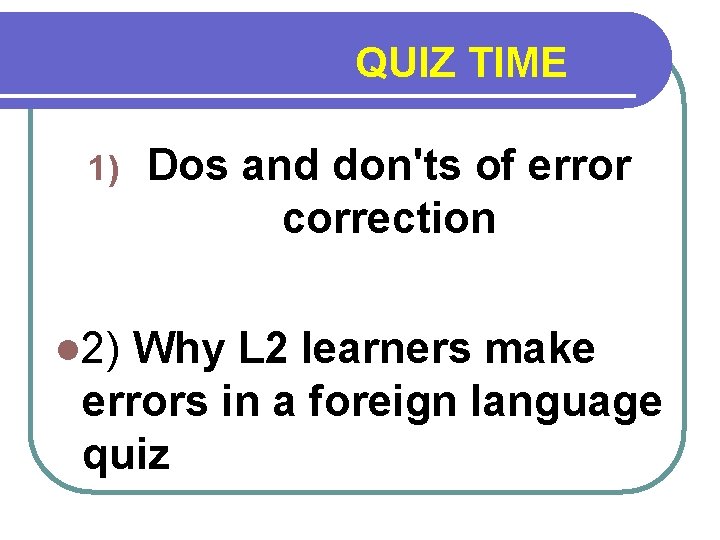
QUIZ TIME 1) 2) Dos and don'ts of error correction Why L 2 learners make errors in a foreign language quiz
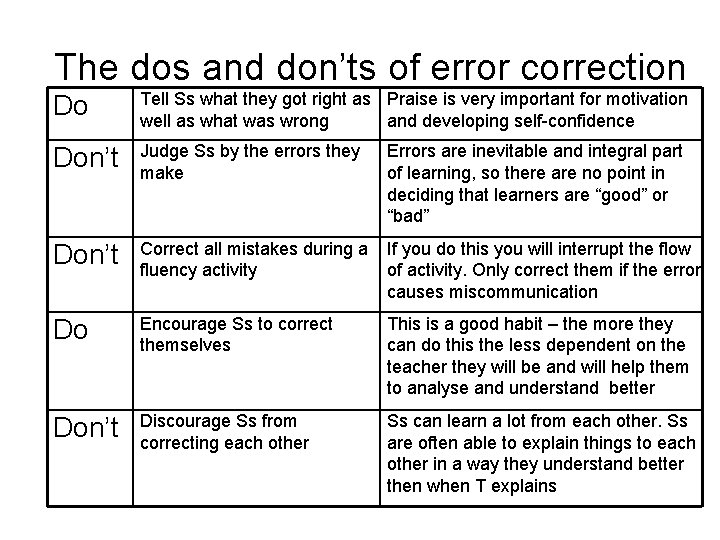
The dos and don’ts of error correction Do Tell Ss what they got right as Praise is very important for motivation well as what was wrong and developing self-confidence Don’t Judge Ss by the errors they make Errors are inevitable and integral part of learning, so there are no point in deciding that learners are “good” or “bad” Don’t Correct all mistakes during a fluency activity If you do this you will interrupt the flow of activity. Only correct them if the error causes miscommunication Do Encourage Ss to correct themselves This is a good habit – the more they can do this the less dependent on the teacher they will be and will help them to analyse and understand better Don’t Discourage Ss from correcting each other Ss can learn a lot from each other. Ss are often able to explain things to each other in a way they understand better then when T explains
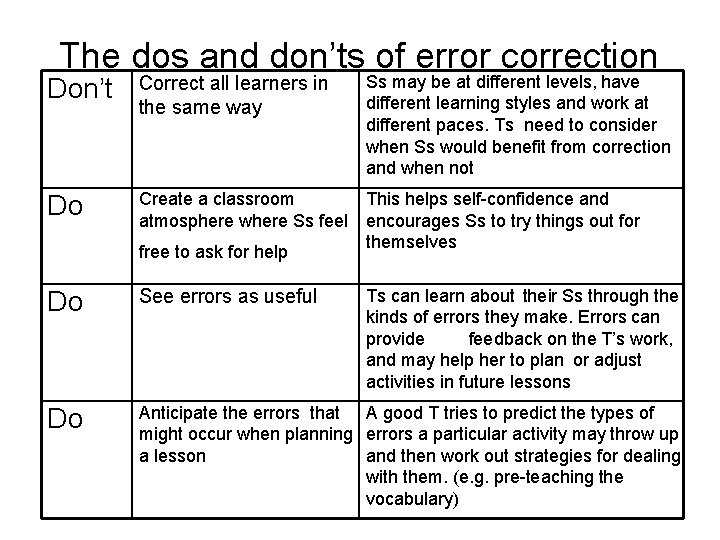
The dos and don’ts of error correction Ss may be at different levels, have different learning styles and work at different paces. Ts need to consider when Ss would benefit from correction and when not Don’t Correct all learners in the same way Do Create a classroom This helps self-confidence and atmosphere where Ss feel encourages Ss to try things out for themselves free to ask for help Do See errors as useful Do Anticipate the errors that A good T tries to predict the types of might occur when planning errors a particular activity may throw up a lesson and then work out strategies for dealing with them. (e. g. pre-teaching the vocabulary) Ts can learn about their Ss through the kinds of errors they make. Errors can provide feedback on the T’s work, and may help her to plan or adjust activities in future lessons
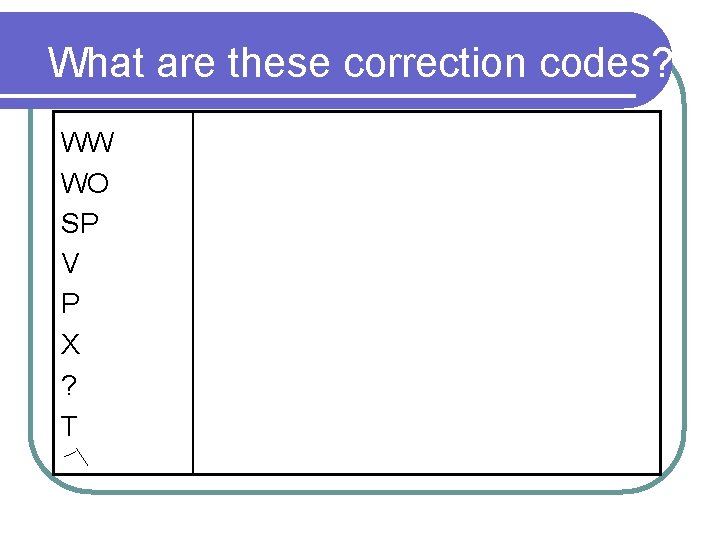
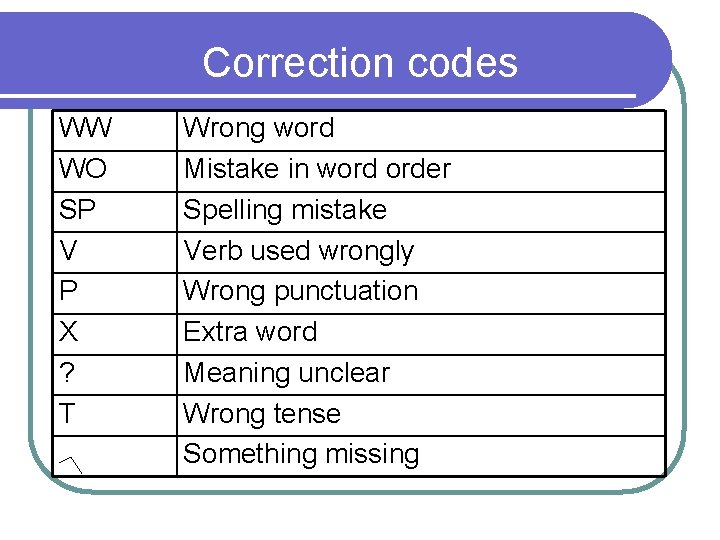
What are these correction codes? WW WO SP V P X ? T
Correction codes WW WO SP V P X ? T Wrong word Mistake in word order Spelling mistake Verb used wrongly Wrong punctuation Extra word Meaning unclear Wrong tense Something missing
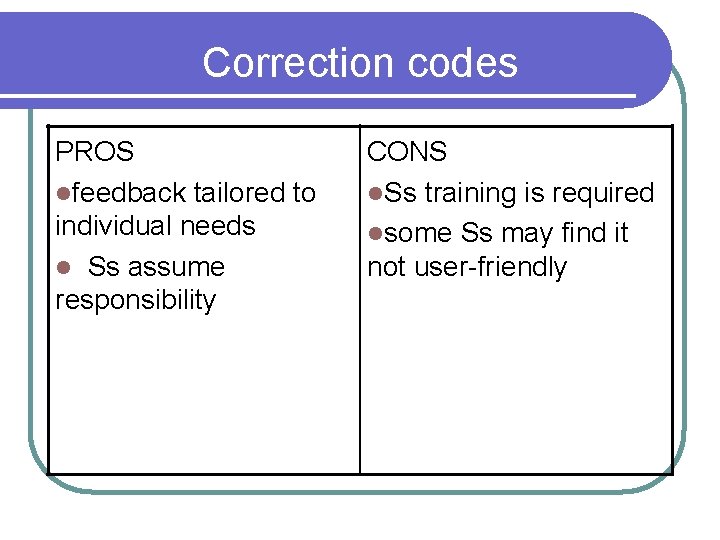
Correction codes PROS feedback tailored to individual needs Ss assume responsibility CONS Ss training is required some Ss may find it not user-friendly
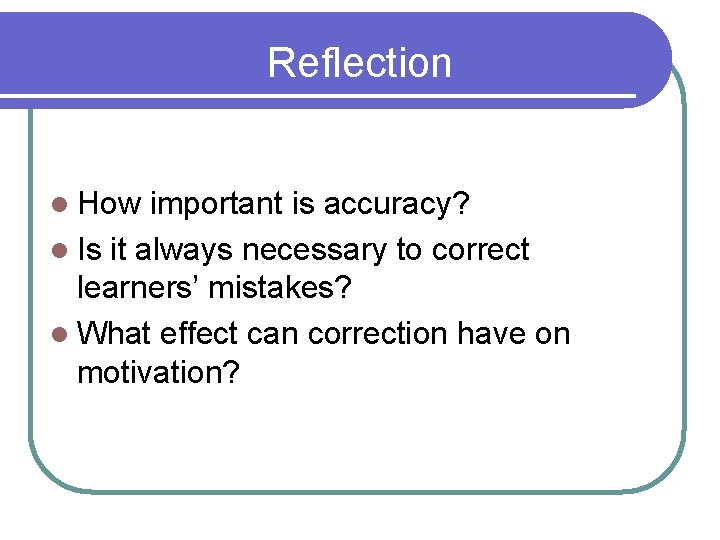
Reflection How important is accuracy? Is it always necessary to correct learners’ mistakes? What effect can correction have on motivation?
Thank you!