
Making Measures More PersonCentered Applying Human Centric Design


- Slides: 52
Making Measures More Person-Centered Applying Human Centric Design Principles to the Development Process February 12, 2020 Presenters: • • Jayanti Bandyopadhyay (Mathematica) Jennifer Simkins (Battelle)
Vision and Goals • • 1 An ongoing process to engage the public in quality measure development. Elicit feedback that will help CMS design resources that can help all of those interested in healthcare quality improvement better understand the goals of quality measurement. • Education • Outreach • Dedicated Websites • Measure Development Roadmaps • Listserv opportunities 2/12/2020
Agenda • HCD Introduction • Benefits of incorporating Human-centered Design (HCD) in the CMS measure development process • Pitfalls • Blueprint for the CMS Measures Management System • The Measure Lifecycle • Use of HCD Methods in Measure Lifecycle Process • HCD Takeaways 2 2/12/2020
Human-Centered Design in Practice for Measure Development Generating measure concepts for pain management using the patient experience Presentation for CMS MMS Information Session Presenter: Jayanti Bandyopadhyay February 12, 2020
Outline • What is human-centered design (HCD)? • When can we use it? • Why is it important? • How did we use it? • What happened during the phases of work? • What did we learn and why is HCD important to measure development? 4
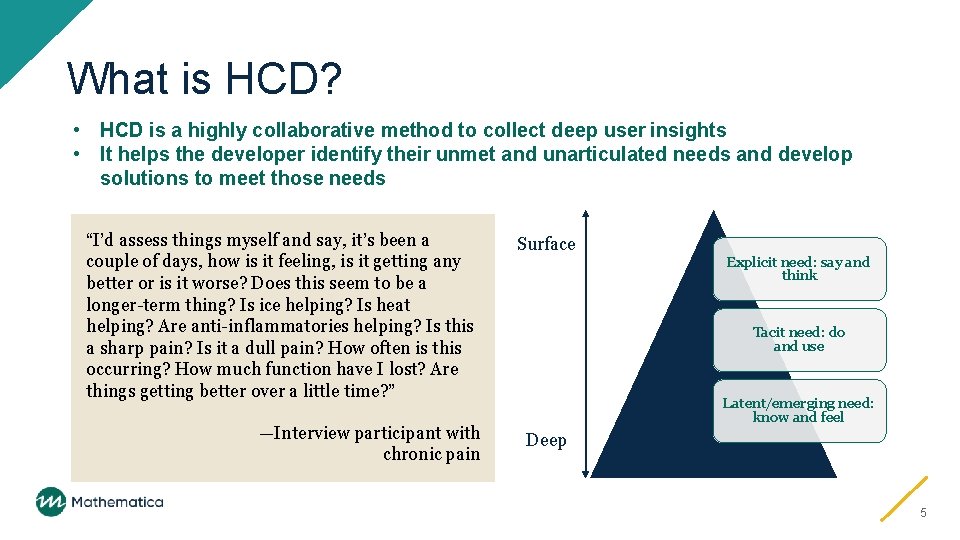
What is HCD? • HCD is a highly collaborative method to collect deep user insights • It helps the developer identify their unmet and unarticulated needs and develop solutions to meet those needs “I’d assess things myself and say, it’s been a couple of days, how is it feeling, is it getting any better or is it worse? Does this seem to be a longer-term thing? Is ice helping? Is heat helping? Are anti-inflammatories helping? Is this a sharp pain? Is it a dull pain? How often is this occurring? How much function have I lost? Are things getting better over a little time? ” —Interview participant with chronic pain Surface Explicit need: say and think Tacit need: do and use Latent/emerging need: know and feel Deep 5
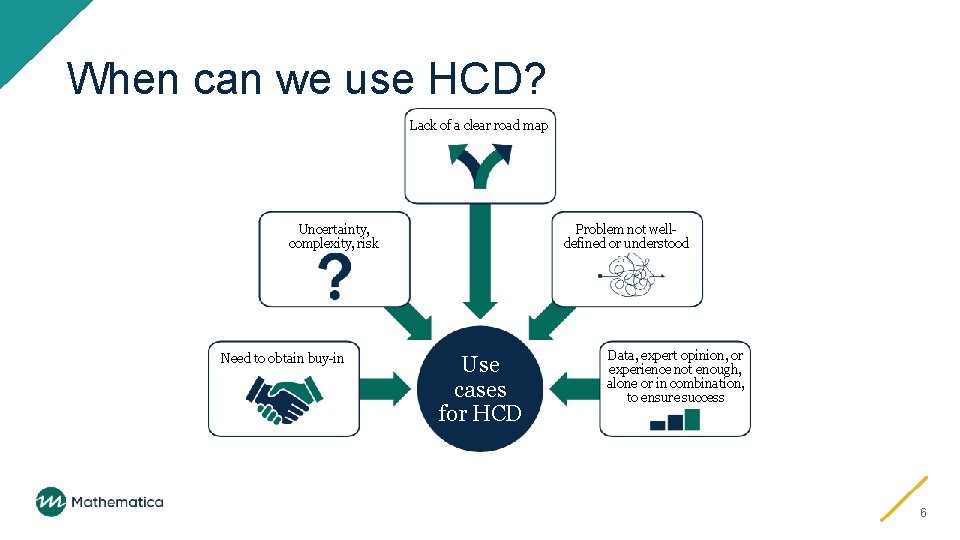
When can we use HCD? Lack of a clear road map Uncertainty, complexity, risk Need to obtain buy-in Problem not welldefined or understood Use cases for HCD Data, expert opinion, or experience not enough, alone or in combination, to ensure success 6
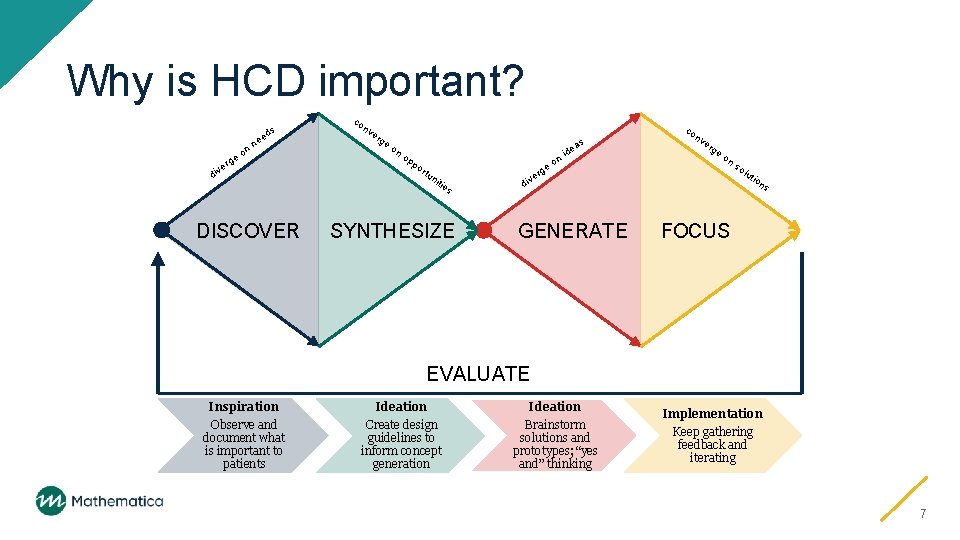
Why is HCD important? ds ee er div nn o e g DISCOVER co nv er ge on op as po rtu nit ies SYNTHESIZE e div o ge de ni co nv er ge on GENERATE so lut r ion s FOCUS EVALUATE Inspiration Ideation Observe and document what is important to patients Create design guidelines to inform concept generation Brainstorm solutions and prototypes; “yes and” thinking Implementation Keep gathering feedback and iterating 7
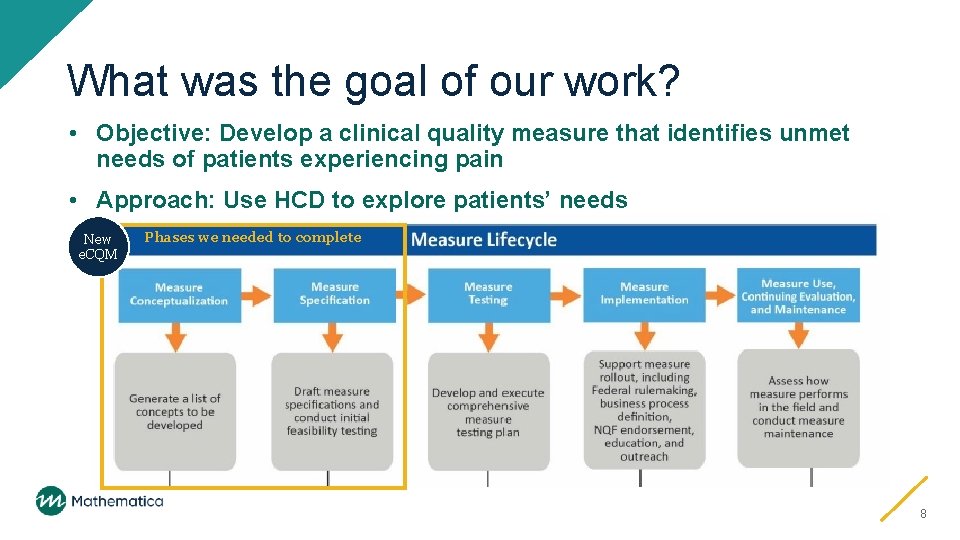
What was the goal of our work? • Objective: Develop a clinical quality measure that identifies unmet needs of patients experiencing pain • Approach: Use HCD to explore patients’ needs New e. CQM Phases we needed to complete 8
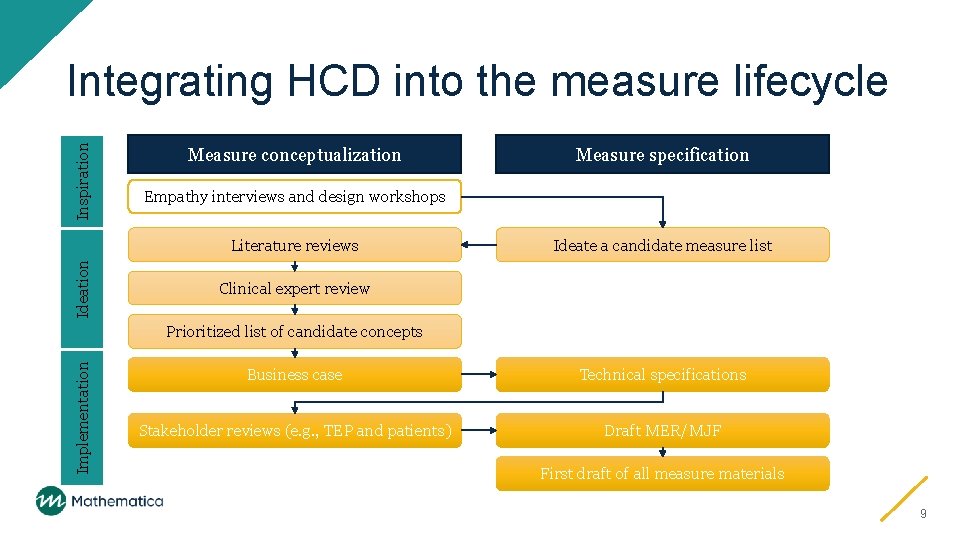
Inspiration Integrating HCD into the measure lifecycle Measure conceptualization Empathy interviews and design workshops Literature reviews Ideation Measure specification Ideate a candidate measure list Clinical expert review Implementation Prioritized list of candidate concepts Business case Technical specifications Stakeholder reviews (e. g. , TEP and patients) Draft MER/MJF First draft of all measure materials 9
Use Case: Developing a measure concept for pain management
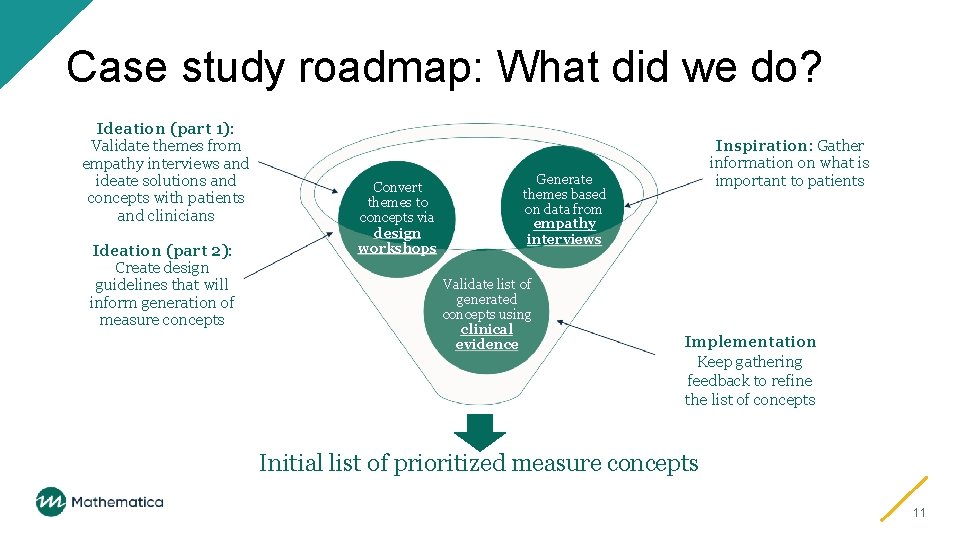
Case study roadmap: What did we do? Ideation (part 1): Validate themes from empathy interviews and ideate solutions and concepts with patients and clinicians Ideation (part 2): Create design guidelines that will inform generation of measure concepts Convert themes to concepts via design workshops Inspiration: Gather information on what is important to patients Generate themes based on data from empathy interviews Validate list of generated concepts using clinical evidence Implementation Keep gathering feedback to refine the list of concepts Initial list of prioritized measure concepts 11
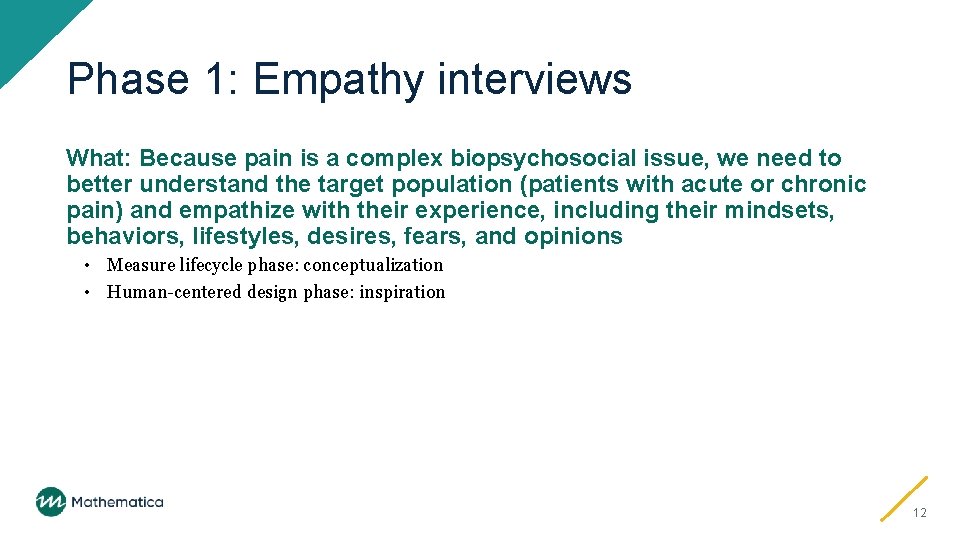
Phase 1: Empathy interviews What: Because pain is a complex biopsychosocial issue, we need to better understand the target population (patients with acute or chronic pain) and empathize with their experience, including their mindsets, behaviors, lifestyles, desires, fears, and opinions • Measure lifecycle phase: conceptualization • Human-centered design phase: inspiration 12
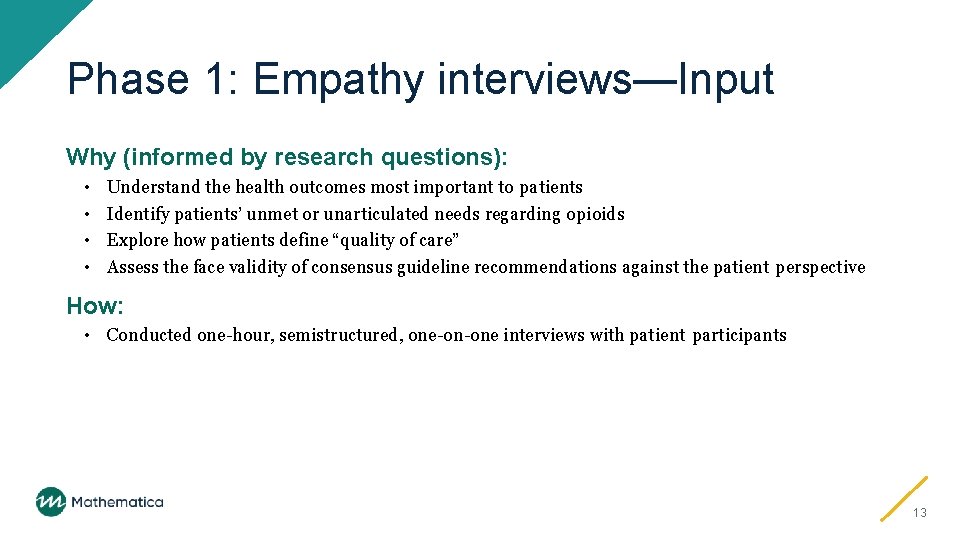
Phase 1: Empathy interviews—Input Why (informed by research questions): • • Understand the health outcomes most important to patients Identify patients’ unmet or unarticulated needs regarding opioids Explore how patients define “quality of care” Assess the face validity of consensus guideline recommendations against the patient perspective How: • Conducted one-hour, semistructured, one-on-one interviews with patient participants 13
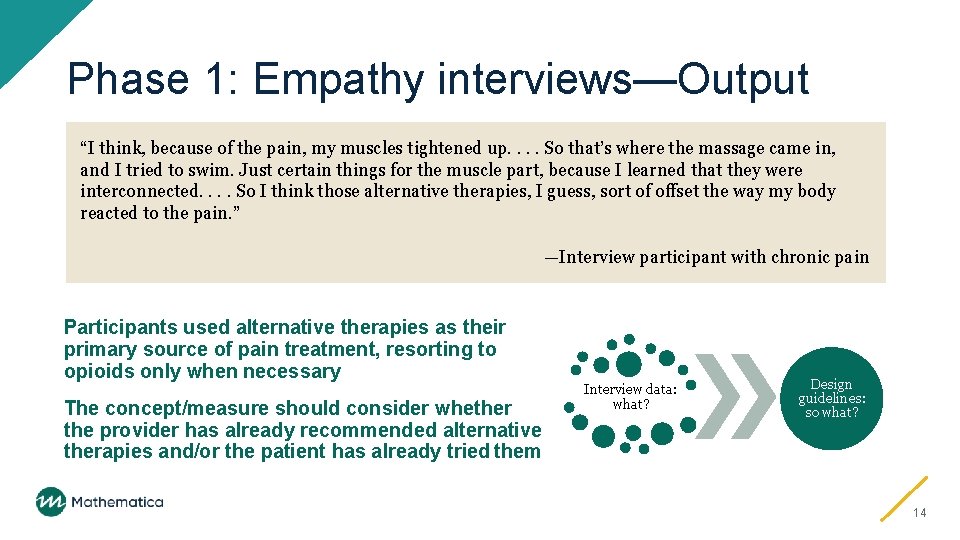
Phase 1: Empathy interviews—Output “I think, because of the pain, my muscles tightened up. . So that’s where the massage came in, and I tried to swim. Just certain things for the muscle part, because I learned that they were interconnected. . So I think those alternative therapies, I guess, sort of offset the way my body reacted to the pain. ” —Interview participant with chronic pain Participants used alternative therapies as their primary source of pain treatment, resorting to opioids only when necessary The concept/measure should consider whether the provider has already recommended alternative therapies and/or the patient has already tried them Interview data: what? Design guidelines: so what? 14
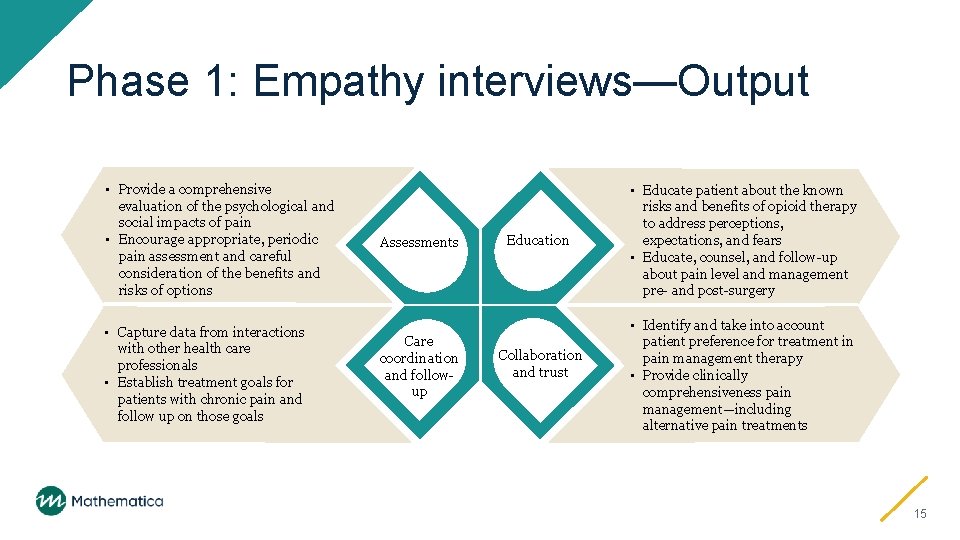
Phase 1: Empathy interviews—Output • Provide a comprehensive evaluation of the psychological and social impacts of pain • Encourage appropriate, periodic pain assessment and careful consideration of the benefits and risks of options • Capture data from interactions with other health care professionals • Establish treatment goals for patients with chronic pain and follow up on those goals Assessments Care coordination and followup Education Collaboration and trust • Educate patient about the known risks and benefits of opioid therapy to address perceptions, expectations, and fears • Educate, counsel, and follow-up about pain level and management pre- and post-surgery • Identify and take into account patient preference for treatment in pain management therapy • Provide clinically comprehensiveness pain management—including alternative pain treatments 15
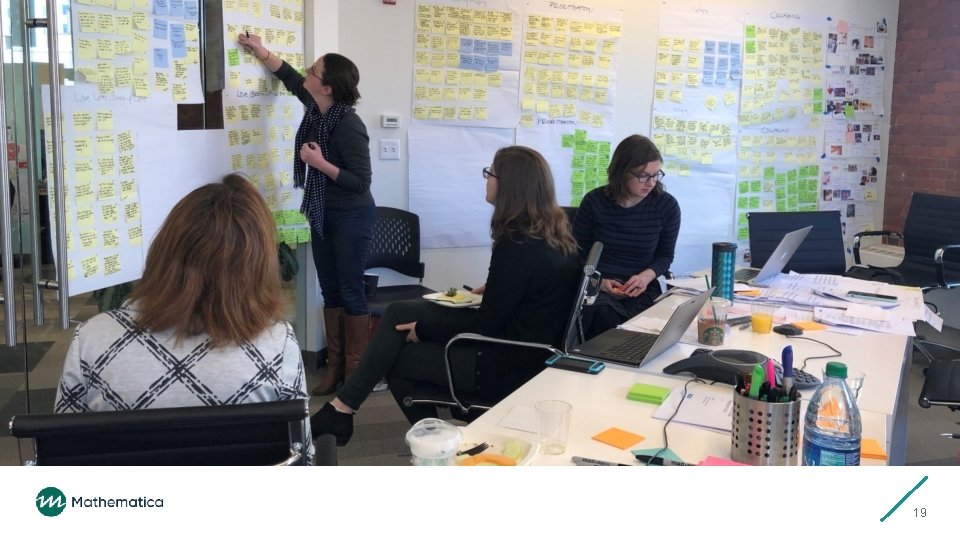
Phase 2: Design workshops—Input What: Create a draft list of concepts via design workshops • Measure lifecycle phase: specification • Human-centered design phase: ideation Why (informed by research questions): • Assess validity of themes from empathy interviews • Draft list of initial measure concepts How: • Conducted two three-hour design workshops with eight new patient participants and two clinician participants • During data analysis, fleshed out the list of measure concepts drafted and prioritized by patients and clinicians 16
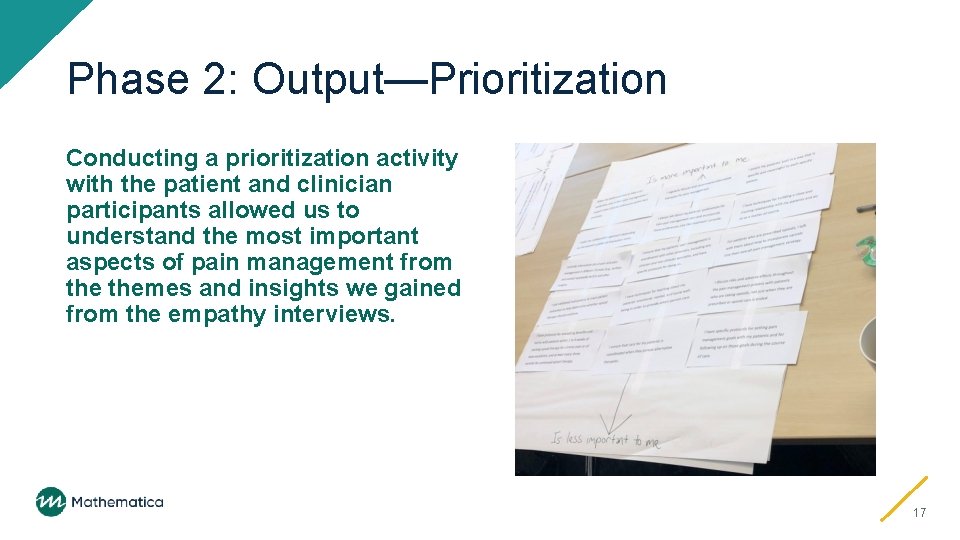
Phase 2: Output—Prioritization Conducting a prioritization activity with the patient and clinician participants allowed us to understand the most important aspects of pain management from themes and insights we gained from the empathy interviews. 17
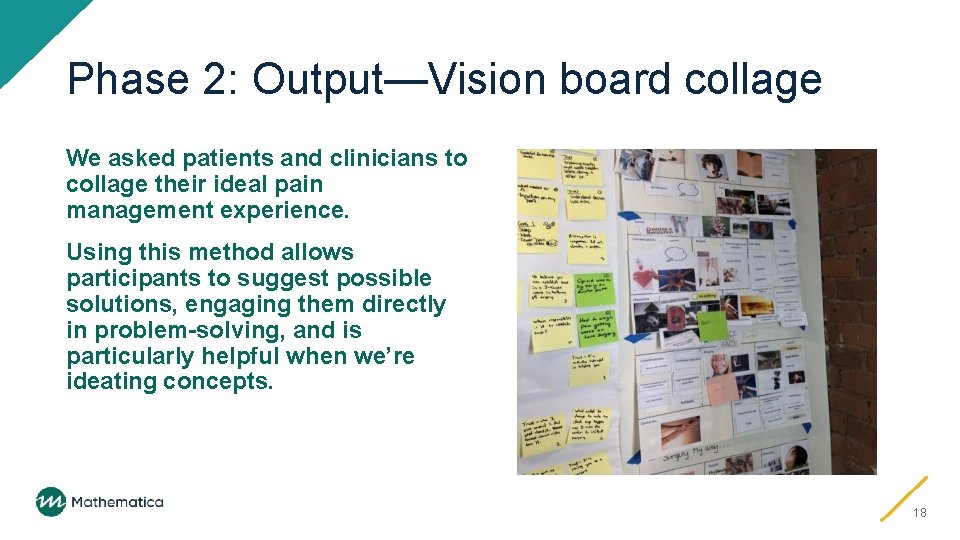
Phase 2: Output—Vision board collage We asked patients and clinicians to collage their ideal pain management experience. Using this method allows participants to suggest possible solutions, engaging them directly in problem-solving, and is particularly helpful when we’re ideating concepts. 18
19
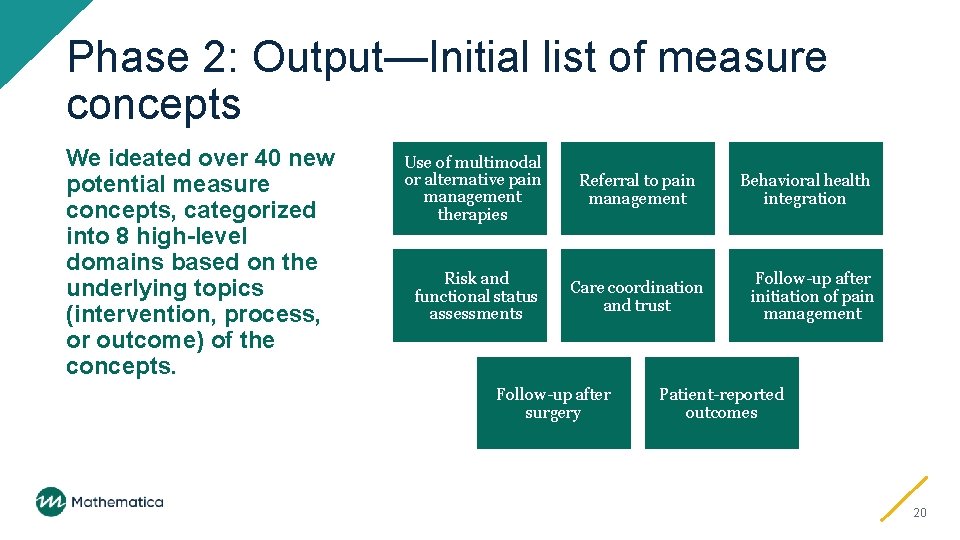
Phase 2: Output—Initial list of measure concepts We ideated over 40 new potential measure concepts, categorized into 8 high-level domains based on the underlying topics (intervention, process, or outcome) of the concepts. Use of multimodal or alternative pain management therapies Referral to pain management Risk and functional status assessments Care coordination and trust Follow-up after surgery Behavioral health integration Follow-up after initiation of pain management Patient-reported outcomes 20
Phase 3: Literature review and clinician input What: Validate list of generated concepts using evidence from literature review and stakeholder input • Measure lifecycle phase: conceptualization Why: • Determine which concepts have a strong evidence base • Gain input on the face validity, feasibility (Expert Workgroup only), and usability of the concepts to prioritize them How: • Convene opioid EWG • Conduct literature review 21
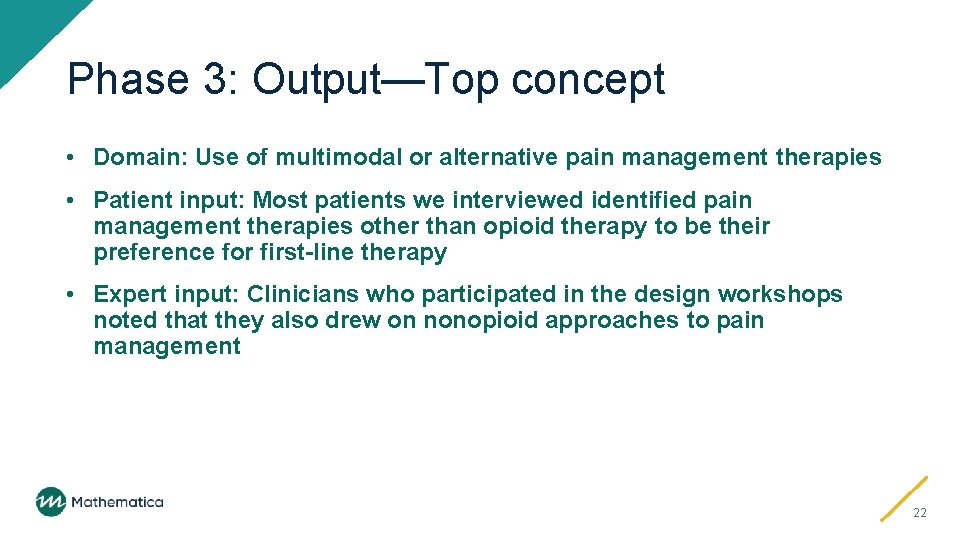
Phase 3: Output—Top concept • Domain: Use of multimodal or alternative pain management therapies • Patient input: Most patients we interviewed identified pain management therapies other than opioid therapy to be their preference for first-line therapy • Expert input: Clinicians who participated in the design workshops noted that they also drew on nonopioid approaches to pain management 22
What did we learn by using HCD in practice for measure development?
Benefits and outcomes of innovative HCD approach Why now? • HCD is an excellent fit for data collection in the measure conceptualization phase • We were able to identify hidden insights or unknowns to patients and measure developers • HCD is also an excellent fit for analyzing all the qualitative data in a very short turnaround • Potential unintended consequences or implementation challenges are brought to the forefront 24
Benefits and outcomes of innovative HCD approach Findings specific to our case: • Most concepts identified as important from the patient perspective aligned with clinician consensus statements and national guidelines • For example, patients did not like to use opioids as first-line therapy, which the CDC guidelines also recommend • Patients and clinicians felt very engaged; brought them together to ideate on concepts 25
Questions?
For more information Jayanti Bandyopadhyay JBandyopadhyay@mathematica-mpr. com Cindy Cullen CCullen@mathematica-mpr. com Sam Simon SSimon@mathematica-mpr. com 27
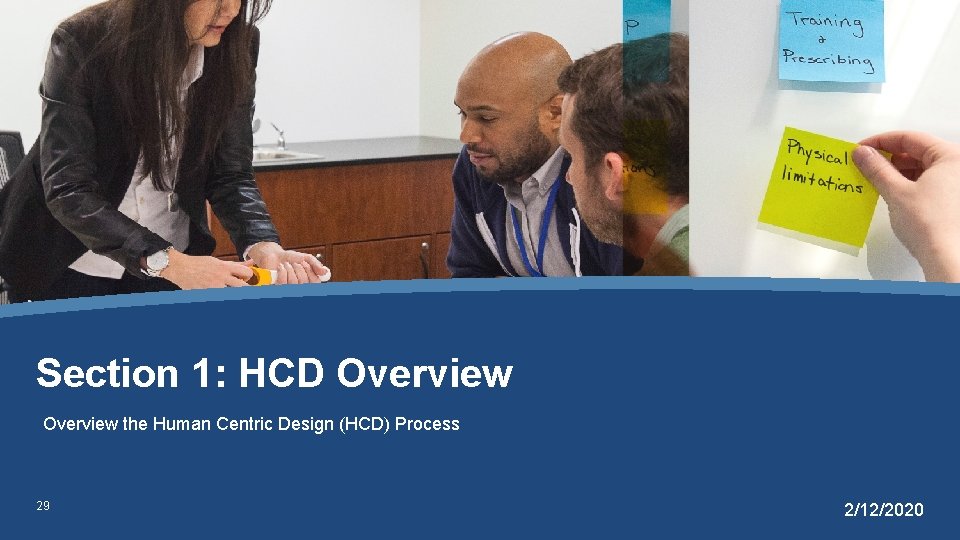
Section 1: HCD Overview the Human Centric Design (HCD) Process 29 2/12/2020
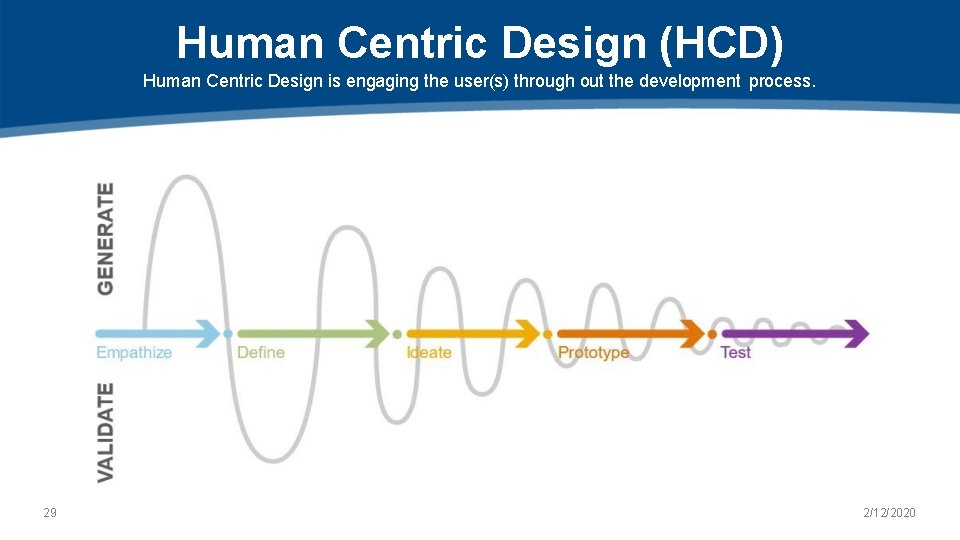
Human Centric Design (HCD) Human Centric Design is engaging the user(s) through out the development process. 29 2/12/2020
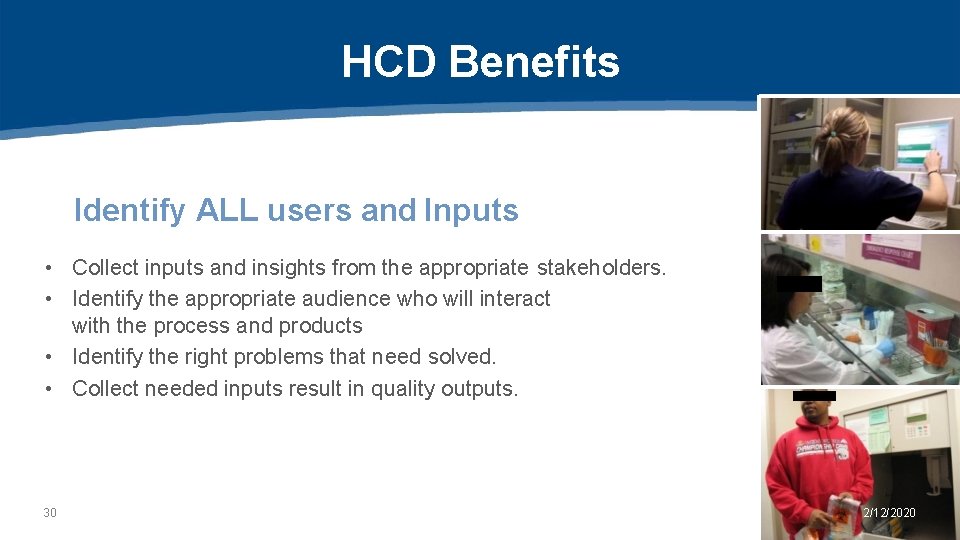
HCD Benefits Identify ALL users and Inputs • Collect inputs and insights from the appropriate stakeholders. • Identify the appropriate audience who will interact with the process and products • Identify the right problems that need solved. • Collect needed inputs result in quality outputs. 30 2/12/2020
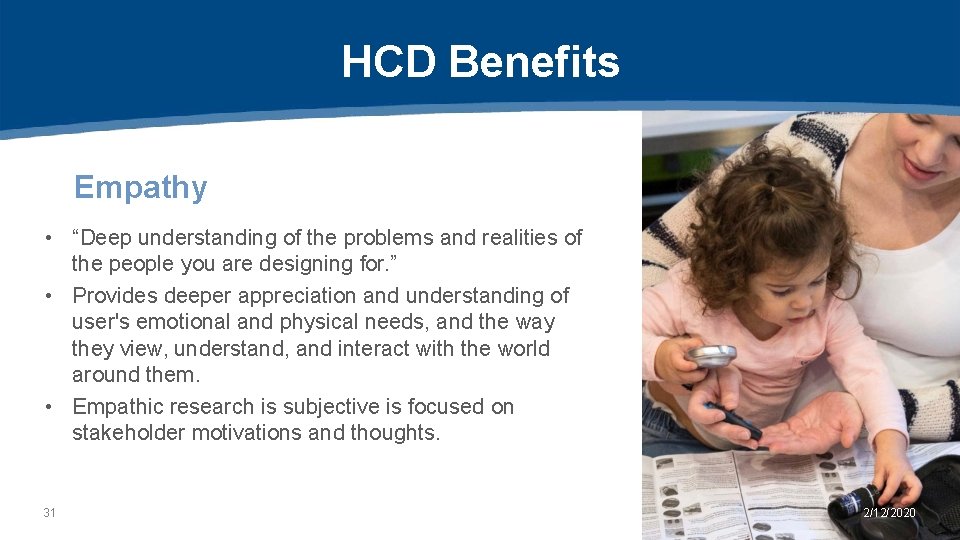
HCD Benefits Empathy • “Deep understanding of the problems and realities of the people you are designing for. ” • Provides deeper appreciation and understanding of user's emotional and physical needs, and the way they view, understand, and interact with the world around them. • Empathic research is subjective is focused on stakeholder motivations and thoughts. 31 2/12/2020
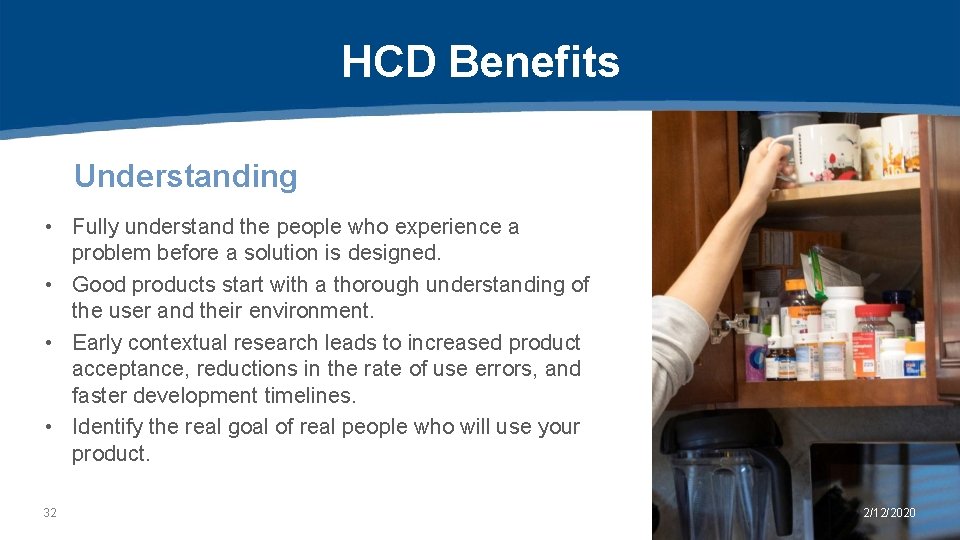
HCD Benefits Understanding • Fully understand the people who experience a problem before a solution is designed. • Good products start with a thorough understanding of the user and their environment. • Early contextual research leads to increased product acceptance, reductions in the rate of use errors, and faster development timelines. • Identify the real goal of real people who will use your product. 32 2/12/2020
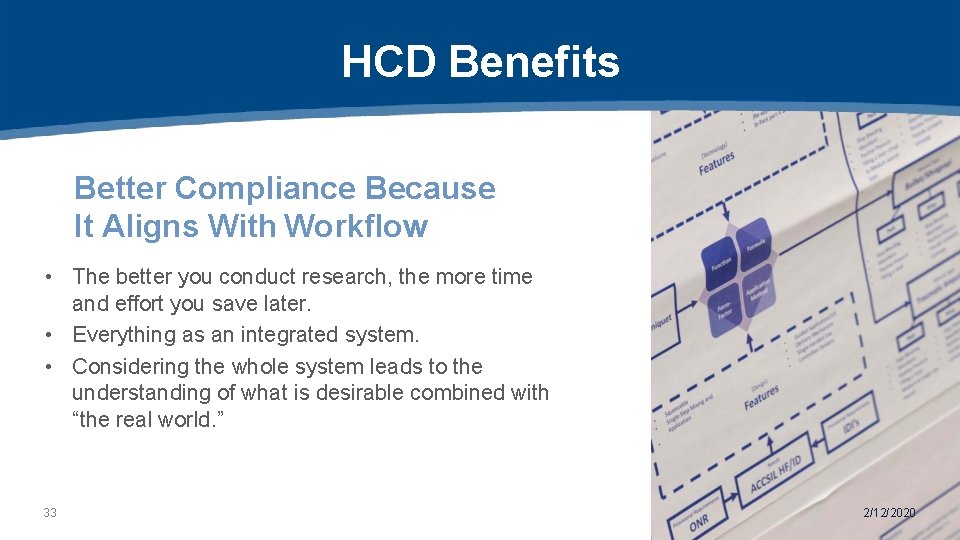
HCD Benefits Better Compliance Because It Aligns With Workflow • The better you conduct research, the more time and effort you save later. • Everything as an integrated system. • Considering the whole system leads to the understanding of what is desirable combined with “the real world. ” 33 2/12/2020
HCD Benefits Rigor • Rigor is required in the HCD process to ensure that research is performed systematically, consistently, and thoroughly. • Attention to detail and listening to what the user says allows the deeper understanding of the information under question. • HCD evaluations require a specific skillset. • Measure development is hard work and needs the rigor of HCD. 34 2/12/2020
HCD Tools A snapshot of techniques useful in Human Centric Design: • Build Rapport: It is important the build rapport with the users to allow participants to get comfortable, so they open up and share important insights. • Open-Ended Techniques: HCD interviewers use open-ended questions when eliciting feedback to allow the users to provide insights in answering questions. • Qualitative Synthesis: Most of the feedback acquired in HCD data collection efforts is qualitative in nature. To then translate this into quantitative results the HCD researchers need to look for common themes that show up in responses. These themes are then categorized and evaluated for similarities and differences to capture the nuances in feedback and the resulting impact on design recommendations. • 5 Whys: The 5 Whys is an effective interviewing technique where asking “WHY? ” five times in an iterative manner with increasingly targeted questions allows the HCD expert to get to the true root cause of an issue. 35 2/12/2020
HCD Pitfalls To Be Aware Of We would be remiss if we did not also mention the potential pitfalls in the use of Human Centric Design: • Its Time-Consuming: Investing in HCD evaluations to get user inputs to aid production of an end product users can use takes time to design, collect data, interpret, test, and iterate. • Subjective in Nature: In terms of questions asked and interpretations of motives and actions expressed or observed. • Individuals are Moving Targets: Design needs to evolve with the changing needs of the user. Continued use by a product can also lead to identification of new needs with increased expertise. HCD process must include continual evaluation and be adaptive to potentially changing needs. • Limited Guarantees: Human-Centered Design does guarantee good products. It can lead to improvements of bad ones. Moreover, good Human-Centered Design will avoid failures. It will ensure that products do work, that people can use them. But it may not solve all problems and is just one tool in the toolbox 36 2/12/2020
Section 2: Using HCD In the Blueprint for the CMS Measures Management System 38 2/12/2020
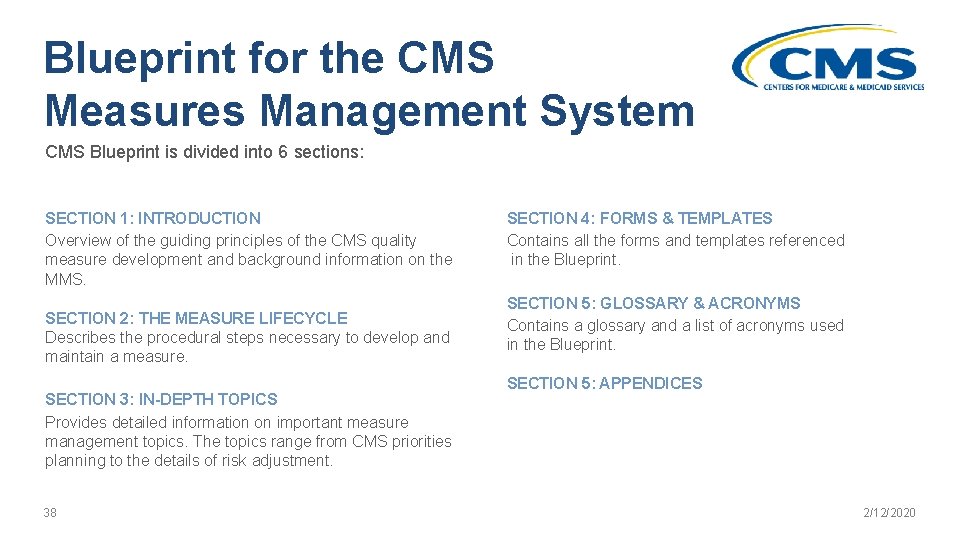
Blueprint for the CMS Measures Management System CMS Blueprint is divided into 6 sections: SECTION 1: INTRODUCTION Overview of the guiding principles of the CMS quality measure development and background information on the MMS. SECTION 2: THE MEASURE LIFECYCLE Describes the procedural steps necessary to develop and maintain a measure. SECTION 3: IN-DEPTH TOPICS Provides detailed information on important measure management topics. The topics range from CMS priorities planning to the details of risk adjustment. 38 SECTION 4: FORMS & TEMPLATES Contains all the forms and templates referenced in the Blueprint. SECTION 5: GLOSSARY & ACRONYMS Contains a glossary and a list of acronyms used in the Blueprint. SECTION 5: APPENDICES 2/12/2020
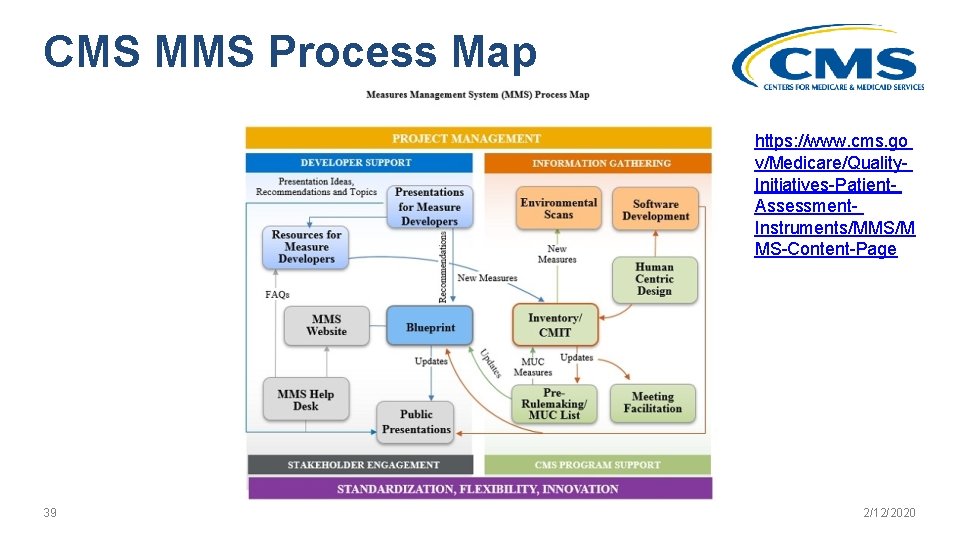
CMS MMS Process Map https: //www. cms. go v/Medicare/Quality. Initiatives-Patient. Assessment. Instruments/MMS/M MS-Content-Page 39 2/12/2020
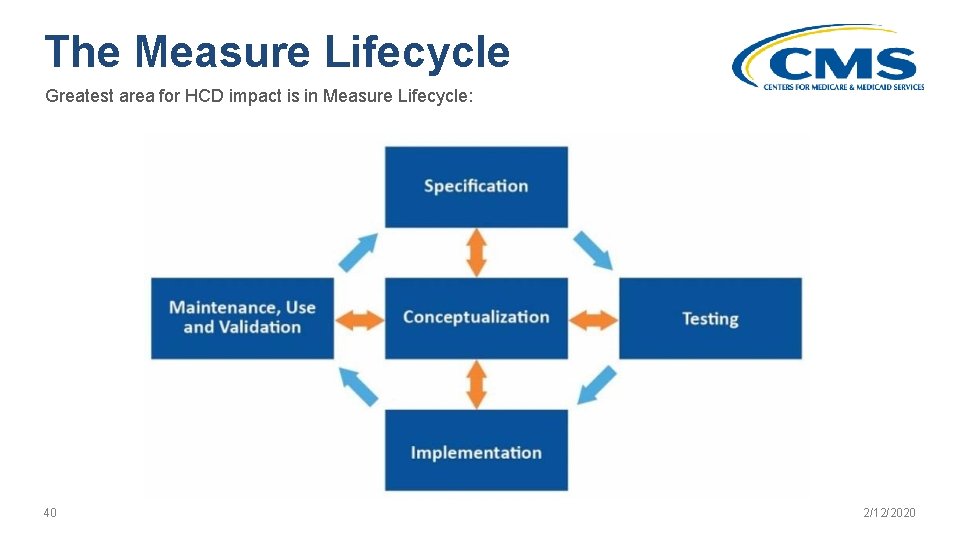
The Measure Lifecycle Greatest area for HCD impact is in Measure Lifecycle: 40 2/12/2020
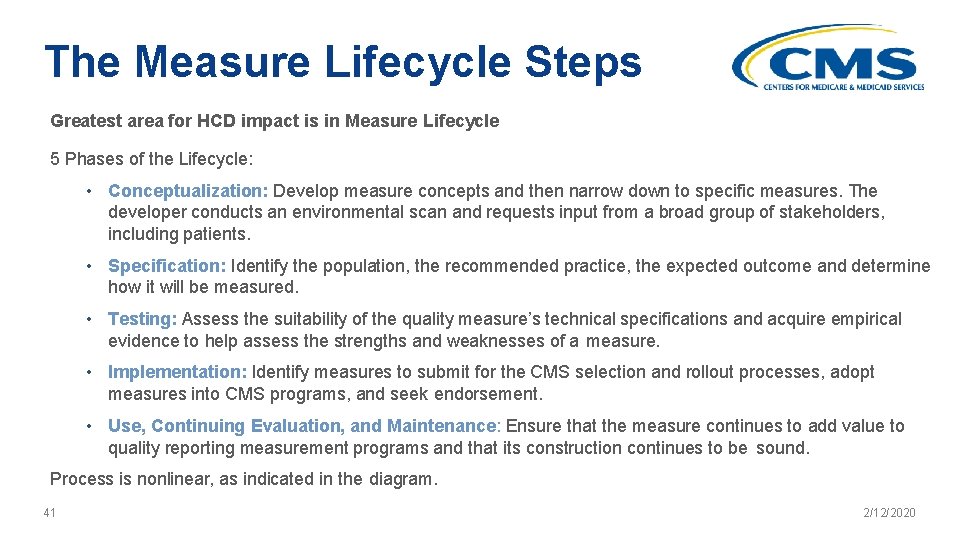
The Measure Lifecycle Steps Greatest area for HCD impact is in Measure Lifecycle 5 Phases of the Lifecycle: • Conceptualization: Develop measure concepts and then narrow down to specific measures. The developer conducts an environmental scan and requests input from a broad group of stakeholders, including patients. • Specification: Identify the population, the recommended practice, the expected outcome and determine how it will be measured. • Testing: Assess the suitability of the quality measure’s technical specifications and acquire empirical evidence to help assess the strengths and weaknesses of a measure. • Implementation: Identify measures to submit for the CMS selection and rollout processes, adopt measures into CMS programs, and seek endorsement. • Use, Continuing Evaluation, and Maintenance: Ensure that the measure continues to add value to quality reporting measurement programs and that its construction continues to be sound. Process is nonlinear, as indicated in the diagram. 41 2/12/2020
Empowering Users CMS advocates USE of THE MMS BLUEPRINT by anyone, saying: • “While CMS measure developers are required to use it, it is also a great resource for non-CMS contracted measure developers who want to submit measures for consideration by CMS. The processes outlined in the Blueprint help ensure measures meet the evaluation criteria used by CMS and the National Quality Forum (NQF) including: the importance to measure and report on the topic, scientific acceptability of measure properties, feasibility, usability and use, and harmonization. ” HCD experts can collaborate with CMS measure developers in their use of the Blueprint to optimize results. https: //www. cms. gov/Medicare/Quality-Initiatives-Patient-Assessment-Instruments/MMSBlueprint 42 2/12/2020
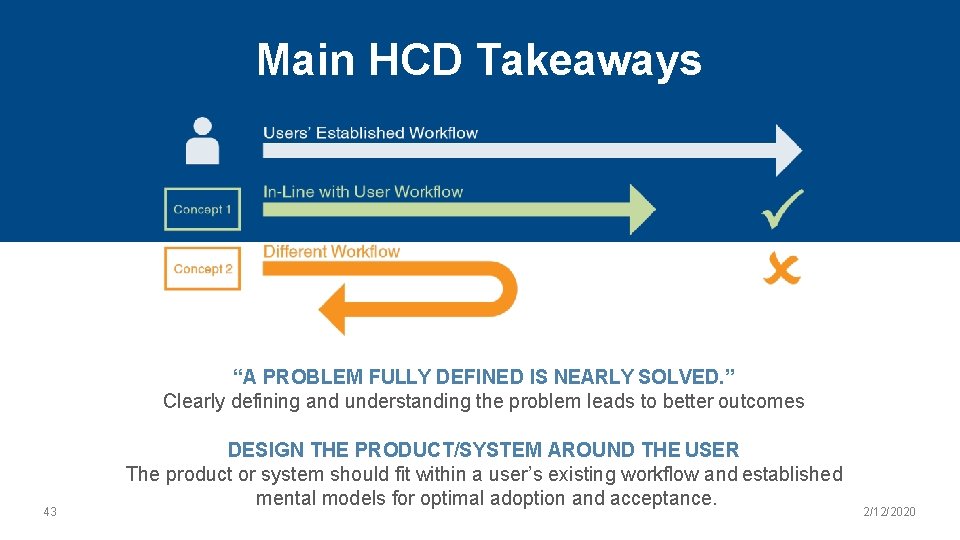
Main HCD Takeaways “A PROBLEM FULLY DEFINED IS NEARLY SOLVED. ” Clearly defining and understanding the problem leads to better outcomes 43 DESIGN THE PRODUCT/SYSTEM AROUND THE USER The product or system should fit within a user’s existing workflow and established mental models for optimal adoption and acceptance. 2/12/2020
Meaningful Measures 44 2/12/2020
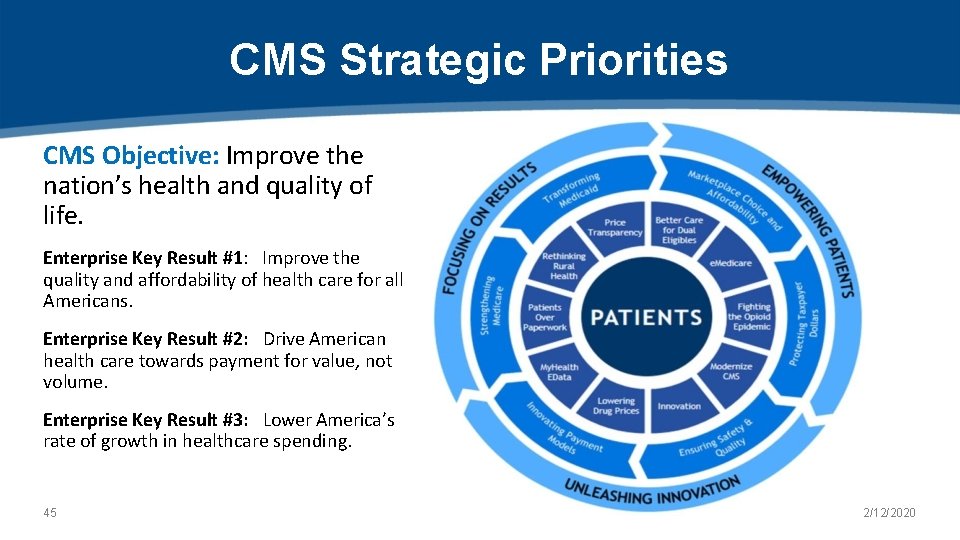
CMS Strategic Priorities CMS Objective: Improve the nation’s health and quality of life. Enterprise Key Result #1: Improve the quality and affordability of health care for all Americans. Enterprise Key Result #2: Drive American health care towards payment for value, not volume. Enterprise Key Result #3: Lower America’s rate of growth in healthcare spending. 45 2/12/2020
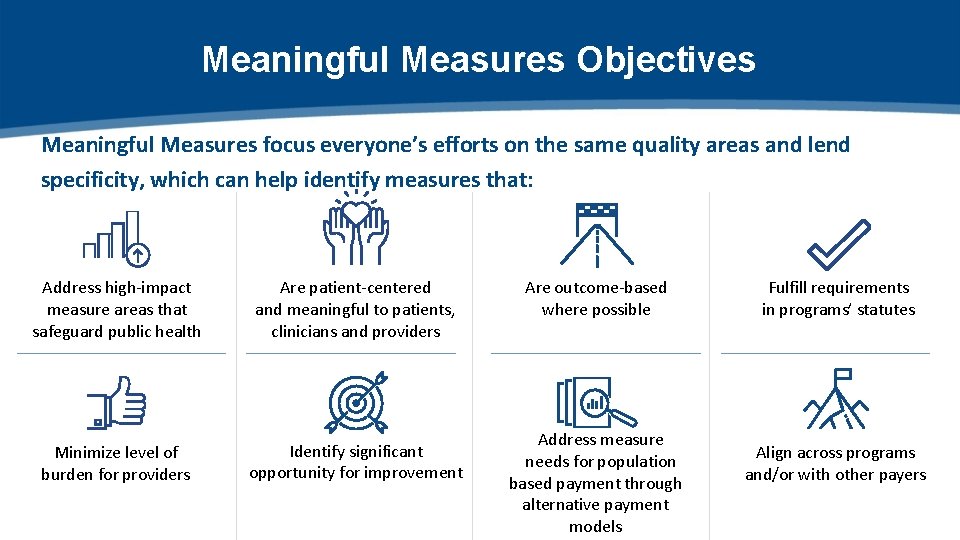
Meaningful Measures Objectives Meaningful Measures focus everyone’s efforts on the same quality areas and lend specificity, which can help identify measures that: Address high-impact measure areas that safeguard public health Are patient-centered and meaningful to patients, clinicians and providers Minimize level of burden for providers Identify significant opportunity for improvement Are outcome-based where possible Address measure needs for population based payment through alternative payment models Fulfill requirements in programs’ statutes Align across programs and/or with other payers
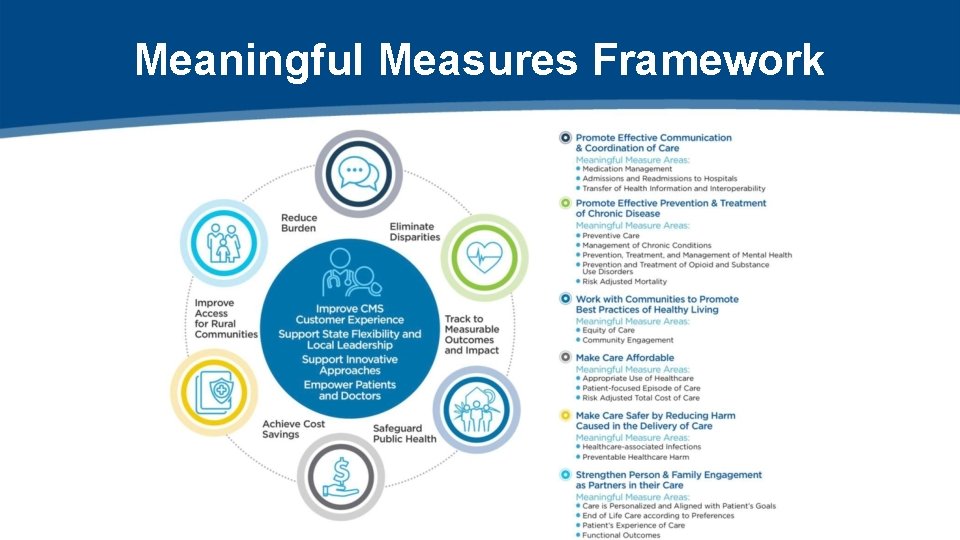
Meaningful Measures Framework
Meaningful Measure Development Priorities Measure Types: – Patient-reported outcome measures – Electronic clinical quality measures (e. CQMs) Measure priorities: – Appropriate use of opioids and avoidance of harm – Nursing home infections and safety measures – Maternal mortality – Sepsis
Discussion 49 2/12/2020
Announcements • Next MMS Info Session: • Date: April, 2020, 2 -3 pm ET 50 2/12/2020
51 Battelle CMS Measures Manager Contact: MMSsupport@Battelle. org Kimberly Rawlings (CMS COR) Contact: Kimberly. Rawlings@cms. hhs. gov 2/12/2020