
Making Impact Evaluations Happen World Bank Operational Experience
Making Impact Evaluations Happen World Bank Operational Experience 6 th European Conference on Evaluation of Cohesion Policy 30 November 2009 Warsaw Joost de Laat and Kaspar Richter
Outline • Result Agenda & Impact Evaluations • Impact Evaluations of Active Labor Market Policies
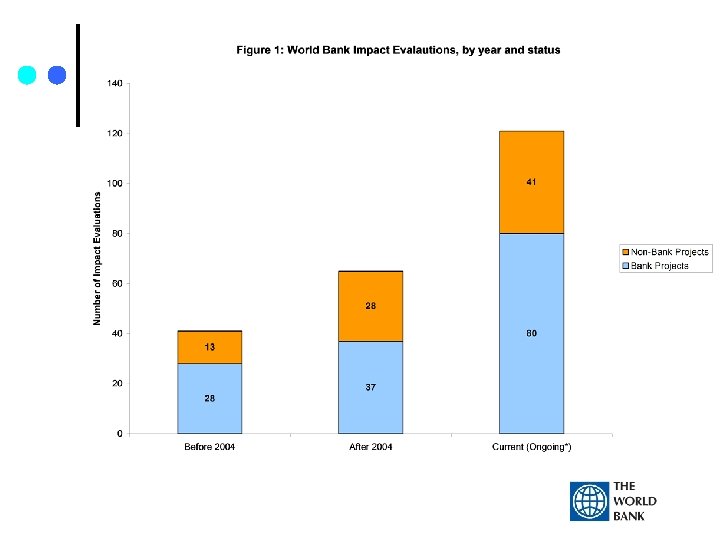
World Bank’s Result Agenda • Results-based approach to ensure that WB contributes to improved country outcomes • Demand for evidence of the results of development assistance is increasing – limited resources, donor fatigue, client expectations • Multiple policy options to address needs • Rigorous evidence often lacking to prioritize policy options • Among monitoring and evaluation techniques, impact evaluation provides an important tool to show the effect of interventions • Given the power of this tool, World Bank increasing number of impact evaluations
World Bank’s Development Impact Evaluation Initiative • Objectives: • To increase number of Bank projects with impact evaluation components • To increase staff capacity to design and carry out such evaluations • To build a process of systematic learning based on effective development interventions with lessons learned from completed evaluations • 12 Clusters: • Conditional Cash Transfers, Early Childhood Development, Education Service Delivery, HIV/AIDS Treatment and Prevention, Local Development, Malaria Control, Pay-for-Performance in Health, Rural Roads, Rural Electrification, Urban Upgrading, ALMP and Youth Employment
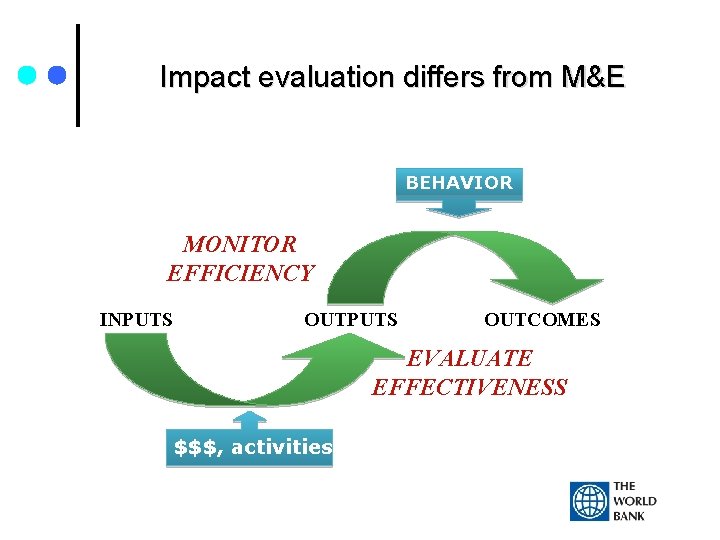
Impact evaluation differs from M&E BEHAVIOR MONITOR EFFICIENCY INPUTS OUTCOMES EVALUATE EFFECTIVENESS $$$, activities
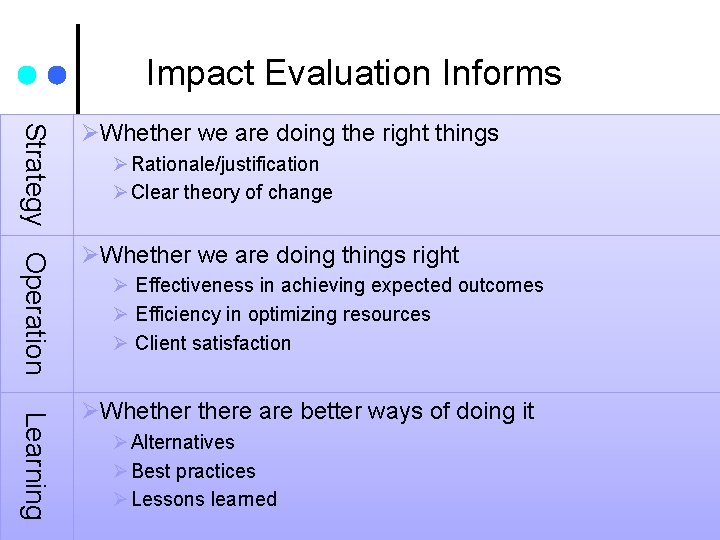
Impact Evaluation Informs Strategy Operation ØWhether we are doing the right things Ø Rationale/justification Ø Clear theory of change ØWhether we are doing things right Ø Effectiveness in achieving expected outcomes Ø Efficiency in optimizing resources Ø Client satisfaction Learning ØWhethere are better ways of doing it Ø Alternatives Ø Best practices Ø Lessons learned
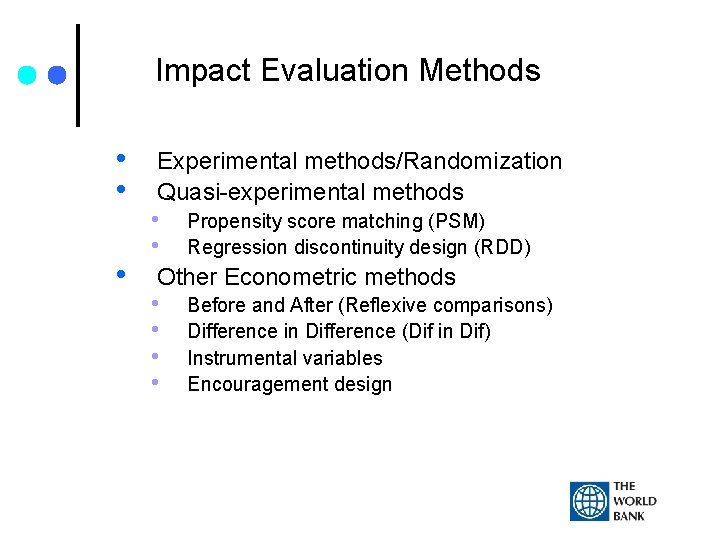
Impact Evaluation Methods • • • Experimental methods/Randomization Quasi-experimental methods • • Propensity score matching (PSM) Regression discontinuity design (RDD) Other Econometric methods • • Before and After (Reflexive comparisons) Difference in Difference (Dif in Dif) Instrumental variables Encouragement design
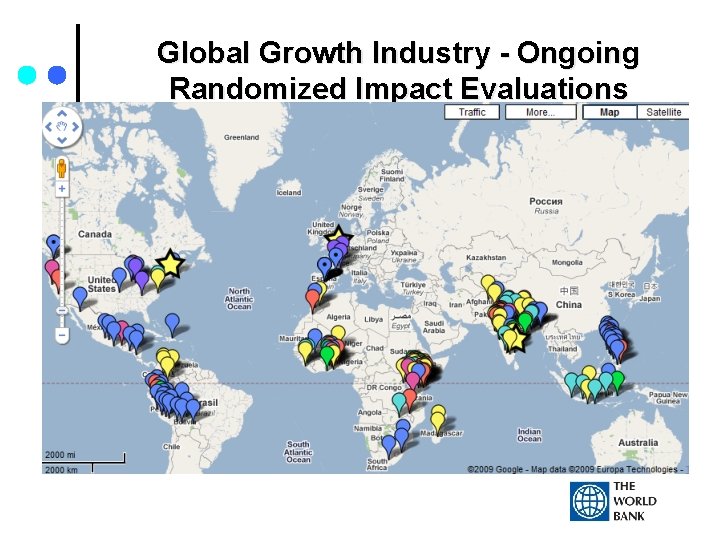
Global Growth Industry - Ongoing Randomized Impact Evaluations From MIT Poverty Action Lab Website (2009)
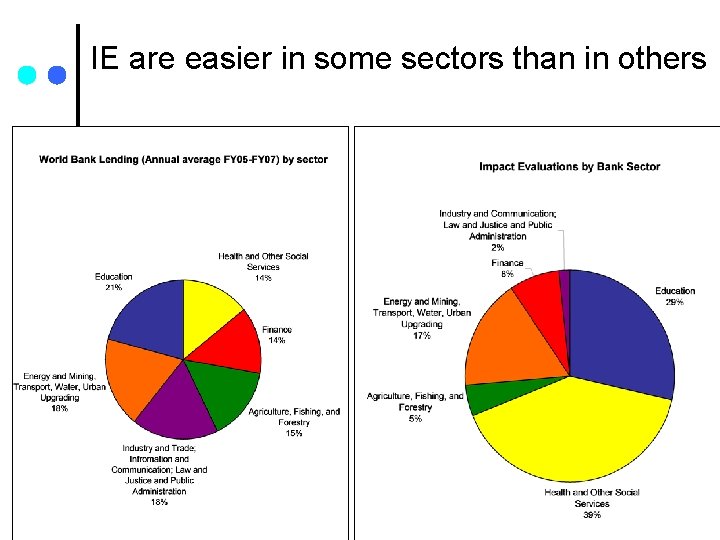
IE are easier in some sectors than in others
Randomization in Infrastructure? • • Very hard to do this mainly due to engineering constrains Unit of observation are often communities rather than HHs Self selection: local communities have to be eligible, prepare a project, apply for funds, and commit some project value (in kind and cash); Some projects already ongoing and the government has no capacity to start everywhere at the same time
10 Steps to Making Impact Evaluations Relevant for Practitioners § § § § § Make policy question the starting point Take seriously ethical objections and political sensitivities Take comprehensive approach to sources of bias Look for spillover effects Take a sectoral approach Look for impact heterogeneity Take scaling up seriously Understand what determines the impact Don’t reject theory Develop within-country capacity
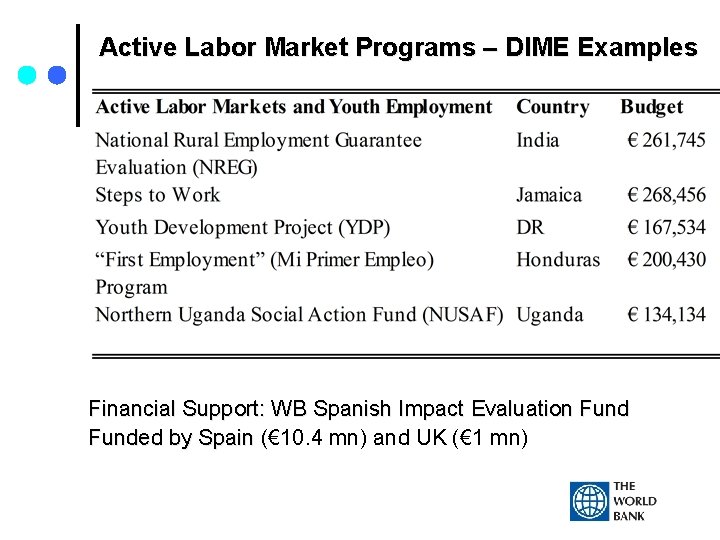
Active Labor Market Programs – DIME Examples Financial Support: WB Spanish Impact Evaluation Funded by Spain (€ 10. 4 mn) and UK (€ 1 mn) (
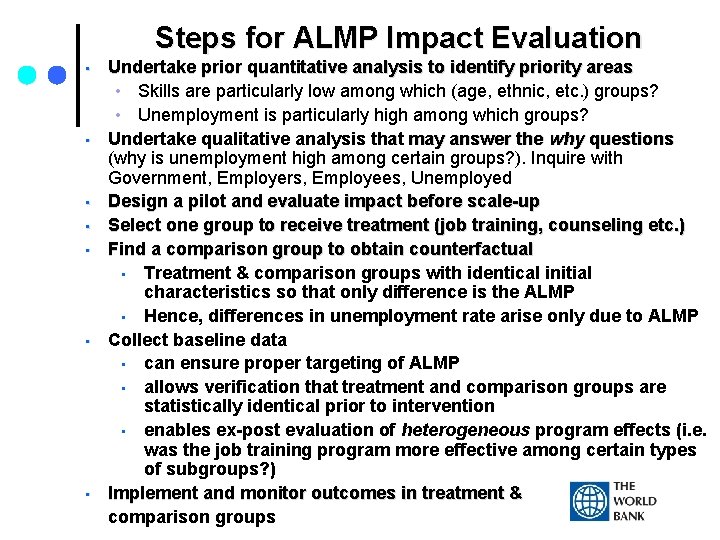
Steps for ALMP Impact Evaluation • • Undertake prior quantitative analysis to identify priority areas • Skills are particularly low among which (age, ethnic, etc. ) groups? • Unemployment is particularly high among which groups? Undertake qualitative analysis that may answer the why questions (why is unemployment high among certain groups? ). Inquire with Government, Employers, Employees, Unemployed Design a pilot and evaluate impact before scale-up Select one group to receive treatment (job training, counseling etc. ) Find a comparison group to obtain counterfactual • Treatment & comparison groups with identical initial characteristics so that only difference is the ALMP • Hence, differences in unemployment rate arise only due to ALMP Collect baseline data • can ensure proper targeting of ALMP • allows verification that treatment and comparison groups are statistically identical prior to intervention • enables ex-post evaluation of heterogeneous program effects (i. e. was the job training program more effective among certain types of subgroups? ) Implement and monitor outcomes in treatment & comparison groups
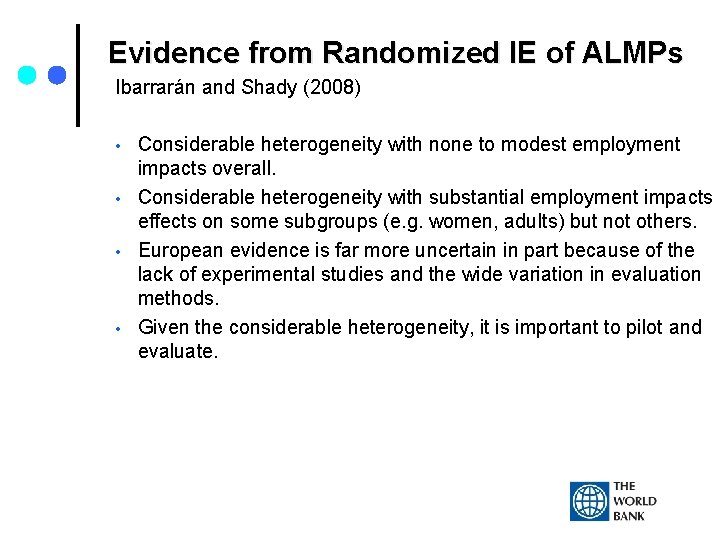
Evidence from Randomized IE of ALMPs Ibarrarán and Shady (2008) • • Considerable heterogeneity with none to modest employment impacts overall. Considerable heterogeneity with substantial employment impacts effects on some subgroups (e. g. women, adults) but not others. European evidence is far more uncertain in part because of the lack of experimental studies and the wide variation in evaluation methods. Given the considerable heterogeneity, it is important to pilot and evaluate.
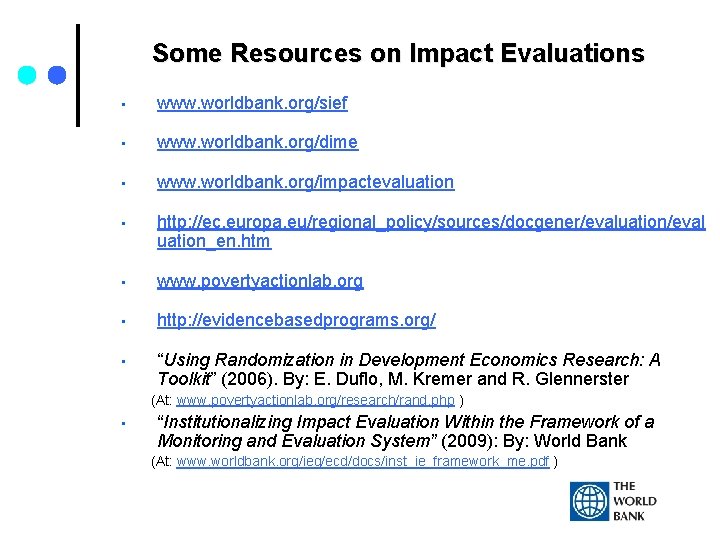
Some Resources on Impact Evaluations • www. worldbank. org/sief • www. worldbank. org/dime • www. worldbank. org/impactevaluation • http: //ec. europa. eu/regional_policy/sources/docgener/evaluation/eval uation_en. htm • www. povertyactionlab. org • http: //evidencebasedprograms. org/ • “Using Randomization in Development Economics Research: A Toolkit” (2006). By: E. Duflo, M. Kremer and R. Glennerster (At: www. povertyactionlab. org/research/rand. php ) • “Institutionalizing Impact Evaluation Within the Framework of a Monitoring and Evaluation System” (2009): By: World Bank (At: www. worldbank. org/ieg/ecd/docs/inst_ie_framework_me. pdf )

ADDITIONAL SLIDES
What we need for an IE 1. 2. 3. The difference in outcomes with the program versus without the program – for the same unit of analysis (e. g. individual, community etc. ) Problem: individuals only have one existence Hence, we have a problem of a missing counter-factual, a problem of missing data
We observe an outcome indicator, Intervention
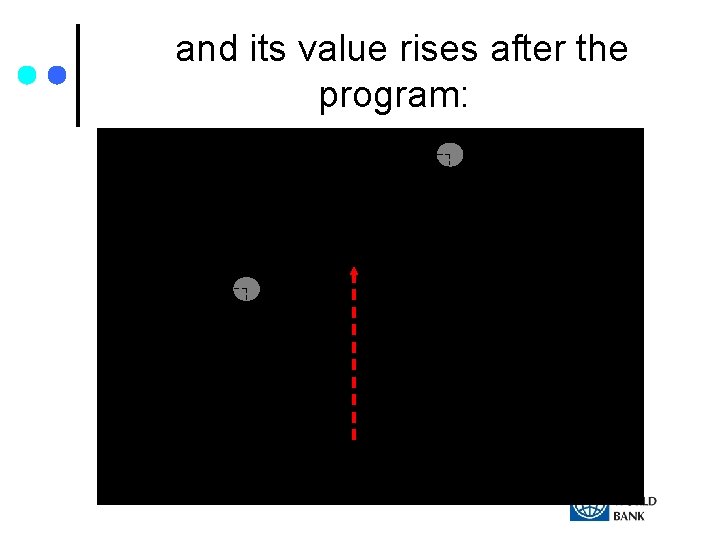
and its value rises after the program: Intervention
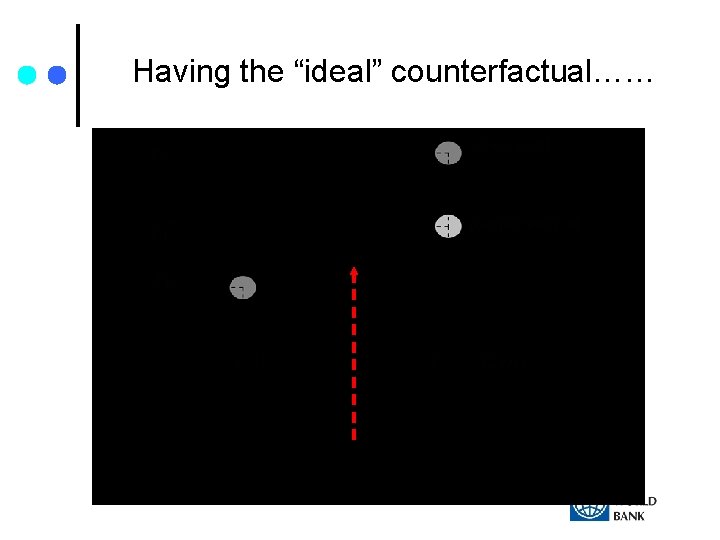
Having the “ideal” counterfactual…… Intervention
- Slides: 21