
Making comparisons Adjectives Adjectives describe nouns A student
Making comparisons
Adjectives • Adjectives describe nouns. • A ______ student • smart • pretty • quiet

2 ways to use adjectives • You can use an adjective in two different ways. • 1. Catelina is a smart student. • 2. Catelina is smart.

Short (1 or 2 vowels) adjectives • • • Tall Short Small Large Big Pretty

The comparative form • When you compare two things/people, using a short adjective, add “-er” at the end of the adjective. • My house is smaller than my sister’s house. • Use “than” before the second item.

Short (1 or 2 vowels) adjectives Make the comparative form. • Large • Tall • Big – taller • Short – shorter • Small – smaller – larger – bigger • Pretty – Prettier
Long (3 or more vowels) adjectives • A(n) ______ student • beautiful • intelligent • excellent
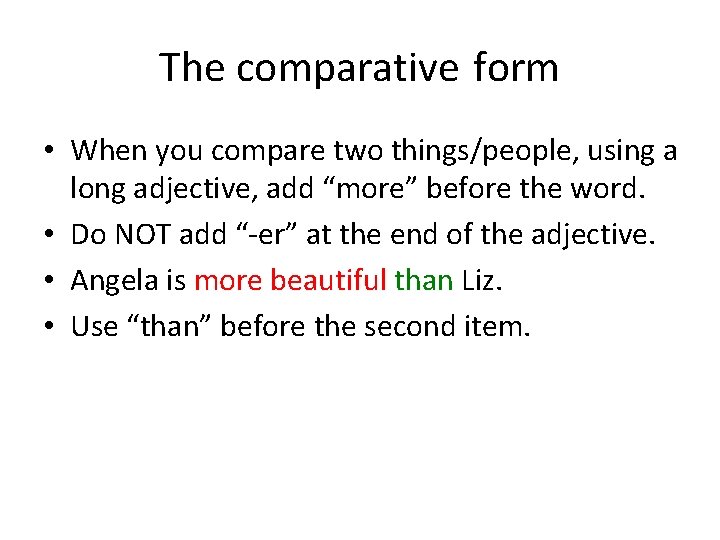
The comparative form • When you compare two things/people, using a long adjective, add “more” before the word. • Do NOT add “-er” at the end of the adjective. • Angela is more beautiful than Liz. • Use “than” before the second item.
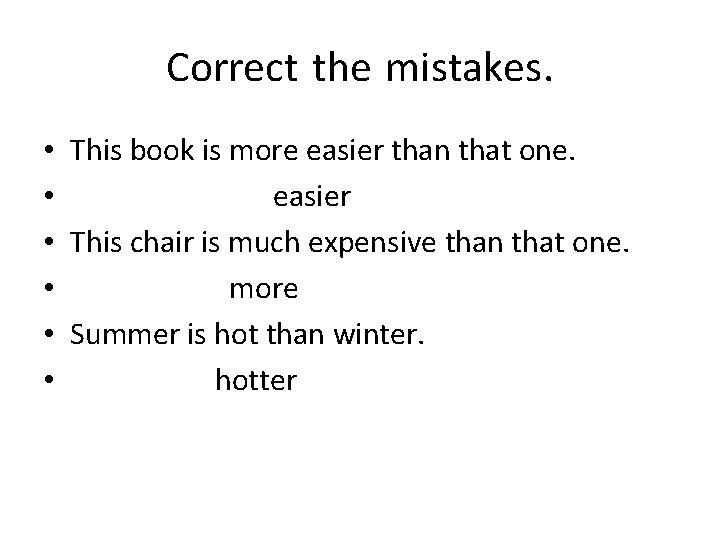
Correct the mistakes. • This book is more easier than that one. • easier • This chair is much expensive than that one. • more • Summer is hot than winter. • hotter
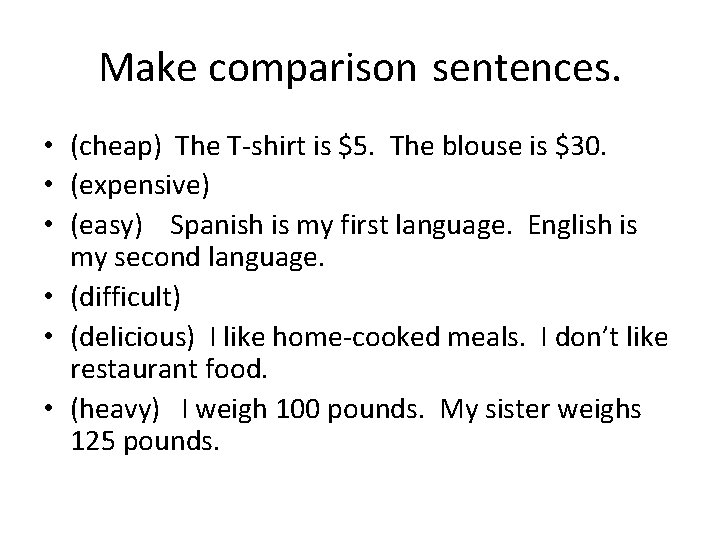
Make comparison sentences. • (cheap) The T-shirt is $5. The blouse is $30. • (expensive) • (easy) Spanish is my first language. English is my second language. • (difficult) • (delicious) I like home-cooked meals. I don’t like restaurant food. • (heavy) I weigh 100 pounds. My sister weighs 125 pounds.
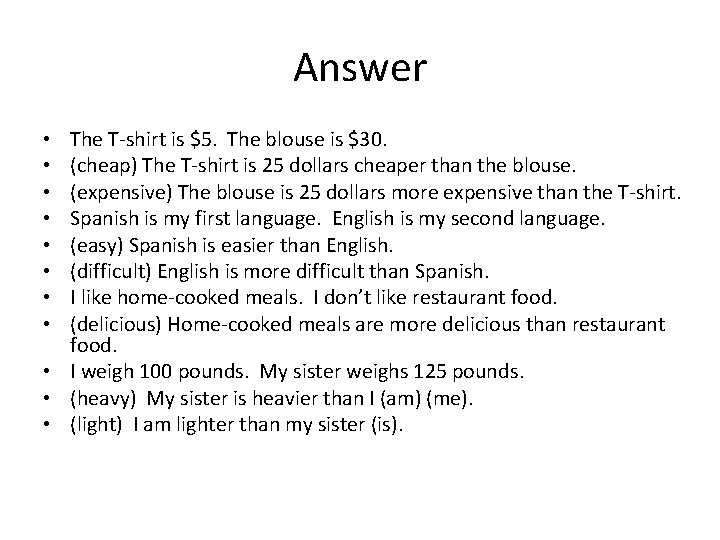
Answer The T-shirt is $5. The blouse is $30. (cheap) The T-shirt is 25 dollars cheaper than the blouse. (expensive) The blouse is 25 dollars more expensive than the T-shirt. Spanish is my first language. English is my second language. (easy) Spanish is easier than English. (difficult) English is more difficult than Spanish. I like home-cooked meals. I don’t like restaurant food. (delicious) Home-cooked meals are more delicious than restaurant food. • I weigh 100 pounds. My sister weighs 125 pounds. • (heavy) My sister is heavier than I (am) (me). • (light) I am lighter than my sister (is). • •

Short superlative form • When you compare two things/people, using a short adjective, add “the” before the adjective and “-est” at the end of the adjective. • My house is the smallest in my neighborhood. • My house is the smallest house in my neighborhood.
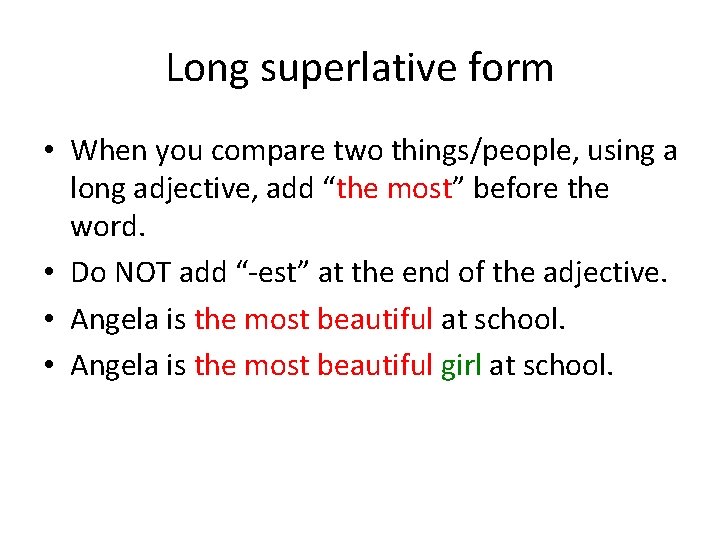
Long superlative form • When you compare two things/people, using a long adjective, add “the most” before the word. • Do NOT add “-est” at the end of the adjective. • Angela is the most beautiful at school. • Angela is the most beautiful girl at school.
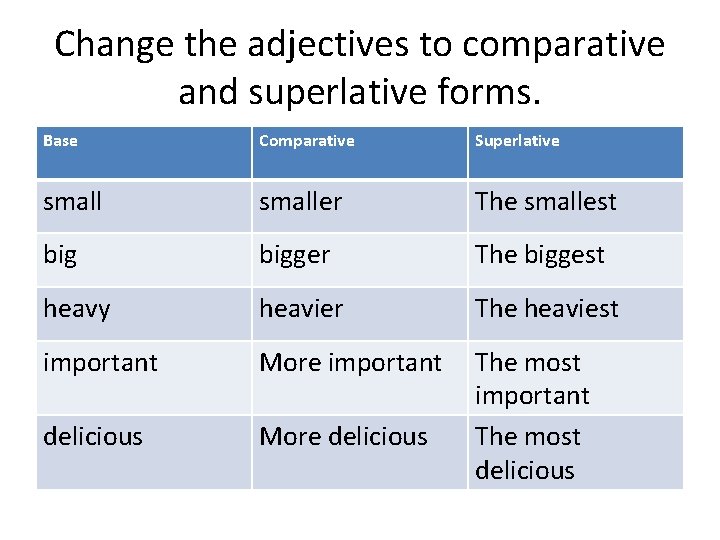
Change the adjectives to comparative and superlative forms. Base Comparative Superlative smaller The smallest bigger The biggest heavy heavier The heaviest important More important delicious More delicious The most important The most delicious
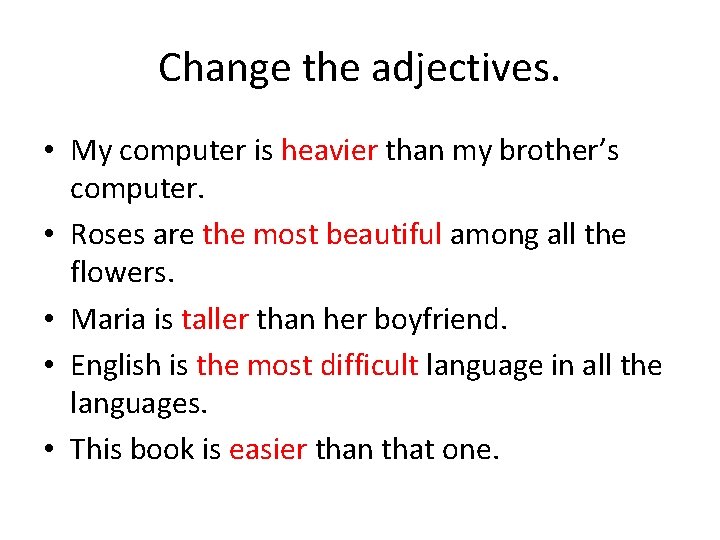
Change the adjectives. • My computer is heavier than my brother’s computer. • Roses are the most beautiful among all the flowers. • Maria is taller than her boyfriend. • English is the most difficult language in all the languages. • This book is easier than that one.
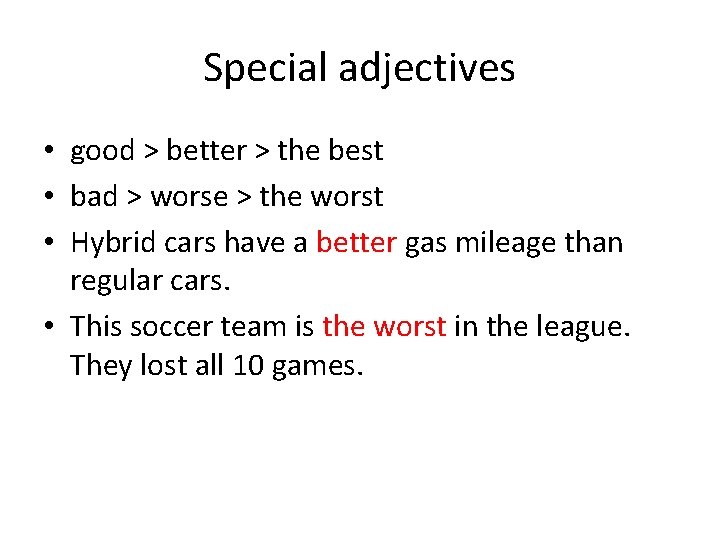
Special adjectives • good > better > the best • bad > worse > the worst • Hybrid cars have a better gas mileage than regular cars. • This soccer team is the worst in the league. They lost all 10 games.
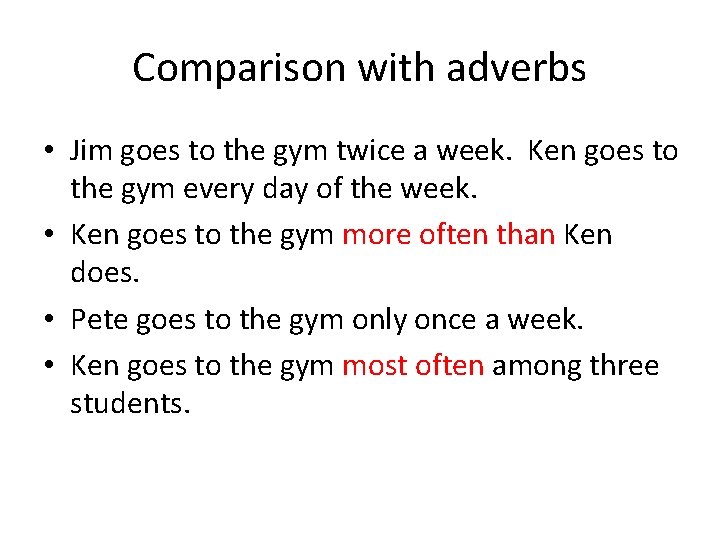
Comparison with adverbs • Jim goes to the gym twice a week. Ken goes to the gym every day of the week. • Ken goes to the gym more often than Ken does. • Pete goes to the gym only once a week. • Ken goes to the gym most often among three students.
Comparison with adverbs • All adverbs are considered “long. ” • Use “more” and “the most. ” • I can’t hear you. Please read the sentence more loudly. • “Who can speak most loudly in class? ” • “Mike speaks most loudly. ”
• Ben, Joe, and Maria are studying at IELC. Ben is in Level 1 classes. Joe is in Level 5. Maria is in Level 8. She speaks English well. • Joe speaks English better than Ben does. • Maria speaks English best among three students.
- Slides: 19