
Making Change Happen The ConcernsBased Adoption Model What
Making Change Happen The Concerns-Based Adoption Model
What do we know about Change? ¥ Lots of research on the adoption of innovations, know as “Diffusion Research” - see Everett Rodgers ¥ Rural Sociology, Government programs in the 3 rd World, Educational innovations, all show the same kind of patterns in adoption and adopters ¥ One educational model is call the “Concerns-Based Adoption Model”
Assumptions of the Concerns. Based Adoption Model (CBAM) ¥ Change is a Process, not an event ¥ It is made by individuals first then by institutions - It is a highly personal ¥ Change entails developmental growth in feelings and skills ¥ Interventions must be related to the people first, and the innovation second ¥ CBAM connects level of use to stages of concern
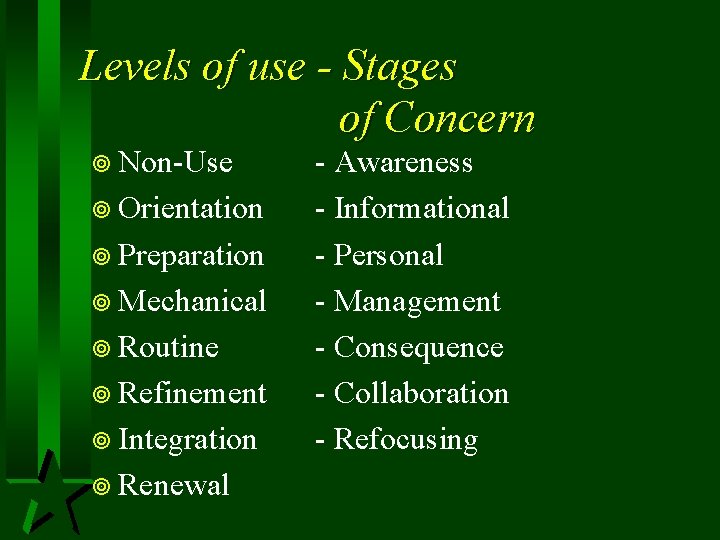
Levels of use - Stages of Concern ¥ Non-Use ¥ Orientation ¥ Preparation ¥ Mechanical ¥ Routine ¥ Refinement ¥ Integration ¥ Renewal - Awareness - Informational - Personal - Management - Consequence - Collaboration - Refocusing

Adopter Types ¥ Innovator ¥ Leader ¥ Early Majority ¥ Late Majority ¥ Resistor
Using CBAM ¥ Be aware of concerns your faculty will likely have ¥ Design the change to address these concerns in advance ¥ Remember that you don’t have to convince everybody, and know who you have to convince ¥ Pay attention to ALL aspects of the change - especially the 5 elements of reform
Five Elements of Institutional Reform ¥ Exemplary materials and practices ¥ Support for exemplary materials and practices ¥ Ongoing mentoring and professional development ¥ Assessment that is aligned with instruction ¥ Departmental and institutional support
Making Change Happen. The Strategic Planning Institute ¥ Designed for department teams, including Dean and Chair/Head ¥ 4 -5 days of examples on solutions to all of the 5 elements of reform ¥ Teams produce a strategic plan for implementation in their departments ¥ If you want this to happen, email Duncan Mc. Bride and tell him to fund it
- Slides: 8