
Making an Effective Oral Presentation Seven Characteristics A
- Slides: 10
Making an Effective Oral Presentation
Seven Characteristics • A great beginning • Excellent supporting facts or details • A solid ending • Strong voice with variation in tone • Eye Contact • Correct Grammar and Usage • Appropriate gestures and use of the hands
Great Beginnings • Get the listeners’ attention • Are often funny or thought provoking - getting the audience to laugh or think seriously • Many good speakers start with stories • Give the audience a preview of the topic you will discuss • State your thesis or main idea
Excellent Supporting Facts or Details • Be accurate. • Make your argument compelling - be sure you give them reasons to believe your thesis or main idea • Don’t give too few supporting details, nor too many. Consider what facts you need to convince yourself.
Strong Endings • Remind people what you have talked about • Review your major points • It is OK to leave them wanting more, but don’t leave them feeling like you missed important points
Your Voice • Inflection - do not speak monotone (the same tone like a drone) - use various pitches (high, medium, and low) as your voice permits • Speak loud enough to be heard but not so loud people think you are screaming at them • Speak clearly, pronouncing words correctly and ENUNCIATING your words
Eye Contact • Look your audience directly in the eye • If a large group, you can look over their heads • Do not look down at your notes so much they think you are reading them word for word (verbatim) • Know the speech well enough to be able to look up at the people constantly.
Gestures • Do not wave your hands uncontrollably or swing your arms too much • Do not fidget • This takes a lot of practice - practice in front of a mirror to see when gestures are appropriate and when they are not.
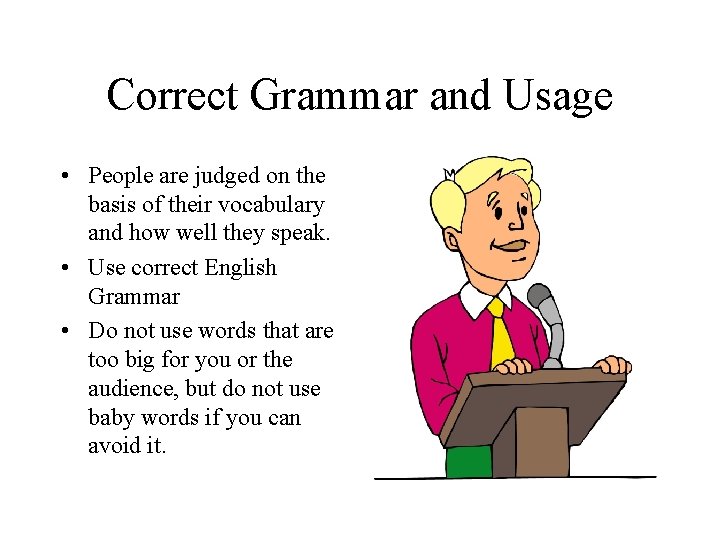
Correct Grammar and Usage • People are judged on the basis of their vocabulary and how well they speak. • Use correct English Grammar • Do not use words that are too big for you or the audience, but do not use baby words if you can avoid it.
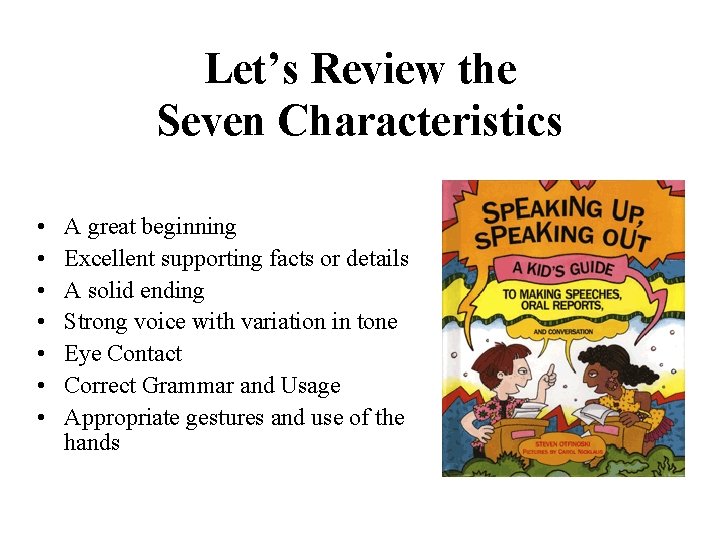
Let’s Review the Seven Characteristics • • A great beginning Excellent supporting facts or details A solid ending Strong voice with variation in tone Eye Contact Correct Grammar and Usage Appropriate gestures and use of the hands