
Making a scale floor plan Making a floor
- Slides: 11
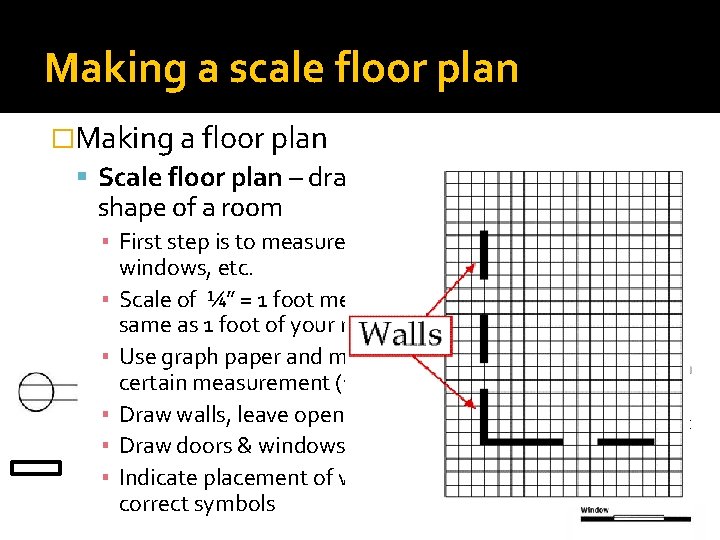
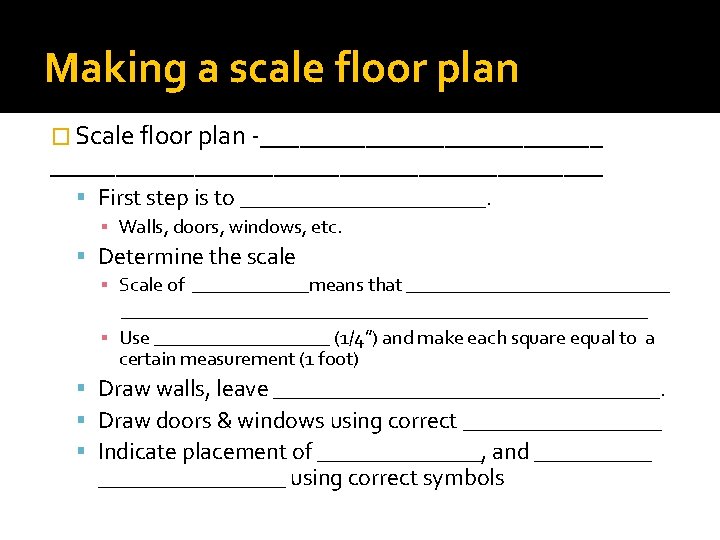
Making a scale floor plan �Making a floor plan Scale floor plan – drawing that shows the size and shape of a room ▪ First step is to measure the room. Walls, doors, windows, etc. ▪ Scale of ¼” = 1 foot means that ¼ inch on paper is the same as 1 foot of your room ▪ Use graph paper and make each square equal to a certain measurement (1 foot) ▪ Draw walls, leave openings for doors and windows. ▪ Draw doors & windows using correct symbols ▪ Indicate placement of vents, and electrical outlets using correct symbols
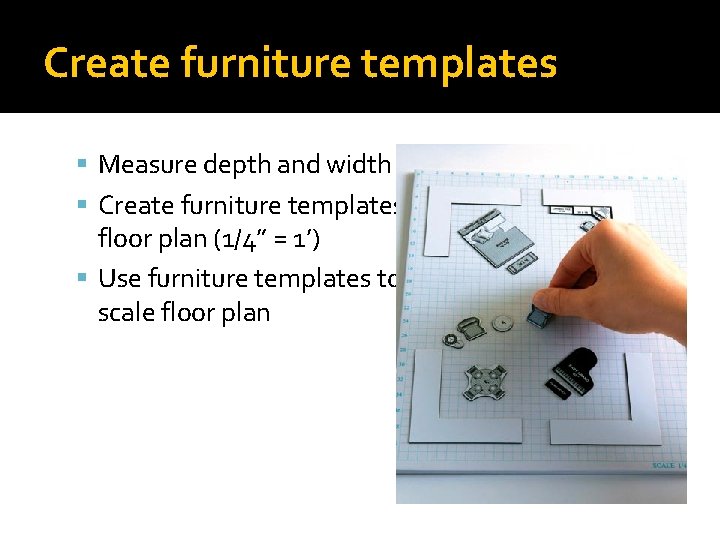
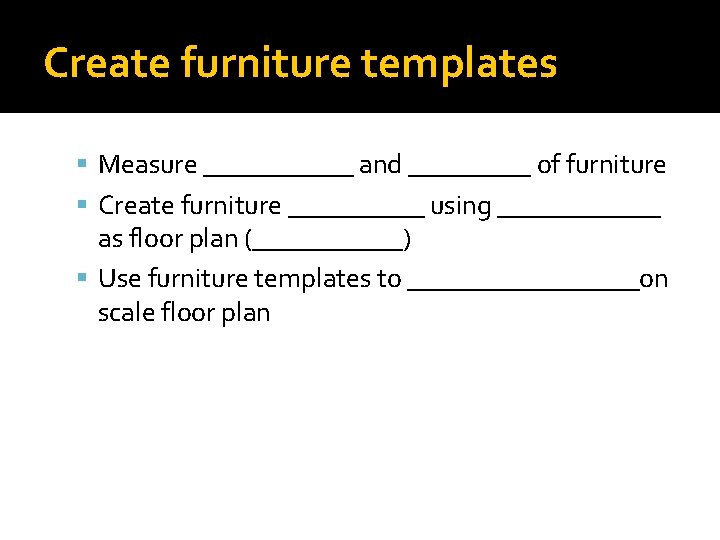
Create furniture templates Measure depth and width of furniture Create furniture templates using same scale as floor plan (1/4” = 1’) Use furniture templates to arrange furniture on scale floor plan
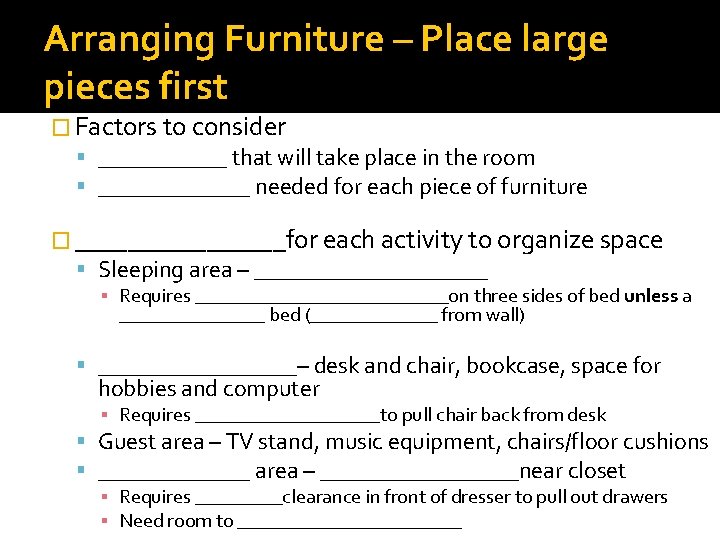
Arranging Furniture – place large pieces first � Factors to consider Activities that will take place in the room Space needed for each piece of furniture � Group furniture for each activity to organize space Sleeping area – bed, night stand ▪ 2 feet clearance on three sides of bed unless a twin bed (6” from wall) Study area – desk and chair, bookcase, space for hobbies and computer ▪ 2 -3 feet to pull chair back from desk Guest area – TV stand, music equipment, chairs/floor cushions Dressing area – chest of drawers near closet ▪ 3 feet clearance in front of dresser to pull out drawers ▪ Room to open closet doors
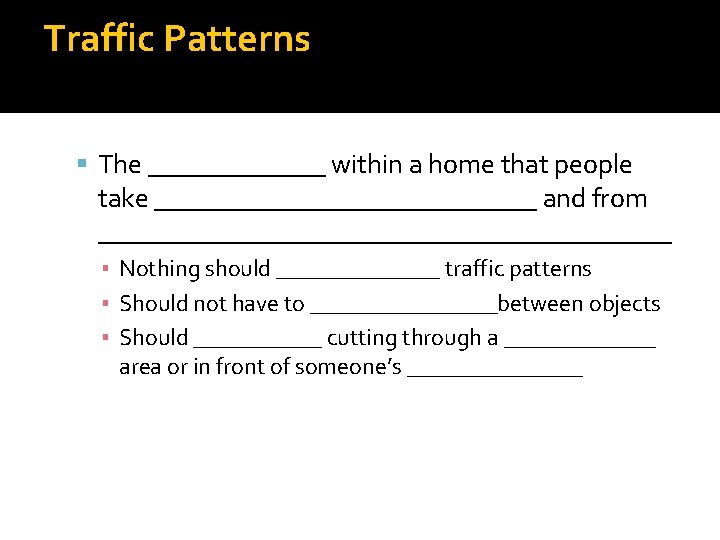
Traffic Patterns The paths within a home that people take to get from one room to another and from one part of a room to another ▪ Nothing should block traffic patterns ▪ Should not have to squeeze between objects ▪ Should avoid cutting through a conversation area or in front of someone’s view
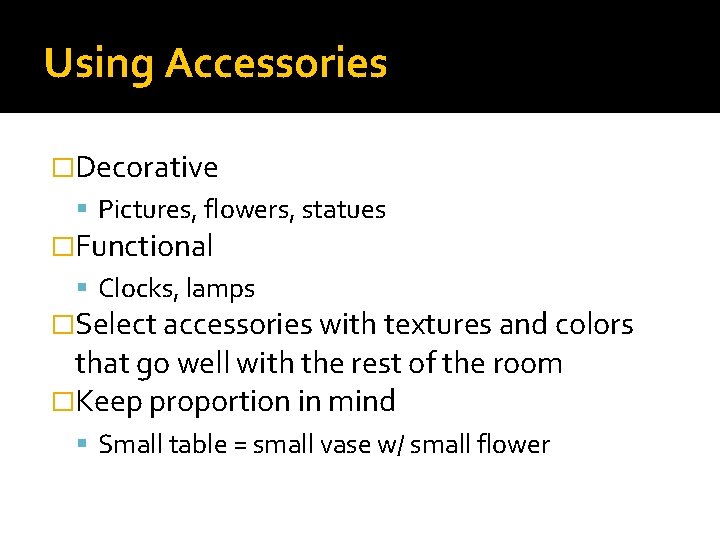
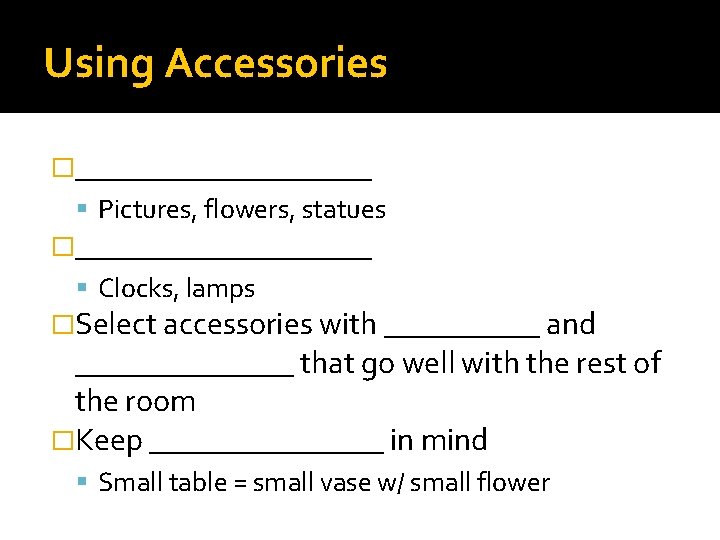
Using Accessories �Decorative Pictures, flowers, statues �Functional Clocks, lamps �Select accessories with textures and colors that go well with the rest of the room �Keep proportion in mind Small table = small vase w/ small flower
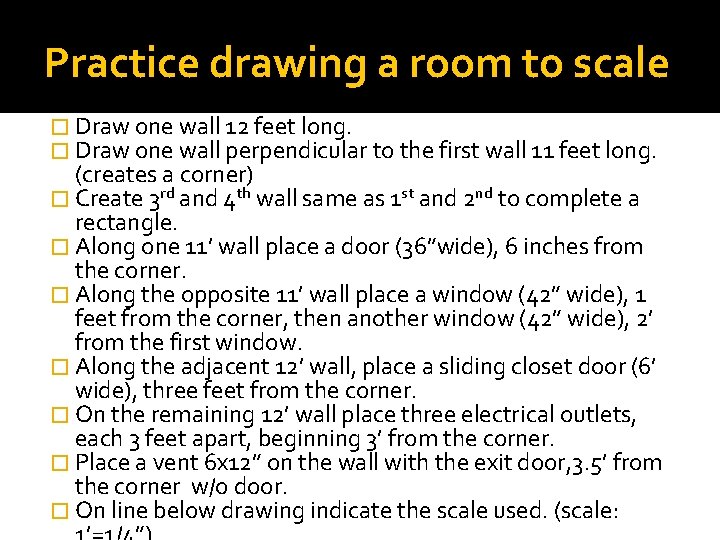
Practice drawing a room to scale � Draw one wall 12 feet long. � Draw one wall perpendicular to the first wall 11 feet long. (creates a corner) � Create 3 rd and 4 th wall same as 1 st and 2 nd to complete a rectangle. � Along one 11’ wall place a door (36”wide), 6 inches from the corner. � Along the opposite 11’ wall place a window (42” wide), 1 feet from the corner, then another window (42” wide), 2’ from the first window. � Along the adjacent 12’ wall, place a sliding closet door (6’ wide), three feet from the corner. � On the remaining 12’ wall place three electrical outlets, each 3 feet apart, beginning 3’ from the corner. � Place a vent 6 x 12” on the wall with the exit door, 3. 5’ from the corner w/o door. � On line below drawing indicate the scale used. (scale:
Making a scale floor plan � Scale floor plan -_____________________ First step is to ___________. ▪ Walls, doors, windows, etc. Determine the scale ▪ Scale of ______means that _________________________________________ ▪ Use _________ (1/4”) and make each square equal to a certain measurement (1 foot) Draw walls, leave _________________. Draw doors & windows using correct _________ Indicate placement of _______, and ________________ using correct symbols
Create furniture templates Measure ______ and _____ of furniture Create furniture _____ using ______ as floor plan (______) Use furniture templates to _________on scale floor plan
Arranging Furniture – Place large pieces first � Factors to consider ______ that will take place in the room _______ needed for each piece of furniture � ________for each activity to organize space Sleeping area – __________ ▪ Requires _____________on three sides of bed unless a ________ bed (_______ from wall) _________– desk and chair, bookcase, space for hobbies and computer ▪ Requires __________to pull chair back from desk Guest area – TV stand, music equipment, chairs/floor cushions _______ area – _________near closet ▪ Requires _____clearance in front of dresser to pull out drawers ▪ Need room to ____________
Traffic Patterns The _______ within a home that people take ______________ and from _____________________ ▪ Nothing should _______ traffic patterns ▪ Should not have to ________between objects ▪ Should ______ cutting through a _______ area or in front of someone’s ________
Using Accessories �__________ Pictures, flowers, statues �__________ Clocks, lamps �Select accessories with _____ and _______ that go well with the rest of the room �Keep ________ in mind Small table = small vase w/ small flower