
Making a Great First Impression Professionalism and Interviewing
- Slides: 17
Making a Great First Impression: Professionalism and Interviewing PRESENTED BY: CAREER SERVICES
What Does Professionalism mean to you?
Professionalism �Conduct or qualities that characterize a profession or professional person. �Actions, attitudes, appearances, and a general mindset are all aspects of professionalism. �How you can set yourself apart from others
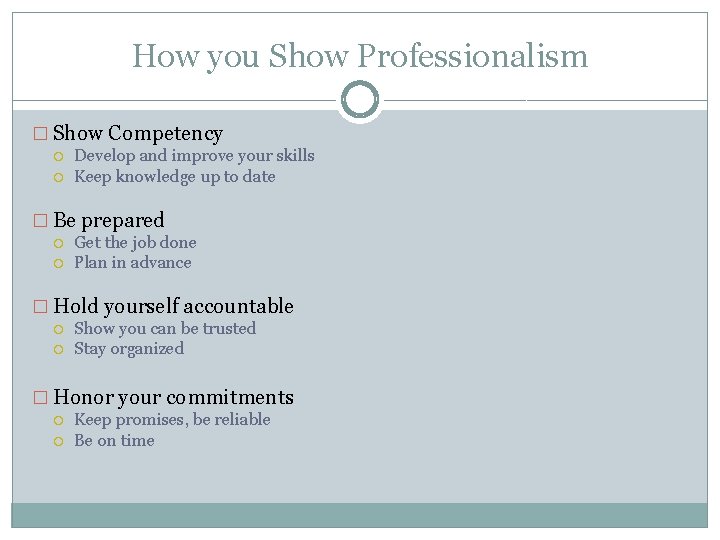
How you Show Professionalism � Show Competency Develop and improve your skills Keep knowledge up to date � Be prepared Get the job done Plan in advance � Hold yourself accountable Show you can be trusted Stay organized � Honor your commitments Keep promises, be reliable Be on time
How you Show Professionalism �Show Competency Example: Don’t just point out problems, offer solutions �Be prepared Example: Do your homework �Hold yourself accountable Example: Be on time for class, attend class �Honor your commitments Example: When working on a group project, meet your deadlines
Tips for Professionalism Greet everyone you encounter; use their name if you know it, make eye contact and smile Use a firm handshake when first meeting someone Stay off your cell phone in class, during meetings and in conversations with others Be on time- if something happens and you are running late, let someone know Use the basics: please, thank you, excuse me
Tips for Professionalism Avoid the rumor mill and gossip- maintain confidentiality Use appropriate humor and avoid profanity Send emails from appropriate email addresses- Use courteous greetings, spell check, and read your emails before you send them
Dress The Part Determine and follow through with the dress code that exists in your setting Wear clean, appropriate clothing and shoes Remove facial and visible body piercings, and cover visible tattoos, to avoid distraction Use general hygiene- don’t wear strong fragrance, or smoke prior to a meeting
Interviewing �A job interview is a screening process- a way for an employer to determine if you should work for them �Is a chance for you to learn more about an organization �Is a formal process
Interviewing �Self assessment- know your strengths, weaknesses, values, likes and dislikes �Pinpoint skills the employer is seeking and think of ways you have demonstrated them �Research the organization you are interviewing with- learn as much as you can
Practice Interviewing �The Perfect Interview: a learning tool, creates a “simulated interview” experience �Asks challenging questions and student responds, just as in a real job interview �Accessible from home (need a webcam) or schedule a time to use the Career Services computer or webcam �Mock Interview: practice with a career counselor
During the Interview �Prove that you are the best candidate for the job �Maintain good eye contact, posture, show enthusiasm and interest, control nervous mannerisms �Be polite and respectful to EVERYONE �Be a good listener- focus on the questions being asked
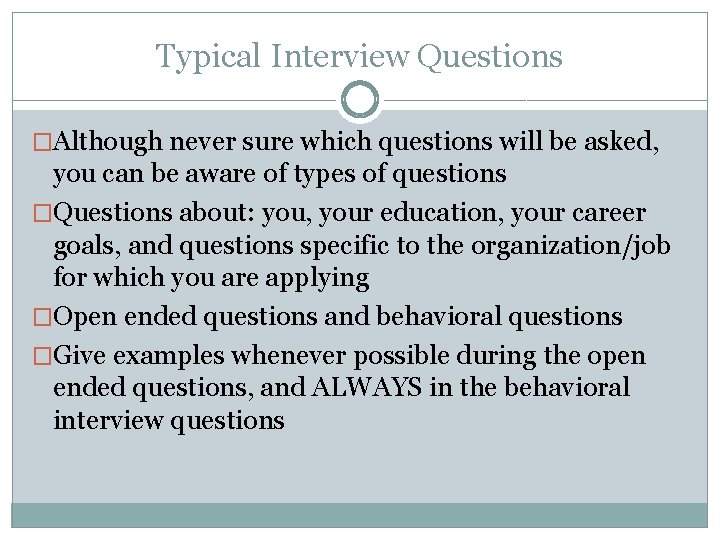
Typical Interview Questions �Although never sure which questions will be asked, you can be aware of types of questions �Questions about: you, your education, your career goals, and questions specific to the organization/job for which you are applying �Open ended questions and behavioral questions �Give examples whenever possible during the open ended questions, and ALWAYS in the behavioral interview questions
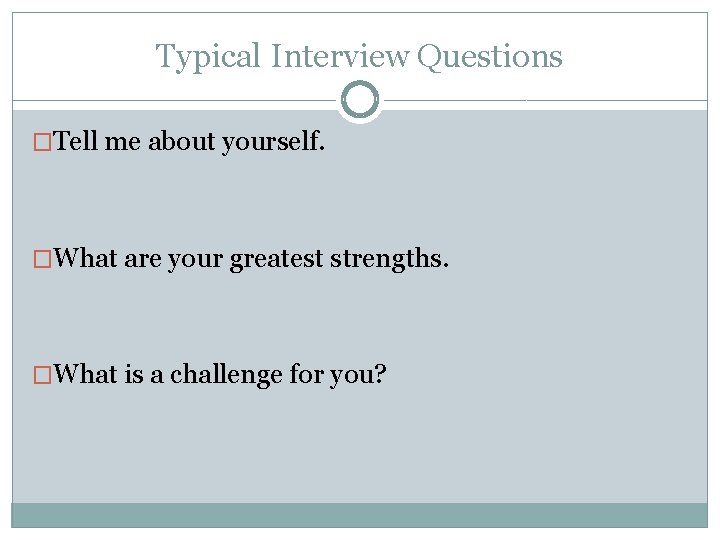
Typical Interview Questions �Tell me about yourself. �What are your greatest strengths. �What is a challenge for you?
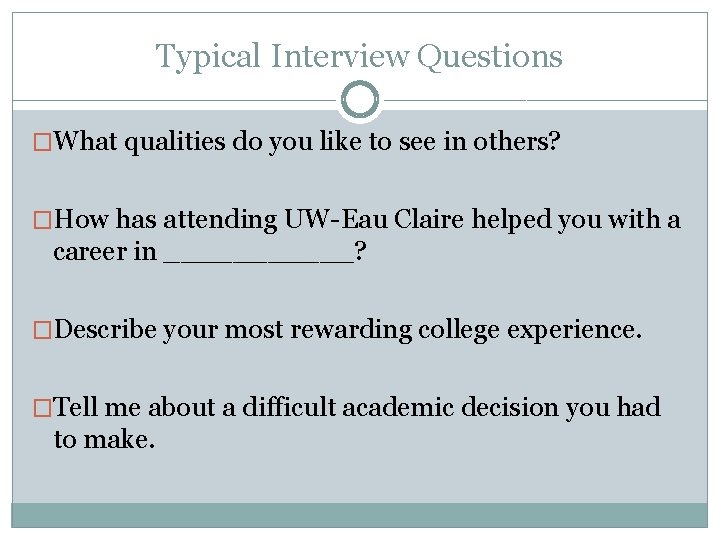
Typical Interview Questions �What qualities do you like to see in others? �How has attending UW-Eau Claire helped you with a career in ______? �Describe your most rewarding college experience. �Tell me about a difficult academic decision you had to make.
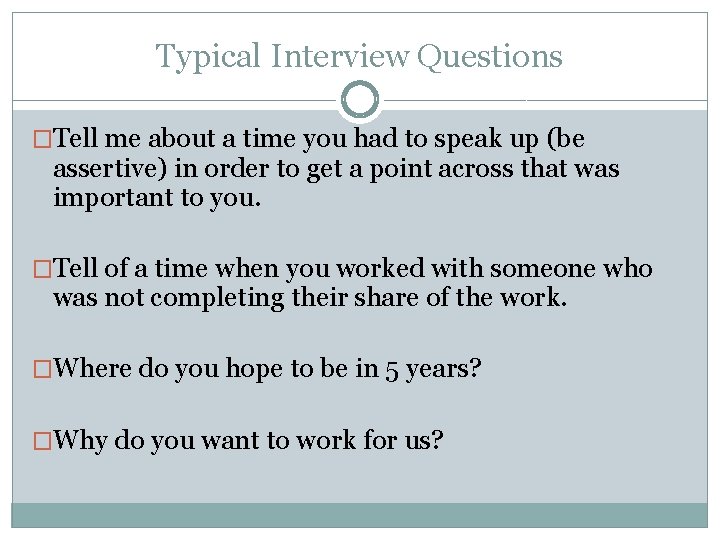
Typical Interview Questions �Tell me about a time you had to speak up (be assertive) in order to get a point across that was important to you. �Tell of a time when you worked with someone who was not completing their share of the work. �Where do you hope to be in 5 years? �Why do you want to work for us?
Questions? CONTACT CAREER SERVICES SCHOFIELD 230 715 -836 -5358 CAREER 01@UWEC. EDU