
Make Your Class a Story Worth Telling Curriculum





- Slides: 29
Make Your Class a Story Worth Telling: Curriculum Flow Graphics for Course Planning “Knowing how to think empowers you far beyond those who know only what to think. ” ---Neil de. Grasse Tyson, astrophysicist. Bethany Dixon, Tom Freeman, and Dana Grooms CSTA 2013: CFGs for Course Planning
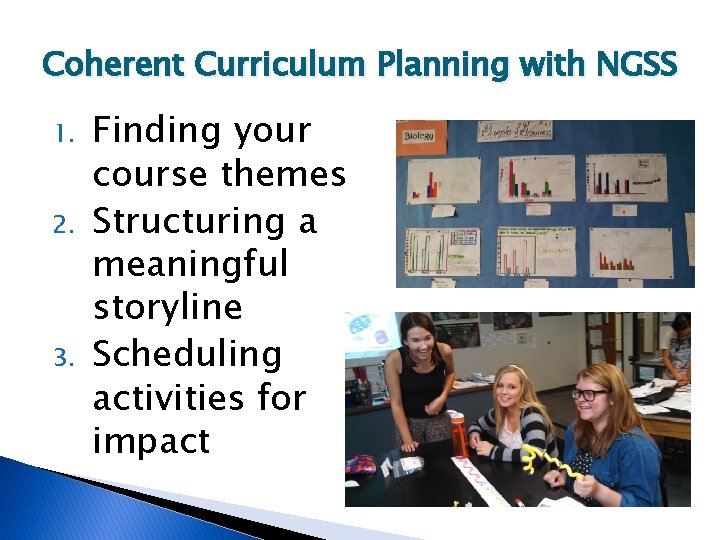
Coherent Curriculum Planning with NGSS 1. 2. 3. Finding your course themes Structuring a meaningful storyline Scheduling activities for impact
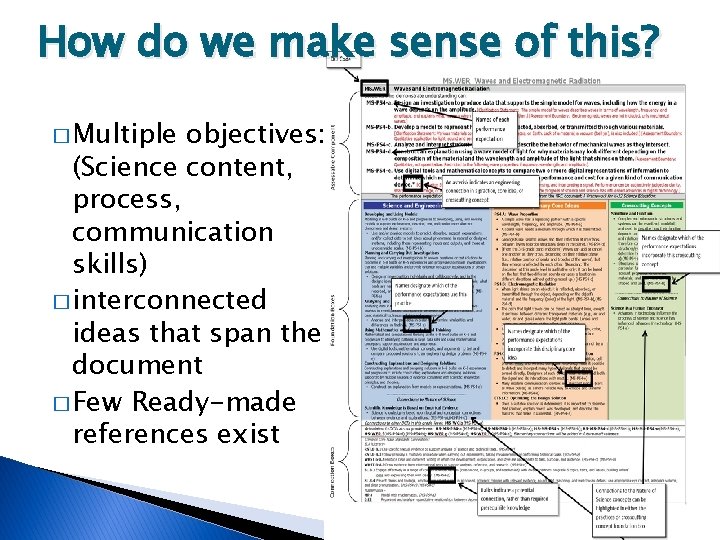
How do we make sense of this? � Multiple objectives: (Science content, process, communication skills) � interconnected ideas that span the document � Few Ready-made references exist
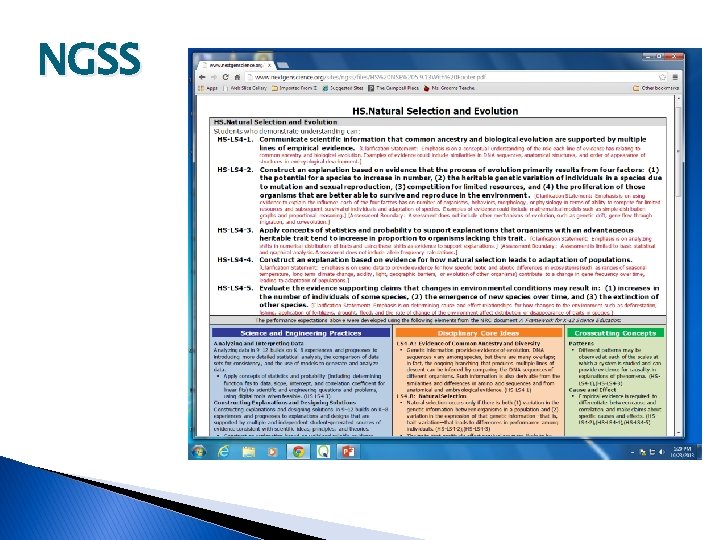
NGSS
NGSS: New Standards for New Learning � Based on the K-12 Science Framework, these are the core concepts needed to be a scientifically literate individual in each of the major core disciplines � What you should be teaching and the depth to which it should be taught at each grade level � Includes assessment boundaries to clarify the depth of knowledge that is expected
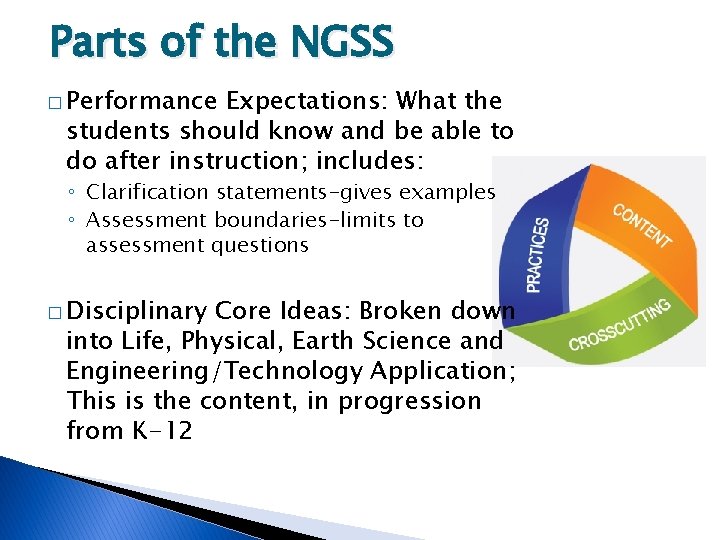
Parts of the NGSS � Performance Expectations: What the students should know and be able to do after instruction; includes: ◦ Clarification statements-gives examples ◦ Assessment boundaries-limits to assessment questions � Disciplinary Core Ideas: Broken down into Life, Physical, Earth Science and Engineering/Technology Application; This is the content, in progression from K-12
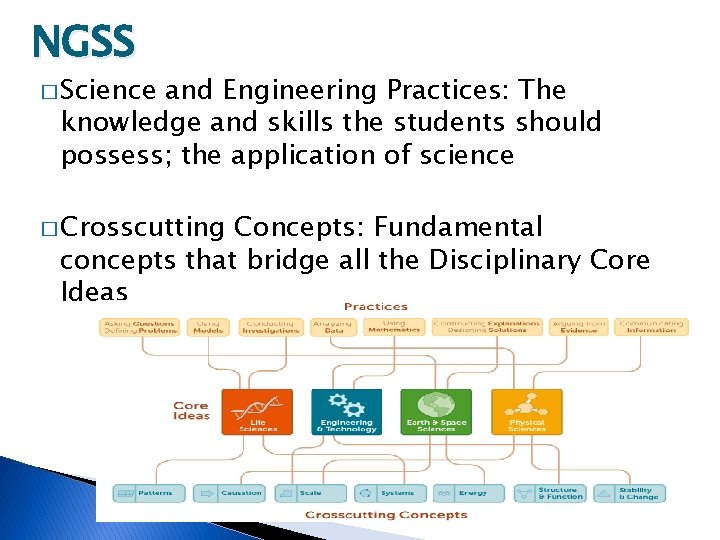
NGSS � Science and Engineering Practices: The knowledge and skills the students should possess; the application of science � Crosscutting Concepts: Fundamental concepts that bridge all the Disciplinary Core Ideas
Structuring your Curriculum: More than Following a Book… � Curriculum planning carefully is good practice � It takes time � Structure and strategies to improve it will help � Overall course design (connections) are usually obvious to teachers but may not be to students � CFGs can be shared with students as a curriculum guide
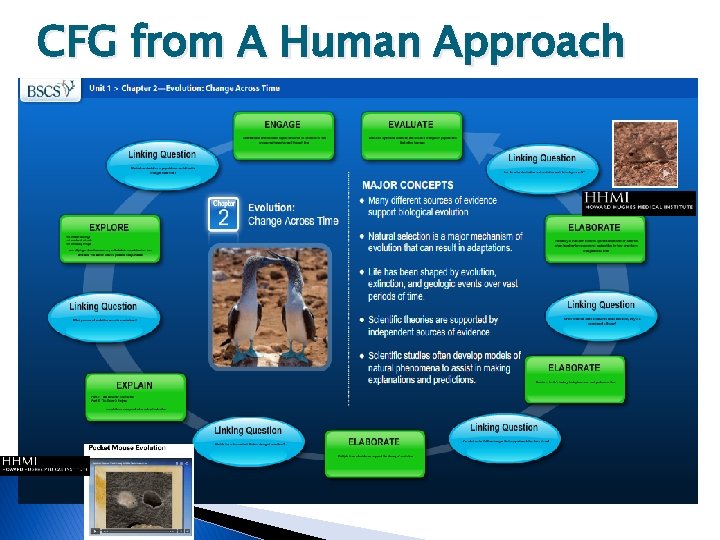
CFG from A Human Approach
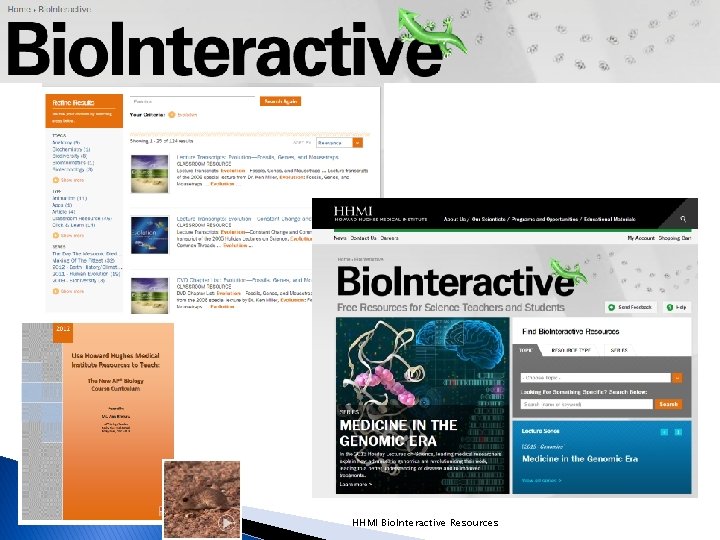
HHMI Bio. Interactive Resources
How did they DO that? � Includes all “NGSS” pieces � Well thought-out � Embedded ◦ Formative assessment ◦ Metacognition ◦ Science and Engineering Practices ◦ Review ◦ Summative Assessments
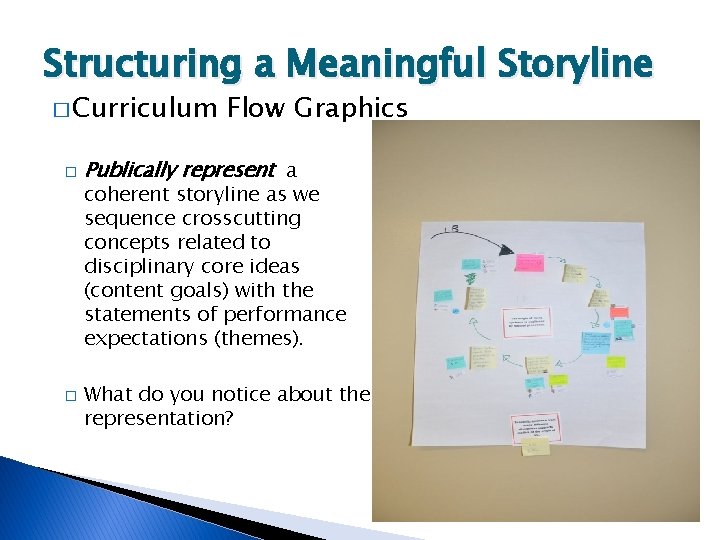
Structuring a Meaningful Storyline � Curriculum � Flow Graphics Publically represent a coherent storyline as we sequence crosscutting concepts related to disciplinary core ideas (content goals) with the statements of performance expectations (themes). � What do you notice about the representation?
Why did they do that!? � Built Idea: with a connection to an overall Core ◦ Theme will connect the course through different topics. ØEach unit is sequenced around the 5 E model ØEach unit links together questions that tie in each lesson.
How to develop CFGs What NGSS has given us is what the students need to know: not how to help them know it: 1. Read the colored cards for your NGSS Standard with your table.
CFG Development � Arrange your disciplinary core idea cards in a logical storyline that helps address the concepts in the NGSS.
CFG Development Record on sticky notes activities that you use that would support the core ideas. • • How well will students be able to make sense of the storyline? Are there missing concepts that students need to make sense of the content?
CFG Development ◦ At this point we would use the storyline, add in crosscutting concepts and science and engineering practices that are supported by your curriculum. ◦ Do any of your activities already support one of these concepts or practices?
CFG Development � After the CFG is constructed, we need to incorporate both summative and formative assessment opportunities and add them into the plan. � Return to your stoplight sheet: ◦ Do you feel a little more comfortable about some of the standards in your disciplinary area regarding the NGSS? �(skip the “mid” assessment and go to the “post” column)
Meta-moment: Thinking about student learning. � How do you determine students’ prior knowledge of a learning target? � How do you assess students before the summative assessment? � How do you determine that student thinking has advanced? � Elbow partner share
Formative Assessment � "It is not an instrument or an event, but a collection of practices with a common feature: they all lead to some action that improves learning. ” � 7 Strategies for Formative Assessment (Chappuis, 2009).
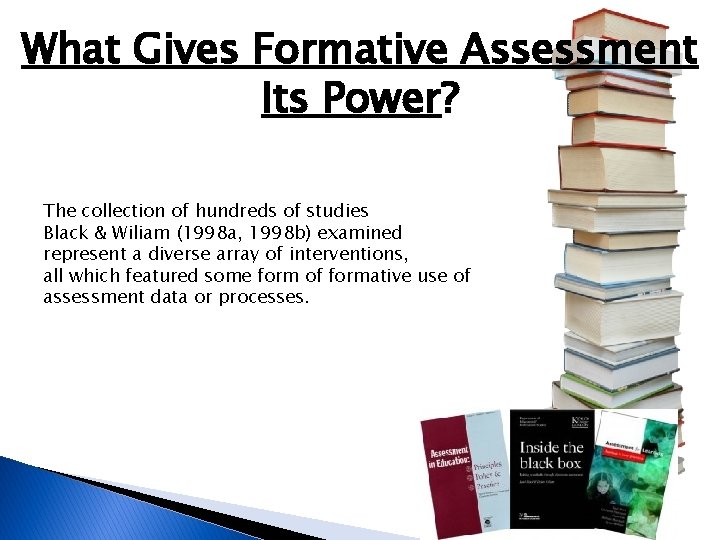
What Gives Formative Assessment Its Power? The collection of hundreds of studies Black & Wiliam (1998 a, 1998 b) examined represent a diverse array of interventions, all which featured some form of formative use of assessment data or processes.
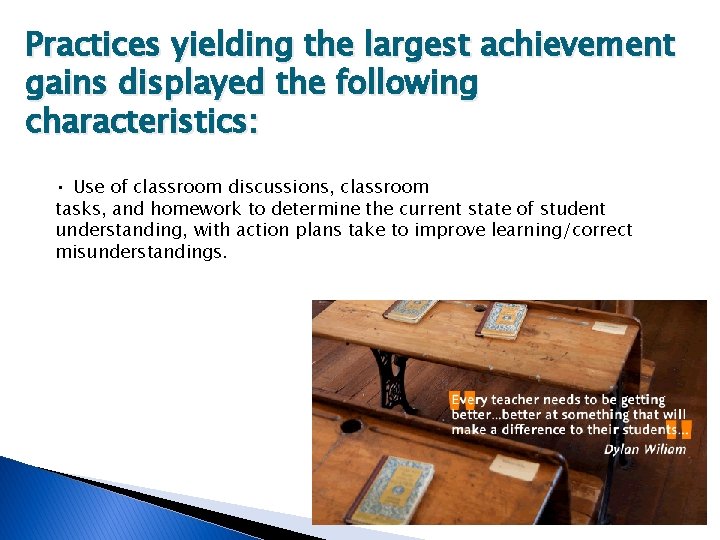
Practices yielding the largest achievement gains displayed the following characteristics: • Use of classroom discussions, classroom tasks, and homework to determine the current state of student understanding, with action plans take to improve learning/correct misunderstandings.
Formative Assessment Tools: � Good teaching includes teaching processes of thought as well as content. Colored Craft Sticks � Traffic Light Assessment � Gots and Needs � Gallery Walk � Meta Moments �
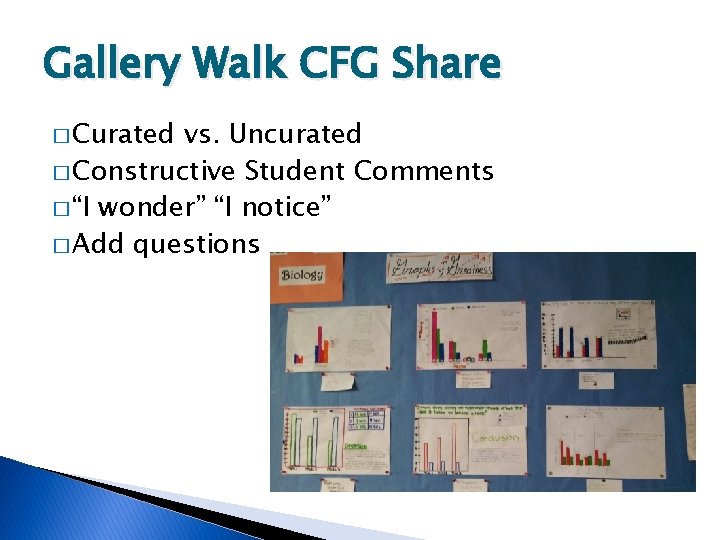
Gallery Walk CFG Share � Curated vs. Uncurated � Constructive Student Comments � “I wonder” “I notice” � Add questions
Thoughts on development and Implementation (2 min. ) � What are the benefits of using a CFG to frame your curriculum? � What � How are the drawbacks? can using CFGs impact your curriculum?
Unpacking the Strategies � Online stopwatch � Traffic Light Formative Assessment � Meta Moments � HHMI Resources � BSCS Resources � Formative Assessment Sticks � Gots and Needs closure
Gots and Needs (2 minutes) � Obtain two sticky notes � Using the first sticky note, please write down one thing you “got” from today’s PD. � On the second sticky note, write down one thing that you “need” with regard to CFGs or any of the material presented here today. � When you have finished, please stick them to their posters.
Evaluation � Please fill out a PD form so that we can improve in our practice. � Thank you for your time and effort!
Special Thanks