
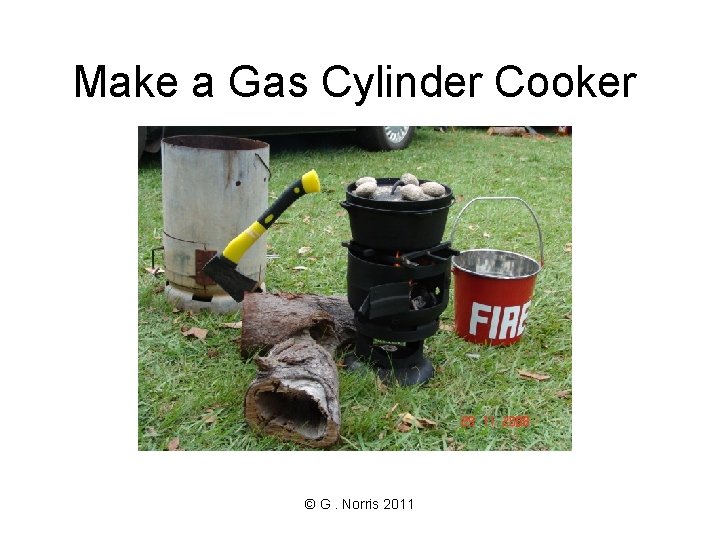
Make a Gas Cylinder Cooker G Norris 2011
- Slides: 23
Make a Gas Cylinder Cooker © G. Norris 2011
Copyright This document and the information contained within is copyright to © G. Norris 2011. Reproduction or distribution by any persons is strictly forbidden without written permission form the author. © G. Norris 2011
Disclaimer The information provided in this slide show is based upon my own research and practical experience in the manufacture of the 9 Kg Gas Cylinder cooker. As this involves working with potentially dangerous items and substances, I provide this only for reference, and accept no responsibility for any injuries or death whatsoever, as a result of using any of the techniques described within this document. It is assumed that you have the necessary basic equipment, knowledge of their use and at least basic metal working skills to complete this task. If you are unsure of any section, please ask someone who does know BEFORE you attempt to undertake the task. © G. Norris 2011
Equipment / Supplies • • • 9 Kg Gas Cylinder. Angle grinder (cutting/grinding wheels to suit). A 4 piece of paper. Permanent Marker. MIG Welder. Hinge and hasp/staple or other hardware to secure door. • Steel Rod (for supporting cooking equipment). © G. Norris 2011
Images/Drawings • BEFORE you start can you PLEASE read all of this instruction manual and study the pictures. • Then READ IT AGAIN! © G. Norris 2011
Getting Started • Obtain a 9 Kg Gas Cylinder • Get gas valve assembly removed. This can be both difficult and dangerous, so take it to Supa. Gas or similar, they will remove it for you for free. • Fill with water. TOTALLY! No air pockets. This ensures no gas residue is still in it for the next step. Empty water. © G. Norris 2011
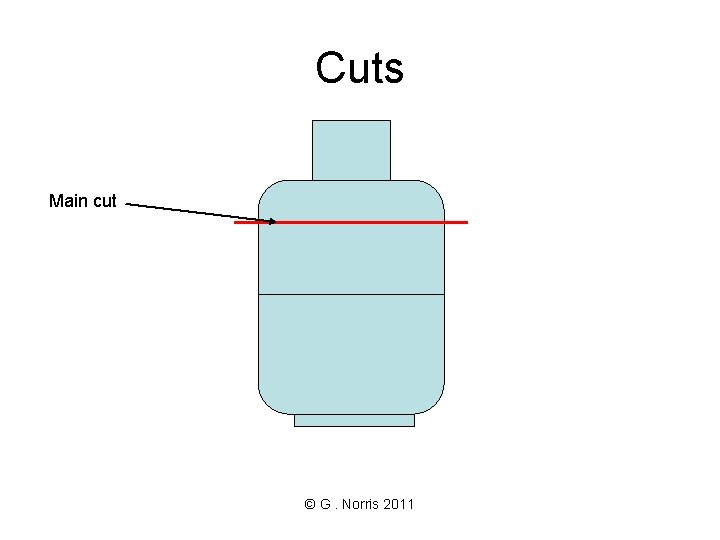
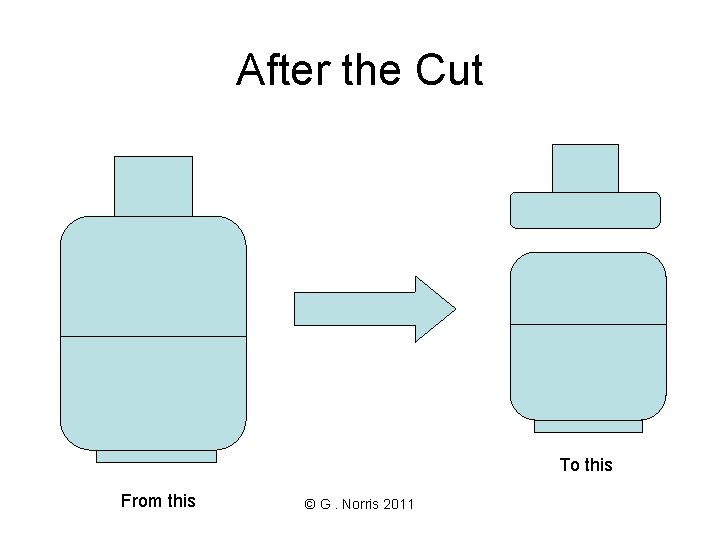
The Big Cut • Measure from the centre weld line toward the top approx 11 cm. Mark around cylinder with a permanent marker. • Lay on it’s side. Get someone to hold it (if possible) or jam up against the wall or bench. • Take your angle grinder (I used my 115 mm) and cut along that line. Take your time. There is no real rush. • When done, run the grinder carefully around both edges to ensure no sharp pieces are likely to stick you. © G. Norris 2011
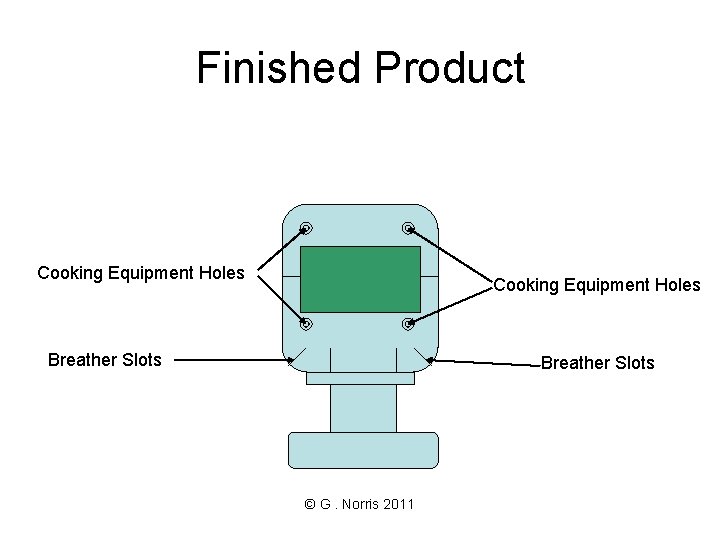
Breathing slots • Place large section on bench CUT SIDE DOWN. • Measure around somewhat evenly (I used the welding points for the base ring as a guide) • Then carefully cut into the cylinder vertically. (See image for this). • Continue around base to get enough breather slots. © G. Norris 2011
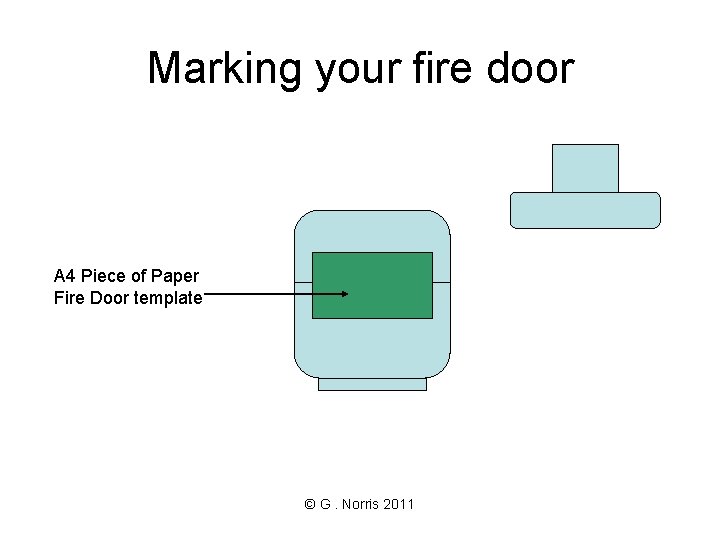
Marking up the fire door • Grab the A 4 piece of paper and fold it in half. • Place on large portion of cylinder in desired door position. (Ensure some metal is left above it as well. • Use permanent marker to trace paper for door position. © G. Norris 2011
Cutting the fire door • Carefully cut along the lines for the fire door, using a cutting wheel on the angle grinder. • Note: Cut ONLY 3 sides. The top, bottom and HINGE SIDE. • This is so you can attach the hinge and THEN cut the final side and still have the hinge in place. © G. Norris 2011
Affixing the hinge • Decide on hinge joining method. Bolts and nuts or weld. • BEFORE you cut that 4 th side, position hinge and either mark and drill holes, then bolt into place, or position, then clamp and weld into place. • NOW, cut the 4 th side, to give you a door. © G. Norris 2011
Affixing the door lock • Again decide on your preferred method for attaching door hardware. • Position and mark up, then attach using method chosen. © G. Norris 2011
Attaching the base • Place large section CUT SIDE DOWN on your work bench • Ensure all areas to be welded are clean of paint grease etc. • Position cylinder top, upside down and centrally. • When your happy with it’s position, weld away. © G. Norris 2011
Cooking Equipment pt 1 • The hotplate. I have a good size hotplate (plough disc size). It fits nicely, but would smother the fire. To prevent this, cut out some “scallop shapes” around the top edge. See image. • This will allow smoke and heat to escape the cooker. © G. Norris 2011
Cooking Equipment pt 2 • Billies and other top cooker gear. • Lay two lengths of steel rod across the top of the cylinder, evenly spaced. • Make sure your billy will be held securely and not topple. • Run a line down the side of the cylinder where each rod hole should go. • Approx 5 cm below the rim make a mark. You should end up with 4 of them. • Then simply drill each one out. • When done, push steel rod lengths through to ensure fit and test fit billy. • Remove rods, cut to length, leaving approx 2 cm overhang one end and 10 cm on the other. Then bend the 10 cm overhang to make a L shape. © G. Norris 2011
Cooking Equipment pt 3 • Camp Ovens. • Lay two lengths of steel rod across the top of the cylinder, evenly spaced. • Make sure your billy will be held securely and not topple. • Run a line down the side of the cylinder where each rod hole should go. • Approx 15 cm below the rim make a mark. You should end up with 4 of them. • Then simply drill each one out. • When done, push steel rod lengths through to ensure fit and test fit billy. • Remove rods, cut to length, leaving approx 2 cm overhang one end and 10 cm on the other. Then bend the 10 cm overhang to make a L shape. © G. Norris 2011
Finishing Up • You should now have a metal object resembling a cooker. • There should be 4 steel rods (8 if you like) that will support cooking equipment in the cooker. • I recommend drilling a hole in the centre of the bottom to allow for drainage if it gets water in it. © G. Norris 2011
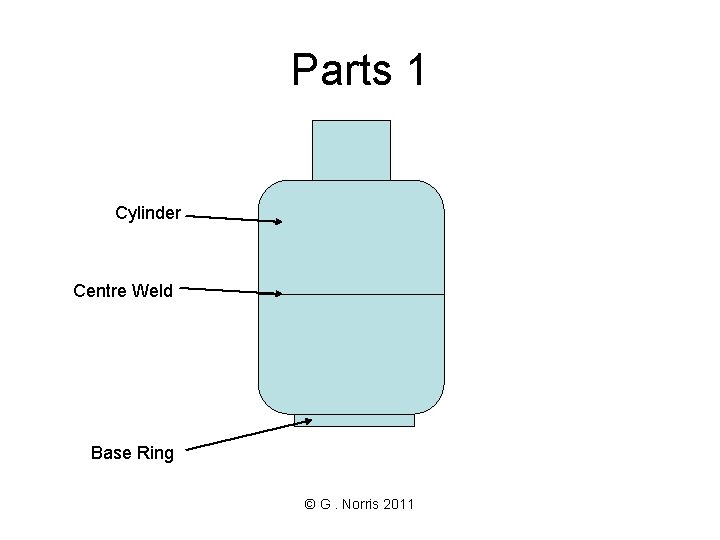
Parts 1 Cylinder Centre Weld Base Ring © G. Norris 2011
Cuts Main cut © G. Norris 2011
After the Cut To this From this © G. Norris 2011
Marking your fire door A 4 Piece of Paper Fire Door template © G. Norris 2011
Finished Product Cooking Equipment Holes Breather Slots © G. Norris 2011
Options • Consider getting a piece of diamond mesh (industrial steps) and cutting down to fit inside as a grate for your fire. • Get a second cylinder and cut it’s top off per the early steps. The weld a 1” wide mild steel strip around the INSIDE of the cooker. The fit the second cylinder top to make an oven. • The options are endless. © G. Norris 2011