
Majority and Minority Carriers Majority Carriers The majority
- Slides: 31
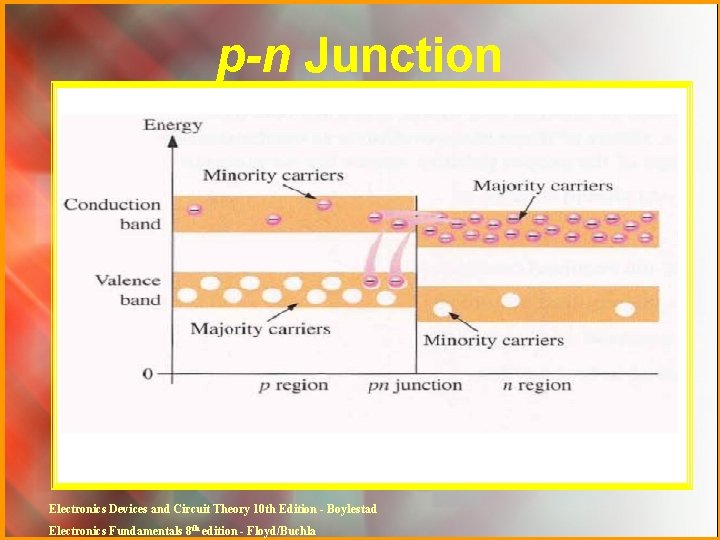
Majority and Minority Carriers Majority Carriers – The majority carriers in n-type materials are electrons. – The majority carriers in p-type materials are holes. • Minority Carriers – The minority carriers in n-type materials are holes. – The minority carriers in p-type materials are electrons. Electronics Devices and Circuit Theory 10 th Edition - Boylestad Electronics Fundamentals 8 th edition - Floyd/Buchla
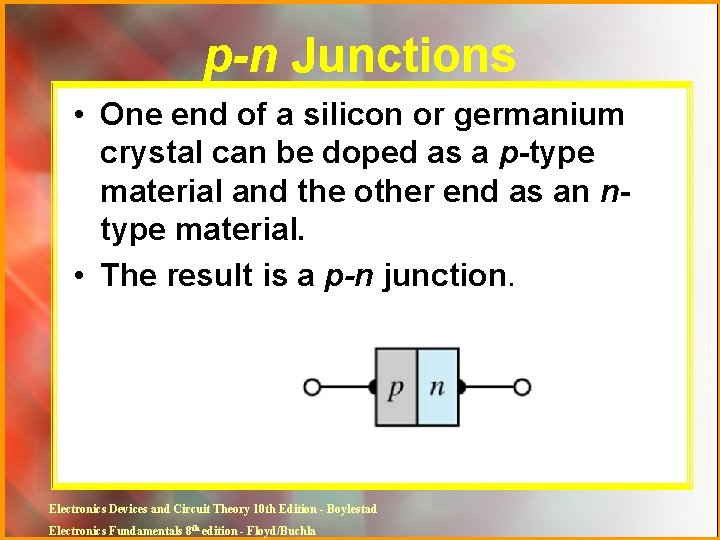
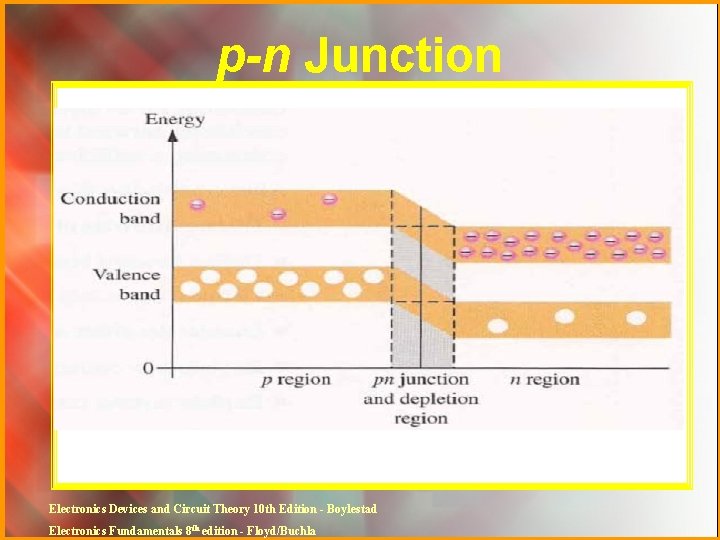
p-n Junctions • One end of a silicon or germanium crystal can be doped as a p-type material and the other end as an ntype material. • The result is a p-n junction. Electronics Devices and Circuit Theory 10 th Edition - Boylestad Electronics Fundamentals 8 th edition - Floyd/Buchla
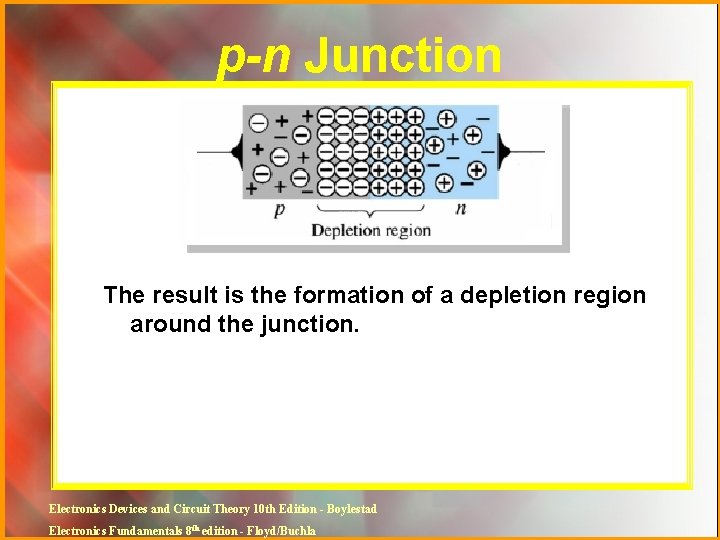
p-n Junction The result is the formation of a depletion region around the junction. Electronics Devices and Circuit Theory 10 th Edition - Boylestad Electronics Fundamentals 8 th edition - Floyd/Buchla
p-n Junction Electronics Devices and Circuit Theory 10 th Edition - Boylestad Electronics Fundamentals 8 th edition - Floyd/Buchla
p-n Junction Electronics Devices and Circuit Theory 10 th Edition - Boylestad Electronics Fundamentals 8 th edition - Floyd/Buchla
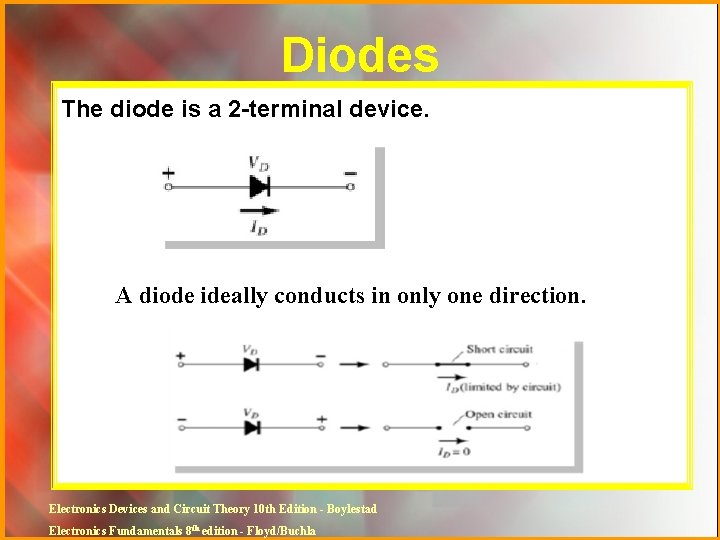
Diodes The diode is a 2 -terminal device. A diode ideally conducts in only one direction. Electronics Devices and Circuit Theory 10 th Edition - Boylestad Electronics Fundamentals 8 th edition - Floyd/Buchla
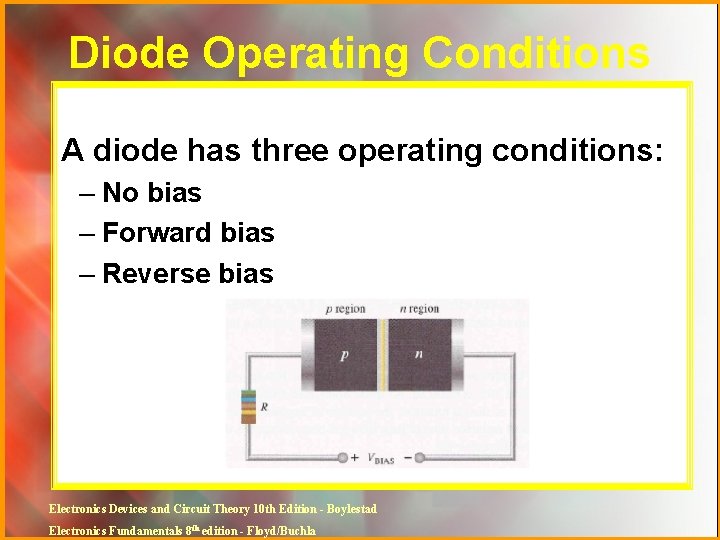
Diode Operating Conditions A diode has three operating conditions: – No bias – Forward bias – Reverse bias Electronics Devices and Circuit Theory 10 th Edition - Boylestad Electronics Fundamentals 8 th edition - Floyd/Buchla
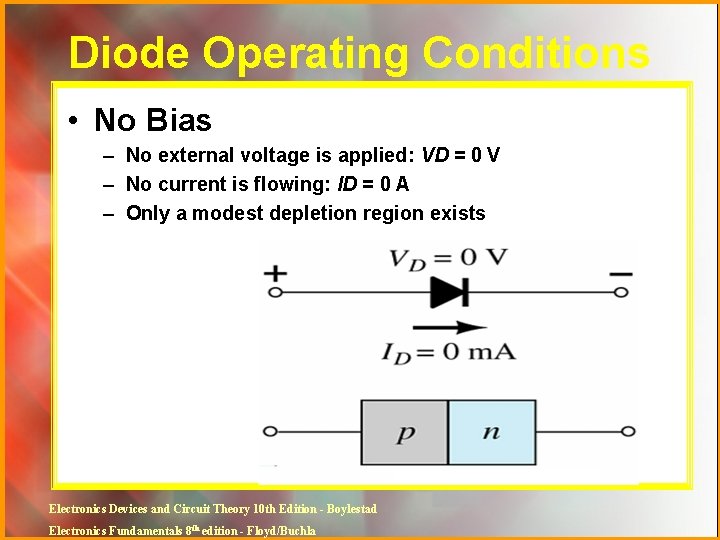
Diode Operating Conditions • No Bias – No external voltage is applied: VD = 0 V – No current is flowing: ID = 0 A – Only a modest depletion region exists Electronics Devices and Circuit Theory 10 th Edition - Boylestad Electronics Fundamentals 8 th edition - Floyd/Buchla
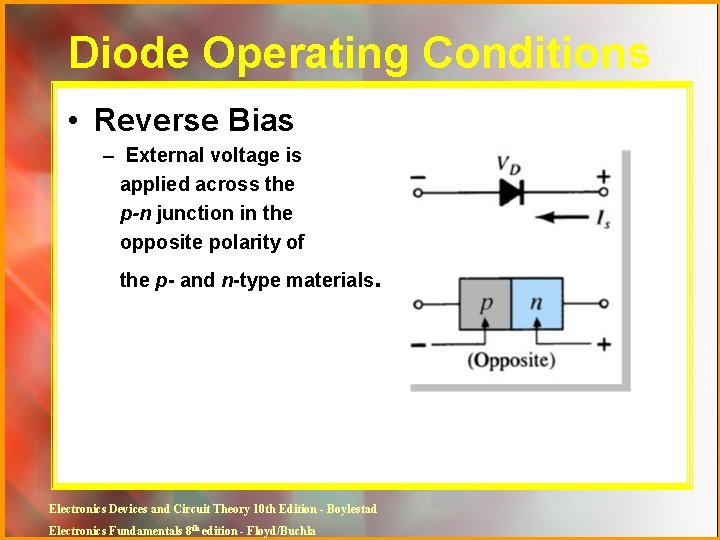
Diode Operating Conditions • Reverse Bias – External voltage is applied across the p-n junction in the opposite polarity of the p- and n-type materials. Electronics Devices and Circuit Theory 10 th Edition - Boylestad Electronics Fundamentals 8 th edition - Floyd/Buchla
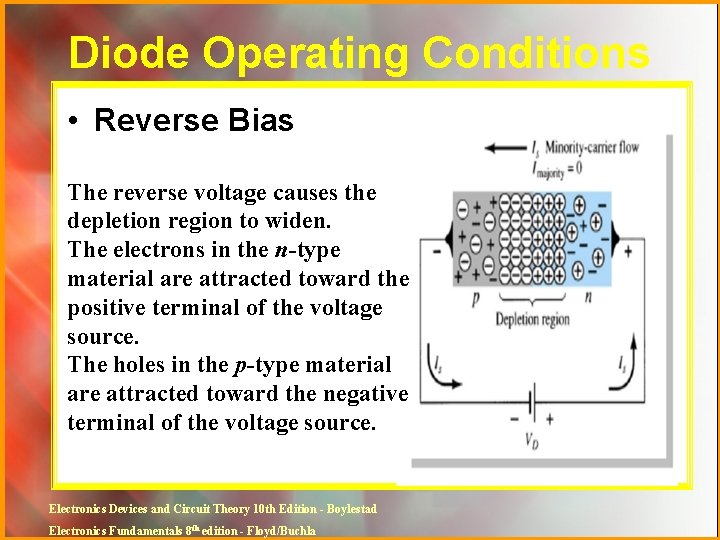
Diode Operating Conditions • Reverse Bias The reverse voltage causes the depletion region to widen. The electrons in the n-type material are attracted toward the positive terminal of the voltage source. The holes in the p-type material are attracted toward the negative terminal of the voltage source. Electronics Devices and Circuit Theory 10 th Edition - Boylestad Electronics Fundamentals 8 th edition - Floyd/Buchla
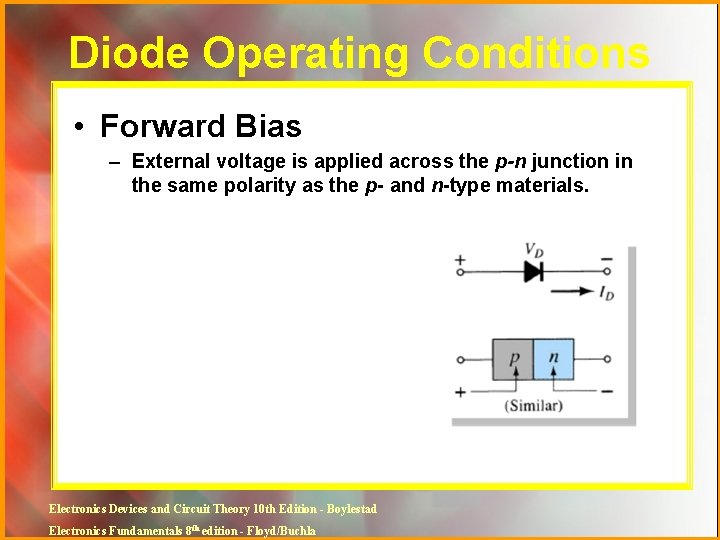
Diode Operating Conditions • Forward Bias – External voltage is applied across the p-n junction in the same polarity as the p- and n-type materials. Electronics Devices and Circuit Theory 10 th Edition - Boylestad Electronics Fundamentals 8 th edition - Floyd/Buchla
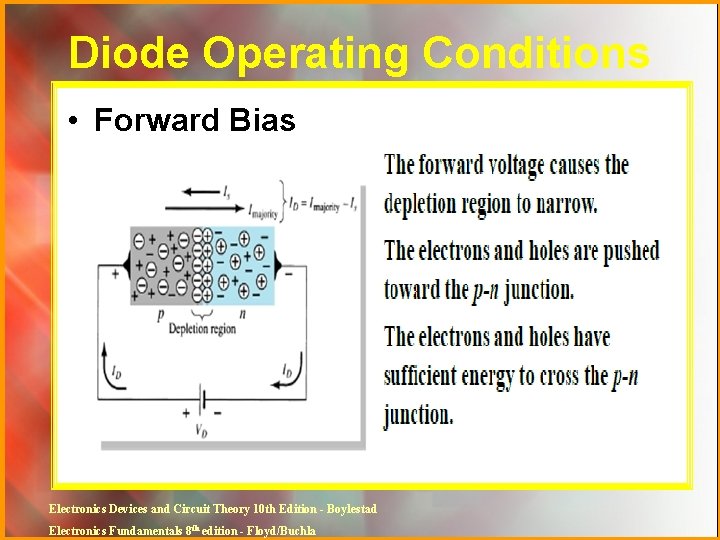
Diode Operating Conditions • Forward Bias Electronics Devices and Circuit Theory 10 th Edition - Boylestad Electronics Fundamentals 8 th edition - Floyd/Buchla
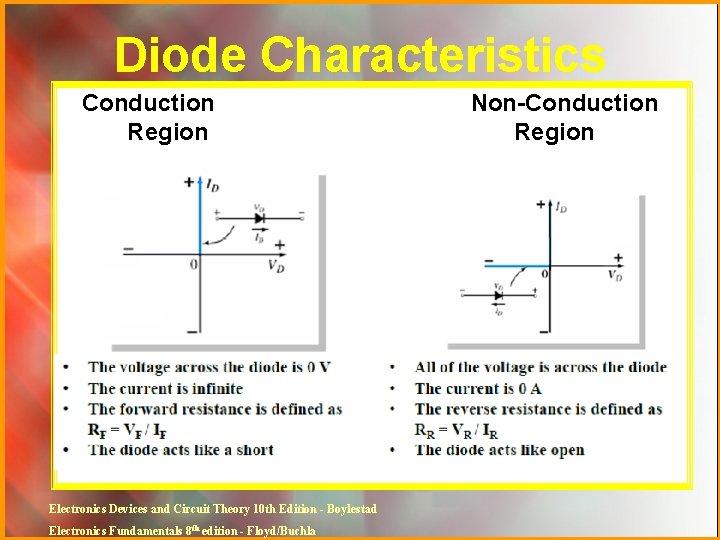
Diode Characteristics Conduction Region Electronics Devices and Circuit Theory 10 th Edition - Boylestad Electronics Fundamentals 8 th edition - Floyd/Buchla Non-Conduction Region
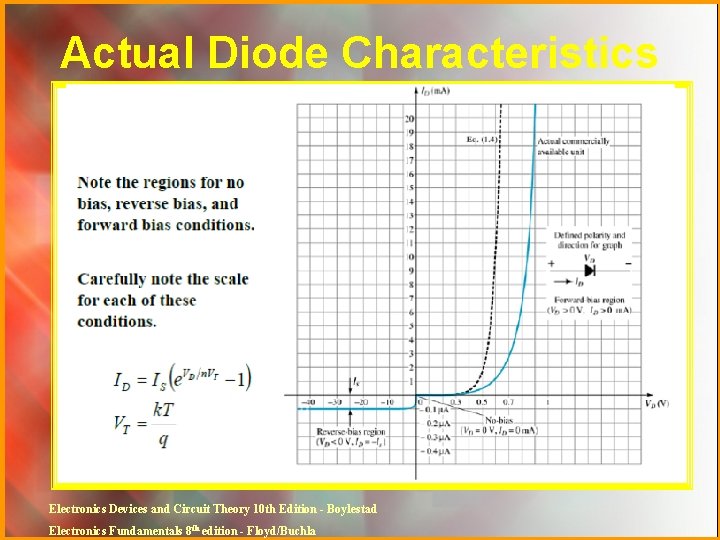
Actual Diode Characteristics Electronics Devices and Circuit Theory 10 th Edition - Boylestad Electronics Fundamentals 8 th edition - Floyd/Buchla
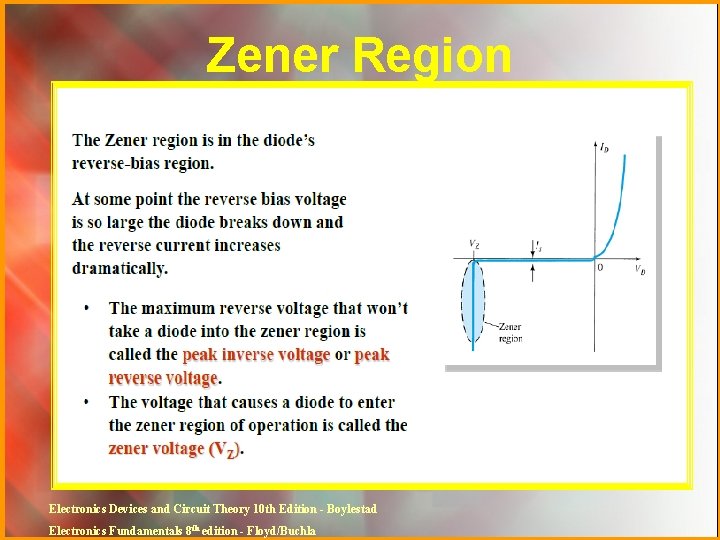
Zener Region Electronics Devices and Circuit Theory 10 th Edition - Boylestad Electronics Fundamentals 8 th edition - Floyd/Buchla
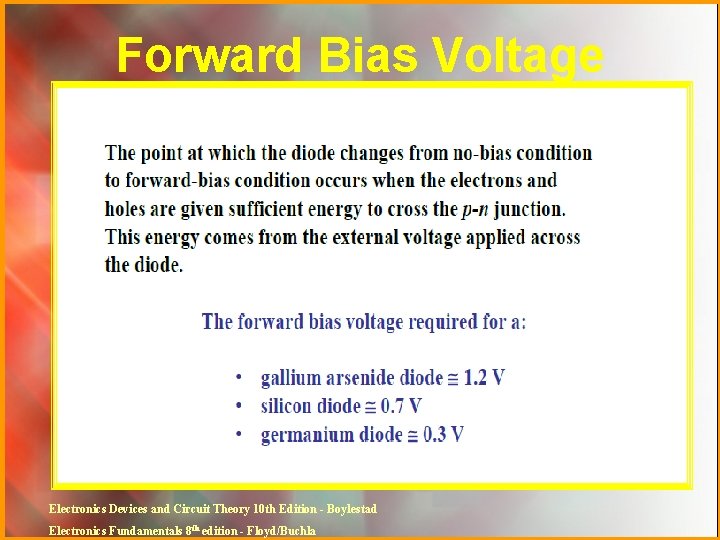
Forward Bias Voltage Electronics Devices and Circuit Theory 10 th Edition - Boylestad Electronics Fundamentals 8 th edition - Floyd/Buchla
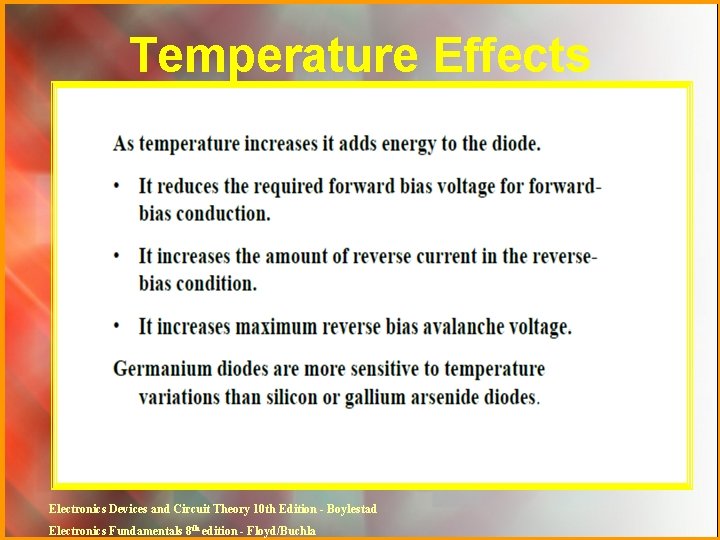
Temperature Effects Electronics Devices and Circuit Theory 10 th Edition - Boylestad Electronics Fundamentals 8 th edition - Floyd/Buchla
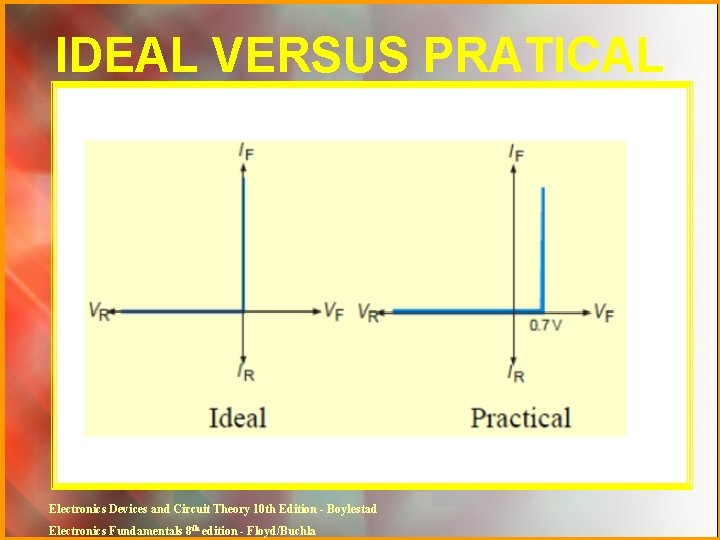
IDEAL VERSUS PRATICAL Electronics Devices and Circuit Theory 10 th Edition - Boylestad Electronics Fundamentals 8 th edition - Floyd/Buchla
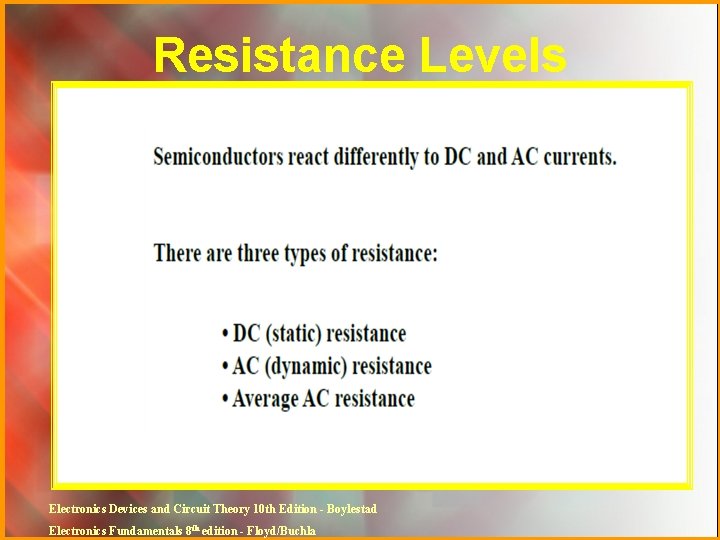
Resistance Levels Electronics Devices and Circuit Theory 10 th Edition - Boylestad Electronics Fundamentals 8 th edition - Floyd/Buchla
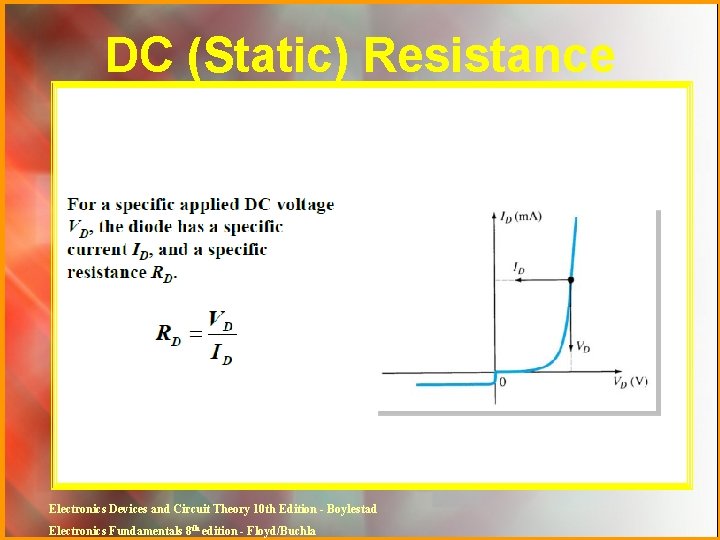
DC (Static) Resistance Electronics Devices and Circuit Theory 10 th Edition - Boylestad Electronics Fundamentals 8 th edition - Floyd/Buchla
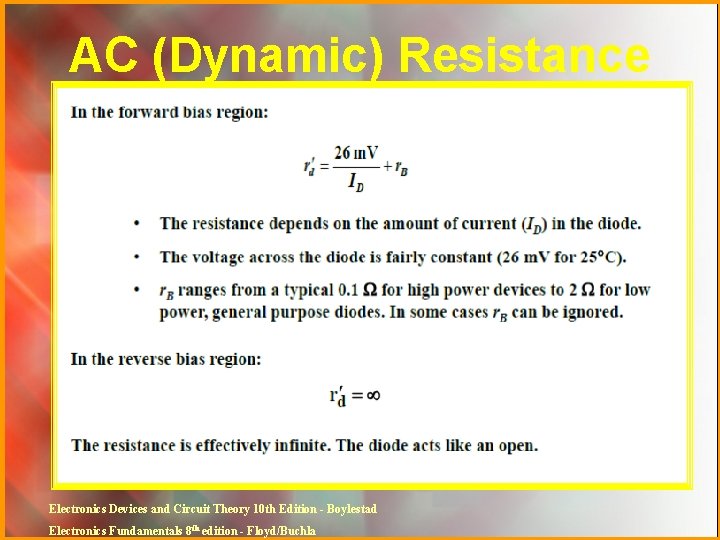
AC (Dynamic) Resistance Electronics Devices and Circuit Theory 10 th Edition - Boylestad Electronics Fundamentals 8 th edition - Floyd/Buchla
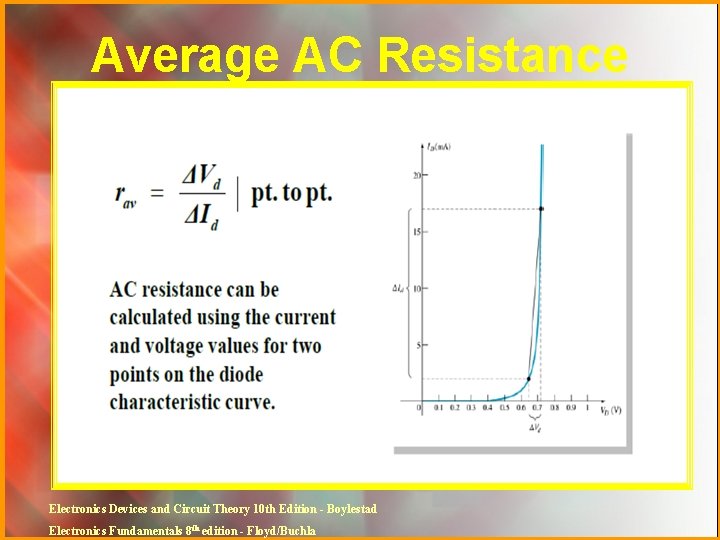
Average AC Resistance Electronics Devices and Circuit Theory 10 th Edition - Boylestad Electronics Fundamentals 8 th edition - Floyd/Buchla
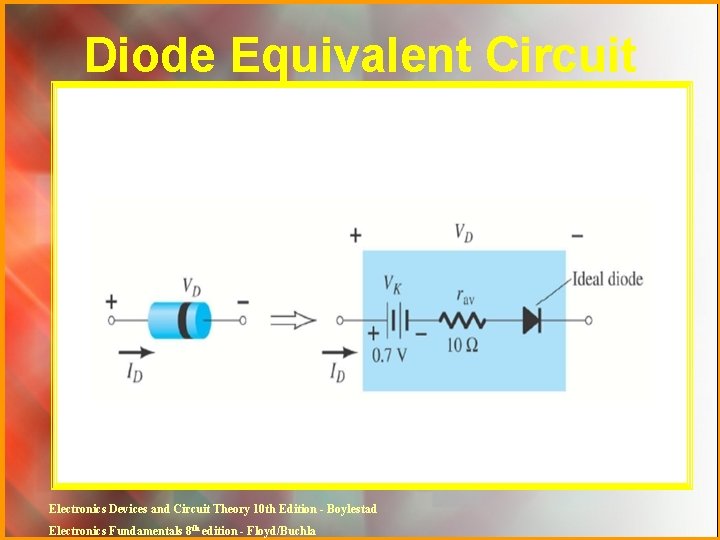
Diode Equivalent Circuit Electronics Devices and Circuit Theory 10 th Edition - Boylestad Electronics Fundamentals 8 th edition - Floyd/Buchla
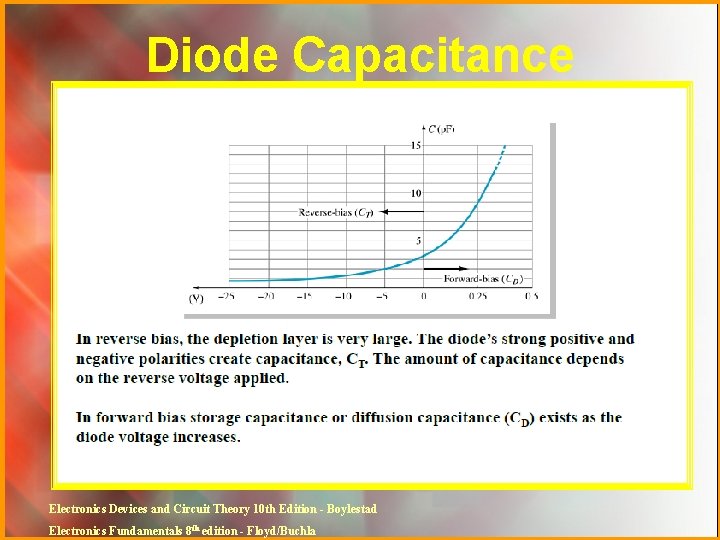
Diode Capacitance Electronics Devices and Circuit Theory 10 th Edition - Boylestad Electronics Fundamentals 8 th edition - Floyd/Buchla
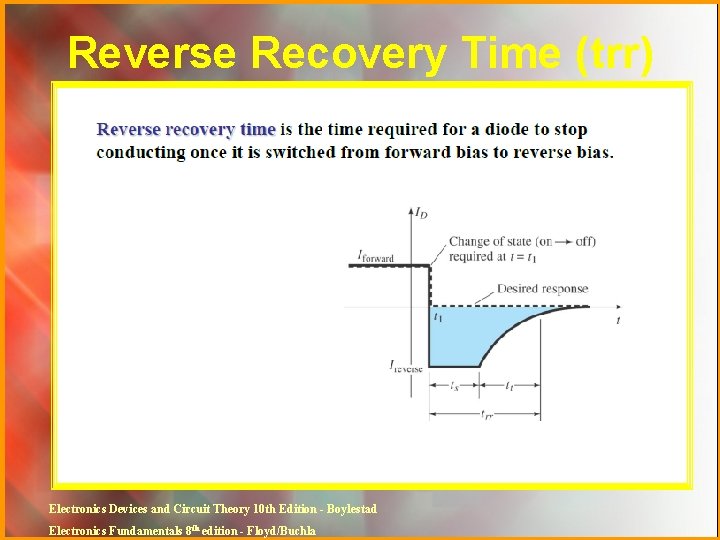
Reverse Recovery Time (trr) Electronics Devices and Circuit Theory 10 th Edition - Boylestad Electronics Fundamentals 8 th edition - Floyd/Buchla
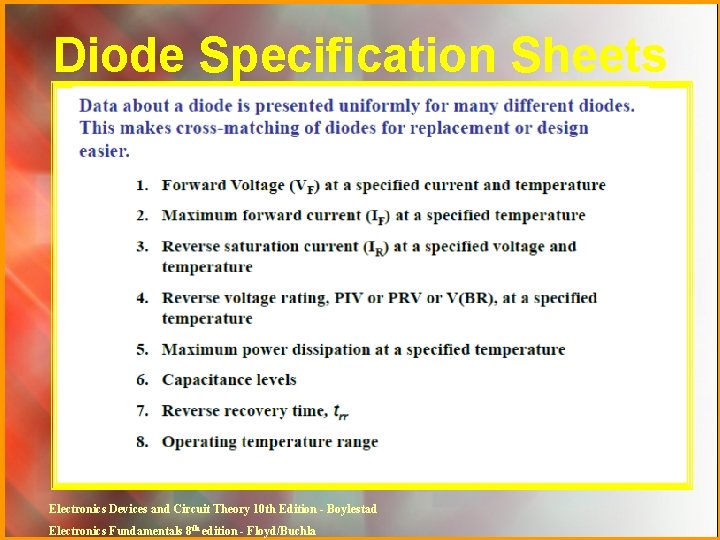
Diode Specification Sheets Electronics Devices and Circuit Theory 10 th Edition - Boylestad Electronics Fundamentals 8 th edition - Floyd/Buchla
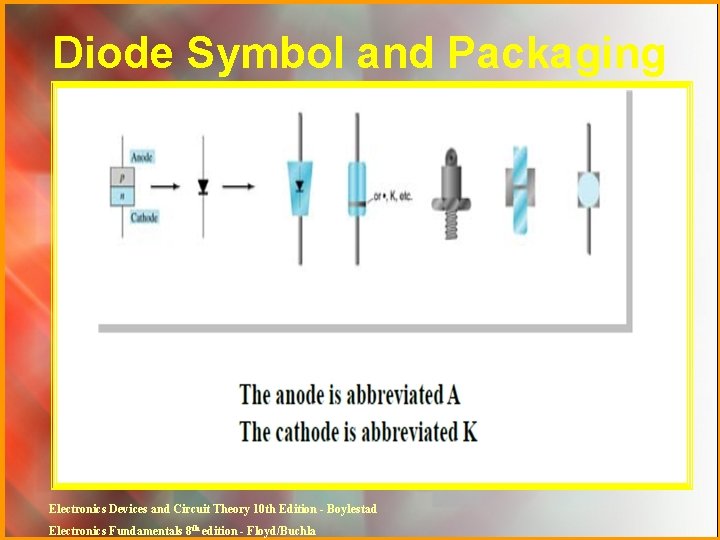
Diode Symbol and Packaging Electronics Devices and Circuit Theory 10 th Edition - Boylestad Electronics Fundamentals 8 th edition - Floyd/Buchla
Other Types of Diodes • Zener diode • Light-emitting diode • Diode arrays Electronics Devices and Circuit Theory 10 th Edition - Boylestad Electronics Fundamentals 8 th edition - Floyd/Buchla
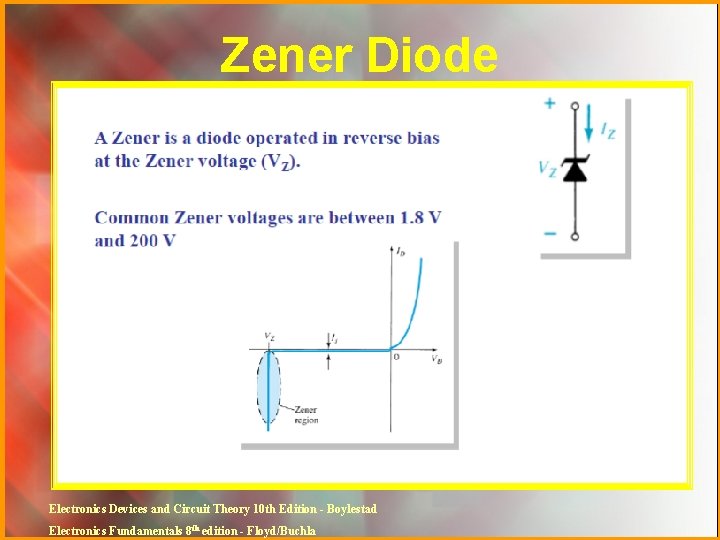
Zener Diode Electronics Devices and Circuit Theory 10 th Edition - Boylestad Electronics Fundamentals 8 th edition - Floyd/Buchla
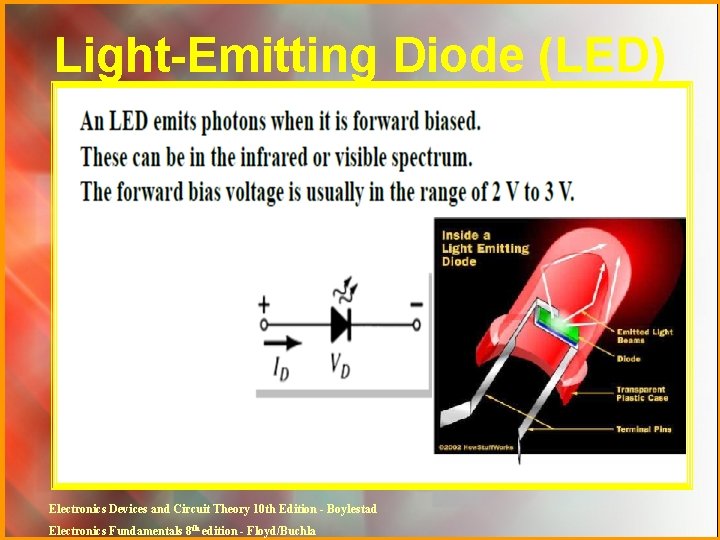
Light-Emitting Diode (LED) Electronics Devices and Circuit Theory 10 th Edition - Boylestad Electronics Fundamentals 8 th edition - Floyd/Buchla
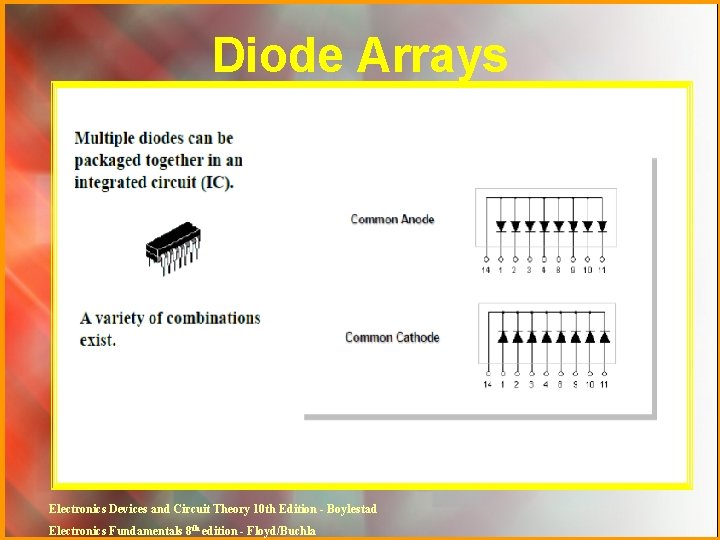
Diode Arrays Electronics Devices and Circuit Theory 10 th Edition - Boylestad Electronics Fundamentals 8 th edition - Floyd/Buchla