
Major volcanic eruptions modelling with SOCOLv 3 AER
- Slides: 25
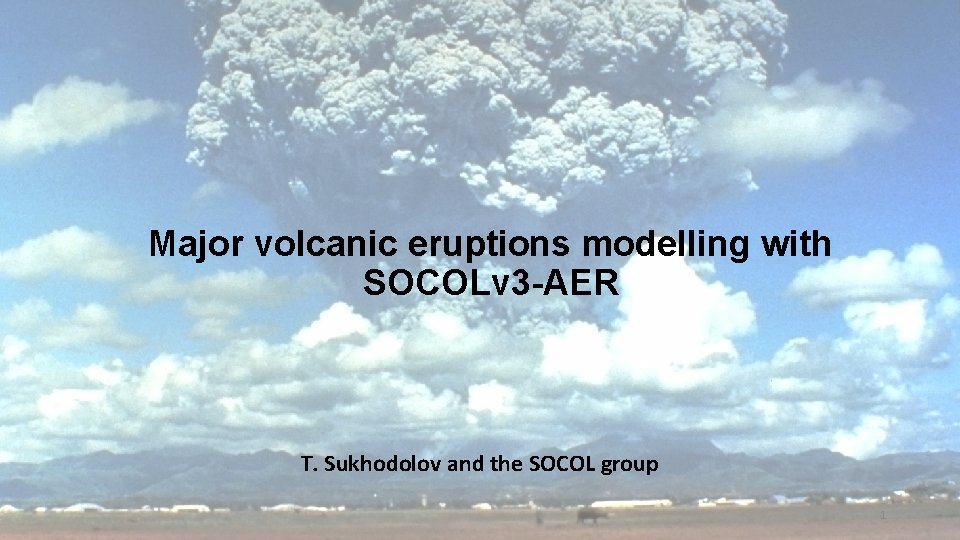
Major volcanic eruptions modelling with SOCOLv 3 -AER T. Sukhodolov and the SOCOL group 1
Content • Background • Modelling issues • Some results 2
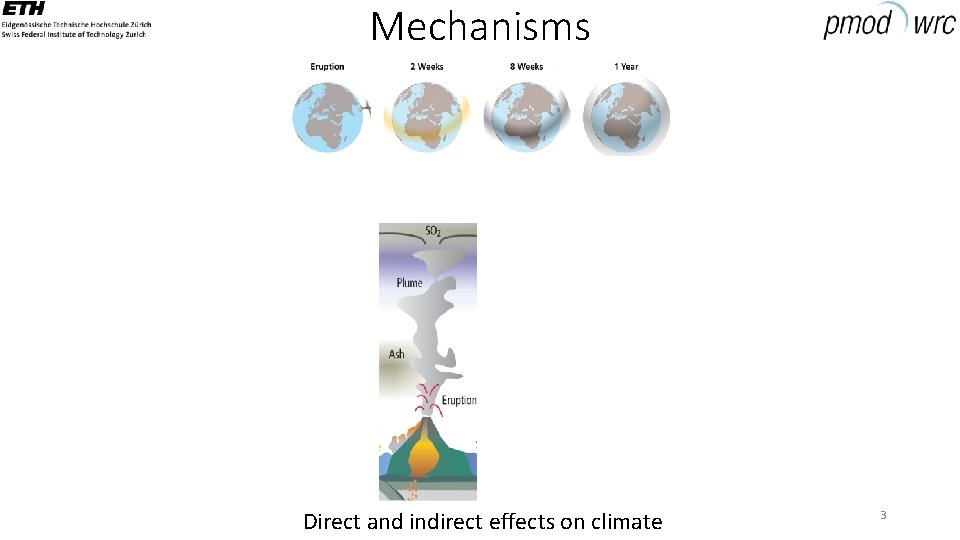
Mechanisms (Broenniman and Kraemer, 2016) Direct and indirect effects on climate 3
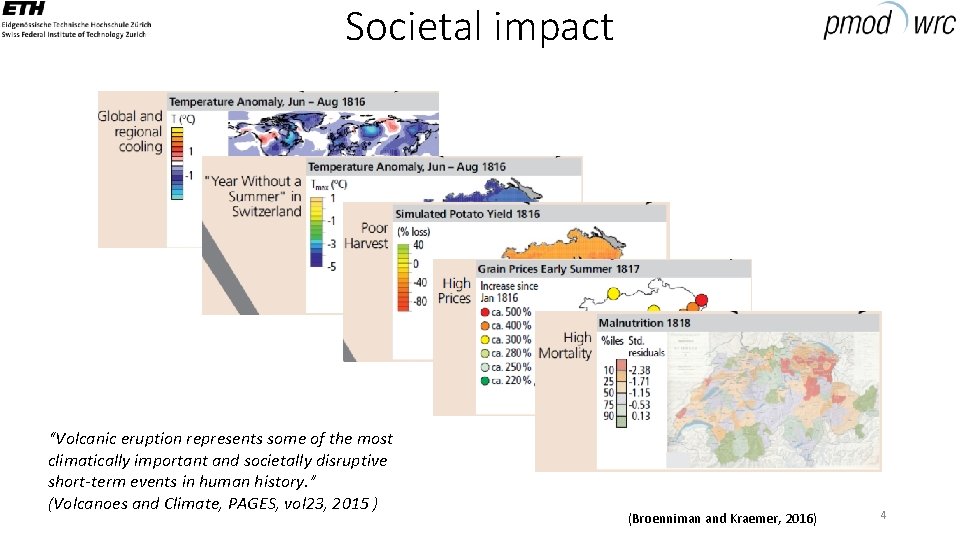
Societal impact “Volcanic eruption represents some of the most climatically important and societally disruptive short-term events in human history. ” (Volcanoes and Climate, PAGES, vol 23, 2015 ) (Broenniman and Kraemer, 2016) 4
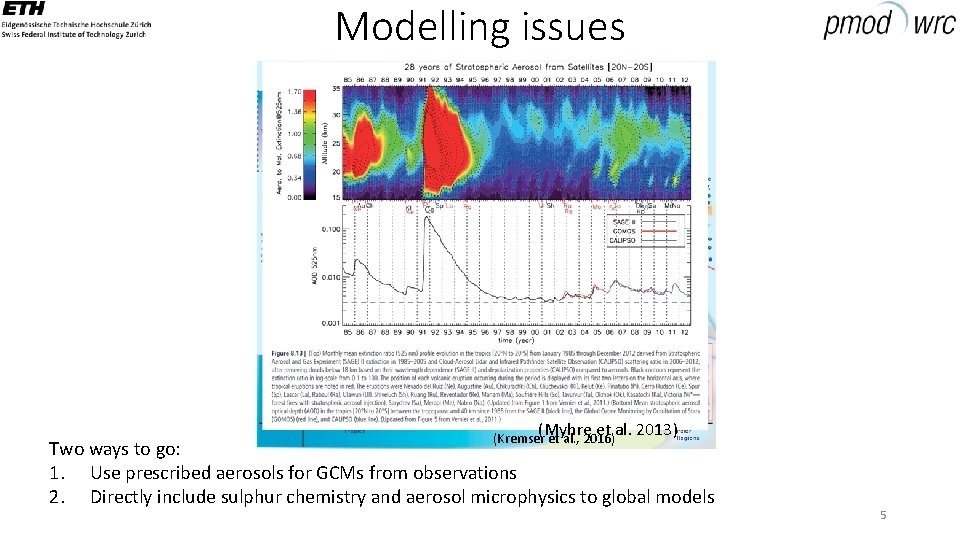
Modelling issues (Myhre et al. 2013) (Broenniman and Kraemer, 2016) (Kremser et al. , 2016) Two ways to go: 1. Use prescribed aerosols for GCMs from observations or microphysical models 2. Directly include sulphur chemistry and aerosol microphysics to global models Assessing of climate impacts needs proper aerosol distribution 5
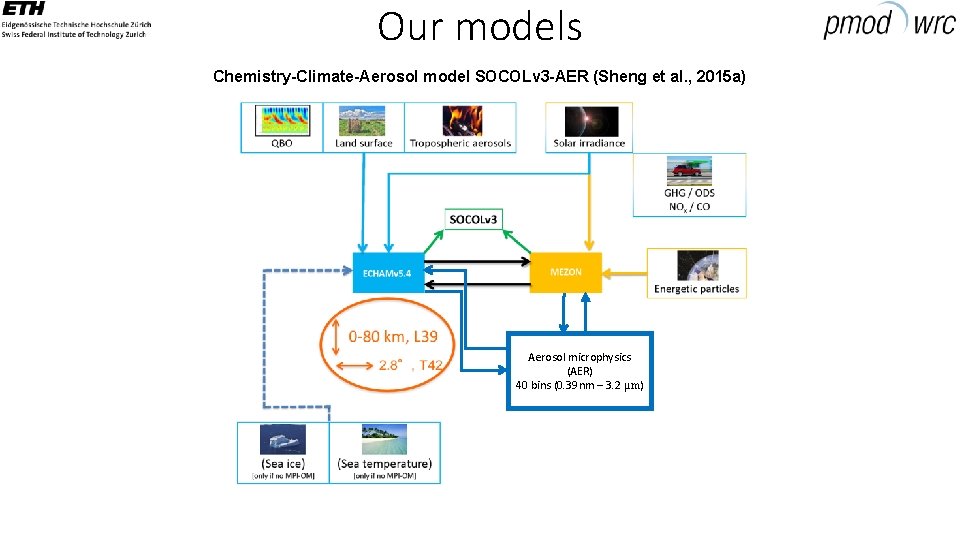
Our models Chemistry-Climate-Aerosol model. SOCOLv 3 -AER (Sheng et al. , 2015 a) Chemistry-Climate model (Stenke et al. , 2013) Aerosol microphysics (AER) 40 bins (0. 39 nm – 3. 2 μm) 6
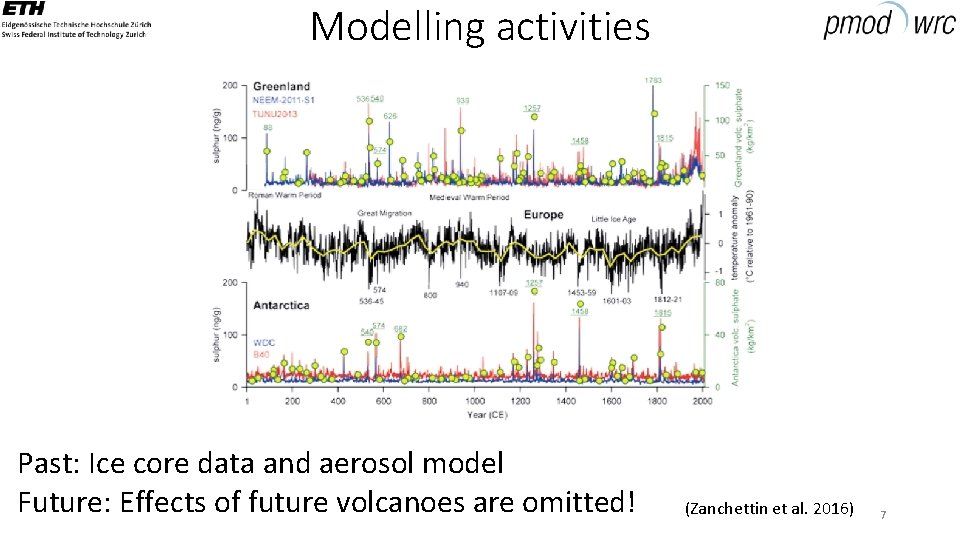
Modelling activities Vol. MIP CMIP, CCMI Past: Ice core data and aerosol model Future: Effects of future volcanoes are omitted! (Zanchettin et al. 2016) 7
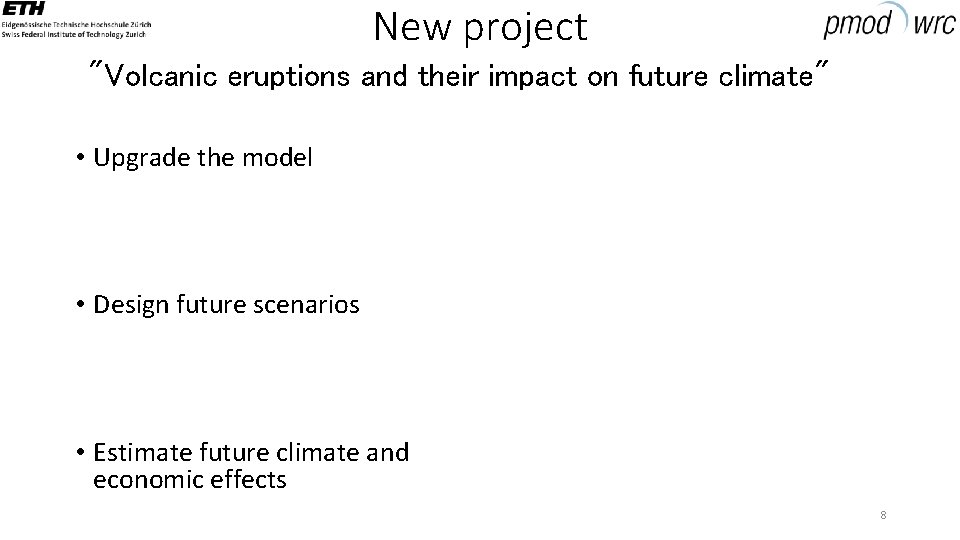
New project "Volcanic eruptions and their impact on future climate" • Upgrade the model • Design future scenarios • Estimate future climate and economic effects 8
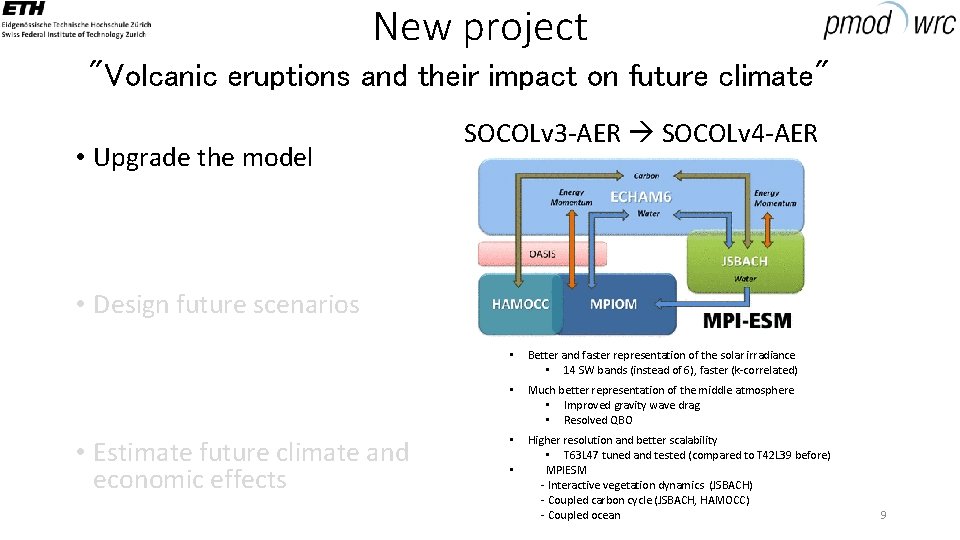
New project "Volcanic eruptions and their impact on future climate" • Upgrade the model SOCOLv 3 -AER SOCOLv 4 -AER • Design future scenarios • Estimate future climate and economic effects • Better and faster representation of the solar irradiance • 14 SW bands (instead of 6), faster (k-correlated) • Much better representation of the middle atmosphere • Improved gravity wave drag • Resolved QBO • Higher resolution and better scalability • T 63 L 47 tuned and tested (compared to T 42 L 39 before) MPIESM - Interactive vegetation dynamics (JSBACH) - Coupled carbon cycle (JSBACH, HAMOCC) - Coupled ocean • 9
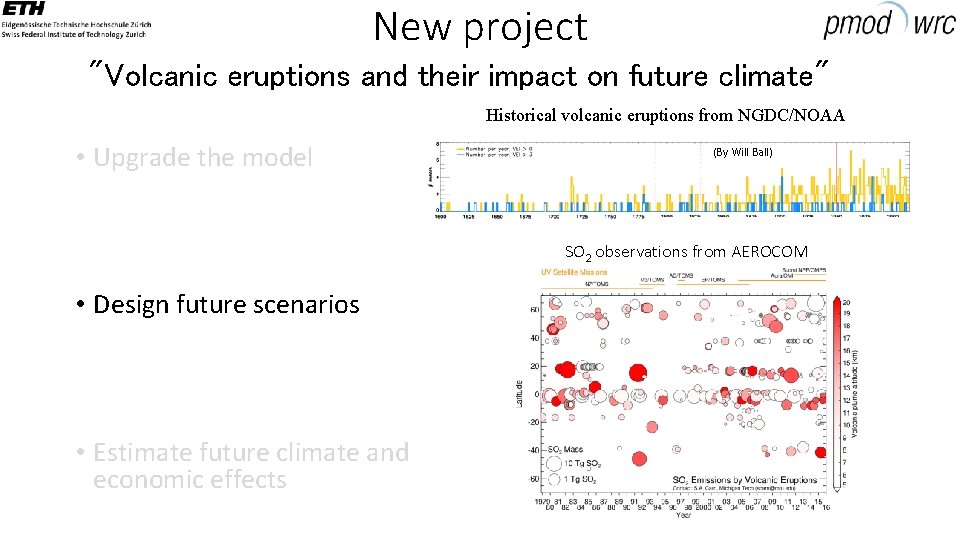
New project "Volcanic eruptions and their impact on future climate" Historical volcanic eruptions from NGDC/NOAA • Upgrade the model (By Will Ball) SO 2 observations from AEROCOM • Design future scenarios • Estimate future climate and economic effects 10
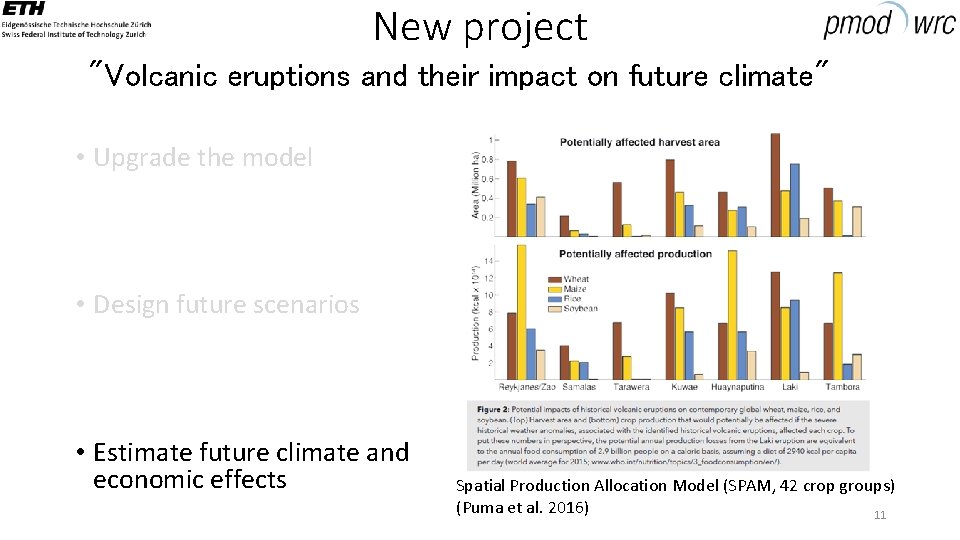
New project "Volcanic eruptions and their impact on future climate" • Upgrade the model • Design future scenarios • Estimate future climate and economic effects Spatial Production Allocation Model (SPAM, 42 crop groups) (Puma et al. 2016) 11
Some recent results • SOCOLv 3 -AER test of Pinatubo (focus on aerosol distributions) • SOCOLv 3 -AER test of Tambora (focus on aerosol transport and deposition) • Results with prescribed aerosols (focus on stratospheric warming) 12
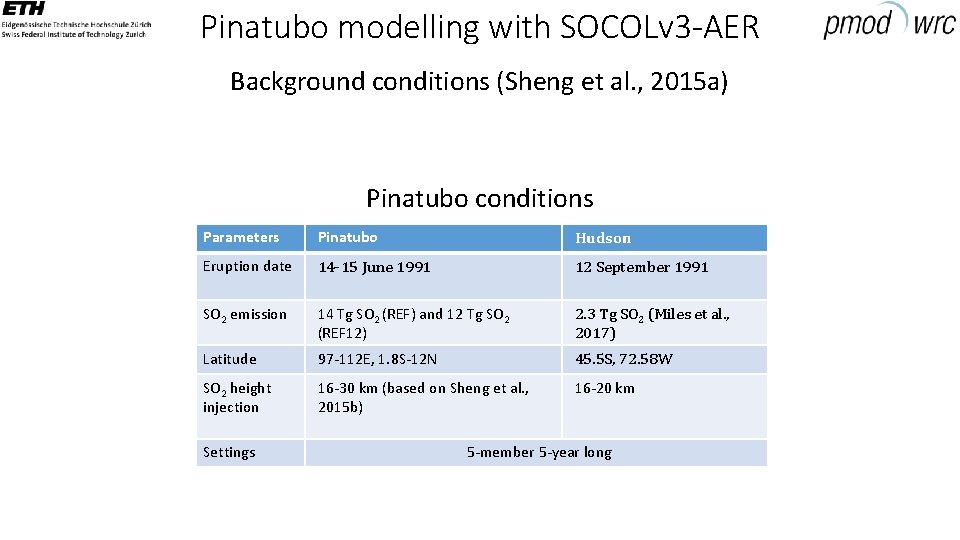
Pinatubo modelling with SOCOLv 3 -AER Background conditions (Sheng et al. , 2015 a) Pinatubo conditions Parameters Pinatubo Hudson Eruption date 14 -15 June 1991 12 September 1991 SO 2 emission 14 Tg SO 2 (REF) and 12 Tg SO 2 (REF 12) 2. 3 Tg SO 2 (Miles et al. , 2017) Latitude 97 -112 E, 1. 8 S-12 N 45. 5 S, 72. 58 W SO 2 height injection 16 -30 km (based on Sheng et al. , 2015 b) 16 -20 km Settings 5 -member 5 -year long 13
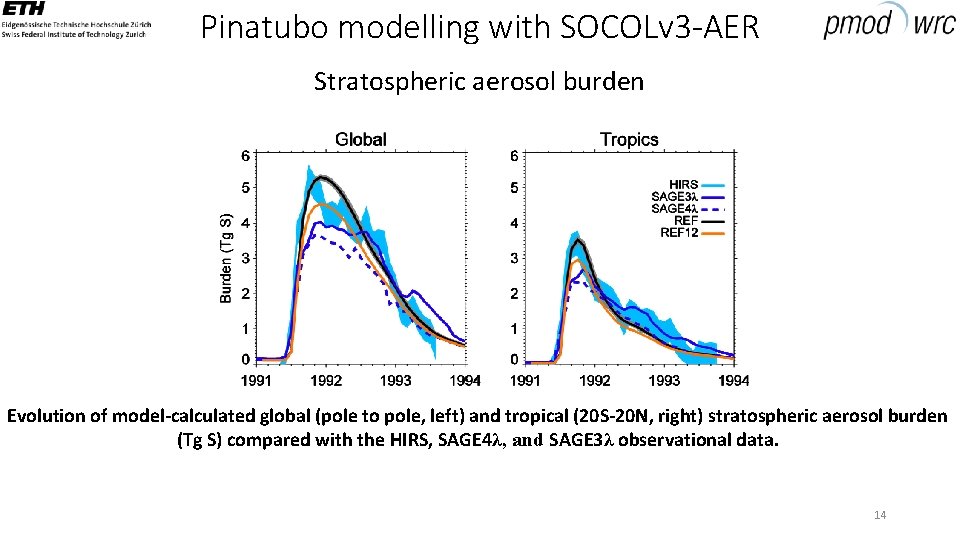
Pinatubo modelling with SOCOLv 3 -AER Stratospheric aerosol burden Evolution of model-calculated global (pole to pole, left) and tropical (20 S-20 N, right) stratospheric aerosol burden (Tg S) compared with the HIRS, SAGE 4λ, and SAGE 3λ observational data. 14
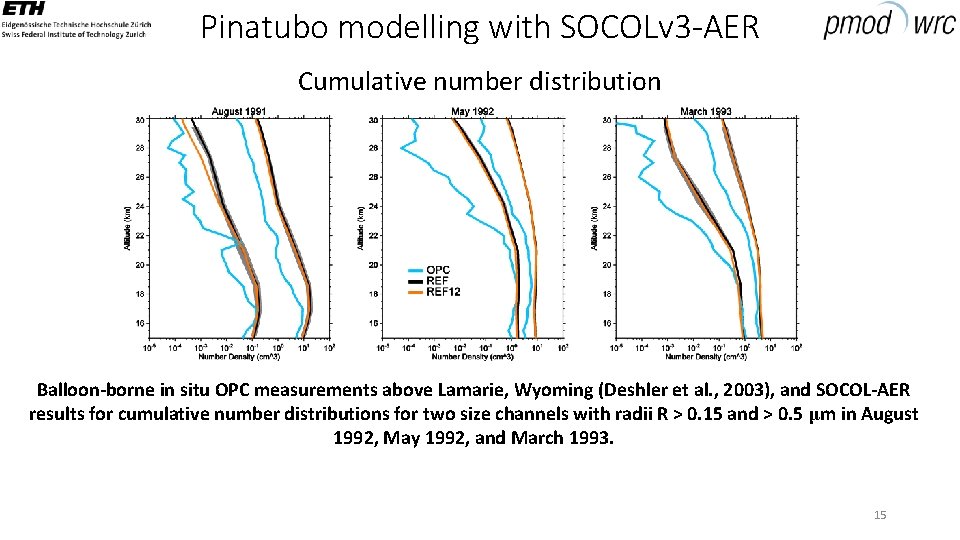
Pinatubo modelling with SOCOLv 3 -AER Cumulative number distribution Balloon-borne in situ OPC measurements above Lamarie, Wyoming (Deshler et al. , 2003), and SOCOL-AER results for cumulative number distributions for two size channels with radii R > 0. 15 and > 0. 5 μm in August 1992, May 1992, and March 1993. 15
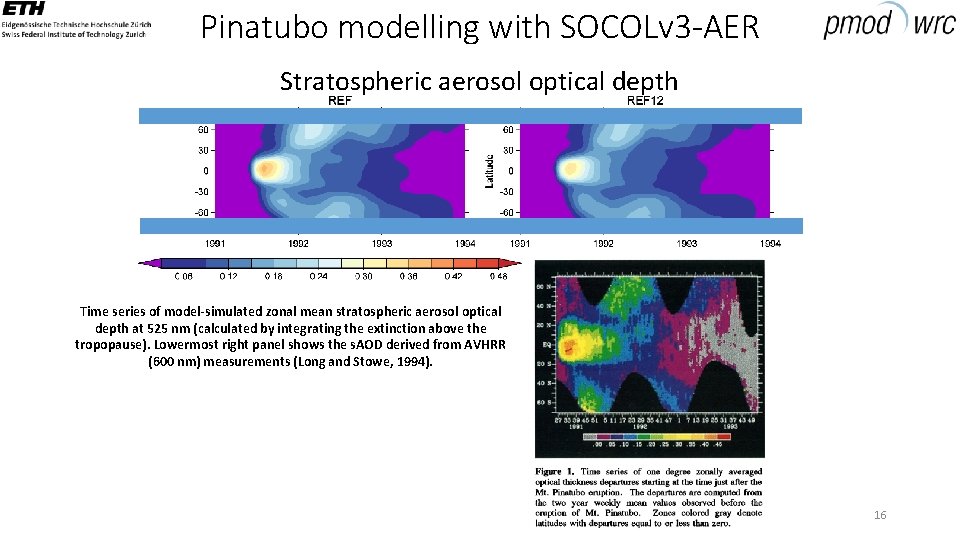
Pinatubo modelling with SOCOLv 3 -AER Stratospheric aerosol optical depth Time series of model-simulated zonal mean stratospheric aerosol optical depth at 525 nm (calculated by integrating the extinction above the tropopause). Lowermost right panel shows the s. AOD derived from AVHRR (600 nm) measurements (Long and Stowe, 1994). 16
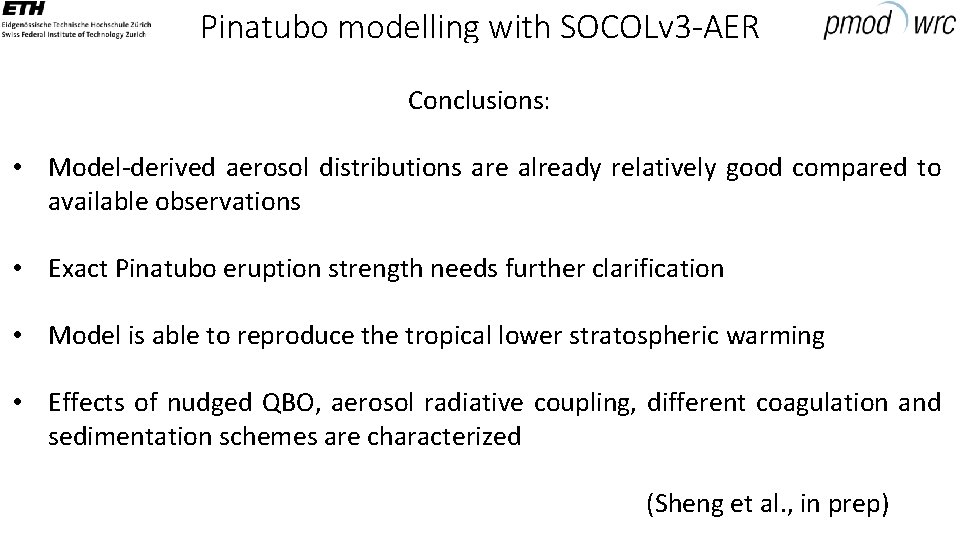
Pinatubo modelling with SOCOLv 3 -AER Stratospheric temperature Conclusions: • Model-derived aerosol distributions are already relatively good compared to available observations • Exact Pinatubo eruption strength needs further clarification • Model is able to reproduce the tropical lower stratospheric warming • Effects of nudged QBO, aerosol radiative coupling, different coagulation and Zonal mean temperature (upper panel) anomalies for tropics (20 S— 20 N) at 30 h. Pa calculated by SOCOL-AER schemes are characterized andsedimentation derived from MERRA and ERA-Interim temperature reanalysis. Anomalies are calculated by removing the annual cycle. (Sheng et al. , in prep) 17
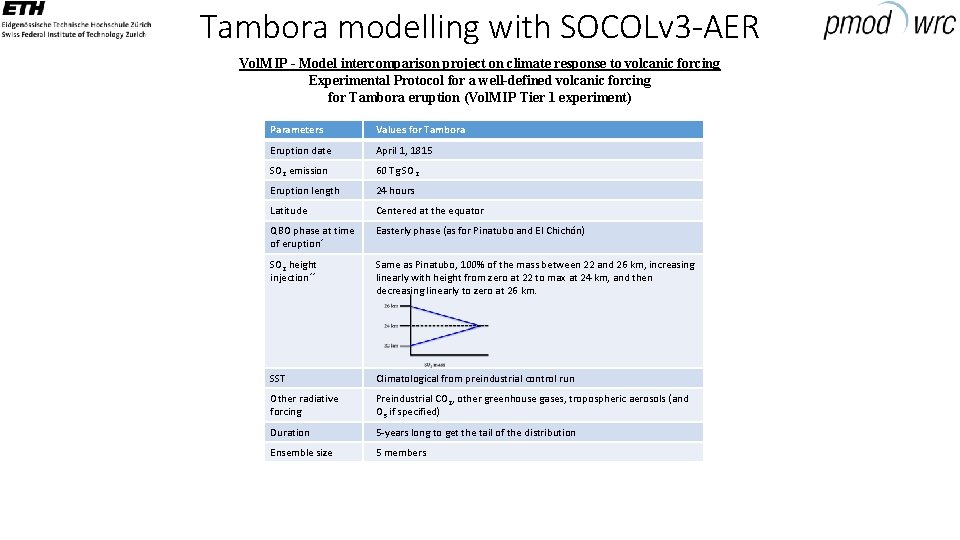
Tambora modelling with SOCOLv 3 -AER Vol. MIP - Model intercomparison project on climate response to volcanic forcing Experimental Protocol for a well-defined volcanic forcing for Tambora eruption (Vol. MIP Tier 1 experiment) Parameters Values for Tambora Eruption date April 1, 1815 SO 2 emission 60 Tg SO 2 Eruption length 24 hours Latitude Centered at the equator QBO phase at time of eruption* Easterly phase (as for Pinatubo and El Chichón) SO 2 height injection** Same as Pinatubo, 100% of the mass between 22 and 26 km, increasing linearly with height from zero at 22 to max at 24 km, and then decreasing linearly to zero at 26 km. SST Climatological from preindustrial control run Other radiative forcing Preindustrial CO 2, other greenhouse gases, tropospheric aerosols (and O 3 if specified) Duration 5 -years long to get the tail of the distribution Ensemble size 5 members
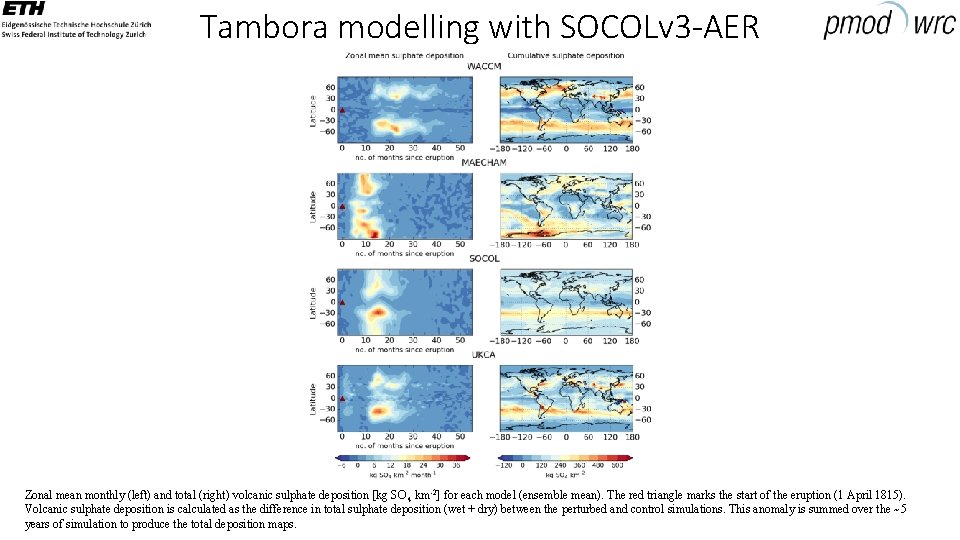
Tambora modelling with SOCOLv 3 -AER Zonal mean monthly (left) and total (right) volcanic sulphate deposition [kg SO 4 km-2] for each model (ensemble mean). The red triangle marks the start of the eruption (1 April 1815). Volcanic sulphate deposition is calculated as the difference in total sulphate deposition (wet + dry) between the perturbed and control simulations. This anomaly is summed over the ~5 years of simulation to produce the total deposition maps.
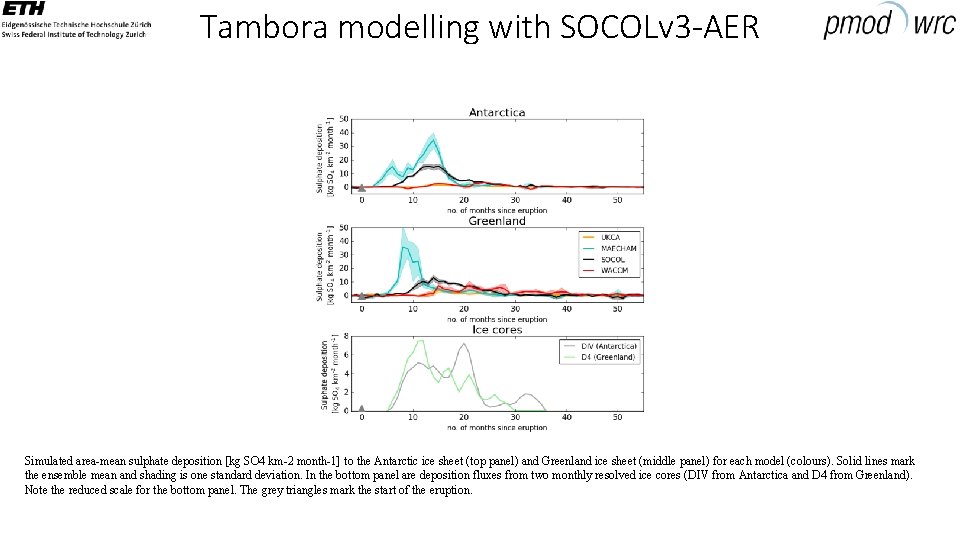
Tambora modelling with SOCOLv 3 -AER Simulated area-mean sulphate deposition [kg SO 4 km-2 month-1] to the Antarctic ice sheet (top panel) and Greenland ice sheet (middle panel) for each model (colours). Solid lines mark the ensemble mean and shading is one standard deviation. In the bottom panel are deposition fluxes from two monthly resolved ice cores (DIV from Antarctica and D 4 from Greenland). Note the reduced scale for the bottom panel. The grey triangles mark the start of the eruption.
Tambora modelling with SOCOLv 3 -AER Conclusions: • Large divergence among models • Better deposition scheme is needed in SOCOL • Several bugs found in our code (Marshall et al. , in prep) Background pre-industrial polar precipitation in each model control simulation (year average) (shading) and ice core accumulation (mm liquid water equivalent yr-1) in ice cores (filled circles). (Sigl et al. 2014). Antarctic ice core accumulation rates are an average of annual ice core accumulation from 1850 -1860 taken from Sigl et al. (2014). Greenland ice core accumulation rates are taken from Gao et al. (2006) (Table 1). WACCM, MAECHAM and SOCOL model data are averages of 60 months of control simulation; UKCA is an average of 48 months. Strong patches in SOCOL precipitation around coasts appear to be numerical artefacts due to SST files are will be repeated with new files.
To be continued… Thank you! 22
Climate impact (Guillet et al. , 2017) Volcanic signal in NH temperature reconstructions 23
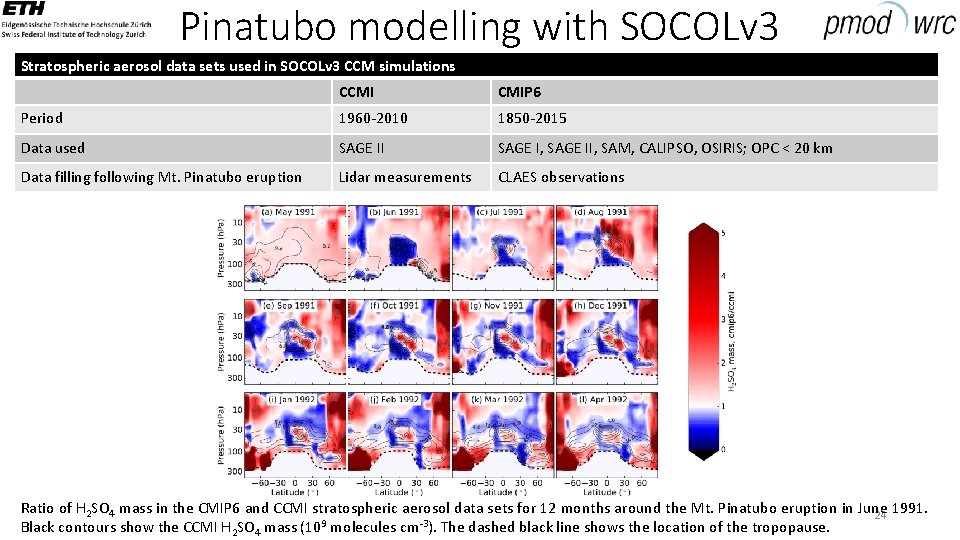
Pinatubo modelling with SOCOLv 3 Stratospheric aerosol data sets used in SOCOLv 3 CCM simulations CCMI CMIP 6 Period 1960 -2010 1850 -2015 Data used SAGE II SAGE I, SAGE II, SAM, CALIPSO, OSIRIS; OPC < 20 km Data filling following Mt. Pinatubo eruption Lidar measurements CLAES observations Ratio of H 2 SO 4 mass in the CMIP 6 and CCMI stratospheric aerosol data sets for 12 months around the Mt. Pinatubo eruption in June 24 1991. 9 -3 Black contours show the CCMI H 2 SO 4 mass (10 molecules cm ). The dashed black line shows the location of the tropopause.
Pinatubo modelling with SOCOLv 3 Conclusion: SOCOLv 3 simulates stratospheric temperature and ozone changes following the Mt. Pinatubo eruption more accurately if CMIP 5 aerosols are used. (Revell et al. , in prep) Time series of temperature anomalies (calculated by removing the annual cycle from 1986 -2005) at 30 h. Pa, 15°N-15°S. The red and blue lines denote the ensemble mean of the SOCOLv 3 CCMI and CMIP 6 ensembles, respectively. The shaded areas denote the ensemble mean +/- 1σ. 25