
MAJOR TRAUMA ASSESSMENT AND RESUSCITATION The general goal
- Slides: 26
MAJOR TRAUMA ASSESSMENT AND RESUSCITATION
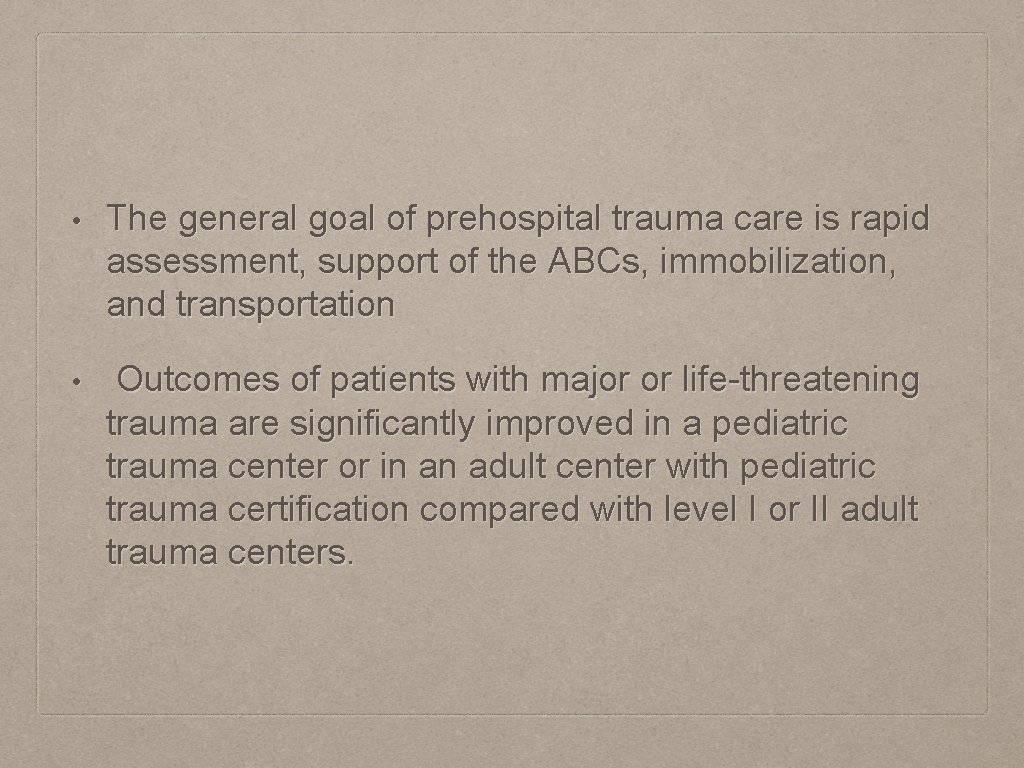
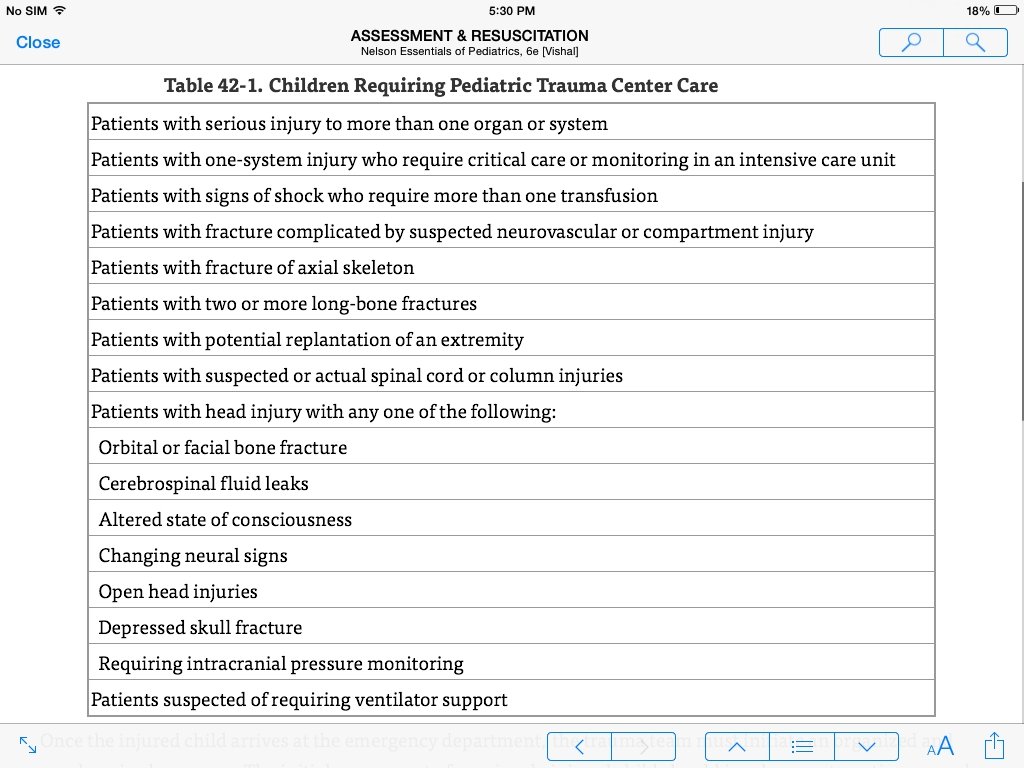
• The general goal of prehospital trauma care is rapid assessment, support of the ABCs, immobilization, and transportation • Outcomes of patients with major or life-threatening trauma are significantly improved in a pediatric trauma center or in an adult center with pediatric trauma certification compared with level I or II adult trauma centers.
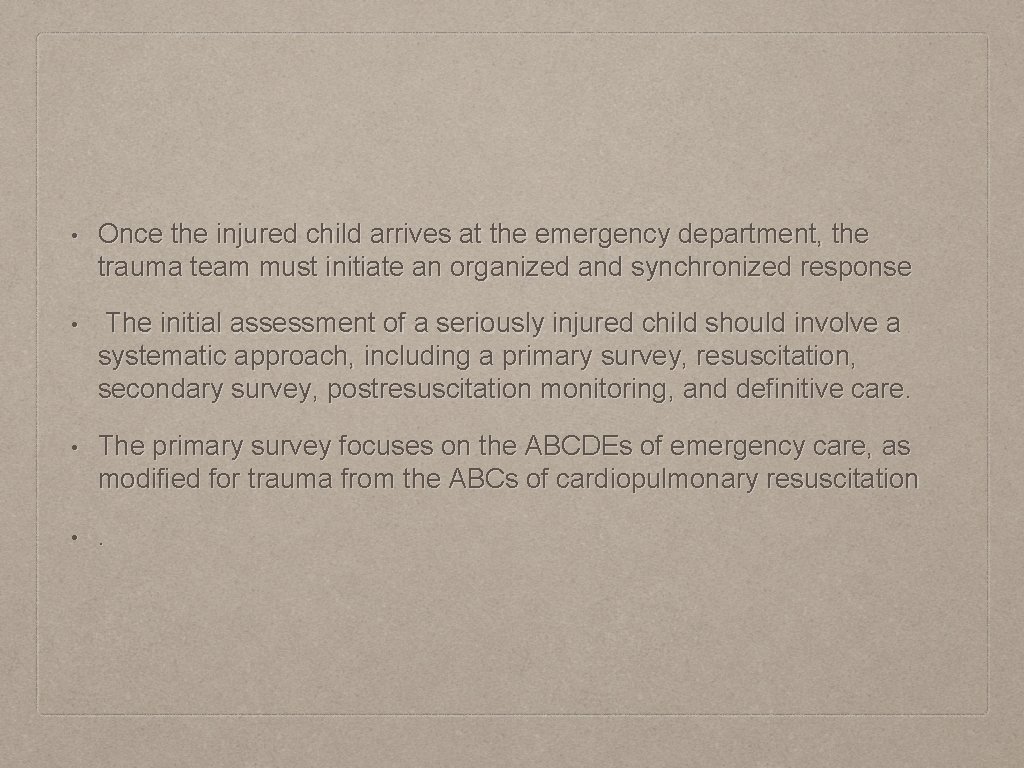
• Once the injured child arrives at the emergency department, the trauma team must initiate an organized and synchronized response • The initial assessment of a seriously injured child should involve a systematic approach, including a primary survey, resuscitation, secondary survey, postresuscitation monitoring, and definitive care. • The primary survey focuses on the ABCDEs of emergency care, as modified for trauma from the ABCs of cardiopulmonary resuscitation • .
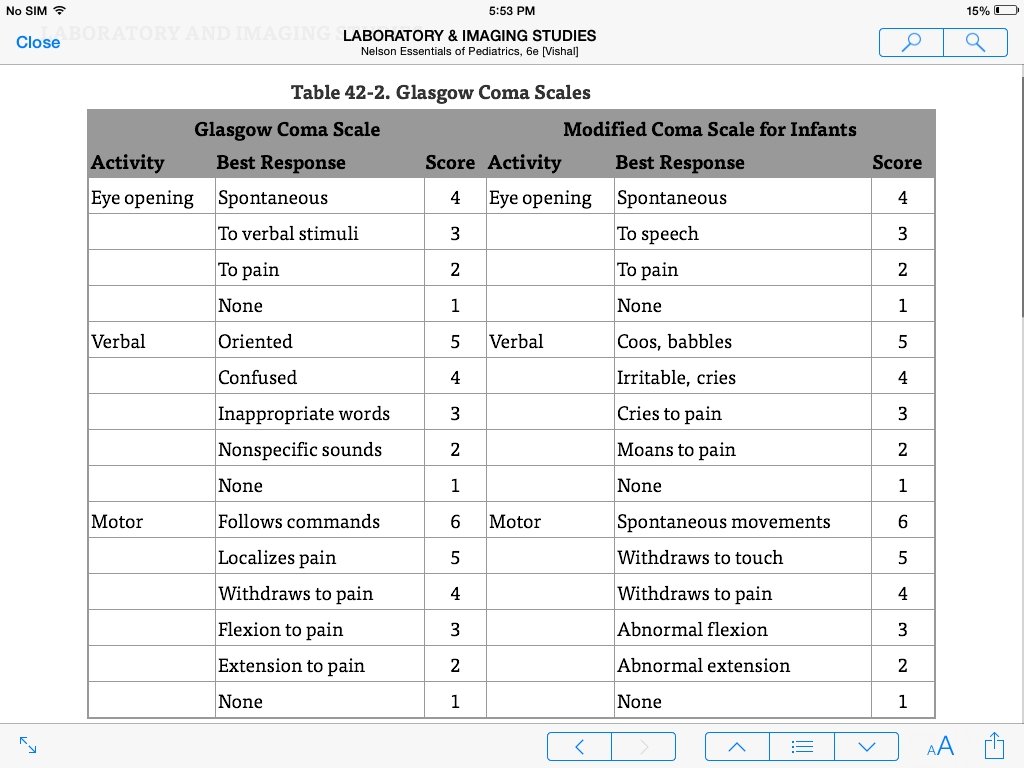
• The assessment of the airway and breathing components should include • meticulous control of the cervical spine (especially if the patient has an altered mental status), • evaluation for anatomic injuries that could impair entry or gas exchange, and consideration of the likelihood of a full stomach (risk of aspiration pneumonia). • Circulation can be assessed via observation (heart rate, skin color, mental status) and palpation (pulse quality, capillary refill, skin temperature) and restored (via two peripheral intravenous lines, when possible) while control of bleeding is accomplished through the use of direct pressure. • Assessment for disabilities (D), including neurologic status, includes examination of pupil size and reactivity, a brief mental status assessment (AVPU-alert; responds to voice; responds to pain; unresponsive), and examination of extremity movement to assess for spinal cord injury • The Glasgow Coma Scales can direct decisions regarding the initiation of cerebral resuscitation in patients with suspected closed head injuries. • E, which stands for exposure, requires a full assessment of the patient by completely disrobing the child for a detailed examination of the entire body. The examiner should ensure a neutral thermal environment to prevent hypothermia
On completion of the primary survey, a more detailed head-to-toe examination (the secondary survey) should ensue. The purpose of this careful re-examination is to identify life-threatening and limb-threatening injuries and less serious injuries. Coincident with the secondary survey and depending, in part, on the assessed physiologic status of the patient, certain procedures and resuscitative measures are initiated. The prioritization of definitive care needs is determined by the injury findings collected from the primary and secondary surveys, the child's physiologic response to resuscitation, and data from continuous monitoring A tertiary survey, including repeat primary and secondary surveys along with review of laboratory tests and radiologic studies, should be performed within 24 hours.
EPIDEMIOLOGY AND ETIOLOGY • Injury is the leading cause of death in children 1 to 18 years of age. • Approximately 47% of these deaths are caused by motor vehicle crashes. • Most remaining injury-related deaths are the result of homicide/suicide (34%) and drowning (5%). • Geography, climate, population density (access to care), and population traits vary by region and affect the frequency, etiology, and severity of injuries. • Injury prevention requires evaluation of factors that affect the host (child), the agent (e. g. , car and driver), and the environment (e. g. , roadways, weather). • The age of the child may determine the exposure to various agents and environments. For example, most injuries in infants and toddlers occur in the home as the result of exposure to agents found there (hot water heaters, bathtubs, soft bedding).
• Gender affects exposure to injury, with boys having a fatal injury rate more than twice that of girls. • More than 50% of trauma fatalities occur at the scene of the injury, in patients who receive injuries to the brainstem, head, aorta, heart, and upper cervical spine. • Another 30% of deaths occur within 48 hours of the injury. • Survival depends on the severity of shock at the time of hospital arrival and the length of time shock has been present. • Taking an injured child to a center at which definitive care and stabilization occurs within 1 hour of the time of injury optimizes the outcome. • A final peak in mortality occurs days to weeks after the initial injury and results from multisystem organ failure or other severe, life-threatening complications that have not responded to medical and surgical management.
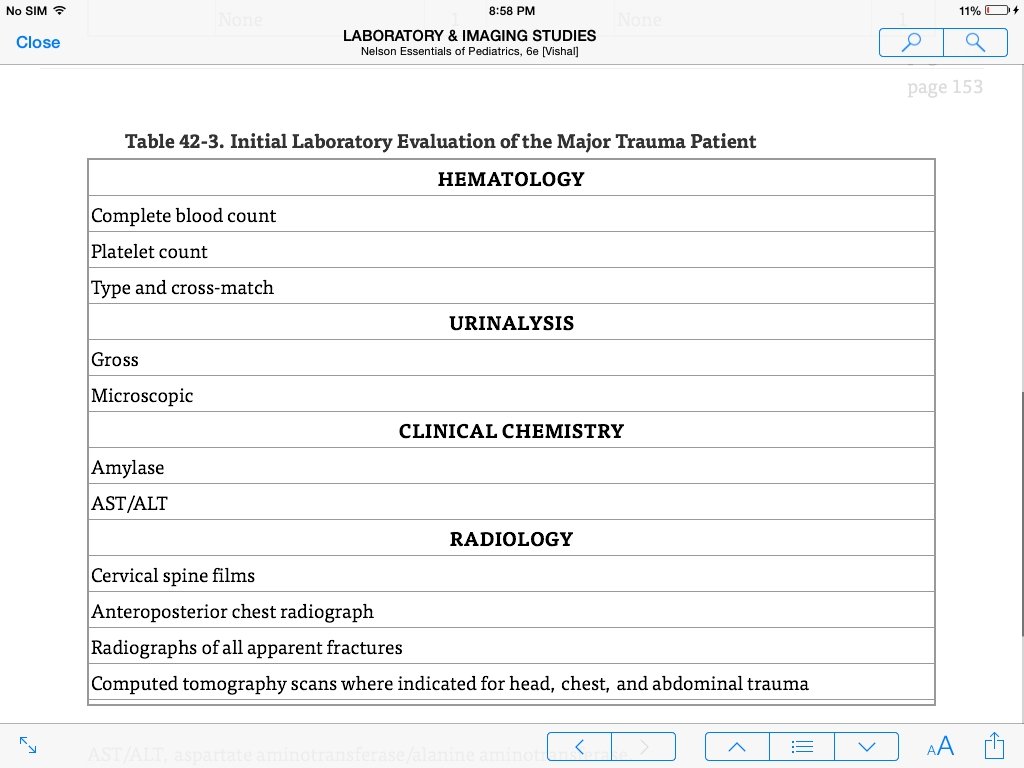
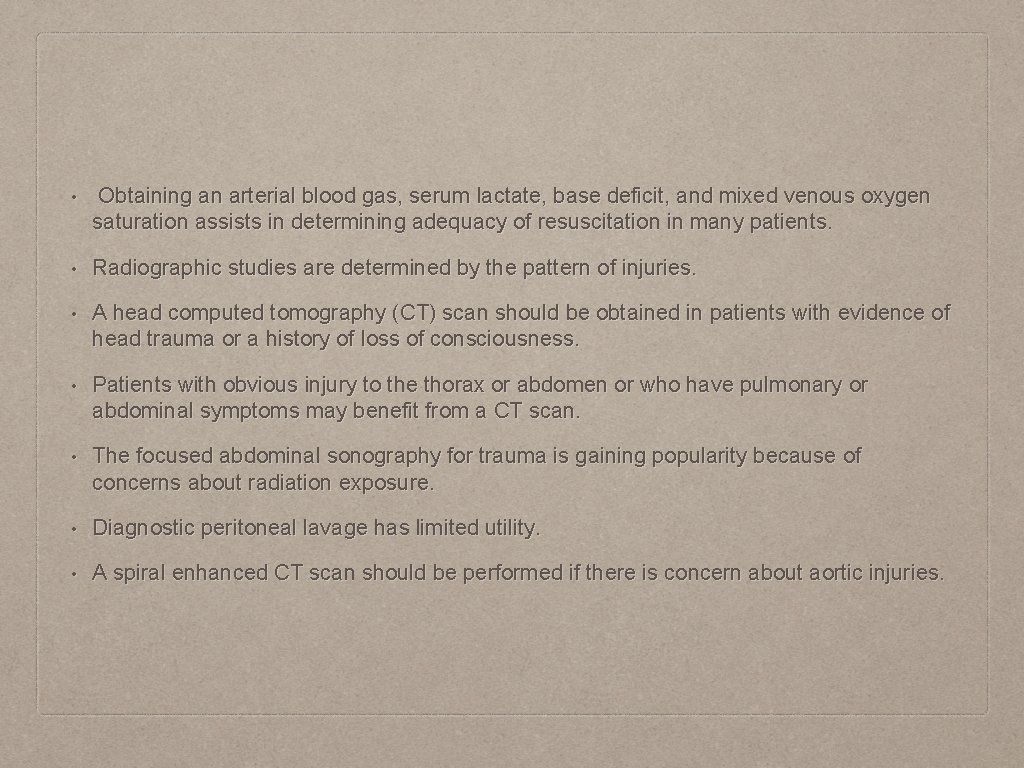
• Obtaining an arterial blood gas, serum lactate, base deficit, and mixed venous oxygen saturation assists in determining adequacy of resuscitation in many patients. • Radiographic studies are determined by the pattern of injuries. • A head computed tomography (CT) scan should be obtained in patients with evidence of head trauma or a history of loss of consciousness. • Patients with obvious injury to the thorax or abdomen or who have pulmonary or abdominal symptoms may benefit from a CT scan. • The focused abdominal sonography for trauma is gaining popularity because of concerns about radiation exposure. • Diagnostic peritoneal lavage has limited utility. • A spiral enhanced CT scan should be performed if there is concern about aortic injuries.
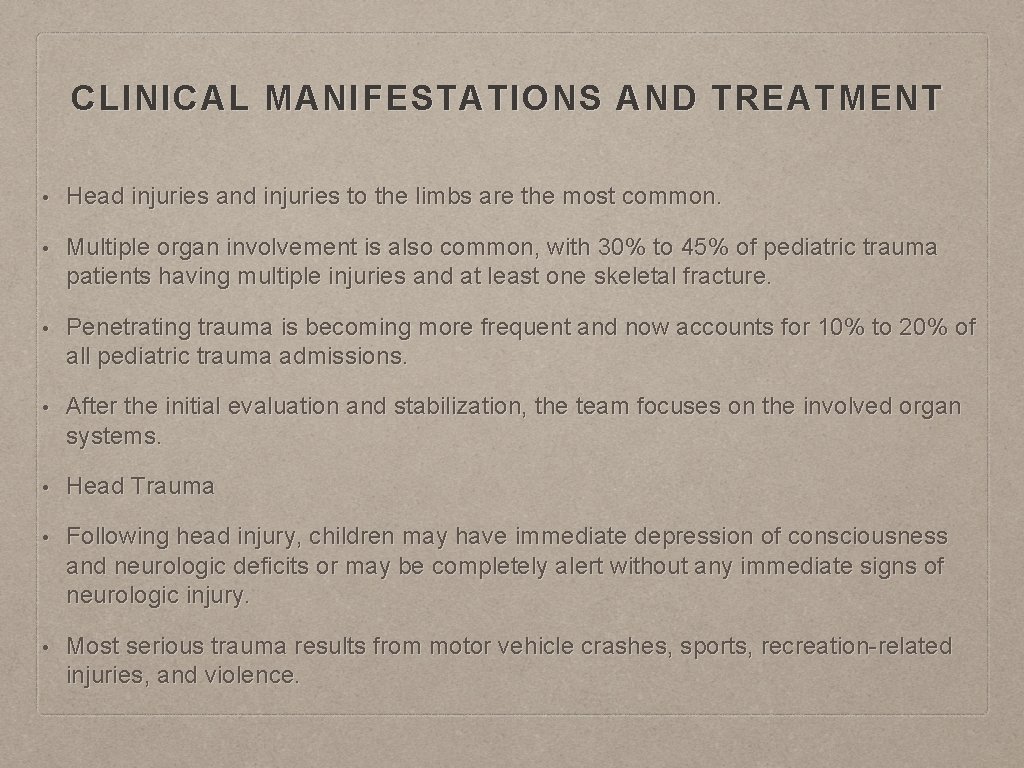
CLINICAL MANIFESTATIONS AND TREATMENT • Head injuries and injuries to the limbs are the most common. • Multiple organ involvement is also common, with 30% to 45% of pediatric trauma patients having multiple injuries and at least one skeletal fracture. • Penetrating trauma is becoming more frequent and now accounts for 10% to 20% of all pediatric trauma admissions. • After the initial evaluation and stabilization, the team focuses on the involved organ systems. • Head Trauma • Following head injury, children may have immediate depression of consciousness and neurologic deficits or may be completely alert without any immediate signs of neurologic injury. • Most serious trauma results from motor vehicle crashes, sports, recreation-related injuries, and violence.
SPINAL CORD TRAUMA • Although spinal cord injury is not common in pediatric trauma patients, it is potentially devastating when it occurs. • Cervical spine immobilization should be maintained until a spinal cord injury is ruled out. • Cervical spine radiographs are not sufficient to rule out a spinal cord injury because the immature vertebral column in children may allow stretching of the cord or nerve roots with no radiologic abnormality (spinal cord injury without radiologic abnormality [SCIWORA]). • SCIWORA may occur in 10% to 20% of children with a spinal cord injury; • when it is suspected, magnetic resonance imaging should be performed. • Controversy exists regarding the use of methylprednisolone for children with blunt spinal cord injury. It is not indicated for penetrating spinal cord injury.
THORACIC TRAUMA • Thoracic injury occurs in only about 5% of children hospitalized for trauma, yet it is the second leading cause of death. • Pulmonary contusion, pneumothorax, and rib fractures occur most commonly, and patients may present without external signs of trauma. • Patients with pulmonary parenchymal injury should receive supportive treatment to ensure adequate oxygenation and ventilation. • Most pediatric blunt thoracic injuries can be managed without surgery. • Injury to the heart and great vessels is rare but requires urgent diagnosis and treatment. • Great vessel injury should be suspected if a widened mediastinum is seen on chest radiograph.
ABDOMINAL TRAUMA • Injury to the abdomen occurs in approximately 8% of pediatric trauma patients. • The relative size and closer proximity of intra-abdominal organs in children increase the risk of significant injury after blunt trauma. • Penetrating trauma, which accounts for less than 10% of pediatric abdominal trauma, may result in a child who is asymptomatic or who presents in hypovolemic shock. • Performing serial physical examinations is the primary method of obtaining information on which to base decisions regarding operative intervention. • Abdominal wall bruising is an important physical examination finding and is associated with significant intra-abdominal injury (often a hollow viscus) in more than 10% of patients.
• Operative intervention may be required in patients whose vital signs are persistently unstable in the face of aggressive fluid resuscitation, even in the absence of extravascular volume loss or an enlarging abdomen. • The presence of peritoneal irritation or abdominal wall discoloration, together with signs of intravascular volume loss, indicates the need for laparotomy. • Abdominal CT is invaluable for assessing hemodynamically stable children with intraabdominal trauma. • Operative exploration is based on CT and physical findings and may be indicated when peritoneal irritation, hypovolemia, or free air on plain film is present. • Most blunt solid organ injury is handled nonoperatively. • Clinical observation is important, because most failures with nonoperative management occur in the first 12 hours.
INJURY TO THE SPLEEN • The most frequently injured abdominal organ in children is the spleen. • Suspicion of a splenic injury should be heightened if there are left upper quadrant abrasions or tenderness. • A positive Kehr sign (pressure on the left upper quadrant eliciting left shoulder pain) is due to diaphragmatic irritation by the ruptured spleen and strongly suggests splenic injury. • CT scans are used to grade splenic injury from 1 to 5 (grade 1, capsular tear or nonexpanding subcapsular hemorrhage, to grade 5, completely ruptured spleen). • Nonoperative management is the treatment of choice for most serious splenic injuries, unless there is continued large blood loss (transfusion requirement: >25 -40 m. L/kg/day) or hemodynamic instability. • If a splenectomy is performed, patients should receive penicillin prophylaxis and should receive pneumococcal and Haemophilus influenzae vaccines to decrease the increased risk of overwhelming sepsis.
LIVER TRAUMA • Major trauma to the liver is a serious cause of morbidity and accounts for 40% of all deaths associated with blunt abdominal trauma in children. • Severe hemorrhage is more common in patients with liver injury than with other abdominal injuries because of its dual blood supply. • Without significant vascular injury, hepatic injury presents and behaves clinically like a splenic injury. • Nonoperative management is recommended but requires close clinical observation for signs of ongoing blood loss or hemodynamic instability. • Like splenic injury, there is a grading system based on the pattern of injury.
RENAL INJURY • The kidney is injured in 10% to 20% of cases of blunt abdominal trauma, and more than 40% of children with injured kidneys have other internal injuries. • A young child's kidney is more vulnerable to trauma than an adult's because of its anterior position in the peritoneal cavity, a more compliant rib cage, and relatively immature abdominal muscle development. • The diagnosis of renal injury is based on history and physical examination coupled with urinalysis showing blood and increased protein levels. • An intravenous pyelogram, ultrasound, or CT may also be useful. • Low-grade renal injury is usually managed conservatively, consisting of bed rest, catheter drainage, and monitoring for resolution of injury by ultrasound or CT. • Surgery may be required for falling hemoglobin levels, refractory shock, or urinary obstruction caused by clots.
PANCREATIC INJURY • Injuries of the pancreas are less common in children than in adults but are seen in bicycle handlebar injuries, motor vehicle crashes, and nonaccidental trauma. • The diagnosis is difficult unless there is obvious injury to overlying structures, such as the stomach or duodenum. • Diffuse abdominal tenderness, pain, and vomiting may be accompanied by elevations of amylase and lipase but may not occur until several days after the injury. • Hemodynamic instability secondary to retroperitoneal hemorrhage may be the presenting sign. • Nasogastric suction and parenteral nutrition are indicated in the management of these patients. • Nonoperative management is appropriate for contusions, but surgical intervention may be required in patients with distal transection. • Drainage of pseudocysts in patients who develop them may be required if they are unresponsive to bowel rest and parenteral nutrition.
INTESTINAL INJURY • Injury to the intestine occurs less frequently than injury to solid intra-abdominal organs and varies with the amount of intestinal contents. • A full bowel is likely to shear more easily than an empty bowel. • Shearing occurs at points of fixation (the ligament of Treitz, the ileocecal valve, and the ascending and descending peritoneal reflections). Intestinal/hollow viscus injuries are the most common intra-abdominal injuries in restrained children involved in motor vehicle crashes.
• Abdominal tenderness is a common finding with intestinal perforation. Peritoneal signs are seen in less than 50% of children. • Pneumoperitoneum occurs in only 20% of patients, but when present it should prompt surgical exploration. • Serial physical examinations are useful when the clinical picture is uncertain. • Duodenal hematoma can occur in the absence of perforation. Duodenal hematomas result from blunt injury to the abdomen, and affected patients often present with persistent pain and bilious emesis. • Most hematomas respond to nonoperative management with gastric decompression and parenteral nutrition.
COMPLICATIONS • Patients requiring hospitalization for multiple trauma are at risk for a variety of complications based on the type and severity of injury. • Sepsis and multiple organ failure may occur in children with multiple trauma. • Delays in enteral nutrition because of an ileus may further increase the risk of sepsis secondary to translocation of bacteria across the intestinal mucosa. • Renal failure secondary to myoglobinuria may be seen in children who sustain crushing or electrical injuries and burns. • Deep venous thrombosis is unusual in the pediatric population, but prophylaxis for older children (>14 years of age), who will be immobilized because of injury, is often provided.
PROGNOSIS • Injuries are the largest cause of morbidity and mortality in children, accounting for more than 60% of deaths in children 1 to 19 years of age. • Mortality rates for patients with head injuries range from 6% to 16%, with younger children having higher mortality rates. • Isolated thoracic injury has a mortality rate of 5%, which increases to 25% if there is a concurrent head or abdominal injury. • Penetrating trauma accounts for 10% to 20% of pediatric trauma admissions. Penetrating injuries caused by firearms have significant mortality, with 30% of victims dying in the field another 12% in the emergency department. • Morbidities are numerous and include hypoxic-ischemic brain injury, loss of limbs, and psychological dysfunction.
EDUCATION FOR PREVENTING INJURIES • The recognition that much of the morbidity and mortality are determined at the scene of an injury has stimulated the development of prevention measures. • The Haddon matrix combines the epidemiologic components (host, agent, physical and social environments) with time factors (before, during, and after the event) to identify effective interventions focused on different aspects of the injury event. • Primary strategies (preventing the event), secondary strategies (minimizing the severity of injury), and tertiary strategies (minimizing long-term impact) can be targeted for each epidemiologic component. • Such strategies typically fall into one of three areas: education, enforcement, and environment (including engineering).
• Education is often the first strategy considered but requires behavioral change and actions on the part of people. Most educational strategies are not well evaluated. • Despite the reliance on an action by the individuals involved, some active strategies benefit from enforcement. Children wearing bicycle helmets experience a significantly lower incidence of traumatic brain injury and death. Enforcement of seatbelt laws increases seatbelt use and may decrease injuries. • Automatic strategies require no action on the part of the population and often change the environment (speed bumps) or involve engineering (child-resistant pill bottles, air bags). Automatic strategies have more consistently resulted in a significant reduction in injuries. The most successful approaches to preventing injury have combined strategies (education, environmental changes, and engineering changes focused on the host, agent, and environment in all three time phases).